
Reviewed · TOKYO TRADITIONAL CRAFT WORKSHOPS
Asakusa:Japanese Calligraphy & Make your original folding fan!
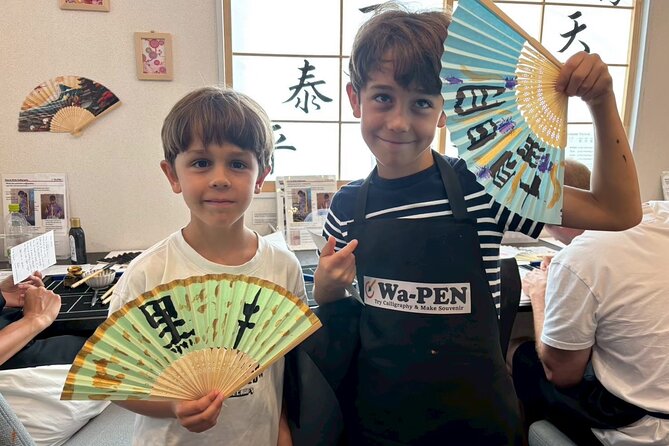
The best part of this Asakusa activity is that you leave with more than a quick lesson. You create a folding fan with your own calligraphy, using a Japanese name or kanji that has personal meaning. The short workshop also explains how Japanese writing developed, so the brush work feels connected to the culture rather than just a craft project.
I like the small private format, since you can ask for help without competing with a large class. I also like the patient instruction, especially from Mana, whose English is good and who can explain the meaning of Japanese names. The main consideration is timing: at about one hour, this is an introduction, not a full traditional calligraphy course.
Key points at a glance
- Create a useful souvenir: Write your chosen word or name on a folding fan you can take home.
- Start with context: A short video covers Japanese language, kanji, and the development of calligraphy.
- Practice before the fan: You learn brush grip, posture, ink preparation, and the basic eight strokes first.
- Private participation: Only your own group takes part, making it easier to receive individual help.
- Asakusa setting: The workshop is near Senso-ji Temple and public transportation in Taito City.
- Optional clothing design: You can also have your calligraphy printed on clothes for an additional option.
A calligraphy souvenir with your own hand in it
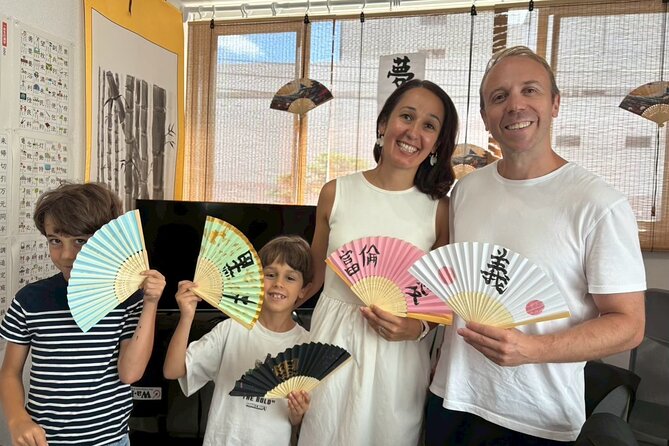
Many Tokyo souvenirs are bought ready-made. This one asks you to make something. That difference matters. Even if your brushwork is uneven, the fan carries your choices, your practice, and the Japanese word you selected.
The finished item is practical enough to use and light enough to pack. You can choose your name in Japanese or a favorite kanji, then work toward a final version on the fan. If you prefer a design you can wear, clothing printing is also available as an option.
This is not presented as a formal examination of calligraphy skill. The tone is relaxed and creative. You get practice sheets, time to repeat strokes, and support before committing your writing to the fan. That makes the activity suitable for first-timers who may feel nervous about using a brush.
More Asakusa and Sensoji tours:
- Tokyo: Japanese Dance Cabaret Theater Asakusa-Kaguwa Ticket
★ 4.8 · 2,270 reviews - Tokyo: Meiji Shrine, Asakusa, Skytree Bus Tour and Cruise
★ 4.7 · 1,986 reviews - Tokyo: Roll and Authentic Sushi Making Class in Asakusa
★ 4.9 · 1,957 reviews
What happens during the one-hour workshop
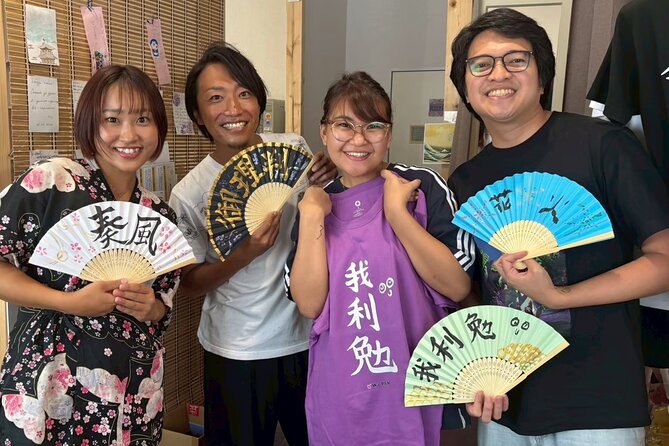
The session begins with a short video about the history of the Japanese language and calligraphy. It also introduces kanji and the different forms of Japanese writing. This opening gives you useful context, especially if you have wondered why some Japanese characters look pictorial while others are built from simpler marks.
The lesson then moves to the tools and basic technique. You learn how to hold the brush, how to sit or stand with suitable posture, and how to guide the tip across the paper. One useful detail is the focus on the basic eight strokes. These strokes are the building blocks behind many kanji, so practicing them helps you understand the structure of the characters rather than copying a finished shape blindly.
You also practice preparing the ink. That small step adds to the traditional feel of the class, and it slows the process down in a good way. Calligraphy rewards control, not speed. If you press too hard, move too quickly, or lose your brush angle, the mark changes at once.
Before working on the fan, you can try different characters on practice sheets. I consider this one of the strongest parts of the activity. A fan is a final object, so having room to make mistakes first takes away much of the pressure.
Choosing a Japanese name or meaningful kanji
You can write your name in Japanese or select a favorite kanji. If you do not know which Japanese characters suit your name, the instructor can write it for you and explain its meaning. Mana is specifically noted for doing this, which is useful because a direct translation is not always as simple as matching letters.
Take a little time to decide what you want before the final stage. A name gives the fan a personal link to you, while a single kanji can express an idea such as love, peace, strength, or another quality. The information provided does not promise a set menu of words, so you should discuss your choice with the instructor rather than assume every translation will be available.
This personal choice is what separates the workshop from a standard demonstration. You are not simply watching an expert form elegant characters. You are making a decision, practicing the marks, and placing your own version on a souvenir.
Making the original folding fan
Once you have practiced, you transfer your calligraphy to the folding fan. The fan is the final canvas and the part you take home. It also gives the activity a clear finish within the one-hour schedule.
Your result may not look like a professional calligrapher’s work. That is part of the charm. The value comes from seeing how much more confident your brush becomes after a few practice attempts. The staff guides you through the process, so you are not left to guess how the design should be placed.
The fan also works well for couples, friends, or family members. Each person can choose a different word or name, then leave with a distinct souvenir. Since the activity is private to your group, you can share the process without being mixed with strangers.
If you want a second type of keepsake, the workshop can also print your characters on clothes as an optional extra. The supplied information does not specify the clothing range or added price, so ask about those details before choosing this option.
More Tokyo craft workshops:
- Tokyo Shinjuku Chopsticks Making Class
★ 5.0 · 1,763 reviews - Chopstick Making Workshop in Ginza
★ 4.8 · 1,366 reviews - Kintsugi Experience: Art of Golden Joinery in Tokyo
★ 5.0 · 467 reviews - Tokyo Chopstick Making Workshop with Artisan
★ 5.0 · 466 reviews
Meeting near Senso-ji in Asakusa
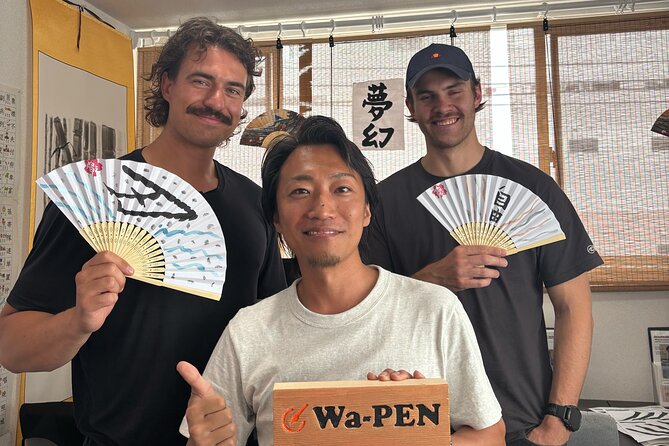
The meeting point is Wa-PEN Calligraphy Attractions and Make Design clothesJapan, at 3F, San-chome Building, 3-27 Nishiasakusa, Taito City, Tokyo 111-0035. The activity is near public transportation, and the listed route includes Senso-ji Temple and Asakusa.
The Senso-ji reference helps place the workshop in one of Tokyo’s best-known traditional areas. You are not signing up for a long temple tour, though. The main activity is the indoor calligraphy session at the listed meeting point, and the experience ends back there.
Plan your route carefully because Nishiasakusa addresses can look similar on a map. A mobile ticket is provided, and confirmation arrives when you book. I would arrive with enough time to identify the building and reach the third floor without rushing. The supplied details do not name a specific station or give a walking time, so use the booking address directly in your navigation app.
Asakusa makes a sensible setting for this kind of workshop. You can pair the class with time around Senso-ji, but keep that sightseeing separate when planning your day. The activity itself lasts about one hour, while your visit to the surrounding district will need additional time.
Patient teaching makes the difference
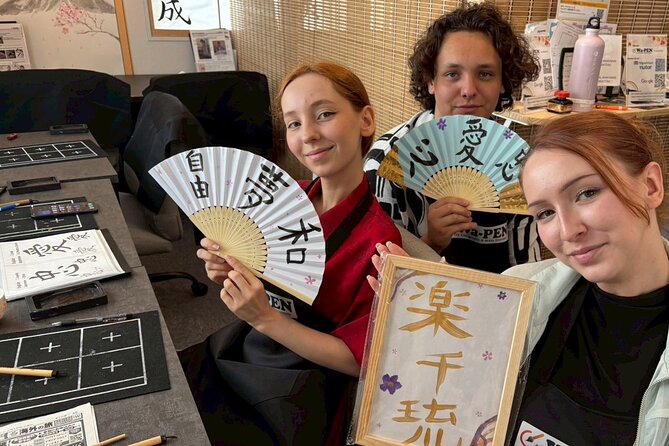
Calligraphy can look simple from a distance. A brush, ink, and paper do not seem complicated until you try to make one clean stroke. Good instruction matters, especially when you are handling a brush for the first time.
Mana is described as friendly, patient, and able to teach in good English. The staff also helps with brush technique, names, and practice. That support is important for anyone who cannot read Japanese, since you can focus on the shape and movement without worrying that you have chosen a meaningless character.
The teaching style appears to allow room for repetition. You get practice sheets rather than moving straight from explanation to the fan. That makes this a better choice for a beginner than a quick photo opportunity where you copy one character and leave.
Some sessions may include green tea. The tea has been described as sweet, but it should be viewed as a small hospitality detail rather than a central part of the booking. The main value remains the instruction and the handmade souvenir.
Why the private format is worth considering
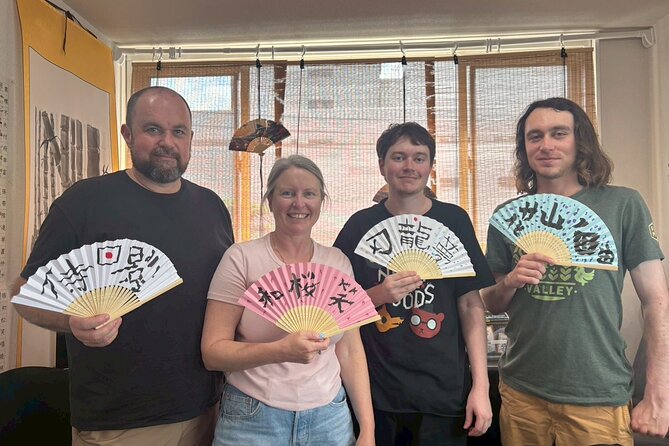
At $43 per person, this is not the cheapest way to buy a folding fan in Tokyo. You are paying for the teacher’s time, the materials, the cultural explanation, practice supplies, and the chance to make the final design yourself.
The private format improves that value. Only your group participates, so you can ask for a correction when a stroke feels awkward. You also do not need to worry about keeping pace with a large class. For a couple or small group, the price can make sense if you want a shared activity rather than another purchased object.
The value is weaker for someone who only wants a low-cost souvenir. You can find fans elsewhere for less, and this workshop takes part of your sightseeing time. It is also a short introduction, so anyone hoping to master Japanese calligraphy should look for a longer course.
The activity is booked an average of 17 days ahead, which suggests planning early is sensible if your schedule in Tokyo is tight. Free cancellation is available until 24 hours before the start time. Changes or cancellations inside that final 24-hour period are not refunded, so leave some flexibility in your itinerary.
Who will enjoy this Asakusa activity
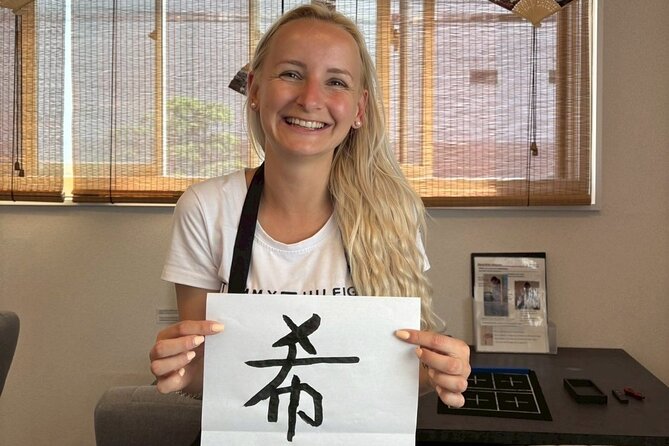
I would recommend this for first-time visitors who want a hands-on cultural activity without giving up half a day. The one-hour length fits neatly before or after sightseeing around Asakusa.
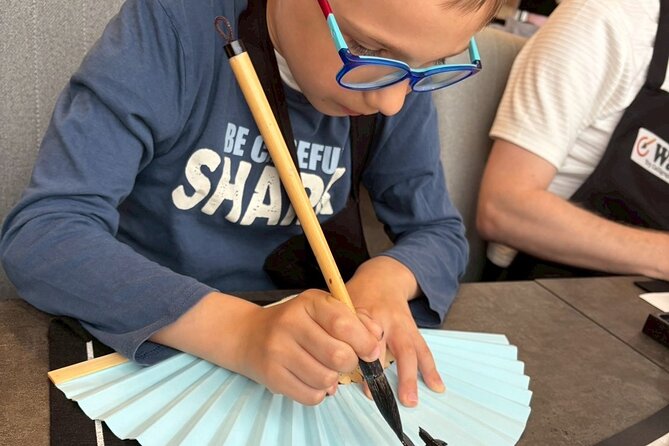
It also suits couples and families who want a souvenir with a personal story. Children may enjoy the creative side, though the supplied information does not specify a minimum age or child pricing. Since most people can participate, the activity has broad appeal, but you should contact the provider if your group has a specific need that is not covered in the booking information.
You do not need to know Japanese in advance. The lesson covers the language and calligraphy background, and the instructor can help write names in Japanese. You should come ready to practice rather than expecting your first attempt to look perfect.
This may not suit you if you want a long guided tour of Asakusa or a serious multi-session study of brushwork. The listed stops include Senso-ji and Asakusa, but the workshop itself is the focus. Think of it as a compact cultural lesson with a take-home result.
Practical planning for your visit
Bring the booking confirmation on your phone, since the ticket is mobile. Check the exact address before leaving for the appointment, then allow time to find the third-floor studio.
Because the experience ends at the meeting point, it is easy to continue exploring Asakusa afterward. You can schedule the workshop between other plans, but do not treat the one-hour estimate as the total time for getting there, checking in, and looking around the district.
Wear something you do not mind working around ink, even though the activity is designed for ordinary participation. The information does not state a dress code or provide details about protective clothing, so a little caution is sensible if you are wearing a favorite outfit.
Most importantly, choose your word before the final writing stage. A name, a personal value, or one kanji connected to your trip will give the fan more meaning than selecting a character at random.
Should you book this calligraphy experience?
Book it if you want a calm, personal activity in Asakusa and like the idea of making your own souvenir. The strongest reasons are the practice time, the private format, and the patient help with Japanese names and brush control. Mana’s English support is especially useful if you want to understand what you are writing.
Skip it if your main goal is bargain shopping, a full Asakusa tour, or advanced calligraphy training. At $43, the price is justified by the lesson and the finished fan, not by the material value of the fan alone.
For most first-time visitors, this is a good one-hour addition to an Asakusa day. Choose your word in advance, arrive with the address ready on your phone, and give yourself permission to make a fan that looks handmade rather than perfect.
FAQ
How long does the Japanese calligraphy and folding fan activity last?
The activity lasts approximately one hour.
Where does the activity start?
It starts at Wa-PEN Calligraphy Attractions and Make Design clothesJapan, 3F, San-chome Building, 3-27 Nishiasakusa, Taito City, Tokyo 111-0035.
Where does the activity end?
It ends back at the meeting point.
Is the activity near Senso-ji Temple?
Yes. Senso-ji Temple and Asakusa are included in the listed itinerary and the workshop is located in the Asakusa area.
Is this a private activity?
Yes. Only your own group participates.
What will I learn during the workshop?
You will learn about the history of Japanese language and calligraphy, brush grip, posture, writing style, ink preparation, and the basic eight strokes.
Can I write my own name?
Yes. You can choose your name in Japanese or select a favorite kanji. The instructor can also write names in Japanese and explain their meaning.
Do I get to keep the folding fan?
Yes. You make an original folding fan with your calligraphy and take it home as a souvenir.
Can I print my calligraphy on clothing?
Yes, clothing printing is available as an option. The supplied details do not state the added cost or specific clothing items.
What is the cancellation policy?
You can cancel for a full refund up to 24 hours before the experience start time. Cancellations or changes made less than 24 hours before the start are not accepted for a refund.
More Tokyo calligraphy classes
- Tokyo: Calligraphy on Kanji Fan & Scroll with Drink
★ 5.0 · 210 reviews - Let’s experience calligraphy in YANAKA, Taito-ku, TOKYO !!
★ 5.0 · 127 reviews - Tokyo: Calligraphy Workshop & Original T-Shirt Creation
★ 4.9 · 105 reviews - Experience all of Japanese culture and Japanese food experience classes “origami, udon, Japanese food, green tea, calligraphy” in 4 hours
★ 5.0 · 105 reviews
Newly reviewed around Tokyo
- Tokyo Asakusa:Calligraphy & Make T-shirt Activity★ 5.0 · 62 reviews
- Intercity Shuttle, Tokyo to Haneda /Narita /Yokohama /Makuhari★ 5.0 · 5 reviews
- 1 Hour Travel around Tokyo with a Professional Photographer★ 5.0 · 3 reviews
- Travel Tokyo with Your Own Personal Photographer★ 5.0 · 43 reviews
- Train in Samurai Swordsmanship and Defeat the Demon in Tokyo★ 5.0 · 5 reviews
- Shuttle Van 6hr Tokyo Tour to-and-from Tokyo, Yokohama and Narita★ 5.0 · 9 reviews
- Kickboxing & Body Training with EX-Pro Fighter★ 5.0 · 4 reviews
- Traditional Japanese Knife Sharpening Class★ 5.0 · 18 reviews
Tokyo Traditional Craft Workshops, compared.
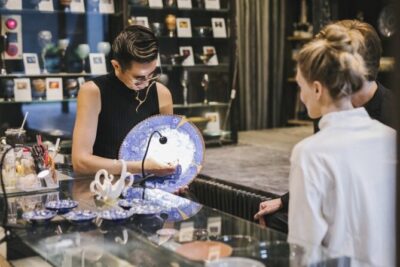
Kintsugi Experience: Art of Golden Joinery in Tokyo
Read our review →
Authentic Pure Gold Kintsugi Workshop with Master Taku in Tokyo
Read our review →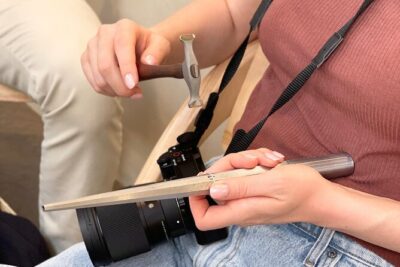
Private Handmade Ring Workshop Activity in Tokyo Shibuya
Read our review →
Browse the lists this tour appears in