
Reviewed · TOKYO IMPERIAL PALACE TOURS
Tokyo Imperial Palace and Heritage of Edo Castle Private Tour
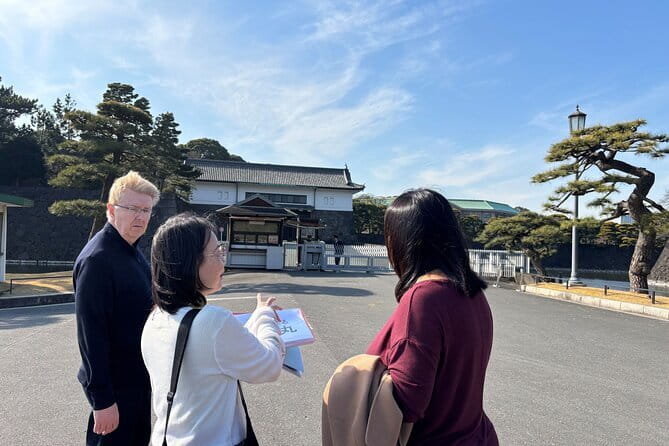
Tokyo’s Imperial Palace area is one of the city’s best places to see old Japan beneath the modern skyline. This private walk links Tokyo Station’s red-brick facade with the former Edo Castle grounds, the Emperor’s palace area, and the East Gardens, where stone walls and castle ruins give the past a physical presence.
I like two things here: the one-group format, which lets you stop and ask questions, and the clear focus on Edo Castle, rather than a vague stroll through central Tokyo. Guide Sakamoto is especially good with patient explanations and family questions. The main drawback is that three hours on foot can feel short if you want a slow garden visit, and palace access itself is limited.
I also like the free admission at each listed stop and the easy start beside Tokyo Station. The route offers useful context about the 400-year-old Nihonbashi district as well. Just remember that this is a walking tour, not a palace interior tour, and transport to the meeting point is your responsibility.
Key points to know before you book
- Tokyo Station begins the story: The 1914 red-brick station connects modern Tokyo with the city’s imperial and commercial past.
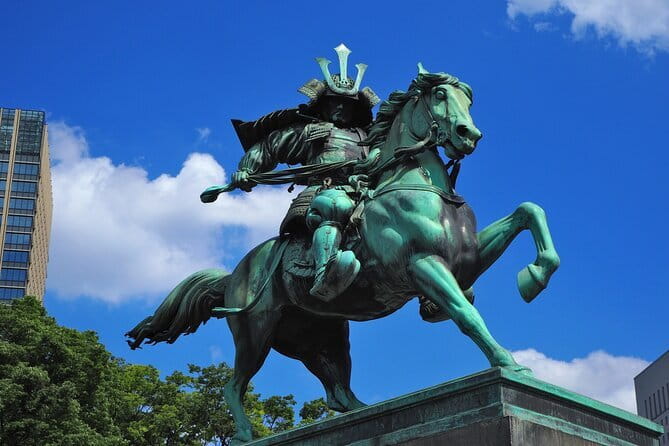
- Edo Castle is the main historical thread: Your guide explains how the Tokugawa shoguns ruled Japan from this site before it became the Imperial Palace.
- The East Gardens add real remains: Stonework, ruins, seasonal flowers, and formal greenery make the former castle grounds easier to picture.
- Your group stays private: You can set the pace and ask questions without holding up a large tour group.
- Sakamoto has earned special praise: Expect a patient guide who can explain Edo Castle clearly and engage younger family members.
- The tour costs $83.24 per person: That is fair for a private, three-hour history walk if you value personal attention, but less appealing if you only want a quick look at the palace exterior.
Why Tokyo Station is a smart place to begin
The meeting point is the Marunouchi Police Department Tokyo Station Police Box at 1-chōme-9-1 Marunouchi. That detail matters in a city where a station can have several exits and a very large footprint. Give yourself enough time to find the police box rather than simply aiming for Tokyo Station and hoping the guide spots you.
Tokyo Station was built in 1914 and is known for its red-brick design. It is still a major transport hub, so you begin in a place where daily Tokyo life is very visible. Trains, office workers, visitors, and grand architecture all meet here.
The station is more than a quick photo stop. It helps your guide explain the change from the old castle city to the modern capital. You can look at the building as a historic landmark, then move toward the palace grounds and see how close the old center of power remains to present-day Tokyo.
The planned stop lasts about 30 minutes, with no admission charge. That is enough time for an introduction, exterior views, and questions, but not a long architectural tour. If Tokyo Station is high on your list, arrive a little early so you can enjoy the area before the walk begins.
More Imperial Palace tours in Tokyo:
- Tokyo: Imperial Palace and Shogun Historical Walking Tour
★ 5.0 · 2,251 reviews - Tokyo: Imperial Palace Japanese History Walking Tour
★ 4.9 · 987 reviews - Tokyo: Imperial Palace and Shogun Walking Tour
★ 4.9 · 935 reviews
The Imperial Palace and the limits of what you see
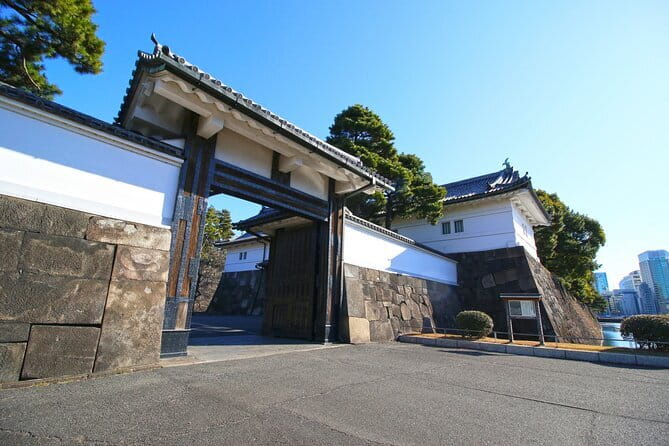
The next major stop is the Imperial Palace, built on the former site of Edo Castle. The Tokugawa shoguns once lived and governed here. Today, the palace is the home of the Japanese Emperor and an important symbol of the country.
This is where a guide adds real value. A palace complex can look like a broad collection of walls, gates, trees, and open space if you walk through without context. Your guide can connect those pieces to the political story of Edo Castle and explain how the site changed from shogunal headquarters to imperial residence.
Plan on about one hour here. The visit is focused on the palace area and its historic setting, not a guaranteed tour inside the Emperor’s residence. The supplied details do not promise interior access, so you should book this for the grounds, views, and history rather than expecting palace rooms.
That distinction is important. If your main goal is to enter the Imperial Palace, this tour may not meet it. If you want to understand the site and see the setting where Japan’s rulers lived, the stop is much more suitable.
The private format helps at this point. You can ask about the difference between the shogun and the Emperor, the former castle, or the meaning of a particular feature without waiting for a scripted group explanation. Sakamoto’s patient approach should suit families, especially if a child or grandchild has a long list of questions.
East Gardens and the physical remains of Edo Castle
The East Gardens of the Imperial Palace take up roughly the final half of the tour, with about 90 minutes planned here. This is the strongest part of the route for seeing traces of Edo Castle itself.
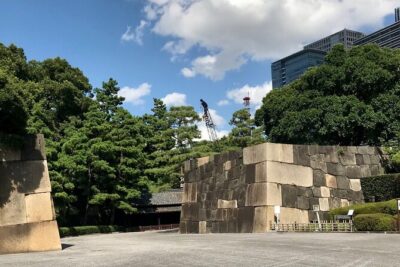
The gardens offer a quieter setting than Tokyo Station. Seasonal flowers and carefully kept grounds soften the hard stone remains, while castle ruins and old walls help you picture the scale of the former stronghold. You are not just hearing that Edo Castle once occupied this land. You are seeing surviving pieces of it.
The gardens also give the tour a better rhythm. After the station and palace area, you get time to slow down, look around, and ask follow-up questions. The setting is useful for families and first-time visitors because the history is tied to visible objects rather than only dates and names.
Admission is listed as free. The tour does not include transport, and the route ends at the Imperial Palace East National Gardens, 1-1 Chiyoda. Depending on timing and your next destination, the guide may also escort you to Tokyo Station. Ask about that on the day if returning to the station would help.
Because this is an outdoor walk, weather matters. The activity requires good weather, and poor conditions can lead to a different date or a full refund. Wear comfortable shoes and check the forecast, especially if you are planning this during a period of heat, rain, or cold. The tour information does not promise indoor alternatives.
How the Nihonbashi connection fits the walk
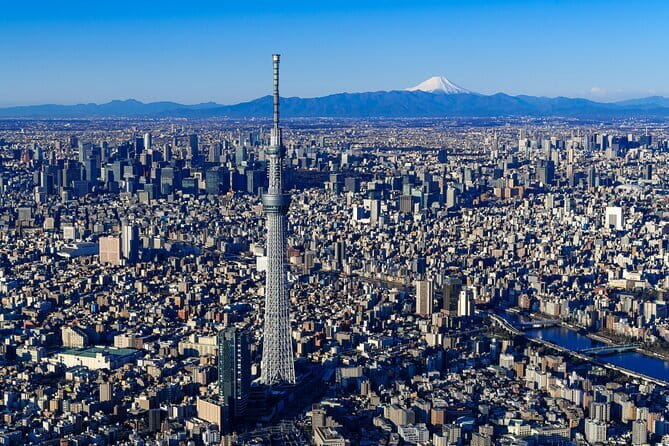
The tour also brings in the 400-year-old Nihonbashi district. That gives you a wider view of central Tokyo beyond the palace grounds.
Nihonbashi has long been tied to commerce and movement, while Edo Castle was the seat of military and political power. Together, the two areas help explain why this part of Tokyo matters. You get a picture of a city shaped by both government and trade.
The listed schedule gives the main time to Tokyo Station, the Imperial Palace, and the East Gardens. It does not set out a separate timed Nihonbashi stop, so you should not assume a long independent visit there. Think of Nihonbashi as part of the guide’s broader historical commentary and route context, rather than the central attraction.
That is still useful. A private guide can adjust explanations to your interests. If you care about old Tokyo neighborhoods and how the city developed around the castle, mention Nihonbashi at the start.
More history and heritage tours in Tokyo:
- Tokyo: Shinjuku Historical Walking Tour & Secret Backstreets
★ 5.0 · 530 reviews - Yanaka Walking Tour: Historic and Traditional District of Tokyo
★ 5.0 · 530 reviews - Mt. Fuji Heritage Tour: Traditional Villages, Lakes & Shrine
★ 4.5 · 509 reviews - From Tokyo: Nikko World Heritage Site Private Full-Day Trip
★ 4.9 · 243 reviews
What a private guide changes
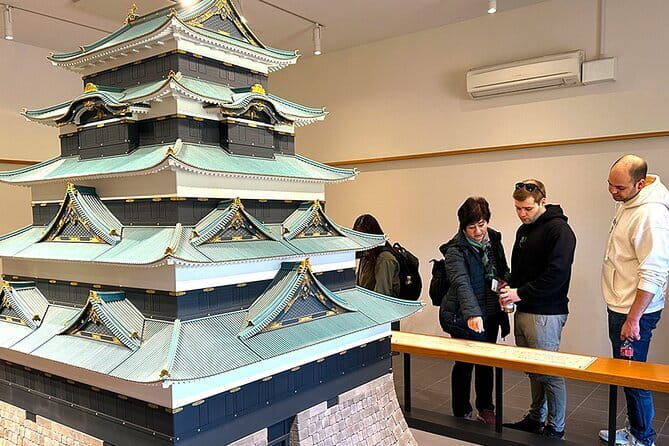
A private tour is not automatically better than a group tour, but this subject benefits from personal explanation. Large castle grounds can leave you unsure what you are looking at. Here, you can stop and ask about a wall, a ruin, or the shift from Tokugawa rule to imperial government.
The tour includes an English, Chinese, Korean, or Japanese-speaking guide. The guide is included in the price, while hotel pickup, hotel drop-off, and transport are not.
Sakamoto is the only guide named in the available information. The feedback about Sakamoto highlights patience, a pleasant manner, and an ability to answer questions from a family group, including a granddaughter. That makes this a sensible choice if you are traveling with children or several generations.
Other guides may lead the tour, so you should not book on the assumption that Sakamoto will be assigned. Still, the repeated praise for guide expertise about Edo Castle points to the main strength of the service: the human explanation, not a special ticket or rare access.
You should also keep your expectations practical. A private guide can control the pace, but the route remains an outdoor walking tour of about three hours. If you need frequent rest stops or want to spend a long time taking photographs, tell the guide early.
Is $83.24 a fair price?
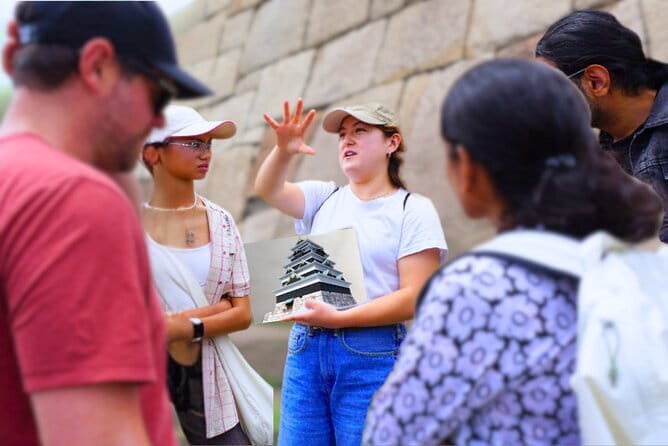
At $83.24 per person, the cost is easiest to justify if you are traveling as a small group and care about history. The admission charges at the listed stops are free, so you are paying mainly for the guide’s time, language service, planning, and private attention.
That price would be less attractive if you only want to see Tokyo Station and take a few palace-area photos. You can visit those public areas without paying for a tour. The value appears when you want the former Edo Castle explained clearly and prefer to ask questions as you go.
The three-hour length also helps keep the price in perspective. This is not an all-day outing with transport, meals, or multiple paid attractions. It is a focused history walk in central Tokyo. You can fit it into a morning or afternoon and continue with your own plans afterward.
Five or more bookings in the previous month suggest some current demand, but the available rating comes from only three reviews. All three are five-star ratings, with the strongest praise directed at the guides’ historical explanations, patience, and helpful manner. That is encouraging, but the small number means you should judge the tour mainly by its format and route.
Who will get the most from this tour
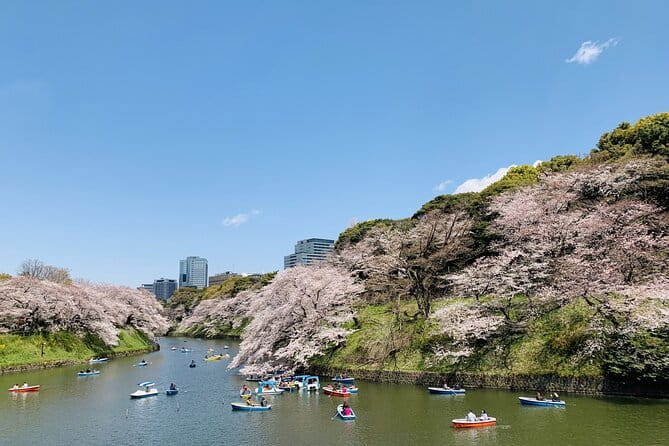
I would choose this for a first visit to Tokyo when you want a readable introduction to the city’s political past. It also suits anyone who has looked at the Imperial Palace and wondered where Edo Castle fits into the story.
Families can benefit from the private setup. A child can ask questions without worrying about slowing down strangers, and the guide can adjust the explanation. The specific praise for Sakamoto’s patience with a granddaughter supports that fit, though the assigned guide may vary.
History fans should enjoy the emphasis on the Tokugawa shoguns and castle ruins. Architecture lovers will get a useful look at Tokyo Station’s red-brick exterior, but this is not a specialist station tour.
I would be more cautious if you have limited mobility, dislike outdoor walking, or want guaranteed access inside palace buildings. Most people can participate, and service animals are allowed, but the tour details do not promise a fully accessible route or extensive seating. Contact the provider before booking if you have a specific access need.
Meeting point, timing, and cancellation advice
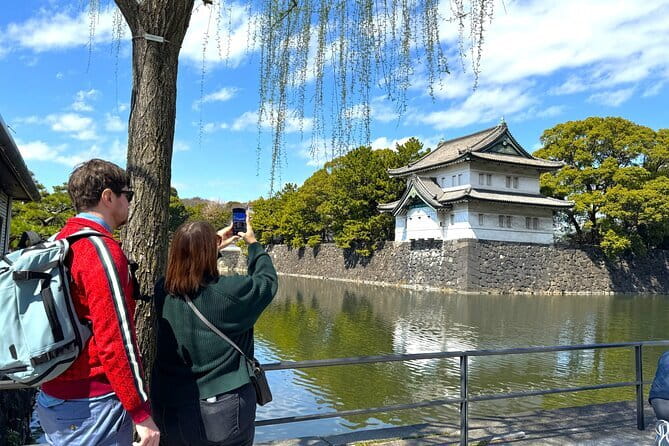
The start is at the Tokyo Station Police Box in Marunouchi, and the end is at the Imperial Palace East National Gardens. The guide may escort you back to Tokyo Station depending on timing and your next destination, but hotel pickup and drop-off are not included.
Confirmation is sent within 48 hours of booking, subject to availability. Since the tour is private, only your group participates.
You can cancel for a full refund up to 24 hours before the local start time. Changes or cancellations inside that 24-hour window are not accepted for a refund. Poor weather is handled differently: if the activity is canceled, you can choose another date or receive a full refund.
Should you book this Imperial Palace walk?
Book it if you want the Imperial Palace area to make sense, not just look attractive. The combination of Tokyo Station, the former Edo Castle site, the East Gardens, and Nihonbashi context gives you a useful three-hour introduction to central Tokyo.
The best reason to choose it is the private guide. You get a flexible pace and room for questions, with special strength in Edo Castle history. The main reasons to skip it are simple: the price is high for a walk through free public areas, and there is no promise of entering the palace itself.
For a family, history-minded visitor, or anyone who prefers a personal explanation over reading signs, $83.24 can be good value. If you are happy to explore independently and only need photographs, save the money and walk the grounds on your own.
FAQ
How long does the private tour last?
The tour lasts approximately three hours. About 30 minutes are planned for Tokyo Station, one hour for the Imperial Palace, and 90 minutes for the East Gardens and Edo Castle ruins.
Where does the tour start?
It starts at the Marunouchi Police Department Tokyo Station Police Box, located at 1-chōme-9-1 Marunouchi, Chiyoda City, Tokyo 100-0005, Japan.
Where does the tour end?
The scheduled end is the Imperial Palace East National Gardens at 1-1 Chiyoda, Chiyoda City, Tokyo 100-8111, Japan. Depending on timing and your next destination, the guide may also escort you to Tokyo Station.
Is admission included?
Admission is listed as free for Tokyo Station, the Imperial Palace, and the East Gardens of the Imperial Palace. The tour price includes the guide, but not transport.
What languages are available?
The tour includes an English, Chinese, Korean, or Japanese-speaking guide.
Is this a private tour?
Yes. Only your group participates, so you can ask questions and set a pace that suits your party.
What happens if the weather is poor?
The activity requires good weather. If it is canceled because of poor weather, you will be offered a different date or a full refund. You can also cancel for a full refund up to 24 hours before the local start time.
Newly reviewed around Tokyo
- Tokyo Asakusa:Calligraphy & Make T-shirt Activity★ 5.0 · 62 reviews
- Intercity Shuttle, Tokyo to Haneda /Narita /Yokohama /Makuhari★ 5.0 · 5 reviews
- 1 Hour Travel around Tokyo with a Professional Photographer★ 5.0 · 3 reviews
- Travel Tokyo with Your Own Personal Photographer★ 5.0 · 43 reviews
- Shuttle Van 6hr Tokyo Tour to-and-from Tokyo, Yokohama and Narita★ 5.0 · 9 reviews
- Kickboxing & Body Training with EX-Pro Fighter★ 5.0 · 4 reviews
- Train in Samurai Swordsmanship and Defeat the Demon in Tokyo★ 5.0 · 5 reviews
- Traditional Japanese Knife Sharpening Class★ 5.0 · 18 reviews
Tokyo Imperial Palace Tours, compared.

Imperial Palace and Shogun Historical Walking Tour
Read our review →
Imperial Palace East Garden and Edo Castle Walking Tour in Tokyo
Read our review →
Imperial Palace, Sensō-ji Temple, & Tokyo Tower Tour
Read our review →
Tokyo Castle, Imperial Palace, Shogun & Garden Walking Tour
Read our review →
Edo Castle & East Garden of the Imperial Palace Tour
Read our review →Browse the lists this tour appears in