
Reviewed · TSUKIJI AND TOYOSU FISH MARKET TOURS
Tokyo Tsukiji Fish Market Food and Culture Walking Tour
Tokyo Tsukiji Fish Market Food and Culture Walking Tour Review
Tsukiji is best understood with your stomach and your eyes wide open. This three-hour walk takes you through the outer market, where seafood stalls, kitchen shops, snack counters, and small restaurants crowd the lanes around Tsukiji Hongwan-ji Temple. You may see sea urchin packed in neat boxes, pufferfish in tanks, or a vendor cutting Bluefin tuna.
I like the mix of food and local know-how. A guide can point out ingredients you would pass without a second glance, explain how Japanese cooks use them, and lead you through the market without leaving you stranded in a sea of signs and shoppers. I also like the range of samples, from dashi soup and green tea to Wagyu beef, fish cakes, seasonal fruit, and sushi or a seafood bowl.
The main consideration is expectation. This is an outer-market food walk, not a tour of the old inner wholesale auction floor. Food portions can feel light for the price, and the tour does not accommodate vegetarian, halal, gluten-free, or allergy-related diets. If you cannot eat fish, choose another activity.
Key points to know before you book
- Tsukiji’s outer market is the real setting: You explore retail stalls, food counters, kitchen shops, and the Tsukiji Uogashi wholesale area when it is open.
- The tasting menu changes: You may receive sushi or a seafood bowl, depending on the day and time.
- Several guides earn strong praise: Guides named Kiyo, Naz, Miky, Kayoko, Mieko, Shoko, Sean, Take, and others have been singled out for clear explanations and friendly service.
- The group can include up to 20 people: Smaller groups are easier to hear and move through crowded lanes.
- Market days matter: The fish wholesale section is closed on Wednesdays, Sundays, and other market holidays.
- Come ready to walk and eat fish: Comfortable shoes are essential, and fish is central to the food served.
Why Tsukiji still matters after the wholesale market moved
Many people arrive in Tokyo expecting the famous pre-dawn tuna auction. That auction and the main wholesale operation moved to Toyosu in 2018. Tsukiji’s outer market remains open, however, and it is still a busy place to buy seafood, Japanese cooking ingredients, knives, pans, and prepared food.
That distinction matters. This experience does not take you into the old wholesale market as it appeared in historic photographs. Instead, you explore the surviving retail district and pass through the Tsukiji Uogashi mini wholesale market when it is operating.
I think that makes this tour most useful for a first visit to Tsukiji. The area can feel confusing, with narrow lanes, shop displays, customers stopping suddenly, and vendors working around you. A good guide helps you understand what you are seeing instead of turning the visit into a walk past random stalls.
The quality of guiding seems to vary by individual, as it does on any group tour. Guides such as Shoko and Take have been praised for explaining ingredients, customs, cooking methods, and market history in clear English. Kiyo, Naz, Miky, Kayoko, Mieko, Sean, and Masa have also received warm praise for their friendliness, pacing, humor, or ability to find good food.
More Tsukiji and Toyosu fish market tours:
- Tokyo: Tsukiji Fish Market Food and Walking tour
★ 5.0 · 1,724 reviews - Tokyo: Tsukiji Fish Market Guided Walking Tour
★ 4.9 · 1,397 reviews - Tokyo Sushi Making Class in Tsukiji with Professional Chef
★ 5.0 · 1,177 reviews
Meeting at Tsukiji Hongwan-ji Temple
The tour begins at the main gate of Tsukiji Hongwan-ji Temple, at 3-chōme-15-1 Tsukiji. Make sure you go to the front side of the temple. The meeting instructions warn that map software may send you to the back entrance.
You meet your guide at the stated start time, and the group leaves promptly. Late arrivals cannot be added time later, and same-day cancellations or missed departures are not refunded. That is a good reason to arrive early, especially if you are coming by public transportation and still need to find the temple gate.
The temple is more than a meeting landmark. You may spend time learning about its unusual design and background before heading into the market. Several experiences have included a look around the temple, which gives the morning a cultural opening rather than sending you straight into a food queue.
Wear shoes you can comfortably walk in for three hours. The route includes crowded market lanes, standing while eating, and repeated stops at stalls. The tour is not described as difficult, but you should have a moderate level of fitness.
Stop one: Tsukiji Jogai Market
The first major section is Tsukiji Jogai Market, the outer market. Plan on roughly 90 minutes here, though the exact rhythm depends on the group, the stalls, and the day.
This is where the tour earns its keep. Rather than treating the market as one giant seafood display, your guide can explain the role of different shops and ingredients. You might see boxes of uni, live pufferfish, large tuna being cut, shellfish, fish cakes, Japanese omelette, seaweed, and other foods used in home and restaurant cooking.
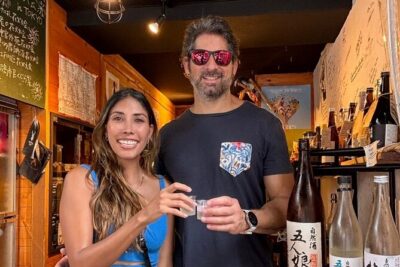
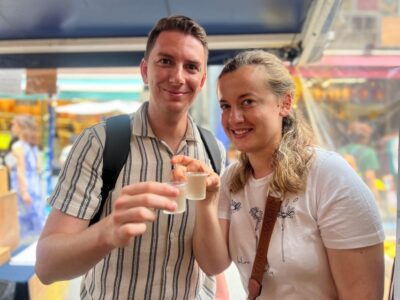
The tastings begin along the way. Dashi soup and green tea may be part of the early sampling, followed by small portions of market foods. Other tastings can include tuna, Wagyu beef skewers, fish cakes, Japanese omelette, seasonal fruit, and tempura. One particularly useful part of this kind of walk is being told how an ingredient is used, not simply being handed a bite with no explanation.
The market is also a shopping district. You may pass stores selling knives, pans, chopsticks, seasonings, and other kitchen goods. If you are hunting for a kitchen tool, the guide may stop at a suitable shop. Shoko, for example, has been praised for helping with food choices and shopping decisions.
The tradeoff is that the route is not a private tasting room. You are moving through working shops, so waits can happen. Some food stops may be quick, and portions are meant to be samples rather than a full meal. If you arrive very hungry, you may want to keep that in mind.
The food: what you are likely to taste
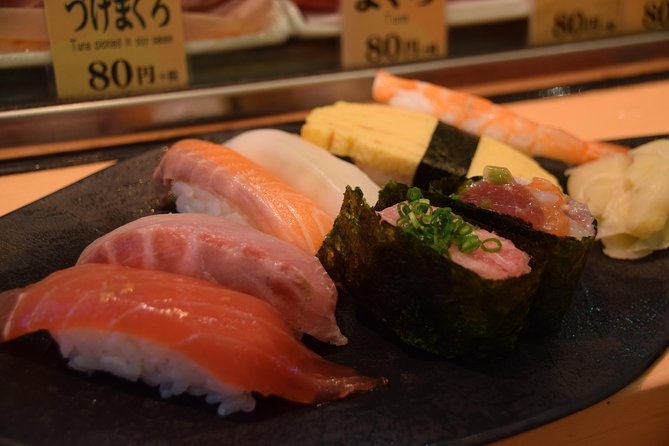
The food is the reason to book this walk, but it helps to understand the format. You receive a series of tastings, plus a final serving of sushi or a seafood bowl. The exact final dish depends on the day and time.
The range is a strong point. You may try familiar food such as sushi, then move into less obvious items such as fish cake, dashi, seaweed, Japanese omelette, squid, eel, or seasonal fruit. Wagyu beef skewers provide a change from seafood, although fish remains the central theme.
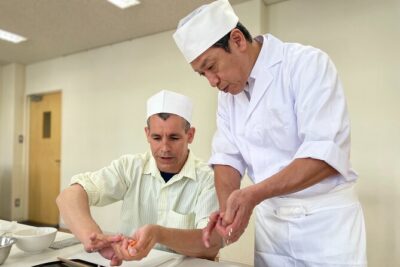
If sushi is new to you, the format gives you a gentle way to try it in small steps. One account described squid and eel as memorable choices, while another highlighted tuna, Wagyu, fish cakes, fruit, and omelette. A sushi preparation demonstration may also be included, with a chance to watch fish being cut or take part in making sushi.
Do not assume every food named in the description appears on every departure. Market schedules affect what shops can serve. On Wednesdays, Sundays, and other closed market days, some stalls are not open, so Japanese omelette, fish cake, and fruit may not be available.
The tour includes lunch and snacks, but this is not a large buffet. One important criticism is that the amount of food may feel modest for a $99.49 ticket. I would book it for guided access and context first, with food as a major bonus, rather than expecting three hours of nonstop eating.
More Tokyo walking tours:
- Tokyo: Imperial Palace and Shogun Historical Walking Tour
★ 5.0 · 2,251 reviews - Tokyo: Shinjuku Local Bar and Izakaya Guided Walking Tour
★ 4.9 · 1,794 reviews - Tokyo: Asakusa Walking Tour with Sensoji Temple Visit
★ 4.8 · 1,583 reviews - Tokyo Castle & Imperial PalaceーShogun Walking Tour
★ 4.7 · 1,068 reviews
Stop two: the old Tsukiji market area
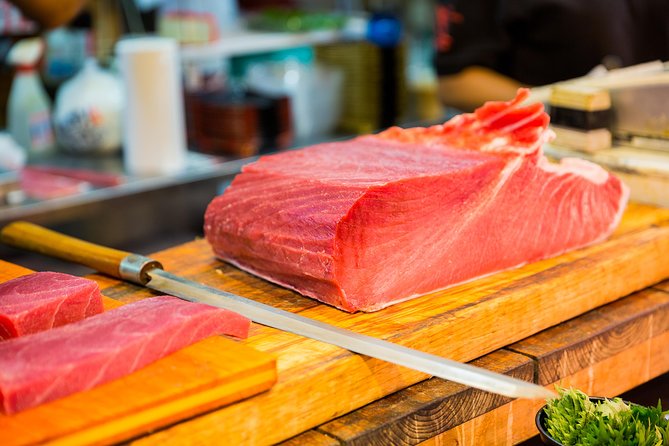
The itinerary allows about 30 minutes for the old Tsukiji market area and food stops. This portion helps connect the present-day stalls with the market’s earlier role as one of Japan’s most important seafood centers.
You will see how Tsukiji continues to serve local shoppers and restaurants even after the main wholesale operation moved. The value here comes from the explanation. On your own, you can look at a row of stalls. With a guide, you can learn what the products are, who buys them, and how they fit into Japanese cooking.
This is also where the tour’s pace can feel uneven. If a shop is busy or the group waits for a tasting, the walk may slow down. A strong guide keeps the stops moving and fills the pauses with useful information. Several guides have been praised for doing exactly that, while a few weaker experiences involved long waits or a guide who seemed less engaged.
Stop three: Tsukiji Uogashi
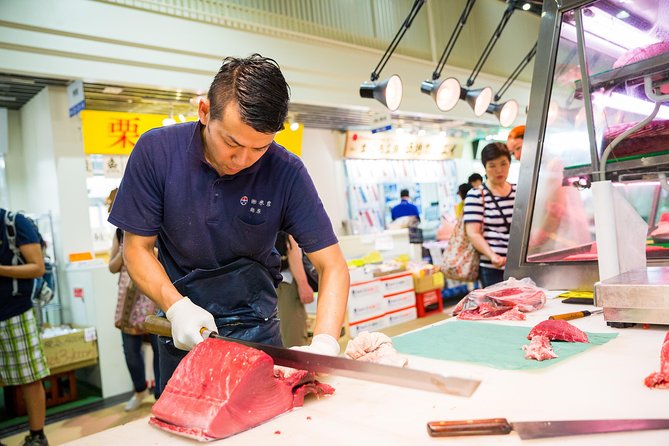
The tour spends about 30 minutes passing through Tsukiji Uogashi, a smaller wholesale market with a wide selection of fresh fish. This is one of the more useful stops for anyone interested in how restaurants source ingredients.
The wholesale section is not open every day. It closes on Wednesdays, Sundays, and holidays, along with other market closure dates. If seeing this area matters to you, check the operating day before booking.
Even when open, this is a working market, not a museum display. Keep close to your guide, do not block shop entrances, and expect a practical atmosphere rather than a polished attraction. The point is seeing fish handled and sold as part of the daily food trade.
This stop also explains why the tour should not be advertised in your mind as the old inner market experience. You are seeing a current wholesale area connected to Tsukiji, not revisiting the former auction floor. For many people, that is still worthwhile. For someone determined to see the historic wholesale operation, it may disappoint.
Stop four: sushi or a seafood bowl
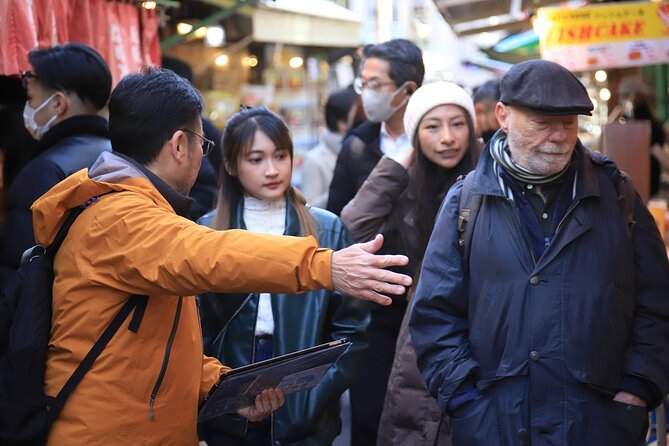
The tour ends with a serving of sushi or a seafood bowl, with the choice determined by the day and time. This is the clearest meal component and a practical way to finish after a morning of small tastes.
The quality of the final stop depends partly on the restaurant and the guide. A strong experience may include a sushi preparation demonstration or a carefully selected sashimi lunch. One guide, Nick, was praised for taking the group to Moritaya, where the fish and preparation made a memorable ending. That specific restaurant should not be treated as guaranteed, but it shows how much the final meal can depend on local connections and the guide assigned to your group.
There is one fair warning. A small number of people felt the final restaurant was too tourist-oriented and that they had little choice once they arrived. Others found the meal excellent. If the restaurant unexpectedly closes, an alternative meal is provided.
Group size, guides, and the human factor
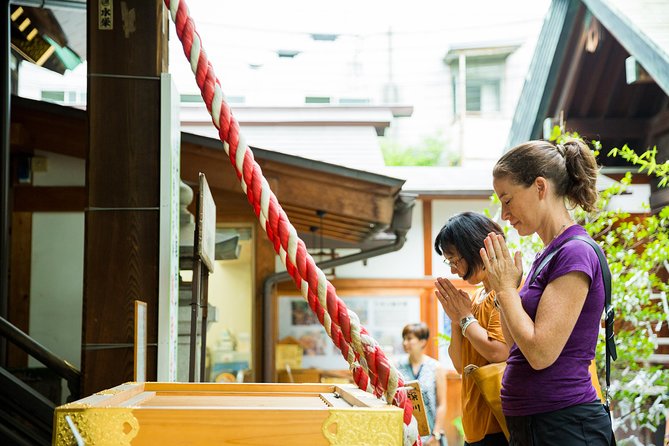
The maximum group size is 20, though some departures may be much smaller. A four-person group is far easier to manage in tight lanes than a full group, and you can hear explanations without standing shoulder to shoulder.
The guide makes a big difference. Masa has been praised for patience, humor, and a calm manner. Mieko received credit for setting a comfortable pace for an older parent. Joy was remembered for being friendly and good-natured, while Mike went out of his way to show a shop after the official route ended.
That does not mean every departure will feel identical. A few people found their guide inexperienced, slow, or lacking enthusiasm. One person found the English difficult to follow. The overall rating is very high, but you should understand that a group walking tour is not a scripted performance. The personal style of the guide shapes the day.
Is $99.49 a fair price?
At $99.49 per person, this is not the cheapest way to visit Tsukiji. You can enter the outer market without paying an admission fee and buy individual snacks on your own.
The price makes more sense if you value three things: an organized route, explanations in English, and a planned set of tastings. A local guide can save you from guessing which stalls are worth your time, help you understand unfamiliar foods, and make the market less intimidating. The final sushi or seafood bowl also adds real value.
The price makes less sense if you mainly want a large meal or prefer to wander independently. A confident eater who has already visited Tsukiji may find enough information online to create a personal route for less money. The tour is paying for access, interpretation, and convenience, not just the food itself.
Free cancellation is available if you cancel at least 24 hours before the start time. Changes or cancellations inside that window are not accepted, and late arrival receives no refund.
Who should book this Tsukiji walk?
I would recommend it to first-time visitors who want a clear introduction to Japanese seafood and market customs. It also suits curious eaters who want to try fish cakes, uni, squid, eel, dashi, or other foods they might skip alone.
Families and mixed-age groups may appreciate the guide’s help, though everyone should be comfortable walking. Small groups are especially useful for older people or anyone who wants time to ask questions and shop.
I would not book it if you need vegetarian, halal, gluten-free, or allergy-conscious food. The operator does not accommodate those requests. I also would not choose it if your main goal is the old wholesale auction or a visit to the former inner market.
Should you book it?
Book this tour if you want Tsukiji explained as well as tasted. Its best features are the local guides, the variety of small food stops, the chance to see kitchen and wholesale shops, and the final sushi or seafood bowl. The experience can turn a confusing market visit into a useful lesson in Japanese food culture.
Skip it if you are comfortable exploring alone, want a heavy lunch, or expect to enter the old wholesale market. For most first-time visitors who eat fish and enjoy walking, the $99.49 price is reasonable when you treat the tour as a guided cultural food experience, not simply a meal with a stroll attached.
FAQ
Where does the Tsukiji food tour meet?
Meet your guide at the main gate of Tsukiji Hongwan-ji Temple, at 3-chōme-15-1 Tsukiji, Chuo City, Tokyo. Use the front side of the temple, since map directions may lead to the back.
How long does the experience last?
The walking tour lasts approximately three hours.
Is lunch included?
Yes. Lunch and snacks are included. The final meal is either sushi or a seafood bowl, depending on the day and time.
What food can I expect to taste?
Possible tastings include dashi soup, green tea, tuna, Wagyu beef skewers, fish cakes, Japanese omelette, seasonal fruit, sushi, and seafood. The exact selection can change with shop hours and market conditions.
Does the tour run through the old wholesale fish market?
The route explores Tsukiji’s outer market and passes through Tsukiji Uogashi when it is open. The original main wholesale market moved elsewhere, so this is not a tour of the former inner auction market.
Can the tour accommodate dietary restrictions?
No. Vegetarian, halal, gluten-free, and allergy-related requests cannot be accommodated. Fish is central to the experience, so you should not join if you cannot eat fish.
More Tokyo markets and shopping streets
- Tsukiji Fish Market Guided Tour and Sushi Making with Pro Chef
★ 5.0 · 775 reviews - Tokyo: Tsukiji Fish Market Food and Culture Walking Tour
★ 4.7 · 757 reviews - Tsukiji Fish Market: Street Food & Culture Walking Tour
★ 5.0 · 669 reviews - Tsukiji Fish Market Small-Group Food Walking Tour
★ 5.0 · 621 reviews
More Tokyo food tours
- Tokyo: Shinjuku Food Tour (13 Dishes at 4 Local Eateries)
★ 5.0 · 6,603 reviews - Tokyo: Shinjuku Food Tour (15 Dishes and 4 Eateries)
★ 4.9 · 2,033 reviews - Best of Shinjuku: Izakaya Food Tour (4 Stops, 14+ Tastings)
★ 5.0 · 1,863 reviews - Eat and Drink Like a Local: Tokyo Ueno Food Tour-Taverns&Ramen
★ 5.0 · 957 reviews
Newly reviewed around Tokyo
- Tokyo Asakusa:Calligraphy & Make T-shirt Activity★ 5.0 · 62 reviews
- Intercity Shuttle, Tokyo to Haneda /Narita /Yokohama /Makuhari★ 5.0 · 5 reviews
- 1 Hour Travel around Tokyo with a Professional Photographer★ 5.0 · 3 reviews
- Travel Tokyo with Your Own Personal Photographer★ 5.0 · 43 reviews
- Kickboxing & Body Training with EX-Pro Fighter★ 5.0 · 4 reviews
- Train in Samurai Swordsmanship and Defeat the Demon in Tokyo★ 5.0 · 5 reviews
- Shuttle Van 6hr Tokyo Tour to-and-from Tokyo, Yokohama and Narita★ 5.0 · 9 reviews
- Traditional Japanese Knife Sharpening Class★ 5.0 · 18 reviews
Tsukiji and Toyosu Fish Market Tours, compared.
Tokyo Sushi Making Class in Tsukiji with Professional Chef
Read our review →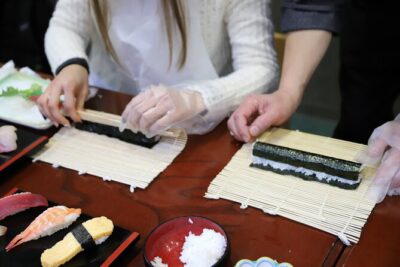
Tsukiji Fish Market Guided Tour and Sushi Making with Pro Chef
Read our review →
Tsukiji Fish Market Food and Culture Walking Tour
Read our review →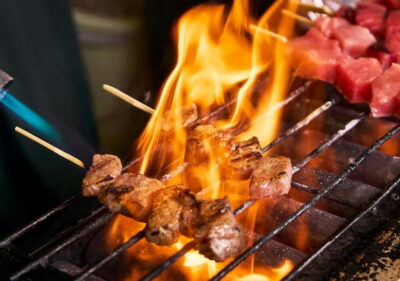
Tsukiji Fish Market: Street Food & Culture Walking Tour
Read our review →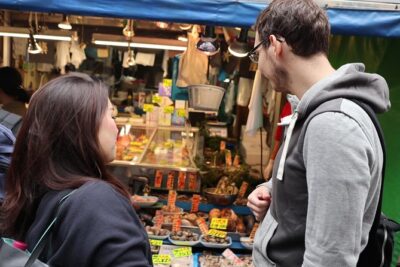
Tsukiji Fish Market Small-Group Food Walking Tour
Read our review →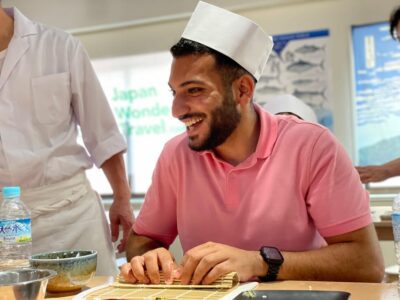
Tsukiji Fish Market Sushi Making Class with Pro Chef
Read our review →Browse the lists this tour appears in