
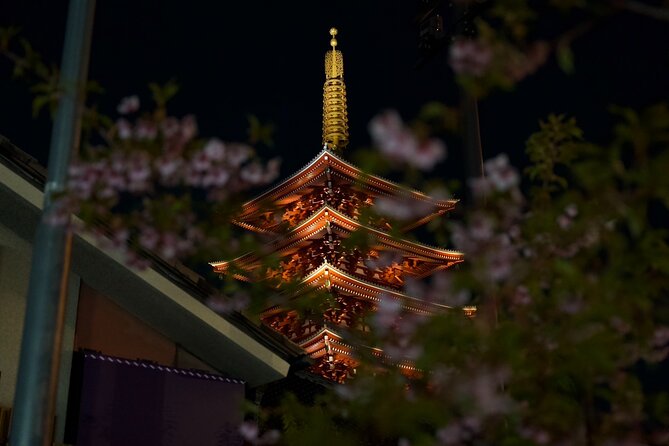
Reviewed · TOKYO WALKING TOURS
Asakusa Night Evening Walking Tour with English-Speaking Guide
Asakusa changes character after sunset. The red Kaminarimon Gate glows against the dark, Senso-ji feels quieter, and the lanes near Hoppy Street take on a local evening rhythm. This one-hour walking tour gives you the stories and orientation that are easy to miss when you explore alone.
I like the compact route and the small maximum group of eight. I also like that guides such as Takumi and Mio bring personal energy to the walk, explaining the temples, shrines, and streets in clear English. The main limitation is timing: the tour is brief, and Senso-ji’s main hall closes at 6 PM, so you should expect an evening look at the temple grounds rather than a full interior visit.
Key points at a glance
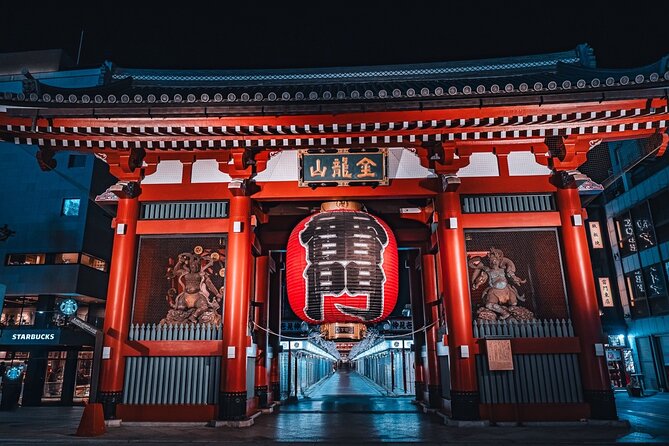
- Kaminarimon after dark: Begin beneath Asakusa’s huge red lantern, with the wind and thunder gods watching from either side.
- Six stops in one hour: The route covers Kaminarimon, Nakamise Shopping Street, Senso-ji, Asakusa Shrine, Hanayashikidori, and Hoppy Street.
- Useful historical context: Guides explain the meaning behind the temples, shrines, streets, and local customs.
- Small group format: The tour accepts a maximum of eight people, making it easier to hear and ask questions.
- A practical dinner finish: The walk ends at Hoppy Street, close to izakayas and restaurants.
- Good value for a short introduction: At $34.29 per person, you are paying mainly for orientation, interpretation, and a well-planned evening route.
Why Asakusa works so well at night
Asakusa is one of Tokyo’s best areas for seeing old and new Japan side by side. By day, the district can feel crowded around its famous temple and shopping street. At night, the lighting and quieter paths give you more room to notice the architecture and atmosphere.
That is the main reason I like this tour. You are not simply walking from one photo stop to another. You are moving through a compact district with Buddhist temples, a Shinto shrine, traditional shops, amusement-park history, and old-style pubs. The guide helps connect those pieces.
The timing also makes sense. The tour is designed to come before dinner, so you finish at Hoppy Street with the rest of your evening open. You can eat nearby, continue exploring Asakusa, or use public transportation to reach another part of Tokyo.
The experience is not a long guided tour with extensive time at each site. Each stop receives about ten minutes. I would think of it as a focused introduction that helps you understand Asakusa before you return on your own.
More Asakusa and Sensoji tours:
- Tokyo: Japanese Dance Cabaret Theater Asakusa-Kaguwa Ticket
★ 4.8 · 2,270 reviews - Tokyo: Meiji Shrine, Asakusa, Skytree Bus Tour and Cruise
★ 4.7 · 1,986 reviews - Tokyo: Roll and Authentic Sushi Making Class in Asakusa
★ 4.9 · 1,957 reviews
Meeting at Kaminarimon and starting beneath the red lantern
The meeting point is outside Burger King Asakusa Azumabashi, at 2-chome 20-6 Kaminarimon in Taito City. The tour then begins at Kaminarimon Gate, the famous entrance to Senso-ji.
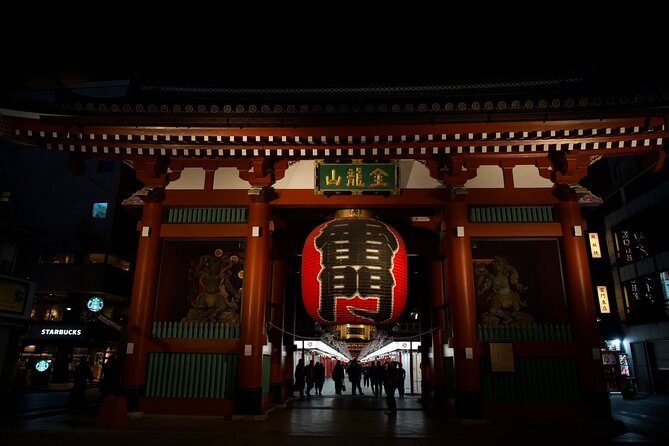
Kaminarimon means Thunder Gate. Its giant red lantern is the first image many people associate with Asakusa. On either side are statues of Fujin, the god of wind, and Raijin, the god of thunder. In daylight, the gate is easy to photograph. At night, lighting gives it a more dramatic look and makes the scale of the lantern especially clear.
I appreciate starting here because the gate provides an immediate sense of place. You do not need a long introduction to know that you have arrived somewhere important. Your guide can add the meaning behind the symbols and explain how this entrance relates to the temple complex beyond it.
The gate is also a useful meeting landmark, but follow the supplied meeting instructions carefully. The listed starting point is the Burger King location, not simply Senso-ji Temple. Confirmation arrives at booking, and the location is near public transportation.
Nakamise Shopping Street and the approach to Senso-ji
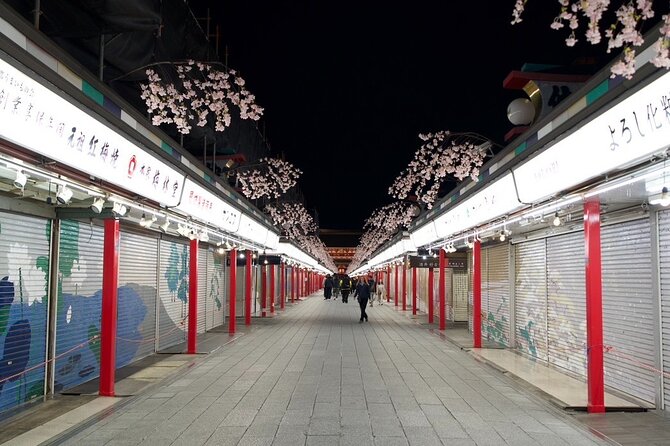
From Kaminarimon, you continue along Nakamise Shopping Street. This straight approach leads toward Senso-ji and is lined with shops selling Japanese snacks, souvenirs, and handcrafted goods.
During the day, Nakamise is one of Asakusa’s busiest stretches. On an evening walk, many shops may be closed or winding down, depending on the time. That can be a drawback if you want to browse and shop. On the other hand, fewer distractions let you pay closer attention to the layout and the connection between the gate, the street, and the temple.
Your guide can explain what you are seeing rather than leaving you to guess at the purpose of the shops or the importance of the route. For someone who already walked through Asakusa in daylight without understanding the setting, this extra context can make a second visit much more meaningful.
You should not book this part expecting a dedicated shopping session. The stop is short, and food and drinks are not included. Think of Nakamise as a cultural passageway and orientation point, with shopping left for later if something catches your eye.
Senso-ji after the daytime crowds
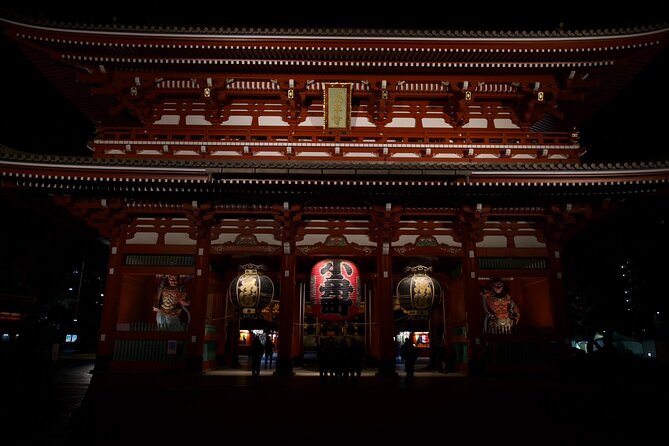
Senso-ji is one of Tokyo’s oldest and best-known temples. It is dedicated to Kannon, the goddess of mercy, and forms the center of Asakusa’s traditional identity.
The temple grounds are particularly suited to an evening walk. The crowds thin out, the buildings are lit, and the pace becomes calmer. Your guide can point out the role of the temple within the district and explain details that are easy to overlook when you are focused on taking photos.
There is one important timing point: the main hall closes at 6 PM. This means the tour may show you the exterior and grounds without allowing entry into the main hall. If going inside is essential to your plans, check the start time and arrange a separate daytime visit.
That limitation does not make the stop pointless. The gate, approach, temple buildings, and evening setting still make Senso-ji a strong part of the route. I would simply set your expectations correctly. This is a guided look at the temple area after dark, not an interior temple visit.
More Tokyo walking tours:
- Tokyo Tsukiji Fish Market Food and Culture Walking Tour
★ 5.0 · 3,184 reviews - Tokyo: Imperial Palace and Shogun Historical Walking Tour
★ 5.0 · 2,251 reviews - Tokyo: Shinjuku Local Bar and Izakaya Guided Walking Tour
★ 4.9 · 1,794 reviews - Tokyo: Tsukiji Fish Market Food and Walking tour
★ 5.0 · 1,724 reviews
Asakusa Shrine beside the temple
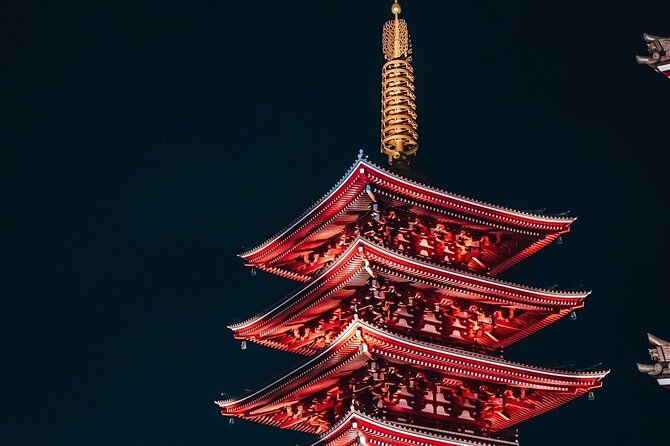
Next comes Asakusa Shrine, located beside Senso-ji. The shrine is dedicated to the three men credited with founding Senso-ji and dates from the 17th century.
This stop is useful because it shows how Buddhist and Shinto sites can exist side by side in Japan. If you explore the area alone, you might see the shrine as just another attractive structure near the temple. With an English-speaking guide, you get a clearer sense of its separate identity and purpose.
The shrine survived World War II and remains a symbol of harmony in Asakusa. That detail gives the stop added weight. It is not only a quick photo opportunity, but also part of the district’s story of survival and continuity.
Again, the scheduled time is about ten minutes. That is enough for an explanation and a look around, but not a long period of quiet reflection. I like the stop for its cultural value, especially if this is your first time sorting out the difference between a temple and a shrine.
Hanayashikidori and a different side of Asakusa
Hanayashikidori is the street near Senso-ji named after Hanayashiki, Japan’s oldest amusement park. The area combines restaurants, cafés, and shops, giving you a view of Asakusa beyond the major religious sites.
This section helps break up the temple route. You move from grand gates and sacred grounds into an everyday neighborhood setting. The short stop gives your guide a chance to discuss how old attractions, small businesses, and local dining fit into Asakusa’s identity.
The street is also a reminder that the area is not a museum frozen in the past. There are still places to eat, meet, and spend an evening. You might find that this is the point where you start thinking less about sightseeing and more about where to return after the walk.
Because the tour is only an hour, you will not have much time to stop in cafés or browse shops. If you want to linger, make a note of the places that interest you and come back after the tour.
Finishing on Hoppy Street before dinner
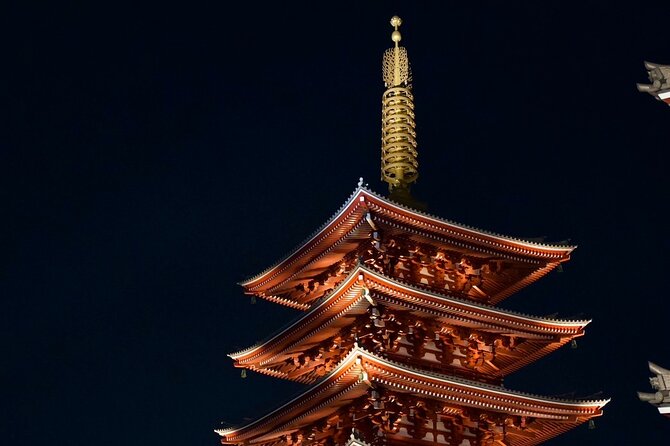
The final stop is Hoppy Street, an alley known for its izakayas and its namesake drink, Hoppy. This is where the tour shifts from history and architecture to the practical question of what to do next.
Hoppy Street is lined with traditional Japanese pubs. The atmosphere is informal, and the area is a natural place to continue your evening. Food and drinks are not included, so your meal afterward is your own choice and expense. That is a fair arrangement for a short walking tour because it lets you pick the restaurant and decide how long to stay.
I like the ending here more than a return to the starting point. You finish in a part of Asakusa that is useful for dinner, not just another landmark. The guide can leave you with a clear next step: choose an izakaya, explore nearby restaurants, or continue walking through the neighborhood.
Keep in mind that the tour ends at Hoppy Street, not back at Burger King. That is convenient if you plan to eat in Asakusa, but you should allow time to get your bearings if you have a later reservation elsewhere.
What the $34.29 price really buys you
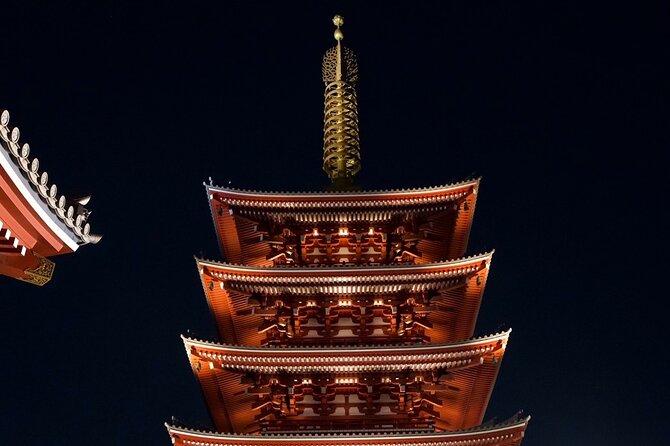
At $34.29 per person, this is not a bargain-priced self-guided walk, but it is a reasonable fee for a small-group introduction to one of Tokyo’s most layered districts.
You are paying for an English-speaking guide, a planned route, historical explanations, and the chance to ask questions during the walk. The maximum group size of eight matters here. A smaller group generally makes it easier to stay together and hear the guide in busy areas.
The value is strongest if you have already seen Asakusa but did not understand what you were looking at. One guest specifically appreciated returning after a daytime visit and gaining the missing context. That is a good way to judge the tour: it adds meaning rather than simply adding more sights.
The value is weaker if you are happy exploring independently, already know Senso-ji and Asakusa Shrine well, or want a longer food tour. You will need to buy your own dinner, and the one-hour schedule leaves little room for extended shopping or temple visits.
The 100 percent recommendation rate and five-star score from 16 reviews suggest a strong start for this experience, especially for the guide quality. Takumi is praised for making the evening informative and enjoyable, while Mio is described as cheerful, fun, and well informed about the area. Those details matter because the guide is the main product here.
Who will get the most from this walk
I would recommend this tour to you if you are visiting Tokyo for the first time and want a short, low-effort introduction to Asakusa. It is also useful if you have limited time and want to combine sightseeing with dinner.
It suits people who prefer explanation over rushing from one landmark to the next. The route is compact, and most people can participate. It is near public transportation, which makes it practical as an early-evening activity.
You may want to skip it if you need extensive temple access, a food tasting experience, or a long photography session. The tour does not include food or drinks, and each stop lasts about ten minutes. It is best understood as a guided neighborhood walk, not a full Asakusa day tour.
The small group should appeal to solo visitors, couples, and families who want a little structure without joining a large coach group. The short duration also makes it easy to fit around other Tokyo plans.
Practical details before you book
The tour lasts about one hour and uses a mobile ticket. Confirmation is provided when you book. Free cancellation is available if you cancel at least 24 hours before the local start time. Changes or cancellations made within 24 hours are not accepted for a refund.
Wear comfortable shoes. The route includes several streets and temple approaches, and the experience works best when you can keep moving without worrying about your feet.
Check the meeting point before setting out. The listed start is Burger King Asakusa Azumabashi, while the walk begins at Kaminarimon Gate. The end point is Hoppy Street, so plan your evening from there rather than assuming you will return to the start.
I would also check the time carefully if entering Senso-ji’s main hall matters to you. Since the hall closes at 6 PM, the evening format is mainly about the grounds, exterior views, and the surrounding district.
Should you book the Asakusa night walk?
Book it if you want a friendly, compact explanation of Asakusa before dinner. The route covers the district’s major landmarks, the group is capped at eight, and the finish at Hoppy Street is genuinely useful.
I especially like it for people who saw Asakusa in daylight but came away without much context. Guides such as Takumi and Mio appear to be a major strength, and the tour’s best moments come from understanding the stories behind the gates, shrine, temple, and streets.
Skip it if you want a full temple interior visit, included food, or enough time to shop and linger. At $34.29, the price makes sense when you value an English-speaking guide and a clear introduction. It is less compelling if you prefer to wander alone and read up beforehand.
FAQ
How long does the Asakusa night walking tour last?
The tour lasts approximately one hour.
What is the price of the tour?
The listed price is $34.29 per person.
What is included?
An English-speaking guide is included.
Are food and drinks included?
No. Food and drinks are not included in the tour price.
Where does the tour start?
The listed meeting point is Burger King Asakusa Azumabashi, at 2-chome 20-6 Kaminarimon, Taito City, Tokyo 111-0034.
Where does the tour end?
The tour ends at Hoppy Street in Asakusa, at 2-chome 8 Asakusa, Taito City, Tokyo 111-0032.
Which places are visited?
The route includes Kaminarimon Gate, Nakamise Shopping Street, Senso-ji Temple, Asakusa Shrine, Hanayashikidori, and Hoppy Street.
How many people can join the tour?
The maximum group size is eight people.
Can I cancel for a full refund?
Yes. You can cancel for a full refund if you cancel at least 24 hours before the experience start time. Cancellations or changes made less than 24 hours before the start time are not accepted for a refund.
More Tokyo night tours
- Tokyo Night Foodie Tour in Shinjuku – Seasonal Sushi, Wagyu Beef
★ 5.0 · 1,161 reviews - Tokyo: Daikoku JDM Car Meet & Night Car Culture Tour
★ 4.8 · 626 reviews - Tokyo After 5: Authentic Japanese Food & Drink Night Tour
★ 4.5 · 560 reviews - Tokyo: Samurai Entertainment Night Show in Kanda Shrine
★ 4.6 · 417 reviews
Newly reviewed around Tokyo
- Tokyo Asakusa:Calligraphy & Make T-shirt Activity★ 5.0 · 62 reviews
- Intercity Shuttle, Tokyo to Haneda /Narita /Yokohama /Makuhari★ 5.0 · 5 reviews
- 1 Hour Travel around Tokyo with a Professional Photographer★ 5.0 · 3 reviews
- Travel Tokyo with Your Own Personal Photographer★ 5.0 · 43 reviews
- Train in Samurai Swordsmanship and Defeat the Demon in Tokyo★ 5.0 · 5 reviews
- Shuttle Van 6hr Tokyo Tour to-and-from Tokyo, Yokohama and Narita★ 5.0 · 9 reviews
- Kickboxing & Body Training with EX-Pro Fighter★ 5.0 · 4 reviews
- Traditional Japanese Knife Sharpening Class★ 5.0 · 18 reviews
Tokyo Walking Tours, compared.
Tokyo Tsukiji Fish Market Food and Culture Walking Tour
Read our review →
Imperial Palace and Shogun Historical Walking Tour
Read our review →
Shinjuku Local Bar and Izakaya Guided Walking Tour
Read our review →
Asakusa Walking Tour with Sensoji Temple Visit
Read our review →
Tokyo Castle & Imperial PalaceーShogun Walking Tour
Read our review →
Browse the lists this tour appears in