
Reviewed · TSUKIJI AND TOYOSU FISH MARKET TOURS
Tokyo Tsukiji Fish Market Food&Culture Walking Tour With a LOCAL!
Tsukiji is best understood with someone who knows where to look. This three-hour walk takes you from Tsukiji Hongwanji Temple into the market’s food lanes, where a local guide helps you choose sushi, Wagyu skewers, fresh ingredients, and other specialties without wandering in circles. The tour also includes a short Japanese lesson and simple guidance on local customs.
I like two things right away: the group is limited to six, and you pay only for the food you choose. I also like the free small-luggage storage, a useful touch if you are moving between hotels or arriving with a suitcase. The drawback is that lunch is not included, so the $75 price is only the starting cost.
Key points at a glance
- The tour starts at Tsukiji Hongwanji Temple: Learn basic Buddhist rituals before entering the market.
- A guide leads you through Tsukiji Jogai Market: Expect help finding food stalls, ingredients, tools, and local specialties.
- You choose and pay for your own food: There is no fixed tasting menu, which gives you control but requires an extra budget.
- The group maximum is six people: This makes it easier to ask questions and follow the guide through narrow market lanes.
- Lunch finishes at 38 KIOSK: Your guide helps turn market finds into a shared meal in a quiet alley venue.
- Small luggage can be stored for free: This is especially useful if you have a small suitcase or bags with you.
Why Tsukiji works better with a local guide
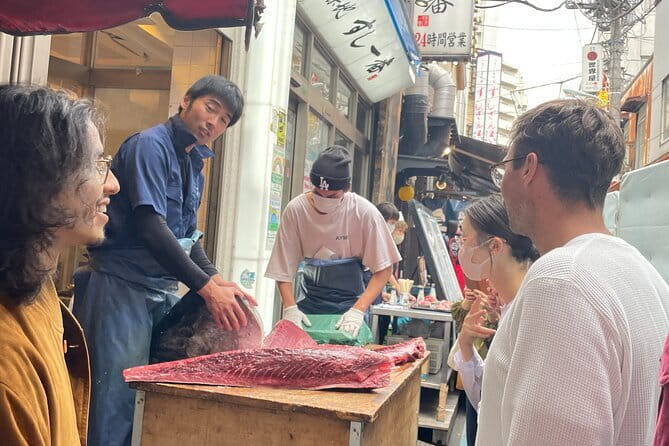
Tsukiji is not only one market with one clear entrance. It is a network of food shops, stalls, counters, specialty stores, and narrow lanes. If you arrive without a plan, you can spend much of your time deciding where to stop instead of tasting anything.
This tour gives you a practical route. You meet at Tsukiji Hongwanji Temple at 10 a.m., then move into the market with a guide who can point out foods and explain how the area works. That matters most if you have only one morning in Tsukiji.
I like that the experience is built around recommendations rather than a rigid food package. You can spend more on dishes that catch your eye and skip anything that does not appeal to you. The tradeoff is simple: you need to bring extra money for lunch and snacks, and the final cost will depend on what you order.
The small group size also changes the feel of the walk. With no more than six people, you should have a better chance to hear explanations, ask about unfamiliar ingredients, and tell the guide about allergies or dietary needs.
More Tsukiji and Toyosu fish market tours:
- Tokyo Tsukiji Fish Market Food and Culture Walking Tour
★ 5.0 · 3,184 reviews - Tokyo: Tsukiji Fish Market Food and Walking tour
★ 5.0 · 1,724 reviews - Tokyo: Tsukiji Fish Market Guided Walking Tour
★ 4.9 · 1,397 reviews
Starting at Tsukiji Hongwanji Temple
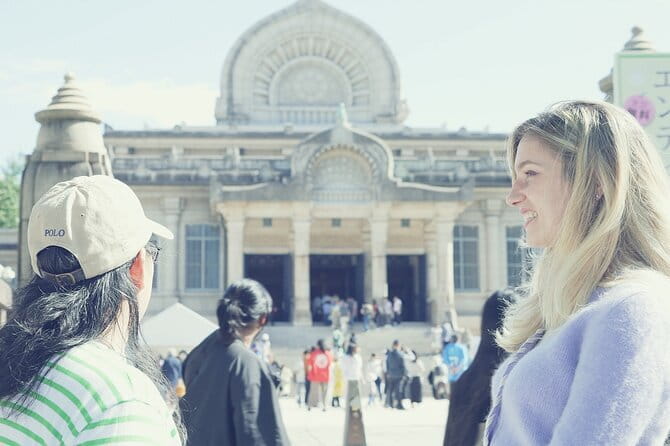
The meeting point is the main gate of Tsukiji Hongwanji Temple, at 3-chōme-15-1 Tsukiji. The temple visit lasts about 10 minutes and is included in the tour.
This opening stop adds useful context before the food portion begins. Your guide explains brief Buddhist rituals, giving you basic information you can use at other Japanese temples during your trip. You are not simply rushing past the building to reach the market.
The temple is also a sensible meeting point. It is near public transportation and easy to identify, though you should allow enough time to reach the main gate for the 10 a.m. start. The tour does not suggest meeting at the market itself, which helps avoid confusion in a busy district.
This stop is short, so it will not suit you if you want a long temple visit or detailed religious commentary. Think of it as a useful introduction and a respectful start to the morning.
A quick lesson before the food hunt
The tour includes a survival Japanese lesson. The exact content can vary by guide, but the purpose is practical: give you a few tools for ordering, greeting, or behaving politely during the rest of your trip.
I value this kind of short lesson more than a long lecture. You get information you can use right away, then continue learning as you move through the market. Local etiquette matters in crowded food areas, where customers stand close to stalls, eat in limited spaces, and need to follow each shop’s customs.
The experience also focuses on how you approach food. The guide can explain what you are looking at, how a dish is commonly served, and which options may suit your preferences. That is helpful when menus or signs are difficult to understand.
Dietary requests should be stated when you book. Vegetarian, gluten-free, allergy-related, and religious needs can be noted in advance. Since food is purchased during the walk and lunch is not preset, clear communication with the guide is important.
Free luggage storage at 38 KIOSK
After the temple, the group goes to 38 KIOSK, the tour’s base and final lunch location. You can store small suitcases and similar luggage there for free during the tour.
This is a small feature with real value. Tsukiji’s lanes are easier to manage without a suitcase, and hauling bags from stall to stall would make the food walk less pleasant. If you are checking out of a hotel or arriving before check-in, this service can make the morning more practical.
The storage offer is described for small luggage, so do not assume that oversized bags or several large cases will fit. If you have anything bulky, confirm the arrangement before booking.
At this point, the guide also gives an introduction to the route. It is a useful pause before entering the market because you can ask about the plan, explain food restrictions, and get your bearings.
More Tokyo walking tours:
- Tokyo: Imperial Palace and Shogun Historical Walking Tour
★ 5.0 · 2,251 reviews - Tokyo: Shinjuku Local Bar and Izakaya Guided Walking Tour
★ 4.9 · 1,794 reviews - Tokyo: Asakusa Walking Tour with Sensoji Temple Visit
★ 4.8 · 1,583 reviews - Tokyo Castle & Imperial PalaceーShogun Walking Tour
★ 4.7 · 1,068 reviews
Walking through Tsukiji Jogai Market
The main market portion lasts about 1 hour and 20 minutes. This is where the tour earns its keep for food-focused visitors.
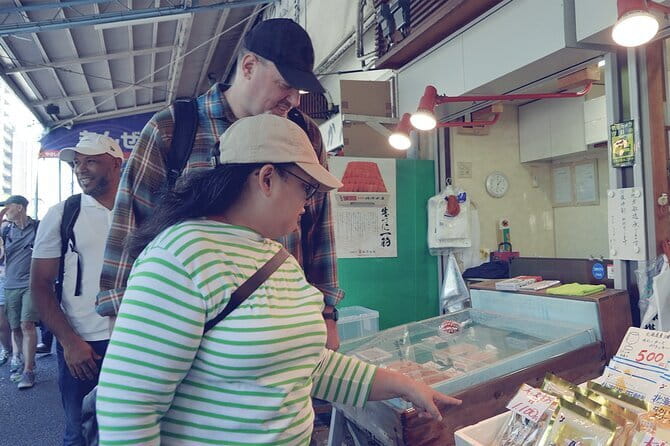
The guide leads you through Tsukiji Jogai Market, the outer market area known for food shops and specialist vendors. You can expect to see fresh ingredients, handmade knives, and cooking tools passed down through generations. The tour connects these objects to Japanese food culture instead of treating the market as a quick photo stop.
Your guide helps you find places for foods such as sushi and Wagyu skewers, along with other dishes available that day. The food list is not fixed, so you should think of this as guided tasting rather than a set menu. That gives you freedom, but it also means you should not arrive expecting a specific number of included samples.
I like this arrangement for people with strong preferences. If raw fish is not your thing, you can put your money toward another choice. If you have come specifically for sushi, the guide can help you focus your limited time on suitable spots.
The market can become much more crowded as the morning progresses. One Saturday before Christmas was described as busy but manageable early in the day, with heavier crowds later. The 10 a.m. start is not an empty-market experience, but arriving earlier in the day should help you move more comfortably.
The walk requires extended walking, with about two hours on your feet in total. Narrow lanes, stops at food counters, and the market’s busy conditions may be tiring if you have difficulty walking for long periods. Most people who can manage a normal walking tour should be able to participate, but this is not a sit-down food tour.
Food choices, spending, and the real price
The listed price is $75 per person. That covers the guide, the temple and shrine visits, the market walk, the Japanese lesson, and luggage storage. It does not cover lunch, alcoholic drinks, or the food you buy during the tour.
This makes the cost structure easy to understand, but not all-inclusive. You are paying for access to a small-group guide and local help, then setting your own food budget. If you order only a few modest items, your total stays more controlled. If you want several tastings, premium sushi, Wagyu, drinks, or a larger lunch, the final amount rises.
For me, the value depends on how comfortable you are exploring food markets alone. If you already know Tsukiji well and can choose stalls confidently, you may prefer to walk independently and spend the $75 directly on food. If you want help with navigation, etiquette, ordering, and food selection, the price buys more than a meal.
The guide can also advise on drink pairings. Alcohol costs extra, but you can ask for suggestions about which food and drink work well together. That is a nice option for people who want a more relaxed lunch, though it is not necessary to enjoy the tour.
Lunch at 38 KIOSK
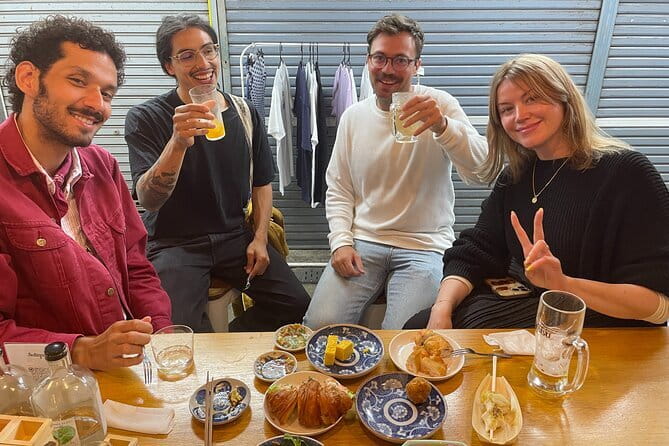
The final hour takes place at 38 KIOSK, a tucked-away venue in a quiet alley. The meal is described as a shared, party-style lunch built around fresh ingredients found during the market walk.
This ending gives the outing a clear shape. You start with the temple, continue through the market, then sit down and eat rather than ending beside a food stall. The quiet setting can be welcome after moving through narrow market lanes.
The meal is not included as a preset package. Your guide helps you hunt for the best options, and the ingredients gathered during the market portion are part of the lunch experience. Since the exact dishes are not fixed, I would ask early in the tour how much food you should expect to order and what may work with your dietary needs.
You can also remain at 38 KIOSK after the formal three-hour tour until closing time. That gives you a chance to keep eating, order drinks, or simply relax, but anything after the included tour period is your own expense.
Visiting Namiyoke Shrine
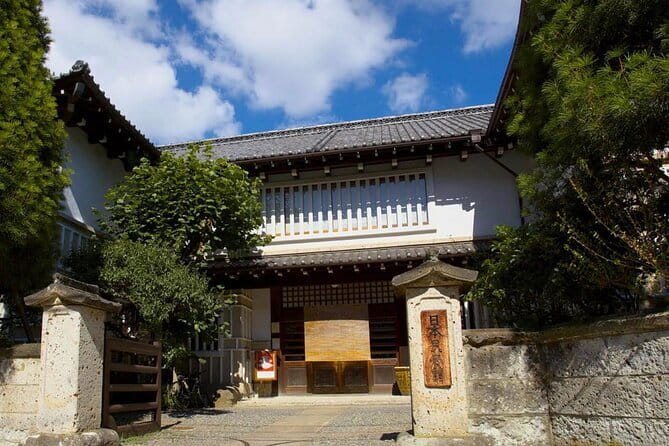
Namiyoke Shrine is included along with Tsukiji Hongwanji Temple and Tsukiji’s market areas. The supplied schedule gives the temple the opening stop and places the main market walk at the center, but it does not give a separate duration for Namiyoke Shrine.
That means you should view the shrine as part of the cultural route rather than expect a long standalone visit. Its inclusion helps connect the market to the neighborhood around it. You get more than a food crawl, but the primary focus remains eating and learning how Tsukiji works.
If you want extensive time at every religious site, this tour may feel brief. If you prefer a food walk with a few meaningful cultural stops, the balance is more suitable.
What the small group changes
A maximum of six people is one of the strongest features here. A market tour can become frustrating when a large group blocks a lane or makes it hard to hear the guide. A small party should be easier to keep together and more flexible at food stalls.
You can also ask direct questions about ingredients, customs, and ordering. If you are unsure about trying something, the guide has a better chance of giving you a clear answer than on a crowded coach-style tour.
The small size does not remove every challenge. Tsukiji can still be crowded, and the group must follow the market’s pace. You should stay close to the guide and expect some standing while food is selected.
One guide named in the tour material is Ronnie, who meets the group at the temple main gate. Guide assignments can change, so book this for the format and local help rather than expecting a guaranteed individual guide.
Who should book this Tsukiji experience
I would choose this tour if you are visiting Tokyo for the first time, care about food, and want help making sense of Tsukiji. It is also a good fit if you enjoy trying several small dishes but do not want to commit to a fixed menu.
The tour suits solo visitors and couples who like a social morning without joining a large group. Families may also appreciate the small size, provided everyone can walk for an extended period and manage the market’s busy conditions.
It is less suitable if you need a fully inclusive price, want a seated meal from the start, or dislike choosing food as you go. It is also not a good match if walking for about two hours is difficult.
The tour accepts most participants, is near public transportation, and allows service animals. For food restrictions, give details when reserving rather than waiting until the market portion begins.
Timing, cancellation, and practical details
The tour begins at 10 a.m. and lasts about three hours. The official end is at 38 KIOSK, though you can stay there until closing if you want to continue on your own.
Confirmation arrives when you book, and the experience uses a mobile ticket. Free cancellation is available up to 24 hours before the start time. Cancellations or changes made less than 24 hours before the start are not refunded or accepted.
The experience requires suitable weather and a minimum number of participants. If poor weather or low enrollment cancels it, you are offered another date or experience, or a full refund.
My verdict: pay for guidance, not just lunch
Book this tour if you want a small, personal introduction to Tsukiji with food advice, cultural context, and a planned route. The temple, shrine, Japanese lesson, luggage storage, and final meal at 38 KIOSK make it more useful than simply arriving and guessing where to eat.
Skip it if you are already comfortable navigating Tsukiji, prefer to control every yen of your food budget, or want lunch included in the advertised price. The $75 fee does not cover food or drinks, so plan for that extra cost.
For most first-time visitors who want to taste Tsukiji without getting lost, the format makes sense. Just arrive ready to walk, bring room in your budget for lunch, and tell the guide about dietary needs before the day begins.
FAQ
Where does the Tsukiji food tour start?
The tour starts at the main gate of Tsukiji Hongwanji Temple, 3-chōme-15-1 Tsukiji, Chuo City, Tokyo 104-8435, Japan.
What time does the tour begin?
The start time is 10 a.m.
How long does the experience last?
The guided tour lasts about three hours.
Where does the tour end?
The tour ends at 38 KIOSK in Tsukiji, Tokyo. The venue remains open for you to continue relaxing and ordering until closing time.
Is lunch included in the $75 price?
No. Lunch is not included. Your guide helps you choose food, but you pay separately for the dishes and any alcoholic drinks.
How many people can join the tour?
The group has a maximum of six participants.
Is luggage storage available?
Yes. Free storage is available during the tour for small suitcases and similar luggage at 38 KIOSK.
Can dietary needs be accommodated?
Vegetarian, gluten-free, allergy-related, and religious dietary needs can be noted when you make your reservation.
Can I cancel for a full refund?
Yes. You can cancel at least 24 hours before the local start time for a full refund. Cancellations made less than 24 hours before the start are not refunded.
More Tokyo markets and shopping streets
- Tsukiji Fish Market Guided Tour and Sushi Making with Pro Chef
★ 5.0 · 775 reviews - Tokyo: Tsukiji Fish Market Food and Culture Walking Tour
★ 4.7 · 757 reviews - Tsukiji Fish Market: Street Food & Culture Walking Tour
★ 5.0 · 669 reviews - Tsukiji Fish Market Small-Group Food Walking Tour
★ 5.0 · 621 reviews
More Tokyo food tours
- Tokyo: Shinjuku Food Tour (13 Dishes at 4 Local Eateries)
★ 5.0 · 6,603 reviews - Tokyo: Shinjuku Food Tour (15 Dishes and 4 Eateries)
★ 4.9 · 2,033 reviews - Best of Shinjuku: Izakaya Food Tour (4 Stops, 14+ Tastings)
★ 5.0 · 1,863 reviews - Eat and Drink Like a Local: Tokyo Ueno Food Tour-Taverns&Ramen
★ 5.0 · 957 reviews
Newly reviewed around Tokyo
- Tokyo Asakusa:Calligraphy & Make T-shirt Activity★ 5.0 · 62 reviews
- Intercity Shuttle, Tokyo to Haneda /Narita /Yokohama /Makuhari★ 5.0 · 5 reviews
- 1 Hour Travel around Tokyo with a Professional Photographer★ 5.0 · 3 reviews
- Travel Tokyo with Your Own Personal Photographer★ 5.0 · 43 reviews
- Shuttle Van 6hr Tokyo Tour to-and-from Tokyo, Yokohama and Narita★ 5.0 · 9 reviews
- Kickboxing & Body Training with EX-Pro Fighter★ 5.0 · 4 reviews
- Train in Samurai Swordsmanship and Defeat the Demon in Tokyo★ 5.0 · 5 reviews
- Traditional Japanese Knife Sharpening Class★ 5.0 · 18 reviews
Tsukiji and Toyosu Fish Market Tours, compared.
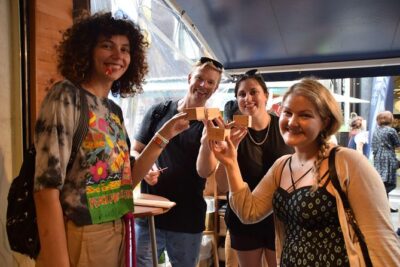
Tokyo Tsukiji Fish Market Food and Culture Walking Tour
Read our review →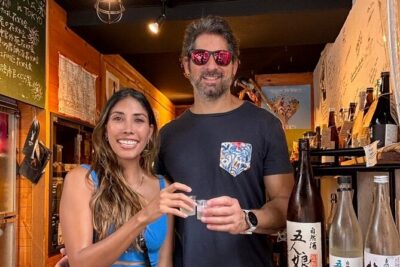
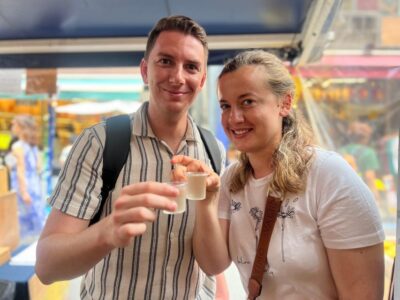
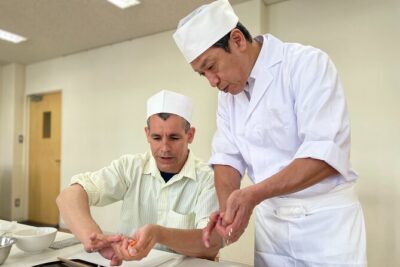
Tokyo Sushi Making Class in Tsukiji with Professional Chef
Read our review →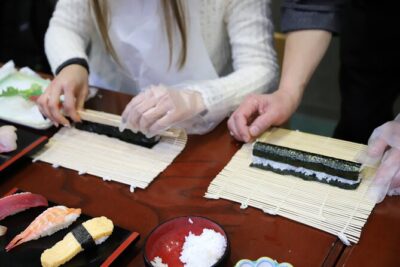
Tsukiji Fish Market Guided Tour and Sushi Making with Pro Chef
Read our review →Tsukiji Fish Market Food and Culture Walking Tour
Read our review →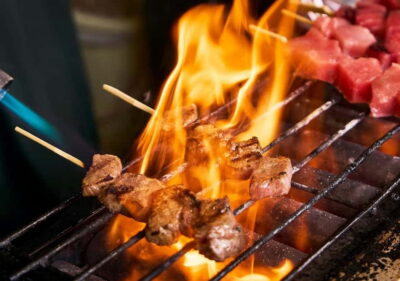
Tsukiji Fish Market: Street Food & Culture Walking Tour
Read our review →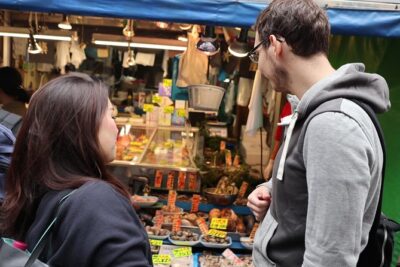
Tsukiji Fish Market Small-Group Food Walking Tour
Read our review →Browse the lists this tour appears in