
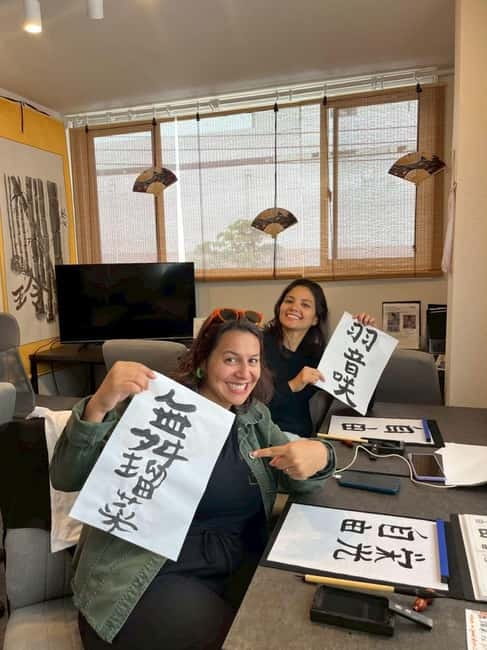
Reviewed · TOKYO TRADITIONAL CRAFT WORKSHOPS
Tokyo:Calligraphy &Make your original folding fan in Asakusa
The best part of this Asakusa activity is that you do not simply copy a Japanese character and leave. You learn how the brush works, practice basic strokes, and finish with a handmade folding fan carrying your own design. It turns a short cultural class into a useful souvenir.
I like the calm pace and the personal teaching from Mana, whose clear English and patient coaching have earned especially strong praise. I also like the small postcard ritual: with green tea, you write a note to your future self about the day. The main consideration is that the meeting point varies by option, and the activity is not suitable for wheelchair users.
Key points to know before you book
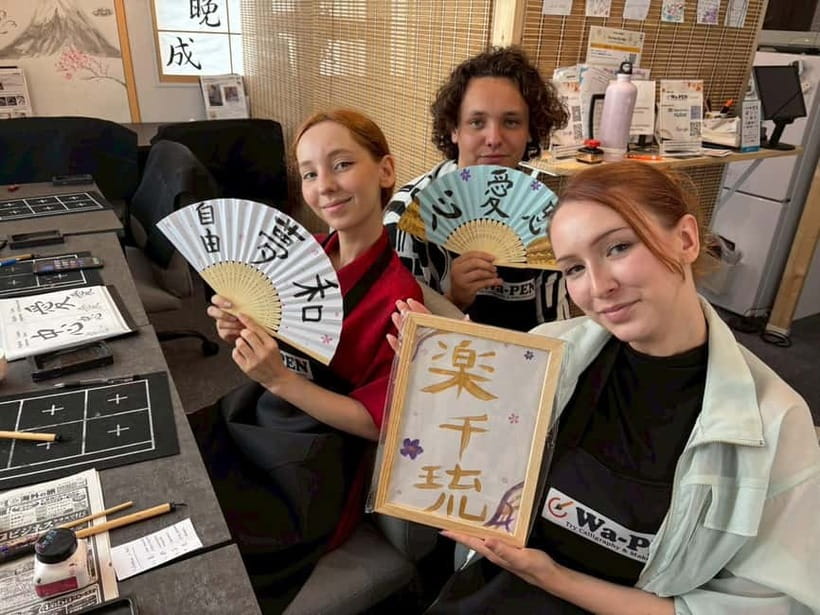
- Practice comes before the final design: You get about 30 minutes with guide sheets before working on your fan.
- Mana teaches the full process: Expect posture advice, brush handling, ink control, and help choosing kanji or hiragana.
- Your fan is the main souvenir: You can select a sample design or ask for help creating something personal.
- Green tea and a postcard slow the pace: The closing ritual gives the class a thoughtful finish.
- The price is modest: At $16 per person, this is a good-value creative break in Asakusa.
- Check your booking option carefully: Henna tattoo options do not include the calligraphy class, and T-shirt printing costs extra.
Why this Asakusa class feels more personal than a souvenir shop
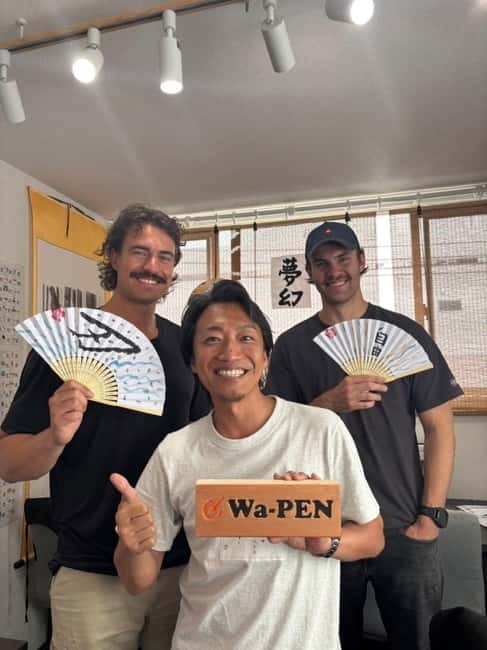
Asakusa can fill a morning with temples, shopping streets, snack stops, and crowds. This calligraphy session gives you a quieter hour to sit down and make something with your hands.
The focus is not on producing perfect Japanese lettering. You are learning the discipline behind it: how to sit, how to hold the fude brush, how much ink to load, and how a stroke changes with pressure and speed. That matters because Japanese calligraphy is not just decorative writing. The movement of the brush is part of the meaning and character of the work.
The class also introduces the background of Japanese calligraphy, kanji, and hiragana. Hiragana is the flowing Japanese syllabary often used in everyday writing, while kanji characters carry meanings that can make a souvenir feel more personal. You might work with a name, a meaningful word, or a character selected from the sample book.
The session is taught in English, which makes it a practical choice if you want more than a quick brush demonstration but do not speak Japanese. Mana is the named instructor associated with the experience, and her teaching style is patient and encouraging. She has helped children, older adults, couples, solo visitors, and complete beginners.
More Asakusa and Sensoji tours:
- Tokyo: Japanese Dance Cabaret Theater Asakusa-Kaguwa Ticket
★ 4.8 · 2,270 reviews - Tokyo: Meiji Shrine, Asakusa, Skytree Bus Tour and Cruise
★ 4.7 · 1,986 reviews - Tokyo: Roll and Authentic Sushi Making Class in Asakusa
★ 4.9 · 1,957 reviews
What happens when you arrive
Your meeting point depends on the option you book, so do not rely only on the general Asakusa area. Check the confirmation details carefully before setting out. The listed coordinates are 35.7162239, 139.7922354.
The class may last from 30 to 90 minutes, depending on the selected option and how much practice you need. That range matters. If you want a quick cultural activity between sightseeing stops, the shorter format may fit. If you want time to work through several designs, choose an option that allows a longer session.
Wear comfortable clothes that can tolerate a little ink. Aprons are provided, but the warning is worth taking seriously. Traditional ink can mark fabric, and one participant specifically wished for a towel at the end, so bringing a small hand towel would be sensible even though it is not listed as required.
Food and drinks are not allowed during the session. The green tea comes as part of the closing experience, rather than something to sip while you are handling ink and paper.
Starting with posture, brush, and ink
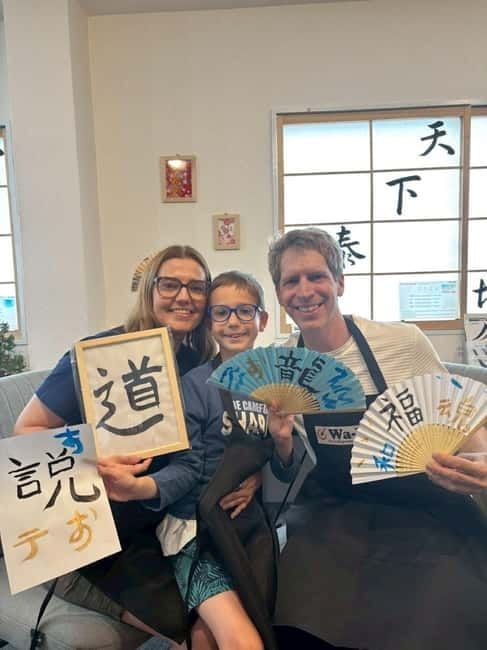
The class begins with the basics. You learn the appropriate attitude and posture for calligraphy, then see how to hold the brush and control the ink.
One distinctive detail is the use of a traditional solid ink stick. Instead of simply receiving a prepared bottle of ink, you use water to soften and melt the ink. This takes a little time, but it helps you understand that calligraphy begins before the brush touches paper.
The amount of ink matters. Too little produces a dry, broken stroke. Too much can make a character heavy and blurred. For a first-time visitor, this is one of the most useful parts of the lesson because it explains why a brush may behave differently from a normal pen.
You then work through about eight basic techniques with guide paper. The guides give you a structure to follow, which is helpful if Japanese characters are entirely new to you. You can concentrate on brush movement instead of guessing where each line begins.
This is also where the activity earns its meditative reputation. The work demands enough attention to pull you away from the noise of Tokyo, but the stakes are low. Your first attempts do not need to be good. They are there to teach your hand what to do.
Thirty minutes of practice before the fan
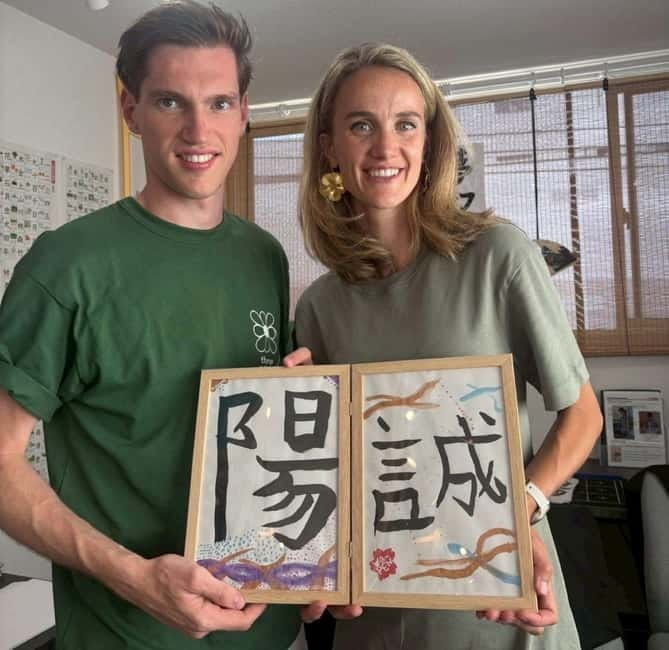
The practice period lasts about 30 minutes on thin paper, with staff nearby to correct your strokes and answer questions. That is a good balance for beginners. A short demonstration alone would leave you with a pretty object but little sense of how it was made.
You can repeat a character until the shape and brush movement feel right. The instructor can help you decide which version has the best balance, rather than simply accepting your first attempt. This is particularly useful for visitors who want to write a name in kanji or choose a character with a special meaning.
The goal is not strict classroom perfection. Calligraphy has room for expression, and your final work will carry signs of your own hand. I would treat the practice paper as part of the experience, not as wasted material. It gives you permission to make mistakes before committing to the fan.
Families should note that the activity can work for children. A six-year-old was able to take part with patient guidance, and the chance to learn the meaning of a name in Japanese adds a personal hook for younger participants. Still, children need to be comfortable sitting, listening, and handling ink carefully.
Older visitors can enjoy it too. The class does not require previous calligraphy experience, and one booking was made specifically for a grandmother who had long liked calligraphy but had never taken a proper class.
More Tokyo craft workshops:
- Tokyo Shinjuku Chopsticks Making Class
★ 5.0 · 1,763 reviews - Chopstick Making Workshop in Ginza
★ 4.8 · 1,366 reviews - Kintsugi Experience: Art of Golden Joinery in Tokyo
★ 5.0 · 467 reviews - Tokyo Chopstick Making Workshop with Artisan
★ 5.0 · 466 reviews
Choosing a word, name, or character
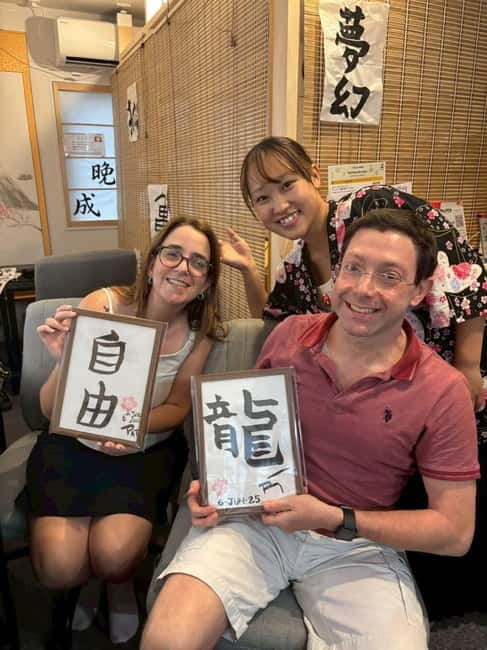
Once you have practiced, you choose the design for your final piece. You can select a favorite idea from a sample book or ask the instructor to help you create something suitable.
This is where the souvenir becomes more than a generic Japan-themed purchase. You might write your name in kanji, choose a word connected with your trip, or select a character whose meaning appeals to you. Ask about the meaning before you settle on a design. A character can look beautiful while carrying a meaning you did not expect.
You do not need to arrive with a finished idea. The instructor can guide you toward a design that fits your skill level and the space on the fan. If you are visiting with a partner or family member, comparing choices can also become part of the activity.
The final design may be written on the folding fan or on another prepared surface, depending on the option selected. The central promise is a one-of-a-kind fan that you can take home. If you want a larger display item, framed paper may also be available through the experience, but check the exact option before booking.
Making the original folding fan
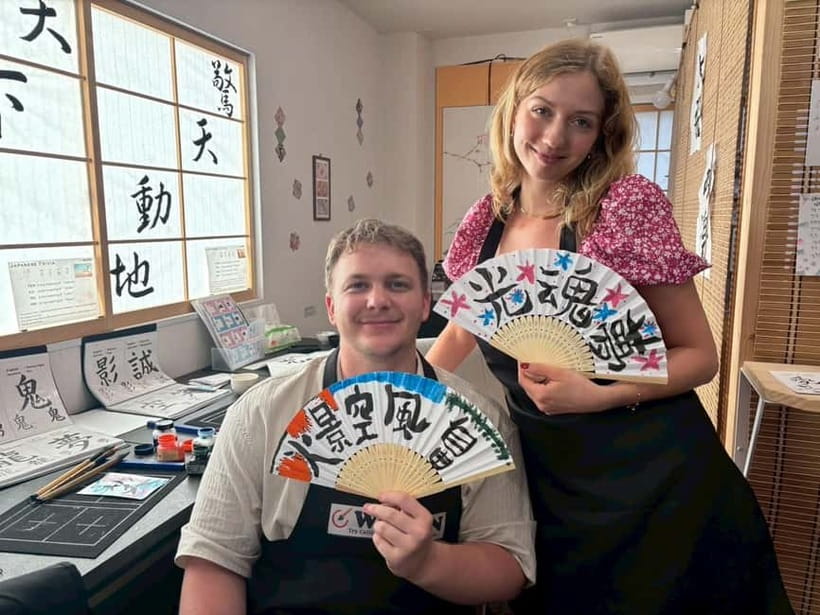
The folding fan gives the class a clear finish. You are not only practicing on disposable sheets. You are applying what you learned to an object that can travel home easily and remind you of Asakusa.
A fan is a practical souvenir for Japan because it is light, flat, and easy to pack. It also leaves room for the brushwork to be the main decoration. The result will not look machine-made, and that is part of its appeal. Small variations in line weight and ink density show that you made it yourself.
Give yourself enough time for this stage. Rushing the final strokes can spoil an otherwise enjoyable session. If your booking permits a longer stay, use the extra time to practice rather than treating the fan as a quick craft project.
Some visitors also ask about putting the calligraphy on a T-shirt. T-shirt printing is not included, and the clothing fee is separate. You can buy a T-shirt in the shop if that option is available to you. This is an optional extra, not part of the $16 core experience.
Green tea and a postcard to your future self
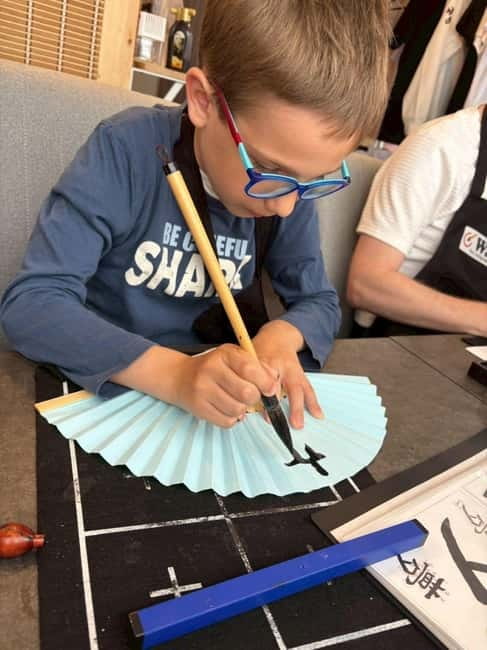
After the brushwork, you receive green tea and write a postcard to yourself. The idea is simple: describe what you felt during the calligraphy class, then send or keep the card as a reminder when you return home.
This small closing detail gives the activity more emotional weight than a standard craft lesson. The fan records what you made, while the postcard records how the trip felt at that moment. If you are nearing the end of your Japan visit, it can be a gentle way to pause before your final sightseeing day.
The postcard also makes the class work well as a personal travel memory rather than a group-only activity. You do not need to buy a separate souvenir for someone at home. You are making something for yourself, with the chance to look back on the experience later.
The green tea is served after the ink work, so you can enjoy it without worrying about spilling it over your paper. Do not expect a full tea ceremony. This is a short refreshment and reflection period, not a formal tea lesson.
The value of $16 in expensive Tokyo
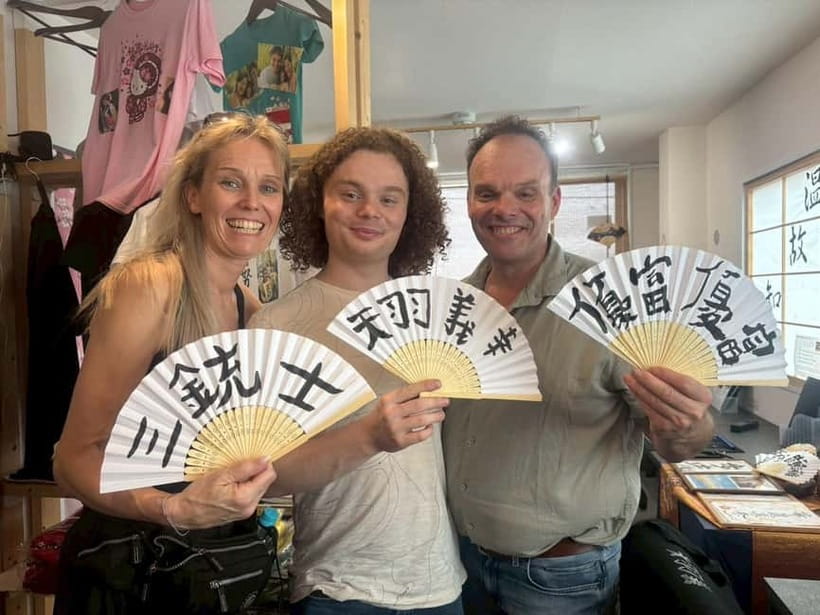
At $16 per person, this is a strong value if the core activity matches what you want from a Tokyo afternoon. You receive instruction, practice materials, ink work, help with a custom design, green tea, a postcard, and an original folding fan.
Many low-cost cultural activities give you a brief demonstration and a preselected souvenir. Here, the time spent practicing is the important difference. You are paying for access to guidance, not just materials.
The price is especially attractive for families and couples who want a shared activity without committing to a long class. It is also a useful rainy-day or hot-weather option. The class takes you off the streets for a creative break without taking half a day.
There are limits. The listed duration can range from 30 to 90 minutes, so the exact value depends on your selected option. T-shirt printing costs extra, and a henna tattoo option excludes calligraphy altogether. Read the option names closely before paying, especially if the fan is your main reason for booking.
Who will enjoy it most
I would recommend this activity to:
- First-time visitors who want a hands-on introduction to Japanese culture
- Solo visitors looking for a calm activity with personal instruction
- Couples who want matching or contrasting keepsakes
- Families with children who can follow basic instructions
- Older adults who have an interest in brushwork or traditional arts
- Anyone seeking a light, packable souvenir with personal meaning
It is less suitable if you want a formal, advanced calligraphy lesson. The class is designed for beginners and short-term visitors, not for people seeking rigorous artistic training.
It is also not suitable for wheelchair users according to the activity information. If accessibility is essential for your group, contact the provider before booking rather than assuming the venue can accommodate you.
Timing, clothing, and booking details
The activity offers free cancellation up to 24 hours before the start time, and you can reserve now and pay later. Those policies help if your Tokyo schedule is still shifting, but you still need to confirm the exact start time and meeting point for your chosen option.
Plan to arrive in clothes that can get a little dirty. An apron is supplied, but ink is the one practical nuisance that deserves attention. Avoid bringing pets, although assistance dogs are allowed.
English instruction is provided. The instructor’s clear communication is especially useful when you are learning the meaning of a character, since a small misunderstanding could affect the design you put on your final fan.
Should you book this calligraphy experience?
Book it if you want a quiet, personal break from Asakusa sightseeing and like the idea of making a souvenir rather than buying one. The $16 price, patient instruction from Mana, practice time, green tea, postcard, and folding fan make it one of the more useful short activities for beginners.
Skip it if you dislike seated craft activities, need wheelchair access, or mainly want a henna tattoo. Also check the booking option carefully if you want T-shirt printing, since that costs extra and the henna option does not include calligraphy.
For most visitors, the fan is the deciding factor. It is light enough to carry, personal enough to remember, and backed by an actual experience rather than a shop receipt.
FAQ
How much does the calligraphy and folding fan activity cost?
The listed price is $16 per person.
How long does the activity last?
The duration is listed as 30 to 90 minutes. Available start times and the exact length depend on the option you book.
Is the experience taught in English?
Yes. English instruction is provided, and Mana is identified as the instructor.
Do I need previous calligraphy experience?
No previous experience is stated as necessary. The session teaches posture, brush use, ink control, basic techniques, and practice with guide paper.
Will I make a folding fan?
Yes. The experience includes making an original folding fan with your calligraphy.
Can I choose what to write?
You can choose a favorite design from a sample book or ask the instructor for help with a custom design. You may also learn to write a name in kanji or other Japanese characters.
Is green tea included?
Yes. Green tea is included toward the end of the experience, along with time to write a postcard to yourself.
What should I wear?
Wear comfortable clothes that can get a little dirty from ink. Aprons are provided, but ink-safe clothing is still recommended.
Is T-shirt printing included?
No. Printing your calligraphy design on a T-shirt is not included. A T-shirt and clothing fee are separate, and you can buy a T-shirt in the shop if available.
Can I choose the henna tattoo option and still take the calligraphy class?
No. If you select the henna tattoo option, the calligraphy experience is not included.
Is the activity suitable for wheelchair users?
No. The activity is listed as not suitable for wheelchair users.
Can I cancel for a refund?
You can cancel up to 24 hours in advance for a full refund. The activity also allows you to reserve now and pay later.
More Tokyo calligraphy classes
- Tokyo: Calligraphy on Kanji Fan & Scroll with Drink
★ 5.0 · 210 reviews - Let’s experience calligraphy in YANAKA, Taito-ku, TOKYO !!
★ 5.0 · 127 reviews - Experience all of Japanese culture and Japanese food experience classes “origami, udon, Japanese food, green tea, calligraphy” in 4 hours
★ 5.0 · 105 reviews - Tokyo: Calligraphy Workshop & Original T-Shirt Creation
★ 4.9 · 105 reviews
Newly reviewed around Tokyo
- Tokyo Asakusa:Calligraphy & Make T-shirt Activity★ 5.0 · 62 reviews
- Intercity Shuttle, Tokyo to Haneda /Narita /Yokohama /Makuhari★ 5.0 · 5 reviews
- 1 Hour Travel around Tokyo with a Professional Photographer★ 5.0 · 3 reviews
- Travel Tokyo with Your Own Personal Photographer★ 5.0 · 43 reviews
- Train in Samurai Swordsmanship and Defeat the Demon in Tokyo★ 5.0 · 5 reviews
- Shuttle Van 6hr Tokyo Tour to-and-from Tokyo, Yokohama and Narita★ 5.0 · 9 reviews
- Kickboxing & Body Training with EX-Pro Fighter★ 5.0 · 4 reviews
- Traditional Japanese Knife Sharpening Class★ 5.0 · 18 reviews
Tokyo Traditional Craft Workshops, compared.
Kintsugi Experience: Art of Golden Joinery in Tokyo
Read our review →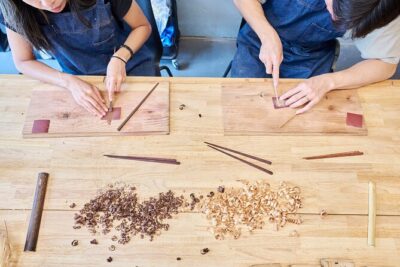
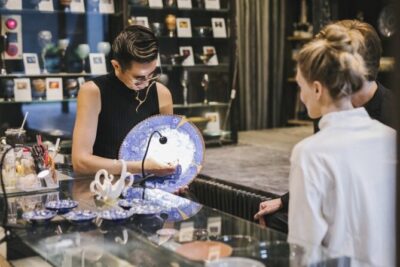
Authentic Pure Gold Kintsugi Workshop with Master Taku in Tokyo
Read our review →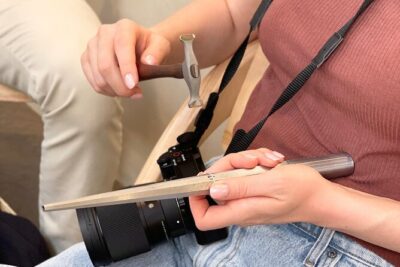
Private Handmade Ring Workshop Activity in Tokyo Shibuya
Read our review →
Browse the lists this tour appears in