
Reviewed · TOKYO SAMURAI AND NINJA EXPERIENCES
Tokyo:Samurai sword and archery class from a samurai descendant
The unusual part of this Tokyo activity is that it is not a staged sword show. At a dojo in Machida, samurai descendant Yoshioki Sumida teaches sword handling, forms, sparring, test cutting, and archery. You work through real techniques in training clothes, with safety and discipline taken seriously.
I like the small-group format, which gives Sumida-sensei time to correct your stance and timing. I also like the mix of sword and bow work: you learn about katana construction, practice with mock swords, cut targets, and try the weapon that samurai used from horseback and on foot. The main drawback is effort. This is a physical class, and you may be sore for a day or two.
Key points to know before booking
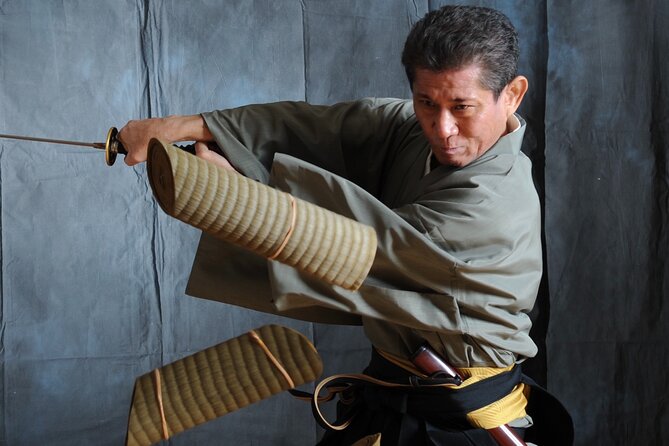
- A working dojo, not a stage show: You train at a martial arts facility and watch a serious Toyama-ryu demonstration.
- Four different sword activities: The lesson covers iai forms, attack and defense drills, sparring, and target cutting.
- Archery is part of the class: You get to handle a real bow and arrow, not just pose with one.
- Master Yoshioki Sumida teaches the class: His instruction combines sword technique, samurai culture, and practical safety.
- Plan extra travel time: The dojo is in Machida, and one participant needed about 1.5 hours from Tokyo Daiba.
- You need to work: The class lasts about 2 hours 30 minutes and can leave your arms and body tired.
A real dojo experience in Machida
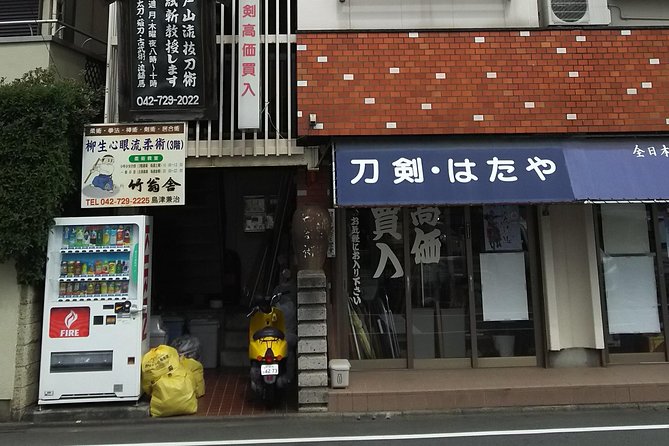
This class takes place at 3-chome-14-14 Haramachida in Machida, Tokyo. That is outside the sightseeing core most people picture when they hear Tokyo, so do not treat the address as a quick walk from Shibuya or Asakusa. One useful account described a journey of about 1.5 hours from Tokyo Daiba. Give yourself plenty of time, since the studio can be a little hard to find.
That extra journey is part of the trade-off. You are not being dropped into a theatrical samurai attraction near a major tourist district. You are going to a dojo where people train. The setting gives the lesson a more serious feel, but it also means this activity works best when you set aside most of an afternoon.
The class allows up to 15 people. That is still a small enough group for personal instruction, especially compared with a large performance or photo session. The exact amount of individual time can depend on attendance, but the format is designed around teaching rather than watching.
More Tokyo samurai and ninja experiences:
- Tokyo: Samurai Ninja Museum Guided tour and Experience
★ 4.6 · 1,010 reviews - Tokyo: Samurai Sword & Archery Class from Samurai Descendant
★ 5.0 · 603 reviews - Best Samurai Experience in Tokyo
★ 5.0 · 458 reviews
Changing into training clothes and learning the blade
When you arrive, you receive a short introduction and change into practice wear. The operator asks for your height and weight in advance so the training clothes can be prepared. This is a small practical detail, but it helps the session begin without a long fitting delay.
The first lesson concerns the Japanese sword itself. You learn about the parts of a katana, how it is constructed, and how it is handled. Some sessions also include seeing how a sword is assembled and disassembled. That background matters because the class does not treat the sword as a costume prop. You begin to understand why the blade, grip, scabbard, and cutting line all affect the way it is used.
You should listen closely at this stage. The sword work later in the class depends on posture, hand position, footwork, and control. Sumida-sensei is described as patient, encouraging, and careful about safety, but the class expects you to pay attention and follow directions.
All required practice equipment is supplied. That includes the uniform, practice sword, bokken, and a real bow and arrow. The listing also refers to a mock sword for exercises and a mock sword for sparring. The equipment changes with the activity, so you are not using a sharp blade while learning basic movements.
Iai forms: learning to move the sword correctly
The iai section introduces the basic handling and swinging of the mock sword. You practice kata, or formal movement patterns, with attention to the sword line and body position. The point is not to swing hard. It is to learn controlled movement that would be impossible to perform safely without proper form.
This part can look simple until you try it. Keeping the blade on the correct line while moving your feet and maintaining balance takes concentration. You may find that your shoulders tense up or your hands do too much of the work. That is exactly why instruction matters here.
I like this section because it gives you something more useful than a quick sword pose. You begin to see that Japanese swordsmanship is built on repetition and precision. A beginner will not leave with mastery, but you will understand why the art demands discipline.
Gekken sparring with practice swords
The gekken section shifts from solo forms to attack and defense. You learn the timing of a strike, how to respond to an attack, and how to spar with a practice sword. The sparring uses a mock or foam sword, according to the information provided, rather than a live blade.
This is usually the most playful part of the class, but it still requires control. You must listen for the instruction, watch your partner, and avoid treating the exercise like a wild movie fight. The aim is to practice timing and movement, not to overpower someone.
Some sessions include sparring with Sumida-sensei himself. That can be memorable, but you should expect him to expose gaps in your defense rather than simply let you win. The lesson remains friendly, yet the teacher uses the exercise to show how quickly poor timing leaves you open.
For families and friends, this section adds a social element. A parent and son, couples, and groups of friends can train together without needing prior martial arts experience. Still, children and adults should be ready to follow safety instructions and concentrate.
More Tokyo martial arts classes:
- Tokyo 2-Hour Genuine Samurai Experience: Kendo in Japan
★ 5.0 · 112 reviews - Tokyo: Samurai Kendo Practice Experience
★ 4.7 · 102 reviews - Samurai Experience – Learn Bushido through Kendo, in Tokyo
★ 5.0 · 88 reviews - Tokyo: Japanese Archery (Kyudo) Experience
★ 5.0 · 78 reviews
Test cutting takes more skill than it looks
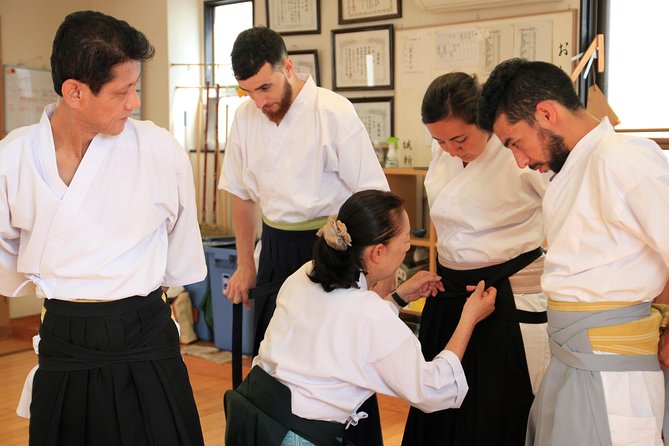
The class also lets you check the blade line and try test cutting. You slash prepared targets while moving, an exercise the description openly calls difficult. This is one of the strongest reasons to book the class, but it is also where you should keep your expectations realistic.
A successful cut is not about brute strength. The angle, distance, grip, timing, and follow-through all matter. A participant who arrived expecting an easy movie-style cut found that using a sword properly was much harder than it looked. That is a useful warning: the first attempt may feel awkward, and a clean cut is an achievement, not a guaranteed photo opportunity.
The sword used for cutting should be treated with full seriousness. Listen to the instructor, wait for your turn, and do not improvise. The class places strong emphasis on safety, and that is appropriate when live cutting is part of the program.
This activity gives you a direct sense of the discipline behind swordsmanship. Even a simple target reveals whether your blade travels correctly. You leave with more respect for the mechanics of the sword, not just the image of a samurai holding one.
Trying a traditional bow and arrow
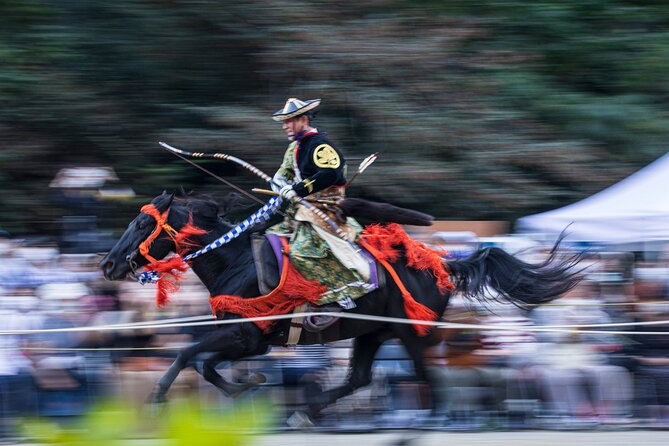
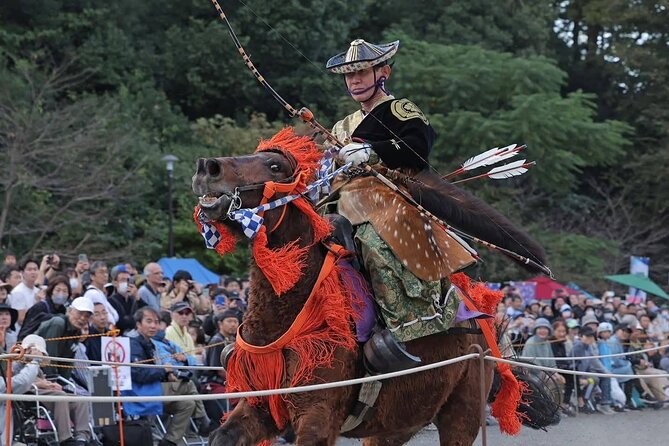
The archery portion adds welcome variety. You get to try a real bow and arrow, described as the main weapon of the samurai 1,000 years ago. The experience is not limited to sword culture, and that broader view helps correct the modern image of samurai as sword-only warriors.
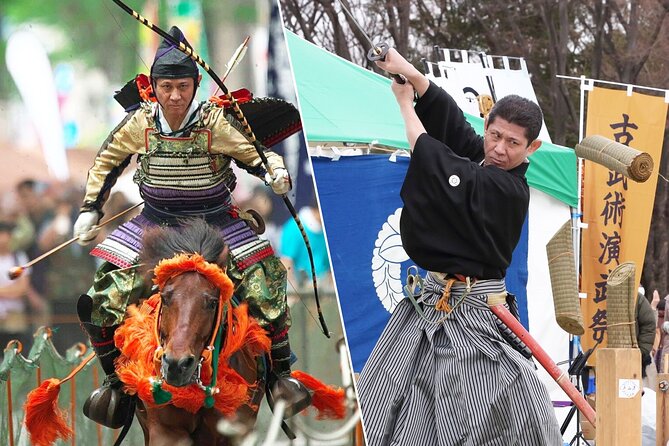
The class is led by an instructor with experience in swordsmanship and horseback archery. The available information does not promise a full mounted archery session, so you should book this for the chance to learn and try the bow, not for riding or a horse show.
Archery uses a different kind of focus. The sword sections ask you to coordinate movement and a blade line. The bow asks you to control your body, draw, aim, and release. Trying both in one session shows how varied martial training can be.
The Toyama-ryu demonstration
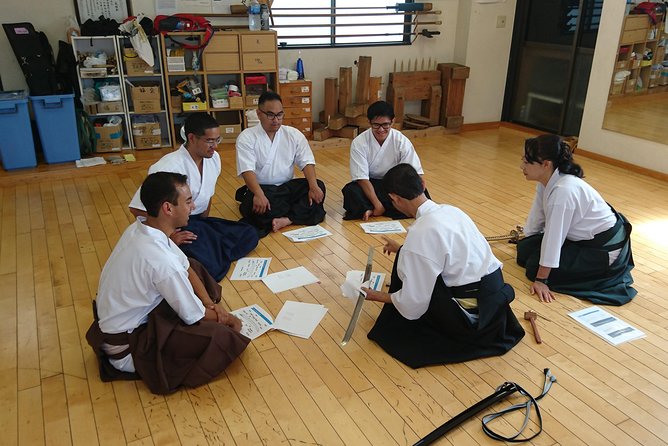
You also have the chance to watch a live demonstration of Toyama-ryu, including a seventh-grade practitioner. This is not presented as entertainment, and that distinction matters. The demonstration includes difficult techniques that you are unlikely to perform during a first visit.
Watching an expert after trying the basics yourself gives the demonstration more meaning. You have already felt how hard it is to keep a mock sword aligned, defend against a partner, or cut a target. The advanced movements no longer look like simple choreography.
The demonstration also helps place your own effort in context. You will not become a samurai master in 2 hours 30 minutes. You will get a demanding introduction, a taste of several disciplines, and a better understanding of the years required to perform them well.
How the time is likely to feel
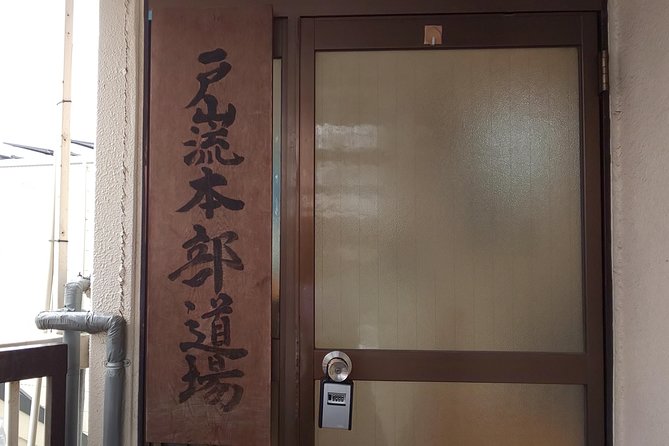
The advertised duration is about 2 hours 30 minutes. The session is divided into several sections, with little idle time between activities. That is good value for anyone who dislikes spending half a tour waiting for the next photo opportunity.
A typical flow includes:
- A short talk on swords, samurai culture, and equipment
- Changing into the practice uniform
- Iai forms with a mock sword
- Gekken attack and defense drills
- Sparring with practice swords
- Blade-line practice and target cutting
- Bow and arrow practice
- A Toyama-ryu demonstration
The order can vary, and the amount of time spent on each part may depend on the group. The key point is that you are active for much of the visit. Wear clothing that will be comfortable under the practice uniform, and plan for physical effort rather than a quiet museum lesson.
Several participants found themselves sore the following day. I would not book this immediately before a long hike, an intensive theme-park day, or another demanding martial arts class unless you are comfortable with that possibility.
What the $198.20 price buys you
At $198.20 per person, this is not a cheap add-on. The value depends on what you want from a samurai experience. If you only want a costume photograph or a short sword demonstration, you can likely find a simpler and less expensive activity.
The price makes more sense if you want several hours of instruction, supplied clothing and equipment, live practice, test cutting, archery, and a demonstration from a trained practitioner. You are paying for access to a specialist-led class rather than a brief tourist performance.
The small-group setting also matters. A class capped at 15 people can give you more correction and interaction than a mass-market attraction. You are not just watching someone else use a sword. You handle the equipment, repeat the movements, and discover which parts are difficult.
There is one cost detail to check before booking. Facility charter fees may occur, and exclusive rental of the facility requires contacting the provider. If you are booking a private group, ask for the exact total first. The advertised per-person price should not be assumed to include a private dojo booking.
Who will enjoy this most
I would recommend the class to you if you have a serious interest in samurai culture, Japanese martial arts, or hands-on learning. It suits first-timers as well as people with some martial arts experience, since the instruction starts with basic handling and builds through several exercises.
It is also a strong choice for families with older children, couples, and friends who want an activity with more substance than a standard photo stop. A son and his friend enjoyed learning sword handling, archery, and sparring, while older participants appreciated the patient instruction. The class can work for people who do not usually play sports, provided they are willing to concentrate and move.
You should think twice if you dislike physical activity, have limited ability to stand and swing, or want a relaxed cultural talk. The available information says most people can participate, but it does not provide a detailed medical or mobility policy. Ask the operator before booking if you have a condition that could affect sword or archery practice.
Getting there and preparing for the visit
The meeting point is 3-chome-14-14 Haramachida, Machida, Tokyo 194-0013. It is near public transportation, but the studio may take some searching once you reach the area. Leave a generous buffer, especially if you are coming from central Tokyo or Tokyo Daiba.
You receive confirmation when you book. Send your height and weight as requested so the practice uniform can be prepared. The activity ends back at the meeting point, so plan your onward route from the dojo rather than from a central Tokyo station.
The class requires good weather. If poor weather forces cancellation, you will be offered another date or a full refund. You can cancel for a full refund up to 24 hours before the local start time. Changes or cancellations made inside that 24-hour window are not accepted for a refund.
Is this authentic enough for the price?
The word authentic is overused in tourism, but this class earns it in a practical sense. You train in a dojo, use the correct practice equipment, learn formal movements, and receive instruction from Yoshioki Sumida, a samurai descendant and master of swordsmanship and horseback archery.
That does not mean you are living a samurai life for an afternoon. You are taking a structured modern class, and the session cannot reproduce the social world or battlefield conditions of historical Japan. What it can do is give you a physical understanding of the tools, discipline, and coordination behind the tradition.
The strongest feature is the balance between explanation and practice. You learn about sword construction and culture, then test your understanding with forms, sparring, cutting, and archery. The best moments come when a task that looked easy suddenly requires full concentration.
Should you book this samurai class?
Book it if you want an active, serious introduction to Japanese swordsmanship and you are willing to travel to Machida. The class is especially good for you if a real dojo, patient instruction, target cutting, and archery sound more appealing than a polished stage show.
Skip it if you want a quick attraction in central Tokyo, a purely historical lecture, or an effortless photo session. At $198.20, the class needs to be a major activity in your day, not a casual filler.
For the right visitor, this is one of the more rewarding ways to connect with samurai culture. You leave tired, more aware of the work behind the sword, and with a much clearer sense that the elegant movements seen in demonstrations are the result of years of training.
FAQ
Where does the samurai sword and archery class take place?
The meeting point is 3-chome-14-14 Haramachida, Machida, Tokyo 194-0013, Japan. The activity ends back at the meeting point.
How long does the experience last?
The class lasts approximately 2 hours 30 minutes.
What activities are included?
You learn about Japanese swords and samurai culture, practice iai forms, work on attack and defense timing, spar with practice swords, try target cutting, practice with a bow and arrow, and watch a Toyama-ryu demonstration.
Is equipment provided?
Yes. The included equipment is a practice uniform, practice sword, bokken, and real bow and arrow. You should provide your height and weight so the uniform can be prepared.
How many people can join the class?
The activity has a maximum of 15 participants.
Can I cancel for a refund?
You can cancel at least 24 hours before the local start time for a full refund. Cancellations and changes made less than 24 hours before the start time are not accepted for a refund. If poor weather causes the operator to cancel, you will be offered another date or a full refund.
More hands-on classes and workshops in Tokyo
- Sushi Making Tokyo Roll and Authentic Japanese Sushi Class
★ 5.0 · 3,971 reviews - Tokyo: Roll and Authentic Sushi Making Class in Asakusa
★ 4.9 · 1,957 reviews - Tokyo Shinjuku Chopsticks Making Class
★ 5.0 · 1,763 reviews - Tokyo: Sushi Making Class in a Happi Coat near a Famous Spot
★ 4.9 · 1,377 reviews
Newly reviewed around Tokyo
- Tokyo Asakusa:Calligraphy & Make T-shirt Activity★ 5.0 · 62 reviews
- Intercity Shuttle, Tokyo to Haneda /Narita /Yokohama /Makuhari★ 5.0 · 5 reviews
- 1 Hour Travel around Tokyo with a Professional Photographer★ 5.0 · 3 reviews
- Travel Tokyo with Your Own Personal Photographer★ 5.0 · 43 reviews
- Train in Samurai Swordsmanship and Defeat the Demon in Tokyo★ 5.0 · 5 reviews
- Shuttle Van 6hr Tokyo Tour to-and-from Tokyo, Yokohama and Narita★ 5.0 · 9 reviews
- Kickboxing & Body Training with EX-Pro Fighter★ 5.0 · 4 reviews
- Traditional Japanese Knife Sharpening Class★ 5.0 · 18 reviews
Tokyo Samurai and Ninja Experiences, compared.
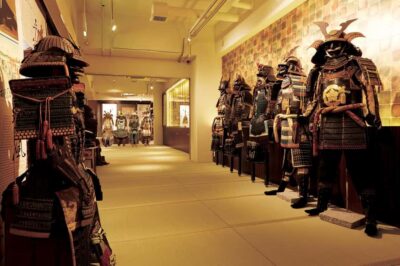
Samurai Ninja Museum Guided tour and Experience
Read our review →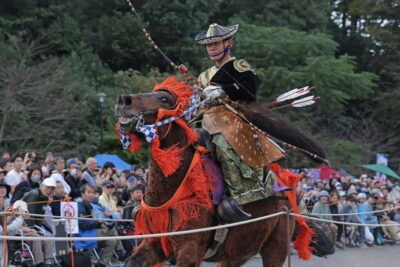
Samurai Sword & Archery Class from Samurai Descendant
Read our review →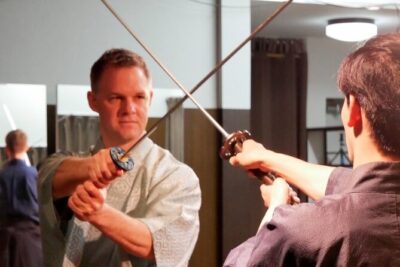
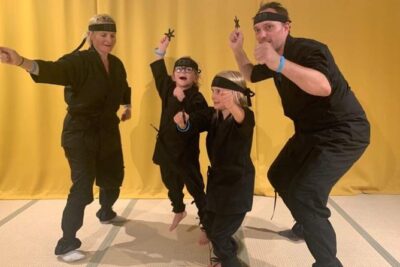
Ninja Experience (Family Friendly) at Samurai Ninja Museum TOKYO
Read our review →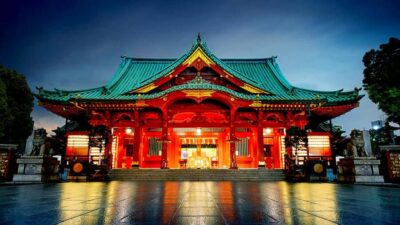
Samurai Entertainment Night Show in Kanda Shrine
Read our review →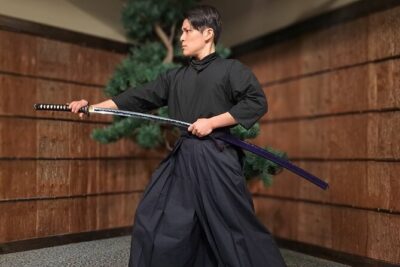
Tokyo Sword Experience – includes Museum Ticket/Ninja Experience
Read our review →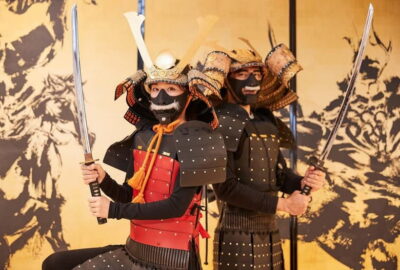
Samurai Ninja Museum Asakusa: Samurai Sword Lesson & Tour
Read our review →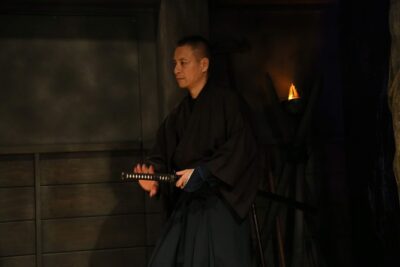
Ninja Samurai 2-hour hands-on lesson by Japanese master in Tokyo
Read our review →Browse the lists this tour appears in