
Reviewed · TSUKIJI AND TOYOSU FISH MARKET TOURS
Tokyo: Tsukiji walk & sushi private tour with Uni Students
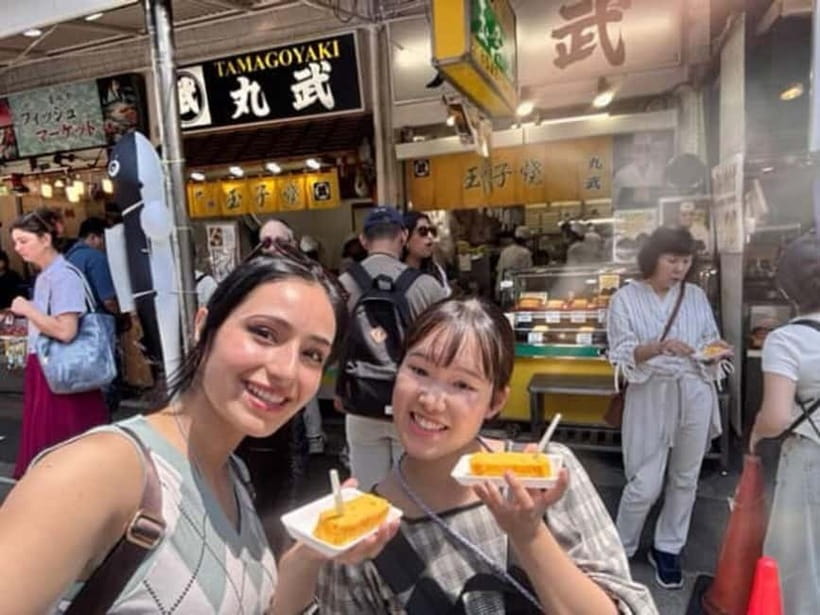
Tsukiji is best understood by walking it with someone who knows its family stalls, food customs, and narrow lanes. This private tour pairs you with a Tokyo university student, sometimes two or three, for a temple visit, market walk, and sushi lunch. Some guides, including Nonoka, grew up around the market and have family connections there.
I like the local family ties and the chance to ask real questions about Japanese life, not just hear a memorized script. I also like that the price includes tamagoyaki and sushi, with guides sometimes helping you find popular stalls and manage long lines.
The main consideration is communication. Your guide speaks English, but is still studying it, so conversations can be less polished than on a professional guide service. That is part of the exchange, but you should come ready for patience, gestures, and a relaxed pace.
Key points to know before booking
- Meet at Tsukiji Hongwanji Temple: The main gate is just outside Exit 1 of Tsukiji Station on the Tokyo Metro Hibiya Line.
- Eat lightly beforehand: Tamagoyaki and sushi are included, and extra market snacks can quickly fill you up.
- Expect a genuine student exchange: Guides such as Teddy, U, Nonoka, Kiko, Nono, Yuri, Risa, Kaho, and Yuta have led recent tours, though your guide depends on the date.
- The market visit lasts about 90 minutes: You will walk through Tsukiji Outer Market, where food professionals shop and work.
- Raw seafood is part of lunch: Sushi and sashimi may be included, so this tour is not suited to someone avoiding raw food.
- Bring comfortable shoes: Tsukiji is a walking tour, and the schedule may change in rain.
Why a student guide changes the Tsukiji experience
Tsukiji Outer Market is easy to visit on your own, but it is not always easy to understand. You can walk past grilled seafood, dried goods, knives, sweets, and sushi counters without knowing what matters, who shops there, or how to behave in a tight food market.
A university student gives the visit a different tone. You can ask about school, family, food habits, Japanese culture, and how a young person in Tokyo sees the world. The private format helps because you are not competing with a large group for conversation.
The guides are not presented as professional interpreters. They are students practicing English, and their language skills can vary. I see that as both the appeal and the trade-off. You get a friendly cultural exchange rather than a perfectly polished lecture.
Several guides have especially useful local links. Nonoka, also called Nono, has family connections to a market shop that goes back three generations. That can bring you closer to the people who work in Tsukiji, though you should not assume every departure includes her or a family shop visit.
More Tsukiji and Toyosu fish market tours:
- Tokyo Tsukiji Fish Market Food and Culture Walking Tour
★ 5.0 · 3,184 reviews - Tokyo: Tsukiji Fish Market Food and Walking tour
★ 5.0 · 1,724 reviews - Tokyo: Tsukiji Fish Market Guided Walking Tour
★ 4.9 · 1,397 reviews
Starting at Tsukiji Hongwanji Temple
You meet at the main gate of Tsukiji Hongwanji Temple, where the guide holds a sign with your name. This is a sensible meeting place because the temple sits just outside Exit 1 of Tsukiji Station. You do not need to search through the market streets at the start.
The temple portion lasts about 30 minutes. You will enter the grounds, learn about the site, and have time to worship. This gives the tour a useful opening: before eating, you get a short introduction to a place of religious and cultural importance.
The temple is not simply a quick photo stop. Your guide can explain how worship works and help you approach the space respectfully. Since the guides are Japanese university students, the conversation may also touch on how young people relate to religion and tradition today.
Thirty minutes is enough for an introduction, but not enough for a long architectural or historical study. If your main interest is temple art, religious history, or detailed architecture, you may want a separate visit with more time. Here, the temple works as a cultural starting point before the food-focused part of the morning.
Walking Tsukiji Outer Market for 90 minutes
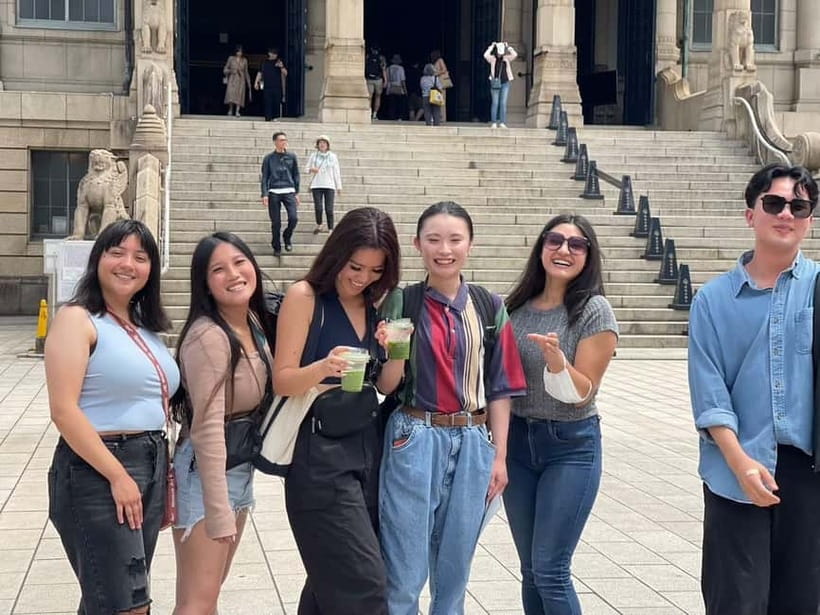
The main portion is a guided walk through Tsukiji Outer Market. The old wholesale fish market moved to Toyosu, but the Outer Market remains a place where food businesses and local shoppers buy ingredients. That distinction matters. You are not visiting the former wholesale auction site, and this tour does not take you to Toyosu.
Instead, you explore the lanes where shops sell seafood, prepared foods, dried ingredients, sweets, and other cooking supplies. The exact stops can change, and the market schedule may affect what is open. A local guide helps you focus on places that fit the day rather than trying to cover every lane.
The narrow streets reward a guide who knows how to move through them. Nono and Yuri were praised for knowing stall owners and for helping with food choices. Other guides, including Nonoka and Yuta, have been described as well prepared and comfortable navigating the market.
You may also find that your guide helps you wait in line. This is a small but valuable service in a popular food district. One account described skipping a long sushi line through a local connection. You should treat that as a possible benefit, not a guaranteed part of every tour.
The market walk is also where the private format earns its keep. You can stop to ask what a food is, how it is eaten, or why it matters. You can ask your guide to explain something twice without holding up a larger group.
Namiyoke Inari Jinja and the working market
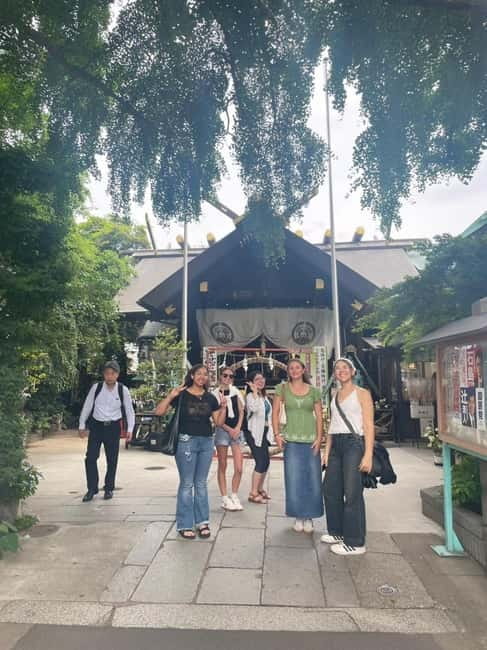
Namiyoke Inari Jinja is included as another guided stop. This shrine has a clear link to the market area and adds another layer to the morning. After the temple, it helps you see that Tsukiji is not only a place to eat. It is also a community shaped by work, worship, family businesses, and long-standing customs.
The provided schedule does not assign a fixed duration to the shrine, so expect a short visit within the market route rather than a major standalone excursion. Your guide can explain the site in the context of Tsukiji and its food workers.
This is one of the tour’s strengths: the religious stops are brief but connected to everyday life. You are not spending three hours on food samples alone. You are getting a compact look at the area’s spiritual and commercial sides.
More Tokyo walking tours:
- Tokyo: Imperial Palace and Shogun Historical Walking Tour
★ 5.0 · 2,251 reviews - Tokyo: Shinjuku Local Bar and Izakaya Guided Walking Tour
★ 4.9 · 1,794 reviews - Tokyo: Asakusa Walking Tour with Sensoji Temple Visit
★ 4.8 · 1,583 reviews - Tokyo Castle & Imperial PalaceーShogun Walking Tour
★ 4.7 · 1,068 reviews
What you actually eat: tamagoyaki, sushi, and more
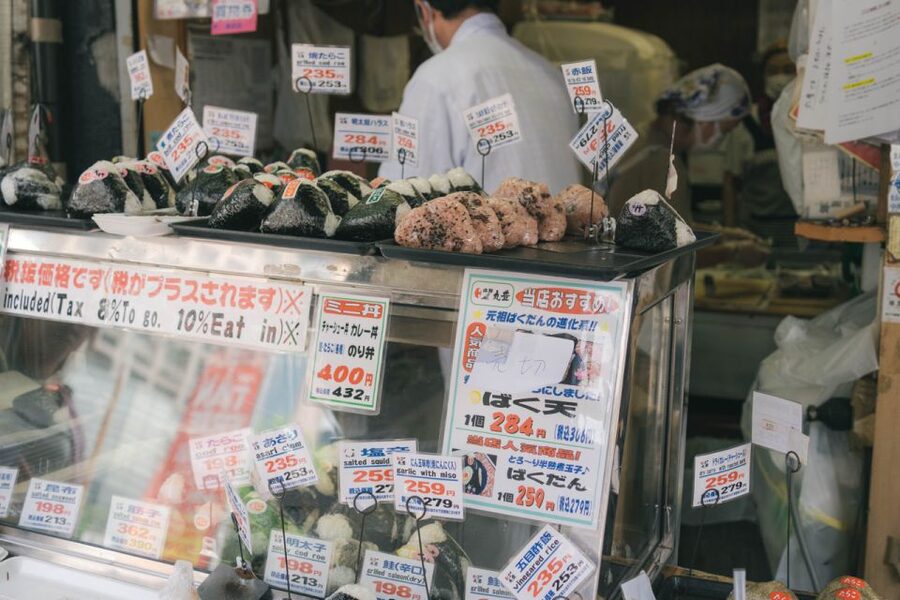
Tamagoyaki and sushi are included in the tour price. Tamagoyaki is a rolled Japanese omelet, often lightly sweet and cooked in layers. It is a classic market food and an easy way to begin tasting Japanese cuisine without committing to raw seafood.
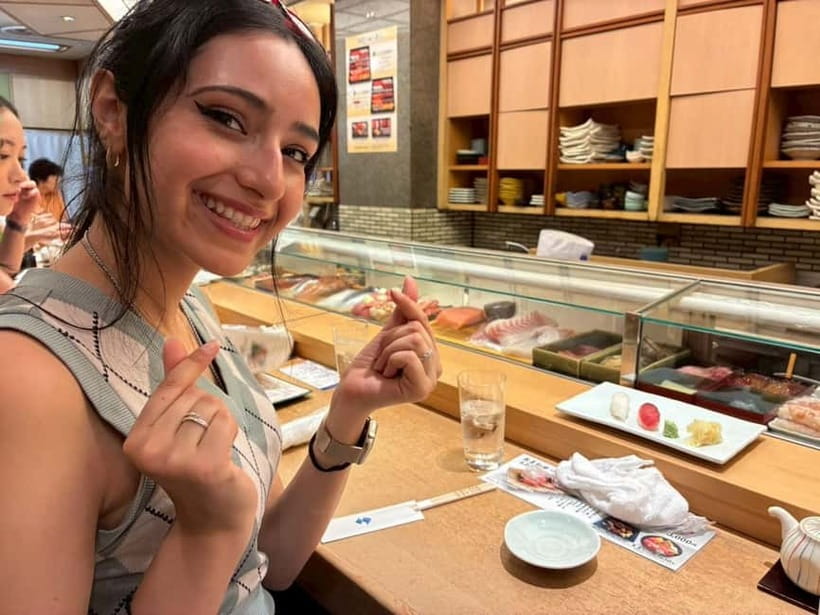
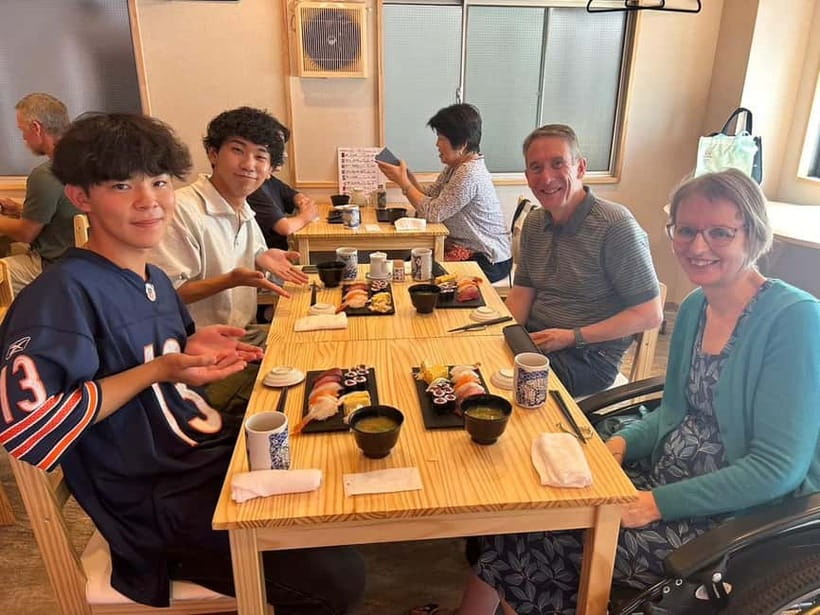
Lunch takes place at a local sushi restaurant, where you eat sushi in the traditional style of a Japanese sushi restaurant. Sashimi may also be part of the meal. One detailed account described choosing chutoro, a prized fatty tuna cut, along with drinks and other market foods, but the exact selection can vary.
The official inclusions are tamagoyaki and sushi. Drinks and food beyond those items are not included, so keep some yen available if you want to add dried scallops, sweets, ice cream, red bean fish cake, or other market treats.
The food stops can be quite generous for a three-hour walking tour. People have enjoyed sushi rolls, sashimi, tamago, and other tastings, but you should not arrive after a large breakfast. The advice to come with an empty stomach is practical, not decorative.
Raw food is included. If you do not eat raw seafood, have allergies, or need a special diet, this may not be the right booking unless the provider confirms an alternative. The supplied details do not promise substitutions.
How much conversation should you expect?
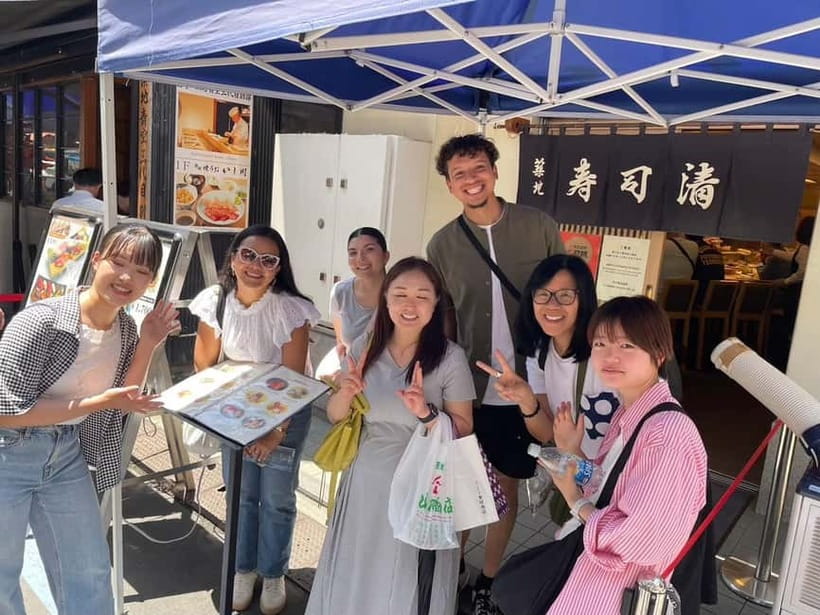
The tour is designed for communication as much as sightseeing. You can ask your guide about Japanese culture, student life, the market, local eating habits, and the way young people view the world around them.
The quality of that exchange depends partly on your guide and partly on your approach. Teddy has been described as outgoing and able to discuss Japan beyond Tsukiji. U was praised for creating a good cultural exchange, while the pair of students on one tour brought humor and plenty of conversation.
English is spoken, but the guides are still studying. If you need precise historical detail or fluent explanations of complicated topics, you may need to ask short questions and confirm what you have understood. A phone translation app could be useful, though the tour is meant to be a human exchange rather than a scripted audio guide.
I would choose this experience if you enjoy meeting people and learning through conversation. I would not choose it if you want a formal lecture, exact timings at every stop, or a guide with specialist training in Japanese food history.
Is $87 a fair price?
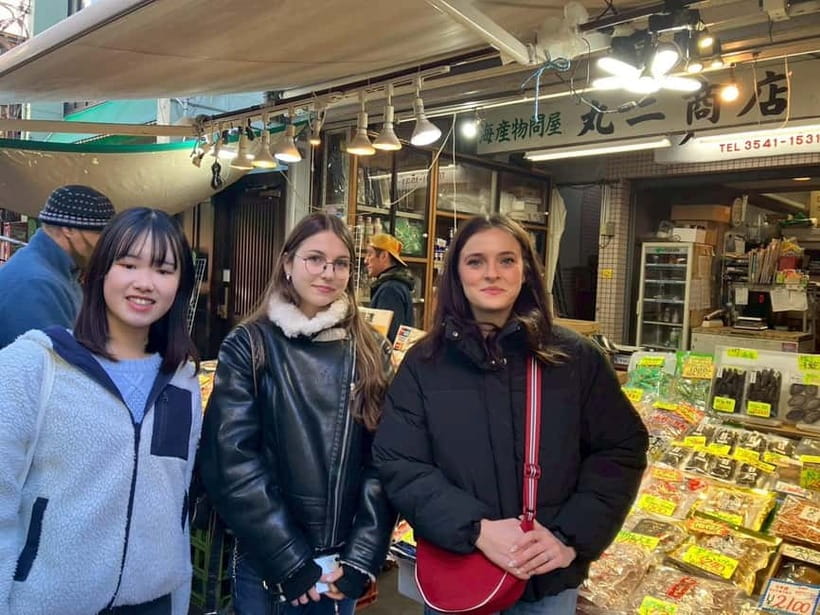
At $87 per person, the value depends on how much you want from the visit. You are paying for three hours of private guiding, an English-speaking university student, temple and shrine visits, a market walk, tamagoyaki, sushi lunch, and photos taken during the tour.
The food matters here. Sushi in Tokyo can quickly cost more than expected, especially when you add market tastings. Since sushi and tamagoyaki are included, the tour is more than a simple walking orientation.
The private group format is another important part of the price. You can shape the conversation around your interests, ask for food explanations, and move at a comfortable pace. A solo visitor or couple may find that especially useful.
Still, the tour does not include every snack or drink. You may want to spend extra on foods that catch your eye, and you should not confuse the included meal with an all-you-can-eat market crawl.
The biggest value is access to local context. If you only need directions to Tsukiji and a sushi reservation, you can spend less by visiting independently. If you want a friendly introduction and a chance to support students while learning how the market connects to local life, $87 is reasonable.
Timing, weather, and what to wear
The tour lasts three hours, with the market walk taking about an hour and a half and lunch taking about an hour. The temple visit lasts around 30 minutes, with the shrine stop fitting into the route.
Starting times vary, so check availability when you book. Morning is likely to be useful for a food market visit, but you should rely on the confirmed start time rather than assume one.
Wear comfortable shoes. You will walk through market lanes and spend time standing at food counters or waiting for items. Weather-appropriate clothing is also important.
Light rain does not automatically cancel the tour. The route may change in wet conditions, and severe weather can alter the plan. You will be notified by email if the status changes.
Bring an appetite, but not an oversized breakfast. Also bring a little extra money for drinks and foods outside the included tamagoyaki and sushi.
Who will enjoy this most?
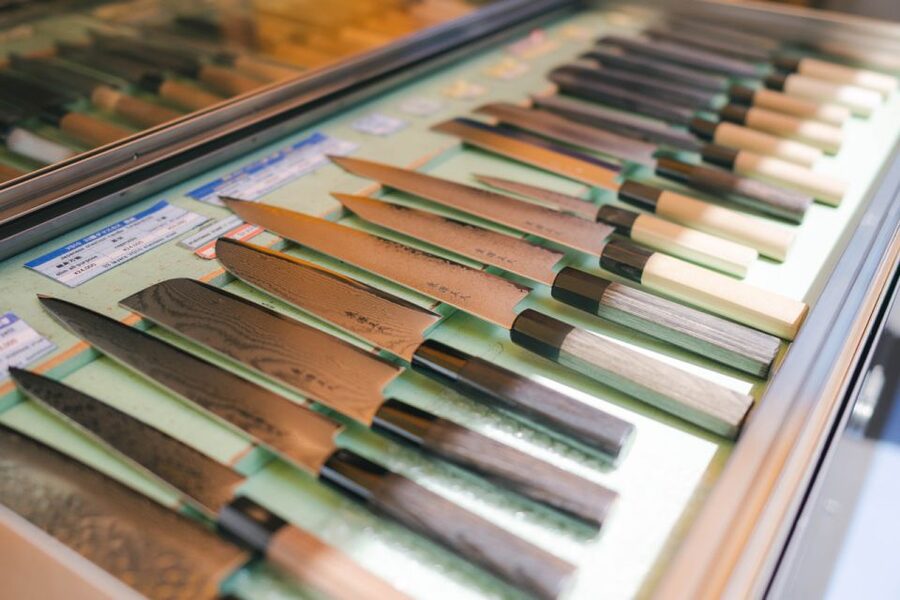
I would recommend this tour to solo visitors, couples, and small private groups who want conversation with a local young person. It is a good match if you have already seen Tokyo’s major sights and want a more grounded morning in one neighborhood.
Food lovers will get the most from it, especially if you enjoy seafood and want help choosing market foods. The tour is also a good first stop for anyone who feels unsure about entering a Japanese market alone.
Families may enjoy the relaxed format, though raw seafood and walking should suit everyone in the group. Children who like food and meeting local students could have a good time, while those who need a fast, tightly managed schedule may find the conversational pace less appealing.
I would be cautious about booking if you have strict dietary restrictions, dislike raw food, or need a fully fluent English guide. The experience depends on student guides, and their English is still developing.
Should you book the Tsukiji student tour?
Book it if you want a personal introduction to Tsukiji, included sushi and tamagoyaki, and a real conversation with a Tokyo student. The family connections of guides such as Nonoka can make the market feel more personal, and guides such as Teddy, U, Yuri, and Yuta bring different strengths.
Skip it if you want a professional culinary lecture, a guaranteed visit with a particular guide, or a menu built around cooked food only. For everyone else, the mix of temple worship, shrine culture, market knowledge, local contacts, and lunch makes this a useful three-hour Tokyo experience at a fair price.
FAQ
Where does the tour meet?
Meet your guide at the main gate of Tsukiji Hongwanji Temple. The temple is just outside Exit 1 of Tsukiji Station on the Tokyo Metro Hibiya Line, and the guide will hold a sign with your name.
How long does the tour last?
The tour lasts three hours. The schedule includes about 30 minutes at Tsukiji Hongwanji Temple, about 1.5 hours in Tsukiji Outer Market, and about one hour for lunch.
What food is included?
Tamagoyaki and sushi lunch are included. Additional food and drinks are not included.
Does the tour include raw seafood?
Yes. The tour includes raw food items, including sushi, and sashimi may be available as part of the market food experience.
What language does the guide speak?
The tour is offered in English and Japanese. The English-speaking guides are university students who are currently studying English.
Is the tour private?
Yes. It is a private group experience, allowing you to have relaxed conversation with your student guide.
What happens if it rains?
The tour proceeds in light rain, but the itinerary may change. In severe weather, you will be notified by email about the tour status.
Newly reviewed around Tokyo
- Tokyo Asakusa:Calligraphy & Make T-shirt Activity★ 5.0 · 62 reviews
- Travel Tokyo with Your Own Personal Photographer★ 5.0 · 43 reviews
- Intercity Shuttle, Tokyo to Haneda /Narita /Yokohama /Makuhari★ 5.0 · 5 reviews
- 1 Hour Travel around Tokyo with a Professional Photographer★ 5.0 · 3 reviews
- Train in Samurai Swordsmanship and Defeat the Demon in Tokyo★ 5.0 · 5 reviews
- Shuttle Van 6hr Tokyo Tour to-and-from Tokyo, Yokohama and Narita★ 5.0 · 9 reviews
- Kickboxing & Body Training with EX-Pro Fighter★ 5.0 · 4 reviews
- Traditional Japanese Knife Sharpening Class★ 5.0 · 18 reviews
Tsukiji and Toyosu Fish Market Tours, compared.
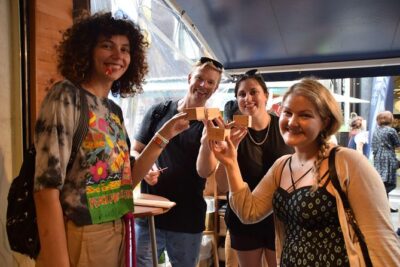
Tokyo Tsukiji Fish Market Food and Culture Walking Tour
Read our review →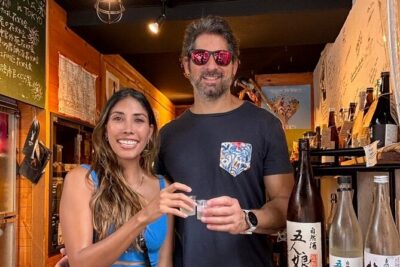
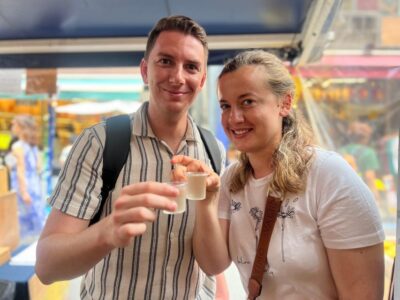
Tokyo Sushi Making Class in Tsukiji with Professional Chef
Read our review →
Tsukiji Fish Market Guided Tour and Sushi Making with Pro Chef
Read our review →Tsukiji Fish Market Food and Culture Walking Tour
Read our review →
Tsukiji Fish Market: Street Food & Culture Walking Tour
Read our review →
Tsukiji Fish Market Small-Group Food Walking Tour
Read our review →Browse the lists this tour appears in