
Reviewed · TSUKIJI AND TOYOSU FISH MARKET TOURS
Tokyo Tsukiji Fish Market Food Tour: 15 Stops & Walk Local Street
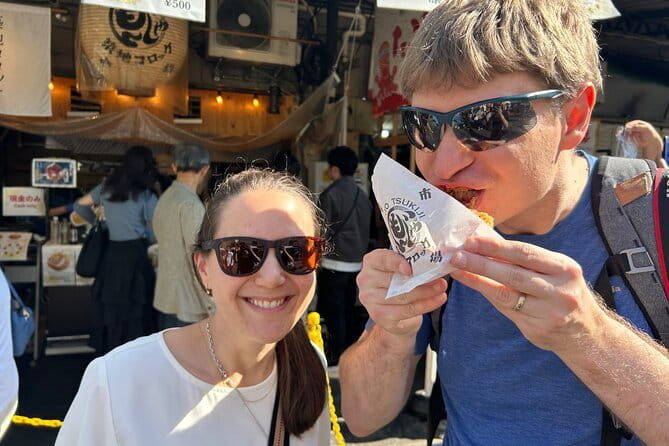
Tsukiji is best understood on foot, one small bite and one side street at a time. This two to three hour walk links Tsukiji Hongwanji Temple, the Jogai shopping street, a small wholesale fish market, and Namiyoke Inari Shrine, with a Japanese guide explaining sushi manners, local customs, and the area’s market culture.
I like the small group limit of 15 and the route’s mix of food, religion, and neighborhood life. I also like the practical touch of photos sent after the tour, plus the chance to learn what to try from a local guide such as Sakura. The main caution is important: the tour description suggests tastings are included, while the included list says food is not included. Confirm this before paying $80.
Key points at a glance
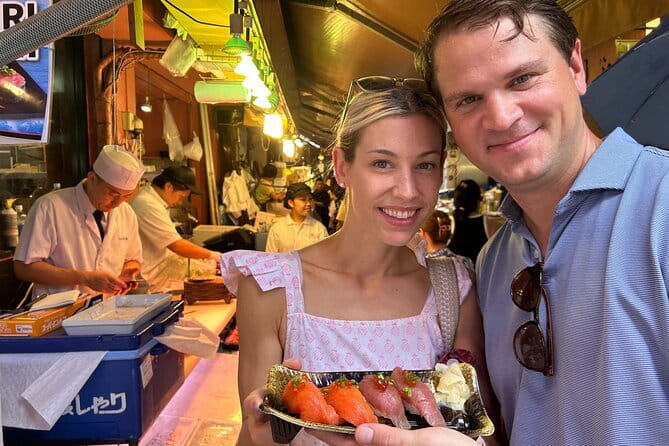
- Four useful Tsukiji stops: See Hongwanji Temple, Jogai Market, a mini wholesale market, and Namiyoke Inari Shrine.
- A guide makes the food stalls easier: Get help with food customs, sushi etiquette, local manners, and the market’s background.
- Small group, capped at 15: The size should allow more conversation than a large bus-style outing.
- Food costs need checking: One part of the description says tastings are included, while another says food is not included.
- Photos arrive after the walk: The guide takes pictures and sends them to you later.
- Easy central meeting point: Start and finish at Tsukiji Honganji Temple, near public transportation.
What this Tsukiji walk is really like
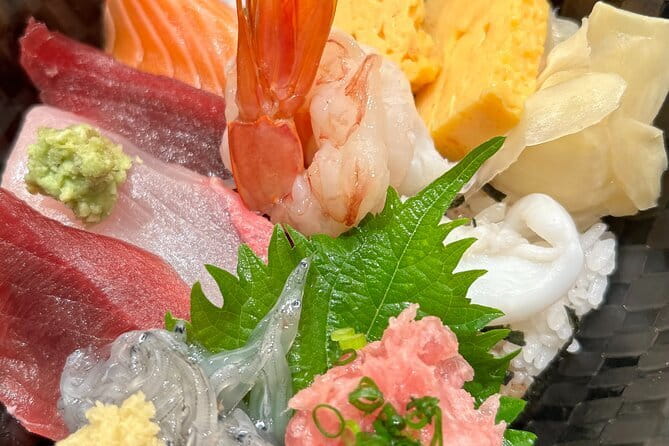
This is not a formal fish auction visit or a long history lecture. It is a guided neighborhood walk through the part of Tsukiji that remains open to the public, with time for food and conversation along the way.
The central appeal is simple: you do not have to figure out the market’s unwritten rules by yourself. A Japanese guide leads you through the streets, explains what you are seeing, and helps connect food to everyday customs. That matters in Tsukiji, where a snack can raise questions about ordering, eating while walking, chopsticks, sushi, seafood, and shrine etiquette.
The tour lasts roughly two to three hours. That is long enough to get a good first look without consuming an entire morning or afternoon. The route itself lists about 15 minutes at each shrine, around 90 minutes around the shopping street, and about 30 minutes near the wholesale market. Expect a steady walk with stops to look, listen, and possibly eat.
The experience has earned a 5 rating from 139 reviews, with 99 percent recommending it. Those numbers suggest strong satisfaction, especially with the guide-led format, but they do not remove the need to check the food policy carefully.
More Tsukiji and Toyosu fish market tours:
- Tokyo Tsukiji Fish Market Food and Culture Walking Tour
★ 5.0 · 3,184 reviews - Tokyo: Tsukiji Fish Market Food and Walking tour
★ 5.0 · 1,724 reviews - Tokyo: Tsukiji Fish Market Guided Walking Tour
★ 4.9 · 1,397 reviews
Starting at Tsukiji Hongwanji Temple
Meet your guide in front of Tsukiji Hongwanji Temple at 3-chome 15-1 Tsukiji, Chuo City. The tour begins here and also ends here, which makes the route easy to manage if you are using public transportation or have another plan afterward.
The temple visit takes about 15 minutes. It gives the tour a calmer opening before you enter the market streets. Your guide explains the temple and helps place Tsukiji in its local setting, rather than treating the area as only a place to buy seafood.
This is also a useful meeting point because it is specific and easy to identify. Still, arrive with enough time to find the entrance. The tour uses WhatsApp for day-of communication, so download the app before you go and make sure you can receive messages.
The temple stop is brief, so do not book this activity expecting a long religious tour. Its value is the contrast it creates: first a place of worship, then a market neighborhood where food, trade, and local routine take over.
Spending 90 minutes in Jogai Market
The main portion of the walk is Tsukiji Jogai Market, the shopping street with more than 400 shops. This is where the experience earns most of its time.
You will walk through an area known for seafood, prepared foods, cooking ingredients, and specialist shops. The guide helps you make sense of the choices instead of leaving you to wander past unfamiliar items. The description says you enjoy a meal on the way to the shopping street, and it also refers to tasting foods such as sushi or Japanese oysters.
Here is where the food wording becomes a real booking issue. The overview says food tastings are included, yet the included section lists food as not included. One dissatisfied customer booked with the expectation that food was covered and felt the $80 price was too high when it was not. The provider apologized for the misunderstanding, but the conflicting wording remains.
I would contact Fuji Tour before booking and ask one direct question: exactly which food items, if any, are included in the $80 price? Also ask if you should bring extra money for every tasting or meal. That answer can change the value of the tour by a lot.
If food is included, the price becomes easier to justify because you are paying for both the guided walk and a set of samples. If food is separate, treat this as an orientation tour with optional purchases rather than a food tour with a guaranteed meal.
The long market stop also gives you a chance to ask questions. One guide, Sakura, received particular praise for explaining sushi-eating technique and Japanese dining etiquette. That kind of advice is useful far beyond Tsukiji, especially if you are still learning how to approach traditional meals in Japan.
A holiday can affect this stop. Shops may close or operate on reduced hours, and the guide may need to change the plan. The tour has already shown it can adjust when part of the market is closed, but you should keep your expectations flexible. Tsukiji is a working shopping district, not a museum with every door open on a fixed schedule.
Seeing the mini wholesale market
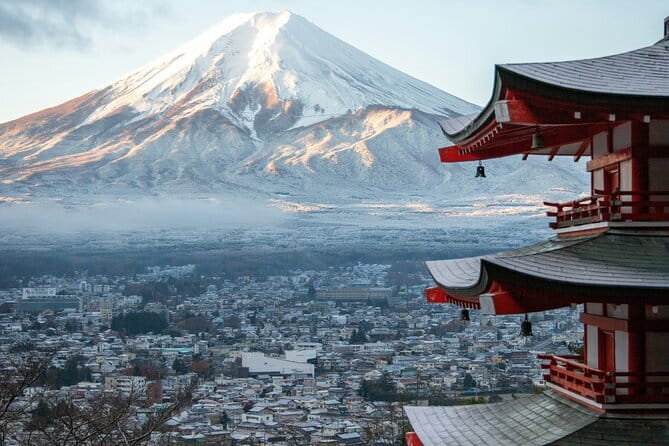
The route then passes a mini wholesale market for about 30 minutes. The purpose is to see the range of fresh fish and the scale of the market trade. The description refers to hundreds of kinds of fish, so this stop is aimed at helping you understand the variety of seafood sold in the area.
Do not mistake this for a full replacement for the old Tsukiji inner market. The route takes you through a smaller wholesale section and the public shopping streets. That distinction matters if your main goal is to see a major auction or a behind-the-scenes fish distribution operation. This experience, as described, is a local walking tour rather than an auction access product.
The 30-minute timing is sensible. Fish markets are visually interesting, but most visitors do not need a long lecture beside the stalls. Your guide can point out what you are seeing, answer questions, and keep the group moving without turning the stop into a rushed photo opportunity.
You should also remember that a market is a place of business. Stay close to the group, listen to the guide’s instructions, and avoid blocking shop entrances or workers. The etiquette portion of the tour is useful here because it helps you act respectfully in a place built for buying and selling, not just sightseeing.
More Tokyo food tours:
- Tokyo: Shinjuku Food Tour (13 Dishes at 4 Local Eateries)
★ 5.0 · 6,603 reviews - Tokyo: Shinjuku Food Tour (15 Dishes and 4 Eateries)
★ 4.9 · 2,033 reviews - Best of Shinjuku: Izakaya Food Tour (4 Stops, 14+ Tastings)
★ 5.0 · 1,863 reviews - Tokyo Night Foodie Tour in Shinjuku – Seasonal Sushi, Wagyu Beef
★ 5.0 · 1,161 reviews
A quiet finish at Namiyoke Inari Shrine
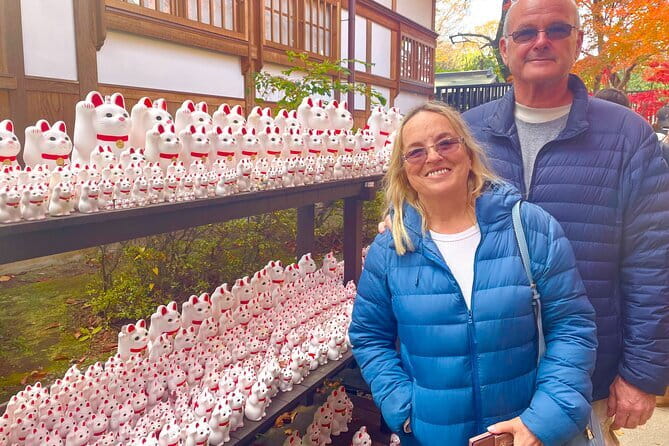
The final listed stop is Namiyoke Inari Shrine, visited for about 15 minutes. The shrine is dedicated to Namiyoke Inari, described as the deity that wards off disasters and weathers the waves.
This stop ties neatly to Tsukiji’s relationship with the sea. After seeing fish, seafood stalls, and market commerce, you finish at a shrine linked with protection from the dangers of the water. It gives the walk a sense of place that a food-only outing would miss.
Again, the visit is short. You will not get an extended shrine study, but you will have time to see the site and hear why it matters to the neighborhood. If you enjoy small religious sites and local customs, this is one of the more distinctive parts of the route.
The tour returns to the starting point at Tsukiji Hongwanji Temple. That makes the finish straightforward, though you will need to arrange your own transport to and from the meeting point. Hotel pickup and drop-off are not included.
What the guide adds to the food
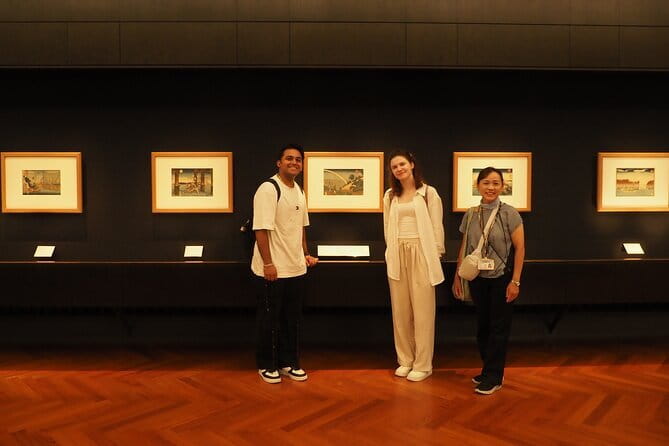
The guide is the main reason to choose this tour instead of walking through Tsukiji alone. You can find the market streets without assistance, but it is harder to know what is worth trying, how to behave around food stalls, and what certain foods mean in Japanese dining culture.
The included explanation covers food, etiquette, culture, and history. In practical terms, you can expect help with matters such as sushi-eating manners and local customs. Sakura was specifically praised for making these points understandable, and the one-to-one situation created by cancellations allowed extra conversation on one occasion.
That does not mean every departure will be private. The group can include up to 15 people, and the actual number may vary. A smaller group generally makes it easier to ask questions, but the tour is not sold as a private experience.
The guide may also need to adjust the route. A market holiday caused closures during one outing, yet the guide changed the plan and still provided a good visit. That is worth keeping in mind: the market is not perfectly predictable, and a flexible guide is more useful than a rigid checklist.
Is $80 a fair price?
At $80 per person, this is not the cheapest way to see Tsukiji. You can walk through the public market streets without booking a tour, and a simple self-guided visit costs much less.
The price makes sense if you value four things: a local Japanese guide, food guidance, cultural explanation, and a small group. The added photos are a pleasant extra. For a first morning in Tokyo, a guide can save you from guessing what to order or how to handle unfamiliar market customs.
The price is harder to defend if food is not included. The tour itself says food is not included in one section, and a customer specifically felt misled after expecting tastings. If you must pay separately for the meal and samples, compare the total with a lower-cost walking tour or plan your own food stops.
I would judge the value this way:
- Good value: Food tastings are included, and you want guidance on etiquette and local food culture.
- Fair value: Food is separate, but you want a structured route and a Japanese guide.
- Weak value: You mainly want to see the market, do not need explanations, and are comfortable choosing food on your own.
The 99 percent recommendation rate and 5 rating show that the experience generally works well, but the food question is too important to ignore. Get a clear answer from the provider before committing.
Who should book this walk
I would recommend it most to first-time visitors to Tokyo who want an easy introduction to Tsukiji without planning every stop. It also suits people who enjoy food but want context, not just a list of snacks.
The tour is a good match if you want to ask questions about Japanese dining manners. It can be especially useful early in your Japan trip, before you visit more sushi restaurants or traditional dining spots.
It also suits solo visitors. A guide gives you company, and the group format removes some of the awkwardness of entering unfamiliar food streets alone. Families and older participants may appreciate the short temple and shrine visits, though the tour still involves walking through market streets.
I would be more cautious if you want a formal culinary class, a guaranteed multi-course meal, or access to a major fish auction. Those are not the clear promises here. I would also reconsider if your schedule is extremely tight, since the tour lasts up to three hours and requires you to reach the meeting point independently.
Weather can affect comfort. One outing took place in cold, unpleasant conditions, yet the guide continued and the participant still found value in the visit. Dress for the season and wear shoes suitable for walking.
Booking details that matter
Confirmation arrives when you book, and the activity is near public transportation. You must pay your own way to the starting point, and hotel pickup is not offered.
Download WhatsApp before the tour because the provider uses it for communication on the day. This is a small task, but it matters if the guide needs to contact you about meeting arrangements.
The maximum group size is 15 people. The activity ends back at Tsukiji Hongwanji Temple, so you can plan a meal, shopping, or another Tokyo stop afterward.
Free cancellation is available if you cancel at least 24 hours before the start time. Cancellations or changes made inside that window are not refunded or accepted, based on the local cut-off time.
Should you book the Tsukiji food tour?
Book it if you want a guided introduction to Tsukiji that combines food, market streets, temples, and practical Japanese etiquette. The route is well balanced, the group is limited to 15, and guides such as Sakura can add useful detail that you would miss on your own.
Before booking, contact Fuji Tour and settle the food question in writing. If tastings are included, $80 can be reasonable for a guided small-group experience. If food is not included, book only if the cultural explanation and local guidance are worth the extra cost to you.
FAQ
How long does the Tsukiji tour last?
The tour lasts approximately two to three hours.
Where does the tour start?
It starts in front of Tsukiji Hongwanji Temple at 3-chome 15-1 Tsukiji, Chuo City, Tokyo 104-8435, Japan.
Where does the tour end?
The tour ends back at the meeting point at Tsukiji Hongwanji Temple.
What places are visited?
The route includes Tsukiji Hongwanji Temple, Tsukiji Jogai Market, a mini wholesale market area, and Namiyoke Inari Shrine.
Is food included in the tour price?
The tour information is inconsistent. The overview says food tastings are included, while the included section says food is not included. Contact Fuji Tour to confirm exactly what the $80 price covers before booking.
How many people can join the tour?
The maximum group size is 15 travelers.
Is hotel pickup included?
No. Hotel pickup and drop-off are not included, and you are responsible for transportation to the meeting point.
More Tokyo walking tours
- Tokyo: Imperial Palace and Shogun Historical Walking Tour
★ 5.0 · 2,251 reviews - Tokyo: Shinjuku Local Bar and Izakaya Guided Walking Tour
★ 4.9 · 1,794 reviews - Tokyo: Asakusa Walking Tour with Sensoji Temple Visit
★ 4.8 · 1,583 reviews - Tokyo Castle & Imperial PalaceーShogun Walking Tour
★ 4.7 · 1,068 reviews
More Tokyo markets and shopping streets
- Tsukiji Fish Market Guided Tour and Sushi Making with Pro Chef
★ 5.0 · 775 reviews - Tokyo: Tsukiji Fish Market Food and Culture Walking Tour
★ 4.7 · 757 reviews - Tsukiji Fish Market: Street Food & Culture Walking Tour
★ 5.0 · 669 reviews - Tsukiji Fish Market Small-Group Food Walking Tour
★ 5.0 · 621 reviews
Newly reviewed around Tokyo
- Tokyo Asakusa:Calligraphy & Make T-shirt Activity★ 5.0 · 62 reviews
- Intercity Shuttle, Tokyo to Haneda /Narita /Yokohama /Makuhari★ 5.0 · 5 reviews
- 1 Hour Travel around Tokyo with a Professional Photographer★ 5.0 · 3 reviews
- Travel Tokyo with Your Own Personal Photographer★ 5.0 · 43 reviews
- Train in Samurai Swordsmanship and Defeat the Demon in Tokyo★ 5.0 · 5 reviews
- Shuttle Van 6hr Tokyo Tour to-and-from Tokyo, Yokohama and Narita★ 5.0 · 9 reviews
- Kickboxing & Body Training with EX-Pro Fighter★ 5.0 · 4 reviews
- Tokyo History: Sensoji Temple & Asakusa District Private Tour★ 5.0 · 28 reviews
Tsukiji and Toyosu Fish Market Tours, compared.
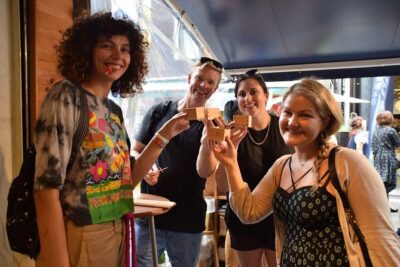
Tokyo Tsukiji Fish Market Food and Culture Walking Tour
Read our review →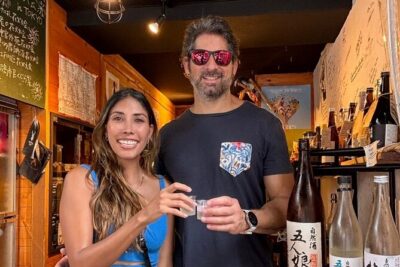
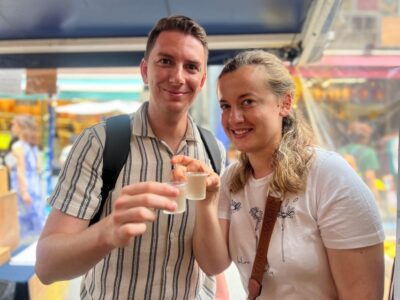
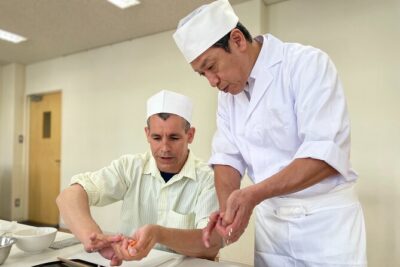
Tokyo Sushi Making Class in Tsukiji with Professional Chef
Read our review →
Tsukiji Fish Market Guided Tour and Sushi Making with Pro Chef
Read our review →Tsukiji Fish Market Food and Culture Walking Tour
Read our review →
Tsukiji Fish Market: Street Food & Culture Walking Tour
Read our review →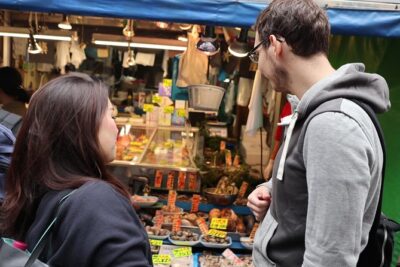
Tsukiji Fish Market Small-Group Food Walking Tour
Read our review →Browse the lists this tour appears in