
Reviewed · TOKYO WALKING TOURS
Tokyo Shinjuku: History, Culture & Hidden Alleys Walking Tour
Shinjuku changes character block by block, from the neon signs of Kabukicho to the tiny drinking alleys of Golden Gai and the quiet grounds of Hanazono Shrine. This two-hour walking tour gives you a useful path through that maze, with a guide handling the navigation while you focus on the streets around you.
I like the route for two clear reasons. First, it covers places that buses cannot reach, including Omoide Yokocho and Golden Gai. Second, guides such as Haydn and Kane have explained local customs and offered practical advice for the rest of a Tokyo visit. The main drawback is that food and drinks cost extra, and two hours is enough for an introduction, not a full exploration of Shinjuku.
Key points at a glance
- Four very different Shinjuku stops: Kabukicho, Omoide Yokocho, Hanazono Shrine, and Golden Gai.
- A useful evening start: The 5 pm meeting time takes you into Shinjuku as its nightlife begins to appear.
- Small-group format: The group can include up to 15 people, keeping the walk more personal than a large city tour.
- Strong local orientation: The guide leads the way through streets that can be confusing on a first visit.
- Good value at $24: You get two hours of guided context without paying for a meal or attraction admission.
- Simple planning: The mobile ticket, public transport access, and return to the starting point make this easy to fit into a Tokyo day.
Why Shinjuku works best on foot
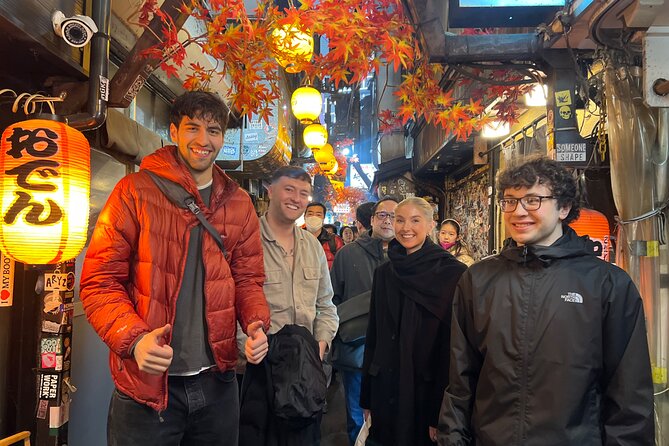
Shinjuku is not one tidy sight. It is a huge district made up of shopping streets, office towers, shrine grounds, nightlife blocks, railway connections, and narrow lanes. You can walk a short distance and feel as if you have entered a different part of Tokyo.
That is why I see value in using a guide here. A map can show you where Kabukicho, Omoide Yokocho, Hanazono Shrine, and Golden Gai are located, but it does not explain how those places fit together. The walk gives you a basic orientation, along with background on local culture and the changing role of each area.
The tour begins at 5 pm, a useful time for this particular route. You get some daylight for the earlier sections, then see the signs and alleyways take on an evening feel. The timing also lets you continue on your own afterward if you want dinner or a drink.
The group size is limited to 15 people. That is not a private tour, but it is small enough for questions and guide commentary to be practical. The walk lasts about two hours, so expect a steady introduction rather than long stops at every site.
More things to do in Shinjuku:
- Tokyo: Shinjuku Food Tour (13 Dishes at 4 Local Eateries)
★ 5.0 · 6,603 reviews - Tokyo Bar Hopping Tour in Shinjuku (All-You-Can-Drink + Dinner)
★ 5.0 · 3,587 reviews - Tokyo: Shinjuku Food Tour (15 Dishes and 4 Eateries)
★ 4.9 · 2,033 reviews
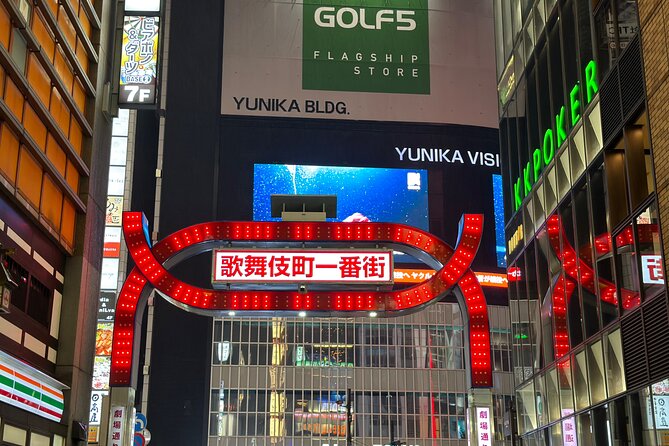
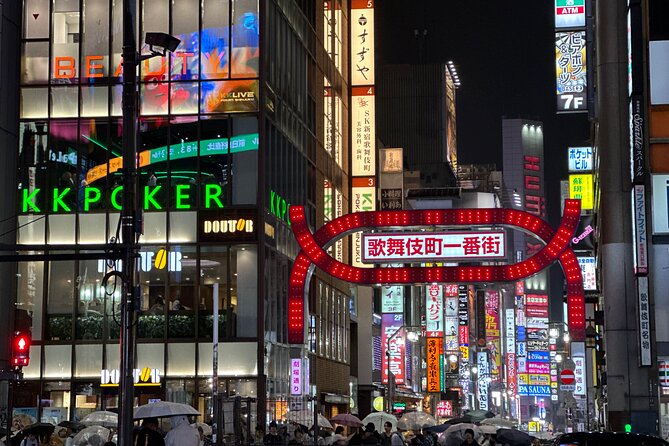
Kabukicho, Shinjuku’s complicated nightlife district
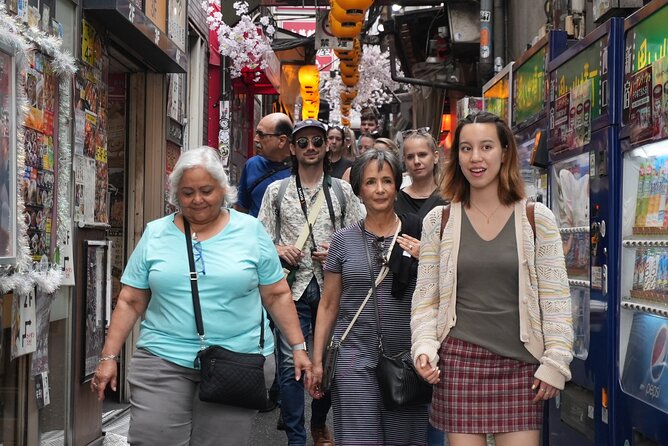
The first stop is Kabukicho, often described as Japan’s red-light district. The tour uses this area as an introduction to Shinjuku, giving you an overview before moving into the smaller streets.
For a first-time visitor, that overview matters. Kabukicho can feel noisy, bright, and hard to read. A guide can give you cultural and historical context instead of leaving you to judge the area from its signs and crowds alone. This is also a place where clear orientation helps you understand that Shinjuku’s nightlife is not limited to one kind of venue.
You should expect commentary and a walk through the district rather than a paid attraction. The stop lasts about 30 minutes, and admission is free. Keep your expectations in check: this is an area visit, not a performance or an evening of organized entertainment.
I like starting here because it gives the rest of the route a useful contrast. After the large, highly visible nightlife district, the walk moves toward older and more confined spaces.
Omoide Yokocho and its postwar alleyways
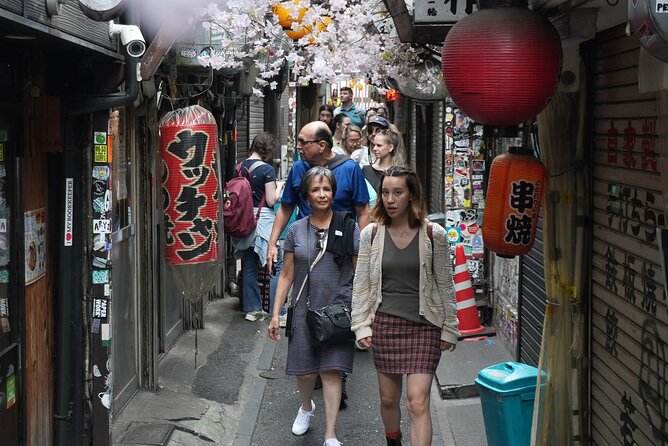
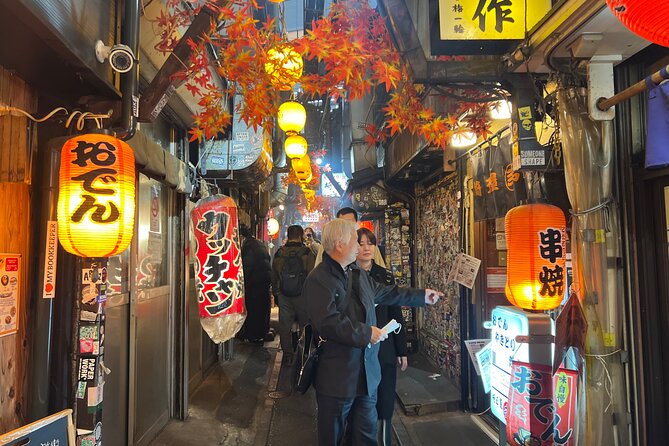
Omoide Yokocho is one of the most memorable parts of the route. It is a narrow alleyway lined with small bars and places to eat, and it was built during the postwar period of the 1950s. You may also hear its rough nickname, Piss Alley, a name that reflects its gritty past rather than a polished tourist image.
The alley offers a close look at a much smaller style of Tokyo nightlife. Instead of broad streets and large signs, you find compact businesses packed into a tight passage. It is the kind of place that is easy to miss if you only follow major roads.
The scheduled stop is about 30 minutes. Admission is included, but food and drinks are not, so you should not assume that this portion includes a meal or tasting. The tour is better viewed as an introduction to the setting. If you like what you see, you can return later and choose a place on your own.
That arrangement keeps the $24 price reasonable, but it also means the tour does not remove every decision for you. The guide shows you the area and explains it. Your later spending depends on what you choose.
Hanazono Shrine, a quiet pause in the city
Hanazono Shrine brings a sharp change of mood. It is one of the oldest shrines in Shinjuku and offers an introduction to Japanese shrines within the city center.
I especially like having this stop between nightlife areas. It reminds you that Shinjuku is not only neon, bars, and crowds. The shrine gives the guide a chance to explain basic cultural points in a real setting, rather than in a classroom-style talk.
The stop lasts about 30 minutes, and admission is included. The supplied details do not promise a ceremony, special access, or a religious activity, so you should expect a guided visit and explanation of the grounds.
For someone new to Japan, this can be one of the most useful parts of the walk. You get a first look at shrine spaces while someone explains what you are seeing. For someone already familiar with Japanese shrines, the stop may feel more introductory, but the contrast with Kabukicho and the alleys still gives the route a strong rhythm.
More Tokyo walking tours:
- Tokyo Tsukiji Fish Market Food and Culture Walking Tour
★ 5.0 · 3,184 reviews - Tokyo: Imperial Palace and Shogun Historical Walking Tour
★ 5.0 · 2,251 reviews - Tokyo: Shinjuku Local Bar and Izakaya Guided Walking Tour
★ 4.9 · 1,794 reviews - Tokyo: Tsukiji Fish Market Food and Walking tour
★ 5.0 · 1,724 reviews
Golden Gai and Tokyo’s tiny bars
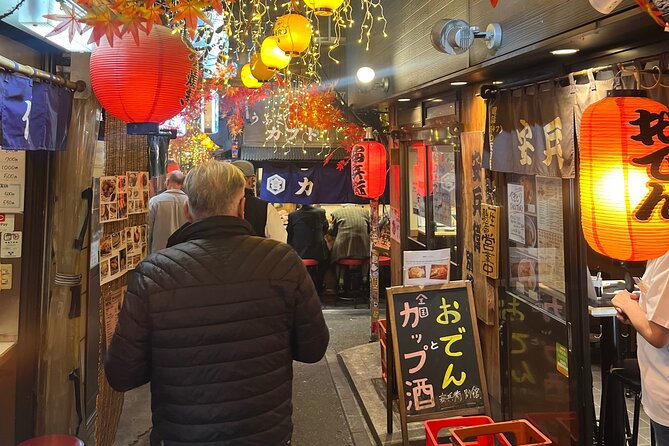
The final stop is Shinjuku Golden Gai, a cluster of narrow streets filled with small bars, including some of Tokyo’s oldest. Like Omoide Yokocho, it shows you a side of Shinjuku that is easy to overlook when you stick to major avenues.
Golden Gai is best understood as a neighborhood of very small drinking spaces, not as one single attraction. The stop lasts about 20 minutes, so the guide can introduce the area, point out its character, and help you understand how it differs from the larger nightlife streets.
You may find the compact bars intriguing, but this tour does not include drinks or a bar entry. If you want to stay, you can make your own plans after the walk. That can be a benefit because you are not locked into a set meal or venue.
The timing is sensible. By the end of the tour, the evening is underway, and you are already in the right area to continue exploring. The guide can also offer suggestions for where to go next. Haydn and Kane were specifically named as guides in the available feedback, though you should not assume that either will lead your date.
What the guide adds to the experience
The biggest reason to book this walk is not simply seeing four locations. You can find all four on a map. The useful part is having someone connect them and explain what you are looking at.
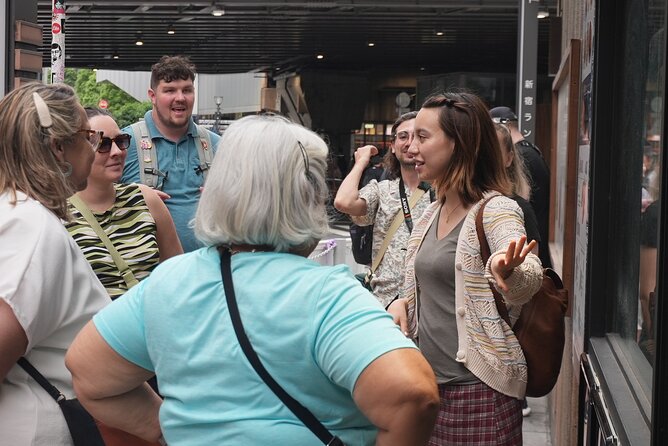
The guide handles navigation through a district that can be confusing, which saves you time and reduces the chance of wandering past the alleys or shrine. You also get commentary about local history and culture, plus the chance to ask questions as the walk goes on.
The guide’s role appears to be especially useful for first-time arrivals. One guide, Haydn, was singled out for showing the group both the expected sights and extra places they would not have found alone. Kane was also praised for offering broad information about Tokyo and Japan, answering questions, and giving advice for later in the trip.
That does not mean the tour replaces a guidebook. The walk is short, and the information will likely stay focused on the route and the wider area. Still, you leave with a better sense of where to return and how the parts of Shinjuku relate to one another.
Is $24 a fair price?
At $24 per person, this is a reasonable price for a two-hour guided city walk in central Tokyo. The value comes from the route, the navigation, and the local explanation rather than from included meals or paid attractions.
You are not paying for transportation, food, or entry to a major landmark. That keeps the cost down, but it also means your total evening budget will rise if you eat in Omoide Yokocho or stop at a bar in Golden Gai afterward.
I would compare the price with the time you might lose trying to plan the same walk yourself. Shinjuku is easy to visit without a guide, but its smaller streets and nightlife districts are not always obvious from a basic map. If you want a compact introduction on your first evening, $24 is sensible.
If you already know Shinjuku well, the value is less certain. You may prefer to spend two hours choosing your own restaurants and alleys. The tour makes the most sense when you want context and a route, not when you are looking for a long meal or a relaxed night at one bar.
Who should book this Shinjuku walk?
I would recommend it most strongly to first-time visitors to Tokyo, especially those staying near Shinjuku or planning an evening in the district. It is also a good fit if you want to understand nightlife areas without trying to decode them alone.
The tour suits people who like walking, short stops, and conversation. The maximum group size is 15, and most people can participate. It is near public transportation, and the walk returns to the meeting point, which simplifies the rest of your evening.
It may be less suitable if you want a food tour, a private guide, or extended time inside bars. Food and drinks are not included, and the schedule gives each stop a limited amount of time.
The mobile ticket is practical for a phone-based booking. Confirmation is sent at booking, and the meeting point is Happy Lemon Keio Shinjuku Shop at 1-chōme-1-4 Nishishinjuku, Shinjuku City. Check the meeting details carefully before setting out, since Shinjuku has many railway exits and busy streets.
Booking, cancellation, and timing
You can cancel for a full refund up to 24 hours before the 5 pm start time. Changes or cancellations made less than 24 hours before the start are not accepted for a refund, and the cut-off follows Tokyo local time.
The experience requires a minimum number of participants. If that minimum is not reached and the activity is canceled, you are offered another date or experience, or a full refund.
The tour ends back at the starting point. That is helpful if you want to continue into Golden Gai or return to the station area, though the details do not specify the exact walking distance or pace. Wear comfortable shoes and allow extra time to find the meeting point in the busy Shinjuku district.
Should you book it?
Book this tour if you want a clear, social introduction to Shinjuku’s nightlife streets, postwar alleys, shrine culture, and small-bar districts. The route covers four distinct places, the guide removes much of the navigation work, and the $24 cost is fair for two hours of local explanation.
Skip it if your main goal is a meal, a private experience, or extended time inside one venue. For most first visits, though, this is a useful way to get your bearings before exploring Shinjuku on your own.
FAQ
How long is the Shinjuku walking tour?
The tour lasts approximately two hours.
What time does the tour start?
The tour starts at 5 pm.
Where does the tour begin?
It begins at Happy Lemon Keio Shinjuku Shop, 1-chōme-1-4 Nishishinjuku, Shinjuku City, Tokyo 160-0023, Japan.
Where does the tour end?
The activity ends back at the meeting point.
What places are visited?
The route includes Kabukicho, Omoide Yokocho, Hanazono Shrine, and Shinjuku Golden Gai.
Are food and drinks included?
No. Food and drinks are not included in the tour price.
How large can the group be?
The activity has a maximum of 15 participants.
Is the tour close to public transportation?
Yes. The meeting point is near public transportation.
Can most people participate?
Yes. Most people can participate in this activity.
Can I cancel for a full refund?
Yes. You can receive a full refund if you cancel at least 24 hours before the experience start time. Cancellations made less than 24 hours before the start are not refunded.
More history and heritage tours in Tokyo
- Tokyo: Imperial Palace Japanese History Walking Tour
★ 4.9 · 987 reviews - Tokyo: Shinjuku Historical Walking Tour & Secret Backstreets
★ 5.0 · 530 reviews - Yanaka Walking Tour: Historic and Traditional District of Tokyo
★ 5.0 · 530 reviews - Mt. Fuji Heritage Tour: Traditional Villages, Lakes & Shrine
★ 4.5 · 509 reviews
Newly reviewed around Tokyo
- Tokyo Asakusa:Calligraphy & Make T-shirt Activity★ 5.0 · 62 reviews
- Intercity Shuttle, Tokyo to Haneda /Narita /Yokohama /Makuhari★ 5.0 · 5 reviews
- 1 Hour Travel around Tokyo with a Professional Photographer★ 5.0 · 3 reviews
- Travel Tokyo with Your Own Personal Photographer★ 5.0 · 43 reviews
- Train in Samurai Swordsmanship and Defeat the Demon in Tokyo★ 5.0 · 5 reviews
- Shuttle Van 6hr Tokyo Tour to-and-from Tokyo, Yokohama and Narita★ 5.0 · 9 reviews
- Kickboxing & Body Training with EX-Pro Fighter★ 5.0 · 4 reviews
- Traditional Japanese Knife Sharpening Class★ 5.0 · 18 reviews
Tokyo Walking Tours, compared.
Tokyo Tsukiji Fish Market Food and Culture Walking Tour
Read our review →
Imperial Palace and Shogun Historical Walking Tour
Read our review →
Shinjuku Local Bar and Izakaya Guided Walking Tour
Read our review →
Asakusa Walking Tour with Sensoji Temple Visit
Read our review →
Tokyo Castle & Imperial PalaceーShogun Walking Tour
Read our review →
Browse the lists this tour appears in