
Reviewed · TSUKIJI AND TOYOSU FISH MARKET TOURS
Tokyo: Guided Walking Tour of Tsukiji Market with Breakfast
Tsukiji is best approached with an appetite and a little patience. This 150-minute walking tour takes you from the striking Indian-inspired exterior of Tsukiji Hongwanji Temple into the narrow lanes of the Outer Market, where you can watch wholesalers work and taste seven Japanese specialties along the way. I especially like the small-group limit of 10 and the way guides such as Yumi, Nori, Minoko, and Rico have helped people order, translate, and adjust tastings to fit their tastes.
The food is the main draw, but the cultural context gives the morning more shape. I like that you get both a Japanese breakfast and an explanation of how cuisine connects with Buddhist practice and local custom. The main consideration is the crowded market setting: you will walk, wait in lines, and eat foods that may be unfamiliar, while English ability can vary somewhat from guide to guide.
Key points to know before booking

- Seven tastings make this a full breakfast: Expect seafood or beef skewers, Japanese omelette, a tuna sandwich, fried fish paste, a drink, Japanese tea, and dashi soup stock.
- The temple is an easy meeting point: Tsukiji Station’s Hibiya Line Exit A1 is about 50 meters from the temple entrance.
- Small groups help in tight lanes: The tour is limited to 10 people, and some departures have operated with only a few participants.
- Guides can help with food choices: Guides have offered alternatives for picky eaters and translated at stalls when guests wanted to buy extra food.
- You see the market at work: This is not only a tasting walk. You also pass shops, restaurants, stalls, and working wholesalers.
- Plan to continue exploring afterward: The tour ends early enough for you to keep looking around Tsukiji Outer Market on your own.
Starting at Tsukiji Hongwanji Temple
Meet in front of Tsukiji Hongwanji Temple, one of the easiest meeting points in this part of Tokyo. From Tsukiji Station on the Hibiya Line, use Exit A1, turn left, and walk about 50 meters to the temple entrance.
The building gives the tour a useful opening. Its exterior has an ancient Buddhist-inspired design with Indian influence, a look that feels very different from the standard shrine and temple buildings you may see elsewhere in Tokyo. You visit the exterior rather than taking part in an indoor temple program, so this stop is brief, but it helps frame the food walk with a little culture.
The guides have also used the temple and nearby shrine area to explain the link between Japanese religion and cuisine. That matters because the tasting is not just a string of snacks. Dashi, tea, fish, rice, and careful preparation all fit into wider ideas about daily life, ritual, and respect for ingredients.
Arrive on time. One person missed the start after reaching the meeting point late, and the group had already moved on. The station access is simple, but Tokyo’s exits and crowds can still slow you down, so give yourself a few extra minutes.
More Tsukiji and Toyosu fish market tours:
- Tokyo Tsukiji Fish Market Food and Culture Walking Tour
★ 5.0 · 3,184 reviews - Tokyo: Tsukiji Fish Market Food and Walking tour
★ 5.0 · 1,724 reviews - Tokyo: Tsukiji Fish Market Guided Walking Tour
★ 4.9 · 1,397 reviews
Entering Tsukiji Outer Market
From the temple, the tour moves into Tsukiji Outer Market. The famous inner wholesale fish market moved to Toyosu, but the Outer Market remains a major food district packed with shops, restaurants, stalls, and suppliers. This tour focuses on the living market streets rather than treating the area as a museum.
You will see workers moving through tight lanes and shopkeepers handling unusual products. The market can be crowded, especially around popular food counters, so keep your group in sight and wear shoes that feel good on hard pavement.
This is where a guide earns the $85 price. On your own, you can certainly walk through Tsukiji, but it is harder to know which foods are worth trying, what an unfamiliar item is, or how to order when the stall staff does not speak much English. A good guide can point out what matters, translate questions, and keep the route moving.
The group size helps. Ten people is small enough for a guide to speak with you directly, yet large enough to give the walk a social feel. Some departures have ended up as very small groups or even private-feeling outings, though you should not count on having the market to yourself.
Seven tastings, from skewers to dashi
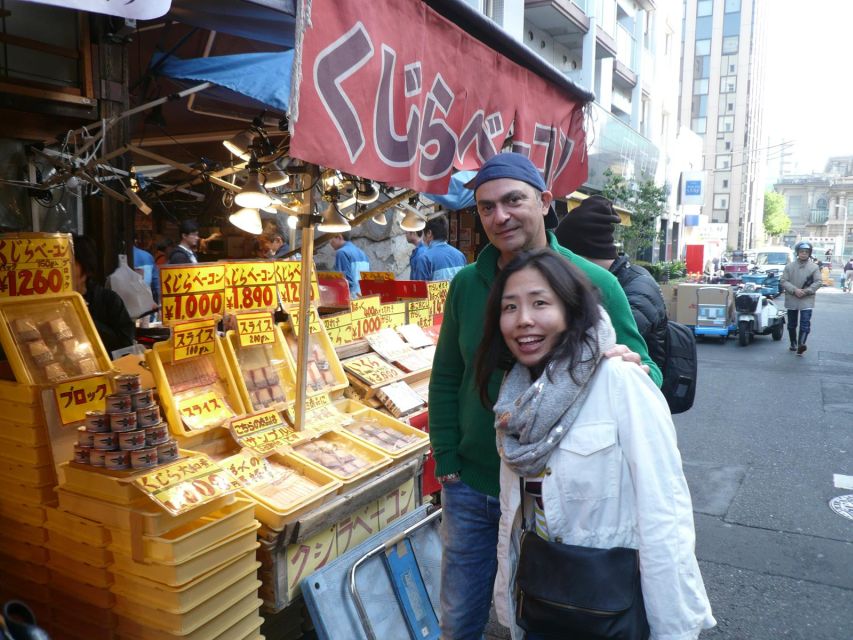
The tour includes seven local tastings. The exact order can change with stall conditions and availability, but you should expect a mix of hot food, seafood, meat, and small drinks rather than seven similar bites.
Grilled seafood or wagyu skewers
A grilled seafood skewer or wagyu beef skewer gives you the most obvious breakfast treat. The food is prepared for immediate eating, which suits the market setting. You get to see the cooking happen rather than receiving a packaged sample.
The beef option can appeal to people who are cautious about seafood, while the seafood choice fits the reason many people come to Tsukiji in the first place. If you have a strong preference, tell the guide early. The guides have shown flexibility when someone did not want a certain ingredient.
More Tokyo walking tours:
- Tokyo: Imperial Palace and Shogun Historical Walking Tour
★ 5.0 · 2,251 reviews - Tokyo: Shinjuku Local Bar and Izakaya Guided Walking Tour
★ 4.9 · 1,794 reviews - Tokyo: Asakusa Walking Tour with Sensoji Temple Visit
★ 4.8 · 1,583 reviews - Tokyo Castle & Imperial PalaceーShogun Walking Tour
★ 4.7 · 1,068 reviews
Japanese-style omelette
The Japanese omelette offers a softer contrast to grilled food. It is a familiar enough starting point for cautious eaters, but still gives you a taste of a market specialty that you might overlook while rushing between stalls.
You may see other egg products or prepared foods nearby, but the included tasting is the omelette. The route is designed around small portions, yet the combined food can become a surprisingly large breakfast.
Tuna sandwich
A tuna sandwich sounds simple, but it shows how Japanese market food can cross between traditional ingredients and everyday convenience. It also provides a useful change of texture after skewers and fried foods.
This is one of the more approachable tastings for children and picky eaters. The guide can help explain what you are eating and may adjust the selection if a particular food does not work for you.
Fried fish paste skewer
The fried fish paste skewer is a chance to try something less familiar. It is a useful example of why a guide helps at Tsukiji. You can look at a row of prepared foods and have no easy way to tell what is inside, how it was made, or how best to eat it.
If you prefer not to try it, say so. The tour is not built around forcing every person to eat every item. Several guides have offered alternatives, which makes this a better fit for mixed groups and families with selective eaters.
Drink, Japanese tea, and dashi
The drink, tea, and dashi samples slow the pace and add context. Japanese tea is a small but fitting part of a morning food walk, while dashi introduces the soup stock that supports so many Japanese dishes.
Dashi may look modest in a tasting cup, but it helps you notice the savory base behind soups, sauces, and other foods. The sample is valuable because it connects what you taste in the market with the broader structure of Japanese cooking.
The included drink is not specified in advance. Do not book this expecting a particular beverage, and do not assume it includes alcohol. The important point is that the tour gives you several kinds of flavor and texture rather than only one large meal.
How much food do you really get?
Come hungry. Seven tastings may sound like small samples, but skewers, omelette, sandwiches, fried food, tea, and soup stock add up. The food is intended as breakfast, not as a token snack before a later meal.
The amount also depends on your choices and the day’s serving sizes. Some people have found it more than enough, while others have wanted to keep exploring the market afterward. I would schedule this as your main morning meal and leave room for extra purchases only if you are still hungry.
The food can be adjusted in practical ways. Guides have accommodated people who avoided certain ingredients and helped parents find alternatives for picky teenagers. That flexibility is one of the strongest reasons to choose this tour over a fixed tasting menu.
Past outings have also included items such as mochi, onigiri, and barbecue-style foods, and one person singled out an onigiri as a favorite. Treat those as possible route variations or extra market finds, not guaranteed parts of the seven listed tastings.
What the guide adds to the market
The guide is more than a person who leads you from stall to stall. At the best moments, the guide acts as interpreter, food adviser, and traffic controller.
Guides named in past outings include Yumi, Nori, Minoko, and Rico. Yumi was praised for keeping the route organized, while Nori helped with food and even assisted with finding the way back to a hotel. Minoko worked with another guide as a team, and Rico was remembered for being especially welcoming.
Guide quality can vary, and English clarity is not identical from one departure to another. One person found a guide difficult to understand at times, although the problem did not prevent the group from enjoying the tour. Keep your questions short and ask for clarification if you miss an explanation.
The guides also help you buy items beyond the included tastings. They may translate at a stall, wait while you decide, or explain what you are looking at. That service is particularly useful if you want to take food home or order something not included in the tour.
Do not expect a formal lecture delivered at every stop. The information comes in short explanations while you walk, wait, and eat. That informal style suits the market, though people looking for a highly structured history tour may want something more museum-like.
Why the $85 price can make sense

At $85 per person, this is not the cheapest way to walk through Tsukiji. You pay for the guide, seven tastings, translation help, route planning, and the time saved choosing stalls in a crowded market.
The value is strongest if you are new to Japan, unsure about Japanese food, or traveling with people who have different comfort levels. A guide can turn a confusing set of food counters into a clear morning plan. The cost also removes much of the guesswork over what to order.
The value is weaker if you already know Tsukiji well, speak Japanese, and mainly want to browse at your own speed. You can spend less by buying individual snacks yourself, though you will not get the same explanations or help with ordering.
A small group makes the price easier to justify than a large coach-style outing. With no more than 10 people, the guide can respond to requests and adjust tastings. Some groups have been small enough to create a flexible, almost private experience, but group size can change by departure.
Timing, comfort, and accessibility
The tour lasts 150 minutes, which is long enough to cover the temple, market lanes, cultural explanations, and seven tastings without taking your whole day. The finish is early enough for you to keep exploring Tsukiji on your own.
Wear comfortable shoes. You will walk and stand in a working market, and waiting at popular stalls is part of the experience. The route is listed as wheelchair accessible, but the narrow, crowded market environment may still require patience and careful movement.
This works best as an early-day activity because it is built around breakfast and market shopping. The precise starting time varies, so check availability for your date. The supplied details do not promise a particular departure hour.
Free cancellation is available up to 24 hours before the start for a full refund, and you can reserve while paying later. Those terms help if your Tokyo plans are still shifting, but you should still arrive at the temple on time once you book.
Who should book this Tsukiji walk?
I would recommend it to first-time Tokyo visitors who want an easy introduction to Japanese food. It is also a smart pick for families, couples, and small groups where one person is adventurous and another needs gentler choices.
Food lovers get the most from it, especially if you like trying several small portions instead of sitting down for one standard breakfast. The cultural explanations make the outing useful even if you are less interested in seafood than the market setting itself.
It is less suitable for anyone who dislikes crowds, standing, unfamiliar ingredients, or a guided pace. You also may not need it if you are comfortable ordering Japanese food independently and prefer to spend your money on a longer self-guided tasting session.
Should you book it?
Book this tour if you want a guided first taste of Tsukiji rather than a simple market walk. The strongest reasons are the seven included tastings, the help with translation and food choices, the small groups, and the chance to connect the market with temple culture.
Skip it if you want complete freedom over timing and menu, or if $85 feels high for breakfast. For most first-time visitors, the combination of food, local context, and practical help makes the cost reasonable, especially when the guide adapts the experience to your appetite and preferences.
FAQ
Where does the Tsukiji Market tour meet?
The meeting point is in front of Tsukiji Hongwanji Temple.
How do I reach the meeting point?
From Tsukiji Station on the Hibiya Line, take Exit A1, turn left, and walk about 50 meters to the temple entrance.
How long does the tour last?
The tour lasts 150 minutes.
What language is the tour offered in?
The live guided tour is offered in English.
How many people can join the group?
The group is limited to 10 participants.
What food is included?
The seven tastings include grilled seafood or beef skewers, a Japanese-style omelette, a tuna sandwich, a fried fish paste skewer, a drink, Japanese tea, and dashi soup stock.
Is breakfast included?
Yes. The seven local tastings are presented as a Japanese street-food breakfast.
Do I need to bring anything?
Bring comfortable shoes for walking and standing in the market.
Is the tour wheelchair accessible?
Yes, the activity is listed as wheelchair accessible.
Can I cancel for a full refund?
Yes. You can cancel up to 24 hours in advance for a full refund.
More Tokyo markets and shopping streets
- Tsukiji Fish Market Guided Tour and Sushi Making with Pro Chef
★ 5.0 · 775 reviews - Tokyo: Tsukiji Fish Market Food and Culture Walking Tour
★ 4.7 · 757 reviews - Tsukiji Fish Market: Street Food & Culture Walking Tour
★ 5.0 · 669 reviews - Tsukiji Fish Market Small-Group Food Walking Tour
★ 5.0 · 621 reviews
Newly reviewed around Tokyo
- Tokyo Asakusa:Calligraphy & Make T-shirt Activity★ 5.0 · 62 reviews
- Intercity Shuttle, Tokyo to Haneda /Narita /Yokohama /Makuhari★ 5.0 · 5 reviews
- 1 Hour Travel around Tokyo with a Professional Photographer★ 5.0 · 3 reviews
- Travel Tokyo with Your Own Personal Photographer★ 5.0 · 43 reviews
- Train in Samurai Swordsmanship and Defeat the Demon in Tokyo★ 5.0 · 5 reviews
- Shuttle Van 6hr Tokyo Tour to-and-from Tokyo, Yokohama and Narita★ 5.0 · 9 reviews
- Kickboxing & Body Training with EX-Pro Fighter★ 5.0 · 4 reviews
- Tokyo History: Sensoji Temple & Asakusa District Private Tour★ 5.0 · 28 reviews
Tsukiji and Toyosu Fish Market Tours, compared.
Tokyo Tsukiji Fish Market Food and Culture Walking Tour
Read our review →
Tokyo Sushi Making Class in Tsukiji with Professional Chef
Read our review →
Tsukiji Fish Market Guided Tour and Sushi Making with Pro Chef
Read our review →Tsukiji Fish Market Food and Culture Walking Tour
Read our review →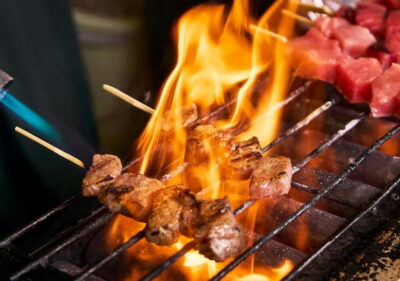
Tsukiji Fish Market: Street Food & Culture Walking Tour
Read our review →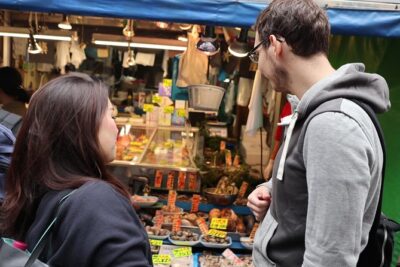
Tsukiji Fish Market Small-Group Food Walking Tour
Read our review →Browse the lists this tour appears in