
Reviewed · TOKYO RAMEN TOURS AND CLASSES
Ramen Making from Scratch +Akihabara Tour –Cooking Class
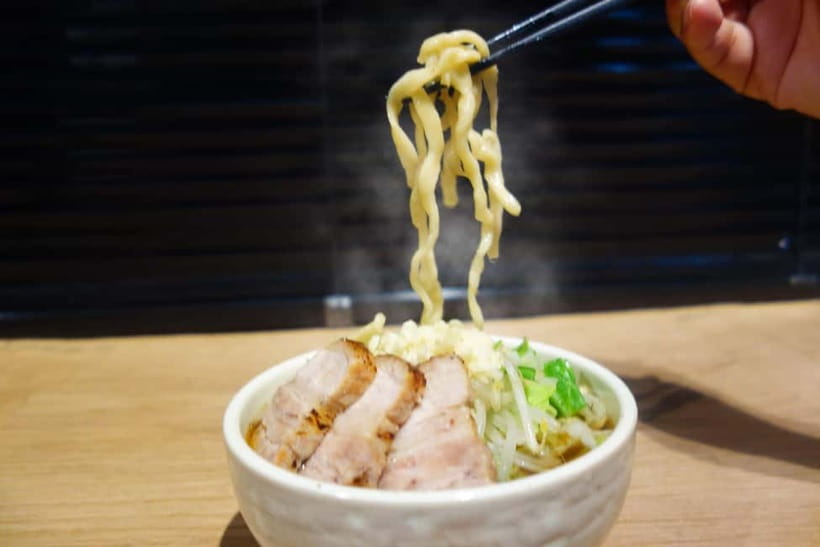
Jiro-style ramen is the star here. You make the noodles from flour, prepare the broth and toppings, then sit down to a bowl you built yourself. I especially like the supermarket stop, where Japanese ingredients become easier to understand, and the small-group format, limited to six people. The 90-minute class is hands-on rather than a quick demonstration.
I also like the way this experience links two sides of Tokyo: Akihabara’s anime and electronics streets and an everyday Japanese food shop. The main consideration is that the class ends at a kitchen studio away from Akihabara, and your train fare from Suehirocho Station is not included. Vegans and vegetarians cannot be accommodated.
Key points to know
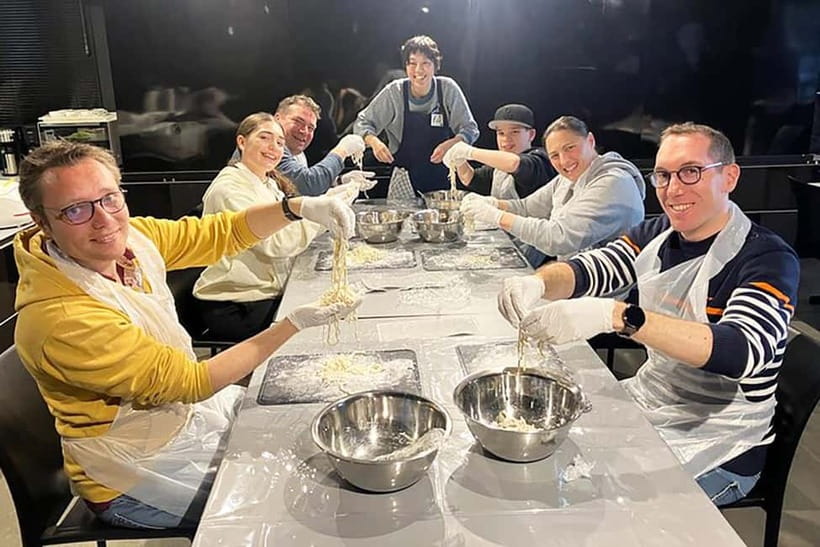
- Make noodles from flour: You prepare fresh ramen noodles instead of simply watching a chef cook.
- Start in Akihabara: The experience includes a short walk through Tokyo’s famous electric town before the food work begins.
- Shop for ingredients: A local supermarket visit helps explain the Japanese ingredients used that day.
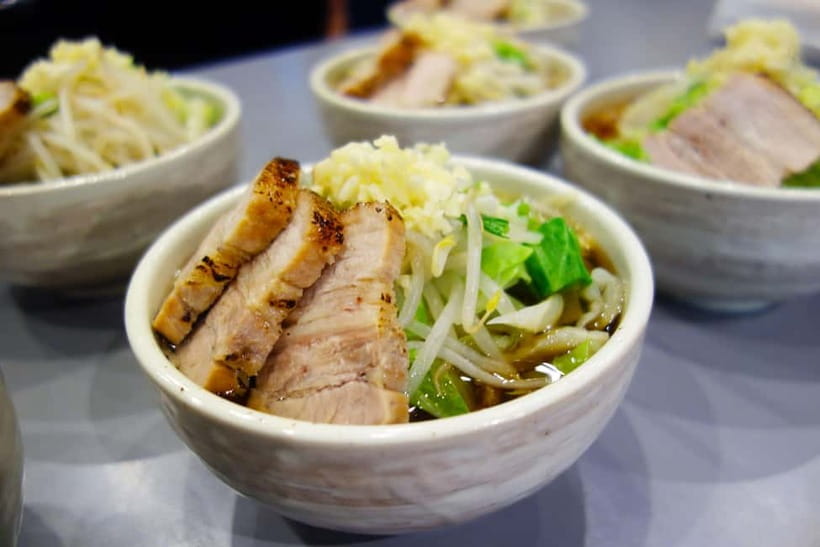
- Cook Jiro-style ramen: You make broth, toppings, and noodles for a hearty bowl associated with a generous serving style.
- Small English-speaking class: The group is limited to six participants, with instruction in English.
- Plan for the return trip: The experience ends at Patia Kitchen Studios, not at Akihabara Station.
Why this ramen class feels different
Many Tokyo cooking classes focus on sushi, tempura, or a broad introduction to Japanese home cooking. This one chooses a more specific target: Jiro-style ramen. That gives the session a clear purpose and lets you spend your time on the parts that make ramen special, especially the noodles, broth, and toppings.
I like that the cooking does not begin in a studio. You first meet at 11 a.m. outside the Central Ticket Gate of JR Akihabara Station. From there, your English-speaking guide takes you through the neighborhood for about 20 minutes.
Akihabara is known for electronics, anime, games, and other pop-culture shops. Even a short walk gives the food class a sense of place. You are not simply arriving at a kitchen with no connection to Tokyo. You first see one of the city’s most recognizable districts, then shift from its entertainment culture to its daily food culture.
The class has a practical feel. You are not only told that Japanese cooking uses certain ingredients. You visit a supermarket and see them in a normal shopping setting. That matters because Japanese food labels and packaged ingredients can be hard to understand when you are on your own.
More Akihabara and anime tours:
- Official Street Go-Kart Tour – Akihabara
★ 5.0 · 1,578 reviews - Tokyo Go Kart: Asakusa, Skytree, and Akihabara **IDP MUST**
★ 5.0 · 988 reviews - Akihabara Anime & Game Adventure Walking Tour (Group or Private)
★ 5.0 · 404 reviews
The Akihabara walk and supermarket visit
The first walk lasts about 20 minutes. Do not expect a full sightseeing tour of Akihabara. The walk is short and is designed to lead you toward the supermarket, but it gives you a quick look at the colorful streets and popular spots along the way.
I see this as a useful opening rather than the main event. If you already know Akihabara well, the walk may feel brief. If this is your first time in the district, it helps you get your bearings before the cooking begins.
The supermarket visit lasts about 20 minutes. Your guide explains the ingredients used for the ramen prepared that day and how they fit into Japanese cooking. This is one of the strongest parts for anyone who wants food context, not just a recipe.
Supermarkets show you what people actually buy. You can see the ordinary, packaged side of Japanese food culture, rather than only ingredients presented in a polished cooking studio. The visit also gives you a chance to ask questions before the class starts.
The stop is not a separate meal or a long shopping session. It is a focused look at ingredients, so keep your expectations in check. Its value comes from the explanation and setting, not from the amount of time spent there.
Taking the train to Patia Kitchen Studios
After the supermarket, you travel by train to the kitchen studio. The ride takes roughly 15 to 30 minutes, depending on the route and timing. Transportation from Suehirocho Station to the studio is not included, so you need to use your own Suica or another IC card.
If you do not have an IC card, the guide will help you buy a ticket. That makes the transfer manageable, but you should still arrive ready to handle a short public-transport connection. The train ride is part of the movement between the two parts of the experience, not a guided sightseeing segment.
The cooking takes place at Patia Kitchen Studios. These are modern cooking spaces in central Tokyo, described as spacious and relaxing, and they are only a few minutes from the nearest station. The studio has also been used for Japanese television programs.
The change of location is worth noting before you book. You begin at JR Akihabara Station but finish at the studio. You will need to arrange your own onward travel after class. If you have a tight afternoon plan beginning back in Akihabara, allow extra time for the return journey.
Making noodles from flour
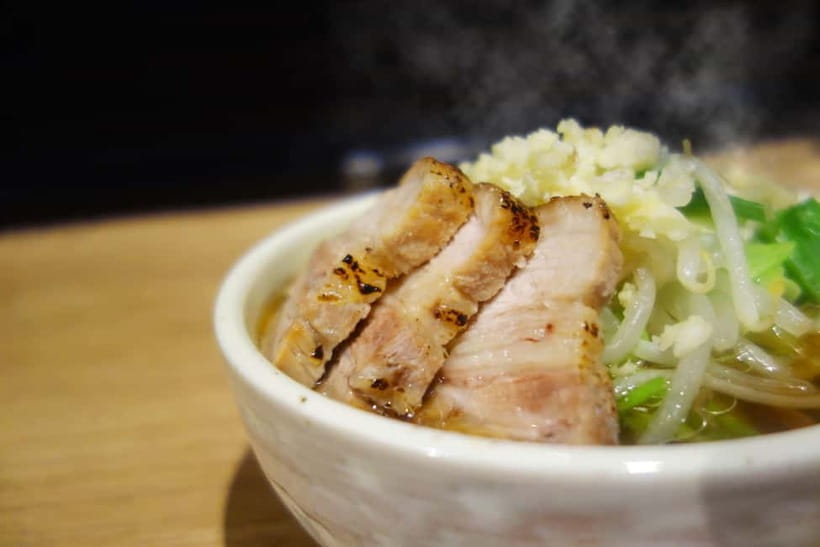
The cooking portion lasts about 90 minutes. You work with an English-speaking instructor and make the ramen from scratch, including the noodles, broth, and toppings.
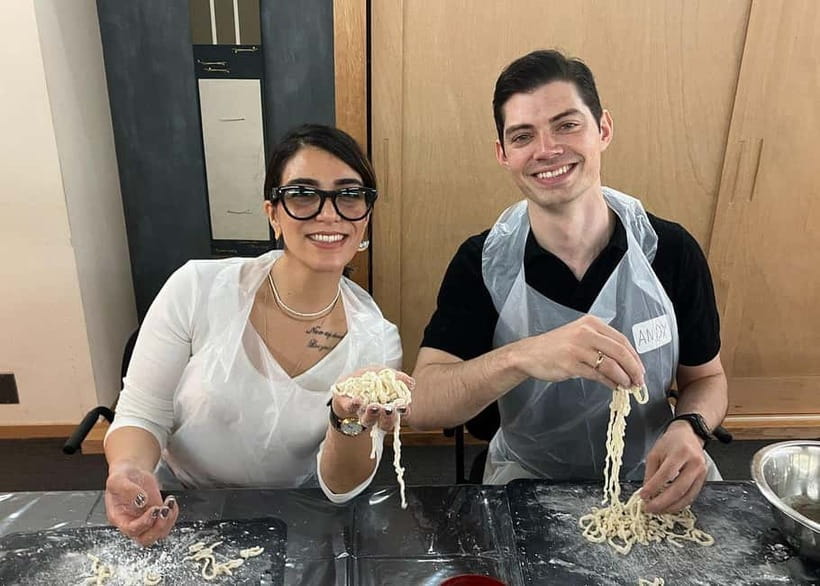
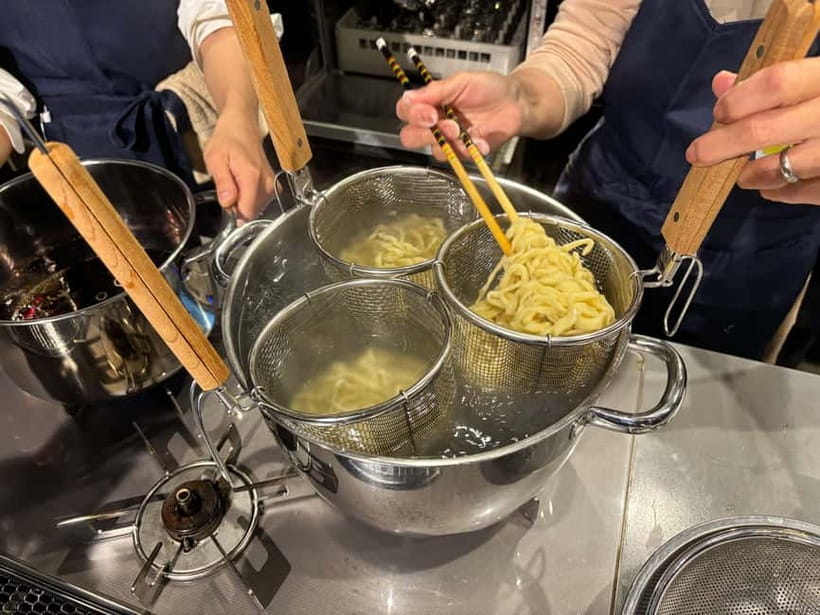
The noodles are the most distinctive hands-on element. You start with flour and learn how it becomes fresh ramen noodles. That gives you a better feel for the dish than simply boiling dried noodles from a packet.
I like this part because noodles are easy to overlook when you eat ramen in a restaurant. The bowl arrives ready to eat, but the noodle texture is one of the main things that defines the dish. Making them yourself helps explain why fresh noodles matter.
The exact technique and sequence can vary with the day’s preparation, and the available information does not specify every step. You should expect guided participation rather than a formal chef demonstration followed by a meal. The English-speaking instructor directs the process so that you can take part at each stage.
For people who enjoy cooking, 90 minutes is enough time to learn the main process without turning the activity into a full-day workshop. For complete beginners, the instructor-led format should make the work approachable. The class is not presented as advanced professional training, so you can focus on learning and eating rather than perfect presentation.
More Tokyo ramen tours and classes:
- Eat and Drink Like a Local: Tokyo Ueno Food Tour-Taverns&Ramen
★ 5.0 · 957 reviews - Ramen & Gyoza Cooking Class in Tokyo with Local Supermarket Visit
★ 5.0 · 823 reviews - Tokyo: Ramen Tasting Tour with 6 Mini Bowls of Ramen
★ 4.9 · 432 reviews - Tokyo: Easy Ramen Cooking Experience in Kabukicho, Shinjuku
★ 4.6 · 321 reviews
Preparing broth and toppings
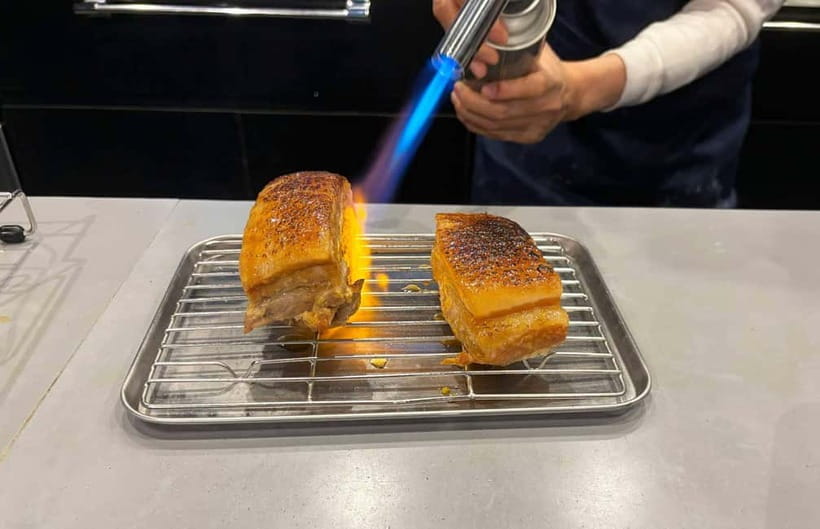
Fresh noodles alone do not make ramen. The class also covers the broth and toppings, bringing the separate parts together in one bowl.
This is where the Jiro-style focus becomes important. Jiro-style ramen is associated with a substantial bowl, generous toppings, and a strong, filling character. The experience gives you a chance to prepare that style rather than learning a generic noodle soup.
The supplied information does not list every topping or the precise broth recipe used on your date. Ingredients depend on what is prepared that day, which is why the supermarket explanation is useful. You learn about the components that are actually being used instead of following a fixed description that may not match the class.
Pork chashu is part of the standard preparation. If you notify the operator more than 48 hours in advance, it can be changed to chicken. That is a useful option for people who eat chicken but prefer not to have pork. It is not a vegetarian substitute, and vegan or vegetarian meals are not available.
Eating the bowl you made
At the end, you eat the ramen you prepared. This is more than a cooking class with a small sample at the end. The stated experience includes food and beverages, and the goal is a complete bowl of Jiro-style ramen.
A Canadian participant described the recipe as the best ramen eaten during a Japan trip. I would not treat that as a promise, since taste is personal, but it points to the main strength of the class: the meal is not an afterthought.
The finished bowl also gives the lesson a clear payoff. You have seen the ingredients in the supermarket, made the noodles, prepared the broth and toppings, and then tasted the result. That sequence helps the activity feel connected from start to finish.
Photographs taken during the experience can be downloaded later. This is a useful extra, especially if you are busy handling dough and ingredients and do not want to stop constantly for pictures.
Group size, pace, and teaching
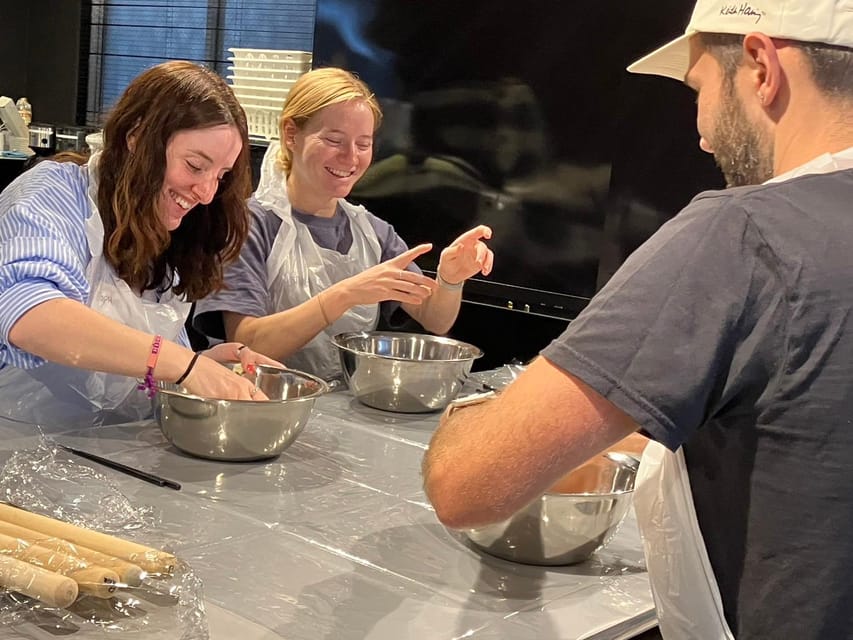
The class is limited to six participants. That is a good size for a practical cooking session. You are more likely to get direct help than in a large group, and the guide can keep the walking portion together.
The instructor and guide provide instruction in English. The experience has received a 5.0 rating from 25 reviews, with particular praise for the friendly cooking team, the clear food explanations, and the quality of the ramen. Two Italian participants singled out the guide and chef as especially good, while another praised the chance to learn about Japanese ingredients.
You should still keep the nature of the class in mind. It is a three-hour activity, not a private chef lesson with unlimited individual attention. With a maximum of six people, the group is small, but you will share the kitchen and work space.
The schedule is fairly compact:
- About 20 minutes walking in Akihabara
- About 20 minutes at the supermarket
- About 15 to 30 minutes by train
- About 90 minutes cooking and eating
Allow some flexibility around the train connection. The total advertised duration is three hours, but the route and the final meal can affect the exact finish.
Is $120 a fair price?
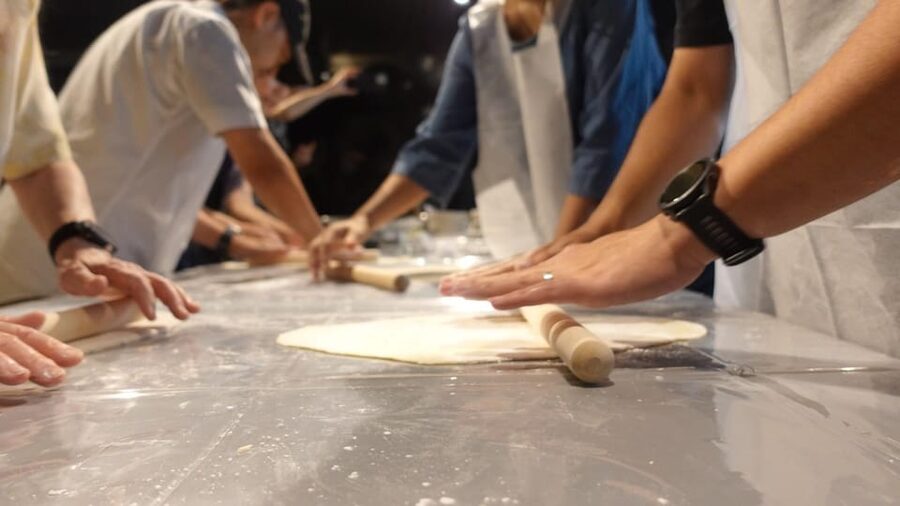
At $120 per person, this is not a cheap bowl of ramen. You could eat ramen in Tokyo for far less. The price makes more sense when you count what is included: a guided Akihabara walk, a supermarket visit, English instruction, the cooking class, food and beverages, a small group, and downloadable photographs.
The class also gives you a skill and a food memory rather than only a meal. If you want to learn how fresh noodles, broth, and toppings come together, the price is easier to justify.
The value is weaker for someone who mainly wants sightseeing in Akihabara or a quick lunch. The neighborhood walk is only about 20 minutes, and the class ends away from the station where you meet. You are paying for the cooking experience first, with Akihabara serving as the opening setting.
The maximum of six participants improves the value. A larger class might make a hands-on noodle lesson feel crowded. Here, the small group and English instruction are central to what you are buying.
Who should book this experience?
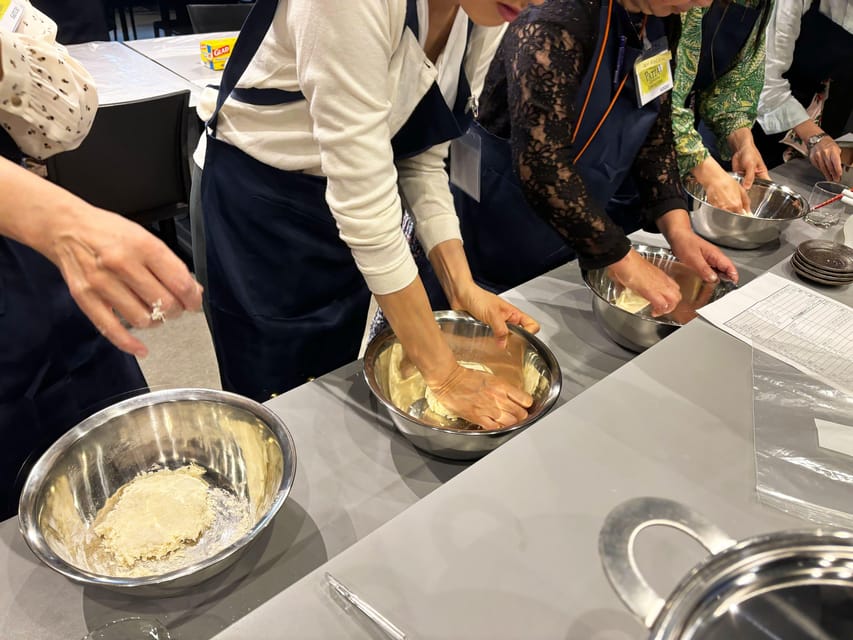
I would recommend it to you if ramen is high on your Japan food list and you want to understand how the bowl is made. It also suits visitors who like pairing a neighborhood walk with a practical activity.
The experience works well for first-time visitors to Tokyo because it combines a famous district with an everyday supermarket and a guided meal. It is also a good fit for couples, since a minimum of two people is required per reservation.
You should think twice if you need wheelchair access, have back problems, or are traveling with a child under five. Baby strollers are not allowed, and smoking is not allowed. Vegans and vegetarians cannot participate because suitable options are not available.
Arrive early. The meeting point is outside the Central Ticket Gate at JR Akihabara Station, and the group leaves if you are more than 10 minutes late. If that happens, you must go directly to the kitchen studio, and no refund is provided for the missed start.
My booking advice
Book this class if you want a focused food lesson with a bit of Tokyo street life attached. The best reasons are the fresh noodles, the supermarket context, the small English-speaking group, and the chance to make a Jiro-style bowl from the base ingredients.
Skip it if your main goal is an extended Akihabara tour, a vegetarian meal, or a class that begins and ends at the same station. For everyone else, $120 buys a well-planned three-hour activity with a real cooking payoff and a meal you helped create.
FAQ
Where does the ramen experience begin?
It begins at 11 a.m. outside the Central Ticket Gate of JR Akihabara Station.
Where does the experience finish?
It finishes at Patia Kitchen Studios, which is a different location from the Akihabara meeting point.
How long does the activity last?
The advertised duration is three hours.
Is the class taught in English?
Yes. The guide and cooking instructor provide the experience in English.
How many people can join the class?
The group is limited to six participants. At least two people are required per reservation.
Is train transportation included?
No. Transportation from Suehirocho Station to the kitchen studio is not included. You should use a Suica or another IC card. If you do not have one, the guide can help you buy a ticket.
Can the pork chashu be changed to chicken?
Yes. You must request the change more than 48 hours in advance.
Are vegan or vegetarian options available?
No. Vegan and vegetarian options are not available.
What is included in the price?
The price includes the grocery store tour, cooking experience, food and beverages, and photographs that you can download later. Hotel pickup and drop-off are not included.
More hands-on classes and workshops in Tokyo
- Sushi Making Tokyo Roll and Authentic Japanese Sushi Class
★ 5.0 · 3,971 reviews - Chopstick Making Workshop in Ginza
★ 4.8 · 1,366 reviews - Matcha Making Class in Tokyo with Authentic Japanese Sweets Set
★ 5.0 · 744 reviews - Tokyo: Samurai Sword & Archery Class from Samurai Descendant
★ 5.0 · 603 reviews
More Tokyo cooking classes
- Tokyo: Roll and Authentic Sushi Making Class in Asakusa
★ 4.9 · 1,957 reviews - Tokyo Shinjuku Chopsticks Making Class
★ 5.0 · 1,763 reviews - Tokyo: Sushi Making Class in a Happi Coat near a Famous Spot
★ 4.9 · 1,377 reviews - Tokyo Sushi Making Class in Tsukiji with Professional Chef
★ 5.0 · 1,177 reviews
Newly reviewed around Tokyo
- Tokyo Asakusa:Calligraphy & Make T-shirt Activity★ 5.0 · 62 reviews
- Intercity Shuttle, Tokyo to Haneda /Narita /Yokohama /Makuhari★ 5.0 · 5 reviews
- 1 Hour Travel around Tokyo with a Professional Photographer★ 5.0 · 3 reviews
- Travel Tokyo with Your Own Personal Photographer★ 5.0 · 43 reviews
- Shuttle Van 6hr Tokyo Tour to-and-from Tokyo, Yokohama and Narita★ 5.0 · 9 reviews
- Kickboxing & Body Training with EX-Pro Fighter★ 5.0 · 4 reviews
- Train in Samurai Swordsmanship and Defeat the Demon in Tokyo★ 5.0 · 5 reviews
- Traditional Japanese Knife Sharpening Class★ 5.0 · 18 reviews
Tokyo Ramen Tours and Classes, compared.

Eat and Drink Like a Local: Tokyo Ueno Food Tour-Taverns&Ramen
Read our review →
Ramen & Gyoza Cooking Class in Tokyo with Local Supermarket Visit
Read our review →

Easy Ramen Cooking Experience in Kabukicho, Shinjuku
Read our review →
Ramen and Sushi Cooking Class with Sake Pairing Set in Tokyo
Read our review →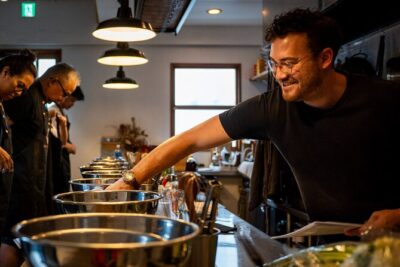
Professional Ramen & Gyoza with Ramen Chef in a restaurant!
Read our review →
Ramen Dojo Tokyo | Make All 3 (Tonkotsu/Shoyu/Miso)
Read our review →Ramen Dojo Tokyo | Make All 3 (Tonkotsu/Shoyu/Miso)
Read our review →Browse the lists this tour appears in