
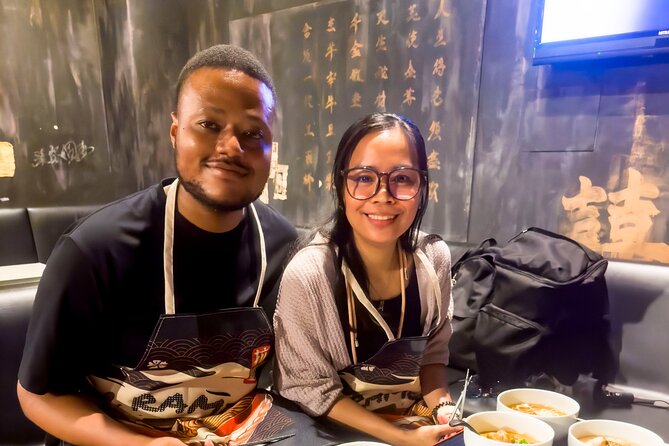
Reviewed · TOKYO RAMEN TOURS AND CLASSES
Shibuya: Ramen Dojo Tokyo | Make All 3 (Tonkotsu/Shoyu/Miso)
Making three kinds of ramen in 90 minutes is the clever hook here. At Ramen Dojo Tokyo, you knead and cut fresh noodles, prepare chicken chashu, then taste tonkotsu, shoyu, and miso side by side. It is part cooking class, part lunch, and part edible souvenir.
I like the small groups of up to eight, which give the instructor time to help with the dough and plating. I also like that the class teaches methods you can repeat at home, rather than turning the whole session into a cooking show. The main limitation is that the three soup bases are prepared ahead of time, so you learn to adjust and combine them rather than simmering full broths from scratch.
Key points to know before booking
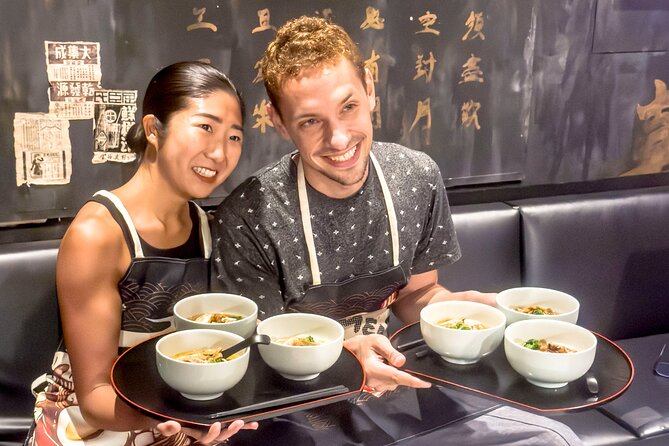
- Three ramen styles in one sitting: Compare tonkotsu, shoyu, and miso in three mini bowls.
- Fresh noodles are the main hands-on task: Knead dough, roll it, and cut it with a professional machine.
- Chicken chashu is prepared in class: You help finish the meat before adding it to your bowls.
- English instruction keeps the process clear: Instructors such as Kazuki, Kensei, Kai, Arata, and Rin have led sessions.
- The $64 price includes a meal and recipe: You receive ingredients, equipment, an apron, three bowls, and a digital recipe.
- Arrive on time: The studio has no early waiting area, and arrivals more than five minutes late may not be admitted.
What makes this ramen class worth your time
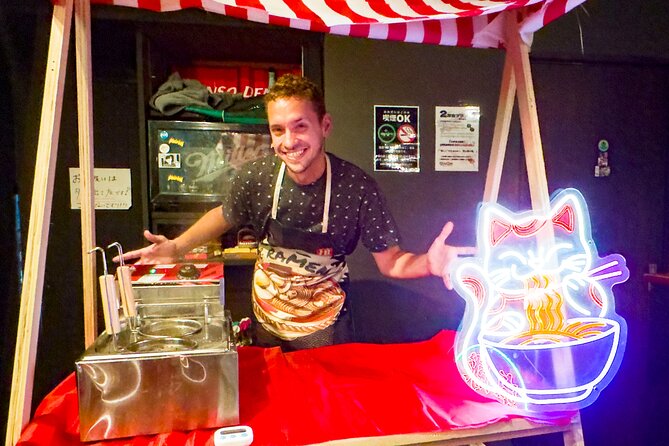
Tokyo offers plenty of excellent ramen shops, but eating a bowl and learning how it comes together are two different experiences. This workshop gives you a useful look at noodles, soup, toppings, and texture without requiring professional cooking skills.
The best part is the comparison. Tonkotsu gives you a rich, pork-based style, shoyu brings a soy-seasoned profile, and miso adds a fuller, savory taste. You do not have to choose just one. The three smaller portions let you notice how the same basic meal changes when the soup base changes.
This is a good choice if you want an activity that feels connected to Japanese food culture but does not take half a day. The class lasts 90 minutes, starts and finishes at the studio, and leaves you in a useful part of Tokyo for more sightseeing afterward.
The experience costs $64 per person. That is not cheap for a meal, but the price covers instruction, ingredients, equipment, an apron, three ramen tastings, and a digital recipe. Since the three bowls can be surprisingly filling, you are paying for both lunch and a practical activity. I would consider it good value if you enjoy cooking or want more than another restaurant meal.
More things to do in Shibuya:
- Official Street Go-Kart in Shibuya
★ 5.0 · 3,435 reviews - Tokyo: Street Kart Experience in Shibuya
★ 4.9 · 1,484 reviews - Shibuya Meltdown Nightlife Tour: All-You-Can-Drink Bar Hopping
★ 5.0 · 1,058 reviews
Walking from Shibuya Station to the studio
The studio is about a 10-minute walk from Shibuya Station, at 1F, 2-16-29 Ohashi, Meguro-ku, Tokyo 153-0044. That location makes the class easy to pair with a morning or afternoon around Shibuya, though you should allow enough time to find the entrance.
Doors open only 10 minutes before the start. There is no waiting area and no early entry, so arriving far ahead of time will not help. The smart plan is to reach the neighborhood a little early, then approach the studio five to 10 minutes before your booked start.
Late arrival matters here. Anyone arriving five or more minutes late may need to join after the class has started or may be turned away, with no refund in some cases. The cooking activities involve flour, machinery, hot water, and close timing, so this strict rule is practical rather than fussy.
The class takes place on stairs-only premises. If you have difficulty with stairs, this is not a suitable choice. Hotel pickup and drop-off are not included, and drinks are extra.
The 10-minute briefing and introduction
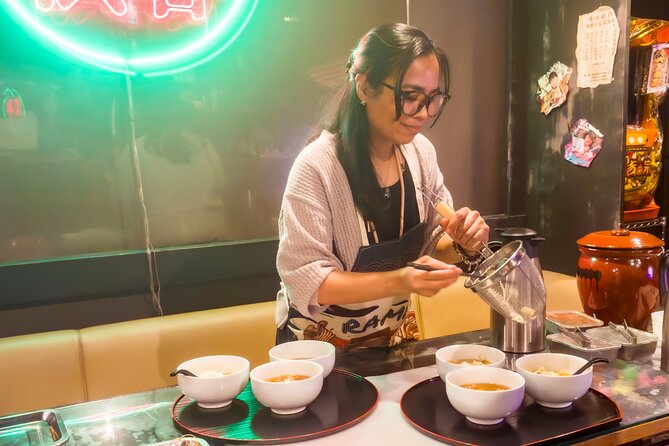
The class begins with a short check-in and safety briefing. The instructor explains the plan, introduces the three ramen styles, and shows how the kitchen equipment will be used.
Instruction is offered in English and Japanese. The English-speaking instructors named in the activity information include Kazuki, Kensei, Kai, Arata, and Rin, with staff assignments varying by session. The teaching style is step by step, which helps if you have never made noodles before.
The group limit is eight people. That is small enough for an instructor to watch your technique, but the class will not necessarily feel private. Some sessions may have only two participants, while others may be fuller. A smaller group gives you more time for questions and individual help.
You receive an apron, but wear clothes that can handle a little flour. The noodle-making portion is the messiest part of the class, and flour may land on your sleeves or front.
Preparing chicken chashu in five minutes
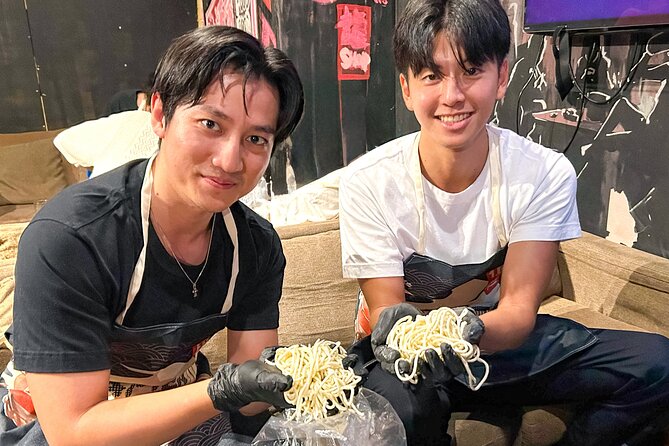
The first food task is chicken chashu preparation. You help prepare the meat, then return to it later for finishing. This is a useful choice for a short class because chicken chashu is more realistic to complete within the timetable than a long, traditional pork preparation.
Do not expect to make every component from raw ingredients. The activity includes hands-on preparation, while some elements are ready in advance. That keeps the class moving and makes it possible to taste three different ramen bowls in one session.
The ingredient list includes wheat, egg, soy, chicken, and pork. The soup bases and other components may contain ingredients that are not obvious from the bowl, so ask ahead if you have dietary concerns.
More Tokyo ramen tours and classes:
- Eat and Drink Like a Local: Tokyo Ueno Food Tour-Taverns&Ramen
★ 5.0 · 957 reviews - Ramen & Gyoza Cooking Class in Tokyo with Local Supermarket Visit
★ 5.0 · 823 reviews - Tokyo: Ramen Tasting Tour with 6 Mini Bowls of Ramen
★ 4.9 · 432 reviews - Tokyo: Easy Ramen Cooking Experience in Kabukicho, Shinjuku
★ 4.6 · 321 reviews
Making noodles from scratch with a professional cutter
The noodle-making section lasts about 20 minutes and is the heart of the class. You work with the dough, knead it, roll it, and cut it into noodles using professional equipment.
The machine adds a fun visual moment, but the process is not just pressing a button. One session included hand technique before the dough went through the equipment, giving participants a better sense of how the dough changes. That hands-on feel is more useful than simply watching a machine do all the work.
You should not expect to master ramen noodles in one short lesson. Flour hydration, thickness, and cutting all affect the final texture, and the class moves at a friendly pace. Still, you leave with a clear outline of the process and a recipe to help you try it at home.
The practical value is strong here. You do not need a restaurant kitchen to repeat the basic method, and one participant found the approach easy to reproduce at home without special equipment. The professional cutter makes the class smoother, but the instructor also shows techniques that can be adapted outside the studio.
Finishing the chashu and preparing the soup
After the noodles are made, you finish the chicken chashu and prepare the soup bases. This section takes about 20 minutes when combined with boiling the noodles and getting the broths ready.
The three broths are not cooked from the beginning in front of you. Long-simmered ramen stock would take far longer than 90 minutes, so the bases are prepared in advance. That is an important point if you are booking because you want to learn full broth production.
What you do learn is how to adjust the soup to your preferred strength. This is where the workshop moves beyond a simple demonstration. You can make the final bowl milder or stronger, then compare the result with the other styles.
The aromas change as the different broths are prepared. That helps you connect the smell, color, and seasoning to the finished bowl. The instructor can explain the differences as you work, and the short format keeps the discussion focused.
Plating three mini bowls side by side
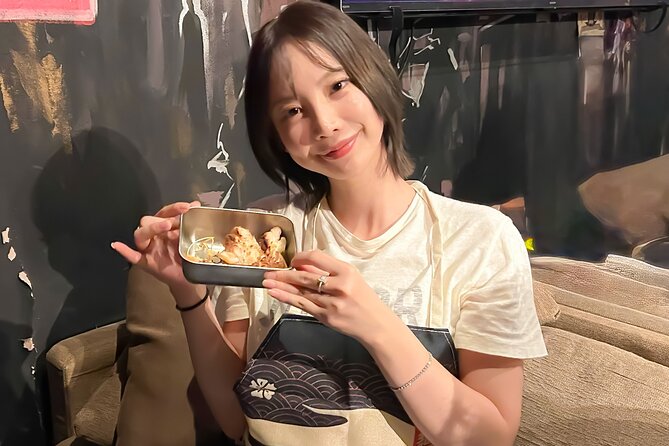
Plating takes about five minutes, but it is the moment when the separate parts become a proper meal. You add noodles, soup, chicken chashu, and toppings to three small bowls.
The presentation is designed for photos. The three bowls make a neat trio, and the different broths give each one its own color and character. Photography is welcome, so keep your phone nearby, but do not let the picture-taking crowd out the tasting.
The portions are called mini bowls, yet three servings can be quite filling. That is why I would avoid eating a large meal right before class. One person arrived too soon after eating and found it harder to enjoy the full tasting. Come hungry enough to try all three.
You get to control some of the final details, including soup strength and toppings. That makes the meal feel more personal than a standard cooking demonstration. It also gives you a fair comparison of the three styles, rather than presenting them as fixed recipes you can only copy.
Tasting time and the value of three styles
The final 30 minutes are set aside for tasting, photographs, and conversation. This is not a rushed stand-and-eat finish. You sit down and work through the three bowls you helped prepare.
Start by tasting each soup on its own. Then compare the noodle texture and chicken chashu across the bowls. The side-by-side format makes the differences easier to notice than ordering three full ramen dishes at separate restaurants.
The class is especially useful for people who know they like ramen but are not sure which style suits them. Tonkotsu tends to feel fuller, shoyu often tastes lighter and saltier, and miso brings a strong savory note. The exact balance depends on how the soup is adjusted during the class.
The meal also gives you a chance to ask final questions. Instructors have been praised for clear explanations, a calm manner, and a willingness to help. Kazuki has been noted for detailed instruction, while Kensei and Kai have led lively, friendly sessions. The specific instructor depends on the date.
A digital recipe is provided after class. This matters because the experience is short and some ingredients are prepared ahead. The recipe gives you a way to repeat the noodle and ramen process at home instead of leaving with only a few photos.
Who will enjoy Ramen Dojo Tokyo
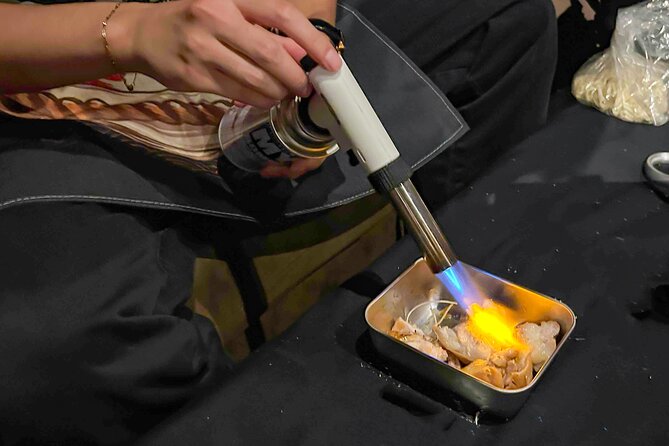
This class suits beginners, couples, families with children aged six and older, and anyone looking for a food activity near Shibuya. You do not need prior cooking experience. The instructor handles the technical explanation, and the class is structured so each person takes part.
It is also a good option for a lunch or dinner plan. The activity starts and ends at the same studio, so you can continue around Shibuya afterward without arranging a separate return journey.
I would especially recommend it to you if:
- You want to make fresh noodles rather than only taste ramen.
- You enjoy comparing different soup styles.
- You prefer a small class with English guidance.
- You want a Tokyo activity that produces a full meal.
- You would like a recipe you can use after your trip.
- You are looking for something suitable for a couple or small family group.
It is less suitable if you want to learn every part of ramen production from start to finish. The broth takes too long to cook within this format, and several elements are prepared ahead.
It is also unsuitable for severe wheat, egg, or soy allergies, celiac disease, severe airborne flour sensitivity, or anyone who needs strict vegan or religious dietary compliance. Ingredients include chicken and pork, and cross-contamination cannot be completely prevented. Partial accommodation for vegetarian, vegan, or no chicken and pork requests may be possible, but you need to ask in advance.
Practical details that affect your booking
The class lasts 90 minutes and is limited to eight people. An English-speaking instructor leads the session, with Japanese also available.
Aprons are supplied, but flour can get on your clothes. Follow the staff instructions around the noodle machine, boiling water, and kitchen equipment. Stairs are the only access route.
Drinks and alcohol are not included. Special dietary substitutes beyond the stated arrangements are also not included.
Cancellation is free up to 24 hours before the class for a full refund. You can also reserve and pay later, which helps if your Tokyo schedule is still changing. If you will be late, contact the class before the start time through the emergency contact details provided with your booking.
Should you book this ramen workshop?
Book it if you want a hands-on food experience that is short, social, and genuinely useful. The fresh noodles, chicken chashu, three soup styles, and take-home recipe give the $64 fee more substance than a standard restaurant meal.
Skip it if your main goal is to cook long-simmered ramen broth from raw ingredients, or if flour, egg, soy, chicken, or pork creates a serious dietary problem. For everyone else, this is a well-planned introduction to ramen with enough eating time to make the class feel like part of your day in Tokyo, not just a cooking lesson.
FAQ
How long does the Ramen Dojo Tokyo class last?
The class lasts 90 minutes. The schedule includes a briefing, chicken chashu preparation, noodle making, soup preparation, plating, tasting, and photo time.
Which ramen styles will I make?
You will prepare and taste three mini bowls: tonkotsu, shoyu, and miso ramen.
Are the soup bases made from scratch during the class?
No. The broths are prepared ahead because full ramen stocks take too long to cook during a 90-minute class. You adjust the soup strength and assemble the bowls during the workshop.
Is the class taught in English?
Yes. The class is conducted in English, with Japanese also available. Instructors named for sessions include Kazuki, Kensei, Kai, Arata, and Rin.
Can children join the class?
Children aged six and older are recommended for the activity. Parents or guardians should still consider the use of flour, kitchen equipment, hot water, and stairs.
Can the class accommodate vegetarian or vegan diets?
Partial accommodation may be possible for vegetarian, vegan, or no chicken and pork requests, but you must inquire in advance. Complete prevention of cross-contamination cannot be guaranteed, and the activity is not suitable for strict dietary compliance.
Newly reviewed around Tokyo
- Tokyo Asakusa:Calligraphy & Make T-shirt Activity★ 5.0 · 62 reviews
- Intercity Shuttle, Tokyo to Haneda /Narita /Yokohama /Makuhari★ 5.0 · 5 reviews
- 1 Hour Travel around Tokyo with a Professional Photographer★ 5.0 · 3 reviews
- Travel Tokyo with Your Own Personal Photographer★ 5.0 · 43 reviews
- Train in Samurai Swordsmanship and Defeat the Demon in Tokyo★ 5.0 · 5 reviews
- Shuttle Van 6hr Tokyo Tour to-and-from Tokyo, Yokohama and Narita★ 5.0 · 9 reviews
- Kickboxing & Body Training with EX-Pro Fighter★ 5.0 · 4 reviews
- Traditional Japanese Knife Sharpening Class★ 5.0 · 18 reviews
Tokyo Ramen Tours and Classes, compared.
Eat and Drink Like a Local: Tokyo Ueno Food Tour-Taverns&Ramen
Read our review →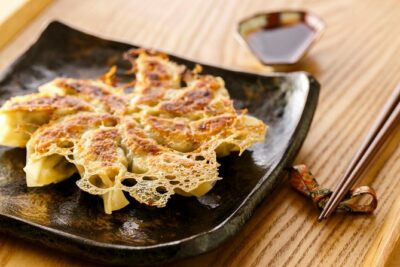
Ramen & Gyoza Cooking Class in Tokyo with Local Supermarket Visit
Read our review →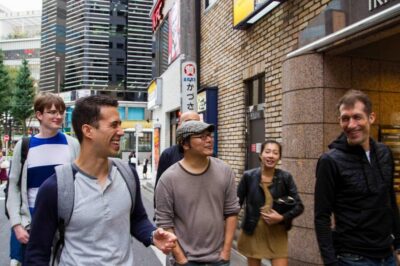
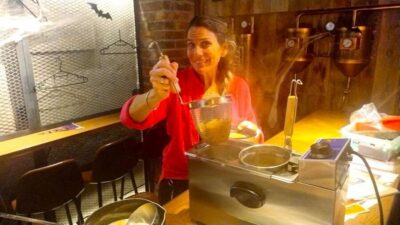
Easy Ramen Cooking Experience in Kabukicho, Shinjuku
Read our review →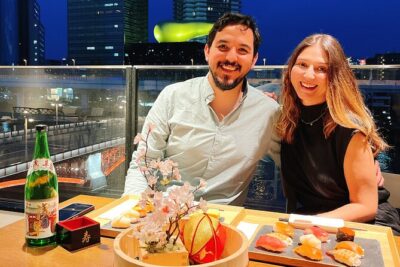
Ramen and Sushi Cooking Class with Sake Pairing Set in Tokyo
Read our review →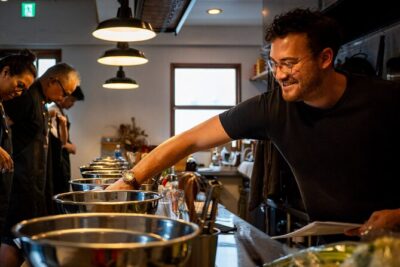
Professional Ramen & Gyoza with Ramen Chef in a restaurant!
Read our review →
Ramen Dojo Tokyo | Make All 3 (Tonkotsu/Shoyu/Miso)
Read our review →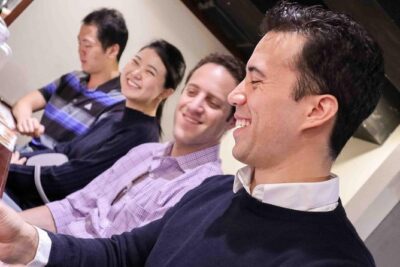
Browse the lists this tour appears in