
Reviewed · TOKYO TRADITIONAL CRAFT WORKSHOPS
Kintsugi Experience with Arita Ware in Tokyo (English Guide)
Kintsugi turns a damaged piece of pottery into something worth keeping. In this 90-minute Tokyo workshop, you repair Arita ware, Japan’s first porcelain, inside Nihonbashi Mutoh Main Store, a traditional craft shop dating to 1923. The finished plate is yours to take home, though it needs a week to dry before you pack it.
I like two things right away: the small group limit of 10 keeps the craft hands-on, and the English-speaking instructor makes a Japanese technique accessible even if you have never worked with ceramics. I also like that you can bring a suitable broken item from home, instead of making only a standard souvenir.
The main consideration is the price, $139 per person. That is a serious spend for 90 minutes, and your finished piece is decorative only. Still, the fee includes materials, instruction, and an Arita ware plate, making this a better fit for craft lovers than for anyone seeking a cheap activity.
Key points to know before booking
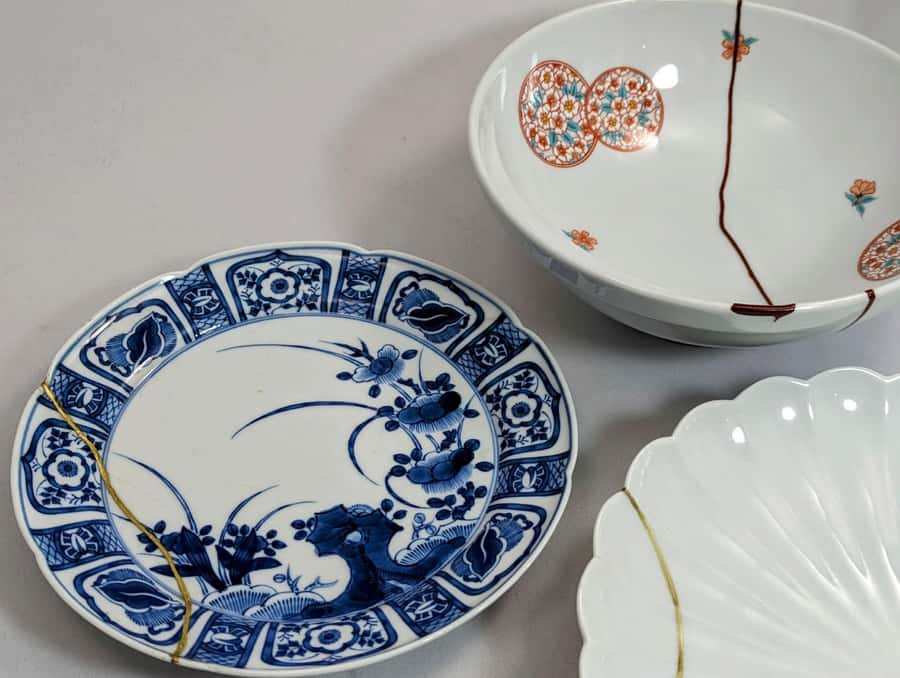
- Repair 400-year-old Arita ware tradition: Work with a porcelain style first produced in Japan about four centuries ago.
- Meet at a century-old craft shop: Nihonbashi Mutoh Main Store has operated since 1923 and sells lacquerware and glassware.
- English instruction in a small group: The class accepts up to 10 participants and may run alongside regular customers.
- Take home a handmade plate: Your workshop piece is included, but it must dry indoors for about one week.
- Bring your own broken object: It must be ceramic or porcelain, no larger than about 15 centimeters in diameter and height, with one or two broken sections.
- Plan for careful use: The repaired piece is for decoration only and cannot go in a microwave or dishwasher.
Why kintsugi makes a good Tokyo souvenir
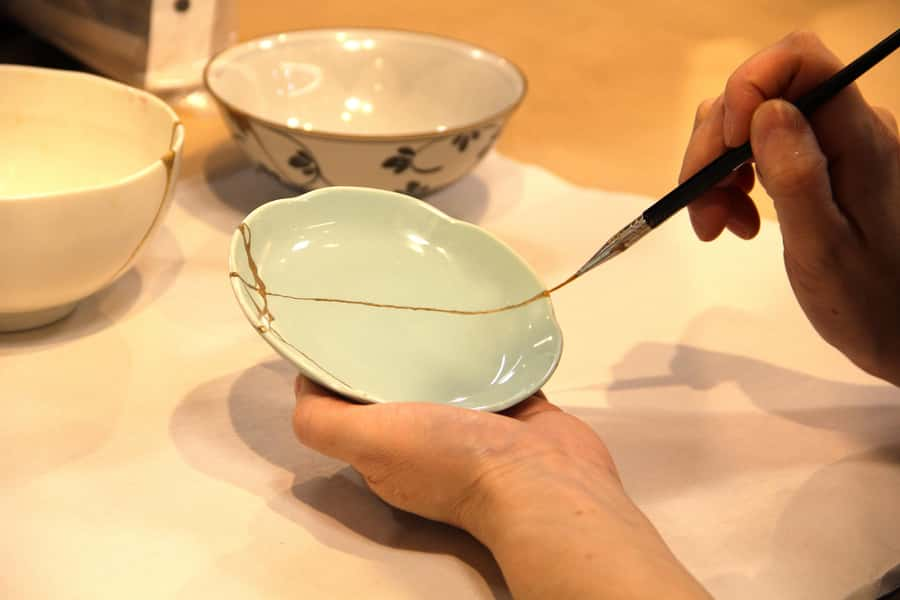
Many souvenirs occupy a shelf for a few weeks and then disappear into a cupboard. Kintsugi gives you something with a story, because the visible repair becomes part of the object rather than a flaw to hide.
The Japanese craft joins broken pottery with lacquer and gold. It is linked with wabi-sabi, the idea that age, imperfection, and change can have their own beauty. You do not need a background in Japanese art to appreciate the point. A crack is not simply damage anymore. It records what happened and becomes part of the design.
That makes this activity more thoughtful than a quick make-and-take craft session. You work on one object, pay attention to its broken lines, and leave with a piece that cannot be duplicated. The result will not look like a factory-perfect souvenir, and that is the point.
This workshop also gives you a connection to Arita ware. Arita porcelain has been made in Japan for about 400 years and is described as the first porcelain produced in the country. The plate used in the class comes from Shobido Honten, a brand with both domestic and international fans. You are not working with a random craft blank. You are repairing a piece connected to a long Japanese porcelain tradition.
More Tokyo craft workshops:
- Tokyo Shinjuku Chopsticks Making Class
★ 5.0 · 1,763 reviews - Chopstick Making Workshop in Ginza
★ 4.8 · 1,366 reviews - Kintsugi Experience: Art of Golden Joinery in Tokyo
★ 5.0 · 467 reviews
Starting at Nihonbashi Mutoh Main Store
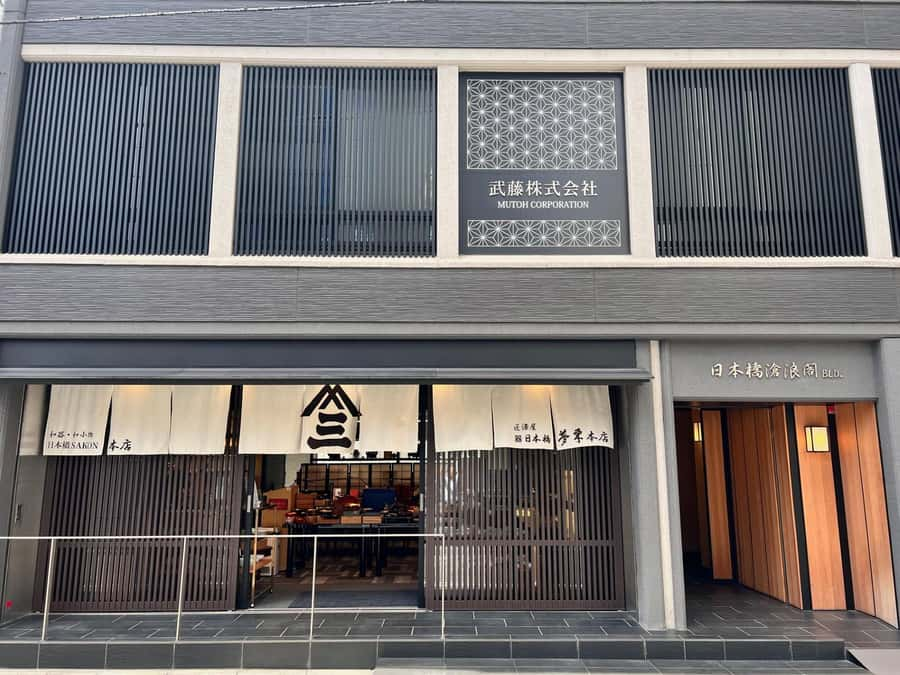
Your meeting point is Nihonbashi Mutoh Main Store at 1-8-3 Honcho, Nihonbashi, Chuo City, Tokyo, postal code 103-0023. The shop was established in 1923 and deals in high-quality lacquerware and glassware.
The setting matters. Instead of doing the class in a generic activity room, you work among traditional Japanese craft goods. Beautiful lacquerware and porcelain provide the surroundings, so the workshop feels tied to the objects and skills it presents.
You choose one of three start times:
- 10:30 to 12:00
- 13:30 to 15:00
- 15:30 to 17:00
The activity runs for 90 minutes, and it ends at the scheduled time even if you arrive late. I would arrive early enough to find the shop and settle in, since losing even 10 minutes matters in a short class. You may be working beside regular customers, so this is not necessarily a private class reserved only for your booking.
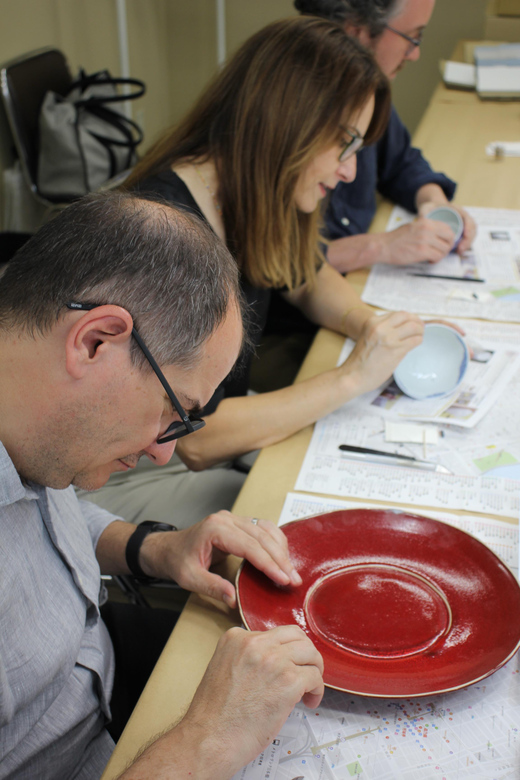
The workshop is limited to 10 people. That is a useful middle ground: large enough to have some energy, but small enough for instruction to remain practical. One session had eight participants and was described as comfortable rather than crowded. The activity is also wheelchair accessible.
What happens during the 90-minute class
The session is built around one finished object. You learn the basic idea of kintsugi, work on the supplied Arita ware plate, and take the result home.
The available information does not set out a minute-by-minute technical program, so you should not expect a long museum-style lecture or a full professional apprenticeship. The value is in the guided practice. The instructor explains the process, and the English support lets you follow the work without needing Japanese.
The teaching may begin in Japanese and then be translated into English. That format has worked well for the class, but it may feel less fluid than a workshop led entirely in English. If you want a fast, direct lesson with no translation pauses, keep this in mind.
The class is designed to complete one object in the allotted time. That focus is helpful. You are not rushing through several small items, and you are not left with an unfinished project. The 90 minutes should be long enough to understand the craft and make a personal piece, but not long enough to explore every form of traditional pottery repair.
You receive all necessary materials, along with the plate used in the experience. At the end, you take it home. This is a handmade object, so small variations are part of the result rather than a problem to correct.
Bringing your own broken pottery
You can bring a ceramic or porcelain item from home, which adds a personal touch to the workshop. Perhaps it is a small dish with sentimental value, or a piece you were about to throw away. Repairing your own object can make the lesson more meaningful than starting with a new plate.
There are strict limits. Your item should be:
- Ceramic or porcelain
- About 15 centimeters or smaller in diameter
- About 15 centimeters or smaller in height
- Broken in one or two places
Do not arrive with a large vase, a pile of fragments, or an object made from glass, wood, or another material. The supplied plate remains the safer choice if you are unsure that your item qualifies. Since the workshop is short, a simple break is more suitable than a complicated reconstruction.
You may also prefer the provided Arita ware because it gives you a clean start and guarantees that the object is appropriate for the class. Bring your own piece only if the personal value outweighs the risk of working on something you care about.
More guided tours in Tokyo:
- Tokyo 6hr Private Tour with Government-Licensed Guide
★ 5.0 · 3,902 reviews - Tokyo: Shinjuku Local Bar and Izakaya Guided Walking Tour
★ 4.9 · 1,794 reviews - Tokyo: Private City Highlights Tour with Local Guide
★ 4.8 · 1,433 reviews - Tokyo: Tsukiji Fish Market Guided Walking Tour
★ 4.9 · 1,397 reviews
What you can take home, and how to care for it
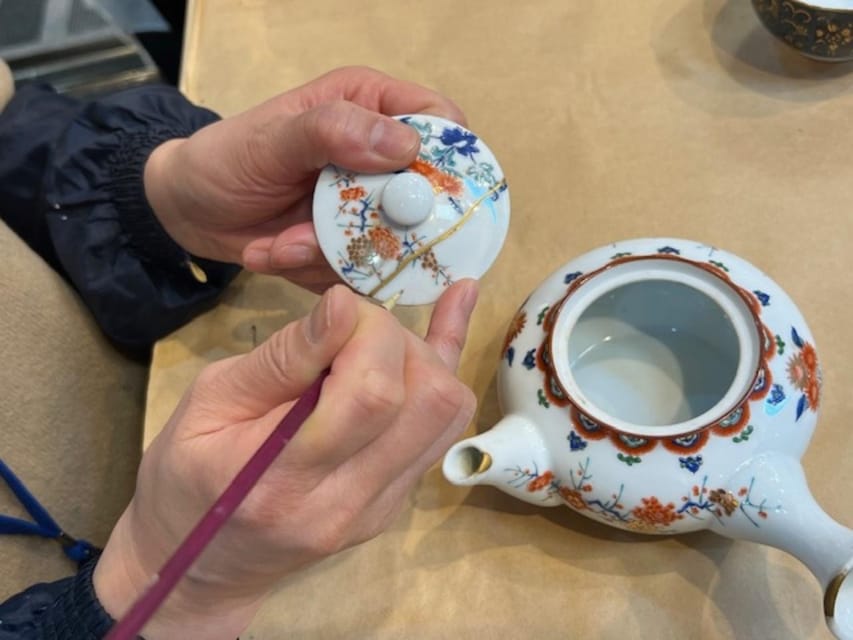
The repaired piece is not ready for immediate heavy use. After the class, bring it home and let it dry indoors for about one week.
Care is simple but limited. Wash it by hand with dishwashing detergent. Do not put it in a dishwasher or microwave, and use it for decoration rather than for eating or drinking.
That last point changes how you should think about the finished plate. It is not a repaired dinner dish for daily service. It is a display piece, keepsake, or small reminder of your time in Tokyo. Pack it with care, and allow room in your luggage for a fragile object that may still need to dry.
Wear clothes you do not mind getting dirty. The workshop involves craft materials, and a smart outfit is not the right choice for hands-on work. You do not need to bring special equipment because the materials are supplied.
Is $139 a fair price?
At $139 per person, this is not a bargain activity. You are paying far more than the cost of a plate or an ordinary souvenir. The price makes sense only if you want the instruction, the setting, and the chance to create a personal object.
The fee includes admission to the 90-minute workshop, all materials, an English-speaking instructor, and the Arita ware plate you use. It also gives you access to a traditional craft shop with about a century of business behind it.
I would compare it with the cost of another premium Tokyo experience rather than with a shopping purchase. The class gives you a souvenir and a skill introduction, but it does not provide a full-day craft course or a finished piece suitable for food. If your main goal is simply to own Arita porcelain, buying an item may be cheaper and easier.
For someone who values making the object, the price is more defensible. You leave with something that shows your own hand, and the visible repair gives it a story. The activity also fills only 90 minutes, so it can fit neatly into a day of sightseeing in Nihonbashi.
Who will enjoy this workshop most
This class suits adults and older teenagers who like traditional crafts, Japanese design, and quiet hands-on activities. Children under 13 cannot participate, so families with younger children need another plan.
You do not need to be artistic. The class is designed as an introduction, and feedback about the activity points to clear guidance for people at all skill levels. An experienced ceramicist may find the session too brief, but a beginner can understand the appeal of kintsugi without committing to a long course.
It also works well for couples or friends who want a souvenir with more meaning than a T-shirt. Each person creates a separate object, so you can compare the results afterward. Solo participants should also feel comfortable, since the group is small and the activity does not depend on arriving with a partner.
This is less suitable for anyone looking for a lively, fast-moving attraction. The appeal is patient work, careful attention, and the calm rhythm of repairing one object. It may also disappoint you if you expect a fully restored plate that can go on the dinner table.
Practical booking advice for Tokyo
Pick your time with the rest of your day in mind. The morning session runs from 10:30 to noon, while the afternoon choices run from 13:30 to 15:00 and 15:30 to 17:00. Because the workshop ends on time, late arrival costs you part of the experience.
The activity is offered in English, and the group size is capped at 10. It may take place alongside regular customers, so expect a working shop environment rather than a private studio.
Cancellation is free up to three days in advance for a full refund. There is no refund if you simply do not take part on the scheduled day. That policy makes it worth checking your Tokyo plans before booking, especially if your itinerary is still shifting.
Food and drinks are not included. The activity lasts only 90 minutes, so this is easy to pair with a meal before or after, but you should not expect refreshments as part of the class.
The main strengths and limitations
The strongest part is the combination of place and material. You work with Arita ware inside a shop devoted to Japanese lacquerware and glassware, rather than handling an unconnected craft object in a plain room.
The English guidance is another clear strength. The instructor keeps the class open to beginners, and the small group makes the lesson easier to follow. The teaching may involve Japanese first and English translation afterward, but the format still gives you a path into the craft.
The largest limitation is the fixed format. You complete one object in 90 minutes and have limited choice in what you make. One piece of feedback specifically wished for more variety, which is a fair point. If you want several shapes, colors, or repair projects, this workshop may feel narrow.
The care rules are also important. The finished item is decorative, must dry for about a week, and requires hand washing. That is not a flaw in the class, but it is easy to forget when you are excited to take your souvenir home.
Should you book the kintsugi experience?
Book it if you want a calm, hands-on introduction to a traditional Japanese craft and value a souvenir you helped create. The Arita ware connection, historic Nihonbashi shop, English instruction, and small group give the short session real substance.
Skip it if $139 feels too high for a 90-minute activity, if you need a fully functional plate, or if you want a wide range of objects to choose from. You can also skip bringing your own treasured pottery unless it meets the size and break limits and you are comfortable using it in a beginner workshop.
For the right person, this is a thoughtful Tokyo memory. It asks you to accept the crack instead of hiding it, then carry that idea home in a small decorative plate.
FAQ
How long does the kintsugi experience last?
The workshop lasts 90 minutes, or 1.5 hours.
What time does the workshop start?
You can choose 10:30 to 12:00, 13:30 to 15:00, or 15:30 to 17:00, subject to availability.
Where does the workshop take place?
It takes place at Nihonbashi Mutoh Main Store, 1-8-3 Honcho, Nihonbashi, Chuo City, Tokyo, postal code 103-0023.
Is the instruction in English?
Yes. An English-speaking instructor leads the experience.
How many people can join the workshop?
The activity is limited to 10 participants.
Can I bring my own broken item?
Yes. You may bring a ceramic or porcelain item that is about 15 centimeters or smaller in diameter and height, with one or two broken sections.
Can I take my finished piece home?
Yes. The plate used in the workshop is included and can be taken home.
How long must the repaired item dry?
You should dry it indoors for about one week after the workshop.
Can I use the repaired piece for food or drink?
No. It is for decoration only. Hand wash it with dishwashing detergent, and do not use a microwave or dishwasher.
Is the activity wheelchair accessible?
Yes, the workshop is wheelchair accessible. It is not suitable for children under 13.
Newly reviewed around Tokyo
- Tokyo Asakusa:Calligraphy & Make T-shirt Activity★ 5.0 · 62 reviews
- Intercity Shuttle, Tokyo to Haneda /Narita /Yokohama /Makuhari★ 5.0 · 5 reviews
- 1 Hour Travel around Tokyo with a Professional Photographer★ 5.0 · 3 reviews
- Travel Tokyo with Your Own Personal Photographer★ 5.0 · 43 reviews
- Train in Samurai Swordsmanship and Defeat the Demon in Tokyo★ 5.0 · 5 reviews
- Shuttle Van 6hr Tokyo Tour to-and-from Tokyo, Yokohama and Narita★ 5.0 · 9 reviews
- Kickboxing & Body Training with EX-Pro Fighter★ 5.0 · 4 reviews
- Traditional Japanese Knife Sharpening Class★ 5.0 · 18 reviews
Tokyo Traditional Craft Workshops, compared.
Kintsugi Experience: Art of Golden Joinery in Tokyo
Read our review →

Authentic Pure Gold Kintsugi Workshop with Master Taku in Tokyo
Read our review →
Private Handmade Ring Workshop Activity in Tokyo Shibuya
Read our review →
Browse the lists this tour appears in