
Reviewed · TOKYO TRADITIONAL CRAFT WORKSHOPS
Handmade Japanese Glass Art Sandblasting Workshop in Tokyo
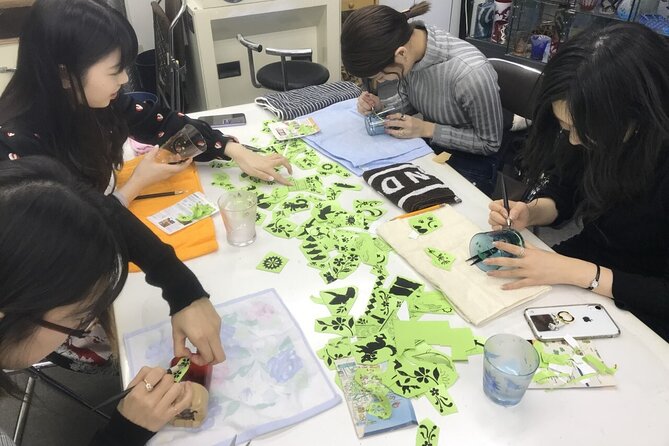
The best part of this Tokyo class is that you do not simply buy a souvenir, you make one. Over about 90 minutes, you design a drinking glass with Japanese images, then use sandblasting to turn the drawing into a finished piece you can take home.
I like the maximum of four people, which gives the workshop a calm, personal feel. I also like the patient teaching from Aki-san and the wide choice of motifs, from Mount Fuji and kimono patterns to geisha and samurai.
The main thing to consider is that this is a focused craft class, not a sightseeing tour. You will spend the full session at the worktable, and the small studio may feel too quiet if you are looking for a fast-moving Tokyo activity.
Key points about this Asakusabashi glass class
- You create a usable keepsake: Decorate a drinking glass rather than simply watching a demonstration.
- The class is limited to four people: A small group allows for close help from the workshop owner.
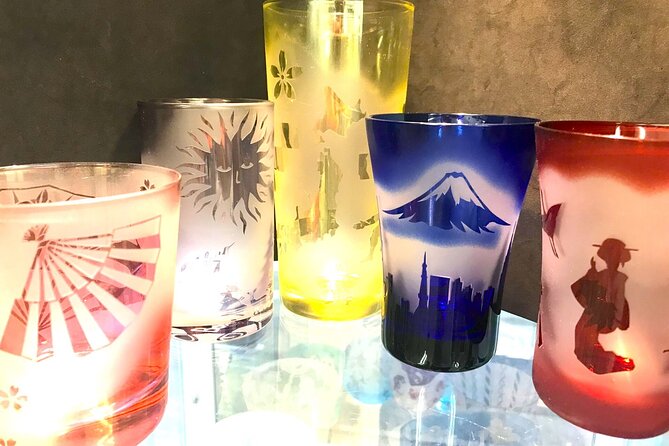
- Japanese motifs guide the design: Choose from images such as Mount Fuji, geisha, samurai, and kimono patterns.
- Aki-san teaches each step: Beginners receive direction on the design process and tools.
- The session lasts about 90 minutes: Long enough to make a personal piece without taking up an entire day.
- The price includes the basics: Your material fee, lesson fee, and consumption tax are included in the listed $53.43 price.
Why this glass workshop makes a better souvenir than a shop purchase
Tokyo is full of tempting souvenirs, but many are easy to forget once you return home. A glass you design yourself carries a more personal memory. Each time you use it, you can remember the afternoon you spent working with Japanese motifs and learning a hands-on craft.
This class gives you that personal connection without asking you to arrive with artistic training. The process is made for beginners, and all materials and tools are provided. You do not need to pack equipment, prepare a design in advance, or understand sandblasting before you arrive.
The finished object also has a practical side. This is not only a paper craft or a small decorative token. You create artwork on a drinking glass, giving the souvenir a useful role at home. The exact final look depends on your design and how you handle the tools, so the result should feel like your own rather than a mass-produced Tokyo item.
I also appreciate the balance between Japanese subject matter and personal choice. The images give you a clear starting point, but you can arrange and decorate the glass in your own way. If you have never designed glass before, a selection of familiar motifs makes the blank surface less intimidating.
More Tokyo craft workshops:
- Tokyo Shinjuku Chopsticks Making Class
★ 5.0 · 1,763 reviews - Chopstick Making Workshop in Ginza
★ 4.8 · 1,366 reviews - Kintsugi Experience: Art of Golden Joinery in Tokyo
★ 5.0 · 467 reviews
Arriving at the Asakusabashi workshop
The meeting point is 1-chōme-26-12 Asakusabashi, Taito City, Tokyo 111-0053. The area is near public transportation, which helps you fit the class into a day of exploring Tokyo. The activity begins and ends at this same location, so there is no complicated transfer at the end.
Pay attention to the address and allow enough time to find the workshop. This is a small, appointment-based activity rather than a large attraction with an obvious entrance. One participant arrived early and found an easel outside with their name on it. That detail suggests the workshop makes an effort to identify its scheduled participants, but you should still rely on your booking details and arrive at the stated meeting point.
If you are early, you might see finished work in the window. That gives you a useful preview of the kind of decoration possible before you begin. A participant who arrived ahead of time was brought inside early when the owner was available, though you should not count on an early start if another class is underway.
The location in Asakusabashi is useful for planning. Since the class takes only about an hour and a half, you can pair it with other Tokyo plans instead of giving up a full day. Still, keep your schedule sensible. Creative work takes concentration, and rushing from a distant sightseeing stop could take some of the pleasure out of the session.
The 90-minute class, step by step
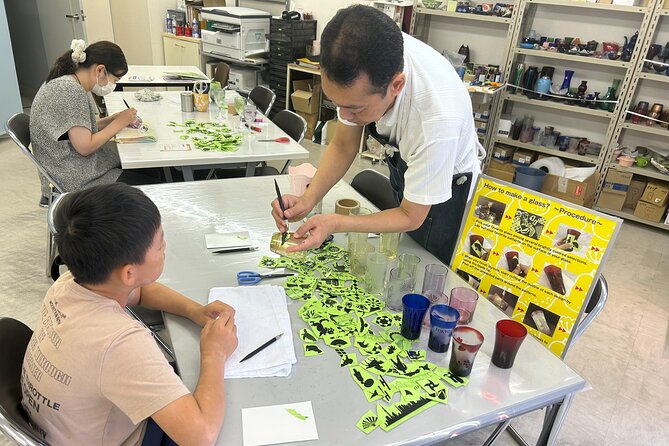
The workshop starts with an introduction to the materials, the design choices, and the sandblasting process. You receive the glass and the tools needed for the project, then look through pictures and motifs to decide what you want to create.
The image choices include Mount Fuji, geisha, kimono patterns, and samurai. These are familiar Japanese themes, but they give you room to make a piece that feels connected to your time in Japan. You can select the subject that fits your taste instead of receiving a preset design.
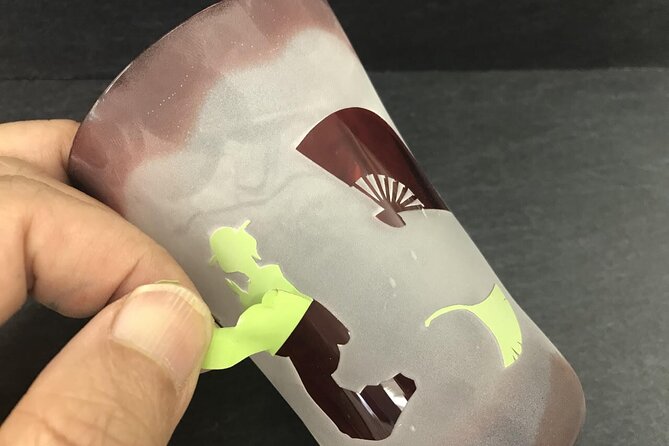
Next comes the preparation of the glass. The exact hand movements and sequence are taught during the class, so you do not need to work out the method on your own. This is where the four-person limit matters. If your design feels awkward or you are unsure about a tool, the instructor can provide direct help rather than leaving you to copy instructions from across a crowded room.
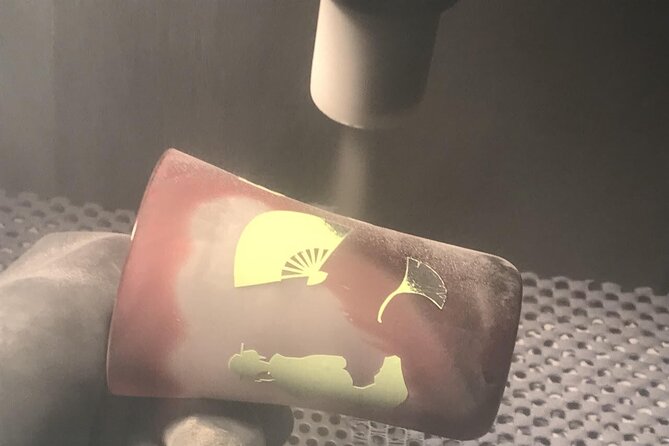
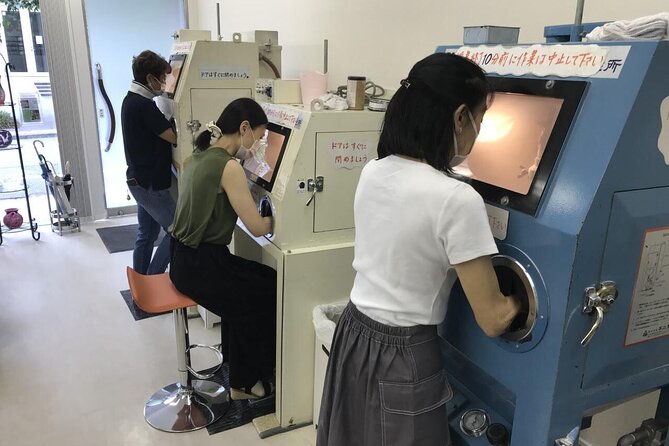
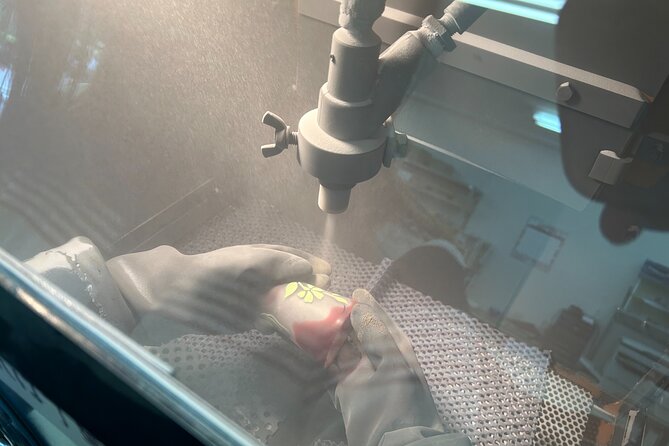
The sandblasting machine then brings your design to life. Sandblasting removes or changes the surface of the glass in the selected areas, creating the finished decorative effect. It is the part of the class that turns your drawing and preparation into a lasting object.
The process is creative, but it is not a free-for-all. You receive step-by-step instruction from the workshop owner, and the class is suitable for first-time participants. That makes it a good choice if you like the idea of making something but do not consider yourself artistic.
At the end, you have a personalized glass artwork to take home. The experience is short enough to fit into a packed Tokyo itinerary, yet long enough for you to complete a project rather than merely paint a quick symbol and leave.
Small group teaching from Aki-san
The instructor is identified in the experience feedback as Aki-san, and the teaching style is one of the strongest reasons to book. Aki-san is described as patient, helpful, and pleasant, with a willingness to guide participants through the project.
That patience matters more here than a long lecture would. Sandblasting involves tools and careful design work, so you want someone who can explain the next step without making you feel hurried. A small class of no more than four people makes individual attention possible.
The group size also affects the mood. A large workshop can turn a creative activity into a production line. Here, you are more likely to have room to ask questions and work at a comfortable pace. If you are traveling with family or friends, the four-person limit lets the class remain fairly personal, though larger groups would need to be split or booked separately.
The class works for adults and children, according to the available experience information. Children will still need to follow the instructor’s directions around the equipment, and adults may need to help younger children with design choices or careful handling. The activity offers shared work without requiring everyone in the group to have the same artistic skill.
One detail I especially like is the possibility of a personal welcome. An easel with a participant’s name was placed outside the workshop, and an early arrival was invited inside before the scheduled time. Those touches do not change the craft itself, but they can make a small appointment feel more personal.
More hands-on classes and workshops in Tokyo:
- Sushi Making Tokyo Roll and Authentic Japanese Sushi Class
★ 5.0 · 3,971 reviews - Tokyo: Roll and Authentic Sushi Making Class in Asakusa
★ 4.9 · 1,957 reviews - Tokyo: Sushi Making Class in a Happi Coat near a Famous Spot
★ 4.9 · 1,377 reviews - Tokyo Sushi Making Class in Tsukiji with Professional Chef
★ 5.0 · 1,177 reviews
Choosing a Japanese design you will actually want to keep
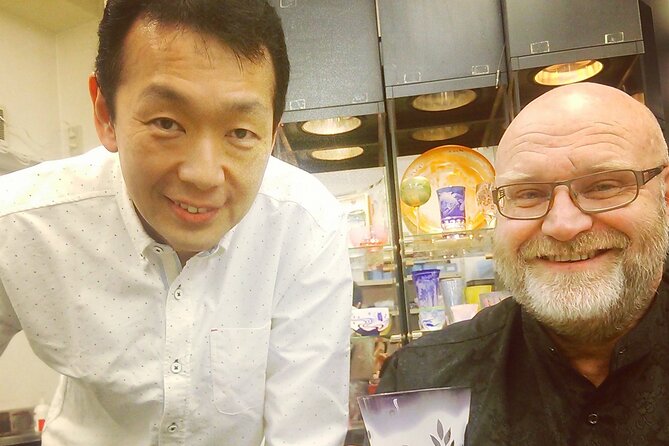
The design stage is where your souvenir becomes personal. You can work with a Japanese image that fits your trip, such as Mount Fuji, or choose a pattern connected to traditional clothing, such as a kimono design. Geisha and samurai provide other clear themes.
You may find the picture selection helpful if you are unsure where to begin. The images give you a visual menu rather than forcing you to invent a complete design from scratch. This is important for a 90-minute session because too much design planning would leave less time for making the glass.
Think about the finished object before you choose. A simple, bold motif may read better on a drinking glass than a very detailed picture. If you want a design that feels unmistakably Japanese, Mount Fuji or a kimono pattern gives you that connection quickly. If you prefer a character-based image, geisha or samurai may suit you better.
The information provided does not promise a particular glass shape, color, or final packaging, so do not book this expecting a specific model of glass. The clear promise is the chance to personalize a glass using the supplied materials and tools. Your final result will depend partly on the design you select and the care you bring to the process.
What the $53.43 price includes
At $53.43 per person, the class is not the cheapest souvenir activity in Tokyo, but the price covers more than a short demonstration. Your material fee, lesson fee, and consumption tax are included, so you are paying for instruction, supplies, studio time, and the finished craft.
The value is strongest if you would otherwise spend money on a standard souvenir and want an activity to go with it. You receive a physical object and a memory of making it. The small class size also gives the session more value than a large group craft where you receive little personal help.
The price may feel less attractive if you mainly want to see Tokyo sights and have no interest in making art. This is not a sightseeing stop with a quick craft added on. It uses about 90 minutes of your day and asks you to focus on one project.
Because the listed price includes consumption tax, you have fewer basic costs to calculate. Hotel pickup and drop-off are not included, but the workshop is near public transportation and starts and ends at the meeting point. You will need to arrange your own way there and back.
Who should book this Tokyo activity
I would recommend the class to you if you want a souvenir with a story behind it. It suits first-time crafters, art lovers, families, and anyone who prefers a quiet indoor activity to another hour of sightseeing.
It is also a smart option for a rainy day or for a break between larger Tokyo attractions, though the information does not promise a particular weather-related arrangement. The short length lets you add it to a broader day without committing to a full-day class.
Families should like the shared nature of the project. Adults and children can work on their own designs, and the instructor provides guidance. Keep in mind that the class has room for a maximum of four people, so a larger family or group would need to confirm how to arrange participation.
The experience is less suitable if you need a fully private class for more than four people, want hotel transportation, or prefer a passive activity. It is also not the right pick if you want to leave with a professionally finished object that you did not make yourself. The charm is in the personal marks and the process.
Practical details before you reserve
The activity lasts approximately one hour and 30 minutes. The start and end point are the same, and the workshop is near public transportation. A mobile ticket is available, which makes it easier to keep the booking on your phone while moving around Tokyo.
Confirmation is sent within 48 hours of booking, subject to availability. Since the class accepts only four people, reserve ahead if this is important to your schedule. The typical booking pattern is about 88 days in advance, so this is the kind of small activity that may be worth arranging before your Tokyo plans fill up.
The experience is listed as suitable for most people. The provided information does not give detailed guidance about wheelchair access, exact age limits, or the size and weight of the finished glass, so contact the provider if any of those points matter to you.
Free cancellation is available if you cancel at least 24 hours before the local start time. Cancellations made within 24 hours are not refunded, and changes inside that period are not accepted. That policy is reasonable for a four-person workshop, but it means you should avoid booking a time that conflicts with a flight, train, or tightly timed sightseeing plan.
My call: book it if you want to make your souvenir
I would book this class if I wanted a personal Tokyo keepsake and a calm change from temples, shops, and crowded streets. The strongest reasons are the four-person limit, Aki-san’s patient guidance, the included tools and materials, and the fact that you leave with a glass you helped create.
I would skip it if your Tokyo schedule is packed with major sights or if handmade art does not interest you. At $53.43, the value comes from the combination of instruction, activity, and finished object, not from the glass alone.
For the right person, this is a pleasant, manageable way to spend 90 minutes in Asakusabashi. Pick a motif you will still enjoy seeing at home, arrive with enough time to find the address, and treat the finished glass as both a useful object and a record of your time in Japan.
FAQ
Where does the glass sandblasting workshop take place?
The workshop takes place at 1-chōme-26-12 Asakusabashi, Taito City, Tokyo 111-0053, Japan.
How long does the experience last?
The activity lasts approximately one hour and 30 minutes.
Where does the activity end?
It ends back at the meeting point in Asakusabashi.
How many people can join the class?
The class has a maximum of four participants.
Is the workshop suitable for beginners?
Yes. The class is designed for beginners and art lovers, and step-by-step instruction is provided.
What Japanese designs can you use?
Available motifs include Mount Fuji, geisha, kimono patterns, samurai, and other Japanese-themed images.
Are materials and tools included?
Yes. The material fee and lesson fee are included, and all materials and tools are provided for the class.
Is hotel pickup included?
No. Hotel pickup and drop-off are not included.
How much does the experience cost?
The listed price is $53.43 per person.
Can you cancel for a full refund?
Yes, if you cancel at least 24 hours before the experience start time. Cancellations made less than 24 hours in advance are not refunded.
Newly reviewed around Tokyo
- Tokyo Asakusa:Calligraphy & Make T-shirt Activity★ 5.0 · 62 reviews
- Intercity Shuttle, Tokyo to Haneda /Narita /Yokohama /Makuhari★ 5.0 · 5 reviews
- 1 Hour Travel around Tokyo with a Professional Photographer★ 5.0 · 3 reviews
- Travel Tokyo with Your Own Personal Photographer★ 5.0 · 43 reviews
- Train in Samurai Swordsmanship and Defeat the Demon in Tokyo★ 5.0 · 5 reviews
- Shuttle Van 6hr Tokyo Tour to-and-from Tokyo, Yokohama and Narita★ 5.0 · 9 reviews
- Kickboxing & Body Training with EX-Pro Fighter★ 5.0 · 4 reviews
- Traditional Japanese Knife Sharpening Class★ 5.0 · 18 reviews
Tokyo Traditional Craft Workshops, compared.
Kintsugi Experience: Art of Golden Joinery in Tokyo
Read our review →

Authentic Pure Gold Kintsugi Workshop with Master Taku in Tokyo
Read our review →
Private Handmade Ring Workshop Activity in Tokyo Shibuya
Read our review →
Browse the lists this tour appears in