
Reviewed · TOKYO TRADITIONAL CRAFT WORKSHOPS
Bonsai Tour & Experience at the Most Sacred City for Bonsai in JP
Bonsai-cho, or Bonsai City, is the place to study Japan’s miniature trees where the tradition still feels active and local. Guide Jun meets you at Toro Station, walks you to a bonsai garden, and explains how these small trees are shaped, trained, and cared for.
I like the hands-on pruning session and the chance to see several established bonsai gardens rather than only a museum display. I also like the small maximum group of 10, which gives Jun time to answer questions, including the many practical ones beginners tend to ask.
The main consideration is the extra cost: you must buy a drink or food at the cafe, starting at about 450 yen, and Bonsai Art Museum admission costs 310 yen if you enter. The tour is also non-refundable, so book only when your schedule is firm.
Key points to know before booking
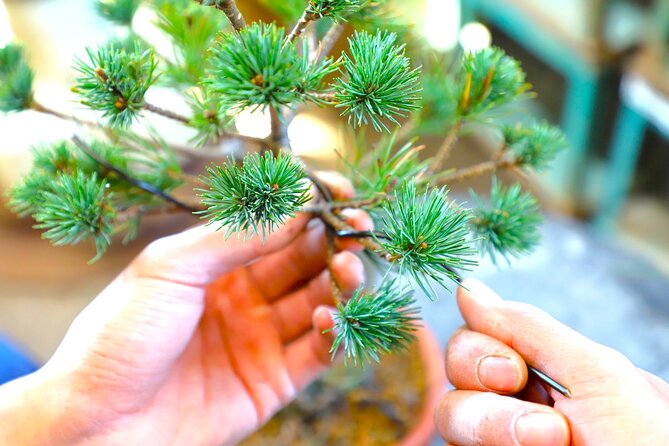
- Bonsai-cho is a real bonsai district: The area was founded about 100 years ago by bonsai gardeners after the Great Kanto Earthquake and remains home to five long-established gardens.
- Jun leads the experience: He meets you at Toro Station, explains the area on foot, and guides both the garden visit and practical workshop.
- You do more than look: The second part covers pruning, shaping, wire cutting, and basic bonsai care.
- The group stays small: A maximum of 10 people means more room for questions and personal instruction.
- The workshop takes place in a cafe: You need to order something, with food or drinks starting at about 450 yen.
- The tour is aimed at ages 13 and up: Anyone under 18 must be with an adult.
Why Bonsai-cho makes sense for this lesson
Bonsai can look simple from across a garden: a small tree in a pot, carefully angled branches, perhaps a patch of moss. Up close, the art is far more exact. Every cut affects the tree’s future shape, and every wire guides a branch without damaging it.
That is why Bonsai-cho is a better setting than a generic Tokyo craft class. This district in Saitama grew around bonsai gardeners after the Great Kanto Earthquake. Today, five long-established bonsai gardens remain in the area, surrounded by greenery and dedicated to trees that can be decades old.
I like that the tour gives you both context and practice. You first see finished examples, then try some of the same basic methods yourself. That order matters. After looking at hundreds of carefully shaped trees, you have a better sense of why a cut or bend is made.
The setting also gives the experience a local feel. You meet at Toro Station, not at a hotel lobby or a large sightseeing venue. From there, Jun walks with you to the garden and introduces the neighborhood along the way.
More Tokyo craft workshops:
- Tokyo Shinjuku Chopsticks Making Class
★ 5.0 · 1,763 reviews - Chopstick Making Workshop in Ginza
★ 4.8 · 1,366 reviews - Kintsugi Experience: Art of Golden Joinery in Tokyo
★ 5.0 · 467 reviews
Meeting Jun at Toro Station at 10 a.m.
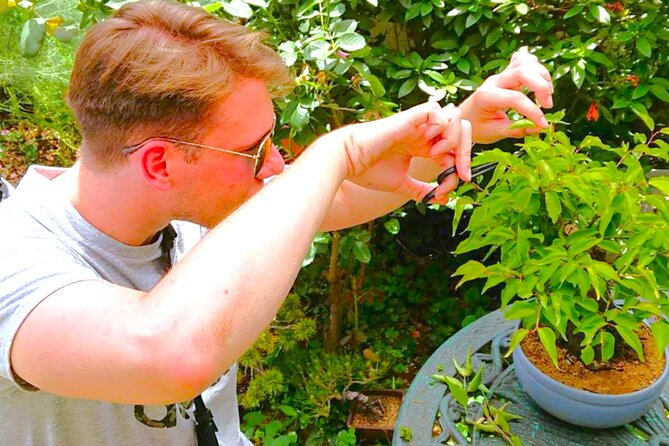
The tour starts at 10 a.m. at Toro Station, at 1 Chome Torocho in Saitama. The meeting point is near public transportation, and the activity finishes back there after about two and a half hours.
Jun’s role is a major part of the experience. He does more than demonstrate tools. He gives a short history of Bonsai-cho during the walk, explains what you are seeing in the gardens, and leaves time for questions about bonsai and Japan more broadly.
That personal approach is useful if you are new to the subject. Bonsai has its own vocabulary and methods, and it is easy to look at a tree without knowing what to notice. Jun can point out the choices behind the shape, the branch structure, and the care needed to keep the tree healthy.
The maximum group size is 10. That is small enough for individual help, though the actual group may be smaller. On one occasion, the tour ran with only one participant, creating a private lesson feel. You should not count on having the guide alone, but the group limit is reassuring.
Walking through a century-old bonsai district
The first part is the sightseeing session. Jun takes you to a bonsai garden or nursery where you can see many carefully maintained trees and hear how bonsai developed in this part of Japan.
The appeal is not simply the number of trees. You are looking at living works that combine horticulture with design. The tree must remain healthy, but its trunk, branches, pot, and overall balance are also considered. Bonsai expresses both the beauty and the severity of nature, using a small container to suggest something much larger.
You may see trees at different stages of training. Some will have highly developed shapes, while others will still be under careful guidance. This makes the visit useful for understanding that bonsai is not a one-time craft project. It is a long process of observation and maintenance.
The tour description refers to visits at prominent bonsai nurseries and, in some accounts, two gardens. Since the exact garden route can vary, do not expect a fixed list of stops. The reliable promise is a visit to an outdoor bonsai garden in Bonsai-cho, with Jun explaining the trees and the local tradition.
The district’s history adds weight to the visit. Bonsai gardeners established the area around a century ago after the Great Kanto Earthquake. Five long-running gardens still operate there, so you are seeing a working center of bonsai culture rather than a display made only for sightseeing.
Seeing the Bonsai Art Museum, with the extra fee
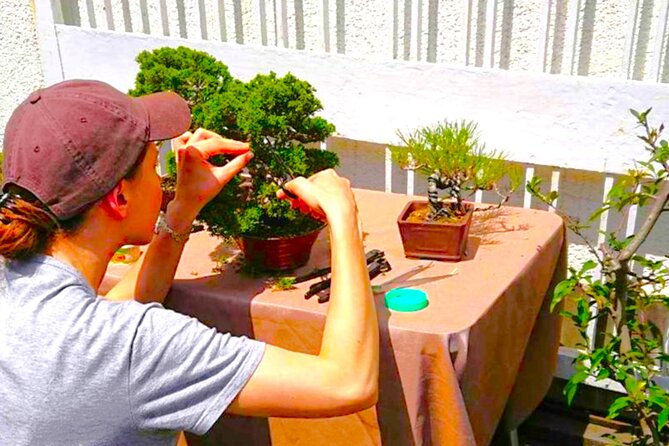
The Bonsai Art Museum is an additional consideration. Admission is listed at 310 yen, or about 2 dollars, and is not included in the tour price.
If museum entry is part of your planned route, budget for this small extra payment. It is also worth confirming the exact plan when booking, since the main description centers on an outdoor garden and nursery visit, while the museum admission is listed separately.
At 310 yen, the fee is modest. Still, the tour’s $55.52 price does not cover every possible entry or purchase, so knowing this in advance helps you avoid surprises. The museum fee is much less significant than the cafe order, but both should be included in your mental budget.
More Tokyo city tours:
- Tokyo: Private City Highlights Tour with Local Guide
★ 4.8 · 1,433 reviews - Tokyo: Asakusa, Skytree & Akhihabara Go-Kart City Experience
★ 4.7 · 761 reviews - Tokyo: 3-Hour Bike or E-Bike City Highlights Tour
★ 4.8 · 435 reviews - Tokyo: Sumo Morning Practice Tour at Sumida City
★ 4.8 · 308 reviews
Learning to prune and shape a bonsai
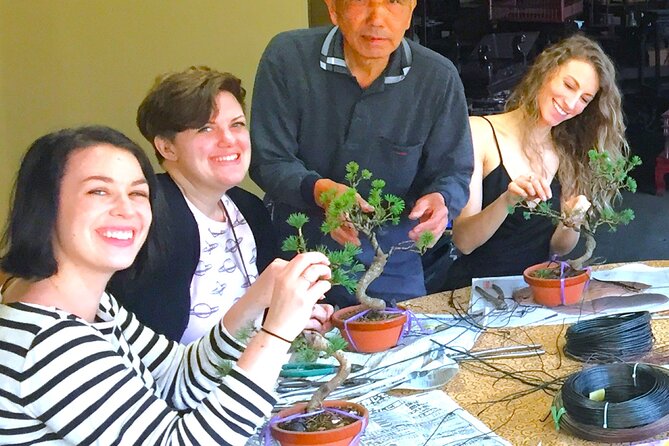
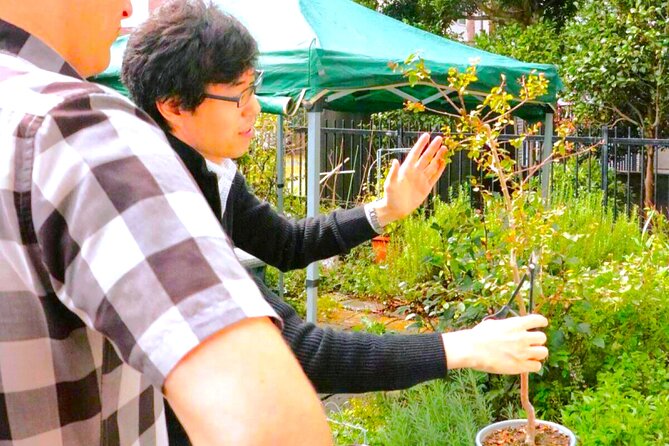
After the garden visit, the tour moves to a cafe for the practical session. You must order something, with food and drinks starting at about 450 yen, or roughly 3 dollars.
A cafe is an informal setting for the workshop. You can sit, ask questions, and work at a slower pace than you might in a large classroom. It also makes the experience feel connected to everyday life in the neighborhood rather than set apart as a staged demonstration.
The instructor provides the bonsai tools, and the tool usage fee is included. You learn basic techniques such as pruning and shaping, along with wire cutting and trimming. Jun explains not only what to do, but why patience matters.
That point is important. Bonsai is not ordinary gardening on a smaller scale. You are making decisions that affect the tree’s future form, and a careless cut cannot simply be put back. A good lesson should leave you more careful, not just more confident.
The hands-on part is suitable for beginners, but it also has value for someone who already owns bonsai. The practical instruction gives experienced hobbyists a chance to ask about technique, while newcomers get a clear introduction without needing prior knowledge.
You should not expect to become a bonsai expert in one session. Two and a half hours is enough for a solid introduction, a garden visit, and practice with basic methods. It is not enough to cover every part of long-term bonsai care, species selection, repotting, watering, and seasonal training in detail.
What the $55.52 price includes
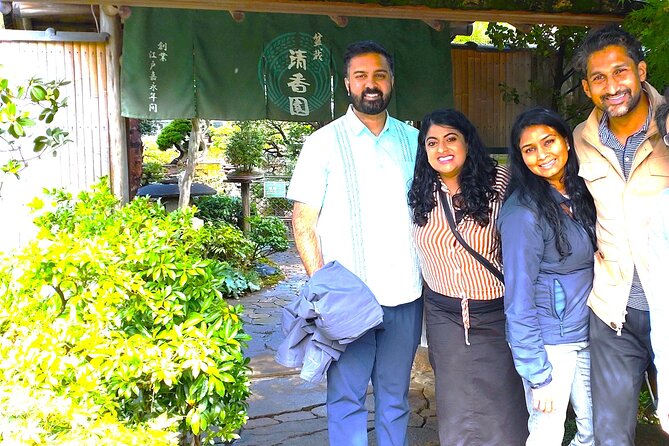
The $55.52 cost covers the instructor, use of bonsai tools, and consumption tax. For a small-group activity with a garden visit and practical instruction, that is a fair price if you want more than a quick look at bonsai.
The strongest value comes from the combination of access and explanation. You are not simply paying for admission to a garden. You are paying for Jun’s guidance, the walk through Bonsai-cho, and time to work with the tools yourself.
The extra costs are limited but clear. Plan on at least 450 yen for a cafe purchase. Add 310 yen if you enter the Bonsai Art Museum. The tour does not say that a bonsai tree or finished piece is included for you to take home, so do not book expecting a souvenir tree.
For me, the price makes the most sense for someone with genuine interest in bonsai, even at a beginner level. If you only want a quick photo stop, a standard museum visit may be cheaper and simpler. If you want to understand the work behind the trees, the instruction adds real value.
Who will enjoy this bonsai experience most
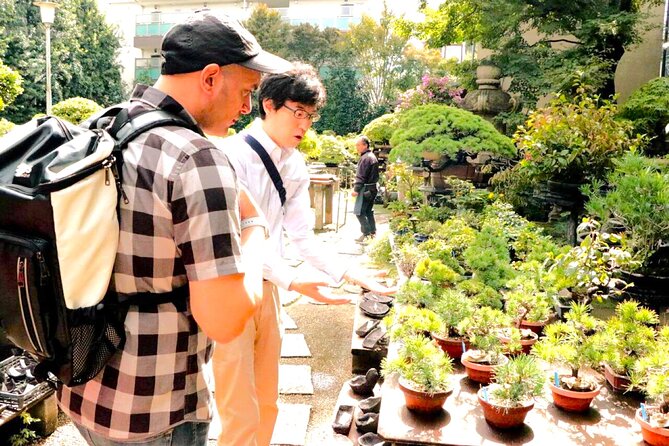
This is a good pick for a curious first-timer who wants to understand bonsai without committing to a full course. Jun’s explanations cover the basic history and technique, and the small group makes it easier to ask simple questions.
It also suits a dedicated bonsai fan. Seeing multiple established gardens and discussing pruning, trimming, and wire cutting in person can add useful detail to what you already know. The experience is not limited to people who have never touched a bonsai tool.
Parents should note the age rules. Participants must be at least 13 years old, and anyone under 18 must attend with an adult. The activity is described as suitable for most people, but anyone who is unwell or under the influence of alcohol will not be permitted to join, with no refund.
The tour may be less satisfying if you want a fast, highly structured sightseeing outing. The cafe portion requires you to sit and practice, and the subject rewards patience. That is part of the charm, but it will not suit every schedule.
Practical timing and group advice
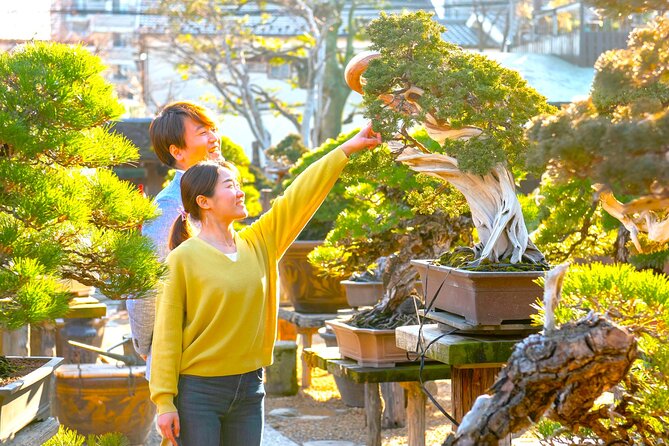
The tour starts at 10 a.m. and lasts about two hours and 30 minutes. Since it begins and ends at Toro Station, you can plan around the same rail stop rather than arranging separate transport after the class.
Give yourself enough time to reach the station before 10 a.m. The meeting point is specific, and arriving late could cut into the garden visit or hands-on session. The tour operates near public transportation, but the provided details do not give a travel time from central Tokyo, so check your own route before booking.
The mobile ticket is convenient, but keep your booking confirmation easy to access. Confirmation is provided at the time of booking.
The experience is non-refundable and cannot be changed for any reason. That is stricter than many sightseeing activities, so check your Tokyo and Saitama plans carefully before paying. The tour is operated by beautiful day tours.
Is this tour worth booking?
I would book this if you want a personal introduction to bonsai and like the idea of visiting the district where the tradition has taken root. The best parts are the setting in Bonsai-cho, Jun’s patient instruction, and the chance to practice pruning and shaping rather than only admire finished trees.
I would skip it if your interest is casual or your schedule is tight. The extra cafe and museum costs are small, but the tour asks for a few hours of focused attention. For a bonsai lover, a beginner, or anyone who enjoys careful Japanese crafts, the hands-on format makes the $55.52 price reasonable.
FAQ
Where does the bonsai tour begin?
The tour begins at Toro Station, at 1 Chome Torocho, Kita Ward, Saitama, Japan.
What time does the tour start?
The start time is 10 a.m.
How long does the experience last?
The activity lasts approximately two hours and 30 minutes.
Where does the tour end?
The tour ends back at the meeting point at Toro Station.
What is included in the tour price?
The price includes the instructor, use of bonsai tools, and consumption tax.
Do I need to pay anything extra?
You need to order food or a drink at the cafe, with prices starting at about 450 yen. Bonsai Art Museum admission costs 310 yen and is not included.
What is the minimum age?
Participants must be at least 13 years old. Anyone under 18 must be accompanied by an adult.
How many people can join the tour?
The activity has a maximum group size of 10 people.
Newly reviewed around Tokyo
- Tokyo Asakusa:Calligraphy & Make T-shirt Activity★ 5.0 · 62 reviews
- Intercity Shuttle, Tokyo to Haneda /Narita /Yokohama /Makuhari★ 5.0 · 5 reviews
- 1 Hour Travel around Tokyo with a Professional Photographer★ 5.0 · 3 reviews
- Travel Tokyo with Your Own Personal Photographer★ 5.0 · 43 reviews
- Train in Samurai Swordsmanship and Defeat the Demon in Tokyo★ 5.0 · 5 reviews
- Shuttle Van 6hr Tokyo Tour to-and-from Tokyo, Yokohama and Narita★ 5.0 · 9 reviews
- Kickboxing & Body Training with EX-Pro Fighter★ 5.0 · 4 reviews
- Tokyo History: Sensoji Temple & Asakusa District Private Tour★ 5.0 · 28 reviews
Tokyo Traditional Craft Workshops, compared.
Kintsugi Experience: Art of Golden Joinery in Tokyo
Read our review →

Authentic Pure Gold Kintsugi Workshop with Master Taku in Tokyo
Read our review →
Private Handmade Ring Workshop Activity in Tokyo Shibuya
Read our review →
Browse the lists this tour appears in