
Reviewed · TOKYO RAMEN TOURS AND CLASSES
Asakusa Classic Ramen & Crispy Gyoza Cooking Class
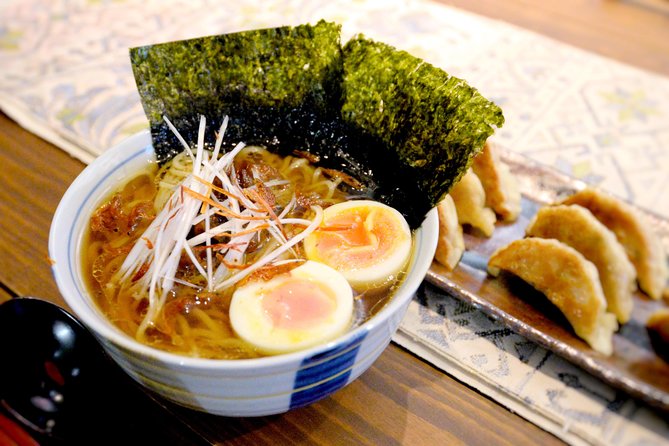
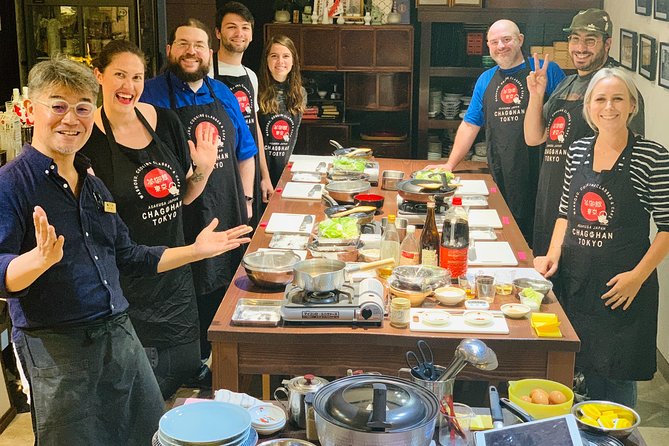
A good ramen class should explain more than how to boil noodles. This one pairs shoyu ramen with handmade gyoza, giving you two useful Japanese dishes in three hours. Masa leads the cooking, while Junko helps with preparation, photographs, and the friendly rhythm of the class.
I like the small maximum of eight people, which leaves room for questions and hands-on work. I also like that you receive recipes afterward, although you should know one important limit: the ramen broth involves many steps, so you assemble the finished bowl more directly than you cook every part of the stock yourself.
At a glance
- Two Japanese staples in one class: Prepare ramen and crispy gyoza during the same three-hour session.
- Masa and Junko lead the class: Expect clear instruction, humor, food background, and help at each stage.
- Up to eight people: The small group suits couples, families, friends, and team outings.
- Gyoza is especially hands-on: You cut vegetables, mix the filling, fold the dumplings, and learn how to crisp the bottoms.
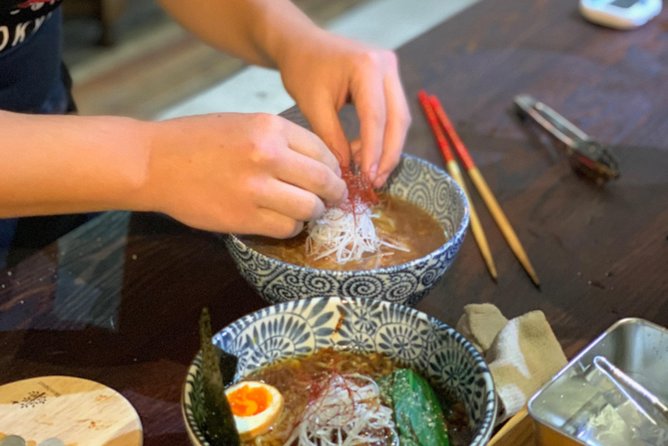
- Ramen focuses on broth and assembly: You learn the ingredients and method, then build a photogenic bowl with toppings.
- Useful take-home extras: An apron, utensils, natural ingredients, recipes, and class photos or videos are provided.
Why this Asakusa class is more than a ramen lunch
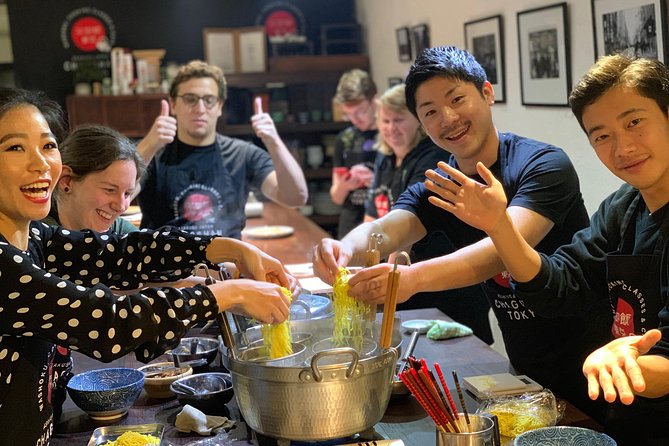
The easy option in Tokyo is to order a bowl of ramen and move on. That can be delicious, but it tells you little about the work behind the broth, the role of seasoning, or the technique that makes a gyoza bottom crisp instead of soft.
This class gives you a closer look at those details. You learn about the ramen base and broth, prepare toppings, and get practical advice for cooking the dishes at home. The lesson also includes background on ramen and Japanese cooking, so the food has context rather than appearing as a set of disconnected steps.
The setting is Chagohan Tokyo in Nishiasakusa, close to the kitchen-supply district of Kappabashi. The class takes place in a real, organized kitchen rather than a private home. That matters if you prefer a dedicated cooking space with proper work areas and tools.
Masa teaches in English, and the class is designed for beginners. At the same time, the instructors can answer more detailed questions, so you do not need to be new to cooking to get something from the session.
More Asakusa and Sensoji tours:
- Tokyo: Japanese Dance Cabaret Theater Asakusa-Kaguwa Ticket
★ 4.8 · 2,270 reviews - Tokyo: Meiji Shrine, Asakusa, Skytree Bus Tour and Cruise
★ 4.7 · 1,986 reviews - Tokyo: Roll and Authentic Sushi Making Class in Asakusa
★ 4.9 · 1,957 reviews
The three-hour plan, from chopping to lunch
The morning session runs from 10:00 a.m. to 1:00 p.m. The afternoon option runs from 3:00 p.m. to 6:00 p.m. Durations can vary slightly, so avoid scheduling a tight connection or another fixed activity immediately afterward.
The session begins with an introduction to the dishes and the ingredients. You learn about the ramen style being prepared, the parts of a flavorful bowl, and the role of the broth, seasoning, noodles, and toppings. This opening is useful because it gives you a framework for the cooking instead of asking you to copy movements without knowing why they matter.
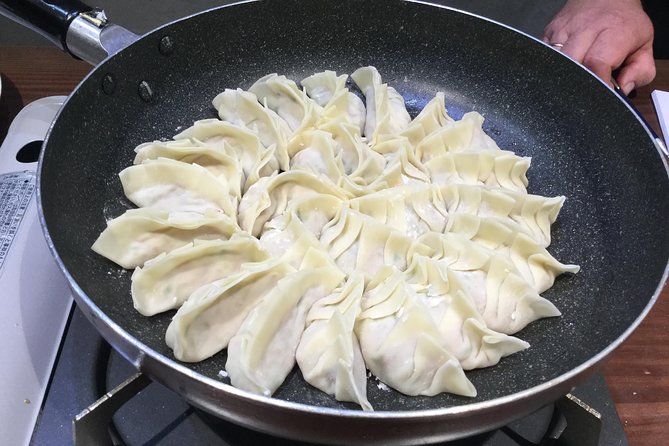
You then work on the gyoza. This includes cutting vegetables by hand, preparing the filling, and folding the dumplings. Folding is the most obviously hands-on part of the class, and it is also the skill you are most likely to repeat at home without a large stockpot or a long shopping list.
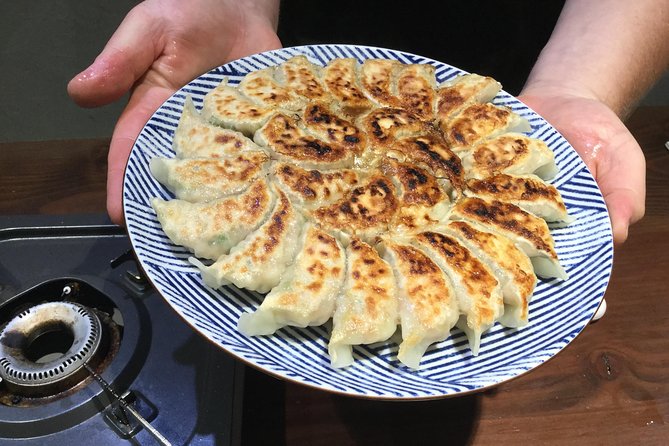
The instructors show you how to cook the dumplings so the outside becomes crisp while the filling stays juicy. Each participant receives roughly eight gyoza, along with a full bowl of chicken ramen, according to the class details provided. That is a substantial meal, not a token sample.
The ramen portion covers the base and broth, plus the toppings and final bowl assembly. The broth has a number of steps and takes more time and control than gyoza, which explains why the chef handles some of the cooking while explaining the process. You should expect to learn the method and build the bowl, not spend the whole class independently preparing a stock from start to finish.
At the end, you assemble a finished bowl with the toppings and sit down to eat. This is the payoff, but it is also part of the lesson. You can see how the elements fit together and compare the crisp dumplings with the finished ramen while the techniques are still fresh in your mind.
Gyoza is the class’s most practical lesson
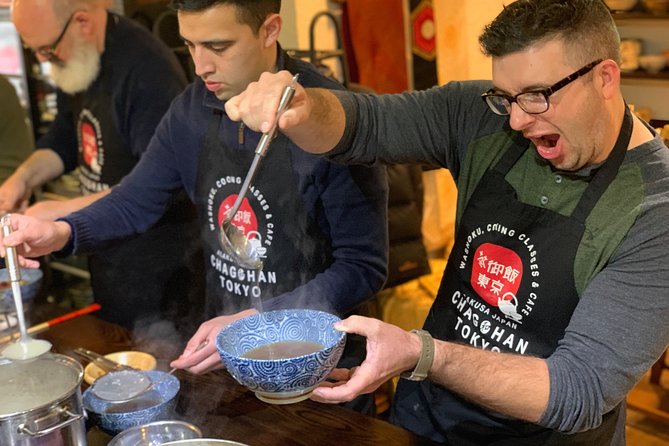
I would put special weight on the gyoza section if you are choosing this experience for useful home cooking skills. The steps are easy to understand, but the results depend on small details: how finely you cut the vegetables, how you mix the filling, how you fold the wrappers, and how you manage the pan.
You get to make the filling and fold the dumplings yourself. That gives you a real sense of the process and lets you see why homemade gyoza can differ from the neat, uniform dumplings served in restaurants.
The crisp base is the key technique. The class explains how to create that texture while keeping the inside juicy. It is the sort of tip that can improve a basic home meal, even if you do not attempt the ramen afterward.
Knife work is part of the preparation, so parents should think about the age and comfort level of children before booking. The class is suitable for families with older children and teens, but it is not simply a demonstration where everyone sits back.
Ramen brings more technique and less direct cooking
Ramen is the larger lesson. You learn about the broth, base, toppings, and the ingredients that give the bowl its flavor. The finished dish is described as shoyu ramen, with chicken ramen specifically noted in the portion details.
The honest point is that ramen is harder to reproduce quickly at home. A shoyu stock made from scratch involves several stages, and the chef carries out much of the more involved cooking. You still see how the process works, receive a detailed recipe, and assemble the bowl, but you should not book this expecting to independently make every component from raw ingredients during the class.
That is not a flaw so much as a practical choice. If every participant had to complete a full broth from start to finish, the class would need far more than three hours. The current format lets you learn the method while also making gyoza, eating a proper meal, and keeping the pace comfortable.
The class uses natural ingredients and does not add MSG or artificial additives. That detail may matter to you if you want to understand the flavor of the dish through its main components rather than relying on packaged seasoning.
More Tokyo ramen tours and classes:
- Eat and Drink Like a Local: Tokyo Ueno Food Tour-Taverns&Ramen
★ 5.0 · 957 reviews - Ramen & Gyoza Cooking Class in Tokyo with Local Supermarket Visit
★ 5.0 · 823 reviews - Tokyo: Ramen Tasting Tour with 6 Mini Bowls of Ramen
★ 4.9 · 432 reviews - Tokyo: Easy Ramen Cooking Experience in Kabukicho, Shinjuku
★ 4.6 · 321 reviews
Masa and Junko set the tone
Masa is the main instructor, and Junko helps run the session. Their roles make the class feel personal without requiring it to take place in someone’s home.
Masa’s English is described as excellent, and his demonstrations are clear. He explains the food, gives instructions in order, and uses humor to keep the process relaxed. That is useful in a cooking class, where a missed step can leave you staring at a wrapper or pan and wondering what happened.
Junko assists with the event and takes photos and videos for the group. Those images are a welcome extra because cooking leaves your hands busy and makes it hard to document the process yourself. The couple’s warmth is a major part of the experience, but the class remains organized and focused on the food.
If you prefer a silent, technical workshop, the conversation may feel more social than necessary. For most people, though, the balance of instruction, cultural background, and humor makes the three hours pass quickly.
A small group with enough food and attention
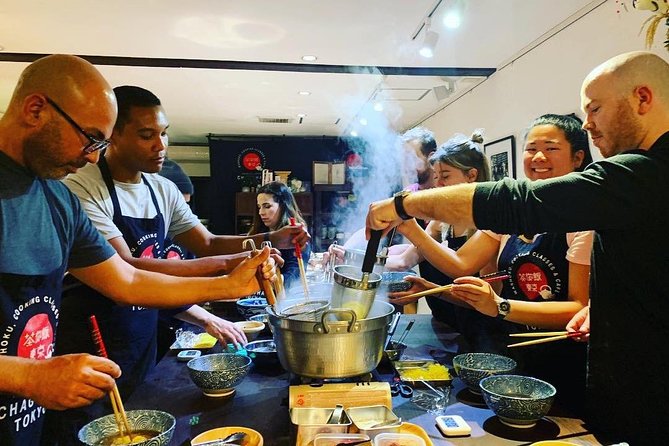
The maximum group size is eight. That is a useful middle ground. You get the energy of a shared class, but the instructors can still move around the room and help with folding, chopping, and cooking questions.
The format suits couples, families, friends, and company team activities. It also works for solo bookings, although the social side will depend on who else joins the session.
You should come ready to participate. This is not a food tasting with a short cooking demonstration. There is hand preparation, knife work, folding, and final assembly. The apron and utensils are supplied, so you do not need to bring special equipment.
The meal at the end adds real value. You are not paying only for instruction and leaving hungry. You eat the gyoza you prepared and a full ramen bowl, with roughly eight dumplings per person noted in the class information.
Is $167.81 a fair price?
At $167.81 per person, this is not a cheap way to eat ramen. You can buy a bowl and gyoza in Tokyo for far less.
The comparison changes when you count what is included. The fee covers about three hours of instruction, a small group, all ingredients, apron and utensils, the cooked meal, recipes, and photo or video help. You also leave with techniques you can use again, especially the gyoza method.
I think the price makes the most sense if you value active instruction rather than restaurant convenience. It is also easier to justify for a family or couple looking for a shared Tokyo activity, where the time together is part of the purchase.
If your only goal is to taste excellent ramen, book a restaurant instead. If you want to understand the food and try making it at home, the class offers more lasting value.
The experience is often booked about 27 days ahead, so reserve early if you need a particular morning or afternoon. Confirmation is sent within 48 hours, subject to availability.
Location and timing in Nishiasakusa
The meeting point is Chagohan Tokyo, at 2-chome 17-13, 1F, Nishiasakusa, Taito City, Tokyo 111-0035. The class ends at the same place.
The area is near public transportation and close to Kappabashi, Tokyo’s well-known kitchen-supply district. That makes the class easy to pair with an afternoon of looking at knives, dishes, cookware, and restaurant goods, though you should leave enough time between plans.
The morning class begins at 10:00 a.m. and the afternoon class at 3:00 p.m. Since the activity can run a little longer or shorter than the estimate, give yourself breathing room. You will also be eating a full meal at the end, so do not plan an immediate lunch reservation after the morning session.
Vegetarian and vegan options are available with advance notice. State your needs before the class rather than assuming a change can be made on the day.
The cancellation terms are strict: the experience is non-refundable and cannot be changed for any reason. If poor weather or an insufficient minimum group causes the provider to cancel, you are offered another date or a full refund.
Who should book this class?
This is a strong choice for anyone who likes ramen or gyoza and wants a practical food activity in Tokyo. It suits beginners because the instructions are structured and the hosts guide you through each stage.
Families with older children and teens can enjoy it, especially if everyone is comfortable with knife work. Couples and friends get a meal plus a shared project, while small work groups can use the class as a relaxed team activity.
You may want to skip it if you dislike group cooking, have strict timing during the day, or only want a quick meal. It is also less ideal if your main goal is to personally cook every part of the ramen broth from scratch. The ramen teaching is useful, but the chef handles the most involved stock work while you learn and assemble.
Should you book the Asakusa ramen and gyoza class?
Yes, if you want a friendly, hands-on food lesson with a proper meal at the end. The best parts are the small group, clear English instruction from Masa, Junko’s help and photos, and the gyoza technique you can realistically repeat at home.
Book it with the right expectation. You will make the gyoza more directly than the ramen broth, and the $167.81 price is high for a meal alone. For food lovers who want context, recipes, and a memorable activity near Kappabashi, it is a worthwhile use of three hours. For a simple bowl of noodles, spend the money at a ramen shop instead.
FAQ
How long is the Asakusa ramen and gyoza class?
The class lasts approximately three hours. The morning session runs from 10:00 a.m. to 1:00 p.m., and the afternoon session runs from 3:00 p.m. to 6:00 p.m. The exact duration may vary slightly.
Where does the class start and finish?
It starts and finishes at Chagohan Tokyo, located at 2-chome 17-13, 1F, Nishiasakusa, Taito City, Tokyo 111-0035. The location is near public transportation.
How many people can join the class?
The maximum group size is eight people. Groups of eight or more should contact the provider directly.
Are aprons and cooking tools provided?
Yes. An apron and utensils are provided, so you do not need to bring cooking equipment.
What food will I prepare?
You will learn to prepare shoyu ramen and crispy gyoza. The class covers ramen broth and base, toppings, gyoza filling, vegetable cutting, dumpling folding, and final ramen assembly.
Can vegetarians and vegans join?
Vegetarian and vegan options are available with advance notice. You should request the appropriate option before attending.
Will I receive the recipes?
Yes. Recipes are provided so you can try making the ramen and gyoza at home.
What happens if I need to cancel?
The experience is non-refundable and cannot be changed for any reason. If the provider cancels because of poor weather or because the minimum number of participants is not reached, you will be offered another date or a full refund.
More hands-on classes and workshops in Tokyo
- Sushi Making Tokyo Roll and Authentic Japanese Sushi Class
★ 5.0 · 3,971 reviews - Chopstick Making Workshop in Ginza
★ 4.8 · 1,366 reviews - Tokyo: Samurai Sword & Archery Class from Samurai Descendant
★ 5.0 · 603 reviews - Tokyo: Tsukiji Fish Market Sushi Making Class with Pro Chef
★ 4.9 · 506 reviews
More Tokyo cooking classes
- Tokyo Shinjuku Chopsticks Making Class
★ 5.0 · 1,763 reviews - Tokyo: Sushi Making Class in a Happi Coat near a Famous Spot
★ 4.9 · 1,377 reviews - Tokyo Sushi Making Class in Tsukiji with Professional Chef
★ 5.0 · 1,177 reviews - Matcha Making Class in Tokyo with Authentic Japanese Sweets Set
★ 5.0 · 744 reviews
Newly reviewed around Tokyo
- Tokyo Asakusa:Calligraphy & Make T-shirt Activity★ 5.0 · 62 reviews
- Intercity Shuttle, Tokyo to Haneda /Narita /Yokohama /Makuhari★ 5.0 · 5 reviews
- 1 Hour Travel around Tokyo with a Professional Photographer★ 5.0 · 3 reviews
- Travel Tokyo with Your Own Personal Photographer★ 5.0 · 43 reviews
- Train in Samurai Swordsmanship and Defeat the Demon in Tokyo★ 5.0 · 5 reviews
- Shuttle Van 6hr Tokyo Tour to-and-from Tokyo, Yokohama and Narita★ 5.0 · 9 reviews
- Kickboxing & Body Training with EX-Pro Fighter★ 5.0 · 4 reviews
- Traditional Japanese Knife Sharpening Class★ 5.0 · 18 reviews
Tokyo Ramen Tours and Classes, compared.
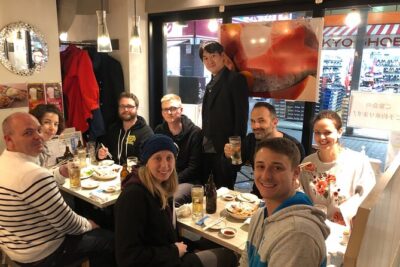
Eat and Drink Like a Local: Tokyo Ueno Food Tour-Taverns&Ramen
Read our review →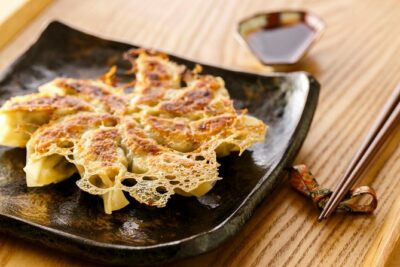
Ramen & Gyoza Cooking Class in Tokyo with Local Supermarket Visit
Read our review →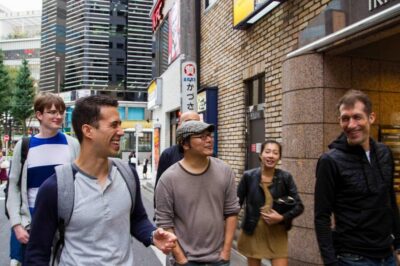
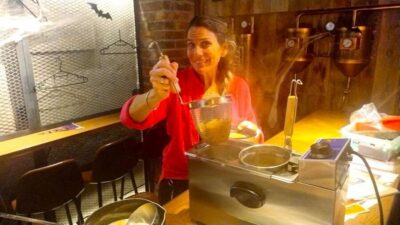
Easy Ramen Cooking Experience in Kabukicho, Shinjuku
Read our review →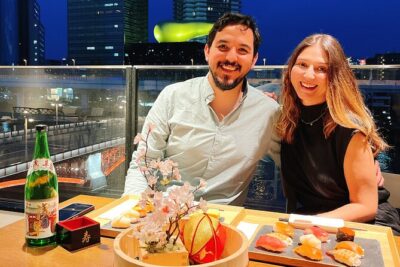
Ramen and Sushi Cooking Class with Sake Pairing Set in Tokyo
Read our review →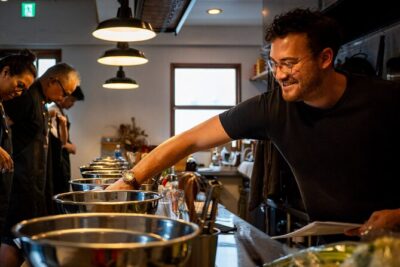
Professional Ramen & Gyoza with Ramen Chef in a restaurant!
Read our review →
Ramen Dojo Tokyo | Make All 3 (Tonkotsu/Shoyu/Miso)
Read our review →Ramen Dojo Tokyo | Make All 3 (Tonkotsu/Shoyu/Miso)
Read our review →Browse the lists this tour appears in