
Reviewed · TOKYO CALLIGRAPHY CLASSES
Tokyo: Japanese Calligraphy Lesson with Skilled Instructor
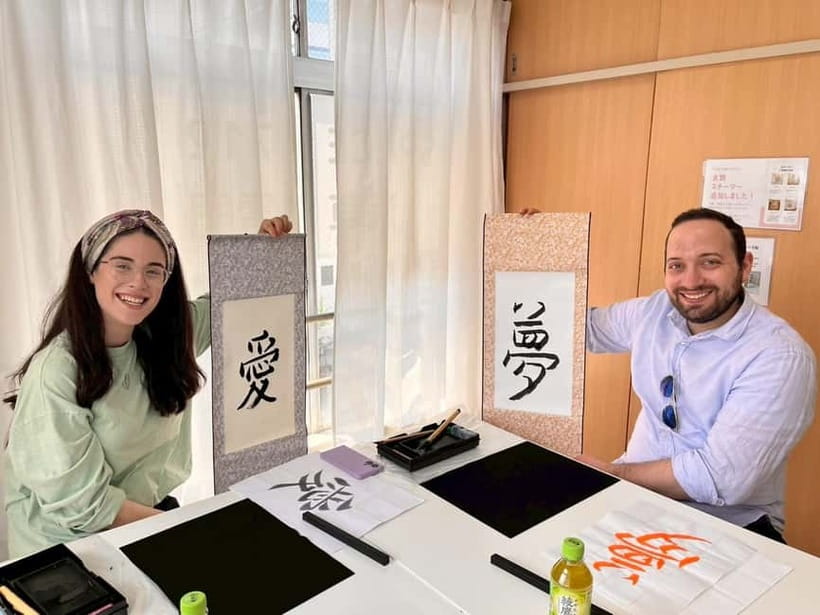
Japanese calligraphy becomes much more than brush strokes in this small Asakusa lesson. You choose a word with a meaning that matters to you, practice it with patient guidance, then put your best version on a fan, decorative board, or hanging scroll.
I like the small group of no more than four and the 20 sheets of practice paper. I also like that instructor Shusuke explains Japanese words in English instead of handing you a brush and hoping for the best. The main limitation is time: one hour is enough for a focused introduction, but not for mastering calligraphy.
Key points at a glance
- Choose a meaningful Japanese word: Browse sample works and learn the meaning behind each word in English.
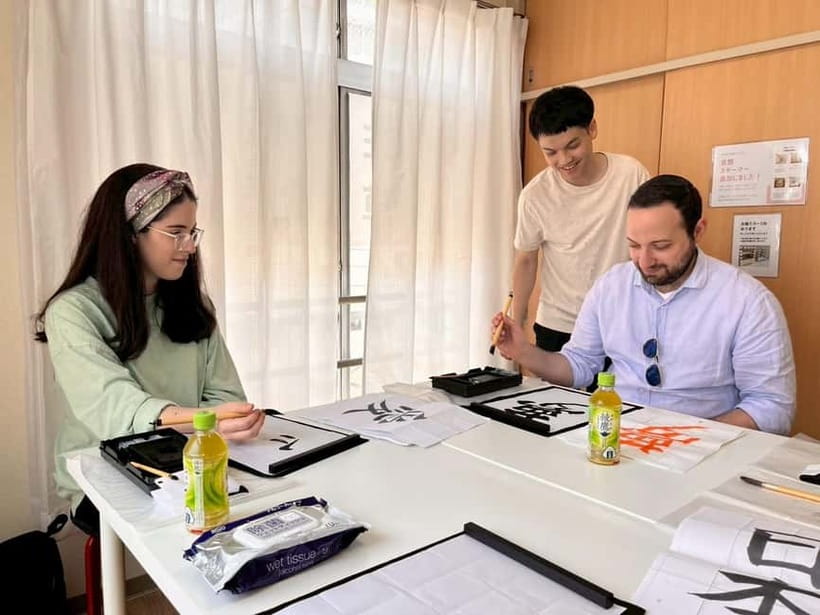
- Practice on 20 sheets: You get about 30 minutes to work on brush control, spacing, and stroke order.
- Learn from Shusuke: The instructor has more than 10 years of experience and holds 3rd Dan certification from the Japan Educational Calligraphy Federation.
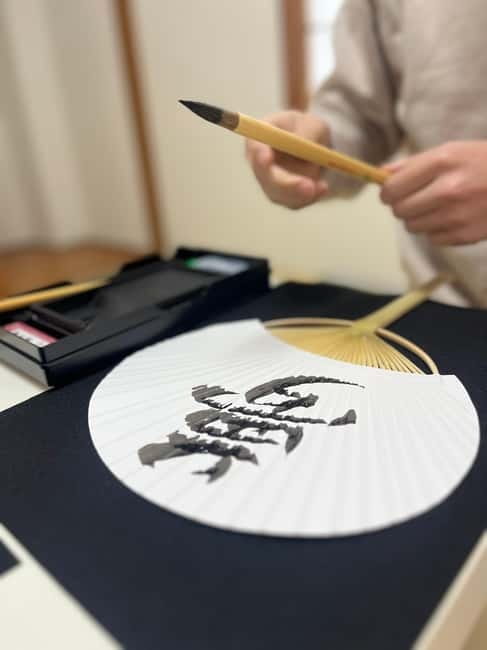
- Take home a handmade piece: Finish on an uchiwa, shikishi, or kakemono rather than leaving with practice paper alone.
- Keep the class personal: The group is limited to four people in a rental room in Asakusa.
- Plan around the location email: The exact room and meeting point are sent after booking, and the room may be Japanese style with tatami or Western style with tables and chairs.
Why this Asakusa calligraphy class is worth your time
Tokyo offers plenty of quick souvenir stops, but this class gives you a reason to slow down. For one hour, your attention goes to a brush, a few ink strokes, and the meaning of a Japanese word. That change of pace can be welcome after busy sightseeing.
The best part is the personal result. A factory-made souvenir tells you where you bought it. A calligraphy piece shows the word you selected and the effort you put into writing it. Your final work may not look like a professional artist’s piece, and that is part of its charm.
At $45 per person, this is not the cheapest one-hour activity in Tokyo. Still, the price covers instruction, 20 practice sheets, your finished souvenir, and a commemorative photograph. If you value a guided cultural activity and want something compact to pack, the cost is fair.
More Tokyo calligraphy classes:
- Tokyo: Calligraphy on Kanji Fan & Scroll with Drink
★ 5.0 · 210 reviews - Let’s experience calligraphy in YANAKA, Taito-ku, TOKYO !!
★ 5.0 · 127 reviews - Tokyo: Calligraphy Workshop & Original T-Shirt Creation
★ 4.9 · 105 reviews
Finding the class in Asakusa
The class uses one of several rental rooms in Asakusa. You receive the exact address and meeting point by email after reserving, so do not rely on a general map pin alone. Read the message before setting out and allow time to locate the correct room.
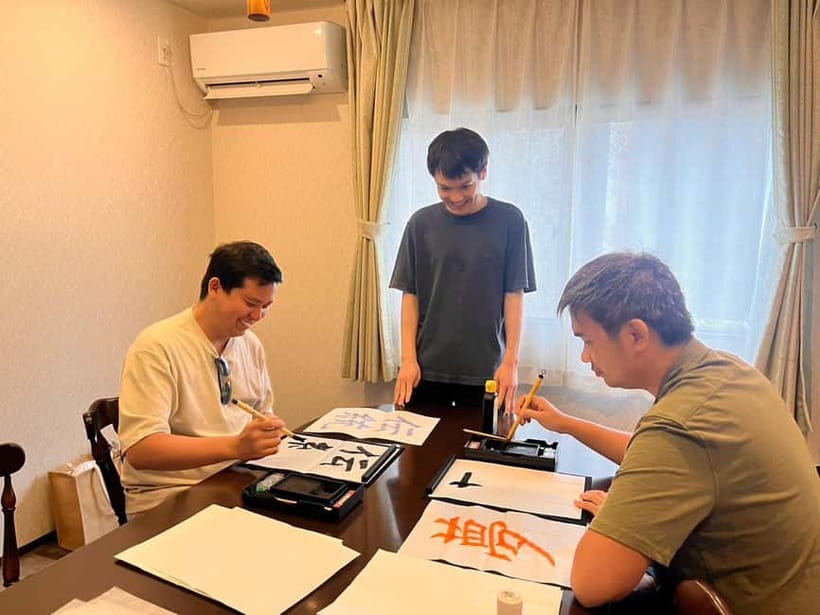
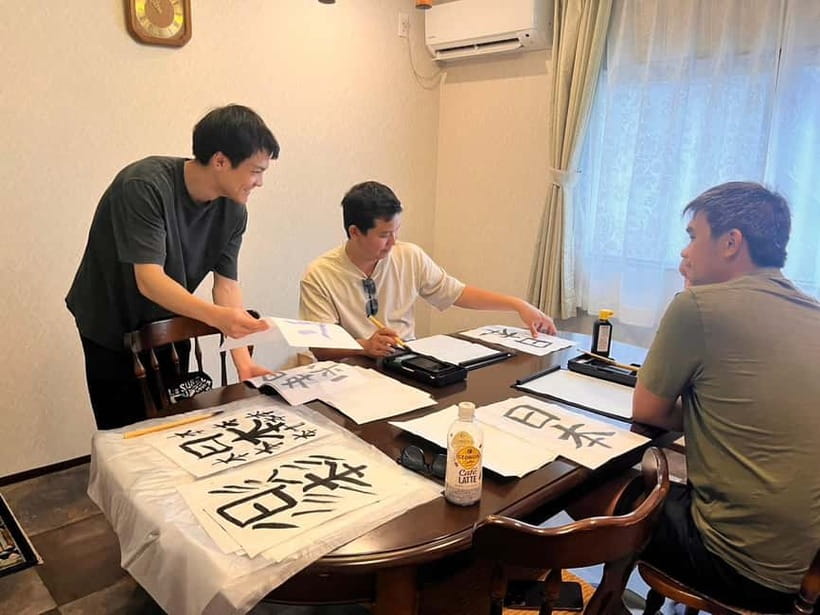
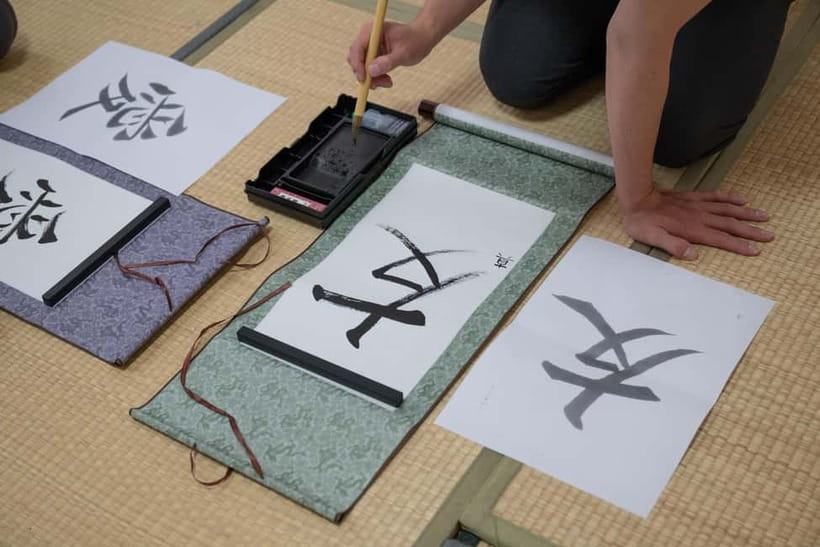
The space may be a Japanese style tatami room or a Western style room with a table and chairs, depending on availability. That means the physical setup can vary. A tatami room gives the session a more traditional feel, while a table and chairs may be easier for anyone who prefers a familiar writing position.
The location matters because Asakusa is one of Tokyo’s most useful sightseeing bases. You can place the class before or after time in the district, but the activity itself is not a guided walk. You are coming for the lesson, not for a tour of nearby sights.
The group limit of four is a real advantage. You are not trying to copy a brush movement from the back of a crowded room. Shusuke can look at your work, point out a problem, and offer a correction suited to your hand.
Choosing a word that means something to you
The class begins with a selection of sample calligraphy works. Each word or phrase comes with an explanation in English, including its meaning and cultural importance. This is a useful step because Japanese characters can look attractive even when you do not know what they say.
I recommend choosing a word for its meaning first and its appearance second. You might prefer a word connected to peace, courage, travel, friendship, or another idea that fits your time in Japan. The supplied examples are there to help you decide, and you can ask questions before committing to a final choice.
This is also where Shusuke’s language ability helps. He speaks native Japanese and advanced English, so the lesson can cover both the shape of the characters and the idea behind them. He also speaks beginner Korean, though the activity is offered in English and Japanese.
One useful feature is the chance to ask about the three main calligraphy forms discussed during the lesson. You can gain a basic sense of how Japanese writing styles differ instead of treating every brush character as the same kind of mark.
Do not rush this choice. You will spend much of the session practicing the same word, then place your strongest attempt on the final souvenir. A word you understand will make the finished piece feel more personal.
Thirty minutes with brush and practice paper
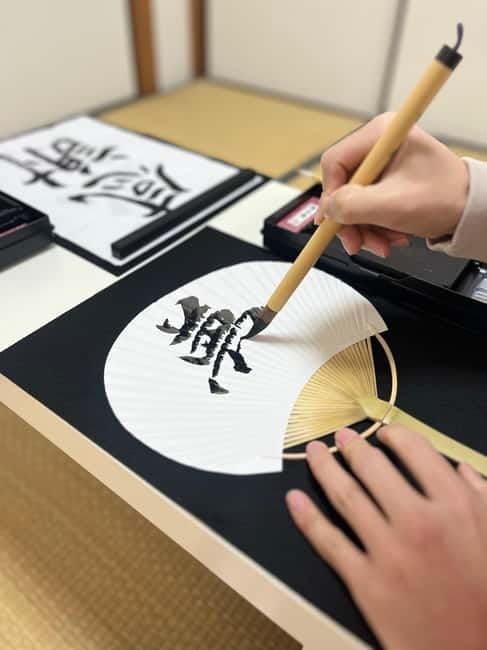
After selecting your word, you practice on hanshi, the thin paper used for calligraphy. You receive 20 sheets, which gives you room to make mistakes. That matters because your first attempt may reveal more about brush pressure than artistic talent.
The practice section lasts about 30 minutes. Shusuke demonstrates the technique and gives step-by-step help as you work. You can use this time to improve the basic parts of the writing:
- Holding and guiding the brush
- Starting and ending each stroke
- Controlling pressure
- Keeping characters balanced
- Leaving suitable space around the writing
- Repeating a stroke until it feels more natural
You should expect guidance rather than a formal school lesson. The purpose is to help you create a finished piece during a short visit, not to make you an expert calligrapher in one sitting.
The 20 sheets also make the activity approachable for beginners. You do not have to protect your first sheet as if it were a final artwork. Use the early attempts to understand the brush. Save the later sheets for deciding which version deserves to move onto your souvenir.
Shusuke has more than a decade of calligraphy teaching experience and holds 3rd Dan certification from the Japan Educational Calligraphy Federation. That qualification does not remove the need for practice, but it does mean you are receiving instruction from someone with a serious background in the craft.
The lesson is described as calm and relaxed, which fits the activity. Calligraphy rewards patience. If you are hoping for a fast, noisy entertainment stop, this may feel slow. If you enjoy careful hands-on work, the quiet pace is a strong point.
More hands-on classes and workshops in Tokyo:
- Sushi Making Tokyo Roll and Authentic Japanese Sushi Class
★ 5.0 · 3,971 reviews - Tokyo: Roll and Authentic Sushi Making Class in Asakusa
★ 4.9 · 1,957 reviews - Tokyo Shinjuku Chopsticks Making Class
★ 5.0 · 1,763 reviews - Tokyo: Sushi Making Class in a Happi Coat near a Famous Spot
★ 4.9 · 1,377 reviews
Turning your best writing into a souvenir
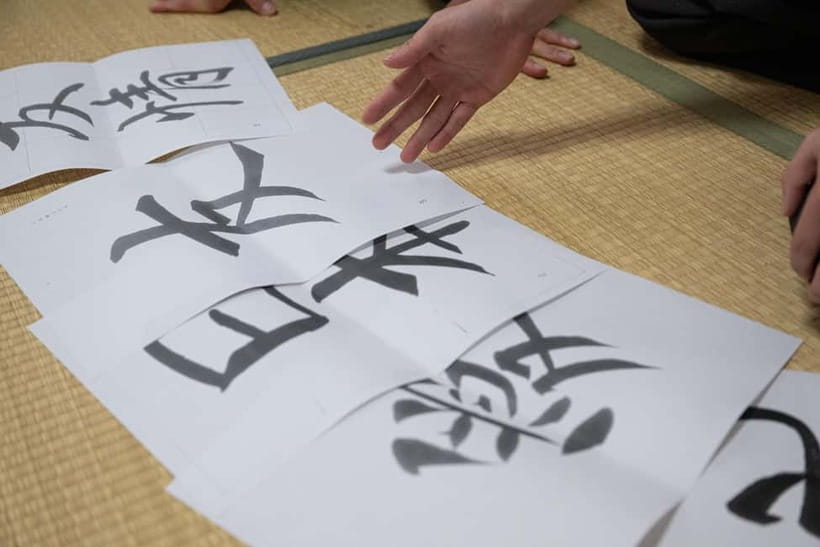
Once you have practiced, you transfer your chosen word to one item. You can select an uchiwa, a traditional Japanese fan; a shikishi, a decorative board; or a kakemono, a hanging scroll.
Each option has a different practical feel. The uchiwa is light and distinctly Japanese, though its shape gives you a limited writing area. The shikishi is a compact display board and may be the simplest item to pack. The kakemono has the strongest traditional presentation and can be hung, but it needs more careful storage in your luggage.
The important point is that you are not simply buying an item with prewritten characters. You are creating the central writing yourself after practice. That makes the final piece personal, even if the strokes are not perfectly uniform.
Move slowly during this final stage. It is the one part of the lesson you cannot easily redo on the finished item. Your practice sheets are for testing size and spacing, so use them to decide how large the characters should be before touching the final surface.
The finished work also works well as a gift. You can explain the word and its meaning instead of handing someone a generic Tokyo souvenir. If you are making it for yourself, it can serve as a small reminder of a quiet hour in Asakusa.
The commemorative photo and the human side of the class
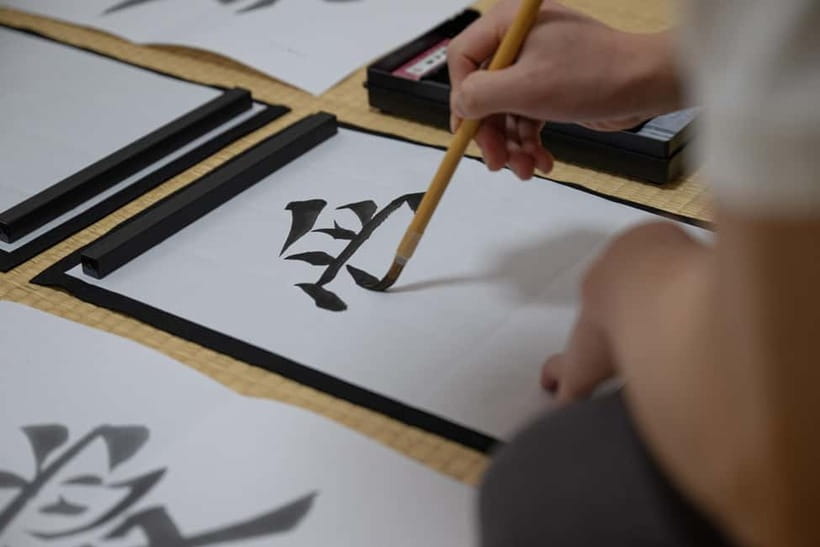
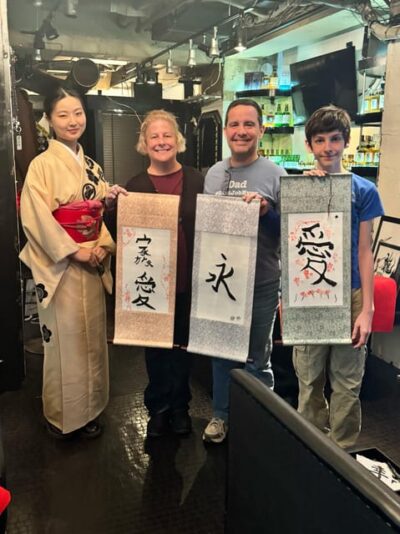
Before the session ends, you take a commemorative photo with your completed work. This is a small inclusion, but it helps record the process as well as the finished item. If you are traveling alone, it also gives you a proper image of the experience instead of another photograph taken at arm’s length.
Shusuke’s manner is part of the appeal. The class is described as intimate and relaxed, and his teaching style is calm. He also takes photographs and offers help with questions beyond the basic lesson, including suggestions connected with places to visit in Japan.
That extra conversation can be useful, but keep your expectations sensible. This is a calligraphy class, not a personal Tokyo planning service. His travel experience across 20 countries and his time studying in the Philippines and Canada may make conversation easy, but the main value remains the writing lesson.
The communication before the class is another practical strength. The meeting point can be easy to find when you have the correct details, but the exact room is not fixed in the general activity information. Check your email carefully and contact the provider if the location message has not arrived.
What the $45 price really includes
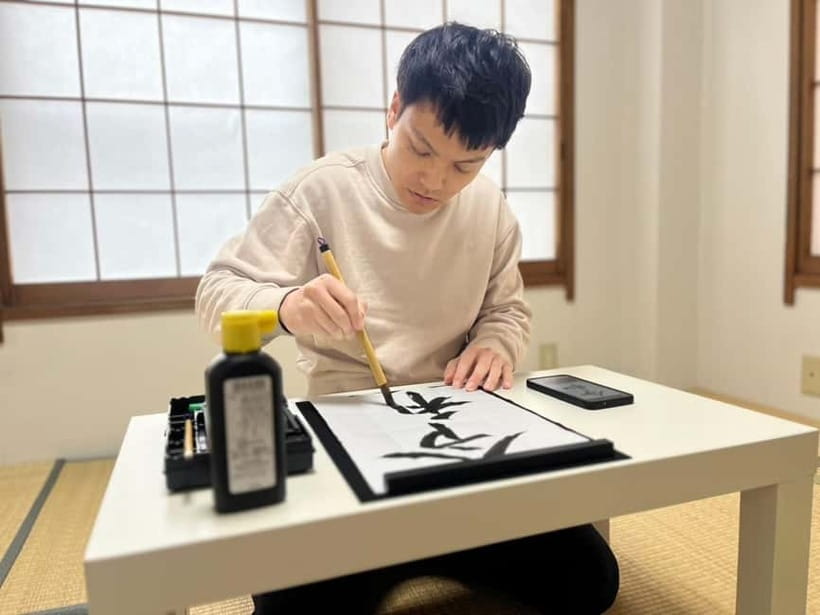
The $45 fee covers more than access to a room. You receive:
- English explanations of sample words
- Instruction from a certified calligraphy teacher
- About 30 minutes of practice
- Twenty sheets of hanshi
- One selected souvenir item
- A commemorative photograph
Viewed as a short cultural workshop, the price is reasonable. You are paying for a teacher’s time, materials, individual correction, and a final object that you create yourself. The small group also gives the fee more value than a large demonstration where you mostly watch.
The price may feel less attractive if your only goal is to buy a Japanese fan or scroll. You could find ready-made souvenirs elsewhere for less than $45. This activity makes sense when you want the process, the explanation, and the chance to put your own brushwork on the item.
The flexible reservation terms help with trip planning. You can cancel up to 24 hours before the class for a full refund, and you can reserve now while paying later. Starting times vary, so check availability for your chosen date.
Who should book this experience
I would recommend this class to first-time calligraphy students, couples, families with older children, and anyone who wants a quieter activity in Tokyo. The limited group size is especially useful if you prefer asking questions without speaking in front of a large crowd.
It also suits visitors who care about meaning. You can choose a word after learning what it represents, then take home a piece that connects to your trip. That gives the souvenir more weight than a quick purchase near a station.
The activity may not suit you if you want a long lesson with advanced technical study. One hour moves quickly, and the class is designed around a finished souvenir. You also need to be comfortable with an exact meeting point that arrives by email and with the possibility of a tatami room.
If your schedule is tight, the one-hour format is easy to fit between other plans. Just allow extra time for reaching the rental room, since the room location varies. Do not book this as a substitute for a full day of cultural sightseeing. Book it as a focused break from sightseeing.
Final call: should you book it?
Book this Asakusa class if you want a personal souvenir, clear English support, and hands-on instruction from Shusuke in a group of four or fewer. The strongest reasons are the 20 practice sheets, the choice of three useful souvenir formats, and the chance to understand your word before writing it.
Skip it if you only want to watch a demonstration, need a fixed public meeting point, or hope to become highly skilled in one hour. For most visitors who enjoy making something with their own hands, $45 buys a calm and memorable hour, not just another object in a shopping bag.
FAQ
How long does the Japanese calligraphy class last?
The activity lasts one hour. About 30 minutes are set aside for practice on hanshi paper before you create your final souvenir.
How much does the experience cost?
The price is $45 per person.
How many people can join the class?
The class is limited to four participants, making it a small-group activity.
Which languages does the instructor speak?
The activity is offered in English and Japanese. The instructor speaks native Japanese and advanced English, and also has beginner Korean ability.
What can I make during the class?
You can write your chosen word or phrase on an uchiwa traditional fan, a shikishi decorative board, or a kakemono hanging scroll.
Do I get practice paper?
Yes. Each participant receives 20 sheets of hanshi calligraphy paper for practice.
Where does the class meet in Asakusa?
The class takes place in a rental room in Asakusa. The exact location and meeting point are sent by email after you make a reservation. The room may be Japanese style with tatami or Western style with a table and chairs.
Newly reviewed around Tokyo
- Tokyo Asakusa:Calligraphy & Make T-shirt Activity★ 5.0 · 62 reviews
- Intercity Shuttle, Tokyo to Haneda /Narita /Yokohama /Makuhari★ 5.0 · 5 reviews
- 1 Hour Travel around Tokyo with a Professional Photographer★ 5.0 · 3 reviews
- Travel Tokyo with Your Own Personal Photographer★ 5.0 · 43 reviews
- Train in Samurai Swordsmanship and Defeat the Demon in Tokyo★ 5.0 · 5 reviews
- Shuttle Van 6hr Tokyo Tour to-and-from Tokyo, Yokohama and Narita★ 5.0 · 9 reviews
- Kickboxing & Body Training with EX-Pro Fighter★ 5.0 · 4 reviews
- Traditional Japanese Knife Sharpening Class★ 5.0 · 18 reviews
Tokyo Calligraphy Classes, compared.
Let’s experience calligraphy in YANAKA, Taito-ku, TOKYO !!
Read our review →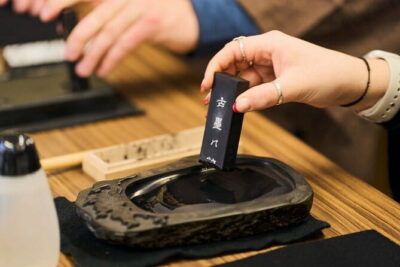
Calligraphy Workshop & Original T-Shirt Creation
Read our review →
Calligraphy Workshop & Original T-Shirt Creation
Read our review →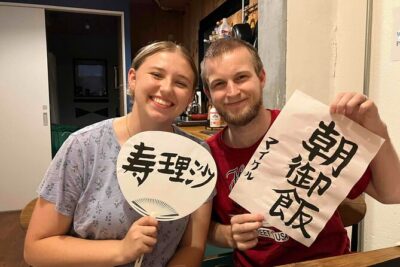
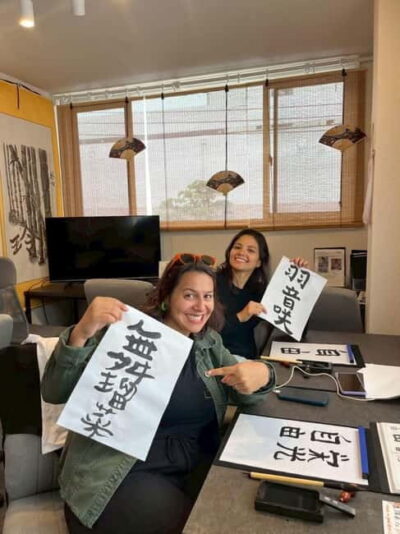
Calligraphy &Make your original folding fan in Asakusa
Read our review →
Tokyo Asakusa:Calligraphy & Make T-shirt Activity
Read our review →Browse the lists this tour appears in