
Reviewed · TOKYO SUMO EXPERIENCES
Tokyo: Family Sumo Workshop & Live Wrestling Show with Lunch
The best part of this Tokyo experience is simple: you do not just watch sumo from a distant stadium seat. You step onto the dohyo, learn a few basic movements from former professional wrestlers, and may even try to push one out of the ring. I especially like the friendly mix of real instruction and comic theater, plus the hearty chanko hotpot lunch. The one thing to consider is that this is an exhibition and workshop, not an official grand tournament.
I also like that you can take part without wrestling. You may stay seated, film the action, ask questions, and take photos with the wrestlers. Guides such as Alisa, Alyssa, Yo, Rio, and Ko have helped make recent sessions clear and welcoming in English, though the host can vary. At $60 per person, it is good value if you want a hands-on cultural activity, but less so if your main goal is to watch serious competitive sumo.
Key points at a glance
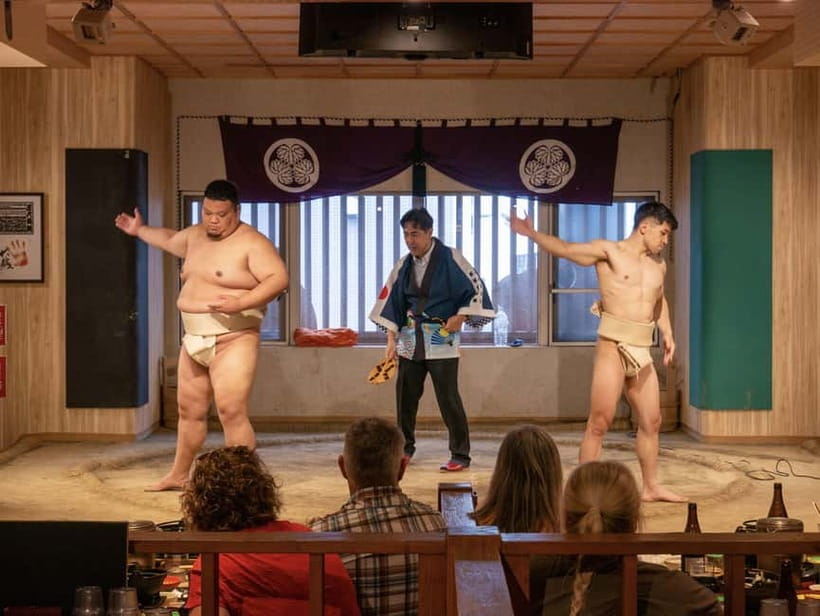
- Enter Ryogoku’s sumo ring: Try shiko, teppo, or suri-ashi on the same kind of clay ring used for the sport.
- See former professionals up close: The demonstration includes training exercises, practice bouts, and a fast, theatrical exhibition match.
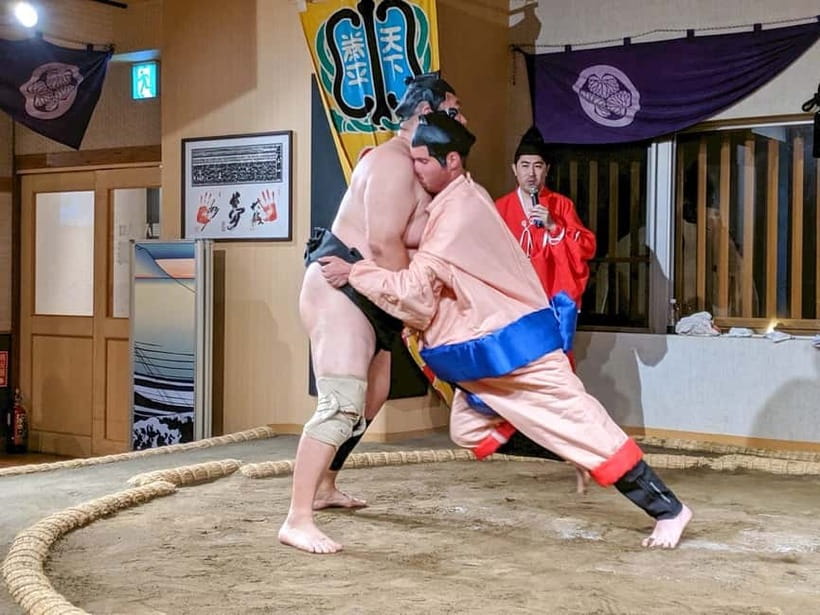
- Challenge a wrestler safely: Volunteers can wear a padded sumo suit and test their strength against a much larger opponent.
- Eat the wrestlers’ traditional fuel: A mini chanko nabe hotpot comes with the experience, with dietary requests arranged in advance.
- Family-friendly by design: Children and adults can watch, learn, laugh, and join the ring at their own comfort level.
- Plan the meeting carefully: Transport is not included, and you meet outside the shop by the face-in-hole photo board.
Why this Ryogoku sumo workshop works so well
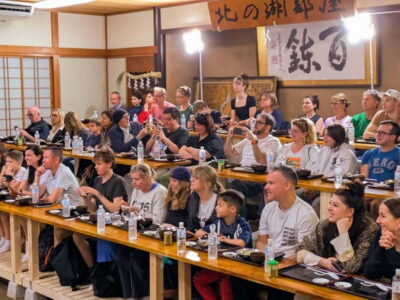
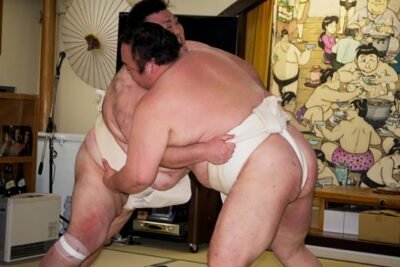
Tokyo offers many polished cultural shows, but this one has a nice physical edge. You hear the slap of a hand against a wrestler’s body, the thump of feet on the floor, and the heavy collision of two large men in a practice bout. Then the atmosphere changes from demonstration to participation as volunteers are invited forward.
That shift matters. Sumo can seem mysterious when you only see the formal bowing, salt throwing, and explosive charge. Here, the English-speaking host explains what you are seeing as it happens. You learn that shiko is not simply a dramatic leg lift, and that suri-ashi means sliding the feet rather than stepping normally. The explanations are short enough for children to follow, but useful enough to give adults a better sense of the sport.
The tone is playful. The former wrestlers know how to build a laugh, especially when a volunteer gives everything to move an opponent who barely seems to budge. Yet the physical demonstrations still show the balance, timing, and control behind sumo. You get comedy without losing sight of the skill.
This is held in Ryogoku, Tokyo’s traditional sumo district and the spiritual home of the sport. You are not being taken into a working tournament arena, but the setting gives the activity a fitting sense of place. For many people, the chance to stand in a sumo ring is more memorable than another museum display.
More Tokyo sumo experiences:
- Tokyo: Sumo Show and Dining Experience
★ 4.8 · 2,742 reviews - the SUMO show
★ 5.0 · 1,960 reviews - Tokyo Shinjuku Sumo Show & Experience with Photo
★ 5.0 · 1,750 reviews
The first hour: from shiko practice to a full-speed bout
The ring program begins with an introduction to sumo customs and training. Expect the host to explain the salt-tossing ritual, the meaning of shiko, and the basic rules before the wrestlers show their drills.
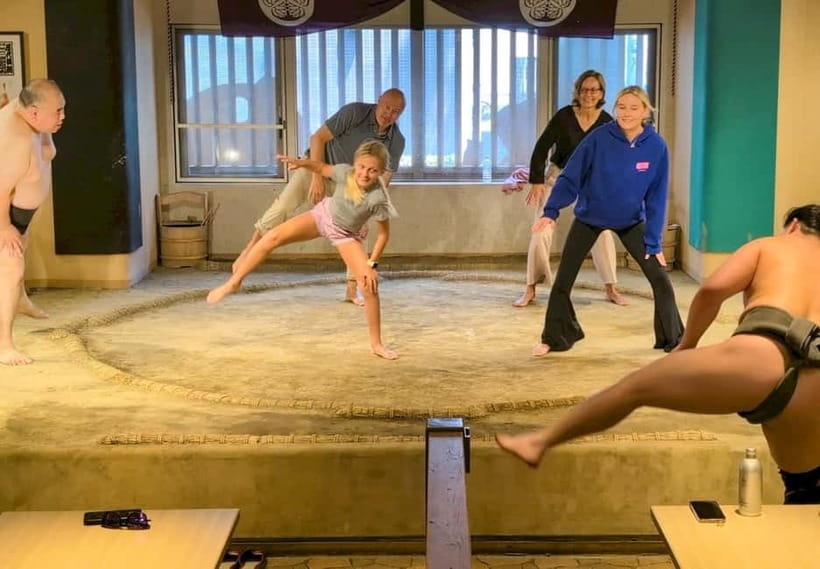
Shiko is the familiar leg-stomping exercise. It requires balance and control, not just brute force. Teppo is a pushing drill, while suri-ashi teaches the low, sliding footwork used to keep contact with the ground. You may try these movements under guidance, though participation is optional.
The optional nature of the drills is important for families. A child who wants to copy the wrestlers can join in, while a shy child or tired parent can stay seated. You can also film from your place. This flexibility keeps the session from feeling like a forced audience-participation show.
After the exercises, the wrestlers demonstrate a practice bout and a more energetic exhibition match. The action is close enough that you can hear the impact, but it is controlled for the setting. The host helps explain what is happening, so you are not left watching two large bodies collide without context.
Then comes the moment many people remember: the volunteer challenge. You can put on a padded sumo suit and face a former professional wrestler. The suit makes the contest safe and funny, but the difference in size and strength remains very real. The listed example is a wrestler weighing around 160 kilograms, so do not expect a fair athletic contest. The point is to feel the force, enjoy the joke, and discover how difficult it is to move someone trained to stay grounded.
I like that parents may either join the action or record it. This solves a common problem with family activities, where one adult ends up missing the best moments while supervising children. Here, you can choose your role.
Volunteer challengers should be in good health. You remove your shoes before stepping into the ring, and loose sportswear is the sensible choice. The activity is wheelchair accessible, but ring participation itself may not suit every visitor. You do not need to wrestle to get the full experience.
What the sumo customs add to the show
The rituals are not filler before the wrestling begins. They help explain why sumo feels different from ordinary combat sports.
The salt toss, the foot stamping, the crouch, and the long pre-bout gestures all carry meaning. The host explains these customs in English while the wrestlers demonstrate them. You begin to see the ring as a formal space, not just a place for pushing.
This is also where the 1,500-year history of sumo enters the program. The presentation is aimed at a general audience, so do not expect a long academic lecture. Instead, you get useful background in small pieces, linked to what the wrestlers are doing right in front of you.
The question period adds value. You can ask about rules, training, and the life of a sumo wrestler. The clear English commentary is one of the main reasons this works well for families and first-time visitors. The guides have been praised for keeping explanations lively rather than turning the session into a dry lesson.
The host can change from one date to another. Names connected with recent sessions include Alisa, Alyssa, Yo, Rio, Ko, Yuto, and Nozomi. I would not book based on a particular guide unless the provider confirms who is working that day, but the repeated pattern is an energetic English-speaking presenter who keeps the group involved.
The chanko hotpot lunch is more than an add-on
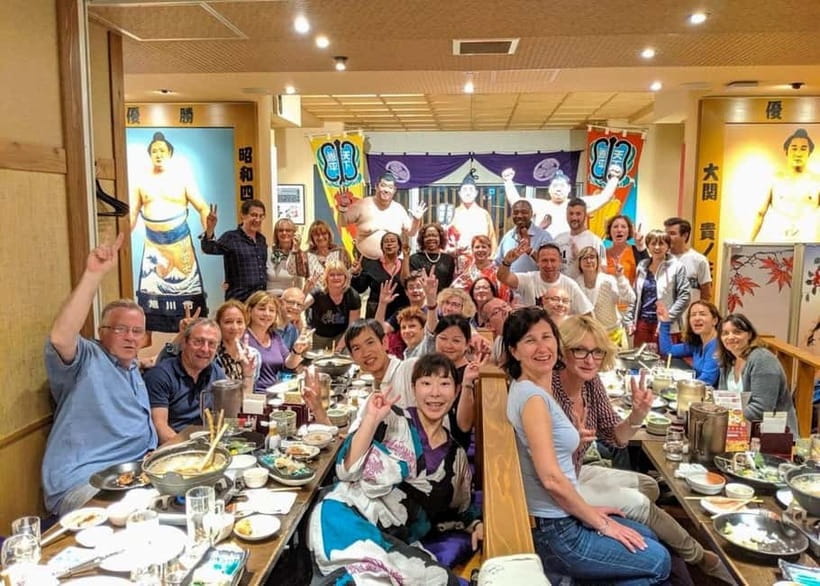
After the ring session, you sit down for a mini serving of chanko nabe, the hotpot associated with sumo wrestlers. It is loaded with meat and vegetables and served hot. The portions are described as generous, so arrive hungry or expect to leave some behind.
Chanko is useful context for the sport because it connects the show to the daily life of wrestlers. This is not merely a themed Japanese meal placed after a performance. The host explains why the dish is linked with the wrestlers’ diet and physique, giving you a practical look at how food supports their training.
The meal has been one of the strongest parts of the experience for many people. The hotpot is described as delicious, abundant, and authentic-tasting, and several families found it substantial enough to count as a proper lunch. The combination of food and entertainment also makes the $60 price easier to justify.
You need to state dietary needs at least 48 hours ahead. Vegetarian, vegan, and other allergy-friendly arrangements are available by request. The venue can also prepare food without pork or alcohol, but it does not hold official Halal certification. If you require strict protection from cross-contamination, the provider cannot guarantee that meal.
Alcohol and extra menu items are not included. You can order additional items on site, but the main value calculation should be based on the ring program, photo time, and mini hotpot.
More Lunch Experiences in Tokyo:
- Tokyo: Mt.Fuji & Lake Kawaguchiko 1-Day Bus Tour w/Optional Lunch
★ 4.5 · 839 reviews - Tokyo: Sumo Experience and Chanko Nabe Lunch
★ 4.8 · 257 reviews - Tokyo: Tsukiji Fish Market Tour with 6 Stops & Seafood Lunch
★ 4.5 · 165 reviews - Tokyo: 1 Day Bus Tour with Meiji-Jingu,Odaiba,lunch&Skytree
★ 4.6 · 156 reviews
Is $60 a fair price?
At $60 per person, this is not the cheapest way to spend a morning in Tokyo. You can visit many cultural sites for less, and a public sumo tournament is a different kind of experience altogether. Still, the price includes admission, ring access, former professional wrestlers, English commentary, the padded challenge equipment, photo time, and lunch.
The key question is how much you value participation. If you only want to see sumo, an exhibition on a small ring may feel limited compared with a tournament. If you want to learn movements, meet wrestlers, ask questions, and try the sport yourself, the value is much stronger.
The included lunch matters for families. You are not paying separately for a meal after the activity, and the food helps turn the event into a self-contained outing. Several people found the meal plentiful enough that eating a large breakfast beforehand would be a mistake.
The reported rating is 4.9 from 99 reviews, with consistent praise for the wrestlers’ humor, the hosts’ energy, the food, and the chance to enter the ring. That pattern suggests the experience delivers reliably on fun and access. It does not mean every visitor will want the same level of audience participation, so remember that the program is built around interaction.
Who will enjoy this most?
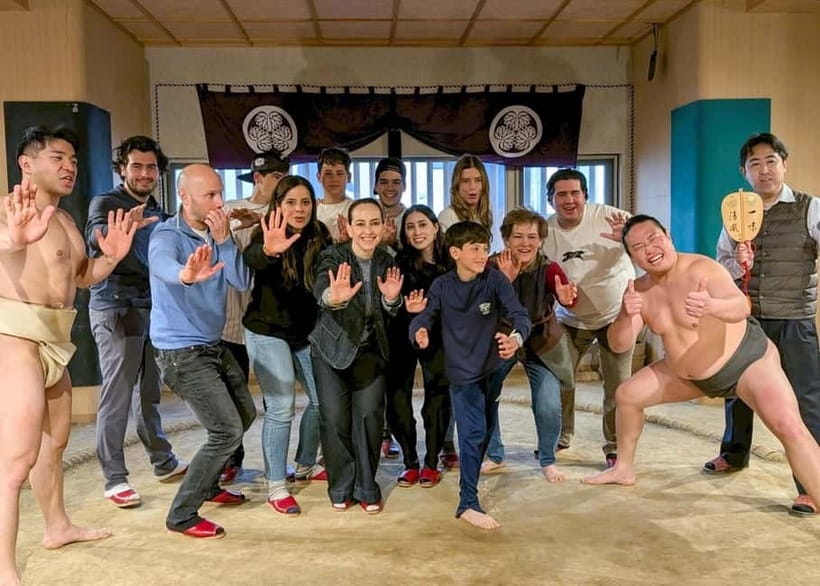
I would recommend it first to families with school-age children, couples who want something more active than sightseeing, and solo visitors who like meeting other people in a relaxed setting. One solo participant found it easy to enjoy the jokes and shared moments even while surrounded by families.
It also suits visitors who want Japanese culture explained in plain English. You will not need prior sumo knowledge, and the drills make the sport easier to understand than a quick match viewed without commentary.
Young children can enjoy the spectacle, though meal rules need attention. Children under five do not receive meals under the child rate, so book them at the adult rate if they need lunch. Children aged six and older cannot be booked at the child rate. The supplied information does not clarify every age category in between, so check the booking details carefully before paying.
The activity is less suitable for anyone seeking a quiet, formal cultural presentation. The wrestlers joke, volunteers are encouraged to perform, and the show depends on a willing audience. It is also not the right pick if you have a serious injury or poor health that makes physical participation unsafe, even though you can remain seated.
Timing, meeting point, and practical preparation
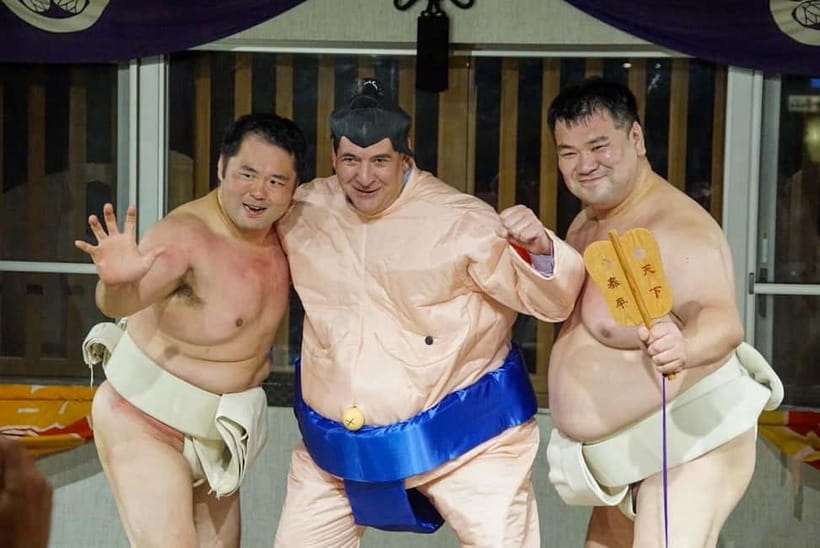
The advertised duration is 105 minutes. The schedule describes roughly an hour for the ring program and another hour around lunch, so allow a little flexibility in how the time is divided. The total timing may vary with the number of volunteers and the pace of the group.
You arrange your own transport. The meeting point is in front of the shop’s face-in-hole photo board. Look for the person holding a smartphone displaying AlvaJapan. Wait outside and do not enter before 10:00 AM if that is the meeting time for your booking. If you lose your way, the provider asks you to call through WhatsApp.
Wear loose sports clothing. You remove your shoes before entering the ring, and comfortable clothing makes the drills and padded suit easier. Bring a phone or camera if you want your own photos, since photo time is included and you are welcome to use your device.
There is a separate entrance for the activity, which helps reduce waiting. The event may not operate if the minimum number of participants is not met. If holding the event on your chosen date is especially important, the provider recommends selecting a private reservation.
Free cancellation is available up to 24 hours before the activity, and you can reserve now while paying later. That is useful when your Tokyo schedule is still shifting.
How this compares with watching official sumo
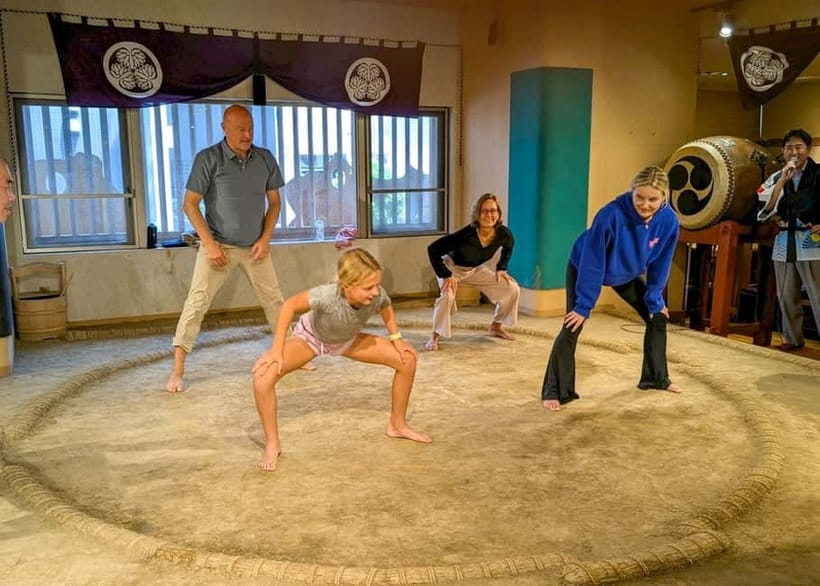
This workshop should not replace an official tournament if you are in Tokyo during tournament season and want to see ranked wrestlers compete under formal rules. A tournament has a larger crowd, more ceremonial structure, and genuine competitive stakes.
This activity offers something an official match cannot: access. You stand in the ring, practice the movements, speak with former professionals, and challenge a wrestler yourself. The exhibition format is lighter and more theatrical, but it is also easier for children and first-time visitors to understand.
I would choose this workshop if you have limited time, want a guaranteed hands-on activity, or are visiting outside a tournament period. I would choose the tournament if serious competition and traditional match-day atmosphere matter more than personal participation. If your schedule allows, the two experiences complement each other.
Should you book this sumo experience?
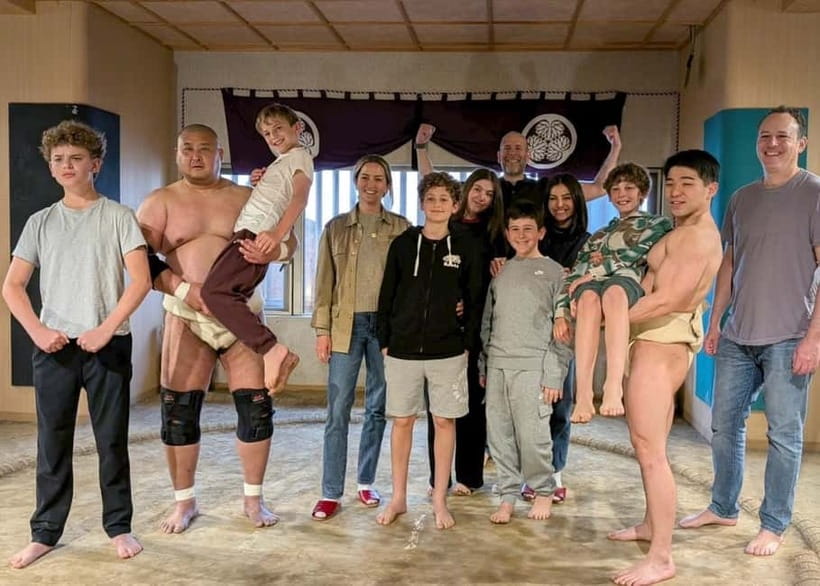
Book it if you want a lively, family-friendly introduction to sumo with a real chance to enter the ring. The strongest reasons are the former professional wrestlers, clear English explanations, optional drills, memorable photo time, and the filling chanko lunch.
Skip it if you dislike audience participation, need a strictly certified Halal meal, or want only formal competitive sumo. Also think twice if you are counting on one particular guide or wrestler, since the staff can vary.
For most visitors, $60 is a fair price for a 105-minute activity that combines instruction, entertainment, food, and personal contact. Come prepared to laugh, wear comfortable clothes, and volunteer only if you feel fit. You can have a good time from your seat, but the most memorable version includes at least one brave person from your group stepping into the ring.
FAQ
Where does the sumo workshop take place?
It takes place in Ryogoku on Honshu, Tokyo’s traditional sumo district. You meet outside the shop by the face-in-hole photo board.
How do I find the guide?
Look for the person holding a smartphone that displays AlvaJapan. If you get lost, the provider asks you to call through WhatsApp.
Is wrestling participation required?
No. Ring drills and volunteer challenges are optional. You may remain seated, watch, film, and take photos instead.
What food is included?
The experience includes a mini chanko hotpot lunch with meat and vegetables. Alcohol and extra menu items are not included.
Can dietary requests be accommodated?
Vegetarian, vegan, and allergy-friendly options can be arranged if you provide the request at least 48 hours before the activity. The kitchen can avoid pork and alcohol, but it does not have official Halal certification and cannot guarantee protection from cross-contamination.
Is the activity suitable for children?
Families are welcome, and children can watch or join suitable parts of the program. Children under five do not receive a meal under the child rate, so book them at the adult rate if they need lunch. Children aged six and older cannot use the child rate.
Is the venue wheelchair accessible?
Yes, the activity is listed as wheelchair accessible. Ring participation is optional, so you can watch from your seat if the drills or challenge are not suitable for you.
More Tokyo shows and performances
- Mt Fuji & Hakone Cruise, Drum Show Bullet Train 1 Day from Tokyo
★ 4.0 · 7,413 reviews - Mt Fuji & Hakone Cruise, Drum Show Bus 1 Day from Tokyo
★ 4.0 · 1,287 reviews - Tokyo: Sumo Show and Experience in Shinjuku
★ 4.8 · 1,001 reviews - Tokyo:Luxury Sumo Show Experience & Japanese cuisine & Drink
★ 4.7 · 577 reviews
More hands-on classes and workshops in Tokyo
- Sushi Making Tokyo Roll and Authentic Japanese Sushi Class
★ 5.0 · 3,971 reviews - Tokyo: Roll and Authentic Sushi Making Class in Asakusa
★ 4.9 · 1,957 reviews - Tokyo Shinjuku Chopsticks Making Class
★ 5.0 · 1,763 reviews - Tokyo: Sushi Making Class in a Happi Coat near a Famous Spot
★ 4.9 · 1,377 reviews
Newly reviewed around Tokyo
- Tokyo Asakusa:Calligraphy & Make T-shirt Activity★ 5.0 · 62 reviews
- Intercity Shuttle, Tokyo to Haneda /Narita /Yokohama /Makuhari★ 5.0 · 5 reviews
- 1 Hour Travel around Tokyo with a Professional Photographer★ 5.0 · 3 reviews
- Travel Tokyo with Your Own Personal Photographer★ 5.0 · 43 reviews
- Train in Samurai Swordsmanship and Defeat the Demon in Tokyo★ 5.0 · 5 reviews
- Shuttle Van 6hr Tokyo Tour to-and-from Tokyo, Yokohama and Narita★ 5.0 · 9 reviews
- Kickboxing & Body Training with EX-Pro Fighter★ 5.0 · 4 reviews
- Traditional Japanese Knife Sharpening Class★ 5.0 · 18 reviews
Tokyo Sumo Experiences, compared.
Tokyo Shinjuku Sumo Show & Experience with Photo
Read our review →
Luxury Sumo Show Experience & Japanese cuisine & Drink
Read our review →
Tokyo Sumo Experience: Chanko & Mochi with a Former Pro
Read our review →
Ultimate Sumo Tournament: Tokyo, Osaka, Nagoya, Fukuoka
Read our review →Browse the lists this tour appears in