
Reviewed · TOKYO SUMO EXPERIENCES
Tokyo: Sumo Experience and Chanko Nabe Lunch
Sumo is far more than two large men pushing each other out of a ring. This two-hour Tokyo experience explains the rituals, rules, training, and meaning behind the sport, then lets you test your courage against former professionals in a playful match. You finish with chanko nabe, the hearty hot pot traditionally linked with sumo life.
I like the close contact with the wrestlers and the clear English explanations. I also like the way lunch is part of the event rather than an afterthought: the wrestlers prepare the chanko nabe, and you eat near the ring. The one thing to consider is the fixed start time. Arrive early, since late arrival could mean missing the opening explanation.
Key points at a glance
- Former professionals lead the session: Learn directly from retired sumo wrestlers rather than from a distant audio guide or recorded presentation.
- You may enter the ring: Audience members can be invited to wear a sumo costume and take part in a playful demonstration.
- Chanko nabe is included: The wrestlers prepare the Japanese hot pot, with food, drinks, and dessert included according to the experience details and participant reports.
- English is used throughout: The rules, rituals, demonstrations, and questions are handled in English.
- Two Tokyo locations: Monday sessions take place in Asakusa, while Thursday sessions are held in Ryogoku.
- Small group, but not necessarily a private room: The booking is limited to six participants, though the venue can include several tables or a wider audience.
Why this sumo lunch works for first-time visitors
Many visitors see sumo during a trip to Japan but never quite understand what they are watching. The match may last only seconds, yet the wrestlers spend much longer preparing, stamping, bowing, and testing one another before the actual push begins.
This experience fills in those missing pieces. You learn why the ring matters, how a bout is won, and how training and ritual fit together. The explanations are in English, which makes a real difference when the subject includes customs that are easy to miss from the seats of a tournament hall.
The tone is playful rather than solemn. That is useful for a mixed-age group or anyone who worries that a lesson about Japan’s national sport might feel too formal. You get real instruction, but you also get jokes, demonstrations, photographs, and the chance to see how strong a former professional remains.
I would not treat this as a substitute for attending an official sumo tournament. You are not watching a full day of tournament matches or sitting in a large arena. This is a hands-on introduction, built around conversation and participation.
More Tokyo sumo experiences:
- Tokyo: Sumo Show and Dining Experience
★ 4.8 · 2,742 reviews - the SUMO show
★ 5.0 · 1,960 reviews - Tokyo Shinjuku Sumo Show & Experience with Photo
★ 5.0 · 1,750 reviews
Arriving in Asakusa or Ryogoku
The location changes by day. On Mondays, the event takes place in Asakusa. On Thursdays, it is held in Ryogoku, Tokyo’s best-known sumo district. Your voucher supplies a map to the exact meeting point, so do not rely on a general search for a sumo venue.
The activity starts at 1:00 PM. The information supplied for the experience says the door opens at 12:40 AM, which appears unusual for a lunchtime event, so check the voucher carefully for the intended arrival time. The important practical point is clear: arrive before the 1:00 PM start, not at 1:00 PM.
There is no hotel pickup or drop-off. You make your own way to the meeting point and return there when the session ends. That keeps the price lower than a private sightseeing tour, but you need to allow time for Tokyo transport and finding the entrance.
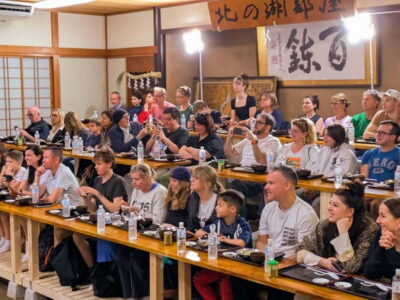
The setting is designed for a close encounter rather than a large show. The booking is limited to six participants, although the room may have more tables or audience members than that. If you want the smallest possible group, check the final booking details before paying.
The opening lesson: rules, ritual, and sumo life
The session begins with an explanation of sumo from former professional wrestlers. You learn how the sport works, but the useful part is the attention given to the ceremonies around the bout.
Sumo has a strong ritual side. The movements before a match are not random warm-ups, and the ring is not simply a convenient platform. The wrestlers explain these customs in a way that helps you watch future matches with more understanding.
You also hear about training and competition. The goal is not to turn you into a sumo expert in one afternoon. It is to give you the basic framework so that the next time you see a bout, you can follow the action and appreciate what happens before the push begins.
The English presentation is especially helpful for families and first-time visitors. Children can follow the physical demonstrations, while adults get more context about the sport’s rules and traditions. The explanations are paired with action, so you are not sitting through a long talk before anything happens.
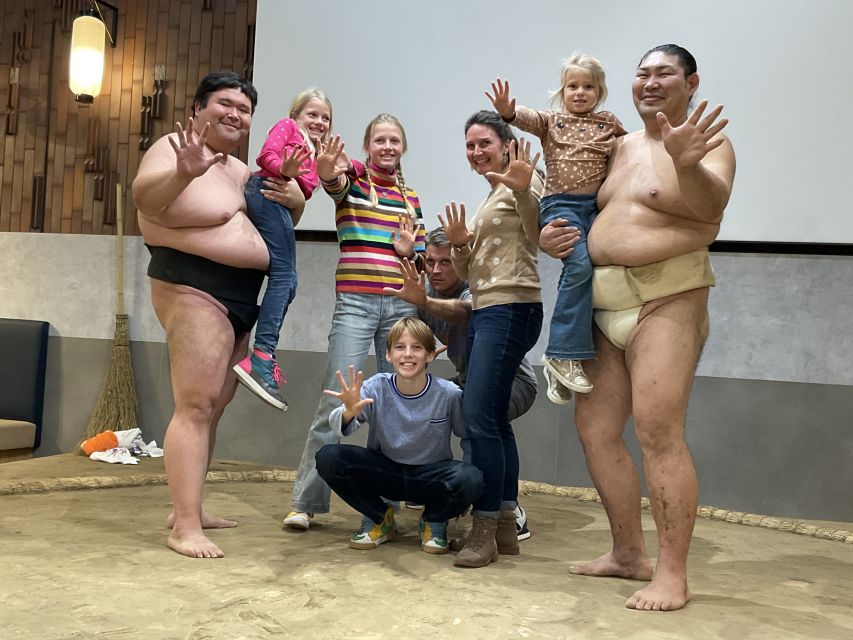
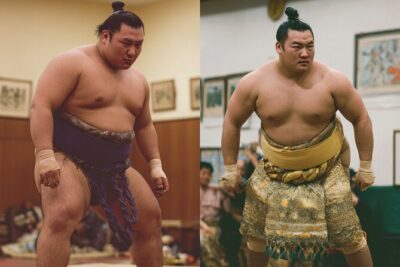
The wrestlers themselves are a major part of the appeal. Sessions have featured performers named Audrey and Jumbo, both praised for strong English, comic timing, and an easy way with the audience. Names and participants can change, but the format keeps the instructors close and available for questions and pictures.
The demonstration: serious technique with plenty of laughs
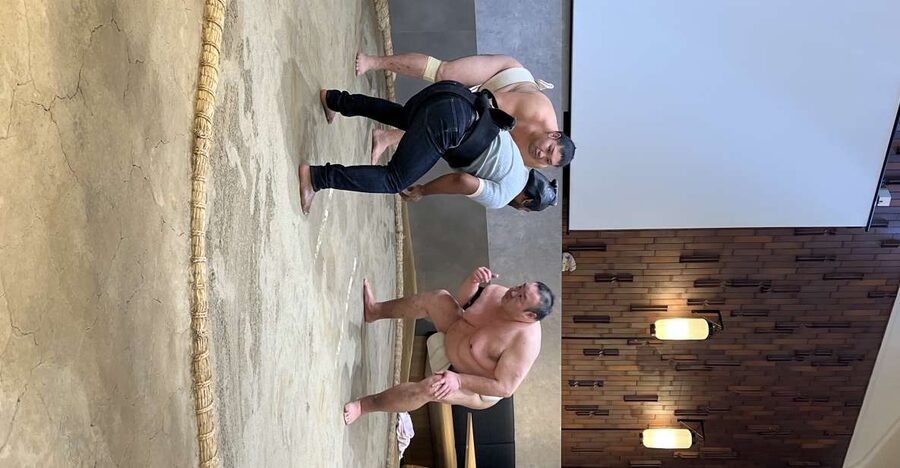
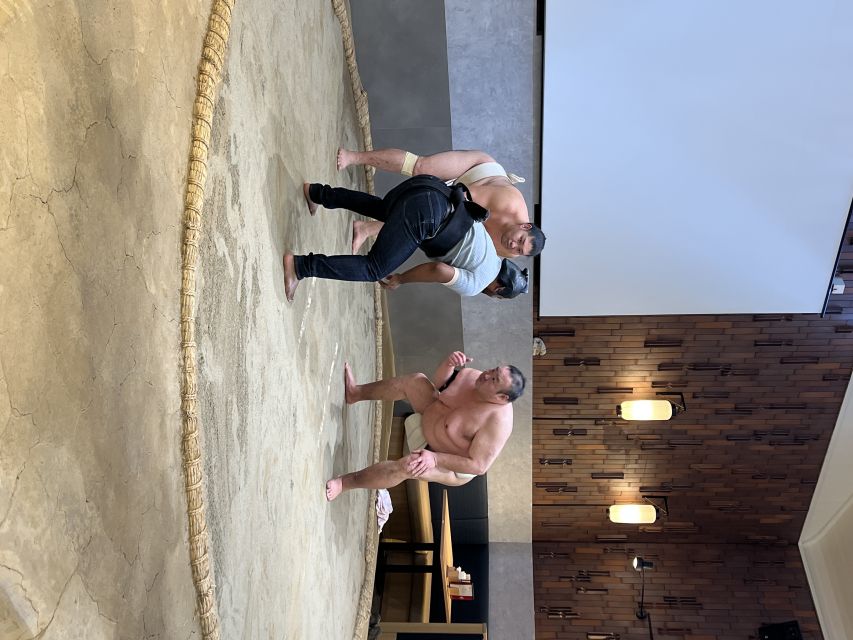
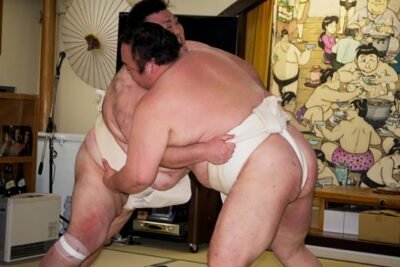
After the introduction, the former wrestlers demonstrate sumo techniques. This is where the scale and strength of the sport become easier to understand.
A professional bout can look simple from a distance. Up close, the demonstrations show how balance, timing, footwork, and body position matter. The wrestlers also make the presentation entertaining, so you are not left with a dry list of rules.
The balance between instruction and comedy is one of the strongest parts of the event. The wrestlers take the sport seriously, but they do not expect you to know the correct response to every ritual or movement. Their warm, playful manner helps shy participants relax.
There is also plenty of time for photographs. You can take pictures with the wrestlers and record the occasion without feeling rushed through a single pose. If a photo matters to you, keep your phone ready, but listen to the presentation first so you do not miss the demonstrations.
More Lunch Experiences in Tokyo:
- Tokyo: Mt.Fuji & Lake Kawaguchiko 1-Day Bus Tour w/Optional Lunch
★ 4.5 · 839 reviews - Tokyo: Tsukiji Fish Market Tour with 6 Stops & Seafood Lunch
★ 4.5 · 165 reviews - Tokyo: 1 Day Bus Tour with Meiji-Jingu,Odaiba,lunch&Skytree
★ 4.6 · 156 reviews - Mt. Fuji, Oishi Park & Arakurayama Pagoda Bus Tour with Lunch
★ 5.0 · 128 reviews
Your turn in the ring
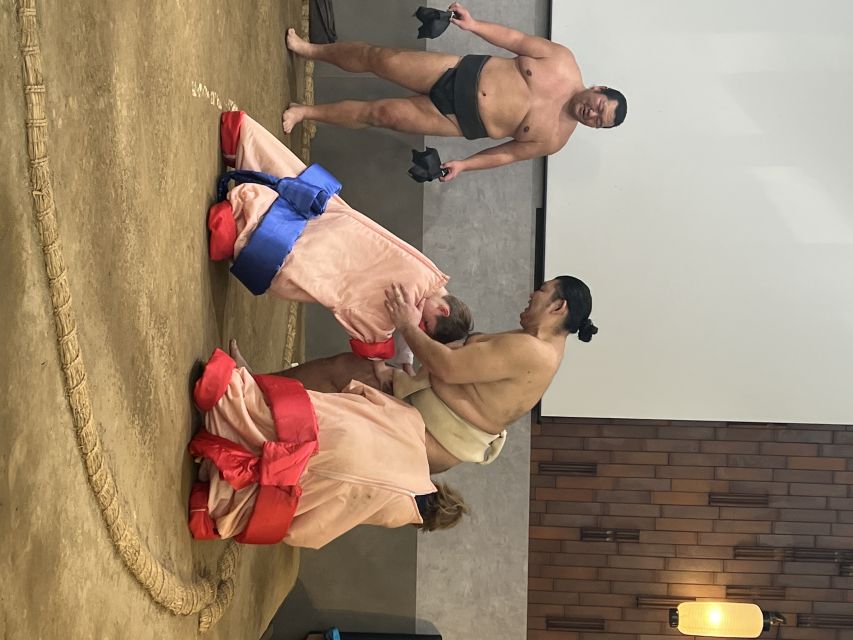
The interactive section is the moment most people remember. Some audience members may be invited to put on a sumo wrestler costume and help with a demonstration. Not everyone can be selected, so do not book this expecting a guaranteed personal bout.
The duel is playful, but the strength is very real. A large adult can still feel surprisingly small when matched against a former professional. The demonstration gives you a safe way to experience the power difference without pretending that you are competing in an actual professional contest.
People of different ages can take part, depending on who is invited and what the instructors arrange. Families have found this especially entertaining, with children getting a close look at the wrestlers and adults sometimes volunteering themselves. If you are keen to participate, show interest, but remember that the selection is not promised.
The activity is best approached with a sense of humor. You are not learning to fight, and you are not being judged on technique. You are taking part in a short, good-natured demonstration that helps explain what the wrestlers can do.
If you have mobility concerns, the experience is listed as wheelchair accessible. Still, the exact mechanics of getting into the ring and taking part are not described, so contact the provider in advance if you need a particular arrangement.
Chanko nabe: the meal after the lesson
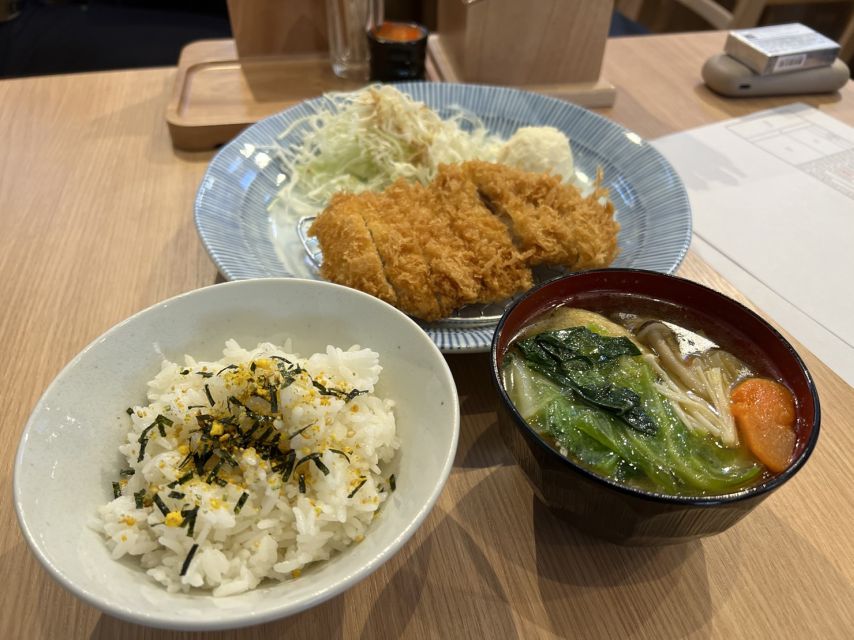
The food is not just a snack between demonstrations. Chanko nabe is a Japanese-style hot pot associated with the diet and stamina of sumo wrestlers, and it is prepared by the wrestlers themselves.
You make or assemble the hot pot as part of the lunch experience, then eat around the ring. The meal has been described as hot, plentiful, and well organized, with some participants also receiving drinks and dessert. The supplied details specifically include lunch, while the individual dishes can vary.
This is a good setting for chanko nabe because the meal connects directly to the subject of the event. You are not simply learning about sumo, then eating an unrelated restaurant lunch. The hot pot gives you a practical link to the food associated with the wrestlers’ training life.
The lunch is also served efficiently. That matters in a two-hour program, where a slow meal could cut into the demonstrations and photo time. Expect a casual group meal rather than a long, formal dining experience.
Vegetarian and halal meals can be requested, but you need to note this when booking or contact the provider by email at least two days before the activity. Do not wait until you arrive. The supplied details do not explain every ingredient or the exact alternative menu, so ask if you have allergies or strict dietary needs.
What the two-hour schedule feels like
The experience is compact. You get the main elements of a sumo introduction without giving up an entire day in Tokyo.
A typical flow includes:
- Arrival before the 1:00 PM start
- English explanations of sumo rules, rituals, training, and competition
- Demonstrations by former professional wrestlers
- A playful audience participation segment
- Photos with the wrestlers
- Chanko nabe lunch prepared by the wrestlers
The order and exact timing may vary. The meal and demonstrations are designed to work together, rather than as separate tours with a long break between them.
The short duration is useful if you are building a busy Tokyo itinerary. A Monday session in Asakusa can fit with sightseeing in the area, while a Thursday session in Ryogoku places you near Tokyo’s traditional sumo center. Keep your schedule flexible after the event, since the listed duration is two hours and the final timing may depend on the group.
Is $95 a fair price?
At $95 per person, this is not a cheap lunch. You are paying for more than the hot pot, though. The price includes admission, participation, the English-led instruction, the demonstrations, and lunch with the wrestlers.
The strongest value comes from the access. A normal restaurant meal might introduce you to chanko nabe, but it would not explain the rituals or let you stand beside retired professionals. A standard sightseeing tour might explain sumo, but it would not give you a costume demonstration, a playful bout, and time for photos.
The small-group limit of six also helps justify the cost, at least for participants who want a more personal session. The room can have additional tables or a wider audience, so do not assume the entire venue will feel like a private lesson. Still, the format gives you more contact than a large stage show.
I see this as good value for a first visit to Japan, a family celebration, or anyone with a strong interest in Japanese sport and food. If you only want to taste chanko nabe, spend less at a restaurant. If you want a full tournament day, put the money toward official sumo tickets instead.
Who should book this experience
This suits first-time visitors who want a clear introduction to sumo without studying the rules beforehand. You do not need prior knowledge, and the demonstrations make the subject easy to follow.
Families are another good match. The wrestlers make an effort to include children, and the physical comedy keeps younger participants interested. The experience has also worked well for birthday surprises and special occasions because it offers a memorable activity rather than just another meal.
It is also a strong choice for adults who want a cultural experience with some action. You learn about a major Japanese tradition, but you are not asked to sit quietly through a lecture. The interactive portion gives the afternoon an edge of anticipation.
You may want to skip it if you dislike audience participation, costumes, or staged physical comedy. You can attend without being selected, but the event is built around the possibility that someone will step into the ring. It is also not the best pick for someone seeking a quiet, refined lunch.
Small details that make the visit easier
Book early enough to protect your preferred Monday or Thursday date, especially if the small-group limit matters to you. Confirm the day’s neighborhood before planning nearby sightseeing: Monday means Asakusa, and Thursday means Ryogoku.
Read the meeting-point map on your voucher rather than assuming the venue is directly beside a major station. Since there is no pickup service, plan your own route and arrive with time to spare.
Wear something comfortable enough for sitting, eating, and possibly taking part in a demonstration. You do not need to volunteer, but you may be asked to help, and the activity is more enjoyable when you are not worried about restrictive clothing.
Tell the provider about vegetarian or halal needs at least two days ahead. For other food restrictions, ask specific questions before booking, since the menu details are limited.
The activity is wheelchair accessible, but anyone who hopes to enter the ring should confirm how participation works for their particular needs. Accessibility for viewing and dining does not automatically describe every physical demonstration.
Should you book the Tokyo sumo experience?
I would book this if you want a friendly, active introduction to sumo and like the idea of combining culture, comedy, photos, and lunch. The former wrestlers bring the subject to life, the English explanations make the rituals easier to follow, and the chanko nabe gives the experience a useful connection to sumo training.
The decision is less clear if your main goal is watching serious competition. This is an educational demonstration, not a tournament, and the interactive bout is playful rather than authentic combat.
For most visitors, the $95 price makes sense when you value access and participation. Choose Asakusa on Monday or Ryogoku on Thursday, arrive before the fixed 1:00 PM start, and treat the audience participation as an option rather than a promise. If those terms fit your day, this is one of Tokyo’s more memorable ways to understand sumo from close range.
FAQ
Where does the sumo experience take place?
On Mondays, the activity takes place in Asakusa. On Thursdays, it takes place in Ryogoku. The voucher provides a map showing the exact meeting point.
How long does the experience last?
The activity lasts two hours.
What time does the experience start?
The activity starts at 1:00 PM. You need to arrive before the start time. The supplied information says the door opens at 12:40 AM, so check your voucher for the intended arrival time.
Is the experience conducted in English?
Yes. The instructor language is English, and the explanations and demonstrations are given in English.
Is lunch included?
Yes. Lunch is included, along with the entrance and participation fees. The meal is chanko nabe, a Japanese-style hot pot prepared by the wrestlers.
Can I take part in a sumo bout?
You may be invited to put on a sumo wrestler costume and join a playful demonstration. Participation is not guaranteed for every person in the audience.
Can vegetarian or halal meals be arranged?
Yes, but you must note the requirement in your reservation or contact the provider by email at least two days before the activity.
Is the activity wheelchair accessible?
Yes, the activity is listed as wheelchair accessible. Contact the provider ahead of time if you need details about taking part in the physical demonstration.
Newly reviewed around Tokyo
- Tokyo Asakusa:Calligraphy & Make T-shirt Activity★ 5.0 · 62 reviews
- Intercity Shuttle, Tokyo to Haneda /Narita /Yokohama /Makuhari★ 5.0 · 5 reviews
- 1 Hour Travel around Tokyo with a Professional Photographer★ 5.0 · 3 reviews
- Travel Tokyo with Your Own Personal Photographer★ 5.0 · 43 reviews
- Train in Samurai Swordsmanship and Defeat the Demon in Tokyo★ 5.0 · 5 reviews
- Shuttle Van 6hr Tokyo Tour to-and-from Tokyo, Yokohama and Narita★ 5.0 · 9 reviews
- Kickboxing & Body Training with EX-Pro Fighter★ 5.0 · 4 reviews
- Tokyo History: Sensoji Temple & Asakusa District Private Tour★ 5.0 · 28 reviews
Tokyo Sumo Experiences, compared.
Tokyo Shinjuku Sumo Show & Experience with Photo
Read our review →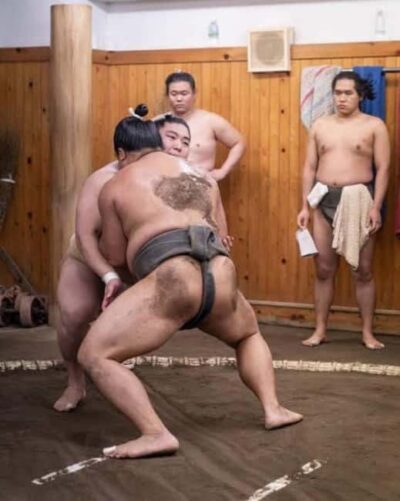
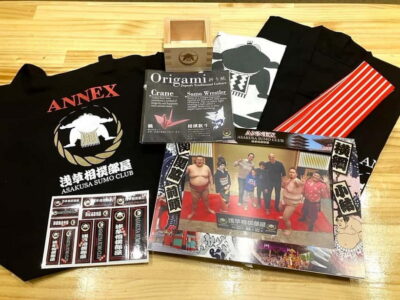
Luxury Sumo Show Experience & Japanese cuisine & Drink
Read our review →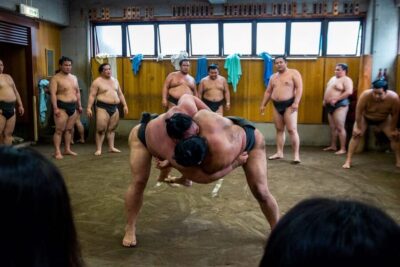
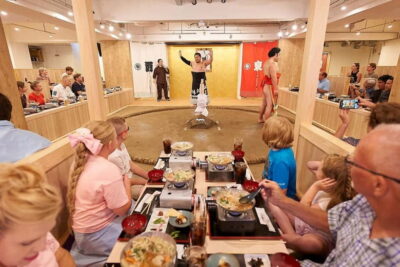
Tokyo Sumo Experience: Chanko & Mochi with a Former Pro
Read our review →
Ultimate Sumo Tournament: Tokyo, Osaka, Nagoya, Fukuoka
Read our review →Browse the lists this tour appears in