
Reviewed · AKIHABARA AND ANIME TOURS
3-Hour Manga Drawing Workshop in Tokyo
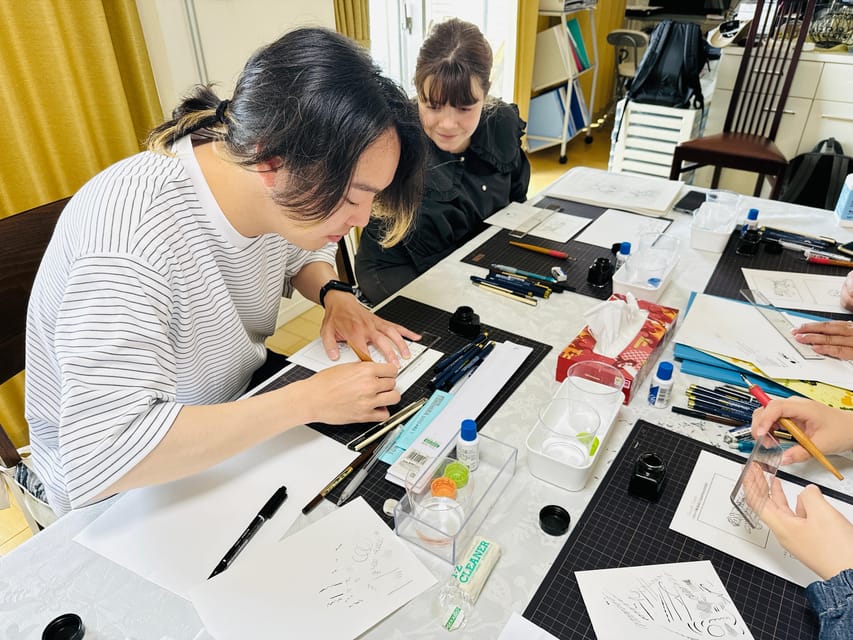
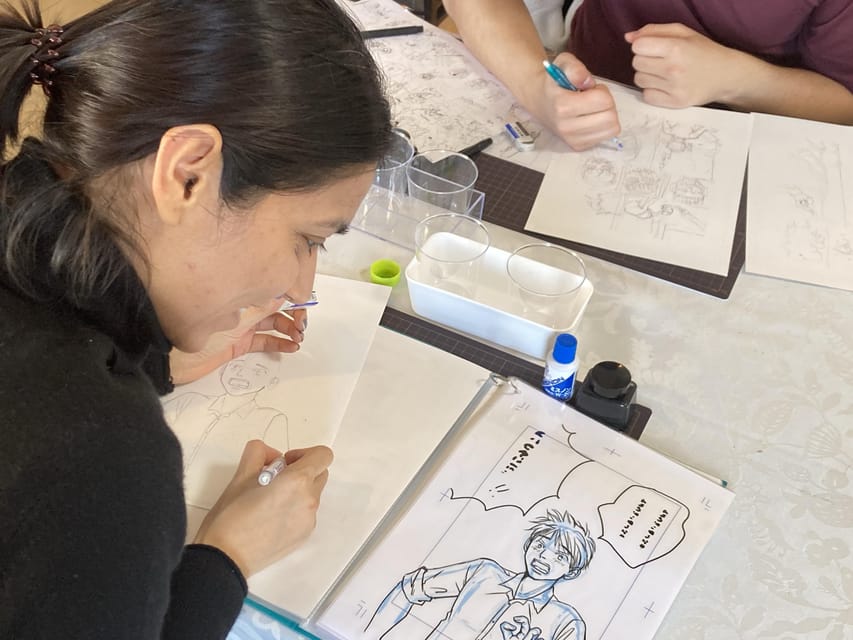
Creating a manga page from a blank sheet is the heart of this three-hour workshop in Kichijoji. A professional manga artist leads you through sketching, dip-pen work, inking, black fills, effect lines, and screen tones, so you finish with more than a souvenir. You leave with a better sense of how a manga page is built.
I like the small class size, limited to five people, and the fact that all drawing tools are supplied. I also like the personal nature of the finished A4 page: it is something you make yourself, not something picked up in a shop. The main consideration is language. Teaching is in Japanese, with English on the instructional slides, so you should be comfortable following visual demonstrations.
Key points to know before booking
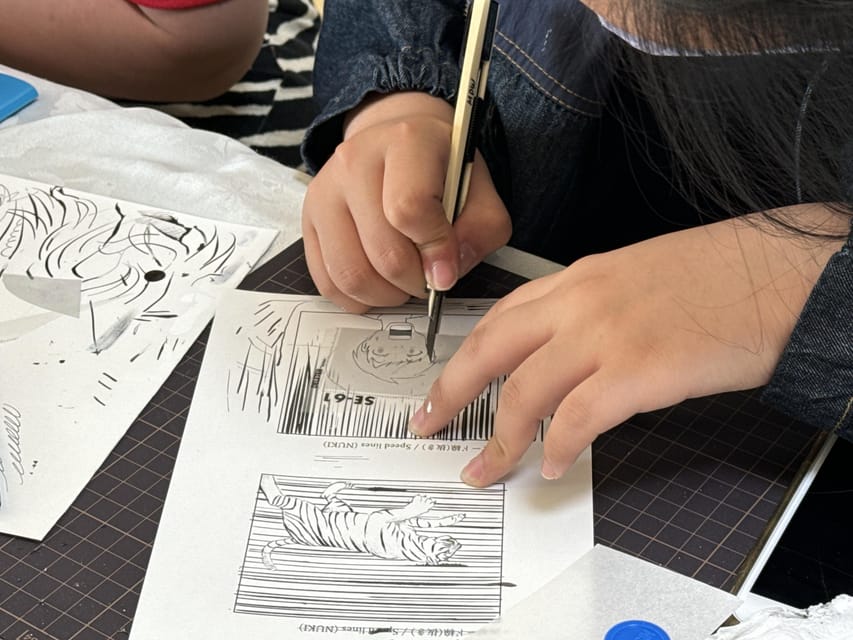
- You make one complete A4 manga page, rather than only practicing isolated drawing exercises.
- A professional manga artist guides the class, with help available throughout the process.
- The lesson covers real manga production techniques, including dip-pen inking, screen tones, black areas, and effect lines.
- The class is limited to five participants, which allows for direct assistance.
- The workshop is near Kichijoji Station and the Ghibli Museum, but transportation is not included.
- Ink can stain clothing and hands, so wear something you do not mind getting dirty.
Why this Kichijoji workshop feels different from a manga-themed souvenir
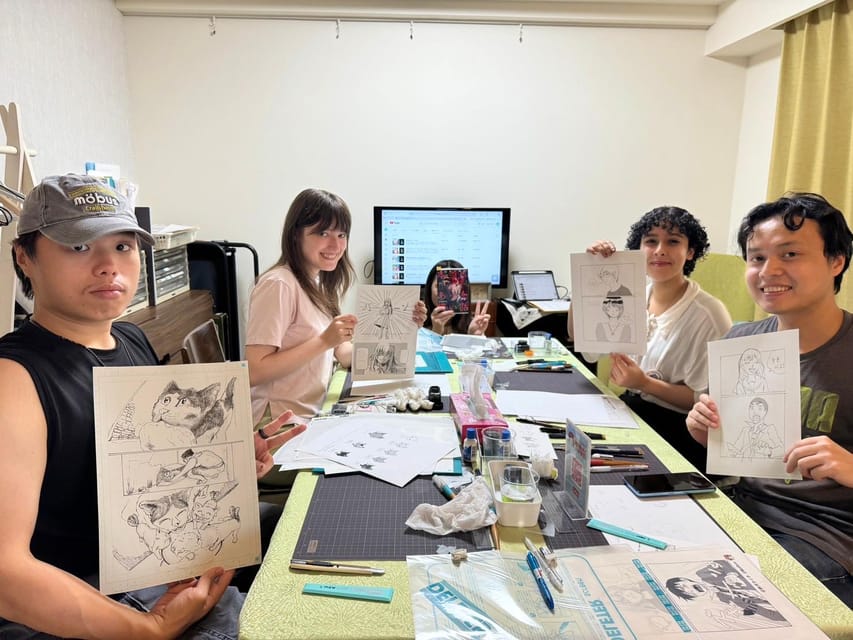
Tokyo offers plenty of anime and manga shops, but shopping only gives you something made by someone else. Here, you take part in the process. The finished page may not look like the work of a published artist, and that is not really the point. The value comes from seeing how a professional page takes shape, one technical step at a time.
You work on A4 manga paper, a useful size for a focused session. It is large enough to show your drawing and effects, but small enough to finish in three hours. You are not asked to produce a full comic or master a character from scratch. Instead, the class gives you a manageable page and a clear sequence of tasks.
That structure matters if you are new to manga drawing. You do not need to arrive with a polished idea or years of art training. The workshop is built around guidance, practice, and completing one page.
More Akihabara and anime tours:
- Official Street Go-Kart Tour – Akihabara
★ 5.0 · 1,578 reviews - Tokyo Go Kart: Asakusa, Skytree, and Akihabara **IDP MUST**
★ 5.0 · 988 reviews - Akihabara Anime & Game Adventure Walking Tour (Group or Private)
★ 5.0 · 404 reviews
Finding the apartment eight minutes from Kichijoji Station
The meeting point is an apartment eight minutes on foot from the north exit of Kichijoji Station. The address is 601 H-Square Kichijoji, 2-4-6 Kichijoji Honcho, Musashino-shi, Tokyo. The building is next to Kichijoji Excel Hotel Tokyu, with a New Balance store nearby.
Pay close attention to the building name. Another building with a similar name is in the area, so this is one place where rushing can cause trouble. When you arrive, press 601 and the call button. The door will be unlocked.
You need to arrange your own transport to the class, and food and drinks are not included. Kichijoji is a practical place to visit before or after the workshop, but the class itself takes place in the apartment meeting point, not at the Ghibli Museum. The museum is nearby, but you need a separate ticket and reservation for that attraction.
The first step: sketching on A4 manga paper
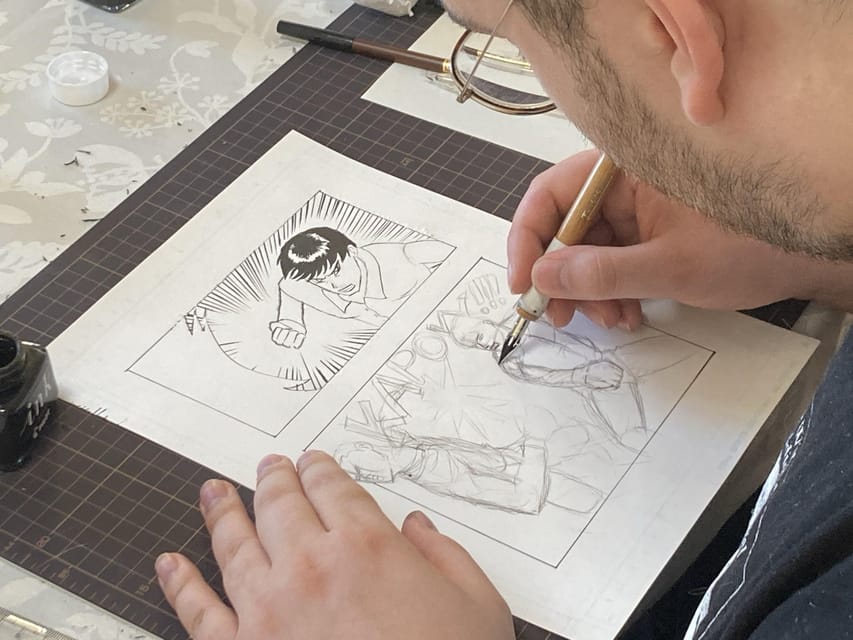
The session begins with a sketch on A4 manga paper. This first stage gives you the basic structure of your page before the permanent ink work starts.
For a beginner, this is the stage where a little patience pays off. You can adjust the shape and placement of your drawing while it is still a sketch. Once you begin inking, changes become harder. The artist’s guidance is useful here because manga drawing is not only about individual characters. Page composition, clear shapes, and the use of empty space all affect how the finished page reads.
The format also keeps the task under control. You are creating one page, not an entire story. If you tend to overthink your drawing, the fixed format helps you keep moving.
Practicing the dip pen before committing to ink
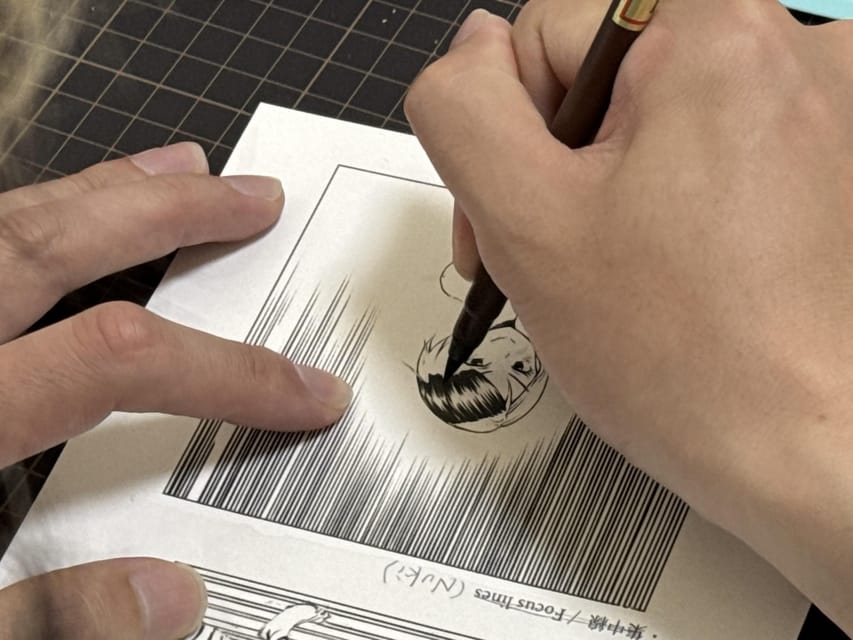
The workshop includes practice with a dip pen before you begin the main inking. This is a valuable part of the class because a dip pen does not feel exactly like a normal ballpoint or felt-tip pen.
You get a chance to understand the movement of the tool and the way ink behaves on manga paper. That short practice can make the next stage less intimidating. It also gives the professional artist a chance to show you how to handle the pen before you work on your page.
The artist’s help is especially useful for people who feel unsure about their drawing ability. One participant who attended alone and described herself as very introverted still found enough support to keep going, despite speaking only limited Japanese. That says something practical about the format: you do not need to be outgoing to take part, and you can ask for help as you work.
More hands-on classes and workshops in Tokyo:
- Sushi Making Tokyo Roll and Authentic Japanese Sushi Class
★ 5.0 · 3,971 reviews - Tokyo: Roll and Authentic Sushi Making Class in Asakusa
★ 4.9 · 1,957 reviews - Tokyo Shinjuku Chopsticks Making Class
★ 5.0 · 1,763 reviews - Tokyo: Sushi Making Class in a Happi Coat near a Famous Spot
★ 4.9 · 1,377 reviews
Inking, black fills, and the look of a finished page
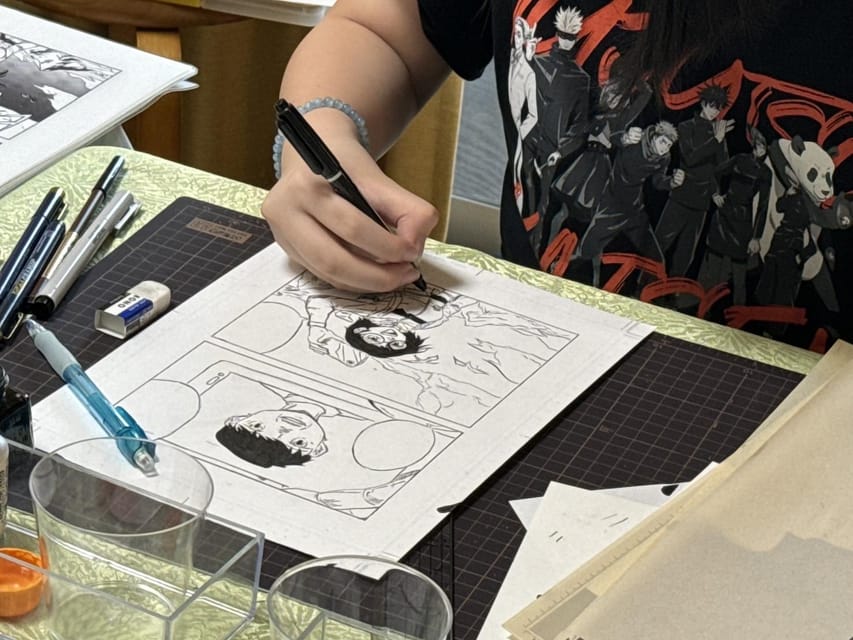
After the sketch and pen practice, you move into inking. This is where the loose drawing begins to look more like a manga page.
You then paint black areas, adding stronger contrast and visual weight. This step can be simple in theory but tricky in practice. A little too much ink can change the balance of the page, while too little can leave it looking unfinished. You will get guidance from the artist as you work rather than being left alone with the materials.
The workshop also covers effect lines. These lines help suggest motion, impact, sound, or emphasis. They are one of the quickest ways to make a page feel more dynamic, and learning to use them gives you a glimpse of the visual shorthand used in manga.
Do not expect to walk out with the polish of a professional publication. You should expect to understand the choices behind the style more clearly. That is a fair trade for the price and the time.
Screen tones and the final details
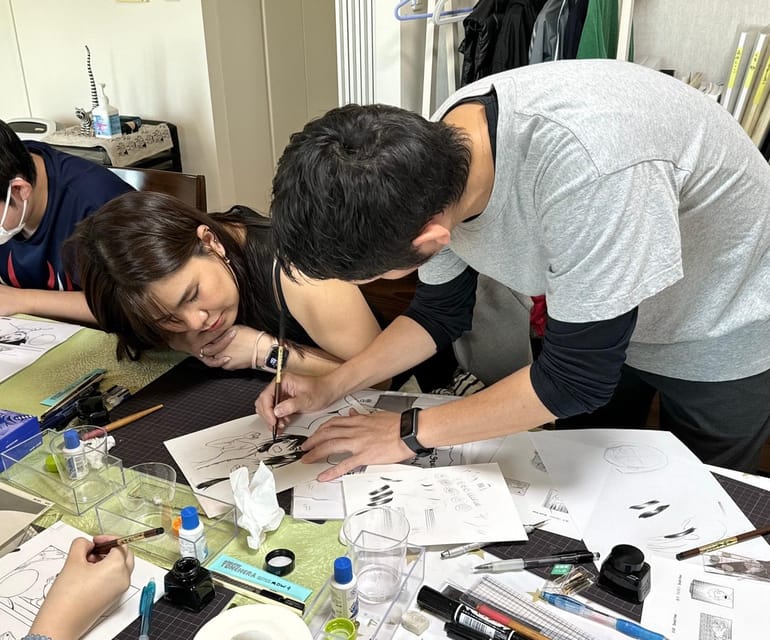
Screen tones are another key part of the class. These tones add shading and texture to a manga page without relying only on hand-drawn crosshatching or painted areas.
For many visitors, this may be one of the most interesting techniques because it is closely tied to the printed manga look. Applying tones also changes the page quickly. A flat area can gain depth, contrast, or mood with the right treatment.
The sequence of sketch, pen practice, inking, black fills, effect lines, and screen tones gives the lesson a clear rhythm. Each stage adds another layer. You can see the page develop in front of you, which makes the completed work feel personal even if your drawing is basic.
At the end, you take the manga page home. Bring a folder or another way to protect it if you plan to carry it around Tokyo afterward. That is practical advice rather than a stated requirement, since the page is your main souvenir and should not be bent in a crowded bag.
Working with a Japanese-speaking artist
The workshop is conducted in Japanese, while the instructional slides also include English. The listed languages are Japanese and English, but you should not expect a fully English-led art lesson.
This arrangement is best for people who can follow demonstrations and visual steps. Manga techniques are often shown directly on the page, so the class does not depend only on spoken explanation. Still, if you need detailed verbal instruction for every step, the language setup may require extra patience.
The small group helps here. With no more than five participants, the artist can look at your page and demonstrate corrections directly. The artist and assistant have also been described as warm and helpful, with clear explanations and steady support. You can expect a hands-on class rather than a large lecture.
For a Japanese-language learner, this could add another useful layer. You may pick up art-related words and simple phrases while working. You should not book it as a formal Japanese lesson, but the setting gives you a reason to use the language in a relaxed way.
What the $129 price includes
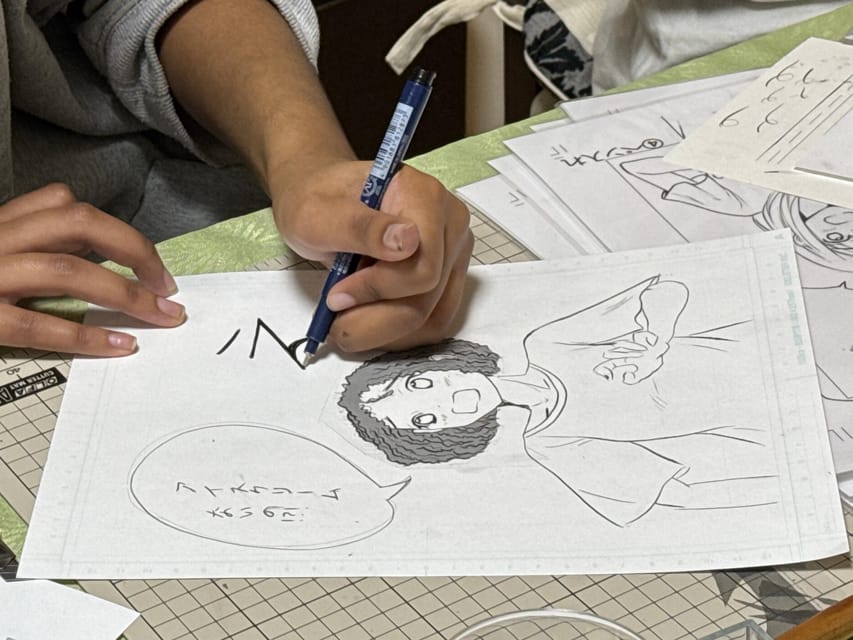
At $129 per person, this is not a cheap drop-in art activity. The price makes more sense when you consider what is included: professional manga artist guidance, all necessary drawing materials, a one-page manga project, and instruction in several techniques.
You are paying for a guided session, not just paper and ink. The value is strongest if you care about manga as a craft, want direct help from an artist, or prefer an activity that produces something personal. If you only want a quick anime-themed activity, the cost may feel high.
The class lasts three hours, which gives you time to work through several stages rather than rushing through a short demonstration. A five-person limit also matters. Large art classes can leave beginners waiting for assistance, while this format gives the artist a better chance to see your work.
The price does not include transportation, meals, or drinks. That keeps the arrangement simple, but you should budget for getting to Kichijoji yourself. Check the available start times when booking so the class fits your Tokyo schedule.
Who will enjoy this most
I would recommend this workshop to manga and anime fans who want to make something with their own hands. It also suits visitors who enjoy creative activities more than sightseeing from one attraction to the next.
You do not need to be an experienced artist. In fact, beginners may get the most from the step-by-step format because every technique is introduced in order. The class can also work well for solo visitors. A participant who arrived alone after companions canceled still completed the activity and found the supportive setting encouraging.
Families and groups should note the language setup and the possibility of ink on hands and clothing. Children may enjoy the subject, but the provided information does not specify a minimum age, so check that point before booking for a child.
People who want a completely English-speaking lesson should think carefully. English appears on the slides, and the activity lists English among its languages, but spoken teaching is in Japanese. Your comfort with visual instruction will make a real difference.
Practical details that affect your day
Wear clothes that can handle ink. The warning is not decorative: ink may stain both your hands and your clothing. Smoking is not allowed.
The workshop is wheelchair accessible. You should still confirm any personal access needs when booking, since the available information does not describe the apartment layout in detail.
Free cancellation is available up to 24 hours before the activity for a full refund. You can also reserve now and pay later, which helps if your Tokyo schedule is still changing. These terms are useful, but check the booking conditions for your chosen date before finalizing.
Plan to arrive with enough time to identify the correct building. The nearby hotel and New Balance store are useful landmarks, but the similar building name makes the exact address important. Press 601 and the call button when you arrive.
Should you book the manga workshop?
Book it if you want a personal Tokyo souvenir, enjoy making things, and are willing to learn through Japanese instruction supported by English slides. The strongest reasons are the professional guidance, the five-person limit, and the chance to take home a page you created yourself.
Skip it if you want a fully English verbal lesson, dislike messy materials, or prefer a short activity with no fixed creative task. At $129, the workshop needs to be more than a casual novelty to feel worthwhile.
For the right person, it offers a rare chance to move past manga fandom and try the working methods behind the finished page. You will not become a professional manga artist in three hours, but you will leave Kichijoji with a better understanding of the tools, a one-page result, and a souvenir that could not have come from a shop shelf.
FAQ
Where does the manga workshop take place?
It takes place in an apartment eight minutes from the north exit of Kichijoji Station. The address is 601 H-Square Kichijoji, 2-4-6 Kichijoji Honcho, Musashino-shi, Tokyo.
How do I enter the building?
Press 601 and the call button when you arrive. The door will be unlocked.
Is the workshop near the Ghibli Museum?
Yes. The workshop is in Kichijoji near the Ghibli Museum in Mitaka, but admission to the museum is not part of this activity.
How long does the workshop last?
The workshop lasts three hours.
How many people can join?
It is a small-group activity limited to five participants.
What language is the class taught in?
The workshop is conducted in Japanese, and the instructional slides include English. The listed languages are Japanese and English.
Are drawing materials provided?
Yes. All necessary manga drawing materials are included.
What will I make during the class?
You will create a one-page manga on A4 manga paper and take it home as a souvenir.
Is the workshop wheelchair accessible?
Yes, the activity is listed as wheelchair accessible.
Can I cancel for a full refund?
Yes. You can cancel up to 24 hours in advance for a full refund.
More 3 Hour Experiences in Tokyo
- Tokyo Top Highlights 3h Guided E-bike Tour
★ 5.0 · 714 reviews - 3h Tokyo E-Bike Tour: Hidden Gems, and Local Life with guide
★ 5.0 · 670 reviews - Tokyo: 3-Hour Bike or E-Bike City Highlights Tour
★ 4.8 · 435 reviews - Tokyo: 3-hour Guided E-Bike Tour of the City’s Hidden Gems
★ 4.8 · 251 reviews
Newly reviewed around Tokyo
- Tokyo Asakusa:Calligraphy & Make T-shirt Activity★ 5.0 · 62 reviews
- Intercity Shuttle, Tokyo to Haneda /Narita /Yokohama /Makuhari★ 5.0 · 5 reviews
- 1 Hour Travel around Tokyo with a Professional Photographer★ 5.0 · 3 reviews
- Travel Tokyo with Your Own Personal Photographer★ 5.0 · 43 reviews
- Train in Samurai Swordsmanship and Defeat the Demon in Tokyo★ 5.0 · 5 reviews
- Shuttle Van 6hr Tokyo Tour to-and-from Tokyo, Yokohama and Narita★ 5.0 · 9 reviews
- Kickboxing & Body Training with EX-Pro Fighter★ 5.0 · 4 reviews
- Traditional Japanese Knife Sharpening Class★ 5.0 · 18 reviews
Akihabara and Anime Tours, compared.

Tokyo Go Kart: Asakusa, Skytree, and Akihabara **IDP MUST**
Read our review →
Akihabara Anime & Game Adventure Walking Tour (Group or Private)
Read our review →

Akihabara Tailor-made Private Tour for Anime Fans
Read our review →
Ramen Making from Scratch +Akihabara Tour –Tokyo Cooking Class
Read our review →Browse the lists this tour appears in