
Reviewed · TOKYO WALKING TOURS
Tokyo: Asakusa Temple & Shrine Walking Tour with Local Guide
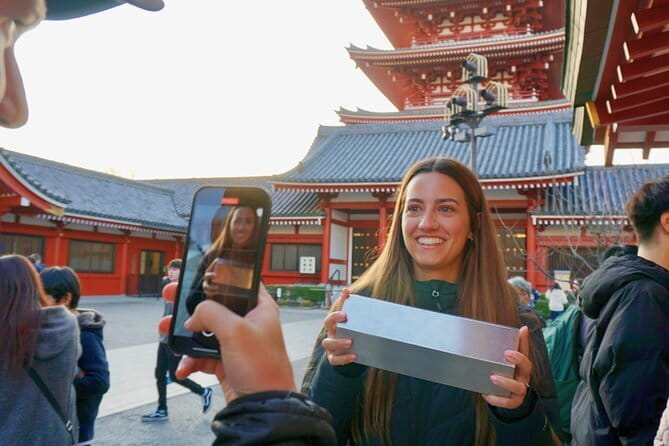
Asakusa’s famous Sensoji Temple is easy to find, but its customs are not always easy to understand. This two-hour walking tour gives you the basic map: Buddhism beside Shinto, temple gates beside shopping streets, and old rituals in the middle of modern Tokyo.
I like the small groups, limited to eight, and the way the tour starts with two fine viewpoints before entering the crowded temple grounds. I also like the practical teaching: how to wash your hands, draw an omikuji fortune, offer incense, and pray properly. The main drawback is the walking. With no seating plan and several outdoor stops, this is not a good match for wheelchair users, people with mobility impairments, or anyone who tires easily.
Key points at a glance
- Two useful Asakusa viewpoints: Begin at Azuma Bridge for Tokyo Skytree views, then look down over the temple district from the Asakusa Culture Tourist Information Center.
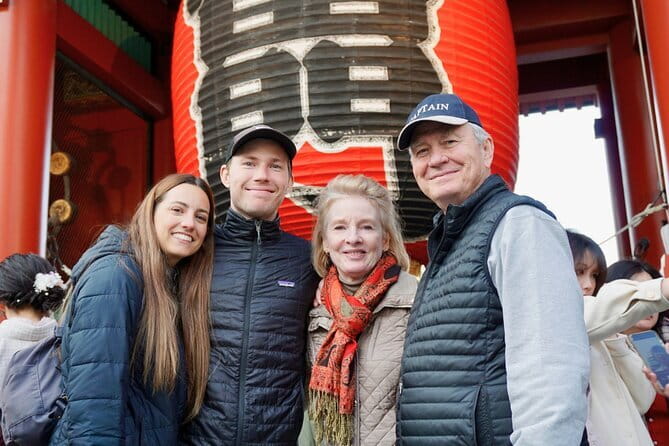
- Small groups of up to eight: You get a better chance to ask questions and request help with photos, translations, food, shopping, or Tokyo planning.
- Buddhist and Shinto customs explained: Visit both Sensoji Temple and Asakusa Shrine, and learn why the two traditions share the same neighborhood.
- Hands-on temple rituals: Try temizu hand washing, incense for physical and mental well-being, and omikuji fortune telling with guidance.
- Good for first-time visitors: The tour explains how to behave at temple and shrine sites before you explore more of Japan on your own.
- Friendly, flexible guides: Guides including Nicolas, Erik, Lino, Nana, and others have been praised for patience, clear explanations, and help with families and solo visitors.
Why Asakusa works so well for a first Tokyo tour
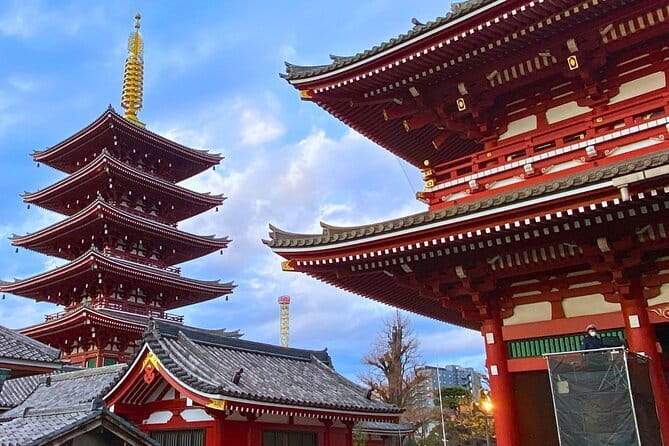
Tokyo can feel huge and hard to read at first. Asakusa gives you a compact introduction to older Japanese traditions, with a major temple, a Shinto shrine, shopping lanes, bridges, river views, and modern towers all close together.
Sensoji is Tokyo’s oldest temple, and its approach is one of the city’s most recognizable walks. But the real value here is not simply seeing the big red gates and taking a picture. A guide can explain why the gates matter, what the figures represent, and how the rituals work without turning your visit into a guessing game.
I especially like that this tour does not rush straight to Sensoji. It begins near the Sumida River, then climbs to a high viewing point before entering the main temple grounds. That order gives you a sense of Asakusa as a district rather than one isolated sight.
The area can be very crowded, especially around Kaminarimon Gate and Nakamise Shopping Street. A small group helps, but you should still expect to walk at a steady pace around other people. The guides have been praised for adjusting the speed, finding quieter corners, and keeping the experience relaxed even in hot weather or rain.
More Asakusa and Sensoji tours:
- Tokyo: Japanese Dance Cabaret Theater Asakusa-Kaguwa Ticket
★ 4.8 · 2,270 reviews - Tokyo: Meiji Shrine, Asakusa, Skytree Bus Tour and Cruise
★ 4.7 · 1,986 reviews - Tokyo: Roll and Authentic Sushi Making Class in Asakusa
★ 4.9 · 1,957 reviews
Azuma Bridge and the golden rooftop view
The meeting point is at Burger King Asakusa Azumabashi, though the exact arrangement can depend on the option you book. From there, the group heads toward Azuma Bridge for about ten minutes of guided sightseeing and photographs.
This first stop gives you a riverside view toward Tokyo Skytree. You will also see the famous gold-colored structure on the Asahi building. Locals call it the golden poop, a piece of Tokyo visual humor that makes the opening stop less formal and more fun.
The bridge is useful for orientation. You can see the contrast between the Sumida River, the tall Skytree, and the older Asakusa district. Ask your guide to take a group picture here if you want one. Several guides have been praised for helping with photos throughout the walk, which is useful if you are traveling alone or with young children.
The next stop is the Asakusa Culture Tourist Information Center. The tour includes about fifteen minutes here, including time for photographs and a view from the upper level. This is one of the best reasons to book the walk rather than simply wander to Sensoji on your own. From above, the temple approach and surrounding streets make much more sense.
You can see the route from Kaminarimon toward the inner gates and the main temple grounds. It is also a good chance to get pictures without standing in the middle of the heaviest crowds. The building itself is modern, which adds another useful contrast to the traditional streets below.
Kaminarimon and the story behind the Thunder Gate
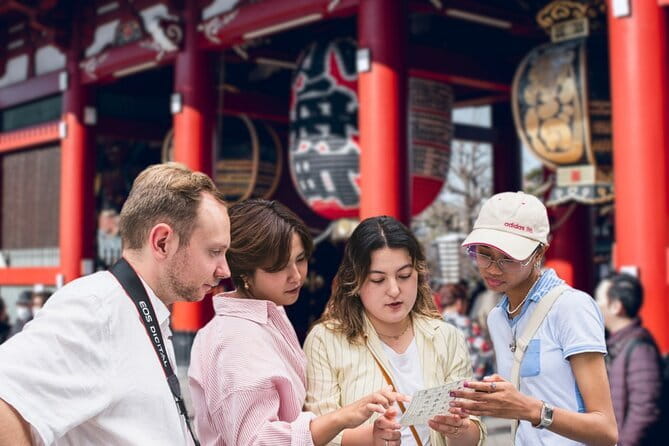
From the information center, the group heads to Kaminarimon, or the Thunder Gate. The stop lasts about ten minutes, with time for an explanation, photographs, and sightseeing.
The large red lantern weighs about 700 kilograms. Your guide explains the meaning of the gate’s name and the figures connected with it. This is the kind of detail that gives the famous photograph some meaning. Without context, Kaminarimon can become just another stop for a quick picture.
The gate is also a practical meeting point in the Asakusa district, so it can be crowded and noisy. Keep your belongings close and stay near the guide when the group moves on. A limited group size helps, but this is still one of Tokyo’s busiest sightseeing spots.
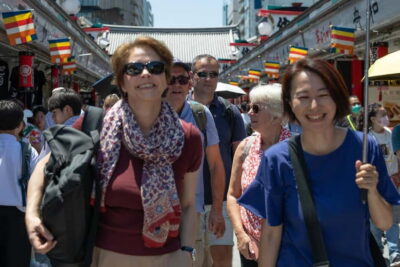
From Kaminarimon, you enter Nakamise Shopping Street. The walk through the shopping area takes around fifteen minutes. Your guide explains the cultural role of the snacks, small gifts, and traditional-style goods sold along the approach to Sensoji.
This is a good place to ask for buying advice. The guide can point out which local treats are worth trying and help with basic translation. Personal purchases are not included, so keep some money available if you want snacks or souvenirs.
Nakamise is not a quiet museum street. It is an active shopping lane with plenty of people, shop displays, and food smells. You may want to return later if you prefer to browse slowly. During the tour, listen to the explanations first and make a note of the shops or products that interest you.
Hozomon Gate and the smaller temple sites
The next major landmark is Hozomon Gate, with about ten minutes for viewing and explanation. This gate leads deeper into the Sensoji grounds and gives you another look at the scale of the temple complex.
The tour also includes two additional temple and shrine stops whose names are not specified in the booking information. That lack of a fixed name may be a benefit in practice. The guide can take you to smaller sites and quieter corners that many people walk past while heading straight to the main hall.
This is where the tour’s local focus becomes most useful. You learn that Asakusa is not only a grand temple entrance and a shopping street. It has a network of sacred places, each with its own role and atmosphere.
The guide explains how Buddhism and Shinto exist side by side in Japan. You will learn where to walk near torii gates, how to bow, and why certain actions belong to a shrine while others belong to a Buddhist temple. The explanations are aimed at visitors, so you do not need prior knowledge of Japanese religion.
The subject can be complicated. Japan’s traditions have mixed and changed over many centuries, and a two-hour tour cannot explain every detail. Still, this introduction gives you enough structure to understand what you are seeing and behave respectfully at other sites.
More Tokyo walking tours:
- Tokyo Tsukiji Fish Market Food and Culture Walking Tour
★ 5.0 · 3,184 reviews - Tokyo: Imperial Palace and Shogun Historical Walking Tour
★ 5.0 · 2,251 reviews - Tokyo: Shinjuku Local Bar and Izakaya Guided Walking Tour
★ 4.9 · 1,794 reviews - Tokyo: Tsukiji Fish Market Food and Walking tour
★ 5.0 · 1,724 reviews
Sensoji Temple, from first gate to main hall
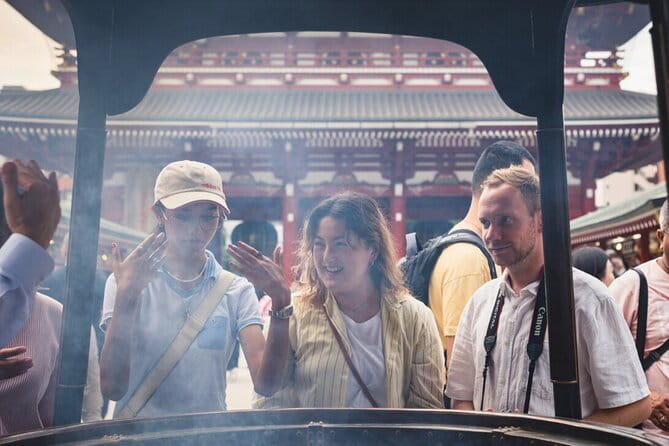
The main Sensoji visit lasts about thirty minutes, making it the longest stop. That is appropriate. The temple is the center of the district, and a quick photo outside would miss much of what makes it important.
Your guide explains the history and architecture of the temple, then walks you through the Buddhist way to pray. You will learn how to approach the ritual, what to do with your hands, and how to bow correctly.
One useful part of this visit is learning the purpose of common rituals instead of copying people at random. You can take part in temizu, the hand-washing ritual, and learn how it prepares you before entering a sacred place. You can also try omikuji fortune telling, with the guide explaining what to do if you receive a favorable or unfavorable result.
Incense is another hands-on part of the experience. The tour presents it as a practice connected with physical and mental healing. You are not required to participate, but doing so with an explanation makes the ritual easier to understand.
Sensoji can be crowded, and the main hall may feel busy rather than peaceful. The guide’s job is not to remove that reality but to help you read the place despite it. Several guides have been praised for keeping a relaxed pace and answering questions instead of delivering a rushed speech.
Asakusa Shrine and the difference between temple and shrine
The final major stop is Asakusa Shrine, with about fifteen minutes of guided sightseeing. Its location close to Sensoji makes it an ideal place to compare Buddhist and Shinto practice on the same walk.
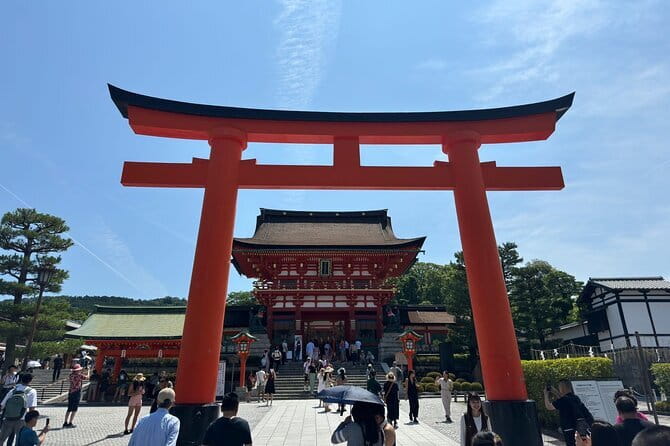
The guide explains the different prayer process at the shrine. You will also learn about behavior around torii gates, including where to walk and how to bow. These details are small, but they matter if you plan to visit Kyoto, Nara, Kamakura, or other Japanese religious sites later in your trip.
The comparison between Sensoji and Asakusa Shrine is one of the strongest parts of the tour. You do not just hear that Buddhism and Shinto are different. You see the difference in the buildings, gates, rituals, and way people approach the sacred space.
At the same time, the tour explains that the traditions have long existed together. That is more useful than treating them as completely separate boxes. You leave with a clearer sense of why a Buddhist temple and a Shinto shrine can sit side by side in one of Tokyo’s oldest districts.
What the guides add to the experience
The guide can make or break a short walking tour. Here, the strongest praise has gone to guides such as Nicolas, Erik, Lino, Nana, Diane, Ayaka, Arief, Joe, Somi, and Ariel.
Nicolas has been particularly praised for his explanations of Shinto and Buddhism, personal connection to Asakusa, and willingness to answer questions. One guide helped a visitor continue toward Kappabashi Street after the tour, while another accompanied a visitor to lunch and offered restaurant suggestions. These extras are not guaranteed, but they show the kind of local help you can ask for.
Families should consider Nana’s approach as a useful example. She kept two children, ages five and eight, involved and explained the sights in a way they could understand. Another guide gave a solo visitor small coins to use at the temple and explained the expected manners.
The guide names may vary by date and language. English and French are offered. Do not book expecting a particular person unless the provider confirms that person in advance.
The small-group limit is eight people. If fewer people book, you may find yourself in a very personal outing. That happened for several bookings, creating something close to a private walk. You should not assume you will have the guide alone, but the group size gives you a much better chance to ask questions than a large bus tour.
Price, timing, and physical effort
At $30 per person for two hours, this is a reasonable price if you want cultural explanation and practical guidance. You are paying for more than a route between famous landmarks. The value comes from the viewpoint, the smaller sites, the ritual instruction, and the chance to ask about Tokyo beyond the official stops.
If you only want photographs of Kaminarimon and Sensoji, you can see those places without booking a tour. The fee makes more sense if you want to understand what you are doing at the temple and shrine, or if this is your first visit to Japan.
The pace is generally relaxed, but the tour still requires continuous outdoor walking. Wear comfortable shoes and bring water. Vending machines are available during the route, but a hot day can make the walk tiring.
The activity runs in rain or shine, so check the forecast and dress for the weather. There is no dress code, and tattoos are welcome. Smoking, drones, alcohol, and drugs are not allowed.
The tour is not suitable for wheelchair users, people with mobility impairments, or people with a low level of fitness. If you are unsure, contact the provider before booking. Free cancellation is available up to 24 hours in advance, and you can reserve now and pay later.
Who should book this Asakusa walk?
I would choose this tour for a first Tokyo visit, especially if you want cultural context early in your trip. It is also a good fit for solo visitors who want company, couples who prefer a personal walk, and families with children old enough to manage two hours on foot.
It works well after arrival in Tokyo because the route gives you practical knowledge for future temples and shrines. You will know how to wash your hands, bow, pray, handle omikuji, and move through a torii gate with more confidence.
Food and shopping fans can ask for recommendations along Nakamise or for help reaching nearby areas such as Kappabashi Street. The tour does not include snacks, souvenirs, lunch, or kimono rental, though the company can tell you about a partner kimono shop two minutes from the meeting point.
I would skip it if your schedule is so tight that you cannot spare two hours, or if walking in crowded outdoor areas is difficult. I would also skip it if you prefer silent sightseeing and do not want explanations during your visit.
Should you book the Sensoji and Asakusa Shrine tour?
Book it if you want more than a checklist of Tokyo sights. The best parts are the high viewpoint, the clear comparison between Buddhism and Shinto, the hands-on rituals, and the chance to ask a local guide about the city.
At $30, it offers solid value for a small group, particularly when you are new to Japan. Just wear good shoes, prepare for weather and crowds, and understand that the smaller temple stops can vary. If those conditions suit you, this is a useful and friendly way to begin exploring Asakusa.
FAQ
How long does the Asakusa Temple and Shrine Walking Tour last?
The tour lasts two hours.
How much does the tour cost?
The listed price is $30 per person.
How many people can join the small group?
The group is limited to eight participants.
Which languages are available?
The tour is offered in English and French.
Where does the tour begin?
The listed starting location is Burger King Asakusa Azumabashi. The meeting point may vary depending on the option booked.
Which major sights are included?
The route includes Azuma Bridge, the Asakusa Culture Tourist Information Center, Kaminarimon Gate, Nakamise Shopping Street, Hozomon Gate, Sensoji Temple, Asakusa Shrine, and smaller local temple sites.
Are temple rituals included?
Yes. You can learn about and take part in temizu hand washing, omikuji fortune telling, incense rituals, Buddhist prayer, and Shinto shrine customs.
Is there a dress code?
No. The tour has no dress code, and tattoos are welcome.
What should I bring?
Bring comfortable walking shoes and water. Dress for the weather because the tour operates in rain or shine.
Is the tour accessible for wheelchair users?
No. The activity is not suitable for wheelchair users, people with mobility impairments, or people with a low level of fitness.
Newly reviewed around Tokyo
- Tokyo Asakusa:Calligraphy & Make T-shirt Activity★ 5.0 · 62 reviews
- Intercity Shuttle, Tokyo to Haneda /Narita /Yokohama /Makuhari★ 5.0 · 5 reviews
- 1 Hour Travel around Tokyo with a Professional Photographer★ 5.0 · 3 reviews
- Travel Tokyo with Your Own Personal Photographer★ 5.0 · 43 reviews
- Train in Samurai Swordsmanship and Defeat the Demon in Tokyo★ 5.0 · 5 reviews
- Shuttle Van 6hr Tokyo Tour to-and-from Tokyo, Yokohama and Narita★ 5.0 · 9 reviews
- Kickboxing & Body Training with EX-Pro Fighter★ 5.0 · 4 reviews
- Traditional Japanese Knife Sharpening Class★ 5.0 · 18 reviews
Tokyo Walking Tours, compared.
Tokyo Tsukiji Fish Market Food and Culture Walking Tour
Read our review →
Imperial Palace and Shogun Historical Walking Tour
Read our review →
Shinjuku Local Bar and Izakaya Guided Walking Tour
Read our review →
Asakusa Walking Tour with Sensoji Temple Visit
Read our review →
Tokyo Castle & Imperial PalaceーShogun Walking Tour
Read our review →
Browse the lists this tour appears in