
Reviewed · TOKYO SUSHI MAKING CLASSES
Shibuya Tokyo: Sushi Making Class (Vegan/Vegetarian/Halal)
The best part of this Shibuya class is that you make sushi you can actually eat, even if fish is off your menu. In 90 minutes, you’ll tackle California rolls and nigiri, learn a little sushi history, and sit down to a proper meal of your own work. I especially like the friendly teaching style and the useful choice of vegan, vegetarian, halal-friendly, and gluten-free options.
I also like that the studio is only about a seven-minute walk from Shibuya Station, so you can fit the class between sightseeing stops. The main caution is simple: the venue may take extra time to find, so do not cut your arrival too close to the start.
Key points at a glance
- Make and eat your own sushi: Prepare California rolls and nigiri, then enjoy the finished meal.
- Built for dietary needs: Vegan, vegetarian, halal-friendly, and gluten-free options are available when requested in advance.
- English instruction: Local instructors explain the techniques, ingredients, and sushi customs in English.
- A short history quiz starts the class: You get cultural context before handling the rice and fillings.
- Central Shibuya setting: The studio is about seven minutes on foot from Shibuya Station.
- Friendly, beginner-friendly teaching: Momoyo, Kaito, and the other instructors guide each step without assuming cooking experience.
A practical sushi lesson in the middle of Shibuya
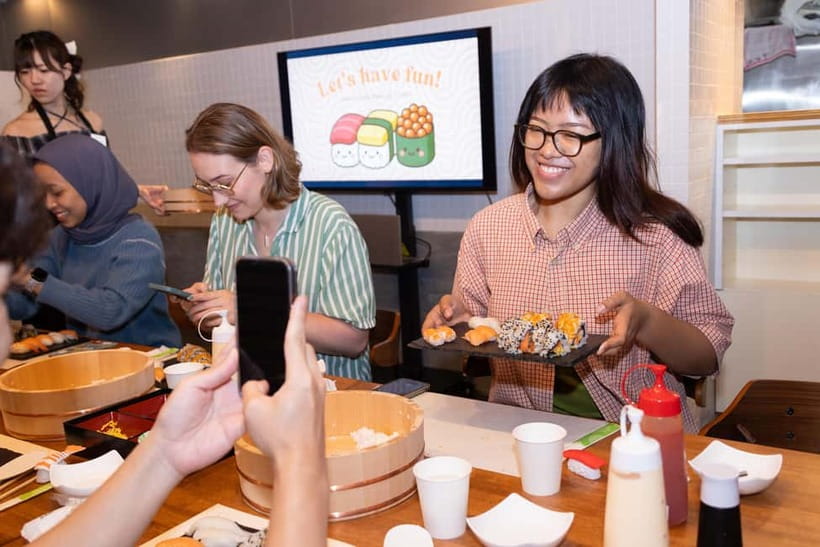
Shibuya is known for its giant crossing, department stores, neon signs, and fast-moving city energy. This class gives you a quieter way to spend part of your time there. You step off the main streets and into a clean cooking studio where the focus is rice, vegetables, seaweed, and the small hand movements that turn simple ingredients into sushi.
At $58 per person, this is not the cheapest meal in Tokyo. But you are paying for more than food. The price includes a 90-minute lesson, an English-speaking instructor, ingredients, utensils, sushi tools, a short cultural introduction, and a meal at the end. For someone who wants a hands-on activity rather than another restaurant stop, that is a fair package.
I would not book this class only to save money on lunch. I would book it because you want to learn a skill, meet local instructors, and understand a familiar Japanese food from the inside out. The meal is part of the value, but the process is the real point.
More things to do in Shibuya:
- Official Street Go-Kart in Shibuya
★ 5.0 · 3,435 reviews - Tokyo: Street Kart Experience in Shibuya
★ 4.9 · 1,484 reviews - Shibuya Meltdown Nightlife Tour: All-You-Can-Drink Bar Hopping
★ 5.0 · 1,058 reviews
What happens before the rice hits the mat
The class begins with a short quiz about the history of sushi. This is a smart touch. It gives you a little background before the practical work starts, and it keeps the cultural side light rather than turning the session into a lecture.
You can expect questions and explanations about sushi’s development and place in Japanese food culture, though the supplied details do not specify the exact quiz topics. The instructors use it as a warm-up, so you have a chance to settle in and speak with the people around you.
That opening matters because sushi can look intimidating. Rice has to be handled carefully, rolls need the right pressure, and nigiri has a very recognizable shape. A few minutes of explanation makes the rest feel more approachable.
The class is taught in English. Instructors such as Momoyo and Kaito have been singled out for clear guidance, patience, and an easy way with people. You should still expect the experience to be hands-on rather than a formal chef demonstration. You will be making the food yourself, with help as you go.
Fresh vegetables give the lesson its character
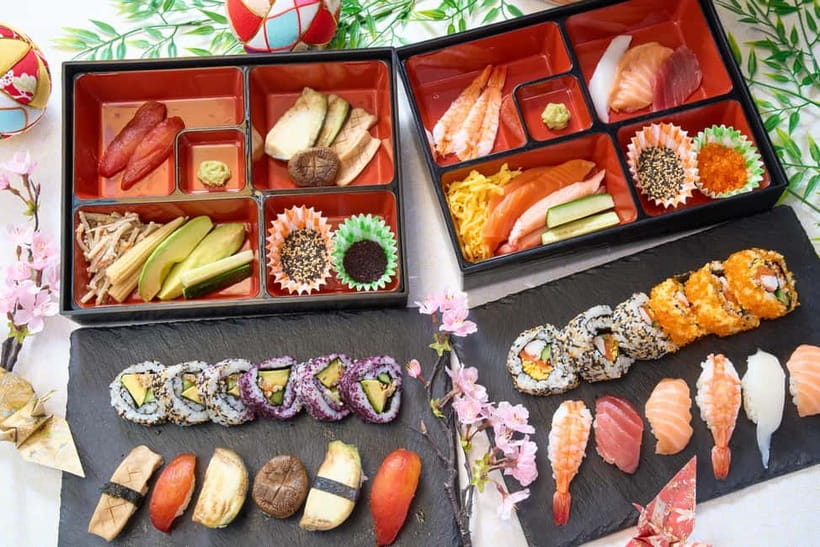
The ingredients for the vegan and vegetarian options include vegetables such as eggplant, mushrooms, tomato, and avocado. These are not just substitute fillings hidden inside a standard sushi lesson. They form the center of what you make.
That makes this activity especially useful in Japan, where finding a satisfying meat-free or fish-free meal can require more planning than many visitors expect. You can enjoy a traditional format while working with ingredients that suit your diet.
The class also has halal-friendly and gluten-free options. You need to state your food preferences or restrictions when booking. Menu changes cannot be handled on the day, so advance notice is important. If you have an allergy or strict dietary requirement, give clear information before you arrive rather than relying on a last-minute conversation.
The exact menu can vary by option, and no complete ingredient list is provided. For that reason, you should treat the stated vegetables as examples, not a guarantee of every item in your meal.
Rolling California rolls without a kitchen battle
The rolling section is likely the most relaxed part of the lesson. You learn about key ingredients, receive tips for handling the rice, and work toward a neat roll rather than a loose pile of fillings wrapped in seaweed.
The instructors guide you through the technique, including how to position ingredients and apply pressure. That practical help is valuable because the first roll often looks less tidy than the one in the instructor’s hands. The point is not perfect restaurant presentation. It is learning enough to repeat the process at home.
You will make California rolls as part of the lesson. The activity description also refers to creative vegetable combinations, so your fillings depend on the dietary option booked and the ingredients supplied that day.
I like this part for families and solo visitors alike. A family can work side by side without needing advanced cooking skills. A solo participant has a natural activity to focus on and an easy reason to chat with the group.
Do keep expectations sensible. This is a 90-minute class, not professional chef training. You will leave with practical techniques, but not with a full sushi curriculum or a certificate.
More Tokyo sushi making classes:
- Sushi Making Tokyo Roll and Authentic Japanese Sushi Class
★ 5.0 · 3,971 reviews - Tokyo: Roll and Authentic Sushi Making Class in Asakusa
★ 4.9 · 1,957 reviews - Make Sushi and Create Unforgettable Memories in Tokyo
★ 5.0 · 1,413 reviews - Tokyo: Sushi Making Class in a Happi Coat near a Famous Spot
★ 4.9 · 1,377 reviews
Nigiri is the small challenge worth trying
Nigiri is the iconic hand-formed style of sushi, and making it gives the class a stronger connection to Japanese food culture than rolling alone. You shape the rice and add the topping or vegetable element in a compact form.
For vegan and vegetarian participants, nigiri may use vegetables or other suitable ingredients rather than fish. The exact preparation is not specified, so you should ask the instructor if you need to know precisely what your booked option includes.
Nigiri can look simple, but small details matter. Too much rice makes it heavy. Too little makes it difficult to handle. The instructor’s step-by-step help is useful here, especially if you have never made sushi before.
This is also where the class feels less like a craft project and more like a food lesson. You are learning how sushi is shaped, portioned, and presented. Then you get to eat it, which is a good reward for the less-than-perfect pieces.
Eating your work is part of the lesson
Once the sushi is prepared, you sit down and eat it. This is not a demonstration where the chef takes over and serves a separate meal. The food on your plate is the result of your own work.
The experience includes time to enjoy what you make, and the staff can take photos of the finished sushi before you eat. That gives you a useful record of the class, especially if your first roll looks better than expected.
The meal is described as substantial enough to feel like a proper lunch or light dinner rather than a token taste. Still, the exact quantity is not stated, so I would not book it expecting a large multi-course feast.
For many people, the satisfaction comes from the combination of making and eating. Sushi made under instruction tastes different from sushi picked up at a counter because you notice the rice, the pressure, the filling balance, and the presentation.
Why the teaching style matters
The strongest feature of this experience is the staff. Momoyo is repeatedly identified as a warm and effective teacher, and Kaito is also praised for making the class fun. Other instructors are described as polite, patient, and clear.
That matters more here than it would in a simple food tasting. If the instructions are rushed, sushi making becomes frustrating. If the teacher explains each step and gives you time to try, the activity works for beginners.
The lesson also includes small conversations about sushi culture, not just instructions about where to put the rice. You get enough background to understand what you are doing without spending the whole session listening to a history talk.
English is the listed language. That makes the class a practical choice if you want to ask questions directly rather than follow a silent demonstration.
The seven-minute walk is convenient, but allow extra time
The studio is about seven minutes from Shibuya Station. That is close enough to combine with shopping, the Shibuya crossing, or another activity in the area.
Shibuya is easy to reach but not always easy to navigate. Large station exits, busy streets, and buildings with several entrances can slow you down. One useful piece of advice is to allow extra time to locate the venue, especially if you are arriving during a busy part of the day.
The meeting point may vary depending on the option you book. Check the specific meeting instructions carefully rather than assuming every booking uses the same entrance or studio details.
Once you arrive, the class takes place in a clean, comfortable cooking space. The information provided does not give the studio’s seating capacity or exact layout, so I cannot promise a particular group size or workstation arrangement.
Audio recording is not allowed. You can ask about photos, since staff are happy to take pictures of your finished sushi, but respect the studio’s rules during the lesson.
Who will get the most from this class
I would recommend this experience to:
- Vegans and vegetarians who want a planned Japanese food activity rather than another improvised meal.
- Solo visitors looking for an easy social activity with a clear structure.
- Couples and families who want to make something together in central Tokyo.
- First-time sushi makers who prefer patient instruction over a self-guided kit.
- Food-focused visitors who want cultural context along with a meal.
- People with halal or gluten-free needs, provided they communicate those requirements before booking.
It is less suitable if you want a serious professional cooking course, a broad survey of many sushi styles, or a menu that can be changed at the last minute.
It may also be less appealing if you are looking for raw seafood preparation. The advertised focus is vegan and vegetarian sushi, with dietary options available, and the named ingredients are vegetables such as eggplant, mushroom, tomato, and avocado.
Is $58 good value in Tokyo?
At $58, the class sits in the paid activity range rather than the casual lunch range. The value depends on how you measure the experience.
If you compare it with buying a basic vegetarian meal, the class costs more. But the fee covers ingredients, equipment, instruction, the sushi-history quiz, and the meal you prepare. You also take home a technique you can use again.
The 90-minute duration is well judged for a city schedule. It is long enough to include cultural background, preparation, rolling, nigiri, and eating, but short enough to fit around sightseeing.
I also see value in the dietary flexibility. You do not have to watch other people make standard fish sushi while you sit out. You can take part in the same activity with an option suited to your needs.
The free cancellation policy allows cancellation up to 24 hours before the activity for a full refund. You can also reserve and pay later, which helps if your Tokyo plans are still shifting. These policies are useful, but they do not replace checking your menu choice and meeting point before the day.
Should you book the Shibuya sushi class?
Book it if you want an easy, social cooking activity with a meal at the end, especially if you are vegan, vegetarian, halal, or gluten-free. The short quiz, English instruction, fresh vegetable ingredients, and hands-on practice make it more useful than a simple food stop.
I would be particularly happy to recommend it to a first-time visitor who wants a taste of Japanese food culture without committing to a full-day tour. The central Shibuya location keeps the rest of your day open.
Skip it if you want raw fish skills, advanced chef training, or a completely flexible menu. If you do book, state your dietary needs early and allow more than seven minutes to find the studio. That small bit of planning should leave you free to enjoy the rolling, the nigiri, and the meal you made yourself.
FAQ
How long does the sushi-making class last?
The class lasts 90 minutes.
How much does the experience cost?
The listed price is $58 per person.
Where is the sushi class located?
The studio is in Shibuya, Tokyo, about a seven-minute walk from Shibuya Station. The exact meeting point may vary by booking option.
Is the class taught in English?
Yes. The instructor language is English, and the class is led by English-speaking local instructors.
What types of sushi will I make?
The class includes California rolls and nigiri. The lesson also covers creative vegetable combinations for the relevant dietary options.
Are vegan and vegetarian options available?
Yes. Vegan and vegetarian options are available, using ingredients such as eggplant, mushrooms, tomato, and avocado.
Can I request halal or gluten-free food?
Yes. Halal-friendly and gluten-free options are available. You must provide your food preferences or dietary restrictions when booking.
Can I cancel the booking or pay later?
You can cancel up to 24 hours in advance for a full refund. A reserve-now, pay-later option is also available.
More vegan and vegetarian tours in Tokyo
- Vegan Friendly Sushi & Okonomiyaki Shibuya Night Foodie Tour
★ 5.0 · 124 reviews - Ramen & Dumpling Cooking in Tokyo with Chef/Vegan possible
★ 5.0 · 107 reviews - Vegan/Vegetarian Ramen and Gyoza by Bentoya cooking
★ 5.0 · 59 reviews - Ramen Making from Scratch with Tokyo Mom(Vegan Option Available)
★ 5.0 · 39 reviews
More Tokyo cooking classes
- Tokyo Shinjuku Chopsticks Making Class
★ 5.0 · 1,763 reviews - Tokyo Sushi Making Class in Tsukiji with Professional Chef
★ 5.0 · 1,177 reviews - Ramen & Gyoza Cooking Class in Tokyo with Local Supermarket Visit
★ 5.0 · 823 reviews - Matcha Making Class in Tokyo with Authentic Japanese Sweets Set
★ 5.0 · 744 reviews
Newly reviewed around Tokyo
- Tokyo Asakusa:Calligraphy & Make T-shirt Activity★ 5.0 · 62 reviews
- Intercity Shuttle, Tokyo to Haneda /Narita /Yokohama /Makuhari★ 5.0 · 5 reviews
- 1 Hour Travel around Tokyo with a Professional Photographer★ 5.0 · 3 reviews
- Travel Tokyo with Your Own Personal Photographer★ 5.0 · 43 reviews
- Train in Samurai Swordsmanship and Defeat the Demon in Tokyo★ 5.0 · 5 reviews
- Shuttle Van 6hr Tokyo Tour to-and-from Tokyo, Yokohama and Narita★ 5.0 · 9 reviews
- Kickboxing & Body Training with EX-Pro Fighter★ 5.0 · 4 reviews
- Traditional Japanese Knife Sharpening Class★ 5.0 · 18 reviews
Tokyo Sushi Making Classes, compared.
Sushi Making Tokyo Roll and Authentic Japanese Sushi Class
Read our review →
Roll and Authentic Sushi Making Class in Asakusa
Read our review →
Make Sushi and Create Unforgettable Memories in Tokyo
Read our review →
Sushi Making Class in a Happi Coat near a Famous Spot
Read our review →
Tokyo Sushi Making Class in Tsukiji with Professional Chef
Read our review →
Tsukiji Fish Market Guided Tour and Sushi Making with Pro Chef
Read our review →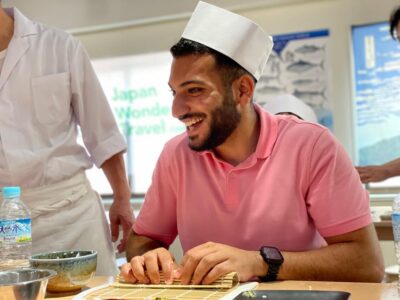
Tsukiji Fish Market Sushi Making Class with Pro Chef
Read our review →
Browse the lists this tour appears in