
Reviewed · TSUKIJI AND TOYOSU FISH MARKET TOURS
Tokyo: Tsukiji Fish Market Tour with 6 Stops & Seafood Lunch
Tsukiji is no longer Tokyo’s wholesale fish market, but its Outer Market remains one of the city’s best places to see seafood, snacks, kitchen shops, and everyday food culture up close. This three-hour tour adds a Buddhist temple, a shrine, a sit-down donburi lunch, and a high city view, giving you more than a simple tasting walk.
I like the way a guide such as Mai, Ken, or Kiyo can explain what you are eating before you try it. I also like the small group, limited to seven people, which makes it easier to ask about dishes, shopping, and Japanese customs. The main drawback is that the tour can feel slow and crowded in the market, and the title may lead you to expect the wholesale fish market rather than Tsukiji’s Outer Market.
Key points to know before you book
- This is an Outer Market tour: You will not visit Toyosu’s wholesale market or its famous tuna auction.
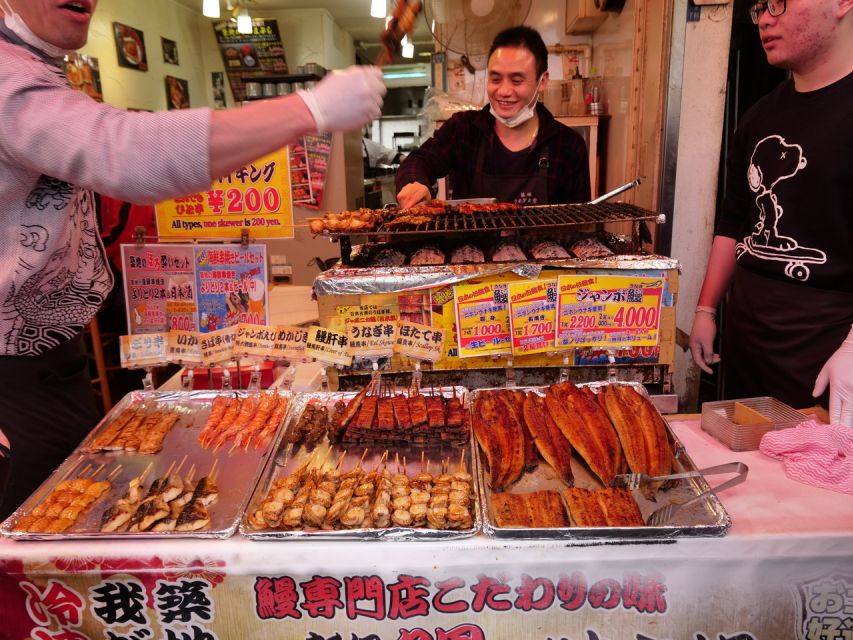
- Five or more tastings are included: The exact foods vary, but past stops have included oysters, tuna sushi, grilled eel, rolled omelet, mochi, unagi, yakitori, and taiyaki.
- The temple and shrine add useful context: Tsukiji Hongan-ji and Namiyoke Inari Jinja show a different side of the neighborhood.
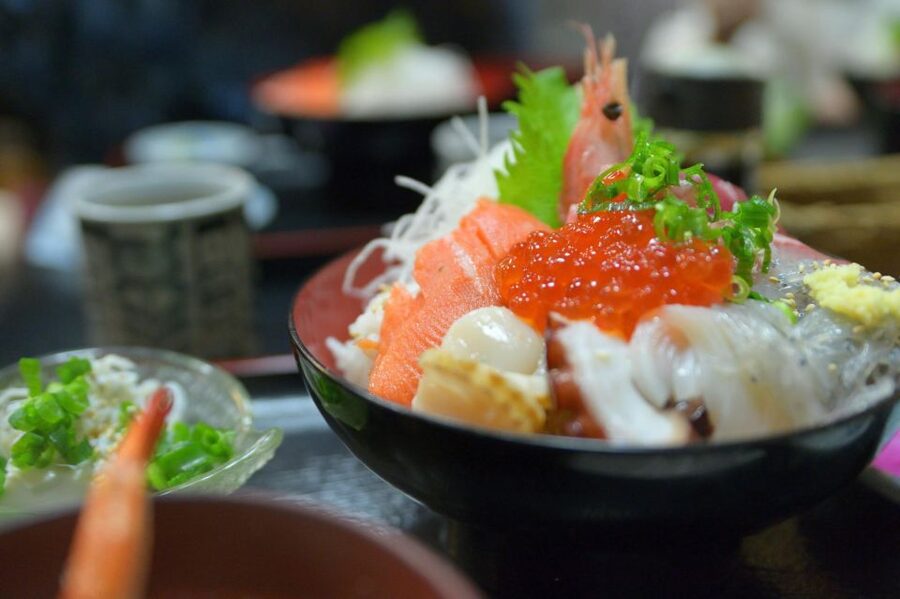
- Lunch is a seafood donburi bowl: The included lunch allowance is up to 1,500 yen, while drinks cost extra.
- The final view is a pleasant surprise: The tour ends with a Shiodome observation stop, often described as a 46th-floor view over the market and harbor area.
- Bring cash and arrive early: Street food purchases are not included, and a late arrival means you may miss the group without a refund or rescheduling.
Why Tsukiji still matters after the fish market moved
Many first-time visitors hear Tsukiji and picture a giant wholesale fish hall. That is now at Toyosu. Tsukiji’s former inner market closed, but the Outer Market kept its narrow lanes, food stalls, specialty shops, and local atmosphere.
That distinction matters. This tour is about eating and walking through Tsukiji’s public market streets, not watching wholesale auctions or seeing the working fish-market floor. If you want the old market atmosphere, food samples, and an easy introduction to the area, Tsukiji fits well. If your main goal is the tuna auction, this is the wrong tour.
The market can be packed, especially on a weekend. You will move through narrow lanes with other shoppers, restaurant customers, and people stopping for photographs. A guide helps you stay together and find worthwhile stops, but you should not expect a quiet, leisurely browse at every stall.
More Tsukiji and Toyosu fish market tours:
- Tokyo Tsukiji Fish Market Food and Culture Walking Tour
★ 5.0 · 3,184 reviews - Tokyo: Tsukiji Fish Market Food and Walking tour
★ 5.0 · 1,724 reviews - Tokyo: Tsukiji Fish Market Guided Walking Tour
★ 4.9 · 1,397 reviews
Starting at Tsukiji Hongan-ji
Meet at the main gate of Tsukiji Hongan-ji, near Tsukiji Station. Pay close attention to the station name. Tsukiji Station is not the same as Tsukijishijo Station, and going to the wrong one can put you too far away for a punctual start.
The guide carries a red or orange MagicalTrip sign. The group then spends about 20 minutes at Tsukiji Hongan-ji, a Buddhist temple with a distinctive appearance and long connection to the district.
This opening stop gives the tour a useful rhythm. Instead of jumping straight into seafood, you first learn about Japanese worship customs, temple etiquette, and local views on religion. You do not need to be religious to appreciate the visit. The guide explains what you are seeing and how people use the space, which makes the temple feel less like a quick photo stop.
The tour must begin on time. If you miss the group, you cannot join later, reschedule, or receive a refund, so I would arrive early rather than trying to cut the connection close.
Eating your way through Tsukiji’s Outer Market
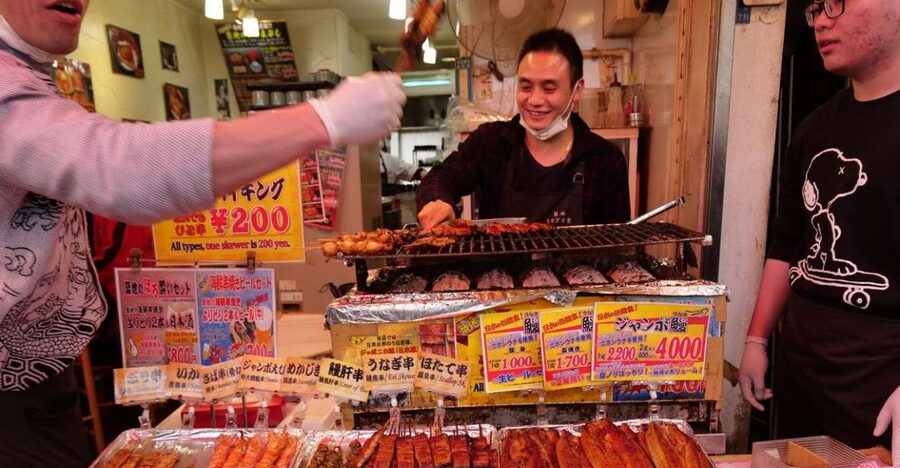
The market walk lasts about an hour, with food tastings and time to look at shops. The guide points out places where you can buy snacks, seasonings, seafood, and other Japanese food products. You can also ask to see or purchase something specific, although the guide cannot guarantee every request.
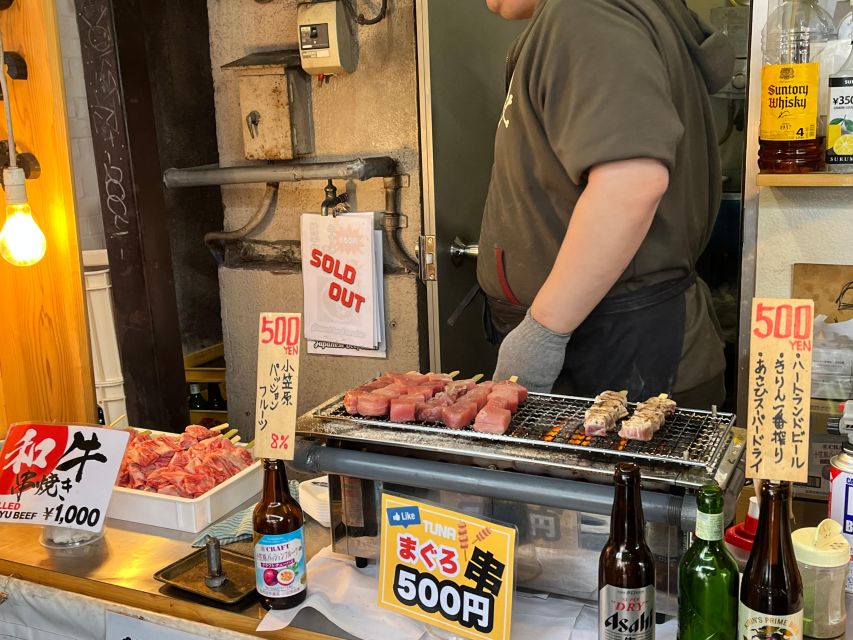
At least five tastings are included. The actual menu changes by stop and season, but the food examples reported from this tour give you a good idea of the range: fresh oysters, tuna sushi, sashimi, grilled eel, yakitori, tamagoyaki, custard-filled mochi, and tuna-shaped taiyaki.
That variety is one of the strongest reasons to book. You are not simply served a plate of sushi and sent on your way. You can compare raw seafood with grilled food, sweet snacks, and familiar Japanese street foods. The guide also gives you a useful explanation of what you are eating, how it is served, and why it belongs in the market.
The small group helps here. With no more than seven participants, it is easier to hear the guide and make quick decisions at a crowded stall. Several guides, including Mai, Meg, Taka, Momo, Hina, and Ken, have been praised for helping people choose food and showing them shops they might not have found alone.
Still, keep your expectations realistic. This is not a private shopping assistant, and the market itself is not a controlled tasting room. One part of the tour may feel rushed if the lanes are packed. You may want more time for photos or browsing, but stopping too long can split the group.
Bring some cash for extra street food and purchases. The included tastings are covered, but you pay separately for anything beyond the planned food. Japanese beer and sake are also extra. The description presents them as a popular way to enjoy Tsukiji, but they are not included in the tour price.
A short stop at Namiyoke Inari Jinja
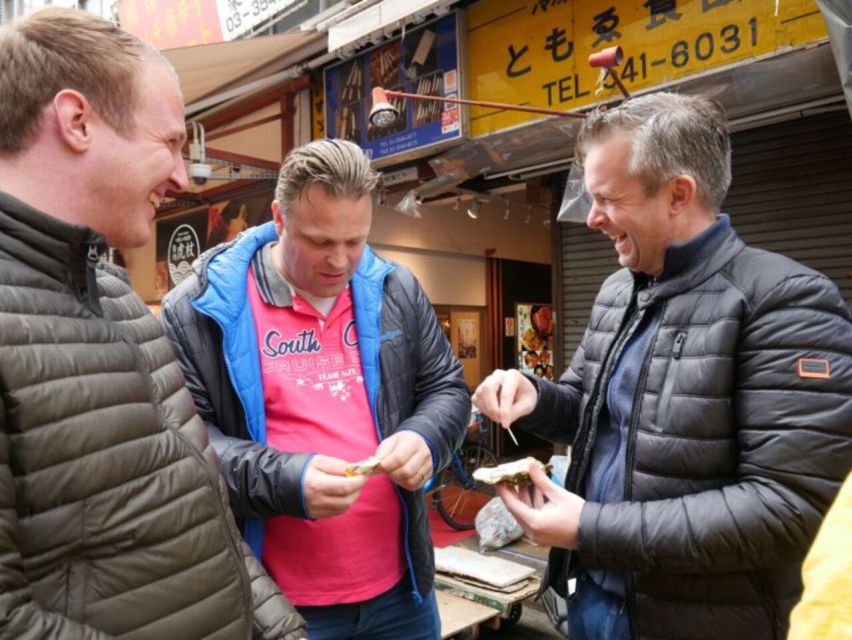
After the market walk, the route includes about 20 minutes at Namiyoke Inari Jinja. This shrine is tied to Tsukiji and adds another layer to the neighborhood’s food culture.
The temple and shrine are not interchangeable. The first stop introduces Buddhist practice, while the shrine gives you a look at Shinto customs. The guide can help explain the difference and show you how local religious traditions fit into daily life.
This stop is short, but it prevents the tour from becoming only a food crawl. You get a better sense of why the neighborhood has such a strong identity and how religion, work, food, and community overlap in Japan.
More Lunch Experiences in Tokyo:
- Tokyo: Mt.Fuji & Lake Kawaguchiko 1-Day Bus Tour w/Optional Lunch
★ 4.5 · 839 reviews - Tokyo: Sumo Experience and Chanko Nabe Lunch
★ 4.8 · 257 reviews - Tokyo: 1 Day Bus Tour with Meiji-Jingu,Odaiba,lunch&Skytree
★ 4.6 · 156 reviews - Mt. Fuji, Oishi Park & Arakurayama Pagoda Bus Tour with Lunch
★ 5.0 · 128 reviews
Donburi lunch with a built-in rest
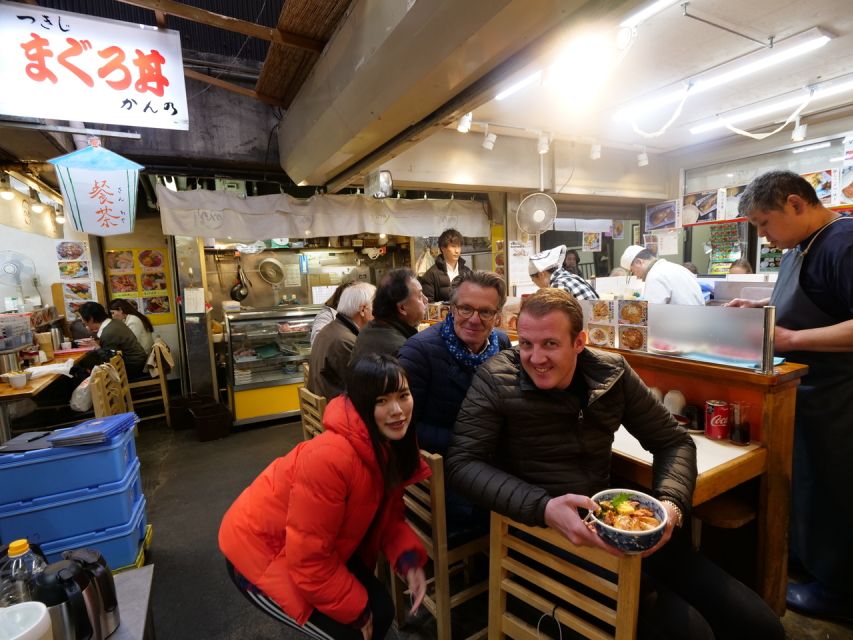
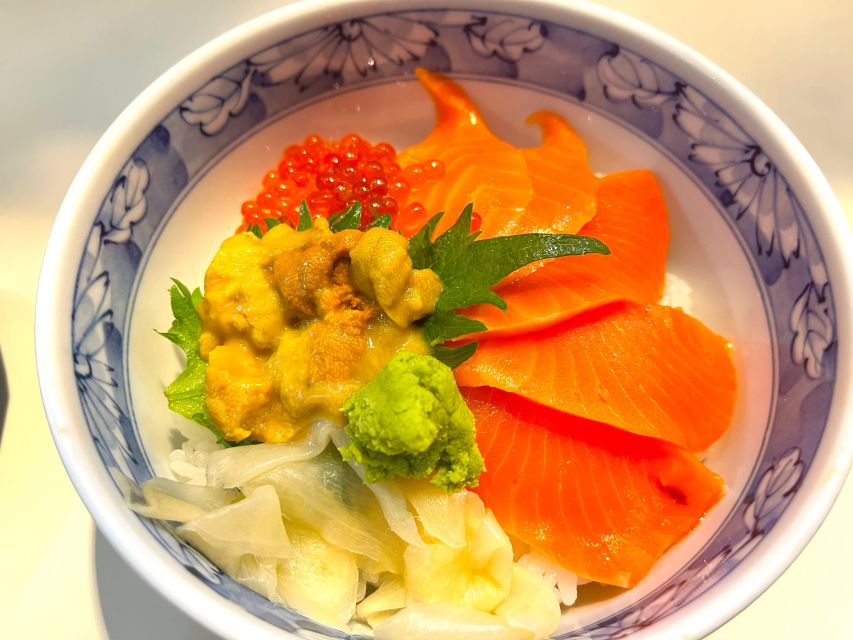
The final market stop is lunch at a seafood restaurant. You sit down to a donburi bowl, usually built around seafood served over rice. The lunch allowance is included up to 1,500 yen.
This is a welcome change after an hour on your feet in crowded lanes. You have time to eat properly, ask questions, and compare the restaurant meal with the small tastings from the stalls. Several guides have received especially warm praise for arranging a good local lunch and helping with menu choices.
The meal is one of the better parts of the value calculation. If you bought a similar bowl yourself, you would still pay for it, and you would have to choose a restaurant without the guide’s help. The tour removes some of that guesswork and gives you a proper break.
Food restrictions need careful handling. The general description refers to vegetarian meals, but the important tour information says vegan and vegetarian options are not available. It also says the operator cannot guarantee allergy-free food or handle every dietary restriction because the food comes from independent kitchens. If you have an allergy or strict dietary need, ask before booking, and do not assume substitutions will be possible.
Ending above Tokyo in Shiodome
The last sightseeing stop is Shiodome Media Tower, where you get a high view over the Tsukiji area and the harbor. Past participants have described the stop as a 46th-floor observation view at Caretta Shiodome.
This is a smart finish. After close-up market lanes, seafood counters, and temple details, you see how the district fits into the larger city. The view also gives you a calm pause before the tour returns to Tsukiji Hongan-ji.
The stop lasts about 20 minutes, so think of it as a viewpoint rather than a long visit to a tower. You will have time for photographs and a short explanation, but it is not a full afternoon at an observation deck.
The official route ends back at Tsukiji Hongan-ji. Guides have sometimes helped participants find a nearby station or get on the right train after the tour, but that is a kindness, not a promised part of the itinerary. If you have a flight, train, or timed attraction afterward, allow extra time.
What the $94 price really includes
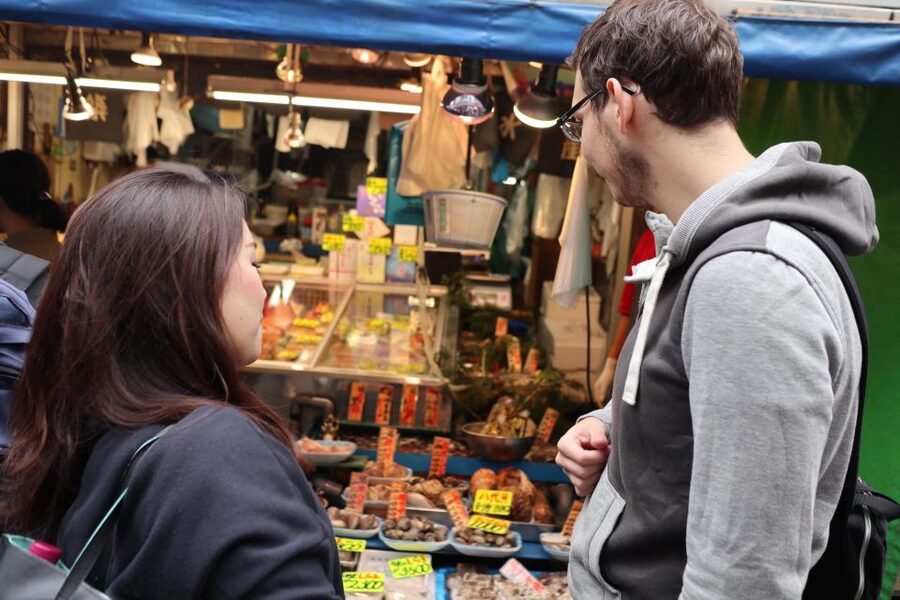
At $94 per person, this is not the cheapest way to walk around Tsukiji. You can visit the Outer Market on your own, buy a few snacks, and find a donburi restaurant without paying for a guide.
The price makes more sense if you value structure and explanation. You receive:
- An English-speaking certified guide
- At least five market tastings
- Seafood lunch with an allowance up to 1,500 yen
- Visits to a Buddhist temple and Shinto shrine
- A Shiodome observation stop
- Tour photos
- A small group capped at seven people
The guide is the main part of the value. Tsukiji is easy to enter but less easy to understand. A guide can steer you through crowded lanes, explain unfamiliar foods, help you avoid ordering blindly, and connect the market to Japanese customs.
I would call the tour good value for a first visit to Tokyo, especially if you want food and culture in one morning. It is less appealing if you are comfortable navigating markets alone, want a long shopping session, or mainly want to see the old wholesale fish market.
Who will enjoy this tour most
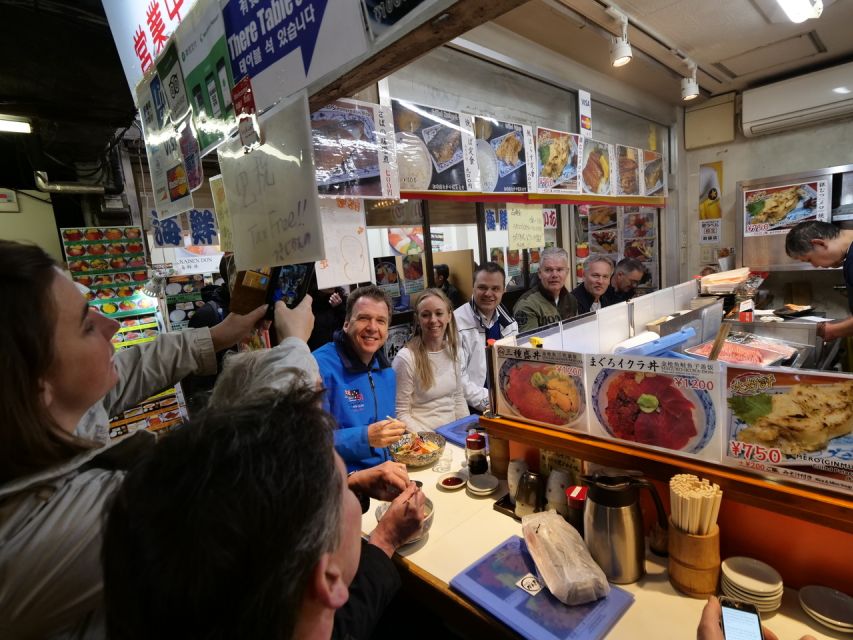
This experience suits first-time Tokyo visitors who want a gentle introduction to Japanese food. Families can join, and one family group specifically appreciated the guide’s ability to keep children interested while explaining the culture.
It also works well for solo visitors. A small group gives you company without the size and noise of a large walking tour. Couples and friends can use the tour as an easy first-day activity, especially when jet lag makes planning a complicated food route less appealing.
Food-focused visitors will get the most from it, but you do not need to be a seafood expert. The tastings cover more than raw fish, and the guide helps you understand each stop.
You should think twice if you use a wheelchair or stroller. Parts of the route are not accessible, and crowded market lanes can be difficult even when the route is technically passable. Strict vegans and vegetarians should also clarify the food situation before reserving.
Practical tips for a smoother morning
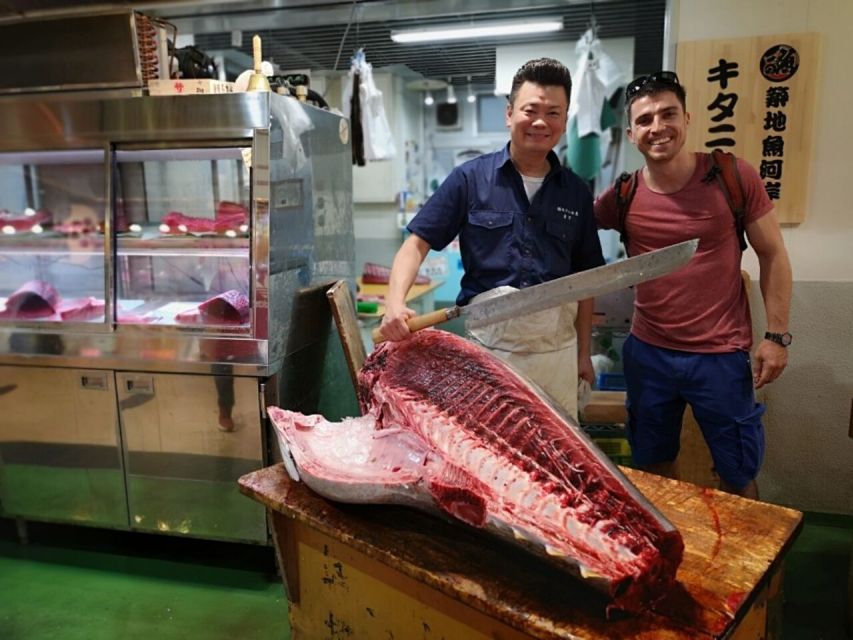
Wear comfortable shoes. The tour lasts three hours, includes several walking sections, and moves through crowded market streets.
Arrive early at the main gate of Tsukiji Hongan-ji. Confirm that you are heading to Tsukiji Station, not Tsukijishijo Station, and look for the red or orange sign.
Bring cash for additional snacks, shopping, beer, or sake. Do not count on every stall accepting the payment method you prefer.
Keep your bag close and stay with the group in the market. The guide can lead you through the crowd, but you still need to watch where you stop.
Tell the operator about allergies or food restrictions before the tour. This does not guarantee a safe substitute, but it gives the team a chance to plan.
The activity offers free cancellation up to 24 hours before the start and allows you to reserve now and pay later. Those policies help if your Tokyo plans are still shifting.
Should you book the Tsukiji food tour?
Book it if you want a guided introduction to Tsukiji’s food stalls, a temple and shrine visit, and a seafood lunch in one compact outing. The strongest part is the combination of tastings and explanation. Guides such as Mai, Ken, Kiyo, and Taka have made the experience especially useful by helping with food choices and adding local context.
Do not book it expecting the wholesale fish market, a tuna auction, or a quiet shopping trip. The Outer Market can be crowded, and the pace may leave you wishing for more time at certain stalls.
For most first-time visitors who want an organized food morning, the $94 cost is fair because it covers the guide, tastings, lunch, and a final city view. For independent eaters who already know Tsukiji and speak enough Japanese to order confidently, visiting alone will cost less and give you more freedom.
FAQ
Is this a tour of the old wholesale fish market?
No. The tour visits Tsukiji’s Outer Market. Tokyo’s wholesale fish market moved to Toyosu, while Tsukiji kept its food stalls, shops, and market atmosphere.
How long does the tour last?
The tour lasts three hours.
Where does the tour meet?
Meet at the main gate of Tsukiji Hongan-ji. The meeting area is near Tsukiji Station, not Tsukijishijo Station.
How do I find the guide?
The guide will hold a red or orange sign marked MagicalTrip.
What food is included?
The tour includes five or more food tastings in the market and a seafood lunch. The lunch allowance is up to 1,500 yen.
Are drinks included?
No. Japanese beer and sake are available at your own expense, as are extra street food purchases.
Can vegetarians or vegans join?
The important tour information says vegan and vegetarian options are not available. Food substitutions and allergy-free meals cannot be guaranteed, so ask about your needs before booking.
Is the tour wheelchair and stroller accessible?
Some locations on the route are not accessible by wheelchair or stroller.
What happens if I arrive late?
The group starts on time. If you miss the group because you are late, you cannot join the tour, reschedule, or receive a refund.
More Tokyo markets and shopping streets
- Tsukiji Fish Market Guided Tour and Sushi Making with Pro Chef
★ 5.0 · 775 reviews - Tokyo: Tsukiji Fish Market Food and Culture Walking Tour
★ 4.7 · 757 reviews - Tsukiji Fish Market: Street Food & Culture Walking Tour
★ 5.0 · 669 reviews - Tsukiji Fish Market Small-Group Food Walking Tour
★ 5.0 · 621 reviews
Newly reviewed around Tokyo
- Tokyo Asakusa:Calligraphy & Make T-shirt Activity★ 5.0 · 62 reviews
- Intercity Shuttle, Tokyo to Haneda /Narita /Yokohama /Makuhari★ 5.0 · 5 reviews
- 1 Hour Travel around Tokyo with a Professional Photographer★ 5.0 · 3 reviews
- Travel Tokyo with Your Own Personal Photographer★ 5.0 · 43 reviews
- Train in Samurai Swordsmanship and Defeat the Demon in Tokyo★ 5.0 · 5 reviews
- Shuttle Van 6hr Tokyo Tour to-and-from Tokyo, Yokohama and Narita★ 5.0 · 9 reviews
- Kickboxing & Body Training with EX-Pro Fighter★ 5.0 · 4 reviews
- Traditional Japanese Knife Sharpening Class★ 5.0 · 18 reviews
Tsukiji and Toyosu Fish Market Tours, compared.
Tokyo Tsukiji Fish Market Food and Culture Walking Tour
Read our review →
Tokyo Sushi Making Class in Tsukiji with Professional Chef
Read our review →
Tsukiji Fish Market Guided Tour and Sushi Making with Pro Chef
Read our review →Tsukiji Fish Market Food and Culture Walking Tour
Read our review →
Tsukiji Fish Market: Street Food & Culture Walking Tour
Read our review →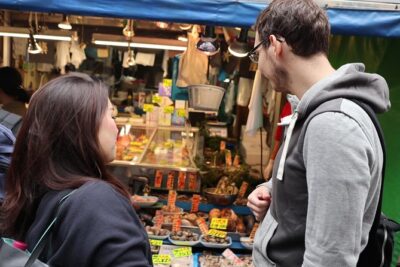
Tsukiji Fish Market Small-Group Food Walking Tour
Read our review →Browse the lists this tour appears in