
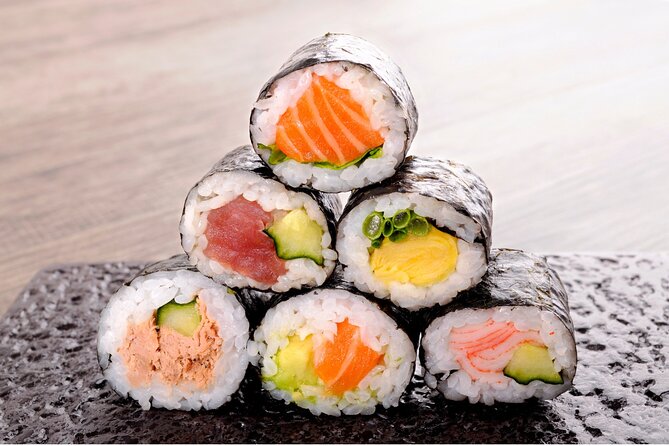
Reviewed · TOKYO SUSHI MAKING CLASSES
Giant Sushi Cooking Class: Make a 1.5m Sushi Roll in Tokyo
A 1.5-meter sushi roll is the main event here. In Tokyo’s Meguro district, you work with local hosts to prepare the rice, fillings, and nori, then join the whole group in rolling one giant maki. It is part cooking lesson, part shared meal, and part food-themed challenge.
I like two things right away: you learn techniques that rely on ordinary kitchen tools, and the class gives you a dish you can try again at home. The handmade Japanese plates used for serving also add a thoughtful local touch.
The main thing to consider is the unusual listed duration of about 12 hours. That may reflect the booking schedule rather than the hands-on cooking time, so check the exact start and end details before paying. The class also has a maximum of 12 people, which keeps the activity small but means spaces may be limited.
Key points to know before booking
- Roll a 1.5-meter maki together: This is a group-sized sushi project, not a standard individual sushi lesson.
- Learn the building blocks: You prepare sushi rice, fish, avocado, nori, and sesame before rolling.
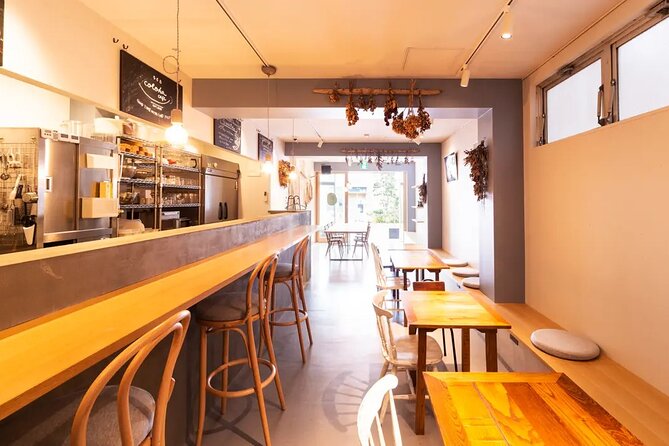
- Located in Meguro: The meeting point is about a 10-minute walk from the station, according to the available class details.
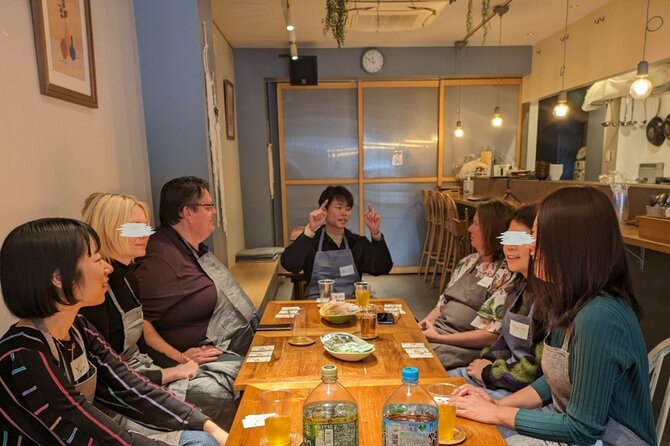
- More than a cooking lesson: Japanese snacks, conversation, and social games are included in the experience.
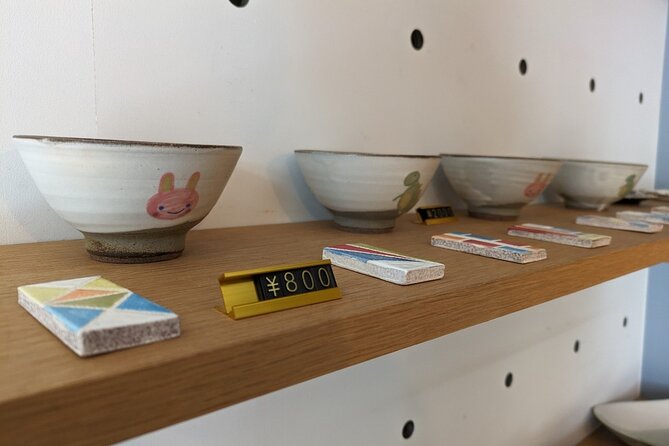
- Served on handmade plates: The tableware is painted by local artists and can be purchased at the onsite shop.
- Small group and flexible cancellation: The maximum is 12 people, with free cancellation up to 24 hours before the start time.
Rolling a 1.5-meter sushi creation in Meguro
Most sushi classes ask you to shape a few neat rolls. This one asks you to help make a sushi log long enough to stretch across a room. The scale gives the class its playful spirit, but the work still follows familiar sushi steps.
You begin by preparing the main ingredients. The class covers the fish and avocado fillings, the nori sheets, and the rice that holds everything together. You also learn why sushi rice has its particular texture and flavor, an important lesson if you want your homemade maki to hold its shape instead of falling apart.
The class description does not provide the names of individual hosts or chefs, so you should not expect a named instructor profile when booking. What is clear is that local hosts guide the preparation and explain traditional methods said to have been passed down through generations.
This is useful for beginners because the lesson is not only about copying hand movements. You get the reasoning behind the food: how to handle the rice, where to place the fillings, and how much pressure to use when rolling. Those details matter more than simply watching someone make sushi quickly.
More Tokyo sushi making classes:
- Sushi Making Tokyo Roll and Authentic Japanese Sushi Class
★ 5.0 · 3,971 reviews - Tokyo: Roll and Authentic Sushi Making Class in Asakusa
★ 4.9 · 1,957 reviews - Make Sushi and Create Unforgettable Memories in Tokyo
★ 5.0 · 1,413 reviews
Preparing rice, fish, avocado, and nori
Sushi rice is the quiet star of the session. It has to be sticky enough to hold the roll together, but not so soft that it becomes a heavy paste. Learning this balance gives you a better chance of recreating the dish in your own kitchen.
You also prepare fish and avocado before assembling the roll. The provided details do not name the type of fish or specify the amount of each filling, so you should view this as a lesson in the method rather than a fixed recipe with exact measurements.
The nori is laid out as part of the group preparation. Since the finished roll is 1.5 meters long, the scale changes the usual rhythm of sushi making. You are not building one small roll alone. You are helping place rice and fillings across a long shared base, with the other people in the class working alongside you.
A final sprinkling of sesame seeds gives the roll extra texture and a familiar finishing touch. Small steps like this help you see how sushi is built in layers, rather than treating it as something that arrives fully formed on a restaurant plate.
The group roll is the fun part
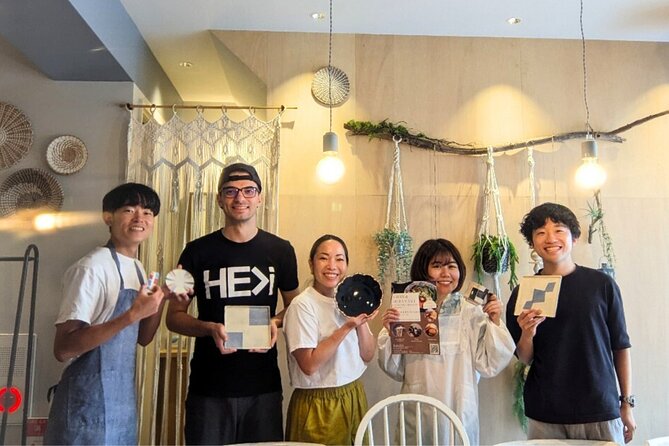
Once the rice and fillings are in place, everyone works together to roll the maki. The trick is applying enough pressure to create a firm log without crushing the ingredients or tearing the seaweed.
This is where the class differs from a standard cooking demonstration. You are part of a coordinated group task, and the size of the roll makes it hard for one person to manage alone. Families, couples, and solo visitors can all take part, but solo visitors should be comfortable joining a shared activity with people they may not know.
The group size is capped at 12 people. That is a useful limit for a hands-on class because you have a better chance of seeing the process and taking part rather than standing at the back of a large crowd. Still, the class is built around cooperation, not quiet individual practice.
Once the roll is formed, it is cut and served. The cutting stage gives you the payoff: a giant maki becomes a series of sushi portions that everyone can enjoy together. The food is both the lesson and the meal, so this experience suits you best if you like practical activities with a social side.
Handmade Japanese plates and the onsite shop
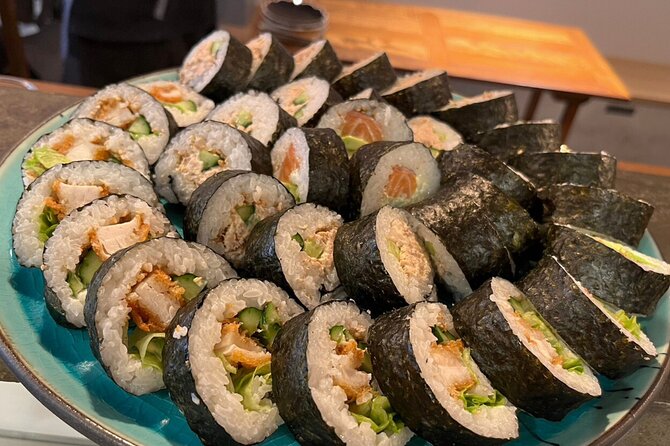
The finished sushi is served on Japanese dishware that has been crafted and painted by hand. Each plate is designed by a local artist, so the serving pieces are not just standard classroom equipment.
That detail gives the meal a stronger sense of place. You are still in a cooking class, but the table setting connects the food to Japanese craft traditions. It also provides an option for a small souvenir that is more useful than a generic Tokyo trinket.
The plates are available to purchase at the onsite shop after the class. You do not need to buy anything to take part, and the available information does not give prices or the full range of items. If you like handmade tableware, leave a little time to browse rather than rushing straight out after eating.
The shop is best viewed as an extra, not the reason to book. The real value is the shared cooking activity and the chance to learn a sushi method you can repeat at home.
More Tokyo cooking classes:
- Tokyo Shinjuku Chopsticks Making Class
★ 5.0 · 1,763 reviews - Tokyo: Sushi Making Class in a Happi Coat near a Famous Spot
★ 4.9 · 1,377 reviews - Tokyo Sushi Making Class in Tsukiji with Professional Chef
★ 5.0 · 1,177 reviews - Ramen & Gyoza Cooking Class in Tokyo with Local Supermarket Visit
★ 5.0 · 823 reviews
Japanese snacks, conversation, and social games
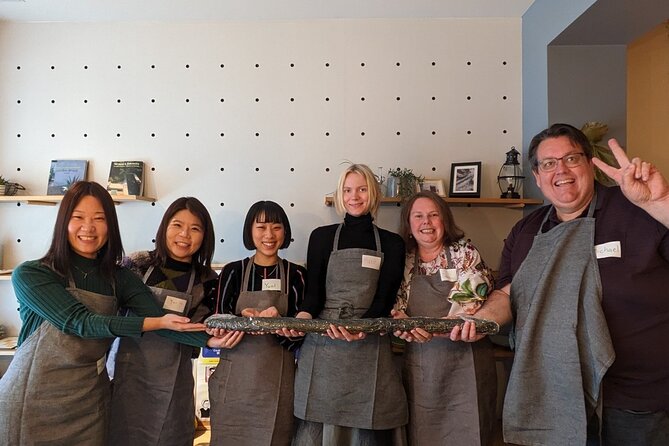
The class is not limited to the giant roll. The available experience details also include Japanese snacks, conversation, and social games. These additions help fill out the visit, especially if you want more than a short, technical lesson.
A previous class experience described the cafe as about a 10-minute walk from the station and noted the friendly atmosphere, snacks, conversation, and Japanese social games. The cafe appeared new at that time, but the service and experience were rated highly. The overall rating shown for the activity is 5 out of 5 from nine reviews, a strong sign of satisfaction, though the sample is small.
I would expect the social element to matter most for solo visitors and couples. It gives you simple ways to interact without needing to create conversation from scratch. Families may also appreciate the games, though younger children need to be comfortable following food preparation instructions and working as part of a group.
If you want a silent, highly formal lesson focused only on knife skills, this may not be the right match. The snacks and games make it more relaxed and communal.
Why the $50 price can make sense
At $50, this class is priced like a special activity rather than a basic meal. You are paying for instruction, ingredients, the shared preparation, the finished sushi, and the social setting. You also get a lesson that can be repeated with everyday kitchen equipment.
That last point is important. Some cooking experiences depend on specialist tools that are hard to find at home. Here, the stated aim is to teach you techniques using ordinary utensils and equipment. You may not recreate a full 1.5-meter roll in your kitchen, but you can apply the rice, filling, and rolling methods to normal-sized maki.
The value depends on what you want from your Tokyo food experience. If you only want to eat sushi, $50 could buy a meal elsewhere. If you want an unusual activity, a guided cooking lesson, and a memorable group project, the price is easier to justify.
The giant roll also gives you something a typical sushi class cannot: a shared result that feels like an event. You are not just taking home a recipe. You are helping produce a dish that requires teamwork and becomes the center of the meal.
Getting to the Meguro meeting point
The meeting point is at 2 Chome-3 Senzoku, Meguro City, Tokyo 152-0012, Japan. The activity begins and ends at the same location, and the venue is near public transportation.
The available directions describe the cafe as roughly a 10-minute walk from the station. Since the exact station name is not provided here, check the current confirmation details and map before setting out. Tokyo addresses can be confusing when you are moving between neighborhoods, and a short walk is easier when you have already checked the route.
Because the activity returns to its starting point, you do not need to plan a separate pickup or find your way to another part of Tokyo afterward. That makes it easier to pair with other plans, although you should keep enough time free around the listed start time.
The booking information gives an approximate duration of 12 hours. That is unusually long for a cooking class, and the supplied details do not explain whether this means the total booking window or the actual time at the cafe. Confirm this point directly before booking, especially if you have a timed museum visit, dinner reservation, or train to catch.
Who will enjoy this sushi class most
This is a good choice for you if you want a hands-on Tokyo food activity with a clear visual payoff. The giant maki is unusual enough to make the class memorable, while the basic techniques are practical enough to use later.
It suits:
- Families looking for a shared activity rather than another sightseeing stop
- Couples who enjoy cooking and eating together
- Solo visitors who like small-group classes and light social interaction
- Sushi fans who want to understand how rice, nori, and fillings work together
- Anyone interested in Japanese tableware and locally made plates
You may want to choose another class if you prefer advanced sushi knife work, a private lesson, or a detailed focus on professional restaurant technique. The supplied information emphasizes group preparation, traditional methods, snacks, and games, not specialist fish cutting or an individual chef’s training.
Dietary information is not provided. If you have allergies or avoid fish, avocado, sesame, or other ingredients, ask the provider before booking rather than assuming substitutions are available.
Practical booking details and cancellation
Confirmation is provided when you book, and the activity accepts mobile tickets. Keep the confirmation easy to access on your phone, particularly if you are navigating Tokyo by train and walking to the venue.
The class has a maximum of 12 people. That is small enough for a more involved lesson, but it also means you should not wait until the last minute if your dates are fixed.
You can cancel for a full refund up to 24 hours before the experience start time. Cancellations made less than 24 hours ahead are not refunded, and changes inside that same window are not accepted. The cut-off follows local Tokyo time, so check the clock carefully if you are booking from another country.
Is the giant maki class worth booking?
I would book this class if you want a friendly, unusual food activity rather than a standard restaurant meal. The giant 1.5-meter roll, practical home-cooking methods, handmade plates, and small group give the $50 price a reasonable purpose.
Before you commit, confirm the actual class length and start time, since the listed approximate duration of 12 hours needs clarification. Also ask about ingredients if you have dietary restrictions.
For families, couples, and solo visitors who enjoy making something together, Japanese Cooking Home ~Wagaya offers a memorable way to spend time in Meguro. You leave with a full stomach, a better sense of how sushi is assembled, and techniques you can use long after the giant roll has been eaten.
FAQ
Where does the sushi cooking class take place?
The meeting point is 2 Chome-3 Senzoku, Meguro City, Tokyo 152-0012, Japan. The activity ends at the same location.
How long does the experience last?
The listed duration is approximately 12 hours. Because that is unusually long for a cooking class, confirm the exact timing before booking.
How large is the group?
The activity has a maximum of 12 people.
What will I make during the class?
You will help prepare fish, avocado, nori, sushi rice, and sesame, then work with the group to roll a 1.5-meter sushi maki. The roll is cut and served after it is finished.
Is the class near public transportation?
Yes. The venue is near public transportation, and the available directions describe it as about a 10-minute walk from the station.
Can I cancel for a full refund?
Yes. You can cancel at least 24 hours before the experience start time for a full refund. Cancellations or changes made less than 24 hours before the start time are not accepted for a refund.
More hands-on classes and workshops in Tokyo
- Chopstick Making Workshop in Ginza
★ 4.8 · 1,366 reviews - Matcha Making Class in Tokyo with Authentic Japanese Sweets Set
★ 5.0 · 744 reviews - Tokyo: Samurai Sword & Archery Class from Samurai Descendant
★ 5.0 · 603 reviews - Tokyo: Tsukiji Fish Market Sushi Making Class with Pro Chef
★ 4.9 · 506 reviews
Newly reviewed around Tokyo
- Ueno and Yanaka Culture Art Walking Tour in Old Tokyo★ 5.0 · 5 reviews
- Sumo Training Watching Experience in Tokyo★ 4.5 · 8 reviews
- 2 Hours Mochi &Nerikiri Making & Matcha Class in Bunkyo★ 5.0 · 21 reviews
- Japanese Sweets (Mochi & Nerikiri) making at a Private studio★ 5.0 · 22 reviews
- Mt Fuji and Kawaguchiko Private Tour★ 5.0 · 10 reviews
- Half-Day Local Tokyo Tour in Adachi Market and Shibamata★ 5.0 · 16 reviews
- Private Full-Day Tour of Tokyo with Hotel Pickup★ 5.0 · 3 reviews
- Vegan / Vegatarian Ramen Tour★ 4.5 · 5 reviews
Tokyo Sushi Making Classes, compared.
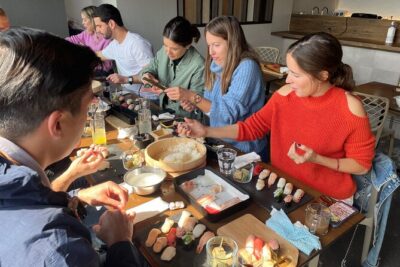
Sushi Making Tokyo Roll and Authentic Japanese Sushi Class
Read our review →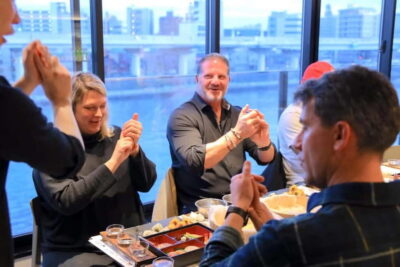
Roll and Authentic Sushi Making Class in Asakusa
Read our review →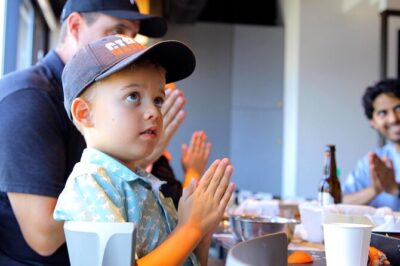
Make Sushi and Create Unforgettable Memories in Tokyo
Read our review →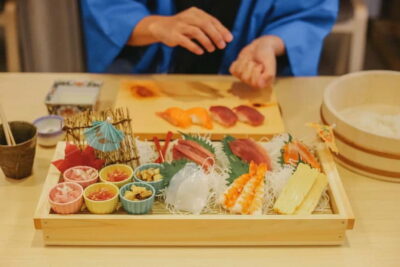
Sushi Making Class in a Happi Coat near a Famous Spot
Read our review →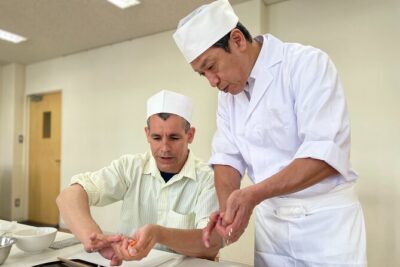
Tokyo Sushi Making Class in Tsukiji with Professional Chef
Read our review →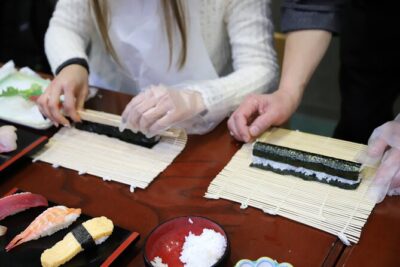
Tsukiji Fish Market Guided Tour and Sushi Making with Pro Chef
Read our review →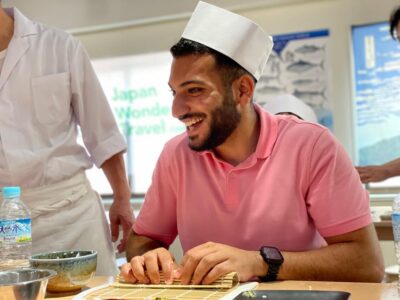
Tsukiji Fish Market Sushi Making Class with Pro Chef
Read our review →
Browse the lists this tour appears in