
Reviewed · TOKYO TRADITIONAL CRAFT WORKSHOPS
Tokyo Chopstick Making Workshop with Artisan
Making chopsticks by hand turns an everyday Japanese object into a useful souvenir with a story behind it. At this small workshop in Taito City, you shape, smooth, and finish your own pair under the guidance of an artisan. The work is simple to understand but surprisingly physical, especially if you choose a harder wood.
I like two things here. First, you leave with something you can actually use, not another trinket for a drawer. Second, the one-hour format fits neatly into a Tokyo day, and children as young as 10 have enjoyed it. Engraving is available for an extra fee, which makes the finished pair more personal.
The main caution is that the advertised price covers the basic experience, while nicer woods and engraving cost more. The class can also run closer to two hours if you work slowly, and one customer found that walk-ins were accepted at a lower price. Check the final cost and timing before you book.
Key points to know before you go
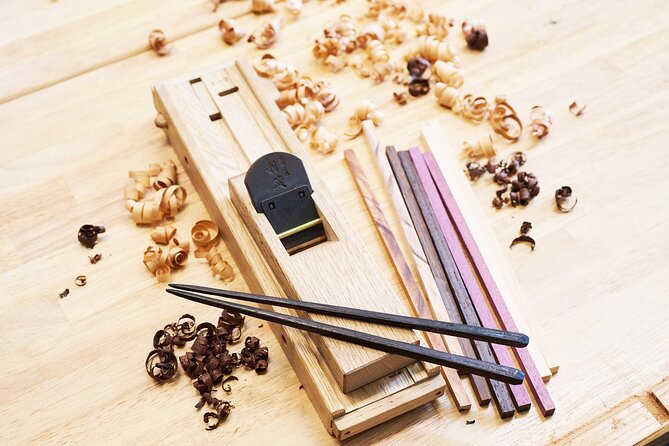
- You make a real pair of wooden chopsticks: Shape and smooth the wood yourself rather than simply decorating a ready-made product.
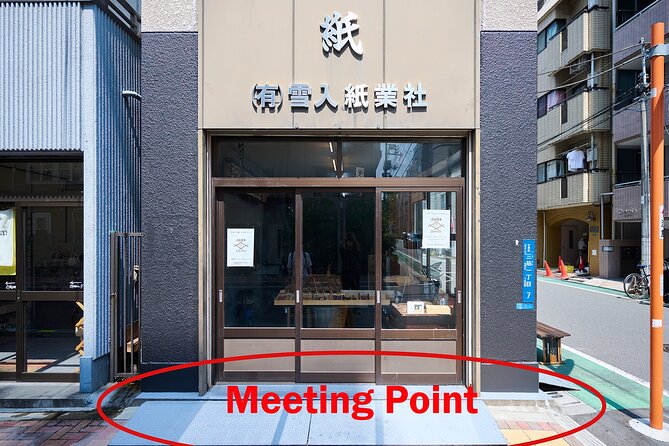
- The class takes place in Taito City: The meeting point is at 1-chome-7-1 Misuji, in an old craft area of Tokyo.
- Harder wood means harder work: Beginners may find an easier wood more comfortable, especially if you have never planed wood before.
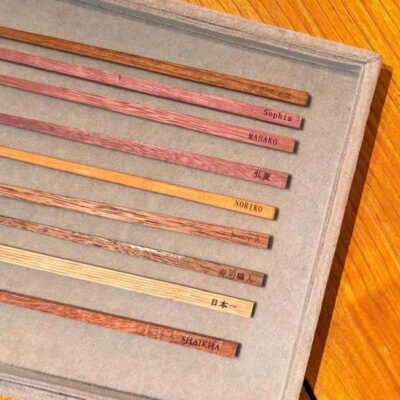
- Engraving adds a personal touch: You can pay extra to have the chopsticks engraved.
- The group is capped at 10 people: That keeps the room small enough for individual help.
- You can cancel free up to 24 hours ahead: Late cancellations and changes are not refunded or accepted.
Turning a daily utensil into a Tokyo souvenir
Chopsticks are easy to buy in Japan. Making your own is the point.
This workshop gives you a short, practical look at Japanese craft through an object you see at every meal. You are not just watching an artisan work. You handle the wood, learn how to shape it, and leave with a pair that carries the marks of your own effort.
That makes the experience especially appealing if you prefer souvenirs with a purpose. A pair of handmade chopsticks takes up almost no luggage space, and the finished item can go straight into your kitchen. With engraving, it can also become a thoughtful gift.
The workshop is held in a timeless craft neighborhood of Taito City. The setting matters. This is not a large tourist attraction with a staged demonstration. It is a small working space where the focus stays on the material, the tools, and the person guiding you.
The experience has received a 99 percent recommendation rate and a rating of 5 from 466 reviews, though the practical details matter more than the numbers. You should expect a modest, hands-on class rather than a long cultural lecture or a full tour of the neighborhood.
More Tokyo craft workshops:
- Tokyo Shinjuku Chopsticks Making Class
★ 5.0 · 1,763 reviews - Chopstick Making Workshop in Ginza
★ 4.8 · 1,366 reviews - Kintsugi Experience: Art of Golden Joinery in Tokyo
★ 5.0 · 467 reviews
Arriving at the Misuji workshop
Your meeting point is 1-chome-7-1 Misuji, Taito City, Tokyo 111-0055. The location is near public transportation, so it can fit into a day spent in the Taito and eastern Tokyo areas.
You might pair it with sightseeing around Asakusa, or with a visit toward Ryogoku. One customer found the workshop walkable from the Ryogoku Kokugikan, the sumo stadium. The exact walking time is not provided, so use a map on the day, but the location makes this a useful indoor stop between larger Tokyo sights.
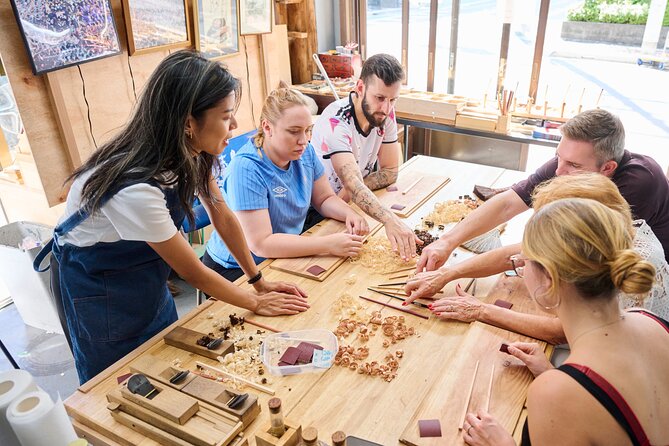
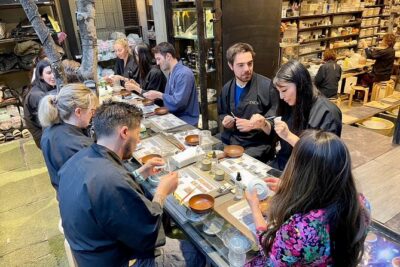
The room is small, with space for a maximum of 10 people. That is a real advantage for a craft class. You are less likely to get lost in a crowd, and the instructor can watch how you handle the tools and step in when you need help.
The small size also means the atmosphere may feel close and informal. If you want a quiet, private class with lots of personal space, this may not be the right fit. If you like working near other people and asking questions as you go, the compact setup should work well.
Staff names connected with the workshop include Rasmus, Sakura, Kaana, and Angie. The exact instructor may vary, but the available feedback repeatedly points to warm, helpful guidance. Angie has also welcomed early arrivals when the room was ready, though you should not count on an early start.
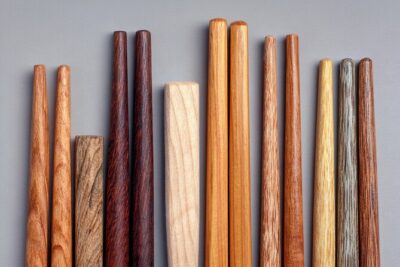
Choosing the wood before you start
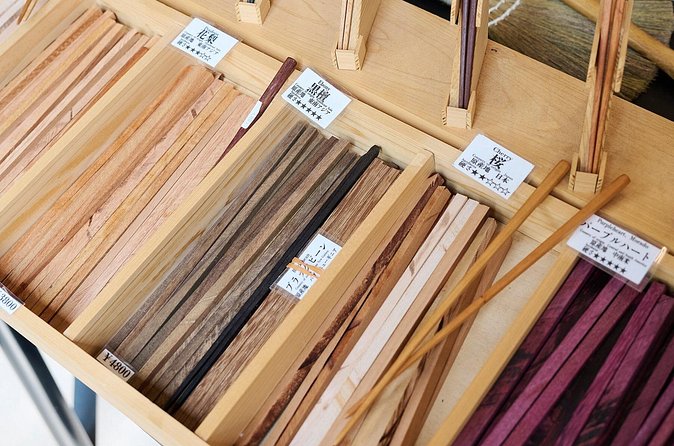
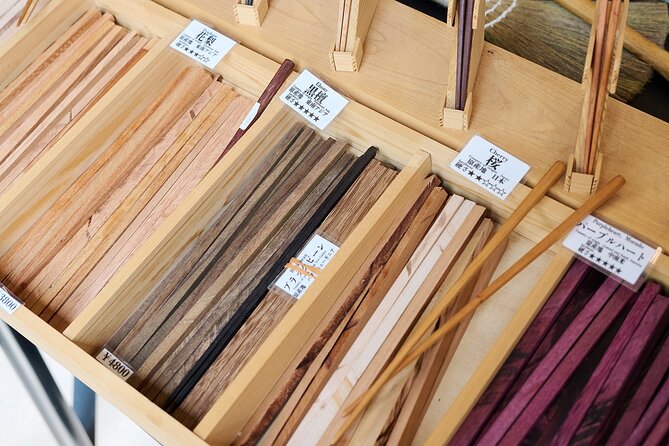
One of the first decisions is the wood. You can choose from several types, but the more expensive options cost extra. This is worth checking before you begin, since the listed price of $26.53 per person appears to cover the basic workshop rather than every possible upgrade.
Wood choice affects the feel of the class. If you have never planed wood before, an easier wood is the sensible choice. A harder or more premium wood may produce a handsome result, but it can demand more pressure and patience. One person described the activity as an arm workout, which is useful advice if you are expecting a purely relaxing craft session.
I would choose the wood based on how much you want to work, not simply on appearance. For a child or a first-time craft project, an easier option may lead to a smoother hour. For someone who enjoys hand tools and wants a more demanding task, a premium wood could be worth the extra cost.
Ask about the wood prices before committing. You do not want the final bill to surprise you, especially if you also want engraving.
Shaping the chopsticks with traditional tools
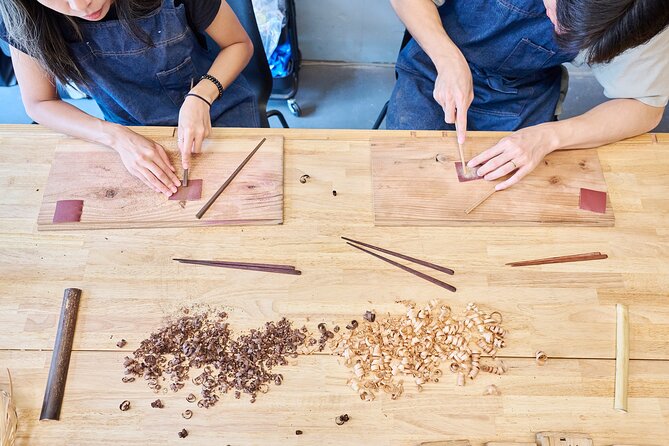
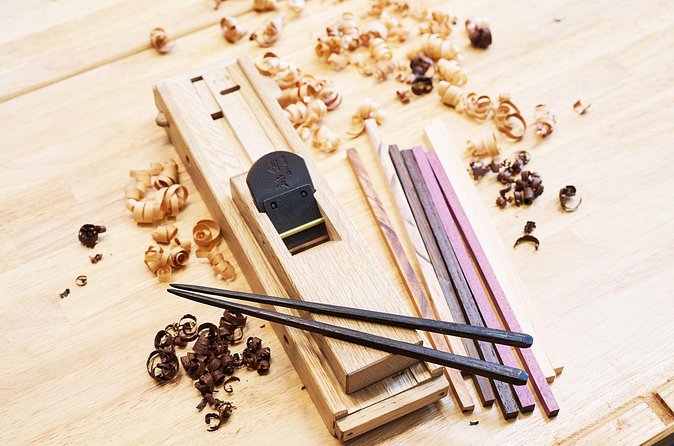
The central part of the class is shaping the wood. You use traditional tools and follow the artisan’s instructions to form the chopsticks. The process is practical and tactile: remove material, check the shape, and keep working until the pair begins to look right.
This is where the class becomes more than a quick souvenir stop. You start to notice how much care goes into an object that normally seems simple. Chopsticks need to be slim, comfortable, and reasonably balanced. Even if your pair is not perfectly uniform, the small differences are part of its handmade character.
The instructor shows you what to do, then lets you work. That balance is important. Too much instruction would make the activity feel like a demonstration, while too little would leave beginners unsure of how to use the tools.
The class suits most people, but do not assume it requires no effort. Planing and shaping can be tiring if you are not used to it. Children can take part, and the experience has been a hit with 10 and 12 year olds, but younger children may need close help with the tools. The supplied details do not set a minimum age, so confirm that point if you are traveling with very young children.
More hands-on classes and workshops in Tokyo:
- Sushi Making Tokyo Roll and Authentic Japanese Sushi Class
★ 5.0 · 3,971 reviews - Tokyo: Roll and Authentic Sushi Making Class in Asakusa
★ 4.9 · 1,957 reviews - Tokyo: Sushi Making Class in a Happi Coat near a Famous Spot
★ 4.9 · 1,377 reviews - Tokyo Sushi Making Class in Tsukiji with Professional Chef
★ 5.0 · 1,177 reviews
Smoothing the surface and finishing the pair
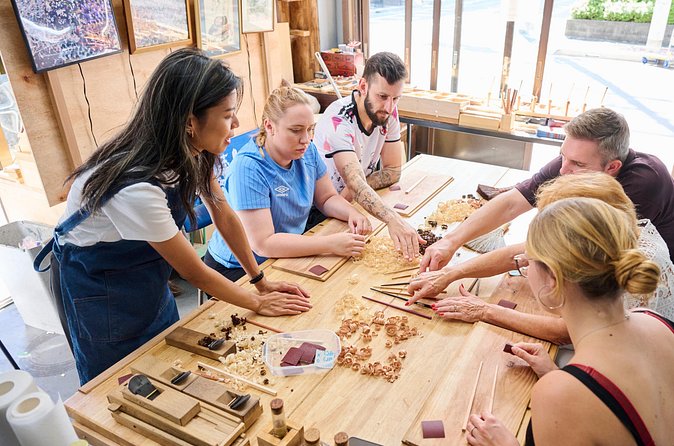
Once the basic shape is formed, you smooth the surface and refine the chopsticks. This part rewards patience. Rushing can leave rough patches, while careful work gives you a more comfortable finished utensil.
The artisan remains available to help with each stage. Several instructors have been praised for making the process easy to follow, including Kaana, Angie, Rasmus, and Sakura. The guidance is especially useful if you have never worked with wood. You can ask for help with the shape, the surface, or the final finish rather than trying to guess.
The advertised duration is about one hour, which is a good target for most people. Still, allow extra time. One customer needed closer to two hours and was not rushed. Your total time will depend on the wood you choose, your pace, and how much care you put into the final surface.
That flexibility is good for the finished product, but it can affect a tightly planned sightseeing day. Do not schedule a major attraction with an inflexible entry time immediately afterward. The workshop ends at the same place where it begins, so you will not need to arrange a second pickup point.
Adding engraving and taking the chopsticks home
Engraving is optional and costs extra. It is a worthwhile add-on if you want a name, date, or personal mark, though the available details do not specify exactly what designs or characters are offered. Ask what can be engraved and how much it costs before choosing it.
The finished chopsticks are wrapped beautifully and ready to take home the same day. That is one of the strongest practical features of the class. You do not need to return later, wait for international shipping, or worry about leaving a large craft item behind.
As a souvenir, the chopsticks have a useful advantage. They are light and compact, and they work as either a personal keepsake or a gift. The pair also gives you a story to share: you shaped and finished them in Tokyo rather than simply purchasing them from a shop.
The end result will depend on your skill, patience, and wood selection. If you expect factory-perfect symmetry, adjust that expectation. The value is in the process and the personal connection, not in producing a flawless professional tool.
How much value do you get for $26.53?
At $26.53 per person, the basic price is reasonable for a short activity that includes instruction and a physical souvenir. You are paying for access to the tools, the artisan’s help, and the chance to make something yourself, not just for the raw wood.
The value improves if you enjoy craft activities. A person who likes making things will likely get more from this than someone who only wants a fast photo opportunity. It is also a useful rainy-day option, since the workshop takes about an hour and works well alongside another indoor activity. One booking was made as a replacement for an outdoor day because of poor weather.
Watch the add-on costs. Premium wood and engraving are charged separately, and those extras can change the total. The workshop also appears to accept walk-ins, with at least one customer reporting a lower walk-in price and no need for a reservation. That makes the online booking convenient, but it also means you may want to compare the booking price with the in-person option if your schedule is flexible.
The tradeoff is certainty. A reservation gives you a planned time, while a walk-in may depend on space. Since the group limit is 10, a busy period could make the cheaper option less useful.
Who will enjoy this workshop most?
I would recommend it to you if you want a souvenir that is personal, useful, and easy to pack. It is also a good choice for families, couples, friends, solo visitors, and anyone who enjoys a quiet hands-on activity.
It works particularly well for:
- People who enjoy traditional crafts
- Families with older children
- Visitors looking for an indoor Tokyo activity
- Anyone who prefers making a souvenir to buying one
- Travelers with an hour to spare near Taito or Ryogoku
- Gift shoppers who want optional engraving
You may want to skip it if you have limited hand strength, dislike repetitive physical work, or want a detailed lecture on the history of chopstick-making. One person wished for more historical explanation. The cultural context is present, but the main focus is making the object.
You should also be comfortable with a small workshop room and a little mess or effort. The class is beginner-friendly, but beginner-friendly does not mean completely effortless.
Practical planning for your Tokyo day
The workshop begins and ends at the Misuji meeting point. It is near public transportation, and the location can pair well with other eastern Tokyo sights. Give yourself enough time to arrive without rushing, especially if you are carrying luggage or navigating Tokyo’s train stations.
Mobile tickets are accepted, and confirmation is provided at booking. The group maximum is 10 people. Since the class may last longer than the stated one-hour estimate, leave a cushion before your next fixed appointment.
Free cancellation is available if you cancel at least 24 hours before the experience start time. If you cancel less than 24 hours ahead, you will not receive a refund, and changes made inside that window are not accepted. Cutoff times follow Tokyo local time.
The activity ends where it starts, which keeps the logistics simple. You can continue sightseeing from Misuji without arranging transport back from another neighborhood.
Should you book the chopstick workshop?
Book it if you want a compact, useful souvenir and enjoy doing rather than simply looking. The small group, patient guidance, same-day finished product, and optional engraving give the experience real value. It is also a smart choice for a rainy afternoon or a family break from temples, shopping, and train rides.
Before you commit, confirm the wood upgrade prices and engraving fee. Choose an easier wood if you are new to planing, and allow up to two hours if you do not want to rush. If you are price-sensitive and have a flexible schedule, ask about walk-in availability, but remember that a reservation gives you more certainty.
For most visitors, this is a pleasing little craft experience with a souvenir you will actually use. It will not replace a full cultural tour, but it offers a personal look at Japanese workmanship in a tidy, manageable format.
FAQ
Where does the chopstick-making workshop take place?
The meeting point is 1-chome-7-1 Misuji, Taito City, Tokyo 111-0055, Japan. The activity ends back at the same location.
How long does the workshop last?
The advertised duration is approximately one hour. Depending on your pace and wood choice, it can take closer to two hours.
How much does the experience cost?
The listed price is $26.53 per person. More expensive wood choices and engraving cost extra.
Can beginners take part?
Yes. The workshop is designed for beginners, and an artisan guides you through shaping, smoothing, and finishing the chopsticks.
Is the workshop suitable for children?
Most people can participate, and children aged 10 and 12 have enjoyed the activity. The supplied information does not give a minimum age, so confirm that directly if you are bringing younger children.
How many people can join the workshop?
The maximum group size is 10 participants.
Can I engrave the chopsticks?
Yes. Engraving is available for an additional charge.
What is the cancellation policy?
You can cancel for a full refund up to 24 hours before the experience start time. Cancellations or changes made less than 24 hours before the start are not accepted or refunded.
Newly reviewed around Tokyo
- Tokyo Asakusa:Calligraphy & Make T-shirt Activity★ 5.0 · 62 reviews
- Intercity Shuttle, Tokyo to Haneda /Narita /Yokohama /Makuhari★ 5.0 · 5 reviews
- 1 Hour Travel around Tokyo with a Professional Photographer★ 5.0 · 3 reviews
- Travel Tokyo with Your Own Personal Photographer★ 5.0 · 43 reviews
- Train in Samurai Swordsmanship and Defeat the Demon in Tokyo★ 5.0 · 5 reviews
- Shuttle Van 6hr Tokyo Tour to-and-from Tokyo, Yokohama and Narita★ 5.0 · 9 reviews
- Kickboxing & Body Training with EX-Pro Fighter★ 5.0 · 4 reviews
- Tokyo History: Sensoji Temple & Asakusa District Private Tour★ 5.0 · 28 reviews
Tokyo Traditional Craft Workshops, compared.
Kintsugi Experience: Art of Golden Joinery in Tokyo
Read our review →
Authentic Pure Gold Kintsugi Workshop with Master Taku in Tokyo
Read our review →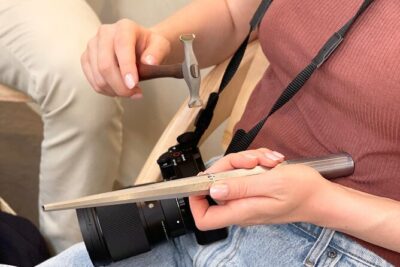
Private Handmade Ring Workshop Activity in Tokyo Shibuya
Read our review →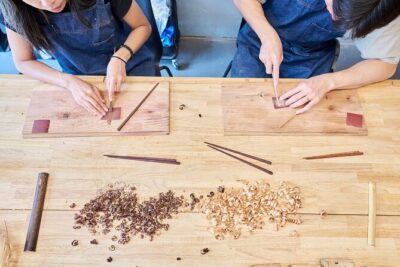
Kintsugi Workshop Class in Shibuya, Tokyo with mon cadeau
Read our review →Browse the lists this tour appears in