
Reviewed · TOKYO SUMO EXPERIENCES
Tokyo Ryogoku Sumo Morning Practice + Photo Shoot with Wrestlers
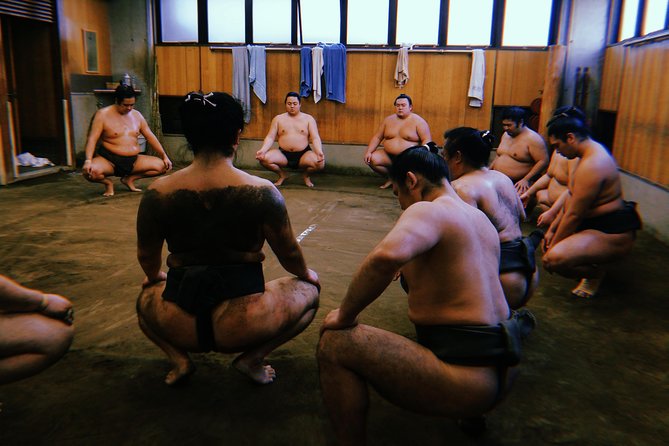
A few feet from wrestlers pushing, slapping, and grappling through real morning training, you get a side of sumo that a tournament seat cannot provide. This is not a staged show. It is a working stable, and the wrestlers may train with little attention to the audience.
I like the close view of serious practice and the chance to see sumo as a way of life, not just a match. I also like the small group size, capped at seven, and the local guides who have included useful details about stable rankings, wrestler routines, and sumo rules. The main caution is simple: you may sit quietly on the floor for more than an hour, and the stable decides if photos are allowed.
Key points to know before booking
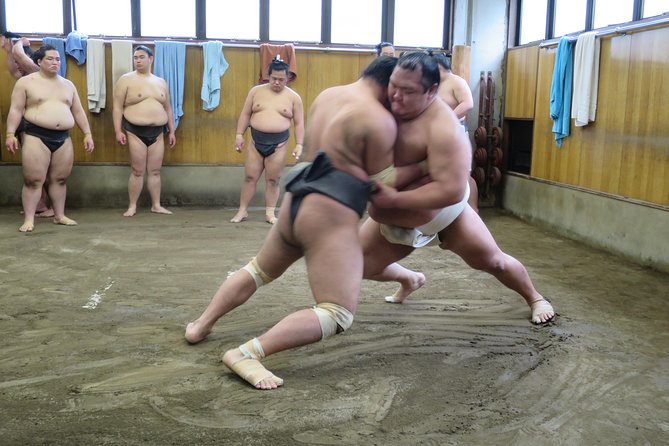
- Real morning training: Watch warmups, exercises, and practice bouts in an active sumo stable.
- Small group access: The tour accepts no more than seven people, though a large booking may be split.
- Floor seating: Most stables use tatami flooring rather than chairs, so sitting comfortably matters.
- Photos are not guaranteed: The stable controls photography and post-practice photos with wrestlers.
- Early and strict timing: Meet at 8:00 a.m. and arrive early. More than 15 minutes late means no entry, refund, or rescheduling.
- Ryogoku station warning: Use the JR Ryogoku Station East Exit, not the Ryogoku Oedo Line station.
Why a sumo stable is more revealing than a tournament seat
At a tournament, you see the public face of sumo: the arena, ceremonies, crowd noise, and short bouts. At a stable, you see the work behind it. Wrestlers repeat drills, test technique, and prepare their bodies under a strict routine. The experience can feel quiet and formal, but that quiet is part of the point.
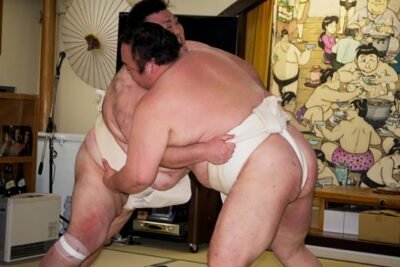
You are watching athletes train for themselves, not perform for an audience. That makes the visit feel unusually direct. You might see warmups and general exercises, followed by actual practice bouts. The intensity can be startling at such close range, especially when a bout ends with a heavy impact on the floor.
The session also gives you a look at the discipline around sumo. Guests must follow the stable’s rules, remain in permitted tatami areas, and avoid treating practice like a casual photo opportunity. Speaking may not be allowed during training. These limits can frustrate some people, but they protect the working nature of the visit.
For me, that tradeoff is worthwhile if you care about authenticity. If you mainly want a lively cultural performance with constant commentary, this may feel restrained.
More Tokyo sumo experiences:
- Tokyo: Sumo Show and Dining Experience
★ 4.8 · 2,742 reviews - the SUMO show
★ 5.0 · 1,960 reviews - Tokyo Shinjuku Sumo Show & Experience with Photo
★ 5.0 · 1,750 reviews
Meeting at JR Ryogoku Station at 8:00 a.m.
The meeting point is beneath the JR Ryogoku Station East Exit, near Re.Ra.Ku Ryogoku Ekimae. Look for a guide holding a red or orange MagicalTrip board. The station detail matters because Ryogoku has two stations, and the Oedo Line station is not the correct meeting point.
I would arrive early, not merely on time. The tour starts at 8:00 a.m., and the operator asks you to meet about 10 minutes before the start. If you are more than 15 minutes late, you cannot join, receive a refund, or reschedule. That rule is especially important here because entering a practice session late would disturb the wrestlers.
The guide gives an introduction before the walk. The quality of this briefing depends on the person leading your group. Guides named in past sessions include Mayu, Masao, Ayaka, Yumiko, Tommy, and Kate. Some have explained the rules, stable structure, wrestler life, and details to watch during practice. Other sessions have felt less organized, with too little background or an unclear plan after the training ended.
The walk to the stable takes about five to 30 minutes. The distance changes because the available stable can change from day to day. That uncertainty is normal, but wear comfortable shoes and keep the early start in mind.
Entering the stable and finding your place
Once you reach the stable, you enter with the guide and sit in the area allowed by the stable. All other areas are off-limits. You cannot wander around to inspect the building or move closer once practice begins.
Seating is usually on the floor over tatami. Chairs are generally not provided. You may sit there for around an hour and 20 minutes, or longer if practice runs late. One session extended to about two hours, and the listed duration of the tour is only an estimate.
This is the biggest physical issue to consider. If you have trouble sitting on the floor, plan carefully. The information provided does not promise chairs or alternative seating. You should also use the toilet before the tour, since you may not be allowed to leave during practice.
The stable is often visited by several tour groups. Seating is first come, first served, so arriving late can put you two or three rows behind the front. The small group limit helps, but it does not guarantee a front-row spot.
What you actually watch during practice
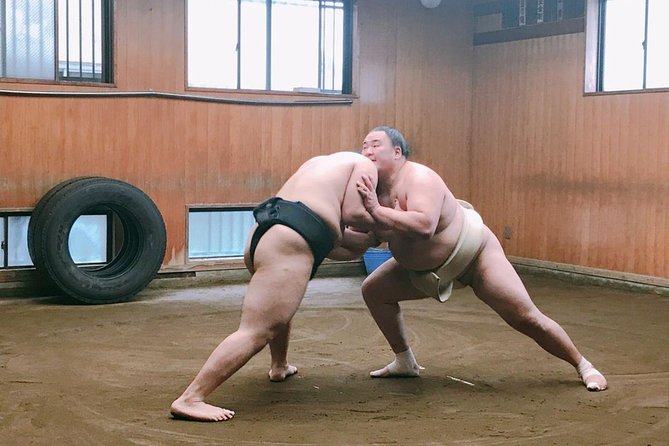
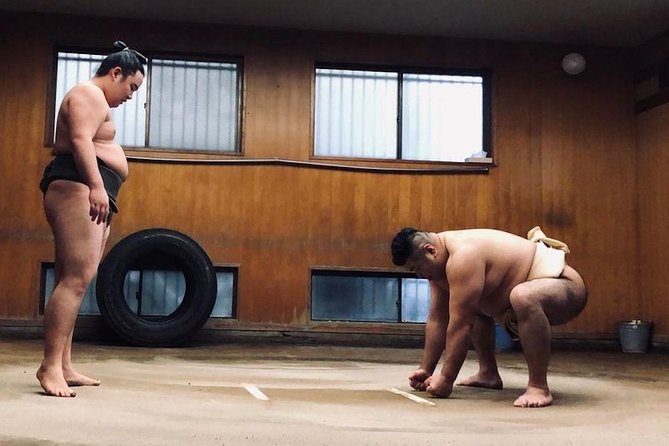
The practice can include warmups, stretching, exercises, and bouts between wrestlers. You may see wrestlers work on technique rather than simply collide at full force. The session can also include hard, sustained fighting that makes clear how demanding the sport is.
The setting lets you notice details that are easy to miss in a stadium. You can watch how wrestlers prepare, how they wait, how they respond to a bout, and how the stable maintains order. The close distance helps you understand the size and physical force of the athletes without any staging.
At the same time, this is not a lesson with a guaranteed script. The practice schedule belongs to the stable. Training can start before your group arrives, finish early, last longer than planned, or change because of the wrestlers’ condition or tournament schedule.
One important point: you may join practice partway through. Morning training begins early, so the scheduled visit does not necessarily cover the first exercise of the day. That can be disappointing if you expect to see a complete session from start to finish.
The audience must remain quiet. Some groups have been told to wear masks, sit in a specific way, or avoid photography during practice. Rules can vary by stable, and the stable has the final say. Follow the guide closely rather than assuming that a camera or phone is welcome.
More Tokyo photo shoots:
- Tokyo Cyberpunk Street Photo Tour
★ 5.0 · 165 reviews - Tokyo Shinjuku Night Photo Tour with Pro Gota
★ 5.0 · 142 reviews - Tokyo Sumo Morning Practice Tour w/ Ring-Side Seat + Photo Shoot
★ 5.0 · 93 reviews - Tour with Pro Tokyo Photographer and take Edgy Unique Portraits
★ 5.0 · 80 reviews
Photography and the possible wrestler photo
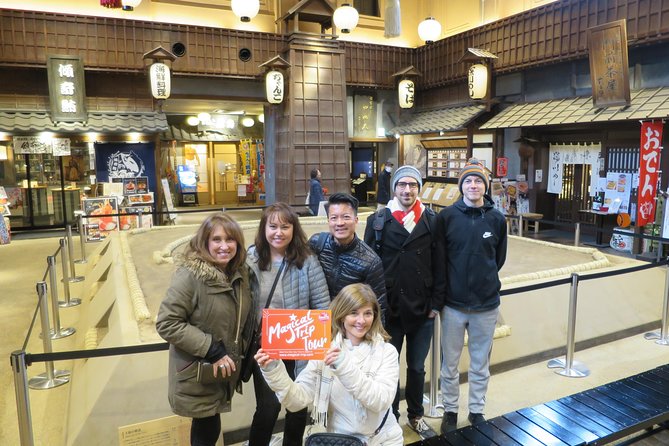
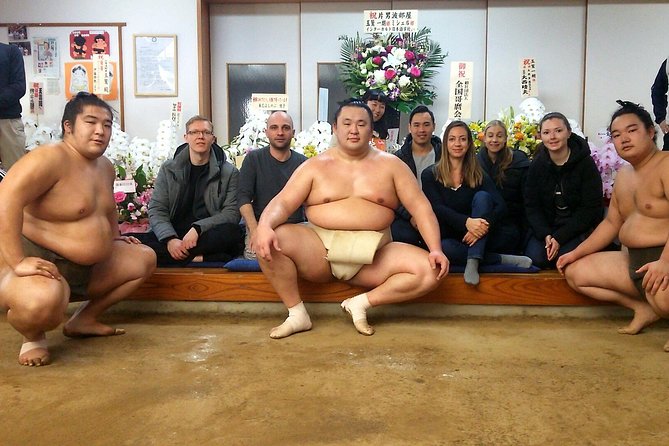
Tour photos are included in the advertised experience, but photography is not guaranteed. The stable decides if visitors may photograph the wrestlers during training and if posed photos with wrestlers are possible afterward.
This distinction matters. You may be close enough for memorable pictures, yet still be asked to keep your phone away during the practice. In some sessions, wrestlers have answered questions and posed with visitors after training. In others, photography has been limited or refused.
Think of the photo as a welcome extra, not the main reason to book. The reliable part is watching training. The photo opportunity depends on the stable’s rules, the wrestlers’ schedule, and the mood of the morning.
The guide can make or break the cultural side
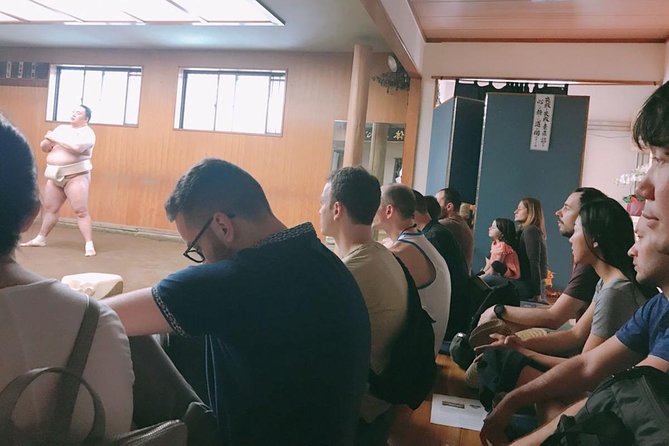
The strongest version of this tour includes a clear explanation before practice and useful notes during the session. A good guide can point out what you are seeing, explain sumo rules, describe how stables are ranked, and connect the training to the wrestlers’ daily life.
Some guides have written notes during practice so visitors could follow the action without speaking. That is a smart approach because it adds context while respecting the stable’s silence.
Names associated with well-received sessions include Mayu, Masao, Ayaka, and Yumiko. Masao has been praised for explaining sumo culture before the group entered the stable. Ayaka has given a helpful briefing on the walk. Yumiko has used extra notes to clarify what was happening. Tommy and Kate have also led sessions with clear introductions.
Still, the guide experience is not perfectly consistent. Some groups have received only a short introduction, with little explanation of the sport’s origins, hierarchy, or training system. If you want a detailed cultural lesson, ask questions before entering the stable, when conversation is easier.
Also listen carefully after practice. The transition can be confusing if the guide does not explain the next stop. The group may walk through Ryogoku before returning to the station, and you should stay with the guide until the tour clearly ends.
Ryogoku Kokugikan and the short walk through sumo town
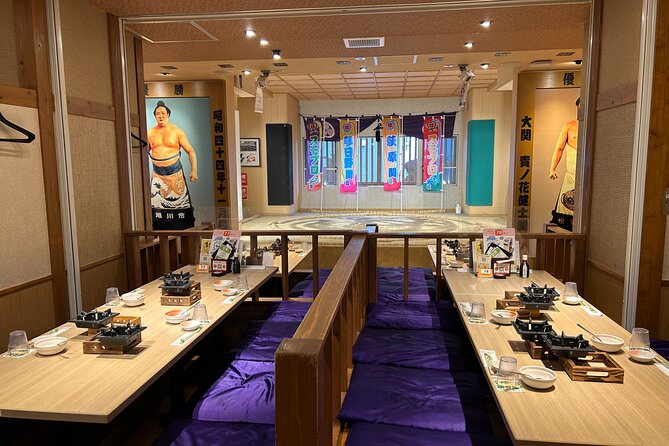
After the stable, the guide may take you through the Ryogoku area, including a short stop near Ryogoku Kokugikan. This portion lasts about 10 minutes and does not include an admission ticket.
Do not expect a full arena tour or a museum visit. The value is the setting. Ryogoku is Tokyo’s sumo district, and walking there helps place the stable within the wider culture of the sport. Depending on the guide, the walk may include local context or a nearby cultural stop such as Ekōin Temple.
The extra walk is brief, but it adds a useful sense of place. It also explains why the meeting point is in Ryogoku rather than at a random Tokyo station. The area is closely tied to sumo life, even when the main practice takes place behind an unmarked or private entrance.
Price, group size, and what the $98.16 covers
At $98.16 per person, this is not a cheap sightseeing stop. You are paying for access arranged through a local operator, a guide, and the chance to enter a stable that can be difficult to approach without local help. The price does not include lunch, a tournament ticket, or a long list of included attractions.
The value depends on what you want. For a sumo fan, close access to real training may justify the cost, especially when a tournament is not taking place. For someone who only wants a quick glimpse, the long quiet sitting period and uncertain photography may make the price feel high.
The group maximum of seven is a real advantage. A small group makes it easier to hear the guide before and after practice, and it reduces the feel of a large organized outing. However, the stable may host other groups, and front-row seating is not guaranteed.
There is no separate entrance fee for the morning practice to pay on the day. If the stable cancels practice because of a sudden schedule change or a wrestler’s condition, the booking is to be fully refunded. The operator may also ask you to change the date or time if the practice schedule changes.
Who should book this morning?
I would recommend this experience to you if you have a real interest in sumo, Japanese customs, or behind-the-scenes sports training. It suits people who can sit quietly, follow firm rules, and accept that the morning belongs to the stable rather than the tour company.
It is also a good option if you cannot attend one of Japan’s six official tournaments. You will not get the arena atmosphere, but you may see more of the daily work that makes tournament competition possible.
Solo visitors can fit in well because much of the session requires quiet attention. Couples and small groups should also find the format easy to manage. The age limit is firm: only people aged 12 and over may enter, and children under 12 will be refused without a refund.
I would hesitate to recommend it if you need flexible timing, dislike floor seating, or want a guaranteed photo with a wrestler. I would also think twice if your interest is casual and the $98.16 price would bother you if the practice is short or the guide’s explanation is brief.
Practical tips for a smoother morning
- Go to the JR Ryogoku Station East Exit, not the Oedo Line station.
- Arrive before 8:00 a.m. and allow time to find the red or orange guide board.
- Use the toilet before the group leaves the station.
- Wear clothes that allow comfortable floor sitting.
- Bring water and a hat during Tokyo’s hot, humid summer.
- Keep your phone and camera ready only if the stable permits photography.
- Do not speak, move around, or enter restricted areas during practice.
- Stay with the group after the stable, since the guide may lead a short Ryogoku walk before returning to the station.
- If you are delayed, contact the operator as soon as possible, but do not assume a late arrival can be accommodated.
Free cancellation is available up to 24 hours before the start time. Changes or cancellations inside that window are not refunded, and poor weather may lead to another date or a full refund. The stable can also cancel at short notice for its own schedule or the wrestlers’ condition.
Should you book this sumo morning practice?
Book it if you want authentic training rather than a staged demonstration. The close view, small group, and chance to see serious practice make this one of Tokyo’s more unusual sports experiences.
Go in with the right expectations. The guide may be excellent, but the level of explanation can vary. Photos may be allowed, or they may not. You may sit on the floor for a long time, arrive after training has already started, or watch a session that runs well past the planned finish.
For a committed sumo fan, those limits are part of the bargain. For a casual sightseer, they are reasons to think carefully before paying $98.16. If you can respect the stable’s rules and value access over comfort, this is a worthwhile way to see the human work behind Japan’s national sport.
FAQ
Where does the tour meet?
Meet at Re.Ra.Ku Ryogoku Ekimae beneath the JR Ryogoku Station East Exit in Sumida City, Tokyo. Do not go to the Ryogoku Oedo Line station.
What time does the tour start?
The tour starts at 8:00 a.m. You should arrive early because the group cannot wait for late arrivals.
How long does the experience last?
The listed duration is about two hours. The stable practice itself is scheduled for around 90 minutes, but training can run longer and cause the tour to finish late.
Can children join the tour?
Only people aged 12 and over can enter the sumo morning practice. Children under 12 cannot join and will be denied entry without a refund.
Will I be able to take photos with the wrestlers?
Possibly, but photos are not guaranteed. The sumo stable decides if photography during practice and posed photos with wrestlers are allowed.
Do I need to pay an entrance fee at the stable?
No separate sumo morning practice entrance fee is required from you on the day.
What happens if the stable cancels the practice?
The stable may cancel or change the schedule because of tournament plans, wrestler condition, or another last-minute issue. If the booking is canceled for that reason, you will be offered a full refund.
More early morning tours in Tokyo
- Tokyo: Sumo Morning Practice Viewing Tour
★ 4.8 · 570 reviews - Tokyo: Sumo Morning Training Visit
★ 4.4 · 370 reviews - Tokyo: Sumo Morning Practice Tour at Sumida City
★ 4.8 · 308 reviews - Tokyo Sumo Morning Practice Tour at Stable
★ 5.0 · 298 reviews
Newly reviewed around Tokyo
- Tokyo Asakusa:Calligraphy & Make T-shirt Activity★ 5.0 · 62 reviews
- Intercity Shuttle, Tokyo to Haneda /Narita /Yokohama /Makuhari★ 5.0 · 5 reviews
- 1 Hour Travel around Tokyo with a Professional Photographer★ 5.0 · 3 reviews
- Travel Tokyo with Your Own Personal Photographer★ 5.0 · 43 reviews
- Train in Samurai Swordsmanship and Defeat the Demon in Tokyo★ 5.0 · 5 reviews
- Shuttle Van 6hr Tokyo Tour to-and-from Tokyo, Yokohama and Narita★ 5.0 · 9 reviews
- Kickboxing & Body Training with EX-Pro Fighter★ 5.0 · 4 reviews
- Traditional Japanese Knife Sharpening Class★ 5.0 · 18 reviews
Tokyo Sumo Experiences, compared.
Tokyo Shinjuku Sumo Show & Experience with Photo
Read our review →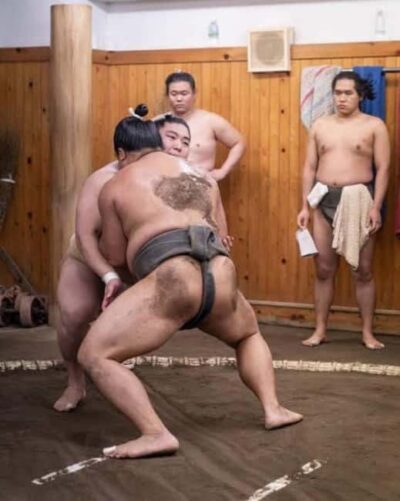

Luxury Sumo Show Experience & Japanese cuisine & Drink
Read our review →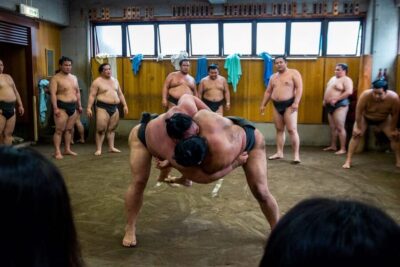
Tokyo Sumo Experience: Chanko & Mochi with a Former Pro
Read our review →
Ultimate Sumo Tournament: Tokyo, Osaka, Nagoya, Fukuoka
Read our review →Browse the lists this tour appears in