
Reviewed · TOKYO SUMO EXPERIENCES
Tokyo: Sumo Morning Training Visit
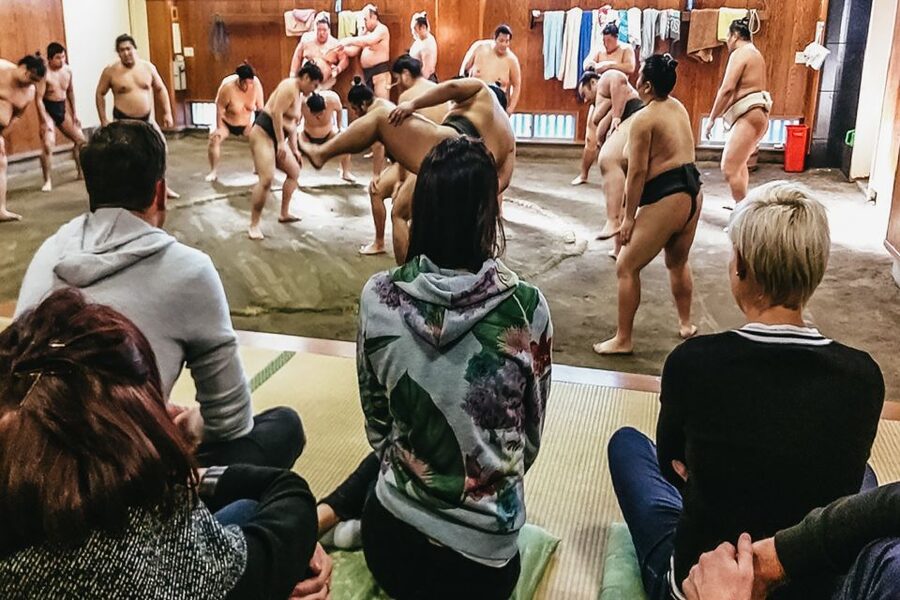
The most memorable part of this Tokyo experience is the sound and force of professional sumo training at close range. You sit inside a real sumo stable, not in a theater, and watch wrestlers repeat the drills, stretches, pushes, and bouts that build their strength and balance. When the session ends, you can join a group photo with the wrestlers.
I like the authentic setting and the chance to see how much technique sits beneath sumo’s huge physiques. I also like the price: at $77, it costs far less than a tournament ticket and gives you a close look at training. The main drawback is the strict etiquette. You may sit on the floor for an hour or more, often without talking, eating, drinking, or shifting around much, and the English guidance can be limited.
Key points to know before you book
- You watch real morning keiko: This is a working training session, not a staged sumo show.
- The stable location arrives late: Your meeting place and time are normally sent by email about three days before the visit.
- Training may last 30 minutes or two hours: Sessions are shorter during Tokyo tournament months, while ordinary practice can run well past the advertised hour.
- Seating is on the floor: Ask in advance about a chair if you have knee, hip, or mobility problems.
- Quiet behavior matters: Keep your phone silent, avoid flash photography, and do not talk loudly.
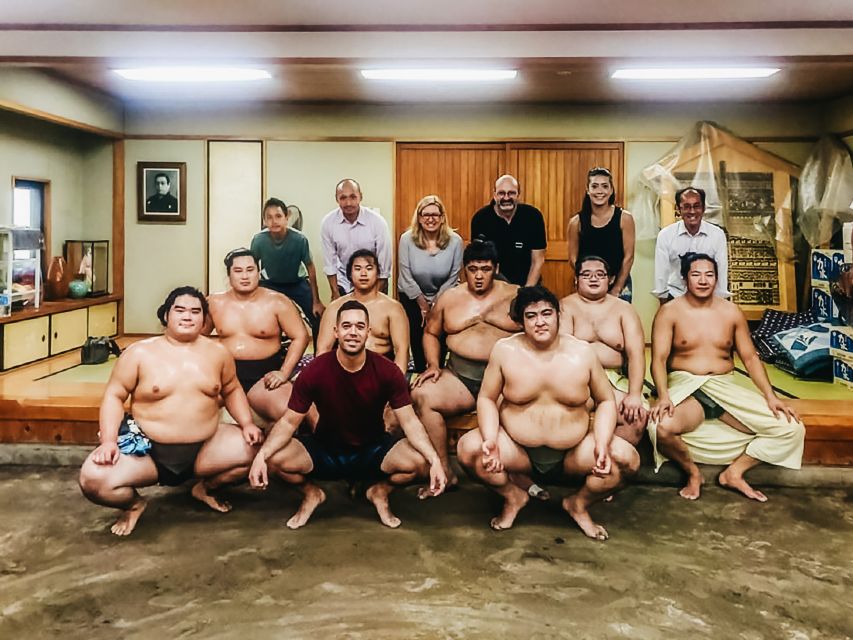
- The group photo is part of the value: You can pose with the wrestlers after training, but leaving early means giving up the photo.
What you are really seeing inside a sumo stable
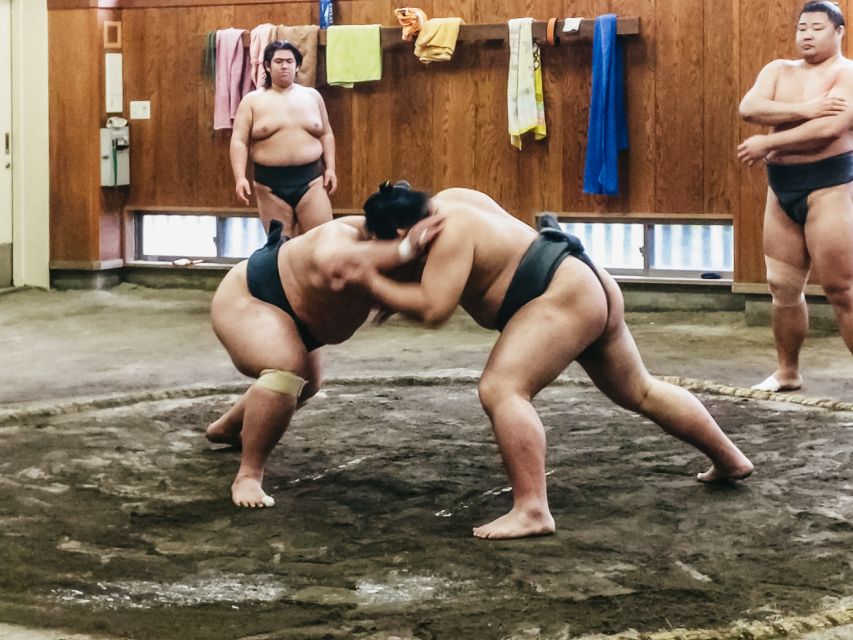
A sumo stable is the wrestlers’ training home and workplace. This visit gives you a close view of keiko, the daily practice that spectators rarely see during a tournament. You are not watching a polished performance with an announcer explaining each movement. You are watching athletes repeat hard, disciplined exercises in a traditional setting.
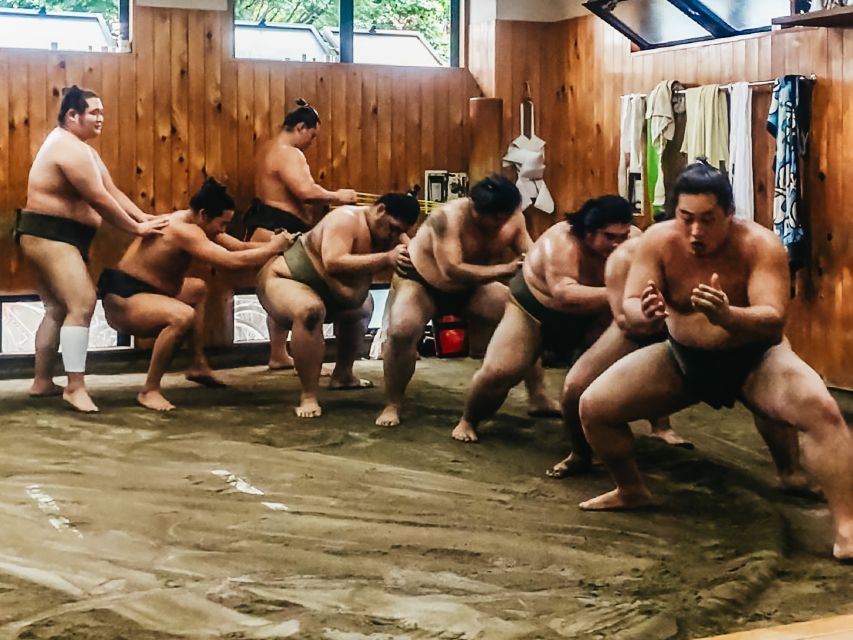
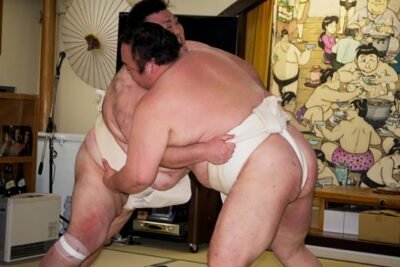
The session can include warm-ups, stretching, footwork, pushing drills, and practice bouts. At times, the wrestlers work with surprising speed. You may hear the heavy slap of bodies meeting the clay and see sweat flying during the harder drills. The size of the wrestlers is striking, but so are their balance, timing, and control.
That difference matters. A tournament shows the finished contest. This visit shows the preparation behind it. You get a better sense of how much repetition and physical strain are required before a wrestler steps into the ring for an official match.
The training itself is not guaranteed to follow one fixed pattern. The wrestlers’ condition can affect the schedule, and some sessions may feel more intense than others. One morning may include sparring, while another may focus more on warm-ups and pushing exercises. You should book this because you want to see authentic practice, not because you expect a particular bout.
More Tokyo sumo experiences:
- Tokyo: Sumo Show and Dining Experience
★ 4.8 · 2,742 reviews - the SUMO show
★ 5.0 · 1,960 reviews - Tokyo Shinjuku Sumo Show & Experience with Photo
★ 5.0 · 1,750 reviews
Getting the meeting details right
The meeting point is not fixed in advance. The actual sumo stable is selected for the date of your visit, and you normally receive the location and meeting time by email about three days before the experience. The stable will be somewhere in Tokyo, but you cannot request a specific stable.
This is the most important practical detail. The automatic voucher and account page may show sample information, so do not rely on the map displayed there. Check the separate confirmation email and the sumo stable named on the voucher. Several people have had trouble because the first address they saw was not the final meeting location.
The guide or greeter will meet you at the stated place and lead you inside. You may not enter the stable alone. Check-in begins at the meeting time, so arriving early does not mean you can ring the bell or go inside. Wait nearby until the host is ready to receive the group.
If you have trouble finding the location, use the phone number in the confirmation email. Immediate help has been available in at least one early-morning mix-up, but it is still wise to allow extra time for walking from the station. Missing the start can mean missing part of the training, and the meeting point may be in a less familiar residential area.
The first moments inside the stable
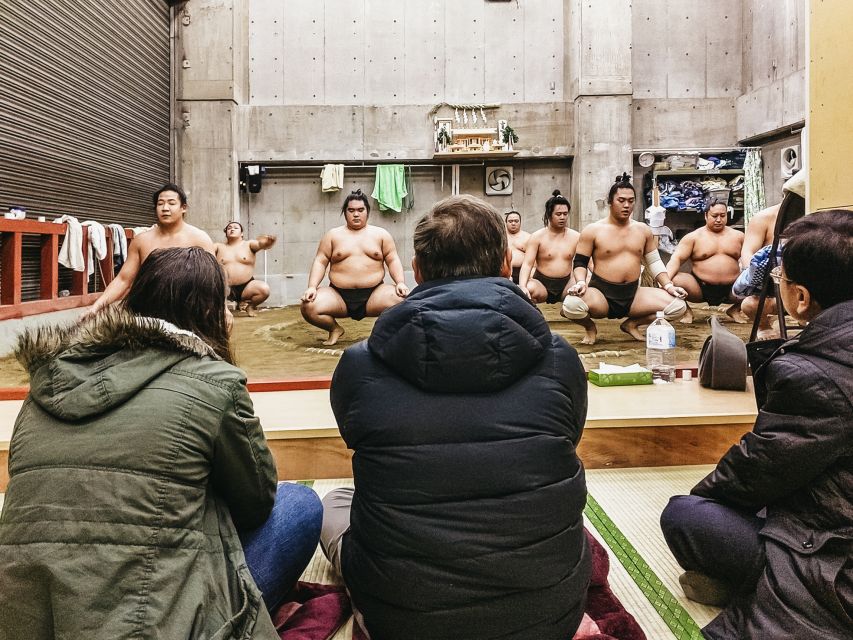
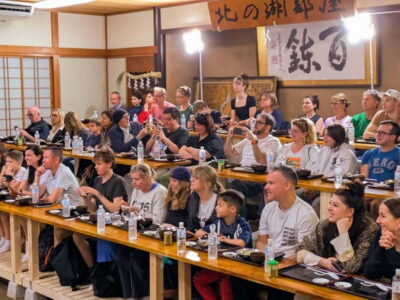
Once inside, you will be shown where to sit around the practice area. Seating is generally free rather than assigned, so arriving on time or a little early is useful. A place toward the front gives you a clearer view, while a back row can leave your sightline blocked by people in front.
The setting is compact. Depending on the stable and the day, the group may be seated along one or two sides of the practice area. This closeness is one of the experience’s strongest points, but it also means the visit can feel crowded. You are not wandering around or choosing different viewing spots once training begins.
Before practice starts, you may receive rules about behavior. Do not expect a long cultural talk. The English-speaking host or greeter may mainly check names, explain where to sit, and manage entry. Some people have found the English communication limited, and explanations of sumo rituals, hand gestures, training methods, nutrition, and the wrestlers’ career path are not a dependable part of the visit.
For that reason, I recommend reading a little about sumo before you go. Even a basic understanding of the dohyo, the ring, and the difference between a warm-up drill and a practice bout will make the session easier to follow. The lack of commentary is not necessarily a flaw. It helps keep the stable functioning as a serious workplace, but it does make the visit less educational than a fully guided museum tour.
Watching warm-ups, pushing drills, and sparring
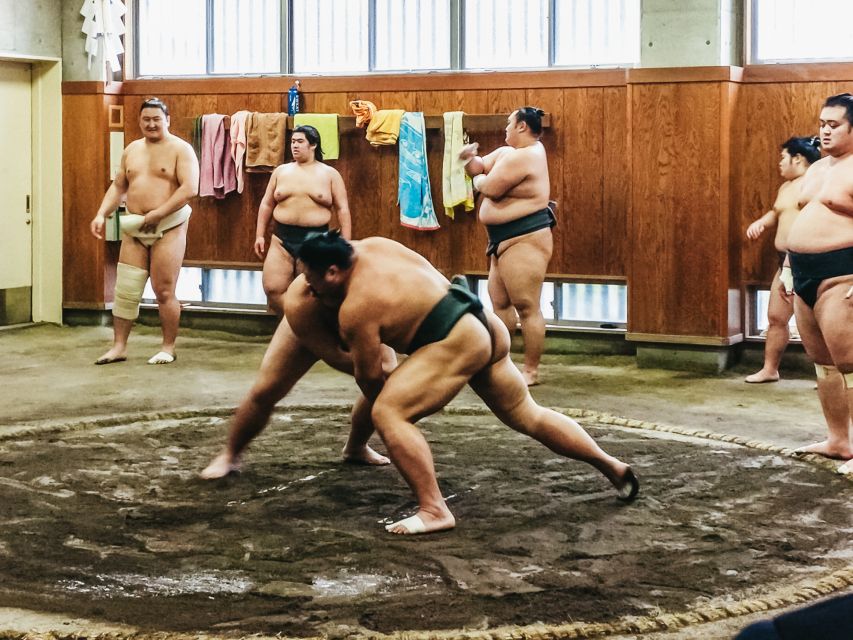
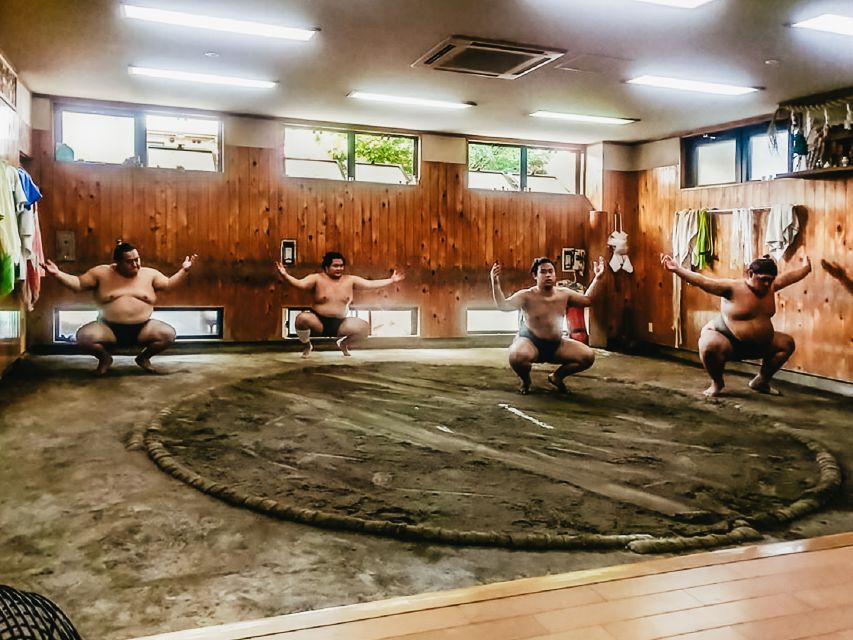
The opening exercises may look simple, but they show the habits that support sumo technique. Repeated footwork, stretching, balance work, and body conditioning are all part of a wrestler’s preparation. Watching these movements at close range makes it easier to see that sumo is not simply about size.
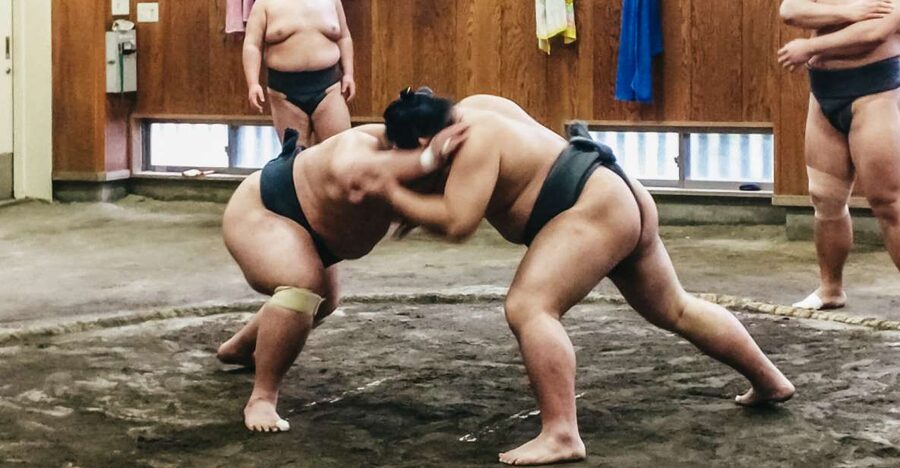
The most exciting moments usually come when two wrestlers work against each other. You might see them practice pushing across the clay, test their balance, or engage in sparring. The impact is loud and physical, yet the movements can also be controlled and precise. Several sessions have included serious warm-ups and sparring, while others have been more restrained.
Do not expect every wrestler to fight a full contest. This is training, and the stable decides what the wrestlers need to practice that morning. One session may offer several intense exchanges. Another may consist mainly of conditioning and technique work. That uncertainty is part of the honest nature of the experience.
I especially like that you can observe the wrestlers’ body language. You see concentration before an exchange, the sudden burst of power, and the way a wrestler resets after a drill. From a distance in a tournament arena, those small details disappear. Here, they become the point of the visit.
The training may last about 60 minutes under normal conditions, but you should leave room for more. Some sessions run 90 minutes or two hours. During the Tokyo Grand Sumo Tournaments in January, May, and September, practice is usually reduced to about 30 minutes because the wrestlers are preparing for competition. The price does not change for the shorter session, so book during a tournament month only if close-up access matters more to you than seeing a longer practice.
More early morning tours in Tokyo:
- Tokyo: Sumo Morning Practice Viewing Tour
★ 4.8 · 570 reviews - Tokyo: Sumo Morning Practice Tour at Sumida City
★ 4.8 · 308 reviews - Tokyo Sumo Morning Practice Tour at Stable
★ 5.0 · 298 reviews - Tokyo Ryogoku Sumo Morning Practice + Photo Shoot with Wrestlers
★ 4.5 · 277 reviews
Why the silence and seating rules matter
A sumo stable is not a tourist attraction in the usual sense. The wrestlers are trying to train, and your behavior affects the room. Keep your phone on silent, avoid loud conversation, and do not eat or drink inside. Smoking indoors is not allowed.
Flash photography is forbidden. Video recording requires permission, so do not assume you can film the drills or bouts. A camera or phone without flash is more suitable, but follow the host’s instructions if photography is restricted at a particular moment.
You are expected to sit quietly and remain in place. The floor seating can become uncomfortable, especially if you are not used to sitting with your legs folded or positioned away from the practice area. Do not point your feet toward the training space, lean against walls, or move around casually.
This is where the experience becomes less suitable for some people. A few visitors have found the stillness harder than expected, especially when practice continued for two hours. If you have knee or hip trouble, request a chair in advance. Seating support is not something you should count on arranging at the door.
You can leave before the training ends, but you will not receive the group photo. That rule gives you a clear choice: stay for the full visit and photo, or leave if the floor seating becomes too painful.
The group photo with the wrestlers
After training, the wrestlers generally pose for a group picture. This is a simple but meaningful finish. You have just watched them work at close range, and the photo gives you a tangible memory of the visit.
The photo is taken as a group rather than as a private session with each wrestler. Keep your expectations modest, since the wrestlers have finished training and the process needs to move along for everyone. The chance to stand near them is still unusual. At a tournament, you would normally see them from much farther away.
Families may find this part especially appealing. A young child can lose interest during a long silent session, but the wrestlers and photo can make the morning feel personal. Still, the activity is best for children who can remain quiet and seated. There is no opportunity to roam around during practice.
Is $77 a fair price?
At $77 per person, this is not the cheapest short activity in Tokyo. You are paying for access to a working sumo stable, advance coordination, a host or greeter, and the group photo. The visit lasts one hour on paper, but the actual training may be shorter during tournament months or much longer at other times.
I think the price is fair if your priority is close access to real sumo training. A tournament ticket gives you the spectacle of official matches, but it may cost more and places you in the arena seats. This experience offers a smaller setting and a look at preparation rather than competition.
The value is weaker if you expect a polished tour with continuous English explanation. The English host may not provide much background, and some sessions feel lightly managed once you are seated. You are paying for entry to the stable and the access itself, not for a lecture on sumo.
If a Tokyo tournament is taking place in January, May, or September, compare this activity with the cost and availability of an actual tournament ticket. Choose the stable visit if you want to watch athletes up close and can accept a session of warm-ups or limited practice. Choose the tournament if you want formal matches, crowd energy, and the full competition format.
Optional hotel transfer and early-morning planning
A one-way hotel transfer can be arranged for an additional cost. Pickup must be within Tokyo’s 23 wards, and the maximum is four passengers. The driver speaks Japanese rather than English, so have your hotel name and pickup details ready.
Hotels without a front desk are not accepted for pickup. You must send the hotel name, check-in date, and booking name by email after reserving, along with a Japanese mobile number that can be used the day before the visit. The pickup time is sent by email at least one day ahead.
If you are not using the transfer, plan your route only after receiving the final stable address. Do not build a tight morning schedule around the activity. The meeting point can change by date, and the practice may run beyond the stated hour.
Wear comfortable clothing for floor seating. Bring a face mask or protective covering, as this is listed among the required items. Leave hats, sunglasses, food, drinks, luggage, and large bags behind. The stable is not the place to arrive with a full suitcase or a large daypack.
Who will enjoy this most
I would choose this for someone who wants a cultural experience that feels less polished and more direct. It suits people who are curious about discipline, ritual, athletic technique, and the daily work behind a national sport.
It is also a good choice if you have already seen sumo on television or at a tournament and want a closer view. The physical impact is easier to appreciate from the stable, and you can see how much work takes place before an official bout.
You should think twice if you need frequent movement, comfortable chairs, a restroom break, or detailed commentary. The stable’s rules are firm, and the visit rewards patience. People with knee problems should request seating support before the day of the activity, not after arriving.
The experience can work for families, but only if children can stay quiet and still. Teenagers and older children who enjoy sports may find the training fascinating. Very young children may struggle with the long silent period, even though the final photo can be a highlight.
Should you book the Tokyo sumo morning visit?
Book it if you want authentic access rather than a staged show. The strongest part is the view of professional wrestlers training close by, with the sound, sweat, balance, and force that television cannot fully convey. The group photo is a worthwhile finish, and $77 is reasonable beside the cost of a tournament outing.
Go in with the right expectations. The location arrives close to the date, the host may offer little explanation, the seating is on the floor, and the session length can change. Arrive on time, sit quietly, keep your phone silent, and treat the stable as a working place.
For a visitor who values direct cultural contact and can manage the etiquette, this is one of Tokyo’s more unusual morning activities. For someone seeking easy comfort and a fully narrated tour, a sumo museum or tournament performance may be a better fit.
FAQ
Where does the sumo morning training visit meet?
The meeting place is decided about three days before your scheduled date. You will receive the actual location and directions by email, and all participating sumo stables are in Tokyo.
Can I choose a specific sumo stable?
No. Specific stable requests cannot be accommodated. The stable depends on the day of your visit.
How long does the training last?
The normal training session lasts about 60 minutes, but some sessions run 90 minutes or up to two hours. During Tokyo Grand Sumo Tournament months in January, May, and September, training usually lasts about 30 minutes.
Will a guide explain the sumo rituals and training?
An English-speaking host or greeter is provided, but detailed explanations are not guaranteed. The host may mainly check your name, explain the rules, and guide you into the stable.
Can I take photographs or record video?
Flash photography is forbidden. Video recording is allowed only with prior permission, so ask before filming. Follow all instructions given inside the stable.
What should I bring and what cannot I bring inside?
Bring a face mask or protective covering. Hats, sunglasses, food, drinks, luggage, and large bags are not allowed, and smoking indoors is prohibited.
Can I leave before training finishes?
Yes, you may leave early, but you will not receive the group photo. Entering the stable is only permitted with the guide or host.
Newly reviewed around Tokyo
- Tokyo Asakusa:Calligraphy & Make T-shirt Activity★ 5.0 · 62 reviews
- Intercity Shuttle, Tokyo to Haneda /Narita /Yokohama /Makuhari★ 5.0 · 5 reviews
- 1 Hour Travel around Tokyo with a Professional Photographer★ 5.0 · 3 reviews
- Travel Tokyo with Your Own Personal Photographer★ 5.0 · 43 reviews
- Train in Samurai Swordsmanship and Defeat the Demon in Tokyo★ 5.0 · 5 reviews
- Shuttle Van 6hr Tokyo Tour to-and-from Tokyo, Yokohama and Narita★ 5.0 · 9 reviews
- Kickboxing & Body Training with EX-Pro Fighter★ 5.0 · 4 reviews
- Traditional Japanese Knife Sharpening Class★ 5.0 · 18 reviews
Tokyo Sumo Experiences, compared.
Tokyo Shinjuku Sumo Show & Experience with Photo
Read our review →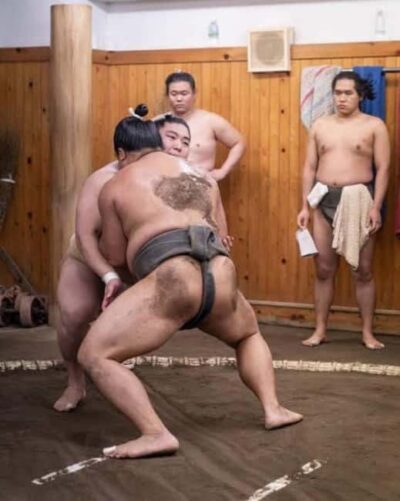

Luxury Sumo Show Experience & Japanese cuisine & Drink
Read our review →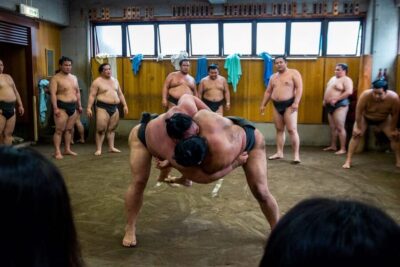
Tokyo Sumo Experience: Chanko & Mochi with a Former Pro
Read our review →
Ultimate Sumo Tournament: Tokyo, Osaka, Nagoya, Fukuoka
Read our review →Browse the lists this tour appears in