
Reviewed · TOKYO SUMO EXPERIENCES
Tokyo Sumo Morning Practice Tour at Stable
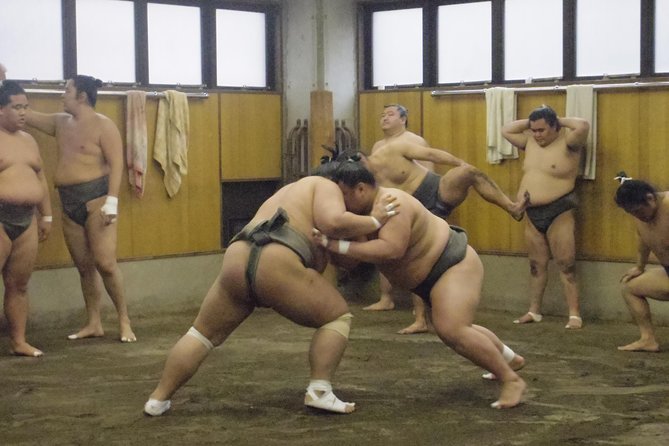
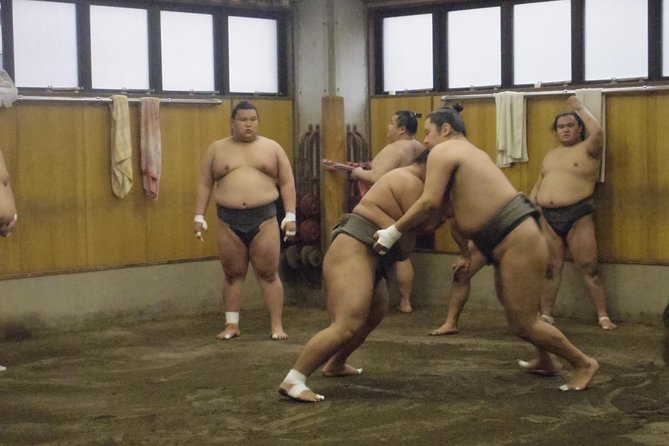
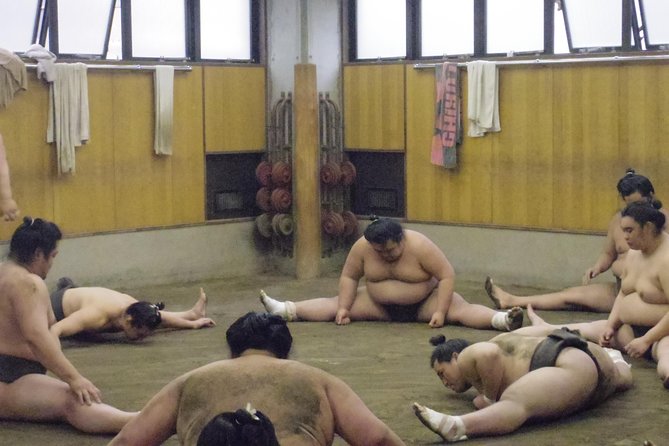
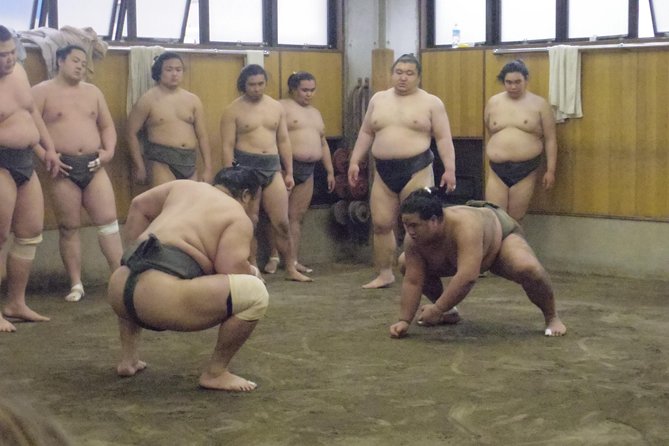
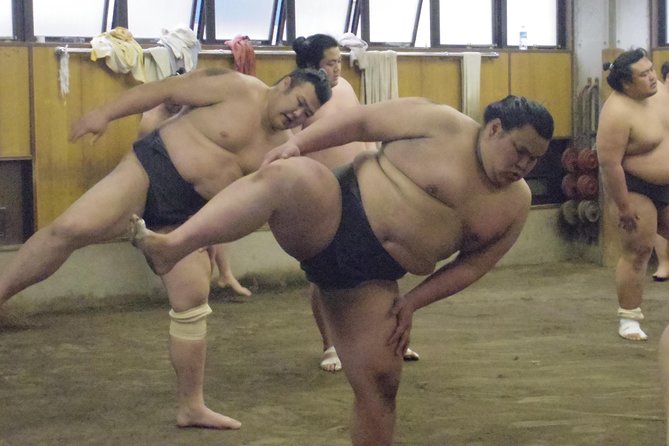
You are not watching a staged sumo show here. You sit close to a working stable and watch wrestlers repeat drills, stretch, collide, and spar as they prepare for competition. The setting is plain, serious, and wonderfully direct. The training is the main event, not a performance built for tourists.
I like two things in particular. First, you see far more action than at a formal tournament, where ceremony and scheduled bouts take up much of the day. Second, the guides, including Seiji, Yumi, Noriko, Nobu, and Cameo, have helped visitors understand the rituals, rankings, and daily discipline behind the sport. The early start and quiet rules are the price of admission.
The main drawback is that the experience depends on the day’s practice and your seat. Commentary through headsets has been useful for many people, but some have found the sound weak or distracting. This is observation, not participation, and you must remain silent, seated, and respectful.
Key points to know before you book
- Watch a real morning practice: See professional wrestlers train inside an active sumo stable in Ryogoku.
- Expect a 7:45am start: You meet near Ryogoku Station, then may travel by train to the stable.
- Learn while you watch: Guides explain Shinto links, rankings, training, and Japan’s six annual Grand Tournaments.
- Stay close to the action: Seating is on stools or mats, depending on the stable, with front places sometimes reserved for sponsors.
- Follow strict stable etiquette: No video, flash, shutter sounds, food, hats, or sunglasses. Cellphones must be silent.
- Plan for heat and limited movement: Tokyo summer can be hot inside the stable, and you cannot leave and re-enter.
Why this sumo practice feels different from a tournament
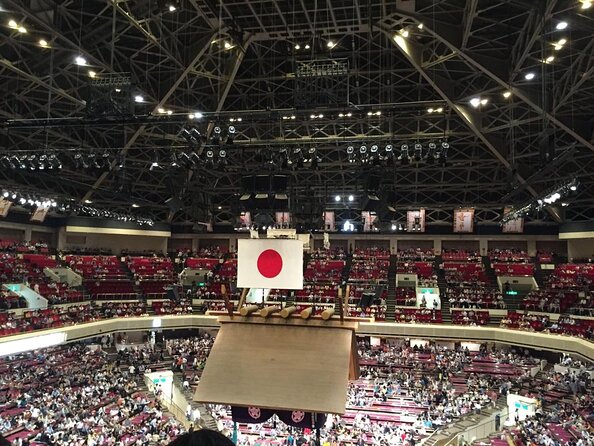
A sumo tournament is polished, public, and full of ceremony. This morning visit shows you the work behind it. You watch wrestlers prepare for the bouts that the public sees later, often repeating one exchange after another with little pause.
That difference matters. At a tournament, you see the final product: the entrance rituals, the ranked bouts, the referees, the banners, and the crowd. At practice, you see the strain. Wrestlers stretch, stamp, push, grapple, and work through mistakes. The rhythm can feel repetitive, but that repetition is the point.
I find this kind of setting more revealing than a staged cultural show. There is no drumbeat added for effect and no theatrical explanation built into the room. The wrestlers are working. Your job is to watch without interrupting.
The atmosphere also gives you a better sense of sumo as a way of life, not just a contest between two large athletes. The stable is a training home and a place where strict customs still matter. Your guide helps make sense of what you are seeing without turning the practice into a lecture.
More Tokyo sumo experiences:
- Tokyo: Sumo Show and Dining Experience
★ 4.8 · 2,742 reviews - the SUMO show
★ 5.0 · 1,960 reviews - Tokyo Shinjuku Sumo Show & Experience with Photo
★ 5.0 · 1,750 reviews
Meeting near Ryogoku Station at 7:45am
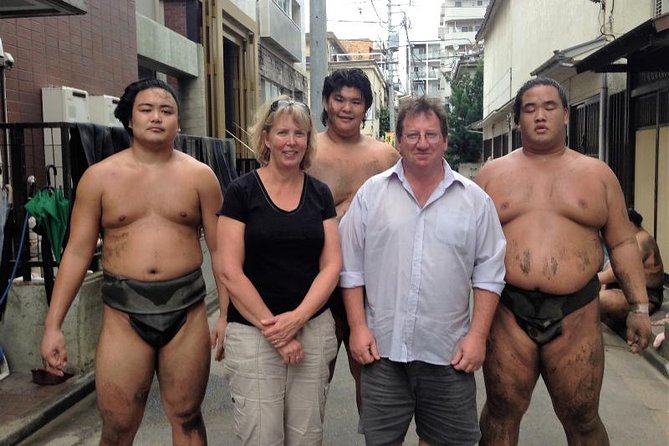
The morning begins at or near Ryogoku Station Gallery, with the exact meeting point depending on the option you book. Check the confirmation email carefully. One person had trouble finding the representative at the station and went directly to the stable, while another found Google Maps slightly off by a block. I would arrive early, keep the stable details handy, and avoid relying on a last-second map search.
Ryogoku is Tokyo’s sumo district, so the location already gives you useful context. After meeting the guide, you may take a train to the stable. The walk and transfer are part of the practical setup, not a sightseeing tour, so wear shoes and clothing that make an early morning start easy.
Use the restroom before meeting the group. This is not a small point. Once you enter the stable, leaving during practice is discouraged, and you cannot re-enter after you leave.
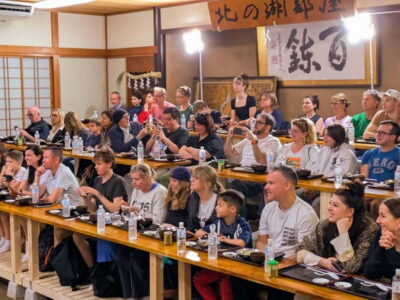
The group can include up to 20 people. That is small enough for a guide to explain what is happening, but it is not a private visit. Your view may depend on where you sit, so arriving promptly matters. Some seating is on stools, while other arrangements may use mats. Front places can be held for sponsors or other special visitors, with general seating behind them.
Entering a working stable
The stable is not arranged like a theater. You will not be stepping into the ring or walking around the training floor. The ring and sandy area are sacred to the wrestlers, and visitors must stay off them.
This is where the tour’s rules make sense. You are asked to watch silently, avoid stretching your legs toward the ring, and never show the soles of your feet toward the wrestlers. Do not call to an athlete, ask for a photograph during practice, or do anything that might break concentration.
Cellphones must be silent. Photos may be allowed without flash or shutter sounds, but video is not allowed. Any photographs you take are for personal use only, since unauthorized use can violate image and privacy rights.
These restrictions may feel formal if you are used to casual sports events. I think they improve the visit. The wrestlers are not stopping their work to entertain you, and the quiet lets you hear the movement, impact, and breathing in the room.
Watching the wrestlers train for about 90 minutes
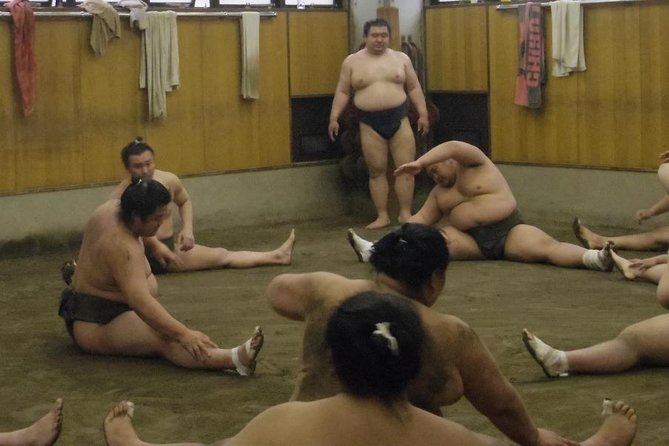
The central practice lasts about an hour and a half, though the exact length can change with the day’s training. That uncertainty is worth understanding before you book. You are not buying a timed stage show with a guaranteed sequence of bouts.
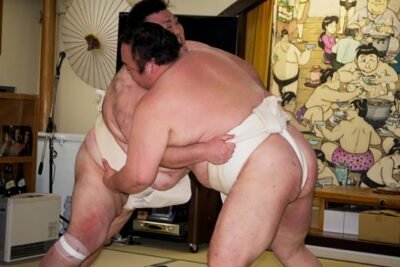
Some mornings may include intense sparring between seasoned wrestlers. Other sessions may place more attention on drills, stretching, or repeated technical work. You might see dozens of exchanges, but the exact amount depends on the stable’s schedule and the content of the practice.
From close range, the physical force is hard to miss. Sumo wrestlers are imposing, but the training also shows control, balance, timing, and stamina. The appeal is not simply watching large men collide. It is seeing how much preparation sits behind a brief match in the tournament ring.
Your guide may use an audio system or headsets to explain the action. This can help you understand what would otherwise look like a series of similar pushes and throws. Guides have explained stable life, rankings, ritual, and the tournament calendar, and some have offered a question period after practice.
There is a tradeoff. Listening and watching at the same time is not easy for everyone. Some people have found the headsets hard to hear because of static, while others felt the commentary interrupted their concentration. If you prefer uninterrupted observation, you may want to focus on the practice and treat the commentary as background. If you know little about sumo, the explanations can make the session much easier to follow.
More early morning tours in Tokyo:
- Tokyo: Sumo Morning Practice Viewing Tour
★ 4.8 · 570 reviews - Tokyo: Sumo Morning Training Visit
★ 4.4 · 370 reviews - Tokyo: Sumo Morning Practice Tour at Sumida City
★ 4.8 · 308 reviews - Tokyo Ryogoku Sumo Morning Practice + Photo Shoot with Wrestlers
★ 4.5 · 277 reviews
The sumo calendar and Shinto traditions
Before you sit down, the guide explains where sumo comes from and how it fits Japanese culture. The sport has ties to Shinto traditions and origins reaching back at least 1,500 years, while its modern development as a major spectator sport has continued over many centuries.
You also learn about Japan’s six annual Grand Tournaments. Each lasts 15 days. Three take place in Tokyo, with one each in Osaka, Nagoya, and Fukuoka.
That information gives the practice some useful shape. You begin to understand that the men training in front of you are part of a ranking system and a demanding competition cycle. A morning stable visit will not teach every rule, but it can help you recognize the difference between ordinary drills, practice bouts, and the larger goal of tournament performance.
One fair criticism is that the rules may not be explained in enough detail for every first-time viewer. If you want a full lesson on scoring, rankings, and match procedure, ask your guide questions when the practice ends. The amount of time for questions can vary, so save your most important ones.
What happens after practice
At the end, your guide takes you back toward the station and the tour finishes near the original departure area. The stable may offer a brief chance for photographs with wrestlers after practice, but you should not treat this as guaranteed or expect a long meet-and-greet.
The photo period can be short, sometimes only a few minutes. Have your phone ready before it begins, but keep it away during training unless photography is permitted under the stable’s rules. Never pressure a wrestler for a photograph while practice is still under way.
This quick ending is part of the stable’s working schedule. You are visiting a place where the athletes need to continue with their day, so the guide may move the group out promptly. I would view a photograph as a welcome extra, not the reason to book.
Is $83.57 a fair price?
At $83.57 per person, this is not a cheap morning activity. You are paying for access to a working stable, a guide, organization around a difficult-to-arrange visit, and interpretation that helps you understand what you are seeing.
The value is strongest if you care about authentic access and want to watch real training up close. The price is harder to justify if you mainly want a quick photo with a wrestler or a simple introduction to the rules. A short stage show may feel more efficient, but it will not offer the same view of ordinary training.
I also think the comparison with a tournament can be misleading. A tournament gives you the drama of official competition, but the best seats can cost more and the action is broken up by ceremony and waiting. At practice, you may see repeated bouts in a compact period, which can make the $83.57 feel reasonable for a serious sumo fan.
The tour has a 4.8 rating from 298 reviews, with 96 percent recommending it. Those numbers are encouraging, but they do not remove the practical limits. Seating, audio quality, practice length, and the amount of post-practice interaction can shape your experience.
Heat, clothing, and stable etiquette
Tokyo summer deserves special attention. The stable has no air conditioning, and the room can become very hot. During summer, water and sports drinks are allowed inside, even though eating and drinking are normally prohibited. Bring water as permitted and consider an ice pack or cold towel.
You cannot wear sunglasses or hats inside. Dress for sitting quietly in a warm room, and avoid anything that makes it hard to remain still. If you are feeling unwell, do not join the tour. The group needs to protect both visitors and wrestlers from illness and disruption.
The stable is a place for concentration. Do not talk during practice, use flash, make shutter sounds, film, step onto the sandy area, or leave halfway through unless necessary. Once you exit, re-entry is not possible.
Children must be at least 12 years old. Younger children cannot enter the stable, so families with children 11 and under need another Tokyo activity.
Who will get the most from this morning
I would recommend this experience to anyone who wants to understand sumo beyond the souvenir-shop version. It suits first-time Tokyo visitors, sports fans, photographers who can follow strict rules, and people interested in Shinto customs and Japanese traditions.
It is especially good for you if you enjoy watching process rather than spectacle. You may leave with a stronger respect for the wrestlers because you have seen the repetition and effort behind their public performances.
I would be more cautious if you need a flexible morning, dislike sitting quietly, or want a guaranteed number of matches. It may also disappoint you if you expect a long question-and-answer session or a polished show with constant narration.
The guide makes a real difference. Names reported for this experience include Seiji, Yumi, Noriko, Nobu, and Cameo. Their role is not to perform but to explain and manage the visit. A clear English-speaking guide can help you notice details in the training that you would otherwise miss.
Booking advice and cancellation
The experience accepts mobile tickets, and confirmation is provided when you book. Check the meeting location in your confirmation, since it can change by option. Free cancellation is available up to 24 hours before the start time, with local time used for the cutoff. Cancellations or changes made less than 24 hours ahead are not accepted for a refund.
My practical advice is simple: book this early in your Tokyo schedule, arrive well before 7:45am, use the restroom first, and keep your morning open in case practice runs longer or shorter than expected.
Should you book this sumo stable visit?
Book it if you want a close look at the daily work behind Japan’s national sport and can accept strict etiquette, an early start, and a variable schedule. The chance to watch real wrestlers train, often from only a short distance away, is the reason to go.
Skip it if your priority is a formal tournament, a long photo session, or a full technical lesson on every rule. For the right visitor, the $83.57 buys something difficult to arrange on your own: quiet access to the working world behind the ring.
FAQ
Where does the sumo morning practice tour meet?
The usual meeting point is near Ryogoku Station Gallery at 7:45am. The exact location can differ by booking option, so check your confirmation email carefully.
How long does the experience last?
The tour takes about two hours, including the meeting, travel to the stable, approximately 90 minutes of practice, and the return toward the station. The practice can be a little shorter or longer depending on the day.
Is the tour suitable for children?
The minimum age is 12. Children aged 11 and under cannot enter the sumo stable.
Can I take photographs?
Photos may be taken without flash or shutter sounds. Video is not allowed, and photographs cannot be used without authorization. You cannot request photographs with wrestlers while practice is taking place.
Can I eat or drink inside the stable?
Eating and drinking are not allowed under normal conditions. During the summer months, water and sports drinks are allowed because the stable can become very hot.
Is the stable air-conditioned?
No. There is no air conditioning during the tour. In summer, bring something to help you stay cool, such as an ice pack or cold towel.
Can I leave and come back into the stable?
No. Once you leave the stable, you cannot re-enter. You are also asked to avoid leaving during practice unless necessary.
What should I wear inside the stable?
Sunglasses and hats are not allowed. Wear comfortable clothing for sitting quietly and prepare for warm conditions, especially in summer.
What is the cancellation policy?
You can cancel for a full refund up to 24 hours before the experience starts. Cancellations or changes made less than 24 hours before the start time are not accepted, and the cutoff follows Tokyo local time.
Newly reviewed around Tokyo
- Tokyo Asakusa:Calligraphy & Make T-shirt Activity★ 5.0 · 62 reviews
- 1 Hour Travel around Tokyo with a Professional Photographer★ 5.0 · 3 reviews
- Travel Tokyo with Your Own Personal Photographer★ 5.0 · 43 reviews
- Intercity Shuttle, Tokyo to Haneda /Narita /Yokohama /Makuhari★ 5.0 · 5 reviews
- Train in Samurai Swordsmanship and Defeat the Demon in Tokyo★ 5.0 · 5 reviews
- Shuttle Van 6hr Tokyo Tour to-and-from Tokyo, Yokohama and Narita★ 5.0 · 9 reviews
- Kickboxing & Body Training with EX-Pro Fighter★ 5.0 · 4 reviews
- Traditional Japanese Knife Sharpening Class★ 5.0 · 18 reviews
Tokyo Sumo Experiences, compared.
Tokyo Shinjuku Sumo Show & Experience with Photo
Read our review →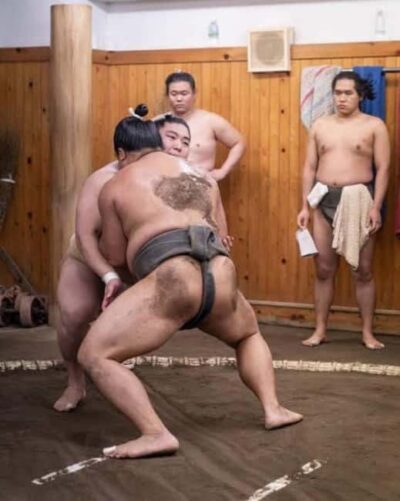

Luxury Sumo Show Experience & Japanese cuisine & Drink
Read our review →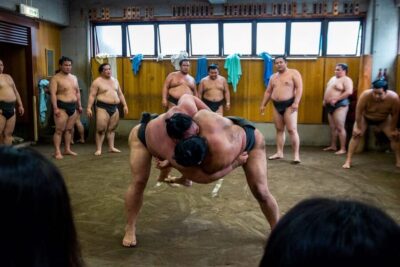
Tokyo Sumo Experience: Chanko & Mochi with a Former Pro
Read our review →
Ultimate Sumo Tournament: Tokyo, Osaka, Nagoya, Fukuoka
Read our review →Browse the lists this tour appears in