
Reviewed · TOKYO CALLIGRAPHY CLASSES
Small Group Japanese Calligraphy Workshop Experience
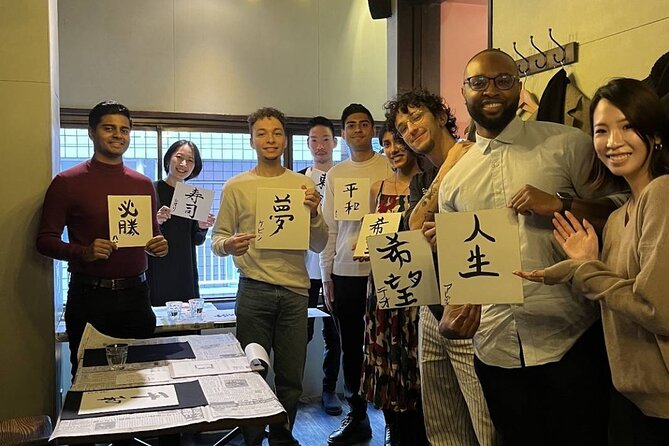
Japanese calligraphy is not simply writing with a brush. It is a slow, deliberate way to connect with Japanese language and culture. In this one-hour shodo workshop, a certified master calligrapher teaches you how to form your name and a favorite Japanese word using traditional tools.
I like the small group limit of seven, since you should have a fair chance to receive personal help rather than watch a teacher work from across a crowded room. I also like that the lesson takes place in a Japanese restaurant during its quiet hours, giving the class an unusual setting. The main drawback is the short duration: you will get a focused introduction, not a full course in calligraphy.
Key details before you book
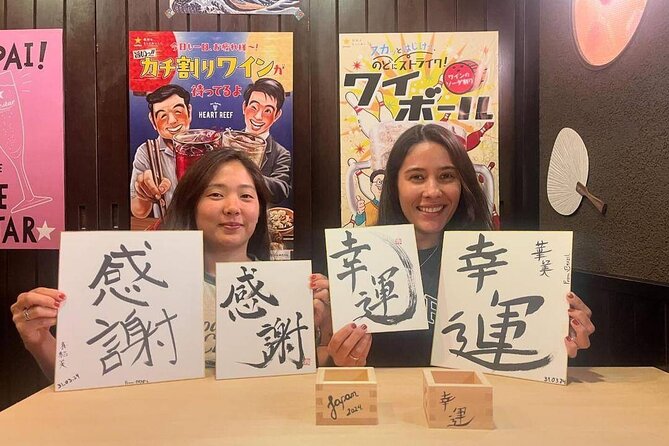
- Practice your name in Japanese: You can write your name or nickname, then try another Japanese word of your choice.
- Learn in a restaurant setting: Monja Kurya Restaurant in Higashiikebukuro hosts the class during off hours, so the room may feel quiet and informal.
- Everything is supplied: Brushes and other necessary calligraphy equipment are included.
- Work with a certified master: The lesson is taught under the guidance of a professional calligrapher.
- Keep a cultural souvenir: One piece may be displayed on the restaurant wall, if you are comfortable with that.
- Plan around a one-hour session: The experience ends where it begins, and there is no hotel transportation.
What the Tokyo shodo lesson is really about
The appeal here is not speed or sightseeing. It is the chance to sit down, hold a Japanese brush, and pay attention to the shape and movement of each character. That change of pace can be welcome after a day of Tokyo stations, department stores, and packed streets.
Shodo is the Japanese art of calligraphy. Traditional brush writing places value on balance, line quality, spacing, and the movement of the hand. Even a simple character asks you to think about pressure, direction, and when to lift the brush.
You will not need to arrive with previous art experience. The class is designed around practice, and the teacher guides you through the basic process. The goal is not to produce museum-quality work in 60 minutes. It is to give you a real introduction and a piece of writing you can continue practicing at home.
That distinction matters. If you want a polished calligraphy performance or a long cultural lecture, this may feel brief. If you want to try a traditional Japanese craft with direct instruction, the format makes good sense.
More Tokyo calligraphy classes:
- Tokyo: Calligraphy on Kanji Fan & Scroll with Drink
★ 5.0 · 210 reviews - Let’s experience calligraphy in YANAKA, Taito-ku, TOKYO !!
★ 5.0 · 127 reviews - Experience all of Japanese culture and Japanese food experience classes “origami, udon, Japanese food, green tea, calligraphy” in 4 hours
★ 5.0 · 105 reviews
Arriving at Monja Kurya Restaurant in Higashiikebukuro
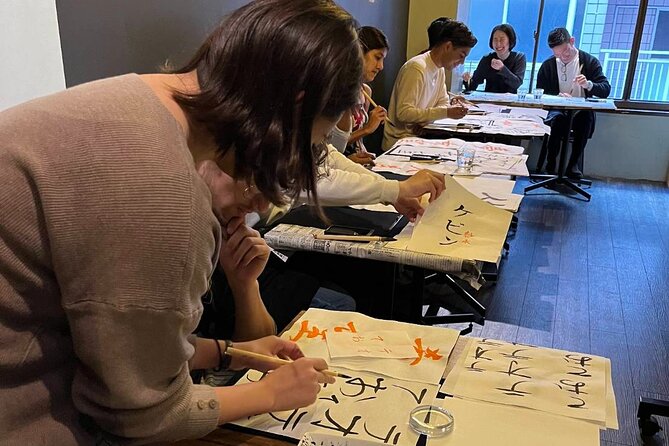
The meeting point is Monja Kurya Restaurant, at Japan, 170-0013 Tokyo, Toshima City, Higashiikebukuro, 1-chōme 25, in the Toki Building on the second and third floors. The activity is near public transportation, but the supplied information does not identify a particular station or give a walking route.
Give yourself time to find the building. The address includes several building and floor details, and restaurants in Tokyo can be easy to miss among signs and storefronts. Keep the mobile ticket ready and check the exact meeting information before setting out.
The restaurant is part of the experience, not just a neutral classroom. The lesson takes place during the restaurant’s off hours, which means the room can be quiet. That is useful for concentration, though you should not expect the energy of a busy dining room or a formal art school.
You will return to this same meeting point when the lesson ends. There is no hotel pickup or drop-off, so plan your route independently before and after class.
A small class with room for personal help
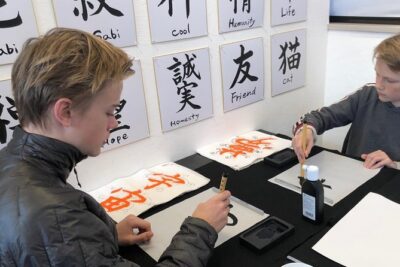
The group is limited to seven people. That is one of the strongest practical features of the experience. Brush work is easier to learn when someone can correct your grip, stroke direction, or pressure while you are still holding the brush.
A small class also makes it easier to ask simple questions. You can pause and check what you are doing instead of trying to copy a demonstration from the back of a large room. For a hands-on activity, this kind of access is worth more than a long talk.
The group size does not guarantee private instruction. You will still share the teacher’s attention with up to six other people. But the limit keeps the session personal enough for direct guidance.
The setting may also help you feel less self-conscious. Everyone is there to try something unfamiliar, and the purpose is practice rather than competition. You can expect mistakes, uneven strokes, and a few characters that look less graceful than you hoped. That is part of learning brush calligraphy.
Beginning with the Japanese brush
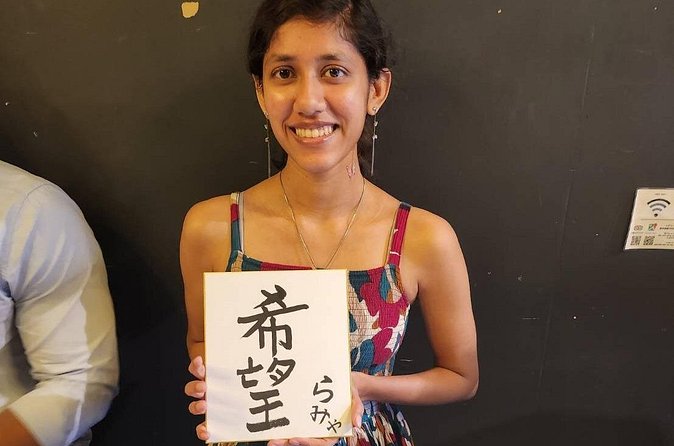
The class introduces you to the Japanese calligraphy brush and the basic act of writing with it. The supplied information does not give a minute-by-minute schedule, so the exact order of demonstrations and practice may vary.
You can expect the teacher to show you how to use the brush and then guide you as you try. The brush is not handled like an ordinary pen. Pressure changes the width and character of a stroke, and the movement of your hand affects the result.
For you, the key lesson is patience. Pressing too hard or moving too quickly can change the look of a character. The best part of this workshop may be the simple physical focus of making one controlled mark at a time.
All necessary equipment is included. You do not need to bring brushes, ink, paper, or other supplies. That keeps the experience easy to add to a Tokyo itinerary and removes the need to buy materials for a craft you have not tried before.
Still, do not expect to leave with a full home studio. The useful takeaway is the technique and the memory of using traditional equipment. If the activity sparks your interest, you can continue practicing after returning home.
More hands-on classes and workshops in Tokyo:
- Sushi Making Tokyo Roll and Authentic Japanese Sushi Class
★ 5.0 · 3,971 reviews - Tokyo: Roll and Authentic Sushi Making Class in Asakusa
★ 4.9 · 1,957 reviews - Tokyo Shinjuku Chopsticks Making Class
★ 5.0 · 1,763 reviews - Tokyo: Sushi Making Class in a Happi Coat near a Famous Spot
★ 4.9 · 1,377 reviews
Writing your name in Japanese
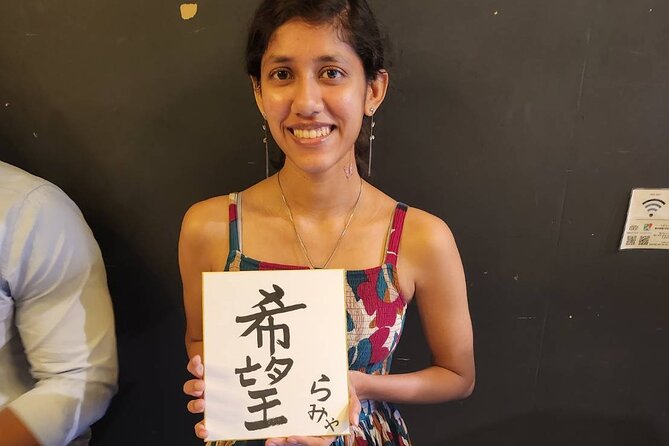
One of the most personal parts of the lesson is writing your name or nickname in Japanese. This gives you a direct reason to care about the characters rather than treating them as abstract shapes.
The exact Japanese rendering of a foreign name can depend on how it is adapted into Japanese writing. The supplied information does not specify which writing system or method the teacher will use for each name, so ask the instructor if you want to understand the form you are practicing.
You should think ahead about the name you want to use. A nickname may be easier or more fun than your full name, especially if you want a compact piece for your final artwork. You can also ask about the meaning and pronunciation of the characters as the lesson progresses.
Writing your name makes the class suitable for families, couples, and friends who want a shared activity. Each person can produce a different result while learning the same basic craft.
It also gives you a souvenir with a personal connection. A photograph of your finished work may remind you of Tokyo more clearly than another generic purchase from a shop.
Choosing a favorite Japanese word
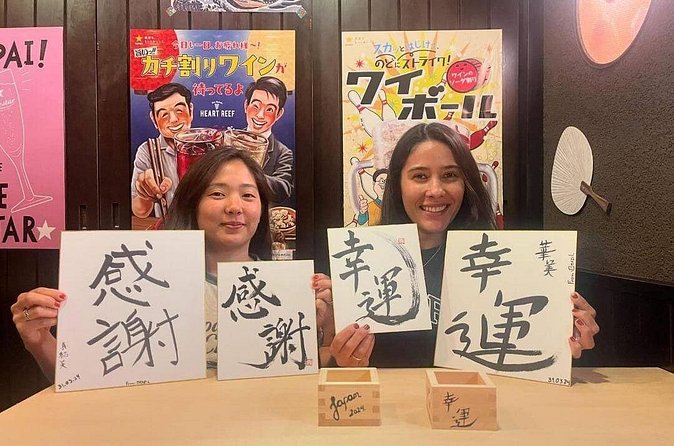
After practicing your name, you can write one Japanese word or another favorite word. This is a chance to choose something with personal meaning, but keep the short class length in mind.
A simple word may work better than a complicated phrase. You will have limited time to learn the character forms and brush movement, so a word that can be explained and practiced within the session is likely to be more satisfying.
If you are unsure what to choose, ask the calligrapher for help. The teacher is there to guide the selection and the writing. You might choose a word connected with travel, family, nature, food, or a personal goal, but the final choice is yours.
This part adds cultural value beyond making a souvenir. You are not merely copying decoration. You are learning how written Japanese carries meaning and how traditional presentation gives the word a visual form.
The experience is introductory, so you should not assume that one class will explain every layer of Japanese writing. But it can give you a useful starting point and a reason to look more closely at calligraphy during the rest of your time in Japan.
Your artwork and the restaurant wall
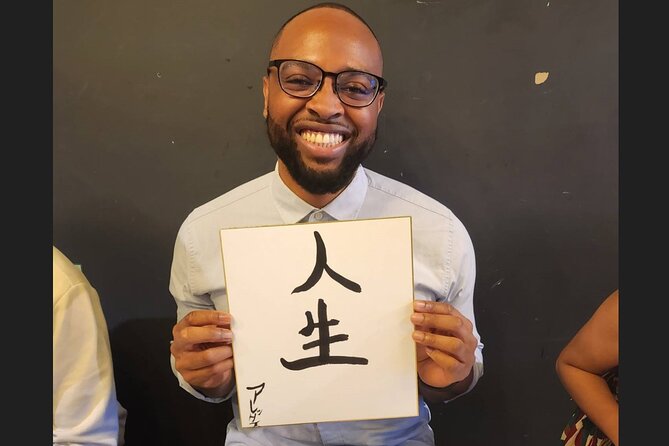
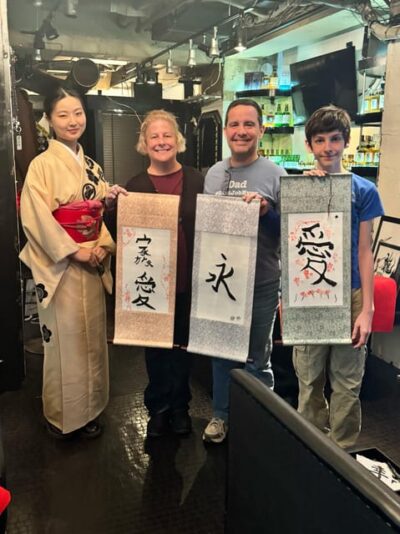
One of your pieces may be displayed on the wall in the restaurant, like an autograph, if you agree. This is an unusual feature and gives the activity a continuing connection to the place where you learned.
You should decide in advance how you feel about leaving your work behind. If you prefer to take everything home, ask the teacher what pieces are available to keep. The information confirms that one artwork can be displayed if you do not mind, but it does not state how many finished pieces you will receive.
The wall display can be fun for returning visitors. If you come back to the restaurant with friends, you may be able to point out your work. It turns a short class into a small, visible memory of your time in Tokyo.
There is also a practical limit here. A restaurant wall is not the same as a professional gallery, and the artwork may be displayed alongside pieces from other participants. Think of it as a friendly signature rather than a formal exhibition.
What the one-hour length means for value
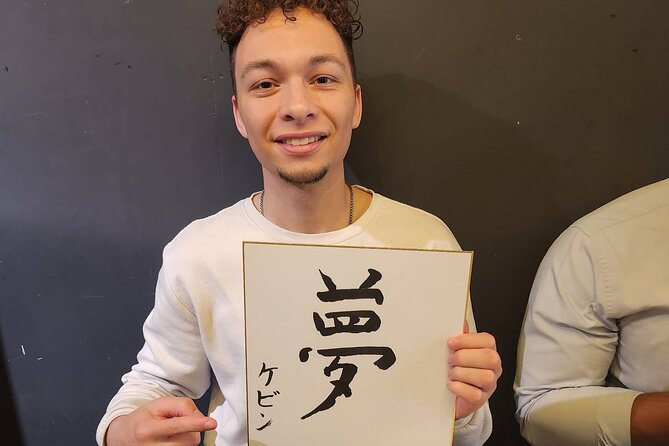
The price is $55.52 per person. For about an hour of instruction, with equipment and an English guide included, that is a reasonable price if you want a structured cultural activity rather than a simple souvenir purchase.
The value depends on what you expect. You are paying for direct access to a certified master calligrapher, use of the materials, guided practice, and the setting. You are not paying for a long workshop, a meal, hotel transport, or an extensive tour of Japanese calligraphy.
The short format is both a benefit and a limitation. It fits neatly into a Tokyo day and does not demand a half-day commitment. You can schedule it between other plans without losing an entire afternoon.
At the same time, one hour passes quickly. Some of that time will be used to settle in, receive instructions, and practice basic strokes. If you already have brush-writing experience, you may want a longer or more advanced class.
For a first try, the length is less of a problem. You can sample shodo without buying supplies or committing to several lessons. The current rating is 5 out of 5 from 12 ratings, with 100 percent recommending the experience, and the strongest praise focuses on the calm lesson and the teacher’s ability to draw good work from beginners.
The teacher’s role in a calm lesson
The instructor is described as an experienced, certified master calligrapher. No personal name is provided, so you should not expect to book a specific named teacher.
The teacher’s role is central. Brush calligraphy can feel unfamiliar at first, and small corrections make a real difference. A good instructor helps you understand not only where a line begins and ends, but also how the stroke should feel.
The available feedback emphasizes a relaxing art experience and says the teacher knows how to get a lot from pupils. That is useful information if you are worried about having poor handwriting or limited artistic ability.
You should still arrive with realistic expectations. The teacher can guide your technique, but cannot turn a beginner into a master in one hour. The session works best when you treat the finished piece as evidence of the learning process, not as a perfect work of art.
The quiet restaurant setting supports that mood. This is not a loud group performance or a rushed stop between attractions. You can focus on the brush, the paper, and the shape of the word in front of you.
Who will enjoy this workshop most
I would recommend this experience to you if you want a small, calm activity that connects you with Japanese culture through your hands. It suits first-time visitors who want something different from temples, shopping, and observation decks.
It is also a good choice if you enjoy making personal souvenirs. Writing your name and a favorite word gives you more involvement than buying a pre-made calligraphy print.
Families may appreciate the short duration, especially if younger participants would struggle with a long class. Friends and couples can compare their writing afterward, while solo participants can use the small group to ask questions.
This may not suit you if you want a full technical course, a long lesson in Japanese language, or an activity that includes food. The restaurant provides the setting, but food and drinks are not included.
The experience is open to most people, and no special ability is stated as necessary. If you have concerns about physical participation or other needs, confirm details before booking, since the supplied information does not give a full accessibility description.
Booking, timing, and cancellation
This experience is often booked about 104 days in advance. That suggests you should reserve early if the date matters to you, particularly if you are planning a tightly scheduled Tokyo visit.
You receive confirmation at the time of booking, and the ticket is mobile. That means you can keep the booking on your phone rather than print it, though a charged phone is still a sensible idea.
Free cancellation is available until 24 hours before the local start time. If you cancel less than 24 hours ahead, you will not receive a refund, and changes inside that window are not accepted.
The activity lasts about one hour and ends at the restaurant. Since transportation is not included, build in time to reach Higashiikebukuro and to continue to your next stop.
Should you book this Tokyo calligraphy class?
Book it if you want a personal, hands-on introduction to Japanese shodo and like the idea of leaving Tokyo with writing you created yourself. The small group, included equipment, English guidance, and certified master calligrapher give the short session solid value at $55.52.
Skip it if you want a long art course, a meal, or a broad cultural tour. The class is focused and brief, and the restaurant setting is quiet rather than highly polished.
For most first-time participants, the best reason to book is simple: you get to slow down, learn a traditional craft, and write something meaningful in your own hand. Just arrive with a name or word in mind, allow time to find the restaurant, and treat the final brushwork as a souvenir of the experience rather than a test of artistic talent.
FAQ
Where does the Japanese calligraphy workshop take place?
The workshop takes place at Monja Kurya Restaurant in Higashiikebukuro, Tokyo. The address is Japan, 170-0013 Tokyo, Toshima City, Higashiikebukuro, 1-chōme 25, Toki Building, second and third floors.
How long does the experience last?
The workshop lasts approximately one hour.
What will I practice writing?
You will practice writing your name or nickname in Japanese and one Japanese word or favorite word.
Is the class taught in English?
Yes. An English guide is included.
Who teaches the calligraphy lesson?
The lesson is taught by a certified master calligrapher. A personal name is not provided.
Are calligraphy materials included?
Yes. All necessary equipment is included, so you do not need to bring supplies.
Is food included?
No. Food and drinks are not included in the activity price.
How many people can join the class?
The maximum group size is seven people.
Does the tour include hotel pickup?
No. Hotel pickup and drop-off are not included. The activity begins and ends at the restaurant meeting point.
Can I cancel for a full refund?
Yes, if you cancel at least 24 hours before the local start time. Cancellations made less than 24 hours before the start time are not refunded, and changes inside that period are not accepted.
Newly reviewed around Tokyo
- Tokyo Asakusa:Calligraphy & Make T-shirt Activity★ 5.0 · 62 reviews
- Travel Tokyo with Your Own Personal Photographer★ 5.0 · 43 reviews
- Intercity Shuttle, Tokyo to Haneda /Narita /Yokohama /Makuhari★ 5.0 · 5 reviews
- 1 Hour Travel around Tokyo with a Professional Photographer★ 5.0 · 3 reviews
- Train in Samurai Swordsmanship and Defeat the Demon in Tokyo★ 5.0 · 5 reviews
- Shuttle Van 6hr Tokyo Tour to-and-from Tokyo, Yokohama and Narita★ 5.0 · 9 reviews
- Kickboxing & Body Training with EX-Pro Fighter★ 5.0 · 4 reviews
- Traditional Japanese Knife Sharpening Class★ 5.0 · 18 reviews
Tokyo Calligraphy Classes, compared.
Let’s experience calligraphy in YANAKA, Taito-ku, TOKYO !!
Read our review →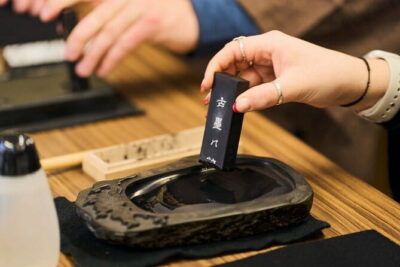
Calligraphy Workshop & Original T-Shirt Creation
Read our review →
Calligraphy Workshop & Original T-Shirt Creation
Read our review →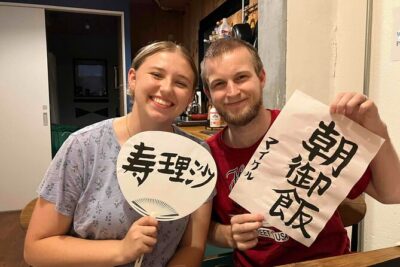
Calligraphy &Make your original folding fan in Asakusa
Read our review →
Tokyo Asakusa:Calligraphy & Make T-shirt Activity
Read our review →Browse the lists this tour appears in