
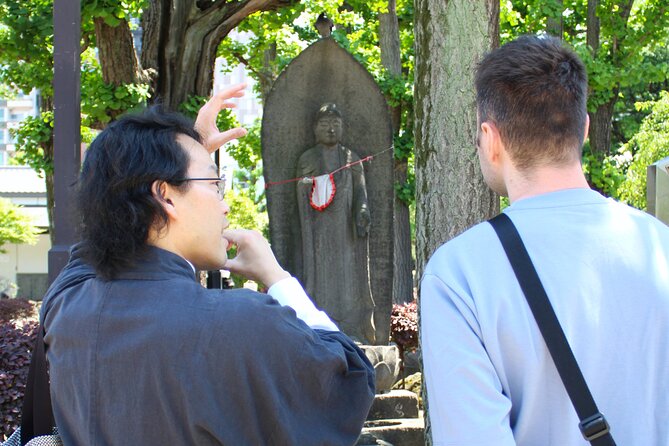
Reviewed · TOKYO WALKING TOURS
Tokyo: Asakusa Walking Tour with Japanese Comedian
Asakusa is one of Tokyo’s easiest districts to enjoy badly. You can walk through Kaminarimon, snap a photo at Sensō-ji, and leave without understanding much of what you saw. This 90-minute walking tour with comedian guide Ryo adds the stories, symbols, and cultural context that turn a famous temple district into a place that makes sense.
I like two things here. First, the small-group format gives you room to ask questions, and Ryo adjusts his explanations to the people in front of him. Second, his mix of history and humor keeps the tour from feeling like a string of dates and names. The main consideration is timing: the walk covers many stops quickly, and Asakusa becomes much busier after about 9 a.m.
Key points at a glance
- Ryo brings comedy to temple history: Expect useful explanations mixed with jokes and everyday conversation.
- The route reaches more than Sensō-ji: You’ll see Bentendo, Nitenmon, Asakusa Shrine, Yogodo, Awashimado, and quieter corners near the main complex.
- An early start pays off: An 8 a.m. start can give you a calmer look before crowds and shops arrive.
- A melon-pan option adds local flavor: The walk can include a stop at Kagetsudo on Nishi-sando Shopping Street.
- The tour is compact and walkable: It lasts about 1 hour 30 minutes and finishes at Sensō-ji’s main hall.
- The price is modest for personal guidance: At $37.99, the value is strongest if you want context and recommendations, not just photographs.
Why Ryo’s comic timing matters in Asakusa
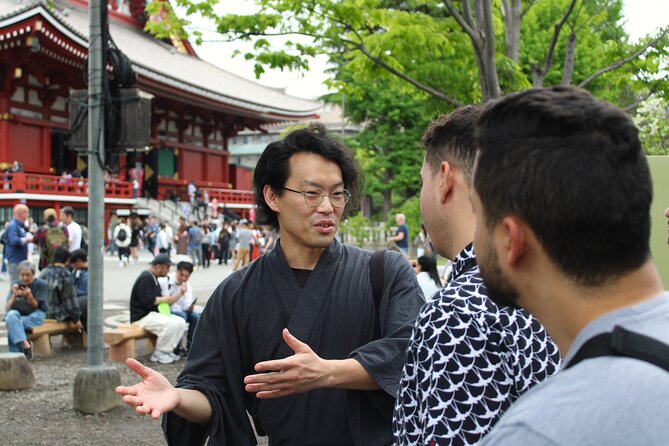
Ryo is not simply a guide who happens to tell jokes. The experience is built around his ability to make cultural information approachable. He explains Buddhist and Shinto traditions, points out details you could easily miss, and leaves room for questions about shops, souvenirs, food, and daily life.
That matters in Asakusa because the district presents several layers at once. Sensō-ji is a Buddhist temple, Asakusa Shrine is Shinto, and the surrounding streets reflect the neighborhood’s long connection with entertainment, shopping, and ordinary city life. Without some guidance, these pieces can blur together.
The humor is also practical. A tour that covers many gates, statues, bells, and temples can become tiring if every stop is delivered in a formal lecture. Ryo’s style, according to the supplied descriptions, combines historical explanation with friendly conversation. That should suit you if you want substance but do not enjoy stiff, academic guiding.
His English is described as very good, and the experience appears comfortable for families, solo visitors, and small groups. One family with teenage children found that he was patient with questions, while another guest appreciated that the route and explanations could be adapted to personal interests.
More Asakusa and Sensoji tours:
- Tokyo: Japanese Dance Cabaret Theater Asakusa-Kaguwa Ticket
★ 4.8 · 2,270 reviews - Tokyo: Meiji Shrine, Asakusa, Skytree Bus Tour and Cruise
★ 4.7 · 1,986 reviews - Tokyo: Roll and Authentic Sushi Making Class in Asakusa
★ 4.9 · 1,957 reviews
Starting above Asakusa at the Tourist Information Center
The meeting point is near Tokyo Cruise Asakusa Pier at 1-chōme-1-1 Hanakawado. The walk begins at the Asakusa Culture Tourist Information Center, where you spend about 10 minutes looking out from the eighth floor.
This is a smart opening. Before walking into the temple district, you get a broad view of Asakusa and a chance to understand how the streets fit together. It also helps you get your bearings near the station and riverfront.
The visit is brief, so do not expect a long stop or a full museum visit. Its value comes from orientation. You see the district from above, then move through it on foot rather than trying to understand it from a bus window.
Kaminarimon and Nakamise, Asakusa’s grand entrance
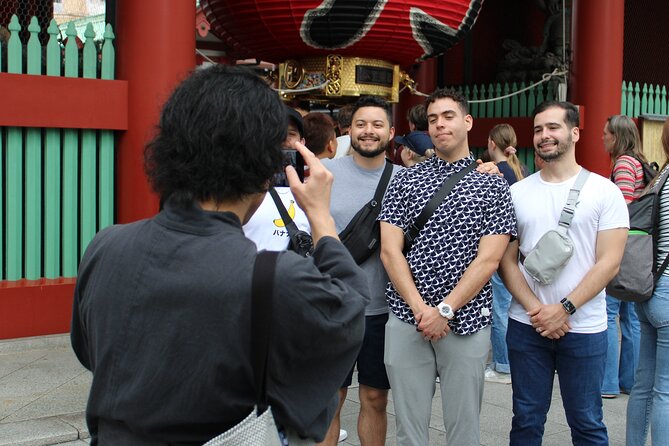
The route enters the central district through Kaminarimon, the Thunder Gate. This is the red gate most closely associated with Asakusa, and it leads toward Nakamise Shopping Street and Sensō-ji.
You will have about 10 minutes here. That is enough to take photographs and hear why the gate matters, but not enough for a leisurely shopping session. If you want souvenirs, plan to return after the tour rather than trying to browse every shop while keeping up with the group.
Nakamise is useful early in the visit because it shows how religious sites and commercial streets work together in Japan. The road toward a major temple is not a quiet approach. It is lined with shops, snacks, and traditional goods, giving you a quick sense of Asakusa’s role as both a pilgrimage district and a popular sightseeing area.
The timing advice is important. One morning walk began at 8 a.m., before the area filled up. The main market activity increases later, and shops open around 10 a.m. Choose early morning for photographs and breathing room. Choose a later time if you care more about seeing the shopping street at full pace.
Bentendo, the Bell of Time, and a quieter temple corner
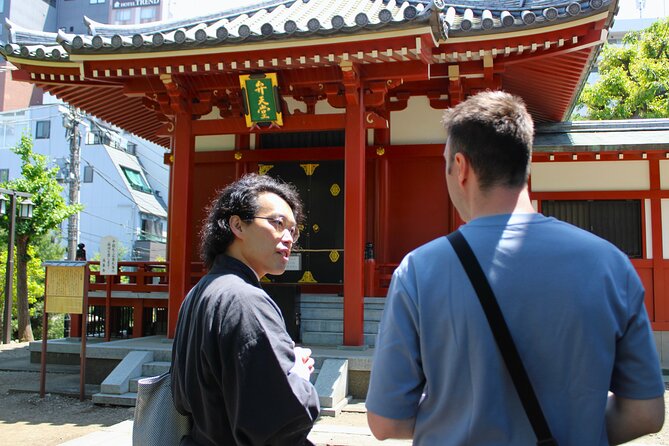
After Kaminarimon and Nakamise, the tour moves toward Bentendo. You spend about five minutes at this smaller temple, associated with art and prosperity.
Bentendo is the sort of stop that benefits from a guide. It is not as visually dominant as Sensō-ji, so you could easily pass by without knowing why it matters. Ryo’s role here is to explain the deity, the setting, and the relationship between this smaller site and the larger temple complex.
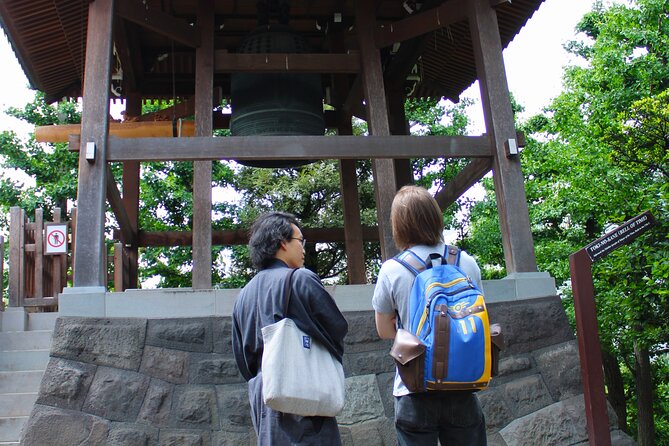
Nearby is the Bell of Time, another short stop. During the Edo period, the bell was rung by a monk of Sensō-ji to tell people the time. This small detail connects the present-day streets to the rhythms of an earlier city, when temple bells were part of public life.
These stops are brief, and that is both a strength and a limitation. You see a wider range of Asakusa than you would on a simple walk to the main hall, but you will not linger long at any one place. Ask questions as you go if one site catches your attention.
More Tokyo walking tours:
- Tokyo Tsukiji Fish Market Food and Culture Walking Tour
★ 5.0 · 3,184 reviews - Tokyo: Imperial Palace and Shogun Historical Walking Tour
★ 5.0 · 2,251 reviews - Tokyo: Shinjuku Local Bar and Izakaya Guided Walking Tour
★ 4.9 · 1,794 reviews - Tokyo: Tsukiji Fish Market Food and Walking tour
★ 5.0 · 1,724 reviews
Nisonbutsu and Nitenmon, where details reward attention
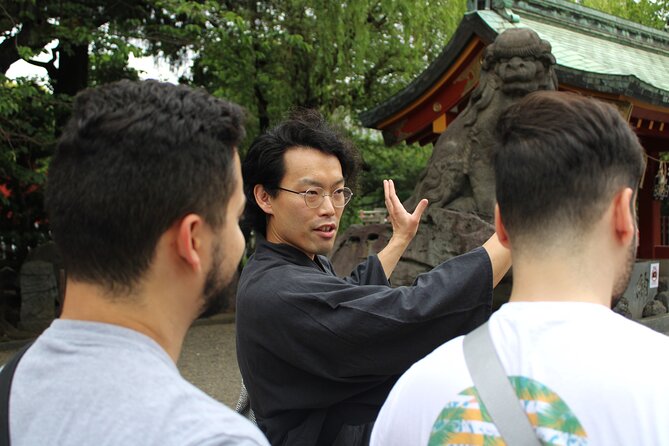
The Nisonbutsu area provides a calmer pause, with two bronze Buddhist statues and four stone statues dating from the seventeenth century. Five minutes may sound short, but a guide can make the stop worthwhile by directing your eye to the figures and explaining their place within the temple grounds.
Next comes Nitenmon Gate, one of Japan’s National Cultural Properties. The gate sits to the right of Sensō-ji’s main hall and is connected with the old shogun-era entrance. The route description identifies it as a gate historically reserved for the general, which gives Ryo a useful opening to explain status, access, and the way power was displayed in old Japan.
This is one of the strongest parts of the walk for anyone who likes small details. The main hall attracts every camera in the district, but gates and side areas often tell you more about how a complex was organized. Ryo’s former work as a rickshaw driver in Asakusa also gives him a practical connection to the neighborhood and its less obvious points of interest.
Asakusa Shrine and the meeting of Buddhist and Shinto traditions
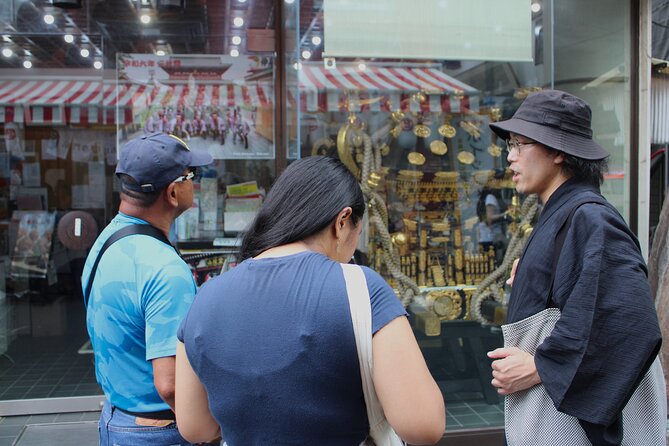
Asakusa Shrine follows Nitenmon. You spend about 10 minutes here, looking at the shrine and learning about its three deities, who are tied to the origin of Sensō-ji.
This pairing is especially useful for first-time visitors to Japan. You can see a Buddhist temple and a Shinto shrine within the same historic area, yet they are not the same thing. A clear explanation helps you recognize differences in architecture, religious purpose, and customs instead of treating every gate and offering box as part of one tradition.
The shrine also has a garage for three large portable shrines used in local festivals. The tour may not coincide with a festival, but the detail helps explain how religious life extends beyond the buildings. The district is not just a collection of old structures. It remains connected to neighborhood ceremonies and seasonal events.
Yogodo and Awashimado, the less obvious stops
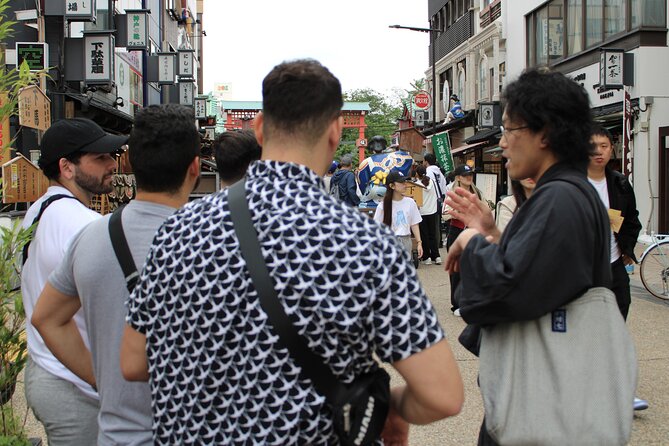
The route continues to Yogodo and Awashimado, with about five minutes at Yogodo and 10 minutes at Awashimado. These are not the headline sights most people list when planning an Asakusa visit, which is exactly why they add value to the walk.
You should not expect grand spaces at every stop. Instead, these smaller temple areas give Ryo room to explain symbols, traditions, and local stories that are easy to overlook. One particularly useful aspect of his guiding is the attention to memorials and small objects, including the Japanese custom of showing gratitude to everyday tools such as paper fans.
The pace may feel brisk if you want long periods of quiet reflection. For most people, though, these stops broaden the visit without requiring extra planning. You see how much is packed into the area around Sensō-ji, rather than treating the main hall as the whole story.
Nishi-sando and the melon-pan decision
At Asakusa Nishisando, the tour can stop at Kagetsudo for melon-pan, a sweet Japanese bread. The stop lasts about five minutes and is included as an option rather than a separate ticketed activity.
This is a small but useful touch. Food gives you another way to understand the neighborhood, and melon-pan is an easy snack to try while walking. The supplied experience details specifically recommend it, and one guest singled it out as a favorite local treat.
Do not treat this as a full food tour. You are not spending an hour sampling several dishes. Think of it as a quick taste and a chance to ask Ryo for further food or shopping suggestions. If you have dietary concerns, ask before ordering, since no ingredient information is provided.
Hozomon and Sensō-ji, the strong finish
Hozomon is another major gate, marked by a pair of guardian statues. You spend about five minutes here before reaching Sensō-ji itself.
Ending at the main hall makes sense. The route has already introduced smaller temples, a shrine, gates, statues, and the surrounding shopping streets. By the time you reach the oldest temple in Tokyo, you have enough context to understand why the complex matters rather than seeing only its most photographed facade.
The final 10-minute stop focuses on Sensō-ji, its roughly 1,400-year history, and Kannon Bodhisattva. The tour is not designed as a long private temple lecture, but this is where the earlier pieces come together. Ryo explains why the temple has remained important to many different kinds of people and how its central deity shaped the site’s appeal.
The tour finishes in front of the main hall at 2-chōme-3-1 Asakusa. That leaves you in a useful position for more photographs, shopping, food, or a return visit to any stop that deserved more time.
What $37.99 buys you
At $37.99 per person, this is a low-cost guided introduction to one of Tokyo’s most visited districts. The price includes the guide and walking experience, while the listed stops themselves have no admission charge.
I see the value in the interpretation rather than the number of sights. You can walk around Sensō-ji for free, but you cannot easily know the meaning of every gate, statue, bell, shrine, and side temple without preparation. Ryo also provides recommendations for shops and local snacks, which can save you time after the tour.
The tradeoff is that this is a short orientation, not a full-day cultural program. You are paying for a focused route and a personable guide, not entrance to a museum, a meal, or private transportation. For a first morning in Asakusa, the price is easy to justify. If you have already studied the area and prefer to explore at your own pace, you may want to skip the guided format.
The booking information refers to a small group capped at six, while the additional details list a maximum of eight participants. Because those figures differ, confirm the expected group size when booking if intimacy is especially important to you.
Who will enjoy this walk most
I would choose this tour if you want a friendly introduction to Asakusa and prefer conversation over a recorded audio guide. It suits first-time visitors, families with older children, solo visitors, and anyone who wants to ask questions as the route unfolds.
It is also a good match if you enjoy comedy but still want real cultural content. The strongest praise centers on the balance between humor, history, and everyday conversation. Ryo is described as patient, flexible, and able to adjust the tour to individual interests.
You should think twice if you need a slow, contemplative temple visit. The route has 12 stops in about 90 minutes, with several visits lasting only five minutes. It is also less suitable if your main goal is serious shopping, since the walking tour passes through commercial streets without giving you extended browsing time.
Wear comfortable shoes and arrive ready to walk. The tour is near public transportation, service animals are allowed, and most people can participate. No special admission fees are listed for the stops.
Booking timing and cancellation details
The early morning option deserves serious thought. An 8 a.m. start has been accommodated, and it can mean cooler temperatures, fewer people, and clearer photographs. Around 9 a.m., the streets begin to fill, while shopping activity increases later in the morning.
You receive confirmation when booking. Free cancellation is available up to 24 hours before the local start time for a full refund. Cancellations or changes made within 24 hours are not refunded or accepted.
Should you book Ryo’s Asakusa walk?
Book it if you want Sensō-ji and its surrounding temples to make sense, not just appear in your camera roll. Ryo’s combination of clear English, local experience, humor, cultural explanation, and practical recommendations gives this short tour more substance than a basic landmark stroll.
Choose an early start if you value calm streets. Choose this tour over independent wandering if you like asking questions and noticing small details. Skip it if you want long shopping stops, a food-focused outing, or uninterrupted time at each temple. At $37.99, it is a particularly sensible choice for a first visit to Asakusa.
FAQ
Where does the tour start?
The tour starts at the Tokyo Cruise Asakusa Pier area, at 1-chōme-1-1 Hanakawado, Taito City, Tokyo.
Where does the tour finish?
The walk ends in front of the main hall of Sensō-ji Temple at 2-chōme-3-1 Asakusa.
How long does the tour last?
The experience lasts approximately 1 hour 30 minutes.
Who guides the tour?
The guide is Ryo, a Japanese stand-up comedian who also has experience as a former rickshaw driver in Asakusa.
What places are included?
The route includes the Asakusa Culture Tourist Information Center, Kaminarimon, Nakamise Shopping Street, Bentendo, the Bell of Time, Nisonbutsu, Nitenmon Gate, Asakusa Shrine, Yogodo, Awashimado, Nishi-sando, Hozomon, and Sensō-ji Temple.
Is food included?
Food is not listed as included. The guide can stop at Kagetsudo in Nishi-sando if you would like to try melon-pan.
How large is the group?
The tour is described as a small-group experience capped at six people, while the additional booking information gives a maximum of eight travelers. Confirm the current group size when booking.
Is the tour suitable for most people?
Most people can participate, and the experience is near public transportation. Service animals are allowed.
What is the cancellation policy?
You can cancel up to 24 hours before the start time for a full refund. Cancellations or changes made less than 24 hours before the experience are not accepted, and the payment is not refunded.
Newly reviewed around Tokyo
- Tokyo Asakusa:Calligraphy & Make T-shirt Activity★ 5.0 · 62 reviews
- Intercity Shuttle, Tokyo to Haneda /Narita /Yokohama /Makuhari★ 5.0 · 5 reviews
- 1 Hour Travel around Tokyo with a Professional Photographer★ 5.0 · 3 reviews
- Travel Tokyo with Your Own Personal Photographer★ 5.0 · 43 reviews
- Shuttle Van 6hr Tokyo Tour to-and-from Tokyo, Yokohama and Narita★ 5.0 · 9 reviews
- Kickboxing & Body Training with EX-Pro Fighter★ 5.0 · 4 reviews
- Train in Samurai Swordsmanship and Defeat the Demon in Tokyo★ 5.0 · 5 reviews
- Traditional Japanese Knife Sharpening Class★ 5.0 · 18 reviews
Tokyo Walking Tours, compared.
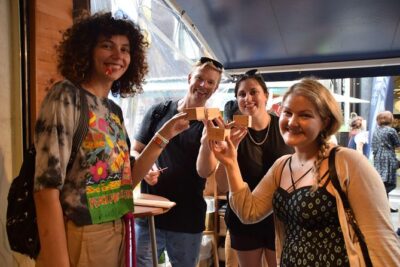
Tokyo Tsukiji Fish Market Food and Culture Walking Tour
Read our review →
Imperial Palace and Shogun Historical Walking Tour
Read our review →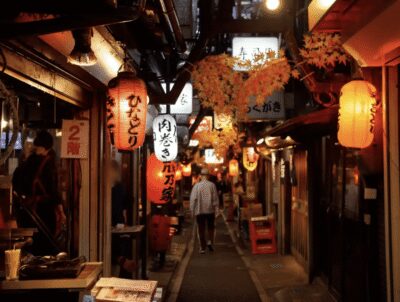
Shinjuku Local Bar and Izakaya Guided Walking Tour
Read our review →
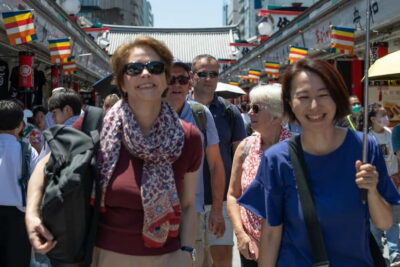
Asakusa Walking Tour with Sensoji Temple Visit
Read our review →
Tokyo Castle & Imperial PalaceーShogun Walking Tour
Read our review →
Browse the lists this tour appears in