
Reviewed · TOKYO TRADITIONAL CRAFT WORKSHOPS
Tokyo: Origami Fun for Families & Beginners in Asakusa
Asakusa sightseeing can get noisy and tiring. This 45-minute origami session gives you a calm change of pace, with more than 100 models, 50 paper colors, and a tablet that guides you from a plain square to an animal, flower, or vehicle. You can fold several pieces rather than sit through one long demonstration.
I like the freedom to choose your own level, and I like the small group size, limited to six people. Staff members keep an eye on your work and help when needed, but this is not a teacher-led class. The main drawback is time: 45 minutes passes quickly, especially if you are folding with young children or tackling an intermediate design.
- More than 100 models: Choose animals, flowers, vehicles, and other designs from a tablet menu.
- 50 paper colors: Pick sheets to match the model, then add stickers, stamps, and marker details.
- Helpful but low-key guidance: Staff assist when you need a hand, while the tablet lets you work at your own pace.
- Small groups: The studio limits each session to six participants, so help is easier to request.
- A useful family break: Children age four and older can take part, with adult supervision required for younger children and everyone under 13.
- Bring socks: Shoes come off for the studio, and socks are required for participation.
A Quiet Creative Stop in Asakusa
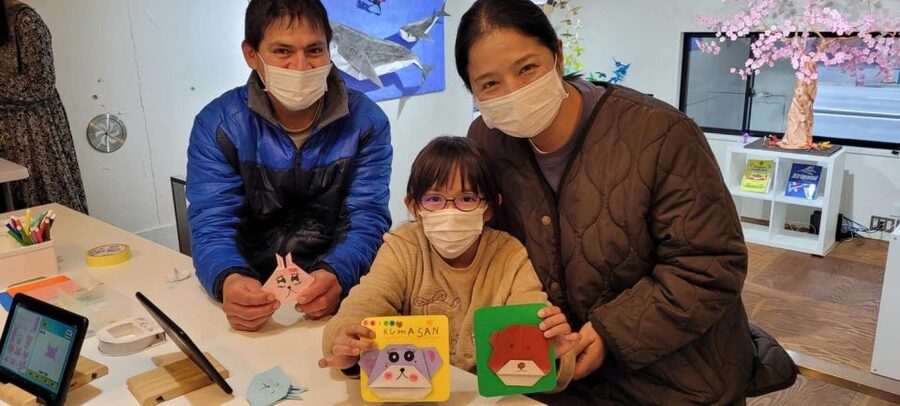
Taro’s Origami Studio offers a simple idea that works well in a busy Tokyo itinerary: sit down, slow your hands, and make something you can carry away. The studio is in Asakusa, one of Tokyo’s most popular sightseeing areas, so it can fit neatly between visits to the neighborhood’s other attractions.
You are not signing up for a formal paper-folding lecture. Instead, you choose a design, follow digital instructions, and ask for help when a fold stops making sense. That setup makes the activity friendly to beginners who want guidance without committing to a long class.
I see the appeal for families in particular. One person can make a simple animal while another tries a flower or vehicle. Nobody has to keep pace with the whole group, though you will get more from the session if you choose your first model quickly.
Finding the Studio From the Main Street
The entrance is on the main street side of the building. This detail matters because the building also faces a park, and the park side is the back. If you arrive next to the park, you will not be able to enter from there.
Look for company signage on the front of the building and a brown sea turtle fixed to the wall below the window. That unusual marker should make the entrance easier to spot, especially if you are trying to arrive on time with children.
The session lasts 45 minutes, so I would avoid spending the first several minutes searching. Have socks ready before you arrive. Shoes are not enough, since socks must be worn for studio activities, and you can purchase a pair beforehand if needed.
More Asakusa and Sensoji tours:
- Tokyo: Japanese Dance Cabaret Theater Asakusa-Kaguwa Ticket
★ 4.8 · 2,270 reviews - Tokyo: Meiji Shrine, Asakusa, Skytree Bus Tour and Cruise
★ 4.7 · 1,986 reviews - Tokyo: Roll and Authentic Sushi Making Class in Asakusa
★ 4.9 · 1,957 reviews
Choosing Your First Origami Model
Once inside, you use a PC tablet with a touchscreen menu. The available designs are organized into categories, allowing you to choose the kind of object you want to make rather than receiving a fixed project.
The selection includes animals, flowers, and vehicles, with models ranging from beginner to intermediate. For a first attempt, I would choose a beginner design with clear, broad folds. That gives you time to learn how the tablet works and still make another model before the session ends.
If you already fold origami, the intermediate choices give you a reason to return to the activity. The large model selection also helps mixed groups. A seven-year-old can choose a straightforward figure while an adult works on something more involved.
You can replay instructions or return to earlier steps. That is important because paper folding is less forgiving than it looks. If a crease is in the wrong place, you can review the step instead of guessing and making the next stage harder.
Picking Paper From 50 Colors
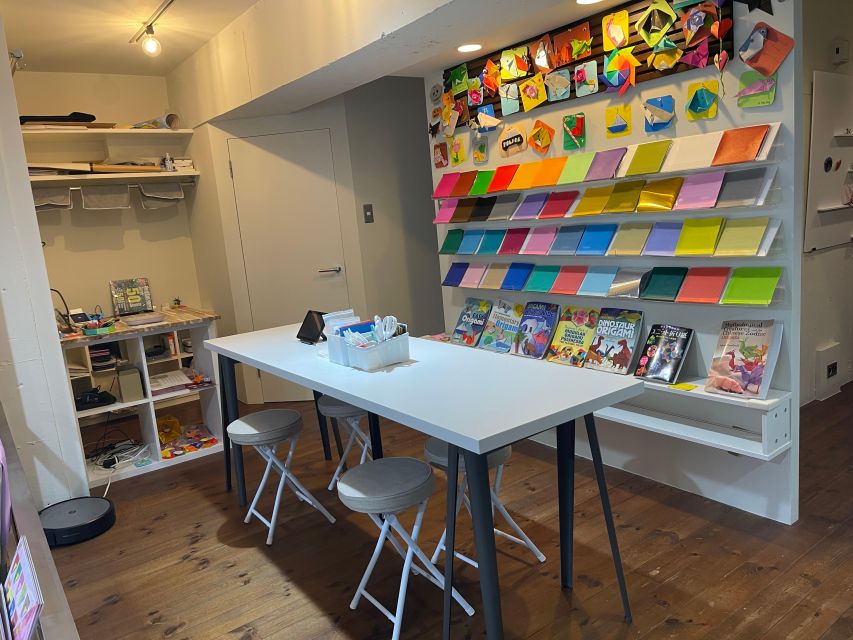
After choosing your model, you go to the origami paper wall and select your sheet or sheets. There are 50 colors, so paper choice becomes part of the creative work rather than a minor detail.
Think about the design before you pick. A flower may benefit from a bright color, while a vehicle or animal may be easier to recognize in a contrasting shade. The activity also lets you make more than one model, so you can try different colors as your ideas develop.
This freedom is one of the best parts of the session. You are not handed an identical kit and told to copy a sample. You make small decisions about color, shape, and decoration from the start.
The 45-minute limit does mean you should not spend too long comparing every shade. If you are with children, letting each person choose one color quickly can preserve more time for folding.
Following the Tablet Instructions
Return to your tablet and press Play to begin. The software takes you from the square sheet through the folding sequence. You can replay a step or go back when you need to check a crease.
This format suits people who prefer to work with their hands rather than listen to a long explanation. You can watch the instructions, pause mentally, fold your paper, and continue. The process also avoids putting one participant in charge of the whole table.
The staff are available to help, but they do not lead the session step by step for everyone. That distinction is worth understanding before you book. You receive instruction through the tablet and personal assistance when needed, not a private lesson with an instructor constantly directing your hands.
The best experience comes from treating the staff as a safety net. Try the tablet directions first, then ask for help when your paper no longer resembles the model or a fold feels unclear. David is one of the instructors who may assist, and his one-on-one guidance has been especially useful for participants wanting a more personal introduction.
More Tokyo craft workshops:
- Tokyo Shinjuku Chopsticks Making Class
★ 5.0 · 1,763 reviews - Chopstick Making Workshop in Ginza
★ 4.8 · 1,366 reviews - Kintsugi Experience: Art of Golden Joinery in Tokyo
★ 5.0 · 467 reviews - Tokyo Chopstick Making Workshop with Artisan
★ 5.0 · 466 reviews
A Helpful Balance of Independence and Assistance
The studio’s approach gives you room to work independently without leaving you completely alone. Staff members watch the activity and step in when help is needed, but they do not press themselves into every fold.
That balance suits adults who want to learn at their own speed. It also helps children who can follow instructions but may need a quick correction. A staff member may show you how to make a difficult fold, while you still complete the model yourself.
One particularly nice touch is the possibility of receiving a small demonstration from an instructor. David has folded a rose for a child during a session, a thoughtful gesture that can make the activity feel personal without turning it into a performance.
Still, expectations matter. If you want a traditional origami lesson with a teacher demonstrating each model to the entire group, this is not that format. If you want choices, visual instructions, and occasional help, it is a better match.
Decorating Your Finished Creations
When your model is folded, you can choose stickers, stamps, and markers to personalize it. This final stage adds a playful finish, especially for children who enjoy decorating as much as folding.
You can keep the design plain if you prefer the clean look of folded paper. Or you can add eyes, patterns, and other details that make an animal or vehicle easier to recognize. The decoration stage also gives younger children something to do while an adult finishes a more difficult model.
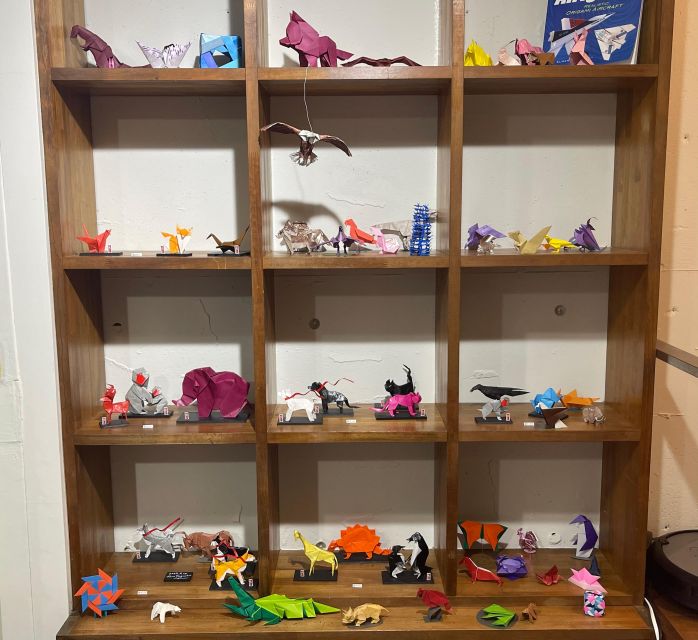
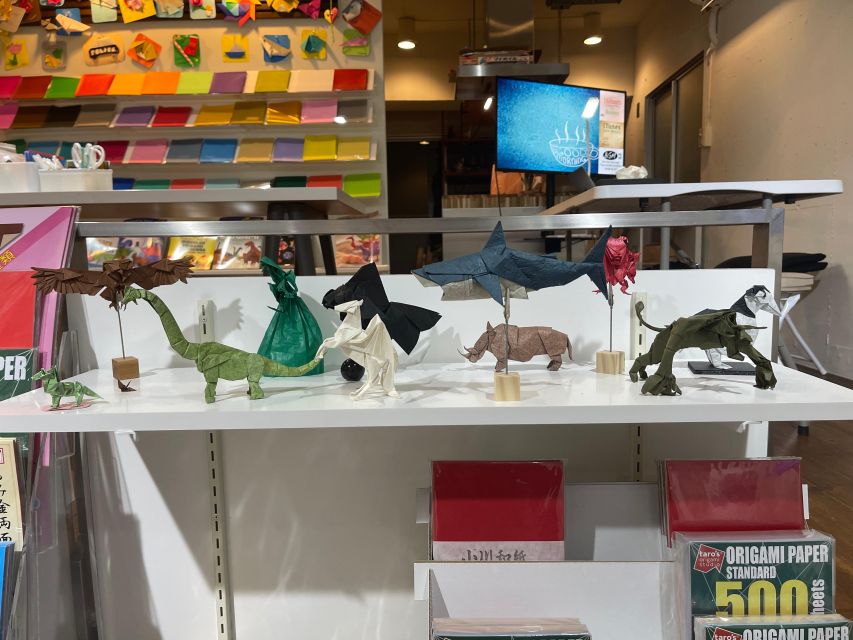
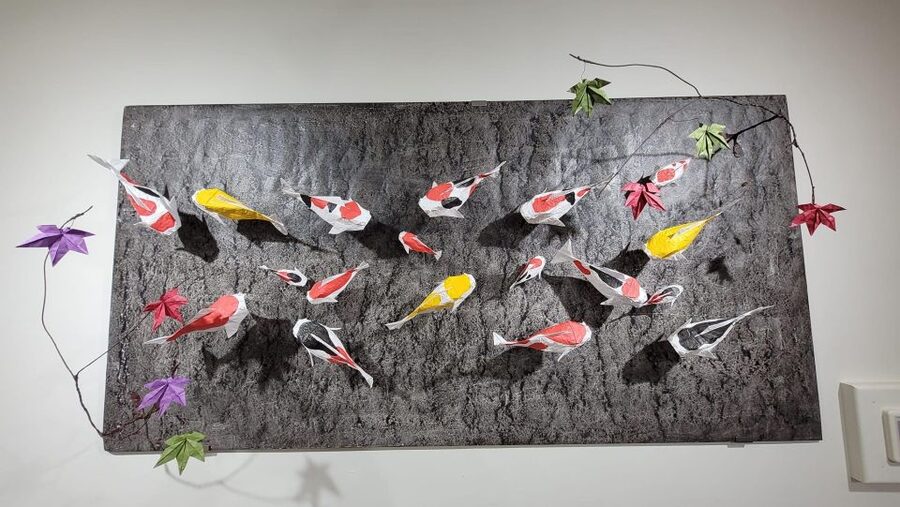
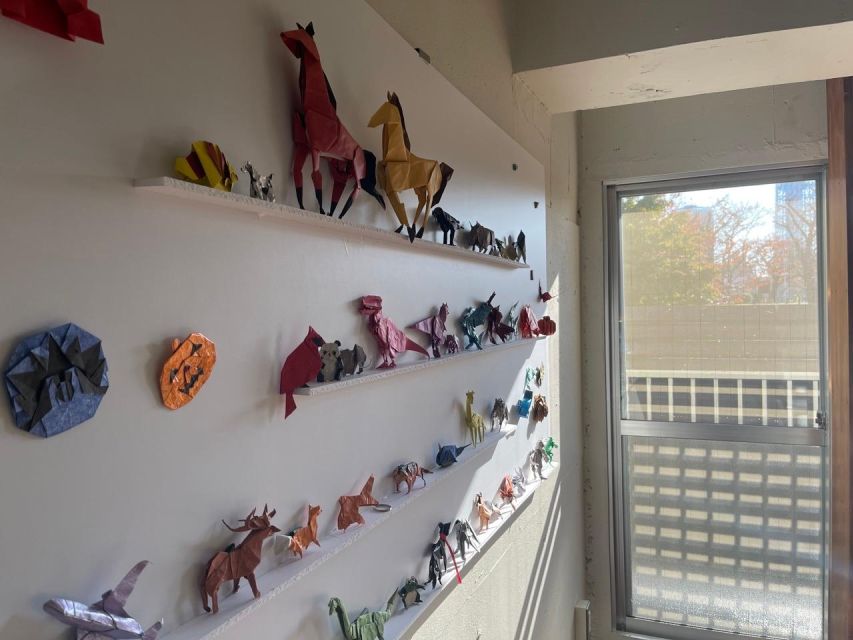
You are allowed to take photos during the activity and can look at the studio’s origami displays during or after your session. The displays give you more ideas if you finish early or want to see what careful folding can produce.
You may also make purchases at the studio. The supplied information does not specify the items or prices, so I would treat shopping as an optional extra rather than part of the $27 activity value.
What 45 Minutes Really Buys You
At $27 per person, this is not the cheapest way to occupy 45 minutes in Tokyo. Its value depends on what you want from the stop.
You are paying for the studio setting, paper and supplies, tablet instruction, staff assistance, and the chance to choose from a large model collection. Taxes and fees are included. For a family that wants a calm indoor activity with a finished souvenir, the price can make sense.
The strongest value comes when you fold several models. A participant may complete about four items during the session, depending on the designs and experience level. Simple models leave more room for experimentation, while a difficult figure can take much of the available time.
I would not book this expecting a full cultural workshop or a long private lesson. The session is short, and the instructor’s role is supportive rather than central. You are paying for a structured creative activity in a convenient sightseeing district, not an in-depth course in Japanese paper arts.
Who Will Enjoy This Most
This experience fits families with children age four and older, couples looking for a quiet shared activity, and adults who have always wanted to try origami but never knew where to begin. It also works for a mixed group with different skill levels because everyone can choose a separate model.
Children under 13 need adult supervision throughout. Children under five who cannot fold independently require an adult beside them for the entire activity. The practical recommendation is age four and older, but very young children may find the tablet steps and careful creasing demanding.
Adults with no origami background should feel comfortable starting with a beginner model. The tablet gives you a clear path, and staff can help with problem folds. More experienced folders may prefer the intermediate options or use the session to make several simple designs in different colors.
The studio is not suitable for people with a cold. Seating has no back support, which may matter if you have difficulty sitting without a supported chair. The facility is also not handicap accessible: there are stairs only, with no ramps or lifts.
A Practical Family Break, With a Few Limits
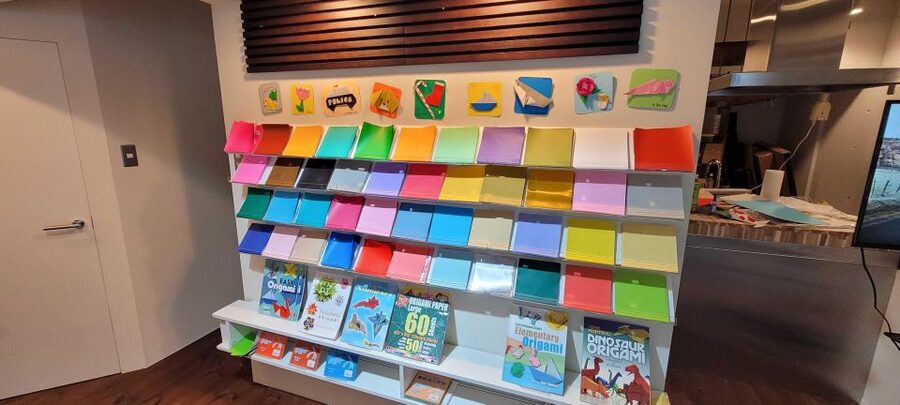
The studio environment is described as relaxing and beautiful, and the activity has a naturally quiet rhythm. You sit, fold, adjust, and try again. That makes it a useful pause after a morning of sightseeing, particularly if your group needs time indoors.
The small group limit of six is another plus. You are less likely to feel lost than in a large workshop, and staff have a better chance of noticing when someone needs help. A one-on-one session can happen if bookings leave the studio with only one participant, though you should not count on that arrangement.
The main limit is the fixed time. One participant wished for longer, and I understand why. Choosing paper, learning the tablet, folding, correcting mistakes, and decorating can fill 45 minutes quickly.
To get the most from it, arrive with a rough plan. Let each person choose a model category and color early. If you are folding with children, begin with easy figures and save intermediate designs for a future visit.
Booking, Socks, and Other Useful Details
The activity is offered in English and Japanese. Instruction comes through the tablet, with staff assistance available in the studio, so you do not need prior origami experience.
Bring socks, and remember that socks are required even if you arrive wearing shoes. The seating has no back support, and stairs are the only way into the facility. These points are easy to overlook when planning a family day in Asakusa.
Food and drinks are not included. The $27 price covers origami paper, supplies, instruction, taxes, and fees. You can take photos, look at displays, and make purchases during or after the session.
You can cancel up to 24 hours before the activity for a full refund. The reserve now and pay later option also helps if your Tokyo plans are still shifting.
Should You Book the Asakusa Origami Session?
Book it if you want a short, hands-on activity that works for beginners and gives children a real project to finish. The combination of 50 paper colors, tablet guidance, helpful staff, and a six-person limit makes it easy to join without preparation.
I would especially choose it for a family with a child who likes making things, or for an adult who wants an introduction without attending a formal class. Pick simple models if you want several finished pieces, and remember to bring socks.
Skip it if you want a teacher-led workshop, supported seating, step-free access, or a long session focused on one advanced figure. For everyone else, this is a pleasant way to add a creative pause to an Asakusa day, with enough choice to keep the experience from feeling like a one-project craft lesson.
FAQ
How long does the origami activity last?
The activity lasts 45 minutes. Starting times vary, so you need to check availability when choosing a session.
How much does the experience cost?
The price is $27 per person. Origami paper, supplies, instruction, taxes, and fees are included.
Is this a teacher-led origami lesson?
No. Tablet software provides the main instructions. Staff members are present to help with models, but they do not lead a full class or provide a private teacher-guided lesson.
How many origami designs can I choose from?
You can choose from more than 100 models, including animals, flowers, and vehicles. Designs range from beginner to intermediate difficulty.
What should I bring?
Bring socks. Socks must be worn during studio activities, and you can purchase a pair before arriving if necessary.
Can children take part?
Children age four and older are recommended for the activity. Children under 13 need adult supervision throughout, and children under five who cannot fold independently require an adult to supervise them throughout the session.
Is the studio wheelchair accessible?
No. The facility has no ramps or lifts and can only be reached by stairs. Seating does not have back support.
Newly reviewed around Tokyo
- Tokyo Asakusa:Calligraphy & Make T-shirt Activity★ 5.0 · 62 reviews
- Intercity Shuttle, Tokyo to Haneda /Narita /Yokohama /Makuhari★ 5.0 · 5 reviews
- 1 Hour Travel around Tokyo with a Professional Photographer★ 5.0 · 3 reviews
- Travel Tokyo with Your Own Personal Photographer★ 5.0 · 43 reviews
- Train in Samurai Swordsmanship and Defeat the Demon in Tokyo★ 5.0 · 5 reviews
- Shuttle Van 6hr Tokyo Tour to-and-from Tokyo, Yokohama and Narita★ 5.0 · 9 reviews
- Kickboxing & Body Training with EX-Pro Fighter★ 5.0 · 4 reviews
- Traditional Japanese Knife Sharpening Class★ 5.0 · 18 reviews
Tokyo Traditional Craft Workshops, compared.
Kintsugi Experience: Art of Golden Joinery in Tokyo
Read our review →

Authentic Pure Gold Kintsugi Workshop with Master Taku in Tokyo
Read our review →
Private Handmade Ring Workshop Activity in Tokyo Shibuya
Read our review →
Browse the lists this tour appears in