
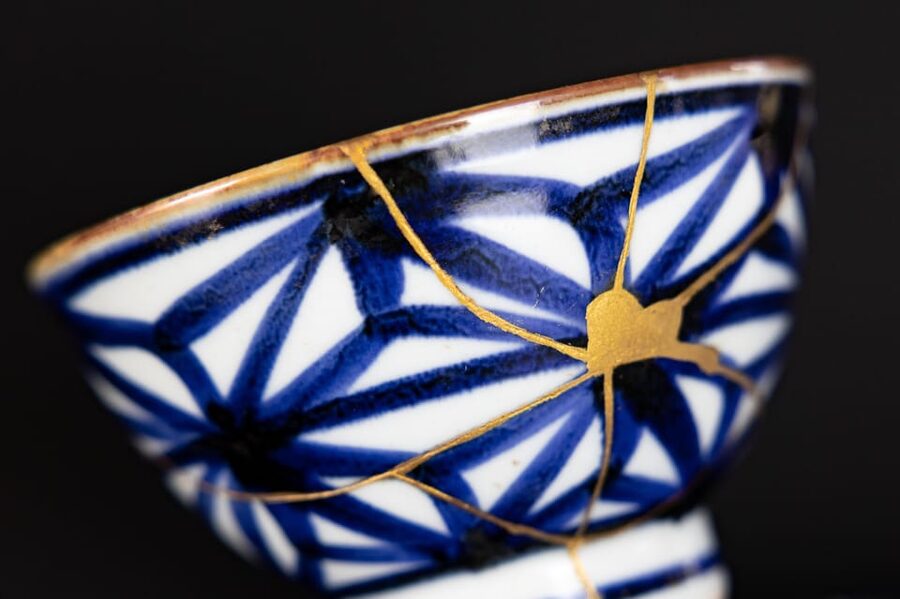
Reviewed · TOKYO TRADITIONAL CRAFT WORKSHOPS
Shibuya Tokyo: Modern Kintsugi Workshop in Shibuya
Modern kintsugi turns a broken plate or bowl into a keepsake, with its repaired lines treated as part of the object’s story rather than something to hide. At mon cadeau, Michiko and her team teach this Japanese craft in a calm studio above Shibuya Crossing, with matcha and seasonal sweets to set the mood.
I like the small class size, which means you can get help at each step instead of trying to copy a demonstration from across a crowded room. I also like that you choose a piece of crockery and take the finished work home in a gift box. The main consideration is timing: the studio is uphill from Shibuya, and you cannot join if you arrive more than 15 minutes late.
Key points at a glance
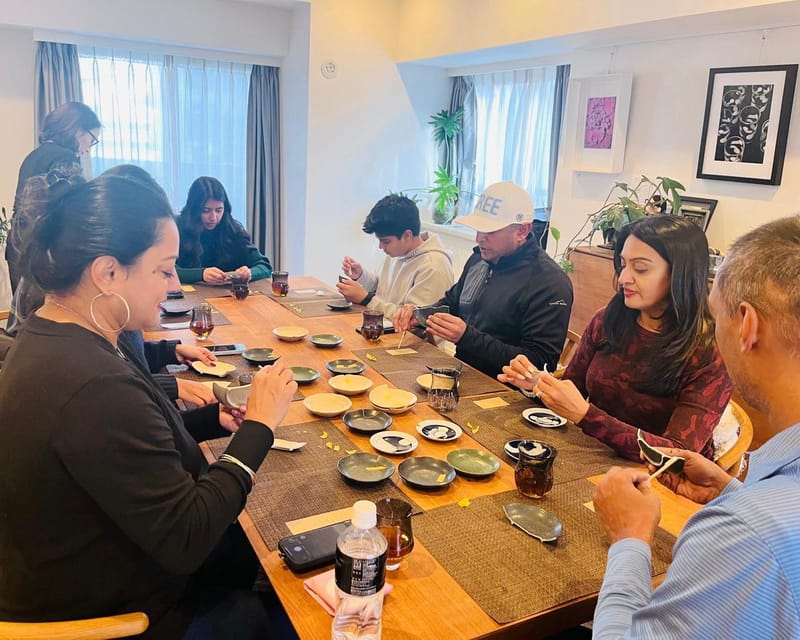
- Modern kintsugi in central Shibuya: Reach the studio from Shibuya Crossing, then leave the neon streets behind for a quiet hands-on craft session.
- Personal guidance for up to six people: Michiko and her team demonstrate each stage before you try it yourself.
- A complete cultural welcome: Matcha tea, seasonal sweets, and an introduction sheet explain more than the repair technique alone.
- A useful choice of materials: The workshop uses contemporary repair materials, making the process faster and more approachable than traditional kintsugi.
- A practical souvenir: Select a crockery piece, repair it during class, and carry it home in a special gift box.
- English instruction: The workshop is designed for English-speaking participants and lasts two hours.
What modern kintsugi means here
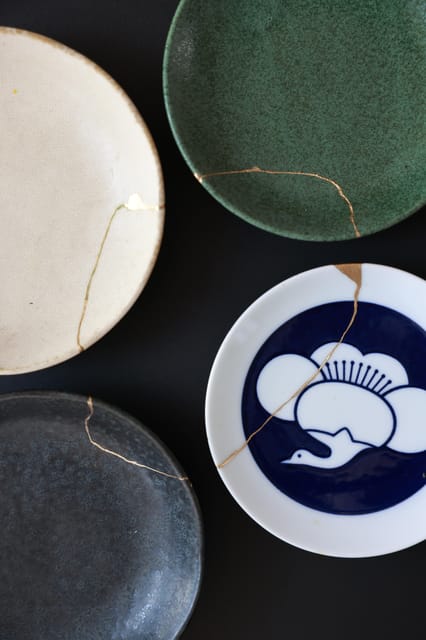
Traditional kintsugi is the Japanese practice of repairing broken ceramics so the damage becomes part of the object’s appearance. Instead of pretending the break never happened, the repaired lines are highlighted. The result reflects the idea of wabi sabi, the appreciation of imperfection, age, and change.
This workshop presents a modern version of that craft. That distinction matters. You are not signing up for a long, formal apprenticeship in traditional lacquer work. The contemporary materials make the process safer, quicker, and easier to manage during a two-hour class.
I see that as a strength for most visitors. You can learn the basic ideas and work with your hands without needing prior pottery or craft experience. At the same time, anyone expecting a strict traditional production method should understand that this is an accessible modern interpretation.
The class gives you more than a finished plate. It offers a small lesson in how Japanese aesthetics can shape everyday objects. A crack becomes a feature. A repaired bowl becomes a reminder of your time in Tokyo.
More things to do in Shibuya:
- Official Street Go-Kart in Shibuya
★ 5.0 · 3,435 reviews - Tokyo: Street Kart Experience in Shibuya
★ 4.9 · 1,484 reviews - Shibuya Meltdown Nightlife Tour: All-You-Can-Drink Bar Hopping
★ 5.0 · 1,058 reviews
Starting with matcha at the Shibuya studio
Your class takes place at mon cadeau’s private studio, uphill from the main Shibuya Crossing area. The meeting point is outside the building about five minutes before the lesson begins. The studio is next door to the Central Hospital Annex building at the top of Bunkamura-dori, on Shoto 2-Chome Crossing.
You receive detailed directions by email after booking. Pay close attention to them. One useful arrival tip is to check the building entrance rather than relying blindly on Google Maps. The map may lead you toward a side alley, while the entrance is on the main street. Look for the tiled facade and the large brown double door with a narrow glass panel.
The uphill walk is not a major journey, but it does add a little time after the noise and crowds around Shibuya Crossing. I would leave extra minutes, especially if you are unfamiliar with the area. This is not an activity to schedule with a tight connection immediately afterward.
The class begins with matcha tea and seasonal Japanese sweets. This opening slows the pace and gives you a gentle introduction to Japanese hospitality before the practical work starts. The tea and snacks are included, so there is no extra charge or special preparation required.
The food is also part of the lesson’s cultural setting. You are not simply sitting down at a craft table and rushing toward a finished souvenir. The opening gives you time to settle in, listen, and shift gears from city sightseeing to careful handwork.
Choosing the crockery you will repair
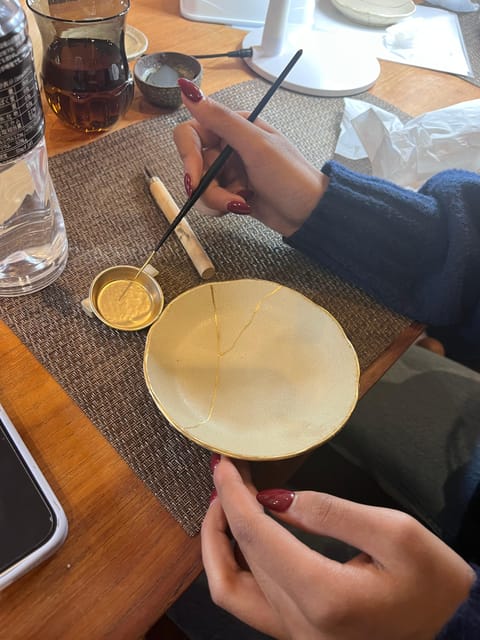
After the introduction, you select a piece of crockery from the studio’s collection. The exact shapes and designs can vary, but the available pieces are prepared for the class and suited to a two-hour project.
This choice gives the experience a personal touch. Instead of receiving an identical souvenir, you pick the object that appeals to you. A small plate may be the right choice for a first attempt, while another participant may prefer a bowl or a piece with a more noticeable break.
The prepared pieces are meant to be manageable. One class participant described the pieces as appealing without being too difficult, while still offering enough challenge to make the work satisfying. That balance is important. A project that is too simple can feel like a demonstration, while one that is too complex could leave you frustrated before the class ends.
You do not need to bring a plate, bowl, glue, tools, or other supplies. The crockery and all repair materials are included. Wear comfortable clothes, since you will be working at a table and handling craft materials for much of the session.
The step-by-step repair process
The instructor demonstrates each stage before you attempt it. The sequence includes reassembling the broken sections, repairing the joins, and restoring the surface with the workshop’s modern materials.
This demonstration-first format works well for beginners. You can watch the hand movements, see how the materials are handled, and then copy the process with direct help nearby. The instructor does not expect you to arrive with craft skills.
The small group limit is six participants. That number is one of the strongest reasons to choose this class over a large group activity. You have room to ask questions, show your work, and receive corrections before a small mistake becomes a bigger problem.
Michiko is the main teacher named in the experience information. Koto, Rita, and Yuki have also helped host or teach sessions. The teaching style is warm and attentive, with the instructor moving around the table to hand out tools and materials and check each person’s progress.
You should expect a practical class, not a lecture. The history and philosophy of kintsugi are explained, but the largest part of the two hours is spent doing the work yourself. That makes the activity a good choice if you want a cultural experience that produces something tangible.
More Tokyo craft workshops:
- Tokyo Shinjuku Chopsticks Making Class
★ 5.0 · 1,763 reviews - Chopstick Making Workshop in Ginza
★ 4.8 · 1,366 reviews - Kintsugi Experience: Art of Golden Joinery in Tokyo
★ 5.0 · 467 reviews - Tokyo Chopstick Making Workshop with Artisan
★ 5.0 · 466 reviews
Why the modern materials matter
The use of contemporary materials deserves a clear explanation. Traditional kintsugi can involve lacquer and a longer curing process. This workshop uses modern alternatives so you can complete the basic repair within a single class.
That makes the activity more approachable for a short Tokyo visit. You do not need to commit to several sessions or wait for a piece to dry over a long period. You can see the repair take shape during the lesson and carry the finished item home afterward.
There is a tradeoff. If your main goal is to study historical kintsugi methods in detail, this may feel more like an introduction than a full traditional craft course. The modern approach is practical and safer for a visitor schedule, but it is not the same as learning every stage of old-style lacquer restoration.
For most people, I think the convenience is worth it. You still learn the central idea of repairing rather than discarding, and you get hands-on practice instead of only hearing about the philosophy.
A quiet contrast to Shibuya Crossing
The location gives the class much of its appeal. Shibuya is famous for giant screens, crowded crossings, shopping, and a quick city rhythm. A short walk uphill brings you to a private studio where the pace is slower and the focus is narrow.
I like this contrast. You can pair the workshop with a visit to Shibuya without spending the whole day on a major excursion. The class lasts two hours, making it easy to place between other central Tokyo plans, provided you allow time to find the building and arrive before the late-entry cutoff.
The studio has been described as clean, inspiring, cozy, and intimate. Those details matter for careful handwork. A calm room helps you concentrate, especially when you are fitting broken sections together or applying the finishing material.
Do not expect a sightseeing tour of Shibuya. The neighborhood is the setting, not part of the guided activity. You will not be taken around the crossing or through nearby attractions. The reward is the change in atmosphere, from one of Tokyo’s busiest districts to a focused craft session.
What you take home
The finished crockery is the main souvenir. You make it yourself, so it carries more meaning than a standard shop purchase. The repaired lines show the work you completed during the class, and the object becomes a physical reminder of your time in Tokyo.
Your piece is placed in a special gift box for the journey home. That is a useful detail if you are still carrying luggage around Japan. You should still handle it with care, but you do not need to improvise your own packaging at the studio.
The class does not promise museum-quality restoration, and you should not judge your first piece by professional standards. The value is in learning the process and creating something personal. The finished result can be beautiful precisely because it shows the repair.
One participant became interested enough to buy a kit for continuing the craft at home. That option is not listed as part of the workshop’s included items, so treat it as an additional possibility rather than something guaranteed. The class itself supplies everything needed for the scheduled project.
Is $141 a fair price?
At $141 per person, this is not a budget activity. You are paying more than the cost of a casual craft lesson or a souvenir plate from a department store.
The price includes the two-hour English-language instruction, a piece of crockery, all repair materials, matcha tea, seasonal sweets, and gift packaging. More important, it includes a private studio setting and a maximum group size of six. Those elements make the cost easier to justify for visitors who value personal help and a finished item they created themselves.
I would compare it with the price of other small-group cultural workshops in central Tokyo, not with the price of buying ceramics. The experience combines teaching, materials, hospitality, and a take-home object. If you want a low-cost activity, choose another option. If you want a focused cultural session with a personal souvenir, the price is reasonable.
The value is strongest for couples, friends, parents with older children, and solo visitors who enjoy making things. It is less compelling if you prefer fast sightseeing, dislike table-based activities, or want a fully traditional kintsugi course.
Who should book this workshop?
This is a strong fit for craft lovers and first-time visitors who want something beyond the usual Tokyo checklist. You do not need experience with pottery, painting, or Japanese culture. The instructions are given in English, and each step is shown before you begin.
It also suits families with children old enough to work patiently at a table. The stated minimum age is five, and one session included children aged 10 and 13. Younger children may need close attention from an accompanying adult, especially during the repair stages.
The class works well for a special vacation memory. The group setting is small enough for conversation, but the activity still gives you time to concentrate on your own piece. It is also a good rainy-day plan, since the work takes place indoors and does not depend on the weather.
You should think twice if you are likely to arrive late. The studio does not allow entry more than 15 minutes after the reserved start time. The uphill location and confusing map directions make an early departure from your previous activity a sensible choice.
Booking, cancellation, and practical details
The workshop runs for two hours, with starting times based on availability. You can cancel up to 24 hours in advance for a full refund, and the reserve-now, pay-later option lets you hold a place without paying immediately.
Everything needed for the repair is included. Bring comfortable clothing, but no special tools or materials. Video recording is not allowed, so plan to keep your phone away while the class is in progress.
The instructor language is English, and the group is limited to six people. Directions arrive after your booking is confirmed, so check your email before setting out. Meet outside the studio five minutes before the start time.
Should you book the mon cadeau kintsugi class?
Book it if you want a hands-on Japanese cultural activity, a calm break from Shibuya, and a souvenir with a story behind it. The best reasons are the patient instruction from Michiko and her team, the very small class size, the included matcha and sweets, and the chance to complete your own repaired piece in one sitting.
Skip it if you want a strict traditional kintsugi apprenticeship, a cheap souvenir, or a tour that moves through several Tokyo sights. The modern materials make the class accessible, but they also mean the workshop is an introduction rather than an exhaustive study of historic technique.
For most visitors, I would call it a thoughtful use of two hours. Give yourself extra time to find the entrance, arrive early, and enjoy the slower rhythm. You will leave Shibuya with more than a photograph: you will have a repaired piece of crockery and a clear sense of why the repair matters.
FAQ
How long does the modern kintsugi workshop last?
The workshop lasts two hours. Starting times vary, so check availability when booking.
Where is the studio located?
The studio is uphill from Shibuya Crossing, next door to the Central Hospital Annex building at the top of Bunkamura-dori, on Shoto 2-Chome Crossing. Detailed directions are sent by email after booking.
Who teaches the class?
Michiko is the main named instructor. Koto, Rita, and Yuki have also hosted or taught sessions. Instruction is provided in English.
What is included in the price?
The price includes matcha tea, seasonal sweets, an introduction explanation sheet, all repair materials, and a piece of crockery to repair. You also take your finished piece home in a gift box.
Can children join the workshop?
Children under five cannot join. The activity information lists five as the minimum age.
What happens if I arrive late?
You cannot join the class if you arrive more than 15 minutes after your reserved start time. Meet outside the building five minutes before the lesson and allow extra time to find the entrance.
More hands-on classes and workshops in Tokyo
- Sushi Making Tokyo Roll and Authentic Japanese Sushi Class
★ 5.0 · 3,971 reviews - Tokyo: Roll and Authentic Sushi Making Class in Asakusa
★ 4.9 · 1,957 reviews - Tokyo: Sushi Making Class in a Happi Coat near a Famous Spot
★ 4.9 · 1,377 reviews - Tokyo Sushi Making Class in Tsukiji with Professional Chef
★ 5.0 · 1,177 reviews
Newly reviewed around Tokyo
- Tokyo Asakusa:Calligraphy & Make T-shirt Activity★ 5.0 · 62 reviews
- Intercity Shuttle, Tokyo to Haneda /Narita /Yokohama /Makuhari★ 5.0 · 5 reviews
- 1 Hour Travel around Tokyo with a Professional Photographer★ 5.0 · 3 reviews
- Travel Tokyo with Your Own Personal Photographer★ 5.0 · 43 reviews
- Train in Samurai Swordsmanship and Defeat the Demon in Tokyo★ 5.0 · 5 reviews
- Shuttle Van 6hr Tokyo Tour to-and-from Tokyo, Yokohama and Narita★ 5.0 · 9 reviews
- Kickboxing & Body Training with EX-Pro Fighter★ 5.0 · 4 reviews
- Traditional Japanese Knife Sharpening Class★ 5.0 · 18 reviews
Tokyo Traditional Craft Workshops, compared.
Kintsugi Experience: Art of Golden Joinery in Tokyo
Read our review →

Authentic Pure Gold Kintsugi Workshop with Master Taku in Tokyo
Read our review →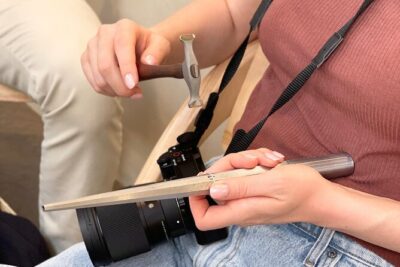
Private Handmade Ring Workshop Activity in Tokyo Shibuya
Read our review →
Browse the lists this tour appears in