
Reviewed · TSUKIJI AND TOYOSU FISH MARKET TOURS
Tsukiji Food and Toyosu Market with Government-Licensed Guide
Toyosu is Tokyo’s modern wholesale market, while Tsukiji is the older, livelier food quarter where you can eat, shop, and squeeze through narrow lanes. This private four-hour tour links both places with a licensed English-speaking guide, so you get the clean order of Toyosu and the edible energy of Tsukiji in one morning.
I like the guide’s practical role: helping you choose a good stall, explaining unfamiliar seafood, and managing the trip between markets. I also like the cultural stops, especially Namiyoke Inari Shrine and the striking Tsukiji Hongwanji Temple. The catch is that food, trains, and any admission costs are extra, and Toyosu can feel quiet if you arrive after its busiest hours.
Key points
- Two very different markets: Toyosu is the modern wholesale center, while Tsukiji is packed with retail stalls, snacks, restaurants, and souvenirs.
- Private guiding: Your group tours alone, with English-speaking guides such as Toyo, Suzuki, Mina, Koji, Show, or Mami.
- Food is separate: Bring cash and budget extra for sushi, seafood, meat, drinks, and other purchases.
- Public transport is part of the outing: Your guide organizes the trip between markets, but train or monorail fares are not included.
- The tuna auction is not included: A separate early-morning tour is required for the auction, which begins around 5:30 a.m.
- Four hours goes quickly: You get a useful introduction, but not unlimited time to browse, eat, and shop.
Why pair Toyosu with Tsukiji?
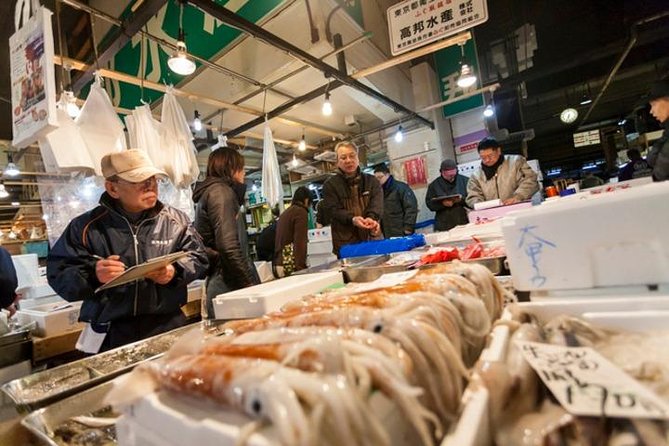
Tokyo’s two famous fish markets now offer very different experiences. Toyosu took over the wholesale business from the aging Tsukiji market in 2018 and occupies a purpose-built site on a man-made island in Tokyo Bay. Tsukiji’s wholesale market moved, but its outer market continued, leaving a busy maze of food shops, counters, and small businesses.
I like seeing both in one outing because the contrast explains how Tokyo’s food system changed. Toyosu gives you the modern working-market side, with organized buildings and viewing areas. Tsukiji gives you the public-facing side, where you can actually buy and taste food.
That contrast also creates the tour’s main weakness. Two market visits can feel repetitive if you mainly want to eat sushi. One guide described the route as a little repetitive, and that is a fair point. If your priority is the tuna auction or a long sit-down meal, a more focused tour may suit you better.
More Tsukiji and Toyosu fish market tours:
- Tokyo Tsukiji Fish Market Food and Culture Walking Tour
★ 5.0 · 3,184 reviews - Tokyo: Tsukiji Fish Market Food and Walking tour
★ 5.0 · 1,724 reviews - Tokyo: Tsukiji Fish Market Guided Walking Tour
★ 4.9 · 1,397 reviews
Starting at Toyosu’s modern market
The stated meeting point is Toyosu Market at 6-chome-6-1 Toyosu in Koto City. You meet your guide on foot, and the tour begins with about an hour at the newer market. Admission is not included, although the guide’s entry fees are covered for sights specifically listed in the experience.
Toyosu is cleaner and more controlled than Tsukiji. Its size and design can make it difficult to understand on your own, especially if you are trying to work out which building contains what. A licensed guide gives you the basic map, explains how the market functions, and points out the areas that matter to a first-time visitor.
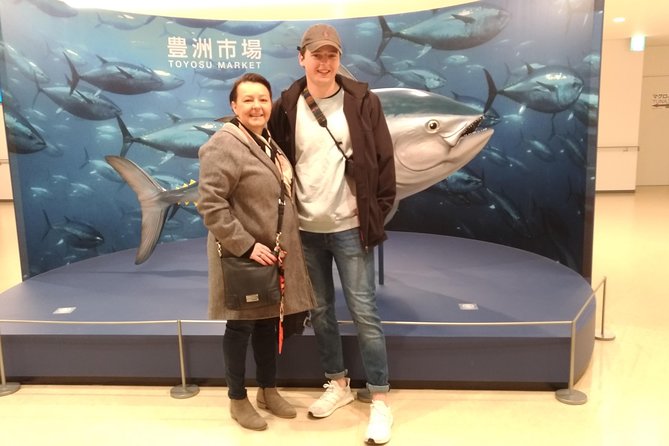
You may see viewing areas connected with the wholesale trade, along with information about the tuna auction. Some guides use videos or illustrations to explain the auction process, and one guide showed the replica of a tuna weighing more than 500 pounds. That kind of visual detail helps when the real auction is not taking place in front of you.
Do not book this experience expecting to watch the tuna auction. The auction option is a separate tour, and it starts around 5:30 a.m. You need to request that experience ahead of time. This tour can explain the auction, but it is not the auction tour itself.
Toyosu also includes more than seafood. The fruit and vegetable building has been singled out as worth seeing, and there are restaurants and shops in the wider complex. Still, timing matters. One midday visit found many stalls closed, leaving the newer market less interesting than Tsukiji. For the best chance of seeing activity, choose an early start and ask the operator about the day’s schedule.
The public-transport ride between markets
The guide organizes the journey from Toyosu to Tsukiji by public transport, but you pay the fare separately. This is more than a simple transfer. It gives you a practical lesson in moving around Tokyo, especially if train stations and IC cards feel intimidating.
Several guides have helped people recharge Suica cards or manage station connections. Another tour included the monorail, with views over Tokyo Bay and toward the downtown area. The exact route may vary, so you should confirm the meeting and transport details before setting out.
I see real value here for first-time visitors. Tokyo’s train system is efficient but can be confusing when you are rushing between a market, a station, and a meal. Having someone handle the route lets you save your attention for the food and sights.
The tradeoff is cost and time. Your ticket is not included, and part of the four-hour schedule goes to walking and riding between locations. That is reasonable for a private tour, but you should not expect four full hours inside the stalls.
Tsukiji’s outer market is the eating half
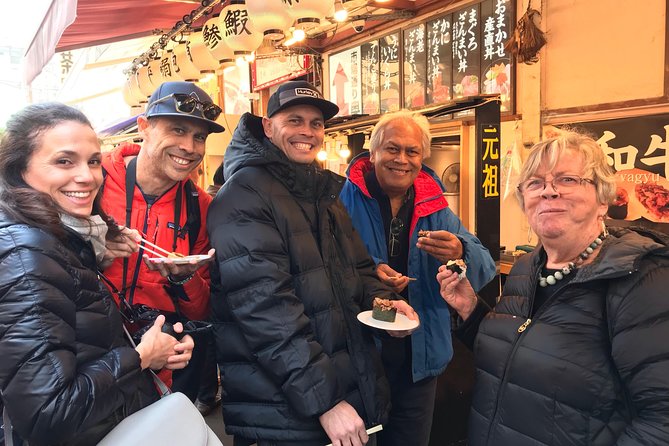
Tsukiji receives about two hours of the route and is usually the more hands-on part of the day. You meet near Tsukiji Hongwanji Temple, outside the market’s main gate, and then walk through the outer market.
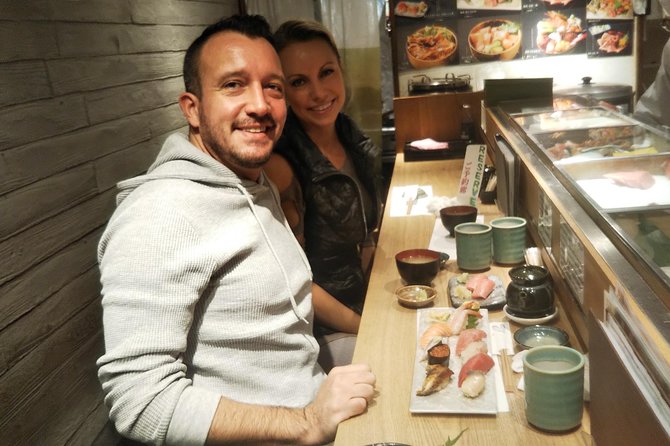
Here you can buy or sample seafood, sushi, sea urchin, grilled eel, tuna, crab, meat, and other Japanese foods. The tour does not include meals, so your guide can point you toward suitable stalls, but you pay for each purchase yourself. Bring cash and an appetite. One useful tip from the experience is to carry enough money if wagyu or several seafood tastings are on your list.
This is where the private format earns its fee. A guide can help you understand what you are seeing, steer you through crowded lanes, and explain how different shops serve different customers. Masa, for example, has guided people through wholesale, retail, consumer, and outer-market areas while explaining how the market works. Other guides have taken groups to particular sushi restaurants, including Daiwa Sushi.
You should be clear about what you want before the morning begins. Tell the guide if you care most about raw fish, cooked seafood, meat, sweets, souvenirs, or a proper sushi meal. The tour is flexible enough to respond to interests, and guides such as Koji, Shuji, Yoshi, and Mami have adjusted the route or food choices for families and individual visitors.
Do not expect a long, relaxed breakfast during the walking portion. One useful warning is that there may be little time to stop and eat before the tour ends. The best plan is to treat the tour as a guided introduction, then stay behind for breakfast or lunch at your own expense. Ending at Tsukiji makes that easy because you are already in the food district.
More Tokyo food tours:
- Tokyo: Shinjuku Food Tour (13 Dishes at 4 Local Eateries)
★ 5.0 · 6,603 reviews - Tokyo: Shinjuku Food Tour (15 Dishes and 4 Eateries)
★ 4.9 · 2,033 reviews - Best of Shinjuku: Izakaya Food Tour (4 Stops, 14+ Tastings)
★ 5.0 · 1,863 reviews - Eat and Drink Like a Local: Tokyo Ueno Food Tour-Taverns&Ramen
★ 5.0 · 957 reviews
Namiyoke Inari Shrine explains Tsukiji’s origins
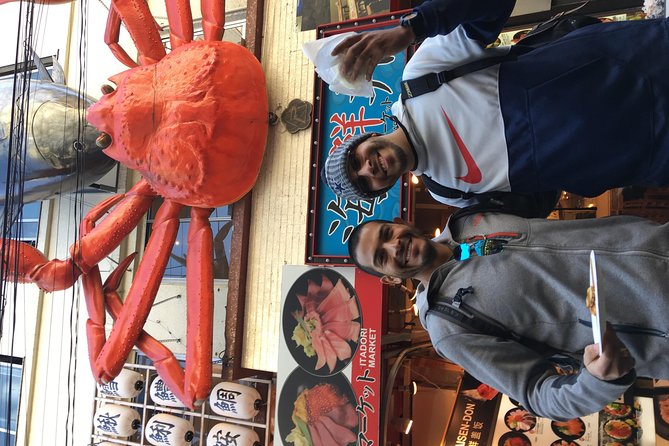
The 15-minute stop at Namiyoke Inari Shrine adds a welcome pause from the food stalls. The shrine is linked with protecting reclaimed land from waves, which connects directly to Tsukiji’s setting beside Tokyo Bay.
This is a small stop, not a major sightseeing appointment. Its value comes from context. Without it, Tsukiji can seem like a collection of shops. With the shrine and a guide’s explanation, you get a clearer sense of how the area developed and why the market occupies this reclaimed waterfront district.
The stop also gives you a chance to notice a quieter side of the neighborhood. If you are interested in how Japanese food, religion, and city growth overlap, this short visit makes the tour feel more rounded.
Tsukiji Hongwanji Temple adds a bold cultural contrast
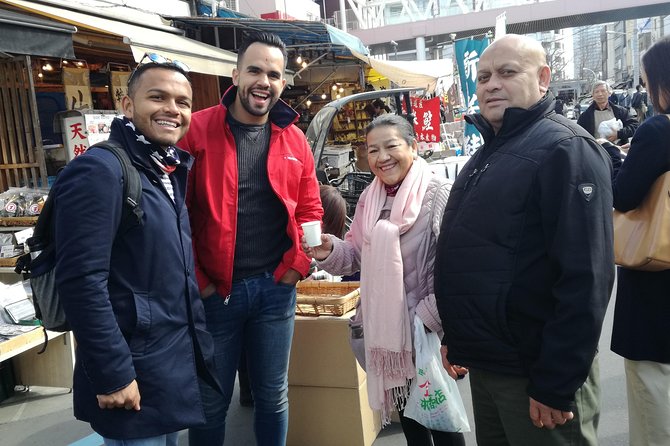
Tsukiji Hongwanji Temple is the meeting point and receives about 30 minutes of the tour. Its unusual construction makes it easy to distinguish from many other Buddhist temples in Tokyo.
The tour uses the temple to explain Japanese Buddhism and the local setting. Some guides also include a short meditation, giving you a calm break after the market lanes. I like this part because it keeps the outing from becoming a four-hour eating crawl.
The temple visit is included as a listed sight, but the tour does not promise an extended religious program. Think of it as a concise cultural stop paired with the food market, not a separate temple tour.
What the private guide changes
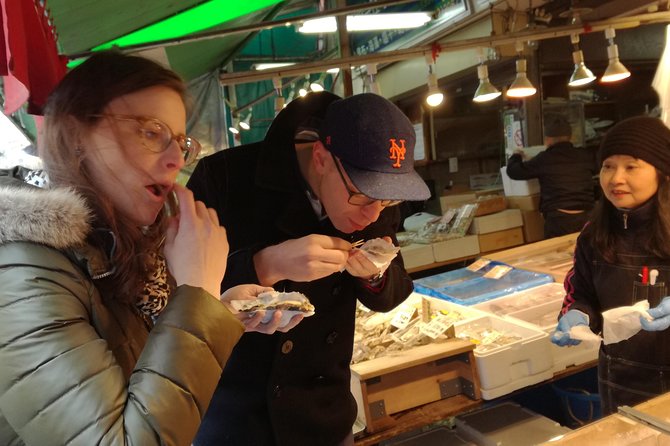
The tour costs $109.01 per person and is private for your group. That price is not a bargain if you only want to wander through Tsukiji and grab sushi. It becomes more reasonable when you value translation, route planning, food advice, and the ability to shape the morning around your interests.
A guide can answer questions that signs and menus cannot. You can ask about the difference between wholesale and retail areas, how an auction works, or what to order at a particular stall. Guides also help with practical details such as train cards, directions, and souvenir shopping.
The guides named in the experience include Toyo, Yasuho Suzuki, Yoshii, Show, Mina, Mami, Koji, Kazu, Shuji, Hiro, Mio, Lily, Emi, and Kenji Kasama. Your assigned guide will depend on availability, so you should not book expecting one specific person unless the operator confirms that arrangement.
The strongest part of the guiding is the personal attention. Families with teenagers have had the route adjusted to keep younger people interested. Solo visitors have received help choosing food and finding their way. Guides have also shared suggestions for other Tokyo neighborhoods and restaurants after the main market visit.
The main point to remember is that this is a walking tour. Pickup and drop-off are on foot, and the official meeting point is Toyosu. Some guides have met people at hotel lobbies, but you should confirm that directly rather than assume hotel pickup is included.
Timing, costs, and practical planning
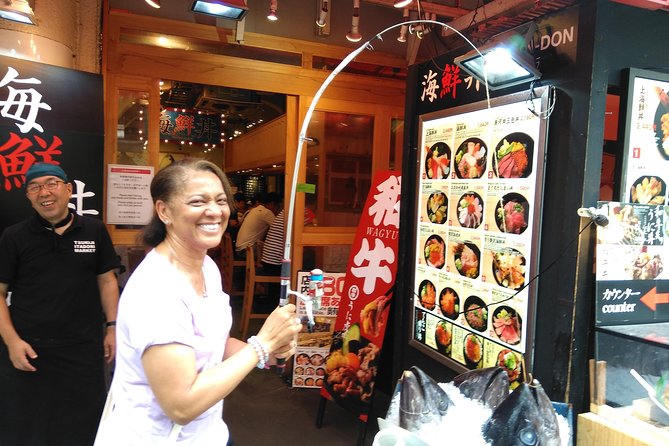
The experience lasts about four hours. The suggested pattern is one hour at Toyosu, travel between markets, about two hours at Tsukiji, 15 minutes at Namiyoke Inari Shrine, and 30 minutes at Tsukiji Hongwanji Temple. In practice, food stops and transport can affect how much time you spend in each place.
Your extra costs can include:
- Train or monorail fares between the markets
- Food and drinks
- Any admission fee not listed as included
- Personal purchases and souvenirs
The tour offers mobile ticketing and group discounts, and confirmation is provided when you book. Most people can take part, and service animals are allowed. Since the route involves walking, wear shoes that can handle several hours on hard city surfaces.
Book early if your schedule is fixed. The experience is booked, on average, 39 days ahead, which suggests that private guide availability can matter during busy periods. You can cancel for a full refund up to 24 hours before the start time. Changes or cancellations inside that 24-hour window are not accepted for a refund.
A no-show has occurred in at least one reported case, followed by a refund through the booking company. That appears to be an exception, but it is still sensible to save the operator’s contact details and confirm the exact meeting point, especially because the tour begins at Toyosu and not necessarily at your hotel.
Who will get the most from this tour?
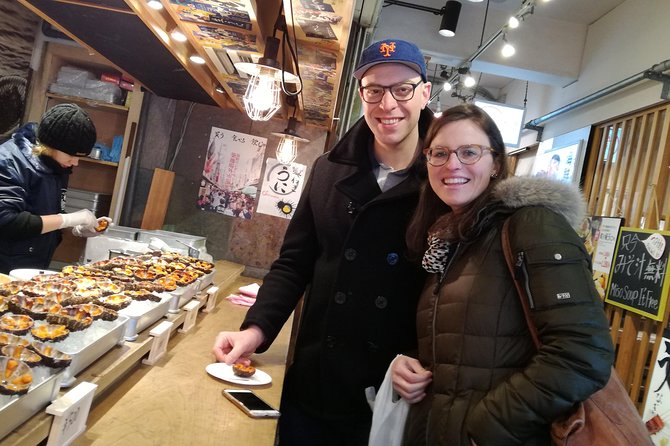
I would choose this tour if you are visiting Tokyo for the first time and want food advice without having to decode every market sign. It is also a good fit for families, older visitors who prefer a planned route, and anyone nervous about Tokyo’s rail system.
Food-focused visitors should benefit most if they tell the guide their priorities. You can ask for sushi, cooked seafood, beef, snacks, or shopping help. The private format means you do not have to follow a large group’s pace.
I would hesitate if you are already comfortable with Tokyo trains and Japanese food markets. You may get more value by visiting Tsukiji independently, spending the saved money on lunch, and reserving a separate early-morning experience if the tuna auction is your main goal.
I would also think twice if you dislike early starts, crowds, or paying separately for food. Tsukiji can be tight and busy, while Toyosu may feel too quiet outside its active hours. The tour gives you structure, but it cannot guarantee that every stall will be open.
Should you book the Toyosu and Tsukiji tour?
Book it if you want one private morning that joins food, transport, and local context. The best value comes from the guide’s help: choosing stalls, explaining unfamiliar dishes, navigating the markets, and showing how the new Toyosu site differs from the old Tsukiji district.
Do not book it as a tuna-auction tour, a four-hour restaurant meal, or an all-inclusive activity. Bring cash, budget for food and transit, confirm the meeting point, and ask for an early start if seeing market activity matters to you.
For many first visits, the $109.01 price is fair because you are paying for guidance rather than admission alone. If you want to eat well, understand what you are seeing, and avoid getting lost between two very different markets, this is a sound choice.
FAQ
How long does the tour last?
The tour lasts approximately four hours.
Where does the tour begin?
The stated starting point is Toyosu Market at 6-chome-6-1 Toyosu, Koto City, Tokyo. Pickup and drop-off are on foot within a designated Tokyo area.
Where does the tour end?
The stated ending area is the Tsukiji Outer Market in Tsukiji, Chuo City, Tokyo.
Is the tuna auction included?
No. This experience is not the tuna-auction tour. A separate tour is available for the Toyosu morning tuna auction, which begins around 5:30 a.m.
Is food included in the price?
No. Food and drinks are not included. You may stay after the tour for breakfast or lunch at your own expense.
Is public transportation included?
No. The guide organizes travel between Toyosu and Tsukiji by public transport, but transportation fees are extra.
Is this a private tour?
Yes. Only your group participates, and the tour includes a licensed local English-speaking guide.
Can I cancel for a refund?
Yes. You can cancel at least 24 hours before the start time for a full refund. Cancellations or changes made less than 24 hours before the start time are not accepted for a refund.
More Tokyo markets and shopping streets
- Tsukiji Fish Market Guided Tour and Sushi Making with Pro Chef
★ 5.0 · 775 reviews - Tokyo: Tsukiji Fish Market Food and Culture Walking Tour
★ 4.7 · 757 reviews - Tsukiji Fish Market: Street Food & Culture Walking Tour
★ 5.0 · 669 reviews - Tsukiji Fish Market Small-Group Food Walking Tour
★ 5.0 · 621 reviews
Newly reviewed around Tokyo
- Tokyo Asakusa:Calligraphy & Make T-shirt Activity★ 5.0 · 62 reviews
- Intercity Shuttle, Tokyo to Haneda /Narita /Yokohama /Makuhari★ 5.0 · 5 reviews
- 1 Hour Travel around Tokyo with a Professional Photographer★ 5.0 · 3 reviews
- Travel Tokyo with Your Own Personal Photographer★ 5.0 · 43 reviews
- Train in Samurai Swordsmanship and Defeat the Demon in Tokyo★ 5.0 · 5 reviews
- Shuttle Van 6hr Tokyo Tour to-and-from Tokyo, Yokohama and Narita★ 5.0 · 9 reviews
- Kickboxing & Body Training with EX-Pro Fighter★ 5.0 · 4 reviews
- Traditional Japanese Knife Sharpening Class★ 5.0 · 18 reviews
Tsukiji and Toyosu Fish Market Tours, compared.
Tokyo Tsukiji Fish Market Food and Culture Walking Tour
Read our review →
Tokyo Sushi Making Class in Tsukiji with Professional Chef
Read our review →
Tsukiji Fish Market Guided Tour and Sushi Making with Pro Chef
Read our review →Tsukiji Fish Market Food and Culture Walking Tour
Read our review →
Tsukiji Fish Market: Street Food & Culture Walking Tour
Read our review →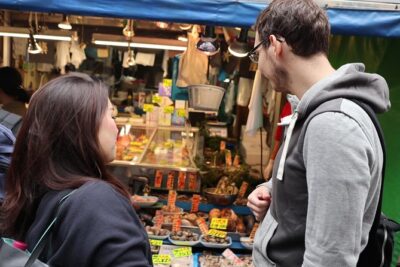
Tsukiji Fish Market Small-Group Food Walking Tour
Read our review →Browse the lists this tour appears in