
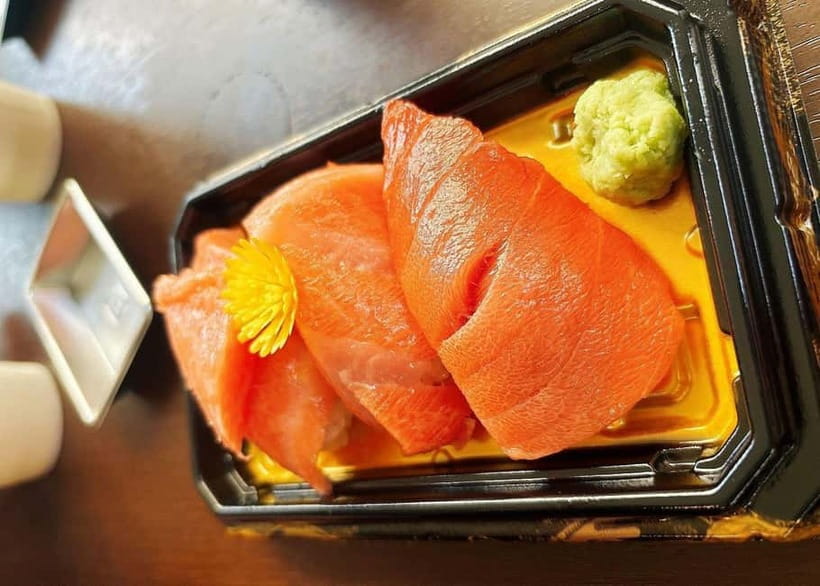
Reviewed · TSUKIJI AND TOYOSU FISH MARKET TOURS
Tokyo: Tsukiji Market and Hama-rikyu Gardens Guided Tour
Tsukiji is at its best when you approach it with an appetite and a little patience. This tour leads you through narrow market lanes packed with seafood, produce, sushi, grilled scallops, tamagoyaki, wagyu skewers, and matcha sweets, then shifts to the quiet paths of Hama-rikyu Gardens. That sharp change from food-market noise to green space and Tokyo towers is the heart of the experience.
I like the useful mix of stops: Tsukiji Hongwanji Temple gives you a calm architectural opening, while the market offers a close look at daily Japanese food culture. I also like that admission to Hama-rikyu Gardens is included, and that the tour can run in English, Chinese, French, Korean, or Spanish.
The main drawback is the walking. You cover the market, a 15-minute walk to the gardens, and an hour in the garden itself. The timing can also stretch from 150 minutes to three hours, especially if you shop or stop for food. Check the accessibility details carefully, since the information describes the tour as wheelchair accessible but also lists wheelchair users and people with mobility impairments as unsuitable.
Key points to know before booking

- Tsukiji still delivers a strong food-market experience: Expect access to around 480 types of seafood and 270 types of produce, with food purchases made separately.
- The route begins at a striking temple: Tsukiji Hongwanji’s unusual architecture and quiet interior area offer a peaceful start before the market crowds.
- Hama-rikyu changes the mood completely: Edo-period design, seasonal flowers, and Tokyo’s skyline make this more than a simple market walk.
- The tour is walking-only: Transportation between stops is not included, and comfortable shoes matter.
- Matcha is an optional extra: A tea and wagashi tasting costs about ¥1,000, paid on-site.
- The price is modest for a guided half-day: At $31 per person, the included garden admission and local guide add real value, but food and drinks cost extra.
Starting near Tsukiji Station and Hongwanji Temple
You meet the guide in front of Starbucks Coffee Tsukiji Station Front. This is a practical starting point because the route begins close to the market district, and you do not need to arrange a separate transfer between the main stops.
The first stop is Tsukiji Hongwanji Temple, with about 15 minutes of guided time. The temple is known for its unusual architecture and peaceful atmosphere. It gives you a moment to slow down before entering the market’s tighter lanes.
I like this order. Starting with the temple helps you see Tsukiji as more than a place to buy breakfast. The area has a spiritual and civic side, as well as its food trade. Fifteen minutes is not enough for a long architectural study, but it is enough to hear the basic story and take in the building before moving on.
Treat the temple as a brief orientation rather than the main event. If your priority is detailed religious architecture, this tour does not give you a long visit. If you want a quiet first stop and a little context, it works well.
More Tsukiji and Toyosu fish market tours:
- Tokyo Tsukiji Fish Market Food and Culture Walking Tour
★ 5.0 · 3,184 reviews - Tokyo: Tsukiji Fish Market Food and Walking tour
★ 5.0 · 1,724 reviews - Tokyo: Tsukiji Fish Market Guided Walking Tour
★ 4.9 · 1,397 reviews
Tsukiji Outer Market: 45 minutes of food and browsing
The main market visit lasts about 45 minutes, including guided time, free time, and shopping. That is enough for a taste of Tsukiji, but not enough to inspect every lane or eat a full meal at a relaxed pace.
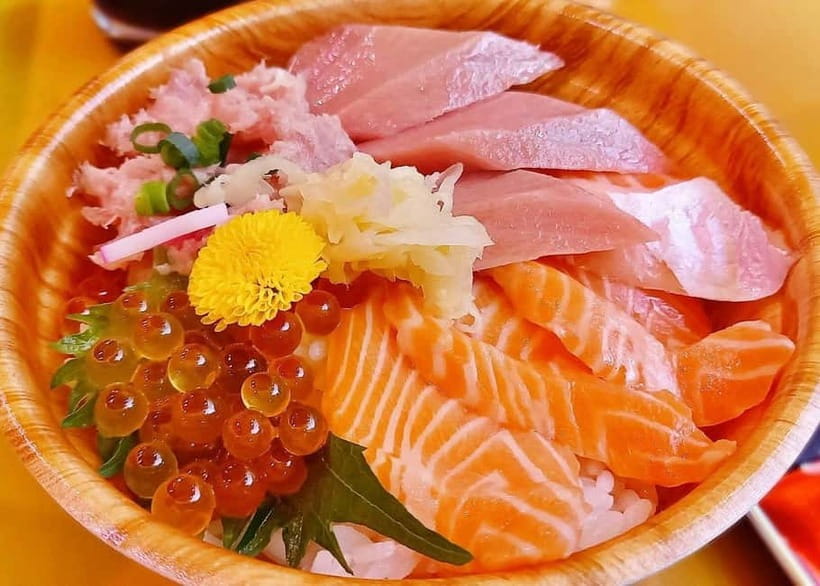
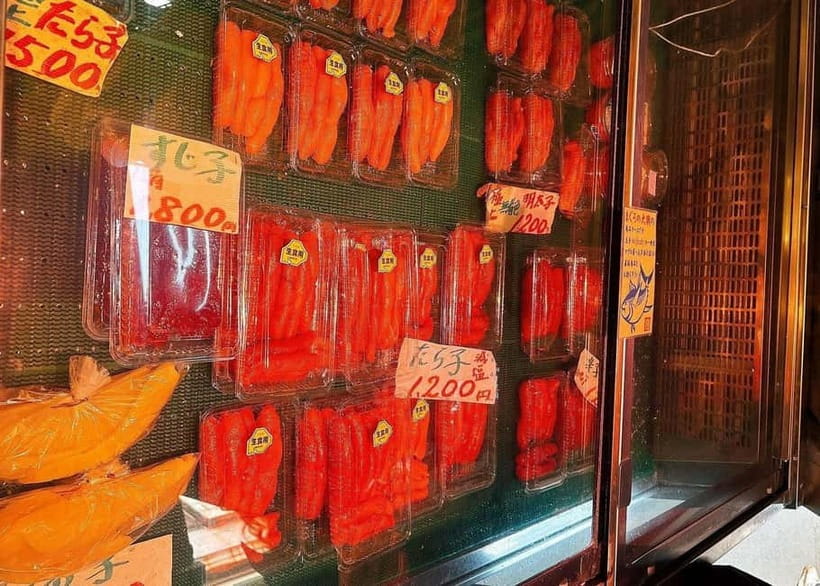
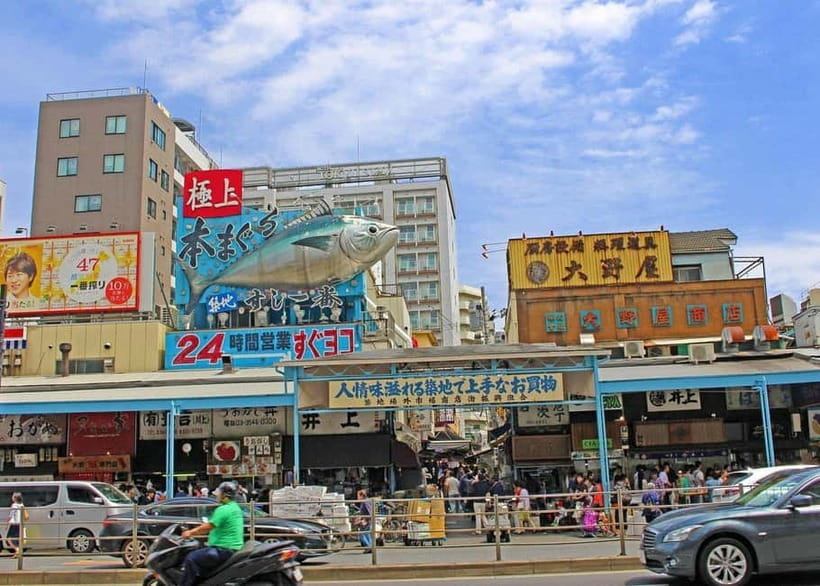
The market handles about 480 types of seafood and 270 types of produce. Those numbers help explain why the place can feel like a food encyclopedia compressed into narrow streets. You may see ingredients used in everyday Japanese cooking alongside items that are less familiar to you.
The most enjoyable part is choosing a few small bites rather than trying to eat everything. Possible foods include:
- Grilled scallops
- Tamagoyaki, or Japanese omelette
- Sushi
- Wagyu skewers
- Matcha sweets
Food from the stalls is not included, so bring some yen if you want to sample. The tour price covers the guide and Hama-rikyu admission, not your lunch or snacks. That arrangement keeps the base price low, but your final cost depends on how much you buy.
I recommend using the guide to understand what you are seeing, then keeping some free time for your own choices. A guide can explain how the market works and point out items you might otherwise pass without noticing. You still control your spending and can pick familiar foods if you are not ready for something adventurous.
The narrow lanes require basic courtesy. Walk at the group’s pace, keep your belongings close, and avoid blocking stall entrances while taking photographs. Smoking is not allowed on the activity. A camera is worth bringing, but ask before photographing people or working stallholders.
The 45-minute limit is the biggest constraint here. You can sample a few foods and browse, but this is not a slow, open-ended food tour. If you want several substantial dishes, shopping time, and careful photos, you may feel rushed. The guide-led structure is better for a first look than for a serious market-shopping expedition.
The 15-minute walk to Hama-rikyu Gardens
After Tsukiji, the group walks about 15 minutes to Hama-rikyu Gardens. There is no included vehicle or public transportation between attractions, so the route is simple but entirely on foot.
This short transfer is useful because it connects two very different sides of Tokyo without a complicated schedule. You leave the market’s food stalls and arrive at a historic garden with open paths, planted areas, and views toward the modern city.
Wear shoes you can walk in comfortably. The tour description specifically warns that there is a lot of walking, and the combination of market lanes, city pavement, and garden paths can be tiring if you are poorly shod. Bring water, especially in warm weather.
Hama-rikyu Gardens and the Tokyo skyline
The garden visit lasts about an hour, with both guided time and free time. Hama-rikyu was created during the Edo period more than 370 years ago, so the visit adds a long historical layer to the food-market experience.
The setting is the tour’s best visual contrast. You can look across quiet garden spaces toward Tokyo’s skyline, with old Japanese garden design in the foreground and tall modern buildings behind it. I like this kind of city view because it shows Tokyo as a place where different eras sit close together, rather than separating the old city from the new one.
Seasonal flowers are another reason to include the garden. The exact display depends on when you visit, so you should not expect the same colors or blooms in every month. The garden remains worthwhile outside peak flower periods, but the strongest visual appeal will change with the season.
Your hour here gives you more breathing room than the market portion. Listen to the guide during the structured part, then use your free time for photographs and a slower walk. This is also the point where the tour feels less like a food outing and more like a general introduction to Tokyo’s historic waterfront district.
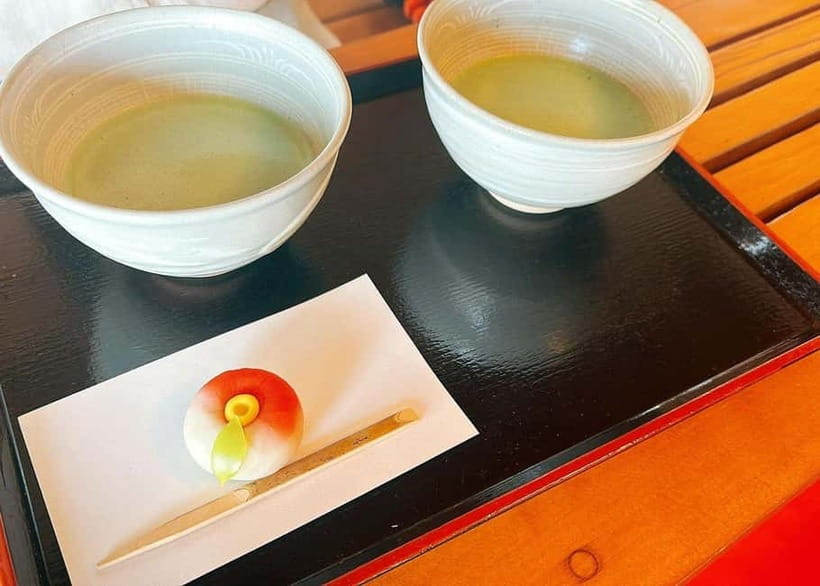
An optional matcha and wagashi tasting may be available in the gardens for about ¥1,000. You pay on-site, and it is not part of the $31 price. If you have never taken part in a Japanese tea setting, this can add a small cultural lesson to the garden visit. You may also prefer to skip it and spend the time walking.
The tasting is optional, which is useful for mixed groups. One person can try matcha and Japanese sweets while another keeps the extra money and explores. Ask the guide about the timing on the day, since the activity description does not promise that every departure includes the tasting at a fixed point.
More Tokyo markets and shopping streets:
- Tsukiji Fish Market Guided Tour and Sushi Making with Pro Chef
★ 5.0 · 775 reviews - Tokyo: Tsukiji Fish Market Food and Culture Walking Tour
★ 4.7 · 757 reviews - Tsukiji Fish Market: Street Food & Culture Walking Tour
★ 5.0 · 669 reviews - Tsukiji Fish Market Small-Group Food Walking Tour
★ 5.0 · 621 reviews
What the $31 price really covers
At $31 per person, this is priced as an accessible introduction rather than a full food tour. You receive a local guide, the guided route, and admission to Hama-rikyu Gardens. That combination is useful because you get help making sense of the market and avoid paying a separate garden entrance fee.
The price does not include food, drinks, transportation, or the optional tea and sweets. You should think of the tour as a guided framework around which you add your own snacks. If you buy several market foods, your total spending can rise quickly, but you remain in control.
The value is strongest if you want three things in one outing: an introduction to Tsukiji, a temple stop, and a historic garden. It is weaker if you mainly want a long tasting session. Forty-five minutes is a short market visit, and the guide cannot provide a full meal within that time.
The published rating is 4.8 from 73 reviews, which suggests a strong overall response, but ratings should not replace practical planning. The walking distance, extra food costs, and changing tour length matter more to your decision than the number alone.
Timing, group pace, and language choices
The stated duration ranges from 150 minutes to three hours. That is a broad range, so check the available start time and expected length when you book. Food purchases, questions, group pace, and the optional tasting can affect how long the outing takes.
The guide service is available in English, Chinese, French, Korean, and Spanish. This is helpful if you want explanations in a language you understand well, especially during the market portion, where small details about ingredients and food customs can otherwise pass quickly.
The exact guide name is not provided, so you should not book this expecting a particular individual. What you can expect is a live guide rather than an audio recording or self-guided route. That matters at Tsukiji, where having someone explain unfamiliar seafood and local food customs can make the short visit more useful.
The finish is at Hama-rikyu Gardens, not back at the Starbucks meeting point. Plan your next stop from the garden rather than assuming you will be escorted back to Tsukiji Station. This one-way design is efficient, but it matters if you have a timed reservation elsewhere.
Who will enjoy this walking tour
I would choose this experience if you are visiting Tokyo for the first time and want a compact introduction to food, religion, gardens, and city views. It suits curious eaters who like to sample several small items instead of sitting down for one long meal.
It also works for people who value explanation. Tsukiji can be confusing at first, and a guide helps turn a collection of stalls into a clearer picture of Japanese food culture. The garden portion gives you a slower hour after the market, which keeps the outing from feeling like nonstop shopping.
Families and mixed-interest groups may find the route useful because it offers different kinds of stops. One person can focus on seafood, another on architecture, and another on flowers and photographs. Keep in mind that children or adults who tire easily may struggle with the walking and the changing pace.
I would think twice if you have limited mobility, are pregnant, or need a fully accessible route. The supplied information gives conflicting signals: it labels the activity wheelchair accessible but also says it is not suitable for wheelchair users or people with mobility impairments. Contact the provider before booking and ask about the exact market lanes, pavement, garden paths, and restroom access.
Simple ways to prepare
Eat lightly before you arrive, but do not come so hungry that you need a full meal immediately. The market section is short, and the best approach is to sample one or two appealing foods while leaving room for other choices.
Bring comfortable shoes, water, a camera, and enough yen for optional food purchases. The matcha and wagashi tasting costs about ¥1,000, and stall foods are extra. Smoking is not allowed during the activity.
If you want photographs, the temple and garden offer calmer moments than the market. In the market, keep your camera ready but stay aware of stall operations and foot traffic. A small bag is easier than bulky luggage in narrow lanes.
Book with flexibility if your Tokyo schedule may change. You can cancel up to 24 hours in advance for a full refund, and the reserve-now, pay-later option lets you hold a place without paying immediately.
Should you book the Tsukiji and Hama-rikyu tour?
Book it if you want a reasonably priced, guided introduction to two very different Tokyo experiences. The strongest feature is the pairing of Tsukiji’s food stalls with Hama-rikyu’s historic garden and skyline views. The temple adds a quiet opening, and the included garden admission improves the value.
Do not book it expecting an all-day food crawl or a slow market-shopping session. The 45-minute market visit is brisk, and every snack costs extra. Also confirm the mobility details before paying.
For most first-time visitors who can comfortably walk and enjoy small tastings, this is a smart half-day choice. You get a clear route, several kinds of Tokyo culture, and enough free time to make the experience your own.
FAQ
Where does the tour begin?
The meeting point is in front of Starbucks Coffee Tsukiji Station Front.
Where does the tour finish?
The tour finishes at Hama-rikyu Gardens.
How long does the experience last?
The listed duration is between 150 minutes and three hours. Check the available departure time for the expected duration.
Is food included in the price?
No. Food purchased from market stalls is optional and paid for separately.
How much does the matcha and wagashi tasting cost?
The optional tasting costs about 1,000 yen and is paid on-site.
Is transportation included?
No. This is a walking tour, including the walk from Tsukiji to Hama-rikyu Gardens.
What languages are available?
Live guides are available in Chinese, English, French, Korean, and Spanish.
Newly reviewed around Tokyo
- Tokyo Asakusa:Calligraphy & Make T-shirt Activity★ 5.0 · 62 reviews
- Intercity Shuttle, Tokyo to Haneda /Narita /Yokohama /Makuhari★ 5.0 · 5 reviews
- 1 Hour Travel around Tokyo with a Professional Photographer★ 5.0 · 3 reviews
- Travel Tokyo with Your Own Personal Photographer★ 5.0 · 43 reviews
- Train in Samurai Swordsmanship and Defeat the Demon in Tokyo★ 5.0 · 5 reviews
- Shuttle Van 6hr Tokyo Tour to-and-from Tokyo, Yokohama and Narita★ 5.0 · 9 reviews
- Kickboxing & Body Training with EX-Pro Fighter★ 5.0 · 4 reviews
- Traditional Japanese Knife Sharpening Class★ 5.0 · 18 reviews
Tsukiji and Toyosu Fish Market Tours, compared.
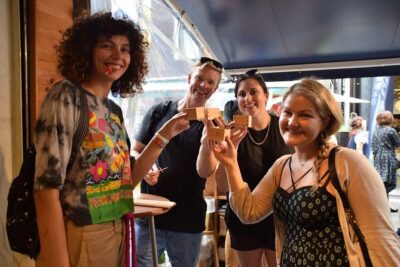
Tokyo Tsukiji Fish Market Food and Culture Walking Tour
Read our review →
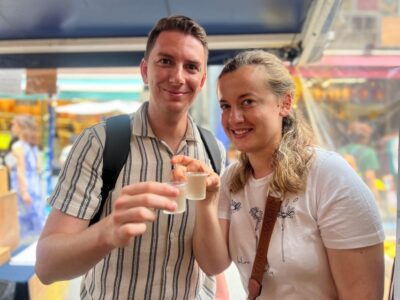
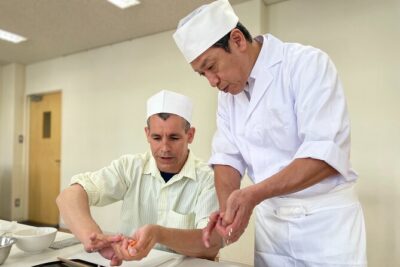
Tokyo Sushi Making Class in Tsukiji with Professional Chef
Read our review →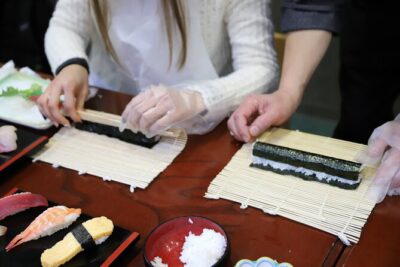
Tsukiji Fish Market Guided Tour and Sushi Making with Pro Chef
Read our review →Tsukiji Fish Market Food and Culture Walking Tour
Read our review →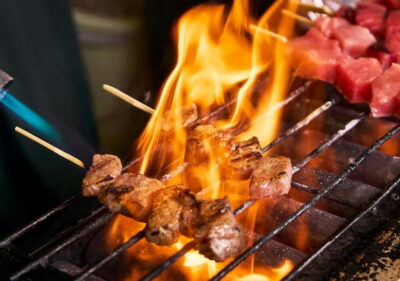
Tsukiji Fish Market: Street Food & Culture Walking Tour
Read our review →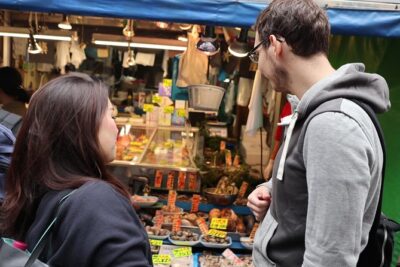
Tsukiji Fish Market Small-Group Food Walking Tour
Read our review →Browse the lists this tour appears in