
Reviewed · TOKYO SUSHI MAKING CLASSES
Tokyo Sushi Making Experience & Japanese Cooking Class
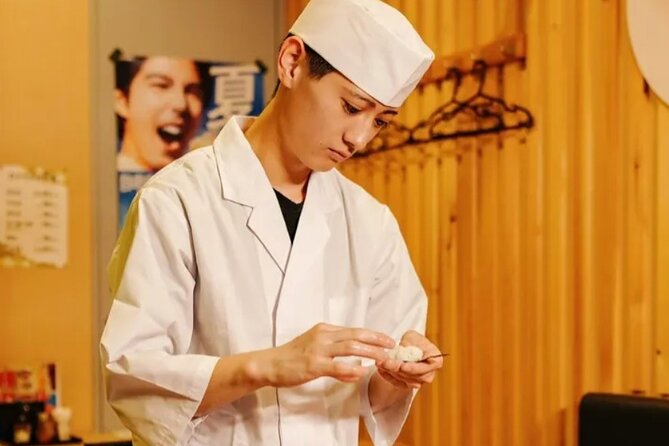
Tokyo sushi is usually best admired from the counter. Here, you get to work behind it. In about 90 minutes, you learn to shape maki, temari, and nigiri, then eat what you make with the help of English-speaking instructors.
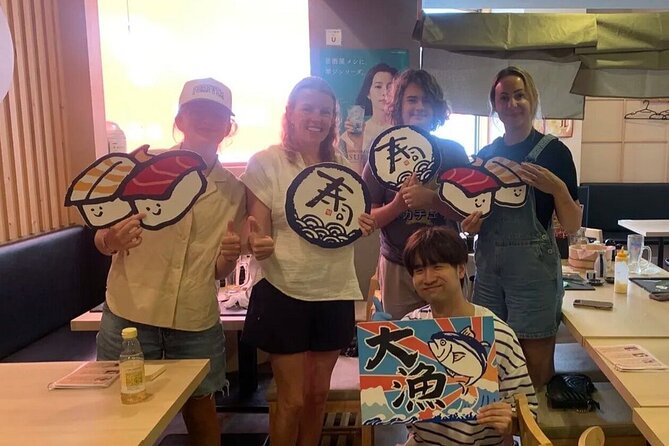
I like two things right away: the class is short enough to fit neatly into a busy Tokyo day, and the small group, capped at 15 people, gives you a fair chance to receive personal help. Families also have a reason to consider it, since children age 4 and older can join. The main drawback is that drinks cost extra, and the short session may feel brisk if you want a long, detailed cooking lesson.
Key points at a glance
- Three sushi styles in one class: Depending on the session, you work with maki and temari, or maki and nigiri.
- Fresh ingredients: Tuna, salmon, squid, and flying fish roe are among the ingredients used.
- English or Chinese instruction: Staff can guide you in English, Traditional Chinese, or Simplified Chinese.
- A manageable 90-minute activity: This works well between sightseeing plans, especially around Shinbashi.
- Optional Japanese drinks: Add sake, shochu, or another drink, but bottled water and juice are not included.
- Suitable for families: Children from age 4 can participate, while alcohol is limited to those age 20 and older.
What you actually do in 90 minutes
The class begins at S-PLAZA Yayoi II in Shinbashi, at 2-chōme 15-10, Minato City, Tokyo. You return to this same meeting point at the end, so there is no second location to find and no complicated transfer during the activity.
The format is hands-on from the start. You do not need to bring cooking equipment or supplies. Instead, the classroom provides the ingredients and instruction, while the staff helps you form the sushi and take commemorative photos.
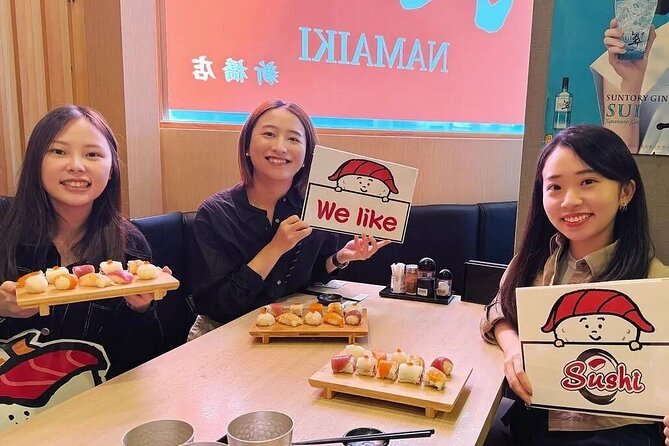
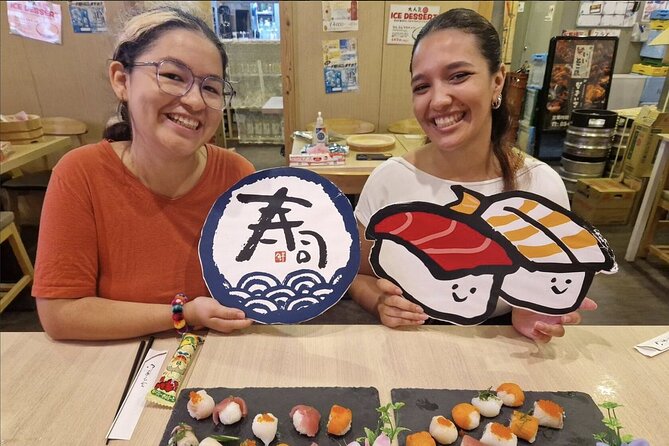
The exact menu can vary. You may make maki and temari sushi, or maki and nigiri sushi. That small difference matters. Maki gives you the familiar rolled form, temari is shaped into a neat, rounded piece, and nigiri requires you to work with rice and a topping in a more traditional style.
You also receive an introduction to sushi culture, including the etiquette behind each bite. That makes the class more than a simple food craft. You learn why sushi is shaped and served in certain ways, then put that information to use with your own hands.
At the end, you eat the sushi you have made. This is the payoff, and it also makes the activity social. You share the classroom with up to 14 other people, so the meal has a casual group feel rather than the quiet focus of a formal sushi counter.
More Tokyo sushi making classes:
- Sushi Making Tokyo Roll and Authentic Japanese Sushi Class
★ 5.0 · 3,971 reviews - Tokyo: Roll and Authentic Sushi Making Class in Asakusa
★ 4.9 · 1,957 reviews - Make Sushi and Create Unforgettable Memories in Tokyo
★ 5.0 · 1,413 reviews
Maki, temari, and nigiri: what each style teaches you
Maki sushi is the most recognizable starting point. You work with the seaweed-wrapped roll format and learn how ingredients and rice come together inside it. Tuna, salmon, squid, and flying fish roe may be part of the ingredients available for the class.
Maki is also the style most likely to feel useful when you return home. The techniques are easy to understand, and the finished rolls are practical for a casual meal. You may not become a sushi chef in one sitting, but you will have a clearer idea of how the pieces are assembled.
Temari sushi has a round, compact shape. Its neat appearance makes it especially appealing for photographs, and it gives you a different lesson in portion and presentation. The shape is less about cutting a long roll and more about forming individual pieces.
Nigiri sushi puts the rice and topping together in a direct way. If your class includes nigiri, you get to work with the form most closely linked to the image of a sushi counter. The topping and rice remain visible, so shaping and presentation matter.
Because the session may cover maki with temari or maki with nigiri, you should check the exact class option when booking. The experience promises hands-on practice, but it does not promise all three styles in every session.
Fresh seafood and the value of making your own meal
The ingredients listed for the class include tuna, salmon, squid, and flying fish roe. That selection gives you several textures and flavors to compare, rather than one repeated filling.
I like this approach because the food is not just decoration for a cooking demonstration. You handle the ingredients, shape the sushi, and then eat the result. That connection makes the lesson easier to remember, particularly if you want to try making sushi at home.
The included food is described as snacks, so you should not treat this as a large lunch or dinner replacement. For most people, it is best planned as a light meal and an activity. If you arrive hungry, you may want to leave room for another meal afterward.
The class also covers sushi etiquette. That detail adds useful context. Sushi has its own customs around handling, presentation, and eating, and even a short explanation can help you feel more at ease at a Tokyo sushi restaurant later in your trip.
Friendly help for first-time cooks
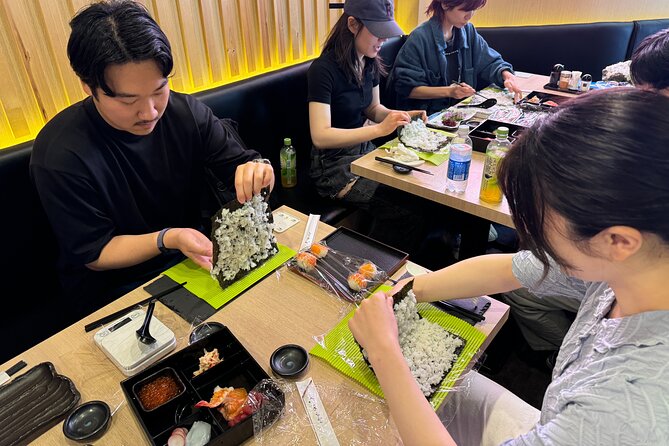
The class is designed for people who want to learn quickly, not for trained cooks. Staff speak English, Traditional Chinese, or Simplified Chinese, so you can ask for help without relying on gestures or translation apps.
The most useful part of that support is the personal assistance. Sushi can look simple until you try to form a clean piece yourself. A small-group limit of 15 allows the instructors to move around the room and offer guidance, although the amount of individual attention will naturally depend on how full the session is.
A family account of the class points to patient hosts and a smooth experience with two children. That matches the age policy, which allows children from age 4. Still, very young children may need close help from the adults in their party, especially during food preparation.
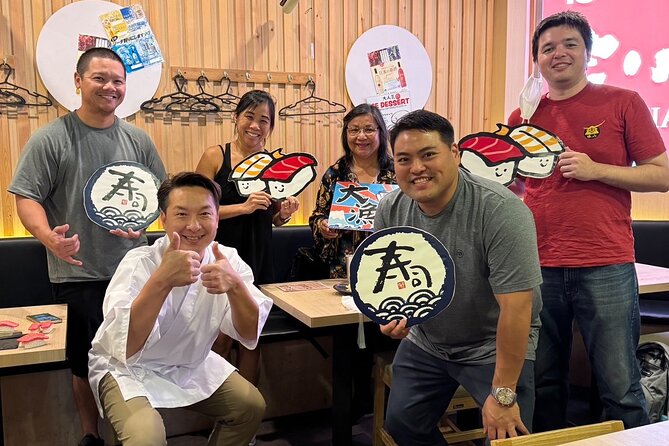
The class also includes commemorative photos. These are a pleasant extra, particularly for families or couples who want a record of the activity without asking a stranger to take pictures. Do not expect a formal professional photo session. The useful point is that you can focus on the class while staff help capture the moment.
More Tokyo cooking classes:
- Tokyo Shinjuku Chopsticks Making Class
★ 5.0 · 1,763 reviews - Tokyo: Sushi Making Class in a Happi Coat near a Famous Spot
★ 4.9 · 1,377 reviews - Tokyo Sushi Making Class in Tsukiji with Professional Chef
★ 5.0 · 1,177 reviews - Ramen & Gyoza Cooking Class in Tokyo with Local Supermarket Visit
★ 5.0 · 823 reviews
A good fit for a busy Tokyo itinerary
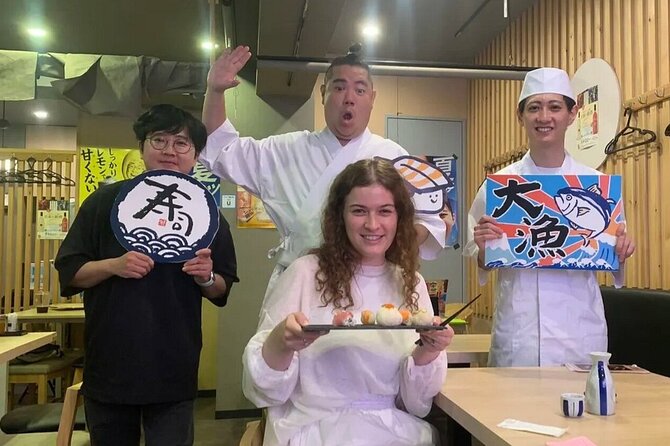
At roughly 1 hour and 30 minutes, this activity is easy to place between larger plans. You could schedule it as a morning activity, a midday break, or an early evening stop before dinner.
The meeting point is in Shinbashi, an area served by public transportation. The activity both starts and ends there, which keeps the logistics simple. You should allow extra time to locate S-PLAZA Yayoi II, since Tokyo addresses and building names can be confusing even when the distance is short.
The mobile ticket is convenient. Keep it ready on your phone and check the meeting details before leaving your hotel. Confirmation normally arrives at booking, but reservations made within two days of the activity may take up to 48 hours to confirm and remain subject to availability.
The short length is a strength if you have only a few days in Tokyo. It is also a limitation. You will learn the basic forms and culture, but you will not get the long, slow progression of a half-day culinary workshop.
Adding sake or shochu
Sake, shochu, and other drinks can be ordered as an extra. This gives adults a way to pair a Japanese drink with the sushi they make, though it also means the advertised price does not cover the full food-and-drink experience if you choose alcohol.
The legal drinking age in Japan is 20. If you plan to order an alcoholic drink, bring valid identification that proves your age. Children and younger participants can still take part in the cooking activity, but they cannot legally drink.
Bottled water and juice are not included. That is a small cost point, but it is worth knowing before you arrive. If you prefer a nonalcoholic drink, ask about available options and expect to pay separately.
Is the $59.46 price fair?
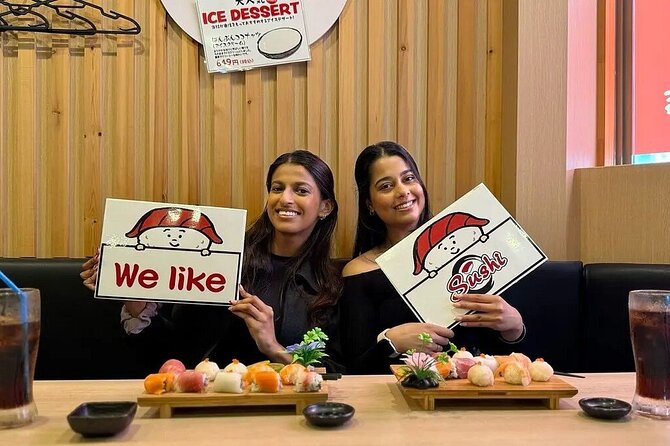
At $59.46 per person, the value depends on what you want from a cooking activity. You are paying for instruction, ingredients, a guided sushi-making session, the chance to eat your own food, and a cultural explanation in a central Tokyo setting.
I consider the price reasonable for a short, organized class with language support and a maximum of 15 participants. It is especially fair if you value the practical lesson and the photos, not just the amount of food on the table.
It is less attractive if your main goal is a large meal. The food is described as snacks, and drinks cost extra. A sushi restaurant may provide more food for a similar amount, but it will not teach you how the pieces are made or give you the same hands-on role.
The strongest value is for first-time visitors who want one approachable Japanese food activity. You get a clear introduction without giving up half a day. For a family, the per-person price can add up, so compare it with the value of an activity that works for both adults and children.
Who should book this class
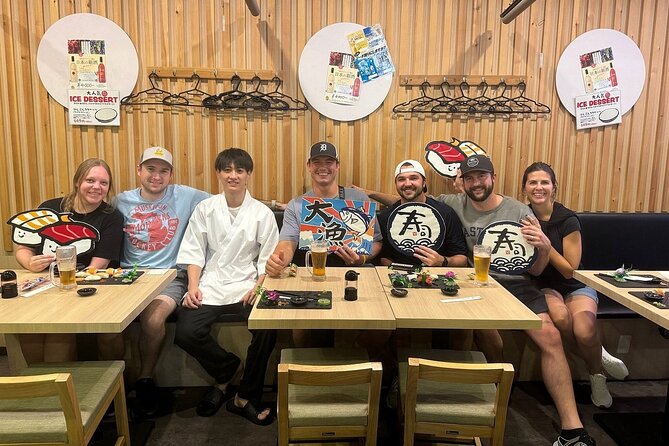
I would point this class toward several types of visitors:
- Families with children age 4 or older who want a food activity rather than another sightseeing stop.
- First-time sushi makers who prefer direct help in English or Chinese.
- Couples looking for a compact activity with photos and an optional drink.
- Visitors who want to learn a Japanese dish they can try again at home.
- Anyone with a tight Tokyo schedule who cannot spare several hours for a cooking school.
It may not suit you if you dislike raw seafood, since tuna, salmon, squid, and flying fish roe are among the listed ingredients. The information provided does not specify substitutions, so ask before booking if you have food allergies, dietary restrictions, or strong ingredient preferences.
It is also not the right choice if you want an advanced culinary course. The class is built around learning several basic sushi forms in a short time, not mastering professional knife work or restaurant-level technique.
Booking, weather, and cancellation details
You can cancel free of charge up to 24 hours before the start time for a full refund. Changes or cancellations made within 24 hours are not accepted for a refund, and the cut-off follows local Tokyo time.
The activity requires a minimum number of participants. If that minimum is not reached, you will be offered another date or activity, or a full refund. The stated policy also says poor weather can lead to a new date or full refund, even though most of the class takes place indoors.
The experience is recommended by 99 percent of the supplied booking feedback and has a rating of 5 from 150 reviews. The most useful takeaway is not the number alone. The class has a clear appeal: patient assistance, a family-friendly format, and the satisfaction of eating something you shaped yourself.
My verdict: book it for the hands-on lesson
I would book this sushi class if you want a friendly, low-pressure introduction to Japanese food culture. The strongest reasons are the manageable 90-minute schedule, the English or Chinese support, the small-group limit, and the chance to make and eat several sushi styles.
I would skip it if you want a substantial meal, a long technical lesson, or a menu tailored to strict dietary needs. For everyone else, especially families and first-time sushi makers, it offers a useful change of pace in Tokyo. You leave with basic techniques, a better sense of sushi etiquette, and photos that show you did more than simply order dinner.
FAQ
Where does the sushi class meet?
The class begins at S-PLAZA Yayoi II, 2-chōme 15-10, Shinbashi, Minato City, Tokyo 105-0004.
Where does the activity end?
The activity ends back at the same meeting point where it begins.
How long does the experience last?
The sushi-making experience lasts approximately 1 hour and 30 minutes.
What sushi will I learn to make?
Depending on the session, you will learn to make maki and temari sushi, or maki and nigiri sushi.
What ingredients are used?
Listed ingredients include tuna, salmon, squid, and flying fish roe. The included food is described as snacks.
What languages are available?
Instruction is available in English, Traditional Chinese, and Simplified Chinese.
Can children join the class?
Children age 4 and older can participate.
Are drinks included?
Bottled water, juice, and alcoholic drinks are not included. Sake, shochu, and other drinks can be ordered separately. You must be at least 20 years old and show valid identification to drink alcohol in Japan.
How many people can join the class?
The activity has a maximum of 15 participants.
Can I cancel for a full refund?
You can cancel at least 24 hours before the start time for a full refund. Cancellations or changes made less than 24 hours before the start time are not accepted for a refund.
More hands-on classes and workshops in Tokyo
- Chopstick Making Workshop in Ginza
★ 4.8 · 1,366 reviews - Matcha Making Class in Tokyo with Authentic Japanese Sweets Set
★ 5.0 · 744 reviews - Tokyo: Samurai Sword & Archery Class from Samurai Descendant
★ 5.0 · 603 reviews - Tokyo: Tsukiji Fish Market Sushi Making Class with Pro Chef
★ 4.9 · 506 reviews
Newly reviewed around Tokyo
- Tokyo Asakusa:Calligraphy & Make T-shirt Activity★ 5.0 · 62 reviews
- Intercity Shuttle, Tokyo to Haneda /Narita /Yokohama /Makuhari★ 5.0 · 5 reviews
- 1 Hour Travel around Tokyo with a Professional Photographer★ 5.0 · 3 reviews
- Travel Tokyo with Your Own Personal Photographer★ 5.0 · 43 reviews
- Train in Samurai Swordsmanship and Defeat the Demon in Tokyo★ 5.0 · 5 reviews
- Shuttle Van 6hr Tokyo Tour to-and-from Tokyo, Yokohama and Narita★ 5.0 · 9 reviews
- Kickboxing & Body Training with EX-Pro Fighter★ 5.0 · 4 reviews
- Traditional Japanese Knife Sharpening Class★ 5.0 · 18 reviews
Tokyo Sushi Making Classes, compared.
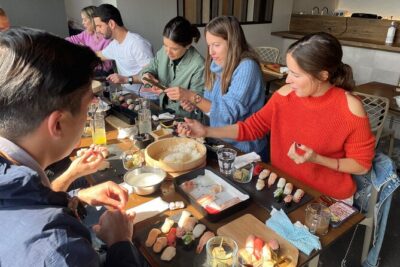
Sushi Making Tokyo Roll and Authentic Japanese Sushi Class
Read our review →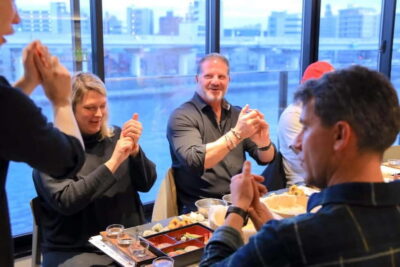
Roll and Authentic Sushi Making Class in Asakusa
Read our review →
Make Sushi and Create Unforgettable Memories in Tokyo
Read our review →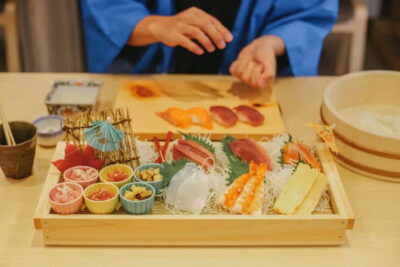
Sushi Making Class in a Happi Coat near a Famous Spot
Read our review →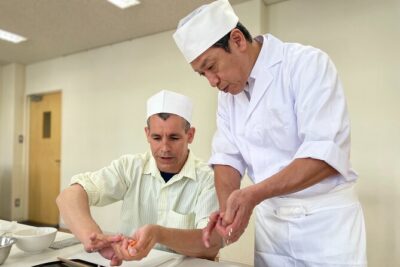
Tokyo Sushi Making Class in Tsukiji with Professional Chef
Read our review →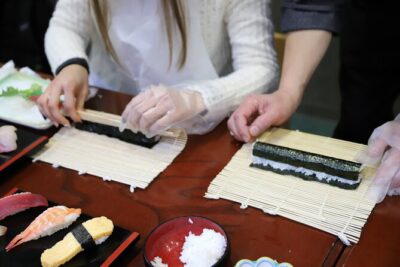
Tsukiji Fish Market Guided Tour and Sushi Making with Pro Chef
Read our review →
Tsukiji Fish Market Sushi Making Class with Pro Chef
Read our review →
Browse the lists this tour appears in