
Reviewed · TOKYO SUMO EXPERIENCES
Tokyo Sumo History Tour with Chanko Nabe Lunch
Sumo makes far more sense once you know what happens outside the bout. This three-hour walk through Ryōgoku connects sumo’s sacred beginnings at Ekō-in Temple with the Kokugikan stadium, wrestler customs, and a hotpot lunch that mirrors the food eaten by rikishi.
I like the clear route and the way it suits first-time fans. I also like the choice between the Sumo Museum and historic stables, since the experience can change with the calendar. The main drawback is simple: you do not watch an actual sumo match or meet wrestlers, and the museum may be closed on your date.
Key points
- Sumo’s story unfolds in Ryōgoku: Start at the former main gate of Ekō-in Temple, where organized sumo matches began, then continue to modern Kokugikan.
- The museum visit can change: When the Sumo Museum is open, you see ceremonial aprons, photographs, and trophies. When it is closed, the guide takes you to two historic stables instead.
- A life-sized ring makes rituals easier to understand: At Ryōgoku Edo Noren, you can stand beside a replica dohyō and learn about salt throwing, poses, and pre-bout customs.
- Chanko-nabe is part of the price: Lunch comes in your own individual pot, while drinks and extra food cost more.
- The guide fills in what you cannot see: Guides named Maikel, Maik, and Malik are associated with the experience information and feedback, with explanations aimed at both beginners and sumo fans.
- The tour is compact and manageable: It begins at 10:00 a.m., lasts about three hours, and is limited to 20 people.
Why Ryōgōku is the right place to learn sumo
Ryōgōku is not just a convenient district for a sumo-themed outing. It is the center of Tokyo’s sumo world, and the route gives you a useful timeline. You begin near the station, pass the modern arena, connect the sport to temple grounds, and finish with the meal that is closely linked to wrestler life.
That order matters. If you begin with rules and names, sumo can feel like a wall of unfamiliar terms: rikishi, dohyō, gyōji, mawashi, and so on. Here, the guide can place those ideas in physical settings. You see where major tournaments take place, learn where earlier matches were held, and then use the replica ring to picture the movements and ceremonies.
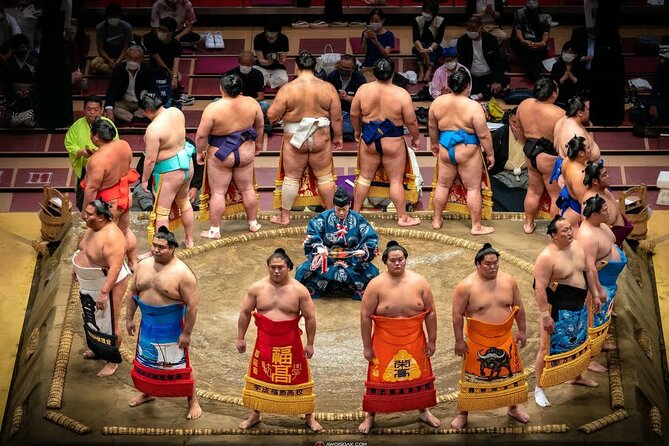
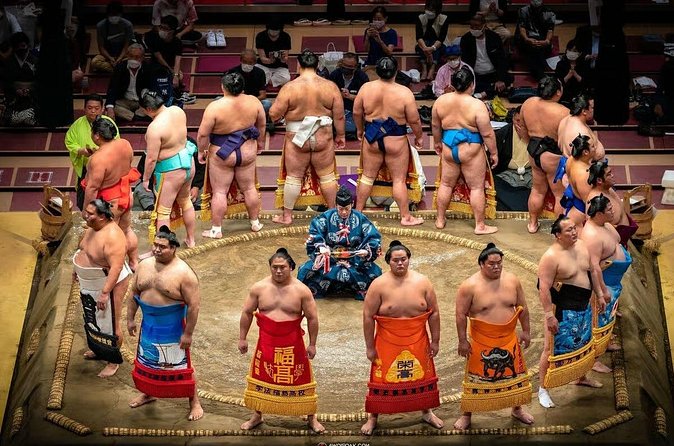
The walk is also a good fit if you want more than a photograph outside the Kokugikan. You will not enter the arena seating area, and you cannot do so without a tournament ticket. Still, the outside explanation covers the stadium’s role, the three grand tournaments held there each year, the colorful banners, and the grand entrance ceremony performed by wrestlers.
More Tokyo sumo experiences:
- Tokyo: Sumo Show and Dining Experience
★ 4.8 · 2,742 reviews - the SUMO show
★ 5.0 · 1,960 reviews - Tokyo Shinjuku Sumo Show & Experience with Photo
★ 5.0 · 1,750 reviews
Starting at Ryōgōku Station with champion portraits
The meeting point is at the 7-Eleven Japan near Ryōgōku Station, at 1-chōme 3-20 in Yokoami. The tour starts at 10:00 a.m., so give yourself enough time to find the correct station exit and meeting spot.
The opening ten minutes are brief but useful. Large portraits of champions help set the mood, and the guide introduces Ryōgōku as sumo town. This is not a major sightseeing stop on its own, but it gets you oriented quickly before the group moves toward the Kokugikan.
A group of up to 20 people is small enough for a walking explanation without being a private tour. If you want to ask about basic rules, the opening is a good time to do so. The experience is designed for beginners, but people who already follow tournaments should hear details about daily routines and ceremony that are easy to miss from the stands.
Reading the banners outside Kokugikan
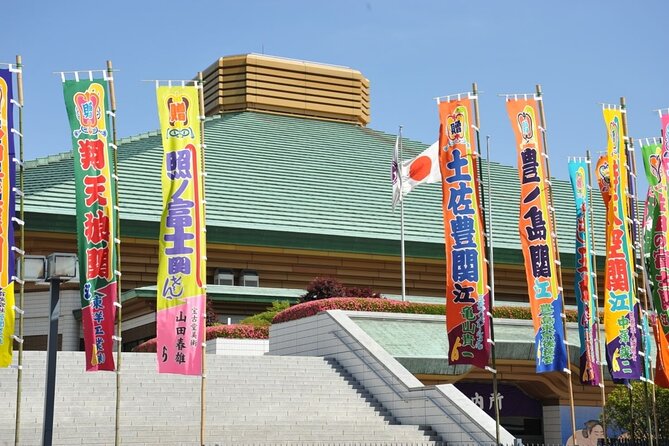
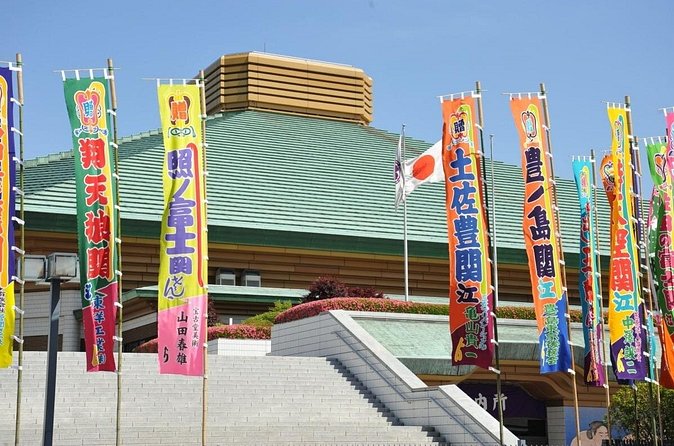
The Ryōgōku Kokugikan is the tour’s first major landmark. You see it from the outside and learn how the arena functions during Japan’s grand tournaments.
The guide explains the colored banners around the building and the meaning behind the wrestlers’ grand entrance. That context is especially useful if you later attend a bout on your own, watch one on television, or see photographs of the arena. Sumo is full of repeated gestures and symbols, but they can look like decoration until someone explains their purpose.
There is an important limit here. This is an exterior visit, not a ticketed stadium tour. The price does not include arena seating, and the schedule does not promise live wrestling. If your main goal is to watch sumo compete, book a tournament ticket separately and treat this walk as background preparation.
For many people, that is a sensible choice. A match gives you action, but a guided walk helps you understand why the action has so much ceremony around it.
Ekō-in Temple and the Chikara-zuka Monument
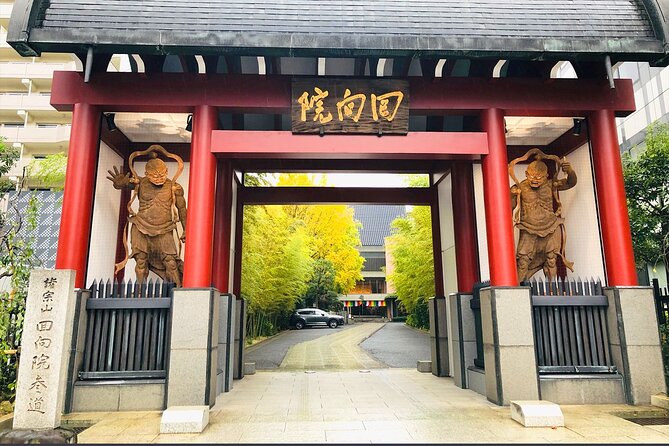
The stop at the former main gate of Ekō-in Temple brings the sport back to its older setting. This is where organized sumo matches began, and the Chikara-zuka Monument honors wrestlers and referees who helped shape the tradition.
The stop lasts about 20 minutes. It is less about sightseeing in the usual sense and more about recognizing the ground beneath the modern sport. Sumo has sacred elements, formal roles, and a strong connection to place. The temple setting gives the guide a chance to explain that background without reducing sumo to a simple contest of strength.
I like this part because it gives the tour a sense of proportion. Kokugikan shows the professional sport as it exists now. Ekō-in helps you see that the institution did not appear fully formed. The two sites work together.
Expect a short visit rather than a long temple tour. The main purpose is the sumo connection and the monument, not an extended exploration of the entire temple complex.
More Lunch Experiences in Tokyo:
- Tokyo: Mt.Fuji & Lake Kawaguchiko 1-Day Bus Tour w/Optional Lunch
★ 4.5 · 839 reviews - Tokyo: Sumo Experience and Chanko Nabe Lunch
★ 4.8 · 257 reviews - Tokyo: Tsukiji Fish Market Tour with 6 Stops & Seafood Lunch
★ 4.5 · 165 reviews - Tokyo: 1 Day Bus Tour with Meiji-Jingu,Odaiba,lunch&Skytree
★ 4.6 · 156 reviews
Choosing between the Sumo Museum and two historic stables
The plan changes depending on the day. When the Sumo Museum is open, you spend about 30 minutes with exhibits that can include ceremonial aprons, photographs, and trophies. It is a compact collection, but those objects help you see the sport beyond the bout itself.
Ceremonial aprons, for example, are not just clothing. They display the public identity of a wrestler and make the visual side of sumo easier to understand. Photographs and trophies give the sport a record of champions, events, and changing eras. The museum is not large, so do not expect a full-day institution. Its value comes from seeing original objects after the guide has introduced the wider story.
On days when the museum is closed, the guide visits two historic stables instead. Each has its own design, and the focus shifts to the daily lives of wrestlers. This option may appeal more to anyone curious about how sumo operates away from the stadium.
You should check the schedule expectation when booking, since the exact stop depends on availability. The two options are not identical. The museum gives you artifacts and visual records, while the stables give you a closer look at the places tied to training and wrestler routines. Both support the central aim of the walk, but your experience will differ.
The tour does not promise that you will see wrestlers in either setting. That is an important point to keep in mind.
Standing beside a replica dohyō at Edo Noren
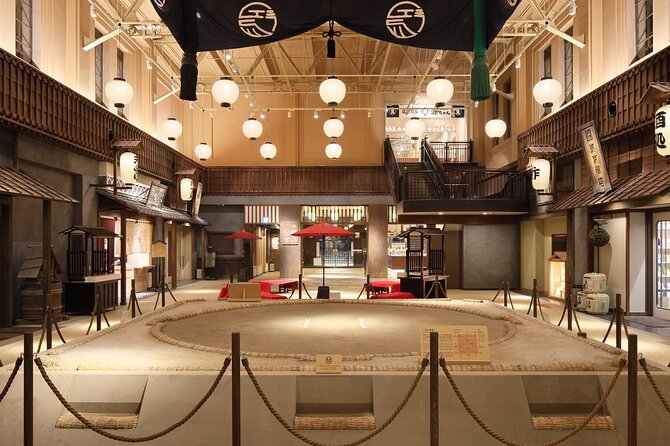
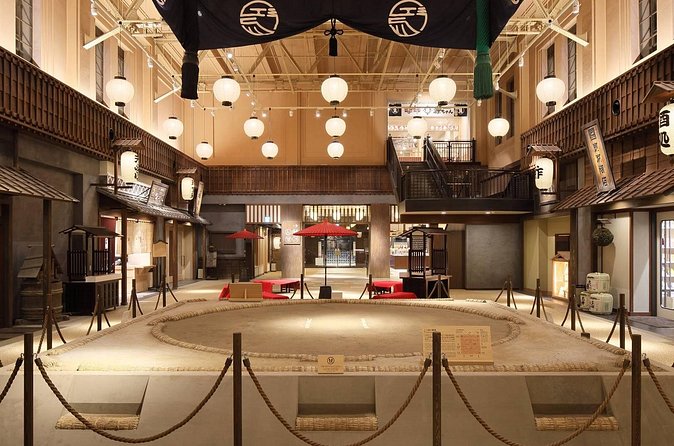
Ryōgōku Edo Noren provides one of the most hands-on parts of the experience. Here you stand beside a life-sized replica sumo ring, or dohyō, and learn what happens before the bout begins.
The guide explains salt throwing, pre-bout movements, and the poses used by wrestlers. You can try sumo positions and take photographs beside the ring. That physical reference helps. A ring viewed on television can look like a small circle, but standing beside a full-size replica gives you a better sense of the space and the formal boundary.
This is also a good stop for families and people who are new to sumo. You do not need to know the rules before you arrive. The guide can point out the parts of the ceremony in an order that makes sense, and the photo opportunity keeps the stop from feeling like a lecture.
The visit lasts about 20 minutes, so it is an introduction rather than a training session. You will not be taking part in a real bout, and the replica is not a substitute for seeing professional wrestlers in competition. Its job is to make the rituals visible.
Chanko-nabe: a filling finish, not just a themed snack
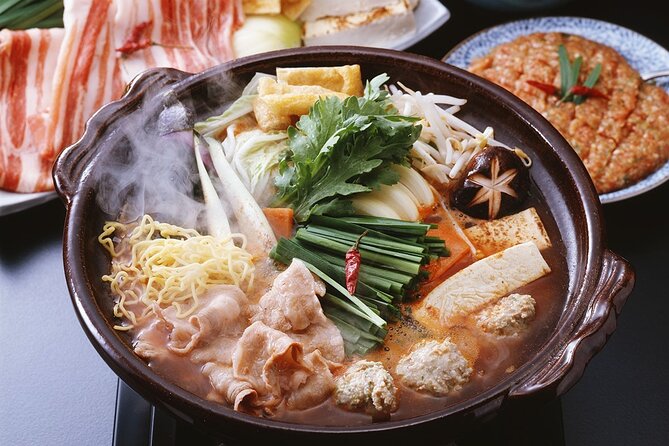
The final hour is devoted to lunch at Chanko Edosawa, or another suitable restaurant in Ryōgōku if the restaurant changes. Chanko-nabe is the hotpot associated with sumo wrestlers, and each person receives an individual pot.
That format makes the meal feel tied to the subject rather than added as an unrelated restaurant stop. The food is traditionally linked to the wrestler’s daily diet, so you finish the walk by trying one part of sumo life rather than simply hearing about it.
The included meal is the chanko-nabe set. Drinks and extra food are not included, so budget for those if you want them. The supplied information does not give a detailed ingredient list, and the restaurant may vary, so do not book this expecting a fixed menu beyond the included hotpot set.
One useful point is timing. After two and a half hours of walking and listening, an hour at the table gives you room to eat at a relaxed pace and continue asking questions. It also means this tour is more substantial than a quick morning stroll. Plan the rest of your day with lunch in mind.
The meal received clear praise in the available feedback, including a comment that the chanko-nabe was delicious. That does not guarantee that every diner will love every ingredient, but it does indicate that the lunch is a meaningful part of the experience, not an afterthought.
What the guide adds for beginners and sumo fans
The guide is the key to the tour. The activity is conducted in English, and the guide explains the major sites, the rituals, and wrestler life as you move between them.
The experience information identifies the provider as Maikel T. Feedback also refers to the guide as Maik or Malik, so the name may be presented in different ways. The important point is that the tour depends on a guide who can connect visual details with the sport’s customs.
If you are new to sumo, you should come away with a better grasp of what you are seeing, not just a set of Japanese words. If you already follow tournaments, the temple site, stable option, museum pieces, and daily-life discussion offer material beyond the standard match-day view.
The strongest praise centers on the guide’s subject knowledge and the amount learned during the walk. One clear caution is that the tour teaches you how to understand and watch sumo rather than showing you live sumo action. That distinction should guide your booking decision.
Is $91.04 a fair price?
At $91.04 per person, the tour is not the cheapest way to walk around Ryōgōku. Its value depends on how much you want the interpretation and the organized lunch.
The price covers an English-speaking guide, the full walking route, explanations at Kokugikan and Ekō-in Temple, the replica ring visit, either the museum or two stables, and chanko-nabe. Since the tour lasts about three hours and includes a substantial meal, the cost is easier to justify than it would be for a short sightseeing walk.
You are also paying for structure. You do not need to research the former temple gate, work out the sumo connections, or decide which sites fit together. The guide creates a story from places that might otherwise seem scattered.
The value drops if you mainly want live wrestling. Arena admission is not included, and the tour does not give you access to tournament seating. It is best viewed as a cultural lesson with lunch, not as a substitute for a match ticket.
Five or more bookings in the previous month suggest steady interest, but the listed rating is based on only three reviews. The positive feedback is encouraging, particularly about the guide and meal, but the small number means you should judge the tour by its clear inclusions and limits rather than by the rating alone.
Who should book this Ryōgōku walk?
I would recommend it to you if you are visiting Tokyo for the first time and want a simple introduction to sumo. It also suits anyone who has watched bouts but wants to understand the ceremony, history, and wrestler lifestyle around them.
The tour works well for:
- First-time sumo followers who want the basic terms and rituals explained.
- People attending a tournament separately who want context before sitting in the arena.
- Visitors interested in food traditions as well as sport.
- Families and mixed groups, since the replica ring and photo stop add a visual element.
- Experienced fans who want to see sumo-related places outside the tournament hall.
You may want to skip it if your priority is a live match, a private visit with wrestlers, or a long museum session. You should also consider the walking format if you prefer a seated tour, although the information provided says most people can participate and the route is near public transportation.
The tour ends back at the meeting point, which makes it easy to continue exploring Ryōgōku afterward.
Practical details before you reserve
The tour begins at 10:00 a.m. and lasts approximately three hours. A mobile ticket is provided, and confirmation arrives at booking.
The group can include up to 20 people. That is not a private experience, but it keeps the group within a manageable size for a walking guide. Wear shoes suitable for walking between several stops, and remember that lunch includes the chanko-nabe set but not drinks or additional dishes.
The museum may be closed on some days. In that case, the itinerary changes to two historic stables, each with a distinct design. If the museum is especially important to you, confirm its availability before you book.
Free cancellation is available if you cancel at least 24 hours before the 10:00 a.m. start time. Changes or cancellations inside that window are not refunded, and the experience requires a minimum number of participants. If the operator cancels because that minimum is not reached, you can choose another date or receive a full refund.
Should you book this sumo experience?
Book it if you want context, local places, and a full Japanese lunch in one compact morning. The strongest parts are the route from Ekō-in Temple to Kokugikan, the explanation of pre-bout customs beside the replica ring, and the chance to see either sumo artifacts or historic stables.
Do not book it expecting a match, an arena seat, or a guaranteed meeting with wrestlers. The tour is about learning how sumo works and why its rituals matter. For that purpose, the $91.04 price is reasonable, particularly if you value an English explanation and the included chanko-nabe meal.
FAQ
How long does the Tokyo Sumo History Tour last?
The experience lasts approximately three hours, including the walking route and the chanko-nabe lunch.
What time does the tour begin?
The tour starts at 10:00 a.m.
Where does the tour begin and end?
It begins at the 7-Eleven Japan near Ryōgōku Station at 1-chōme 3-20, Yokoami, Sumida City, Tokyo 130-0015. It ends back at the meeting point.
Is entry to a live sumo match included?
No. The tour does not include entry to the arena seating area during tournaments. Arena tickets must be arranged separately.
Will I visit the Sumo Museum?
You may visit the Sumo Museum when it is open. If it is closed, the guide takes the group to two historic stables instead.
Is lunch included in the price?
Yes. The chanko-nabe set is included, with each person receiving an individual pot. Drinks and additional food are not included.
What is the cancellation policy?
You can cancel for a full refund up to 24 hours before the experience starts. Cancellations or changes made less than 24 hours before the start time are not refunded or accepted.
More history and heritage tours in Tokyo
- Tokyo: Imperial Palace and Shogun Historical Walking Tour
★ 5.0 · 2,251 reviews - Tokyo: Imperial Palace Japanese History Walking Tour
★ 4.9 · 987 reviews - Tokyo: Shinjuku Historical Walking Tour & Secret Backstreets
★ 5.0 · 530 reviews - Yanaka Walking Tour: Historic and Traditional District of Tokyo
★ 5.0 · 530 reviews
Newly reviewed around Tokyo
- Tokyo Asakusa:Calligraphy & Make T-shirt Activity★ 5.0 · 62 reviews
- 1 Hour Travel around Tokyo with a Professional Photographer★ 5.0 · 3 reviews
- Travel Tokyo with Your Own Personal Photographer★ 5.0 · 43 reviews
- Intercity Shuttle, Tokyo to Haneda /Narita /Yokohama /Makuhari★ 5.0 · 5 reviews
- Train in Samurai Swordsmanship and Defeat the Demon in Tokyo★ 5.0 · 5 reviews
- Shuttle Van 6hr Tokyo Tour to-and-from Tokyo, Yokohama and Narita★ 5.0 · 9 reviews
- Kickboxing & Body Training with EX-Pro Fighter★ 5.0 · 4 reviews
- Traditional Japanese Knife Sharpening Class★ 5.0 · 18 reviews
Tokyo Sumo Experiences, compared.
Tokyo Shinjuku Sumo Show & Experience with Photo
Read our review →
Luxury Sumo Show Experience & Japanese cuisine & Drink
Read our review →
Tokyo Sumo Experience: Chanko & Mochi with a Former Pro
Read our review →
Ultimate Sumo Tournament: Tokyo, Osaka, Nagoya, Fukuoka
Read our review →Browse the lists this tour appears in