
Reviewed · AKIHABARA AND ANIME TOURS
Tokyo: Private Manga Drawing Class with Professional Artist
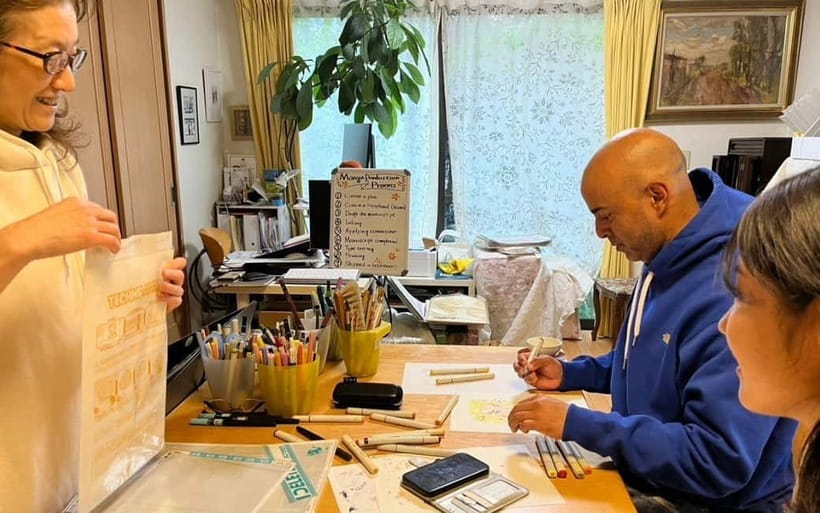
The best part of this Tokyo workshop is the chance to work beside Yumiko, a published manga artist whose stories have appeared in Japanese magazines. You do not just sketch a cartoon and leave. You learn how professionals build a character, control line weight, add screentone, and fix mistakes.
I like the small maximum group of six, which gives Yumiko time to correct your hand angle and draw examples on your page. I also like the three difficulty levels: you can practice inking, outline a character, or design one from scratch. The main drawback is the price, $141 per person, which is a lot for 150 minutes if you only want a casual souvenir drawing.
Key points to know before booking
- Work with a published artist: Yumiko has serial manga experience and can answer questions about shōnen, shōjo, seinen, publishing, and portfolios.
- Use real manga tools: Try G-pens, maru-pens, brush pens, dip ink, alcohol markers, white ink, correction fluid, and screentone sheets.
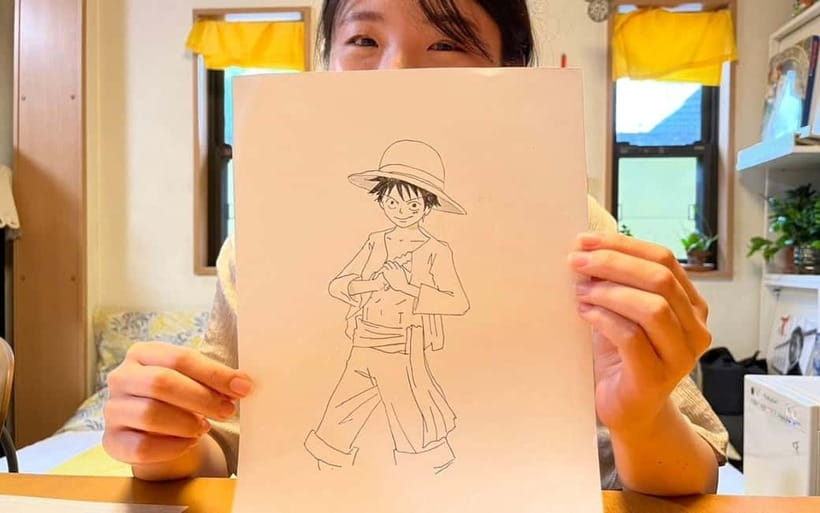
- Choose your own challenge: Pick a beginner inking sheet, a character outline, or a full character design, with options such as chibi style and action poses.
- Learn classic screentone: Cut halftone sheets with an art knife, place them for shadows or effects, and burnish the edges into the paper.
- Receive personal feedback: The artist circles the room, demonstrates techniques, marks areas to improve, and signs your finished work.
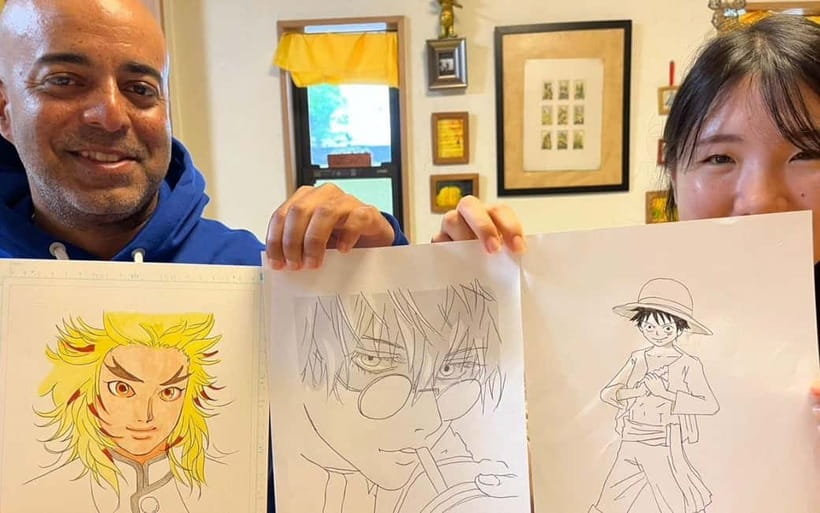
- Take home more than one drawing: Your pack includes the original artwork, practice sheets, a mini tool guide, and an artist-drawn portrait.
Starting at Shindaita Station with a tiny group
You meet your guide outside the ticket gates at Shindaita Station on the Keio Inokashira Line. The station has one exit, so this is a simple meeting point: walk through the wickets and step outside.
The studio is reached from the station meeting point, but transportation to the studio is not included. Plan your own train fare and allow enough time to find the meeting spot. If you are uneasy about navigating Tokyo trains, the meeting arrangement is still helpful because you do not have to search for one of several station exits.
The workshop is private, with no more than six people. That number matters. Manga drawing involves small corrections that are easy to miss in a large class. Here, the artist can look at your grip, posture, wrist angle, and page position. English is used during the session, with Japanese support available.
You can book this for yourself, a couple, or a family group. Children aged six and up can take part, but the activity is not suitable for children under five. Comfortable clothes are sensible since you will spend much of the session seated and working with ink and art tools.
More Akihabara and anime tours:
- Official Street Go-Kart Tour – Akihabara
★ 5.0 · 1,578 reviews - Tokyo Go Kart: Asakusa, Skytree, and Akihabara **IDP MUST**
★ 5.0 · 988 reviews - Akihabara Anime & Game Adventure Walking Tour (Group or Private)
★ 5.0 · 404 reviews
Meeting Yumiko and choosing your manga direction
The class begins with an introduction to Yumiko and her published work. You can look through her portfolio and discuss the genres she works in, including shōnen, shōjo, and seinen.
This opening is useful because it gives the lesson a personal direction. Tell her which series, characters, or styles you like. If you arrive wanting to draw Tanjiro, a chibi character, or a character in an action pose, this is the time to say so.
You do not need prior drawing experience. Beginners can use printed guideline sheets rather than face a blank page. More experienced artists can ask for a new character, an expression sheet, or a harder pose.
The three levels make this class more flexible than a fixed craft activity:
- Inking practice gives you a controlled way to test pens and line weight.
- A character outline adds basic anatomy and proportion.
- Full character design asks you to make more creative choices from the start.
I would choose the level based on your goal, not your confidence. A beginner who wants to learn might get more from an outline than from an easy coloring-style sheet. A child or first-time artist may have a better time starting with chibi proportions and clear guidelines.
Testing G-pens, maru-pens, and brush pens
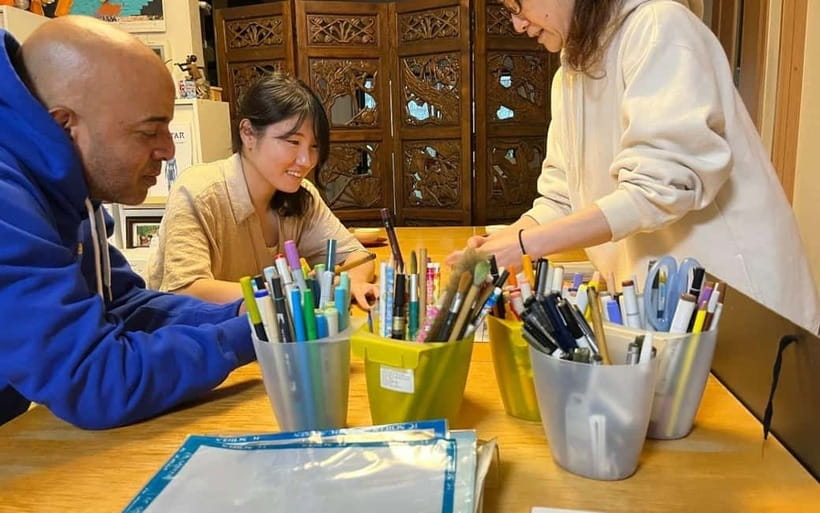
The tools are a major reason to book this class. You get to try the classic pens used in manga production, rather than simply watch an artist use them.
A G-pen can produce expressive lines that change in thickness with pressure. A maru-pen is useful for finer marks. A brush pen offers a different feel, with quick changes between narrow and broad strokes. Comparing them helps you understand why manga artists keep several tools nearby instead of relying on one pen for everything.
You also learn how the paper changes the result. The artist compares premium Kent paper with inexpensive copy paper, explaining how paper tooth and weight affect ink control. This is practical advice you can use after the class. The right paper can reduce frustration, especially when you are trying to keep fine lines clean.
The class also touches on dip ink, alcohol markers, screentones, and digital tablets. You are not expected to master every medium in one sitting. Instead, you get a look at how traditional tools fit alongside newer digital methods.
Expect a few imperfect lines. That is part of the lesson. Smudging, shaky curves, hand strain, and poor perspective are all common problems, and the artist shows you how to manage them. You learn to rotate the page instead of twisting your wrist when drawing a curve. That small habit can make a surprising difference.
Building a character from shapes and proportions
Once you select your project, the lesson moves into construction. You use basic shapes to plan the head, torso, limbs, and balance line before adding details.
This is where the class becomes more useful than a simple drawing demonstration. Manga faces may look effortless, but the character still needs a stable structure. You work with heads-to-body ratios, balance, and anatomy so the finished figure does not look as if it is tipping over.
The printed guides help you stay on track. Yumiko moves around the room and offers corrections, including advice on posture and how to hold the pen. If needed, she demonstrates directly on your page.
You then add the features that give the character personality. The artist can help with expressions, hair, action poses, or a chibi treatment. If you already have a favorite character in mind, you can use that interest to keep the exercise focused.
One useful technique is line-weight theory. You learn where to thicken or taper lines to suggest volume. Hair can use feathering for shine and movement. Speed lines add motion. These details do not require advanced drawing skills, but they make a finished page look more intentional.
A 150-minute session cannot turn you into a professional manga artist. It can give you a clear process: build the body, check the proportions, control the outline, then add texture and effects. That process is more valuable than simply copying a finished character.
More hands-on classes and workshops in Tokyo:
- Sushi Making Tokyo Roll and Authentic Japanese Sushi Class
★ 5.0 · 3,971 reviews - Tokyo: Roll and Authentic Sushi Making Class in Asakusa
★ 4.9 · 1,957 reviews - Tokyo Shinjuku Chopsticks Making Class
★ 5.0 · 1,763 reviews - Tokyo: Sushi Making Class in a Happi Coat near a Famous Spot
★ 4.9 · 1,377 reviews
Applying screentones with an art knife and burnishing spoon
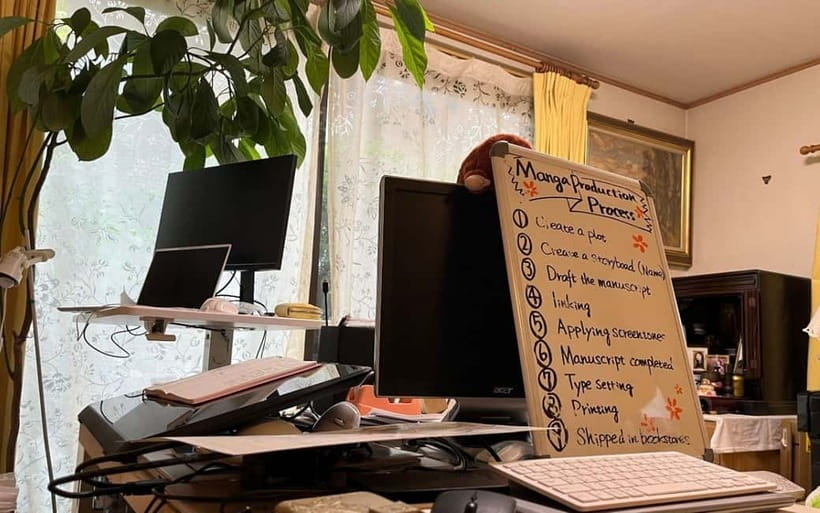
The screentone section is one of the more unusual parts of the workshop. You choose halftone sheets for shadows, backgrounds, sparkle effects, or other textures.
You then cut the tone with an art knife and place it on the drawing. A burnishing spoon helps press the sheet into position and blend the edges. This is a hands-on process, and it requires more care than simply shading with a pencil.
Classic screentone is worth trying because it shows how manga artists created depth and atmosphere before digital tools became common. You see how a simple dot or line pattern can suggest a shadow, a gradient, or a background effect.
It is also the part most likely to test your patience. Cutting too much, placing a sheet slightly off, or leaving a rough edge can affect the final page. That is not a reason to skip it. It is a good reason to listen closely to the artist and work slowly.
If screentone is your main interest, say so early. You may choose a simpler drawing and spend more time on the tone work. One participant who already had previous manga instruction planned to return for more help with screentone, which tells you that this technique can easily become its own study.
Finishing with white ink, corrections, and critique
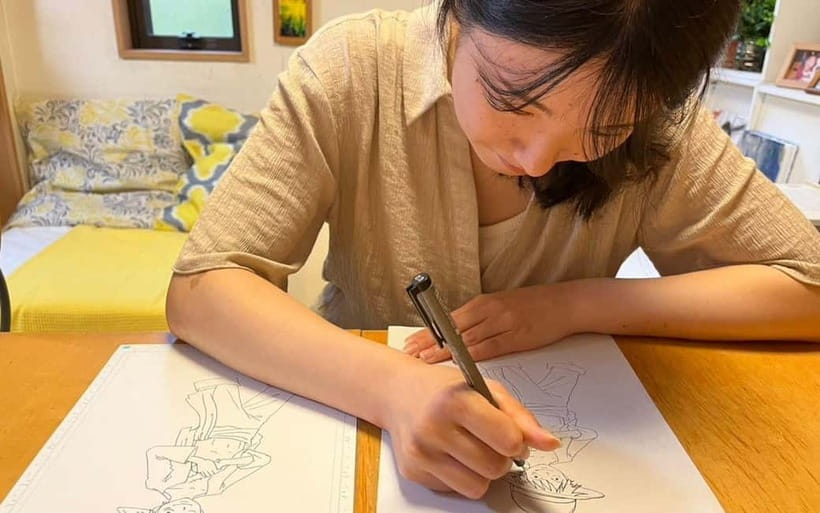
Near the end, you add final touches with white-ink pens and correction fluid. These tools help create highlights and repair small mistakes.
The correction stage is reassuring for beginners. You do not have to treat every stray mark as a disaster. Manga production includes ways to clean up and refine a page, and seeing those methods makes the work feel more approachable.
You receive one-on-one feedback on the finished artwork. The artist marks areas to improve and signs the completed piece. This direct critique is one of the strongest reasons to choose a small workshop instead of a self-guided manga activity.
You also receive an artist-drawn portrait. One participant arrived hoping to draw Tanjiro and completed the character from scratch, then received a similar Tanjiro drawing signed by Yumiko. Your subject may differ, but the portrait gives you a second piece to take home and a personal reminder of the session.
Photos with the artist and your artwork are allowed. Bring a camera if you want a record for social media or a reference image for your own practice.
What you take home and what you can use later
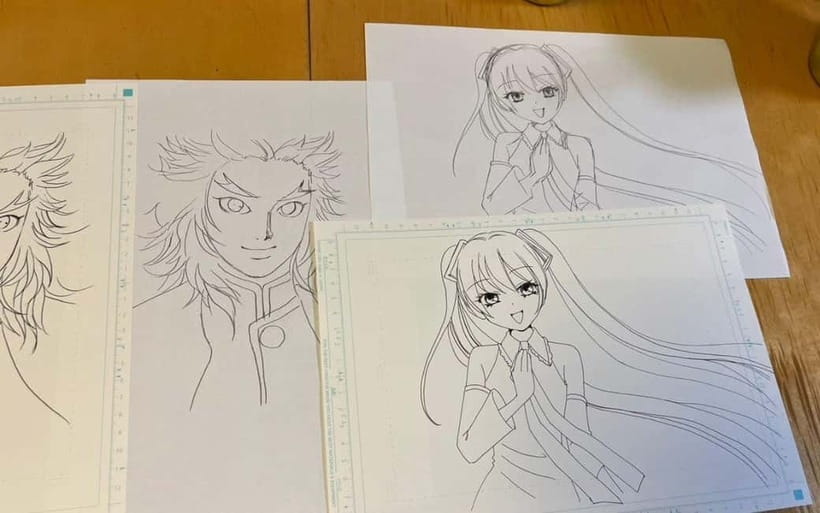
Your take-home pack includes your original artwork, practice sheets, and a mini handbook listing the tools used in the class and where to buy them in Tokyo.
That tool guide adds real value. If you want to continue, you can look for G-pens, maru-pens, paper, screentones, markers, and related supplies while you are still in Japan. One participant bought Copic markers and illustration books for Demon Slayer and Naruto after the session.
The workshop is especially useful if you want to practice at home but do not know what to buy. Art shops can be overwhelming, and manga tools are not always obvious to a first-time buyer. The lesson gives you a chance to handle the supplies before spending money.
Bring comfortable clothes and a camera. Meals are not included, so plan food separately before or after the class. The 150-minute length is long enough for a proper lesson but short enough to fit into a day of sightseeing, depending on the starting time you select.
Is $141 a fair price for 150 minutes?
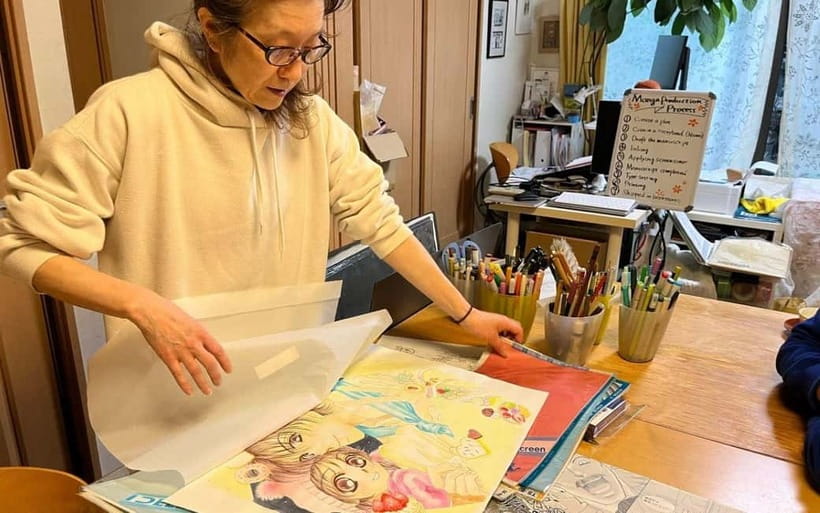
At $141 per person, this is not a budget activity. You are paying more than the cost of a quick tourist craft session, and the class may feel expensive if your only goal is to leave with a drawing.
The value improves if you care about the process. The price includes a professional instructor, use of specialist tools and materials, a private small-group setting, personal corrections, an original artwork, practice sheets, a tool handbook, and an artist-drawn portrait.
You also avoid buying a full set of pens, paper, ink, and screentones just to test whether you like them. For someone serious about manga, the chance to compare supplies and ask an active published artist about technique, portfolios, or publishing can justify the cost.
I would not book it for a child who only wants a quick character sketch. A younger participant needs to enjoy patient, hands-on drawing for two and a half hours. For an older child, teenager, anime fan, art student, or adult hoping to improve, the personal instruction makes the price easier to defend.
Who will get the most from this studio session?
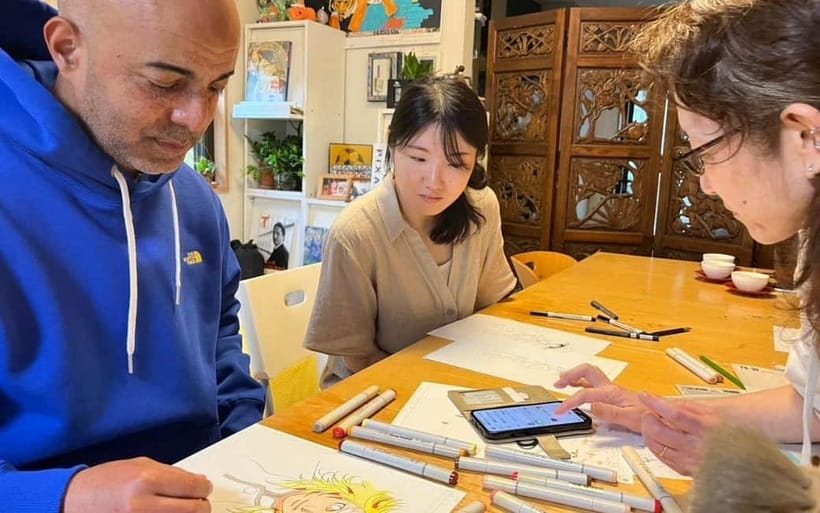
You are a strong match if you fit one or more of these descriptions:
- You love manga or anime and want to understand how the artwork is made.
- You want to draw a favorite character with guidance rather than copy a video at home.
- You are curious about traditional tools such as dip pens and screentone.
- You want feedback on line control, proportions, posture, or character design.
- You are building an art portfolio and want to ask about publishing or professional practice.
- You are traveling with a teenager or family member who enjoys drawing.
You may want to skip it if you dislike seated art activities, want a broad Tokyo sightseeing experience, or have no interest in taking time to practice. The class focuses on drawing, tools, and feedback. It is not a general tour of manga neighborhoods or a shopping trip.
The private format also suits people who prefer asking questions without speaking in front of a large class. You can ask about favorite series, portfolio reviews, industry work, or the difference between genres during the session.
My recommendation: book it for the hands-on lesson
I recommend this manga class if you want a real creative activity in Tokyo and are willing to pay for personal instruction. The strongest features are Yumiko’s professional background, the six-person limit, the choice of difficulty, and the chance to use tools that many visitors only see behind the scenes.
Book it especially if you want to draw a specific character or learn screentone. Tell the artist your interests at the start, and choose a project that fits your skill level. If $141 feels high, ask yourself whether you are paying for a souvenir or for instruction you can continue using. For the latter, this workshop offers a solid value and a memorable piece of Tokyo culture.
FAQ
Where does the manga drawing class meet?
Meet your guide just outside the ticket gates of Shindaita Station on the Keio Inokashira Line. The station has a single exit.
How long does the workshop last?
The session lasts 150 minutes, or two and a half hours. Starting times vary, so check availability when booking.
Do I need previous drawing experience?
No. The class welcomes beginners and provides printed guideline sheets across three difficulty levels.
What languages are used during the class?
The session is conducted in English, with Japanese support available.
Can children participate?
Children aged six and up can participate. The activity is not suitable for children under five.
What is included in the price?
The price includes a professional manga artist instructor, drawing tools and materials, personal feedback, original artwork, practice sheets, and a take-home pack. Meals and transportation to the studio are not included.
Newly reviewed around Tokyo
- Tokyo Asakusa:Calligraphy & Make T-shirt Activity★ 5.0 · 62 reviews
- Intercity Shuttle, Tokyo to Haneda /Narita /Yokohama /Makuhari★ 5.0 · 5 reviews
- 1 Hour Travel around Tokyo with a Professional Photographer★ 5.0 · 3 reviews
- Travel Tokyo with Your Own Personal Photographer★ 5.0 · 43 reviews
- Train in Samurai Swordsmanship and Defeat the Demon in Tokyo★ 5.0 · 5 reviews
- Shuttle Van 6hr Tokyo Tour to-and-from Tokyo, Yokohama and Narita★ 5.0 · 9 reviews
- Kickboxing & Body Training with EX-Pro Fighter★ 5.0 · 4 reviews
- Traditional Japanese Knife Sharpening Class★ 5.0 · 18 reviews
Akihabara and Anime Tours, compared.
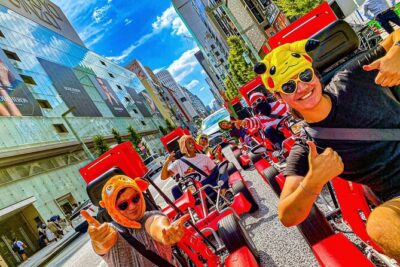
Tokyo Go Kart: Asakusa, Skytree, and Akihabara **IDP MUST**
Read our review →
Akihabara Anime & Game Adventure Walking Tour (Group or Private)
Read our review →
Akihabara Tailor-made Private Tour for Anime Fans
Read our review →
Ramen Making from Scratch +Akihabara Tour –Tokyo Cooking Class
Read our review →Browse the lists this tour appears in