
Reviewed · TOKYO IMPERIAL PALACE TOURS
Tokyo: Imperial Palace with Nostalgic Alley Kagurazaka tour
The best part of this tour is the change of scene. You begin among Tokyo Station’s grand modern buildings, walk into the former grounds of Edo Castle, then finish in Kagurazaka, a quieter district of lanes, restaurants, and old geisha connections. I like the strong historical arc and the chance to see Tokyo beyond its usual postcard stops.
I also like the small-group format, limited to eight people, and the built-in pause for coffee, tea, and a snack. The main drawback is that this is a walking tour with several outdoor stops, and it does not enter the Imperial Palace itself. The finish can also run about 15 minutes late.
Guides including Hiro and Shuntaro have received especially warm praise for answering questions, adapting to guests’ interests, and offering extra Tokyo advice. If you want a quick, well-organized introduction to the former Edo Castle area and Kagurazaka, this tour makes a strong case for its $51 price.
Key points at a glance
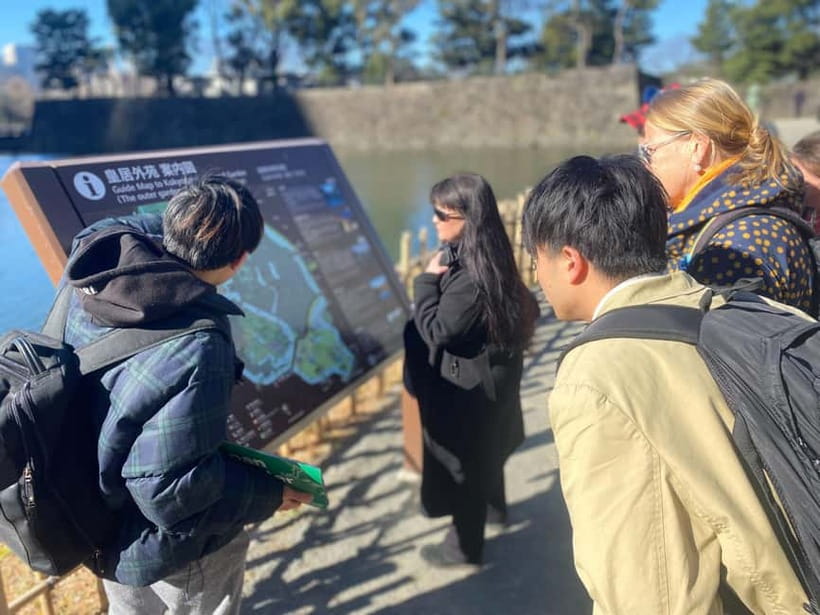
- Edo Castle in the middle of modern Tokyo: See castle walls, gardens, gates, and ruins while learning how the Tokugawa Shogunate shaped Japan.
- A useful route from Tokyo Station: The walk connects several major sights without requiring local trains between them.
- Kagurazaka beyond the usual Tokyo circuit: Finish in a district once linked with tea houses and geisha performances, now known for local shops and traditional restaurants.
- Coffee, tea, and a local snack included: A 25-minute break gives your feet a rest and adds a small taste of everyday Tokyo.
- Small group and English guidance: With no more than eight participants, you have a better chance to ask questions and keep the pace comfortable.
- A practical choice for first-time visitors: The tour covers famous sights efficiently, then adds lanes and shrines that are easy to miss on your own.
Why this Tokyo walk works so well
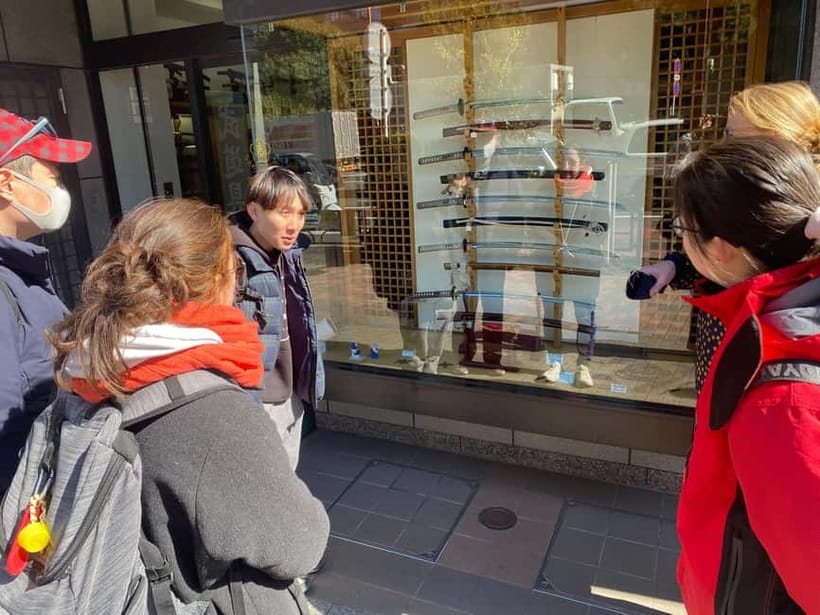
Tokyo can feel enormous, and the Imperial Palace area is one of the places where a guide helps you make sense of the scale. You are not simply looking at a moat or an old stone wall. You are walking through the former center of political power in Japan.
This experience links three ideas in a tidy half-day route: modern Tokyo around Marunouchi, the old Edo Castle grounds, and the local character of Kagurazaka. That progression gives the outing more shape than a palace photo stop alone.
I especially like that the tour does not end at the Imperial Palace. After the main sights, you move toward quieter streets, a neighborhood shrine, and narrow alleys where the atmosphere feels less arranged for sightseeing. You get the headline attraction, then a more personal side of the city.
The price is $51 per person for 210 minutes. That is a reasonable value if you want an English-speaking guide, a small group, coffee or tea, a snack, and several connected sights. It is less compelling if you only want a quick exterior view of the palace, since you could see some of that area without booking a tour.
More Imperial Palace tours in Tokyo:
- Tokyo: Imperial Palace and Shogun Historical Walking Tour
★ 5.0 · 2,251 reviews - Tokyo: Imperial Palace Japanese History Walking Tour
★ 4.9 · 987 reviews - Tokyo: Imperial Palace and Shogun Walking Tour
★ 4.9 · 935 reviews
Starting at Marunouchi and Tokyo Station
The meeting point is outside the Shin-Marunouchi Building, in front of a cafe called STAND T. Look for the BEAMS sign on the second floor. Marunouchi Central Exit is the closest Tokyo Station exit, and the meeting point is about a two-minute walk from there.
This is a sensible place to begin. Tokyo Station gives you a clear reference point, and the surrounding Marunouchi district provides an immediate contrast with the older sights ahead. The first part of the walk includes a guided look at Tokyo Station and a photo stop, lasting about 10 minutes.
You should arrive with comfortable shoes and clothing. The tour lasts three and a half hours, and the route includes gardens, gates, ruins, alleys, and city streets. There is no need for specialist equipment, but you will be happier in shoes suited to steady walking rather than fashion footwear.
Entering the former Edo Castle grounds
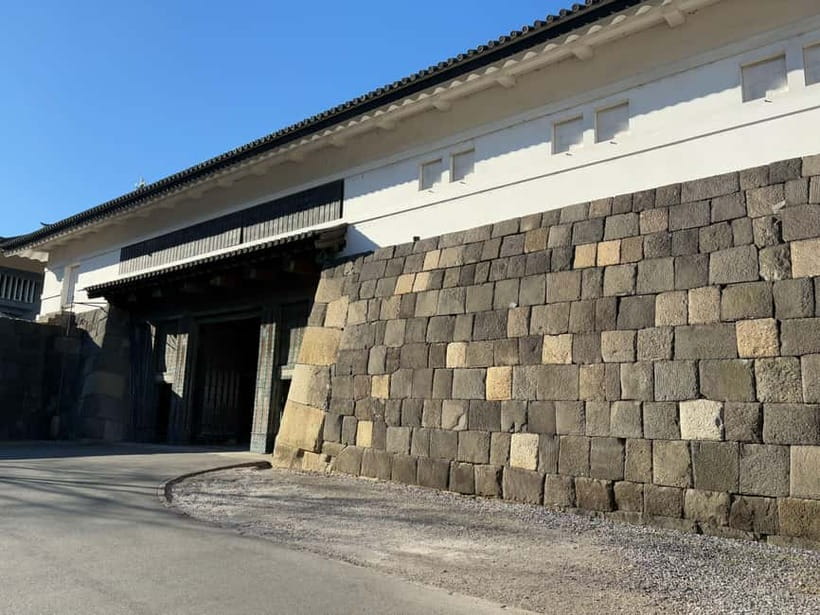
The Imperial Palace area is the main historical section of the tour. The route does not enter the inner palace, which is not open to the public. Instead, you explore public areas connected with the former Edo Castle complex.
That distinction matters. You should book this experience to see the setting and learn about its past, not to tour the emperor’s private residence. The guide fills in the missing pieces by explaining the Shogun era and how Edo became the political center of Japan.
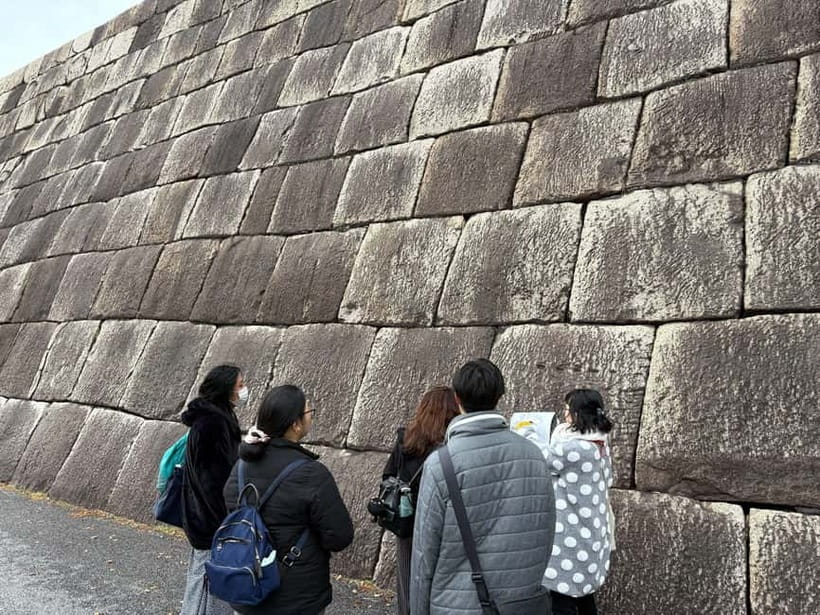
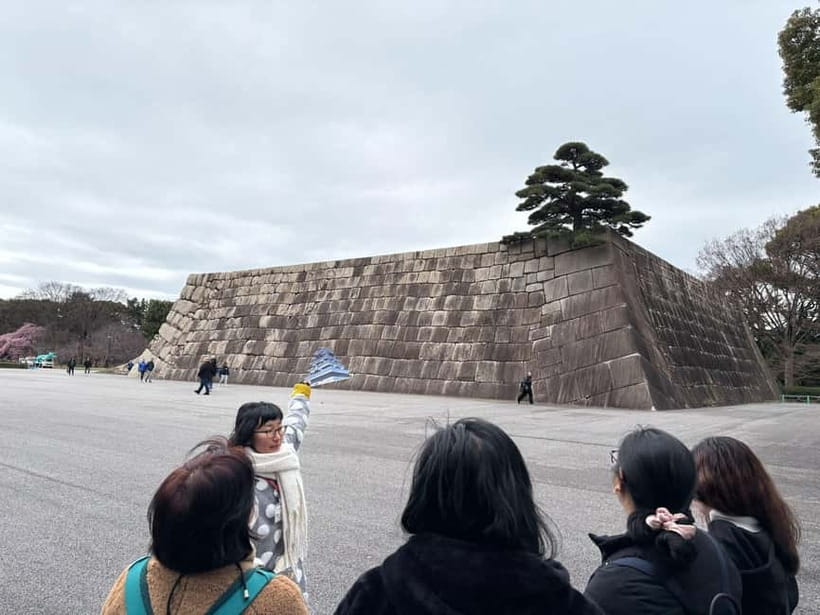
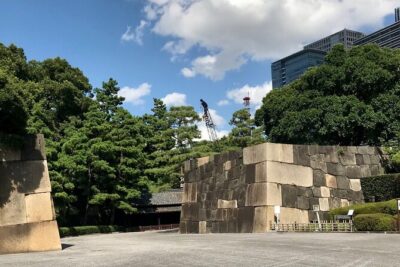
The castle walls are one of the strongest visual parts of the walk. Their careful stone construction gives you an idea of how much planning and labor went into protecting the castle. A guide can also help you notice details that might otherwise look like attractive but anonymous masonry.
At Ote-Mon Gate, you get a photo stop and further explanation. Gates were not simply entrances. They helped control movement into one of the most important compounds in the country. Standing there, you can better picture the formal route into the castle grounds.
Ninomaru Garden and Edo Castle ruins
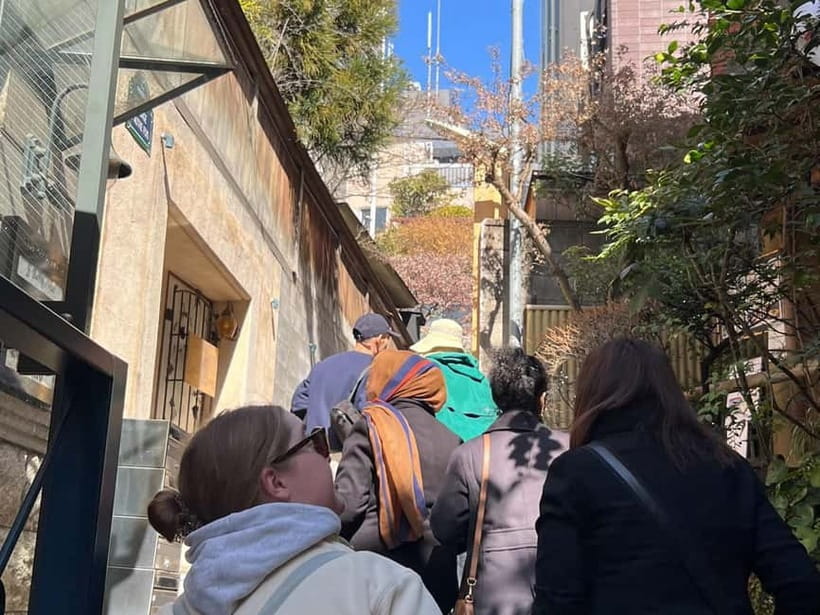
Ninomaru Garden brings a softer change of pace. The garden offers the kind of carefully arranged scenery many people hope to see in Tokyo: water, plants, paths, and traditional design within a former military and political center.
I like this contrast between hard castle defenses and controlled natural beauty. It shows that Edo Castle was not only a fortress. It was also a place of ceremony, administration, and daily life for the ruling class.
The Edo Castle ruins give the tour its strongest sense of scale. You see traces rather than a complete castle building, so the guide’s explanation matters here. The point is not to find a perfectly preserved structure. It is to understand that much of modern central Tokyo occupies what was once a huge and powerful castle compound.
The experience description emphasizes the feeling of walking through the former grounds. That is more useful than treating each ruin as an isolated photo stop. As you move from wall to garden to remains, the former castle begins to make sense as a large working center rather than a single monument.
A completely different kind of day in Tokyo:
- Mt Fuji and Hakone 1-Day Bus Tour Return by Bullet Train
★ 5.0 · 26,383 reviews - 1-Day Tokyo Bus Tour
★ 5.0 · 14,250 reviews - Tokyo: teamLab Planets TOKYO Digital Art Museum Entry Ticket
★ 4.6 · 9,779 reviews - Mt Fuji & Hakone Cruise, Drum Show Bullet Train 1 Day from Tokyo
★ 4.0 · 7,413 reviews
A quick look at Nippon Budokan
The route includes a brief, roughly five-minute guided stop at Nippon Budokan. It is not the main focus of the outing, but it adds another recognizable point in the wider area.
Because the stop is short, keep your expectations modest. This is a quick look and photo opportunity, not a long visit. The benefit is that the tour keeps moving and preserves time for the coffee break, shrine, and Kagurazaka lanes later in the morning or afternoon.
Coffee, tea, and a local snack
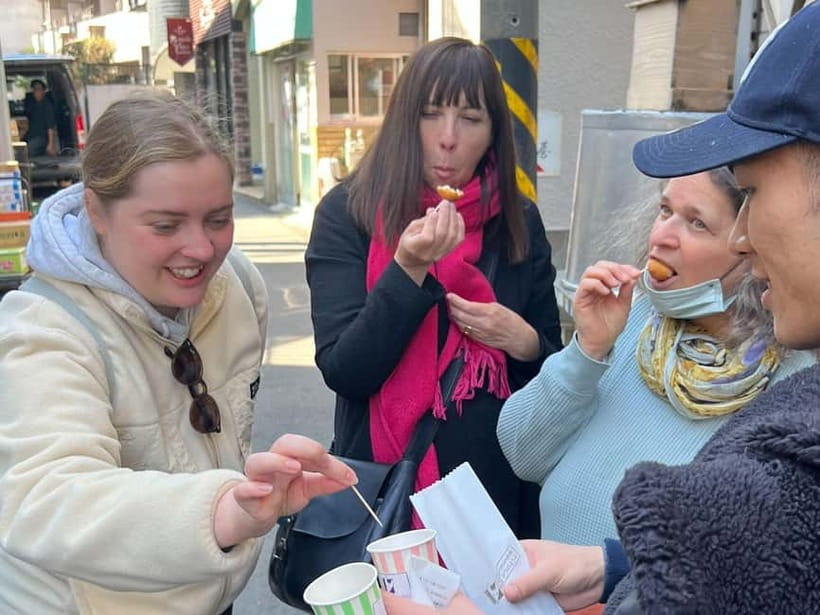
At Aomi Coffee Kudanshita, the group gets about 25 minutes for a break. Coffee or tea is included, and this pause is well placed after the palace and castle section.
A break matters on a walking tour. It gives you time to sit, ask the guide follow-up questions, and reset before the neighborhood portion begins. It also keeps the schedule from feeling like one long stream of commentary and photo stops.
A snack is included as well. The plan is to stop at a local shop, although the exact place may change depending on operating days. That flexibility is worth knowing in advance. You are promised a snack and a local stop, but not one fixed shop or one guaranteed item.
I see this as a small but worthwhile feature. You are not signing up for a full food tour, yet the snack adds a taste of local routine and gives the final part of the walk a more relaxed feel.
Tokyo Daijingu and the god of love
Tokyo Daijingu is one of the more distinctive stops. The tour spends about 20 minutes there, explaining the shrine and its connection with love and good relationships.
This stop gives the route a different tone from the castle grounds. Instead of focusing on military power and government, you encounter a place tied to personal hopes and everyday religious practice. It also helps show how Tokyo’s old traditions continue within the modern city.
The guide’s role is useful here because shrines can be confusing if you do not know what you are looking at or why a particular place matters. You should have time for a guided explanation and photographs, though the exact pace can depend on the group.
From Ushigome Gate to Kagurazaka

After Tokyo Daijingu, the walk continues toward the remains of Ushigome Gate. Like the other castle traces, this stop works best when you connect it to the larger story. The remains help mark the former reach of Edo Castle and show how far the castle grounds extended beyond the most famous palace views.
Then the setting changes again. Kagurazaka is known for local businesses, restaurants, and traditional-style lanes. About 200 years ago, this district was associated with a red-light quarter and tea houses where maiko and geisha performed.
That past gives the neighborhood a character you will not find in the same way around Shibuya or Asakusa. It is not a preserved stage set, and you should not expect a museum district. The appeal is the mixture of old street patterns, present-day shops, and traces of a nightlife culture that once shaped the area.
The tour ends near FamilyMart Kagurazaka Sanchome. That is practical if you want to continue exploring, eat in the neighborhood, or make your own way elsewhere. The route does not return you to Tokyo Station, so plan your next move from Kagurazaka.
The narrow lanes of Kagurazaka
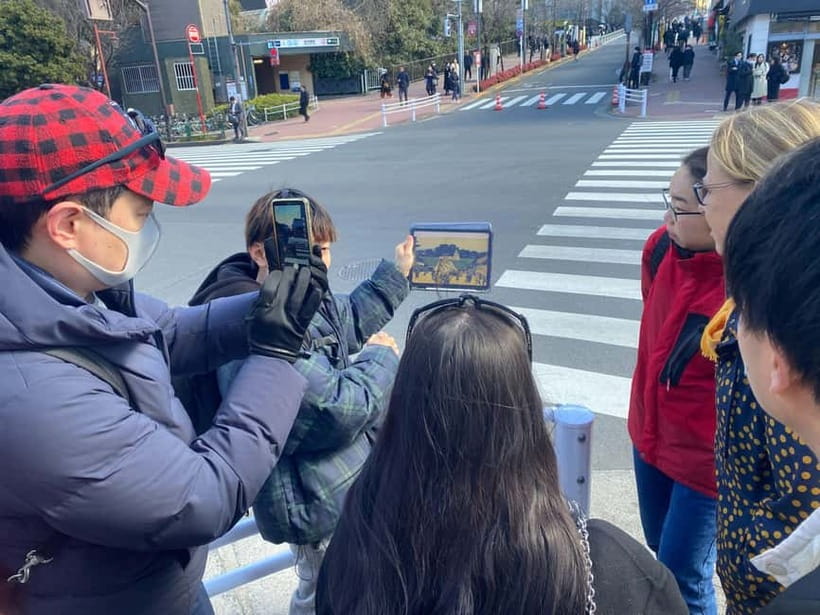
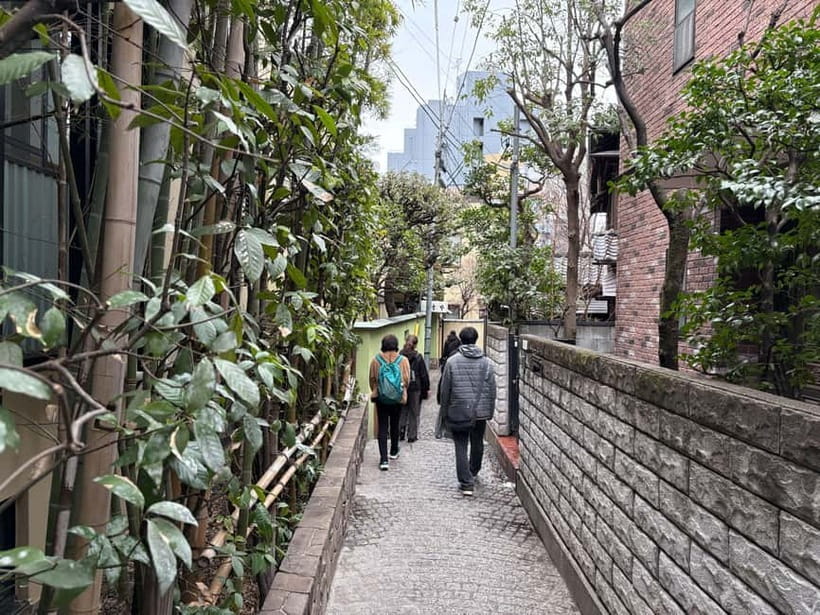
The final section includes Geisya Komichi Alley, Hyogo Yokocho Alley, and Kakurenbo Yokocho. These narrow passages are the part of the tour most likely to feel different from a standard Tokyo introduction.
You will stop for photographs and guided explanation, but the value is not only visual. The lanes help you see how a local district can retain older patterns while operating as a living part of the city. Restaurants and shops occupy the area today, and the atmosphere is more residential and neighborhood-based than the big Tokyo names used in many sightseeing plans.
I would not book this tour solely for the alleys, since the experience is brief and the exact feel can change with the time of day. But they make an excellent final chapter after the palace. You start with national history and end with street-level Tokyo.
The name Kagurazaka is also useful when planning the rest of your day. You can treat the tour as a guided introduction, then decide if you want to return for a meal or more independent wandering.
The guide makes the difference
The small group size, capped at eight participants, is one of the tour’s practical strengths. A guide can usually respond more easily to individual questions in a group this size than in a large coach party.
Hiro has been praised for sharing local knowledge, explaining the Imperial Palace area clearly, and offering ideas for seeing more of Tokyo. Shuntaro has also been singled out for his good humor, broad information about the places along the route, and willingness to add more detail.
Those comments point to what you should want from this experience: not a memorized speech delivered at fixed stops, but a guide who can respond to your questions. One recent booking described the guide as particularly attentive to personal wishes and ideas. That flexibility is valuable when you want more detail about Shogun history, shrine customs, food, or the rest of Tokyo.
The official language is English. Since the route includes historical terms and cultural context, ask questions when something is unclear. The format is designed for conversation rather than a large crowd standing at the back of a group.
Timing, walking, and practical limits
The full duration is 210 minutes. The published sequence gives you about 10 minutes around Tokyo Station, one hour around the Imperial Palace, five minutes at Nippon Budokan, 25 minutes for coffee, and 20 minutes at Tokyo Daijingu, with additional time for the castle remains, gate areas, and Kagurazaka alleys.
That is an efficient schedule, but it is not a slow photography walk. You will cover several areas and should be ready to keep moving between stops. The tour can finish around 15 minutes later than planned because of traffic or route conditions.
Pregnant women are listed as unsuitable for this activity. Smoking, alcohol, drugs, weapons, sharp objects, and drones are not allowed. These rules are straightforward, but the pregnancy restriction is worth noting before you reserve.
Free cancellation is available up to 24 hours before the start for a full refund, and you can reserve now and pay later. Those terms are useful if your Tokyo plans are still shifting.
Is $51 a fair price?
I think the price works best for visitors who want context as well as sightseeing. You are paying for three and a half hours, an English-speaking local guide, a small group, coffee or tea, a snack, and a route that combines major sights with less obvious streets.
The value is not in admission tickets, since the inner palace is not visited. It comes from the guide’s storytelling, route planning, and ability to connect the Edo Castle remains with the later Kagurazaka section.
For a first visit to Tokyo, that combination is useful. You see a must-visit area without spending half a day figuring out how the palace grounds fit together, then move into a district you might otherwise overlook.
If you already know the Imperial Palace area well, or if you prefer exploring alone at your own pace, the price may feel less attractive. The tour is also not aimed at food enthusiasts seeking a long series of tastings. The snack is a pleasant extra, not the central event.
Who should book this tour?
I would recommend it to first-time Tokyo visitors who want a manageable introduction to the city’s political past and a local neighborhood afterward. It also suits history-minded people who enjoy learning how the Tokugawa Shogunate shaped the city.
The tour is a good match if you appreciate a guide who answers questions and adjusts the discussion. The small group gives you a better chance to do that, especially if the guide is as responsive as Hiro and Shuntaro have been described.
You should think twice if you dislike walking, need a very predictable finish time, or want to enter the inner palace. You should also avoid expecting an elaborate food experience or a full tour of preserved geisha buildings.
For most visitors, I would book it when the goal is to connect famous Tokyo sights with a more local final stop. The castle walls, Ninomaru Garden, shrine, snack, and Kagurazaka lanes give you a clear three-and-a-half-hour story of Tokyo, from Shogun power to neighborhood life.
FAQ
Where does the tour begin?
It begins outside the Shin-Marunouchi Building, in front of STAND T cafe. Marunouchi Central Exit at Tokyo Station is the closest exit, and the meeting point is about a two-minute walk away.
Where does the tour finish?
The tour ends at FamilyMart Kagurazaka Sanchome in the Kagurazaka area.
How long does the experience last?
The scheduled duration is 210 minutes, or three and a half hours. The finish may be delayed by about 15 minutes because of traffic or route conditions.
Does the tour enter the inner Imperial Palace?
No. The inner palace is not open to the public. The tour visits public areas connected with the former Edo Castle grounds, including the Ote-Mon Gate, Ninomaru Garden, and castle ruins.
Is the tour conducted in English?
Yes. The live tour guide language is English.
How large is the group?
It is a small-group experience limited to eight participants.
Are coffee, tea, and food included?
Coffee or tea is included during a 25-minute break, and a snack is included. The snack stop may change depending on the local shop’s operating day.
What should I bring?
Bring comfortable shoes and comfortable clothing. The tour includes extended walking and outdoor stops.
Newly reviewed around Tokyo
- Tokyo Asakusa:Calligraphy & Make T-shirt Activity★ 5.0 · 62 reviews
- Intercity Shuttle, Tokyo to Haneda /Narita /Yokohama /Makuhari★ 5.0 · 5 reviews
- 1 Hour Travel around Tokyo with a Professional Photographer★ 5.0 · 3 reviews
- Travel Tokyo with Your Own Personal Photographer★ 5.0 · 43 reviews
- Kickboxing & Body Training with EX-Pro Fighter★ 5.0 · 4 reviews
- Train in Samurai Swordsmanship and Defeat the Demon in Tokyo★ 5.0 · 5 reviews
- Shuttle Van 6hr Tokyo Tour to-and-from Tokyo, Yokohama and Narita★ 5.0 · 9 reviews
- Traditional Japanese Knife Sharpening Class★ 5.0 · 18 reviews
Tokyo Imperial Palace Tours, compared.

Imperial Palace and Shogun Historical Walking Tour
Read our review →
Imperial Palace East Garden and Edo Castle Walking Tour in Tokyo
Read our review →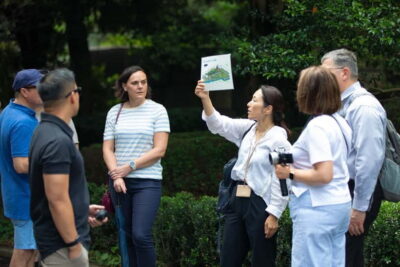
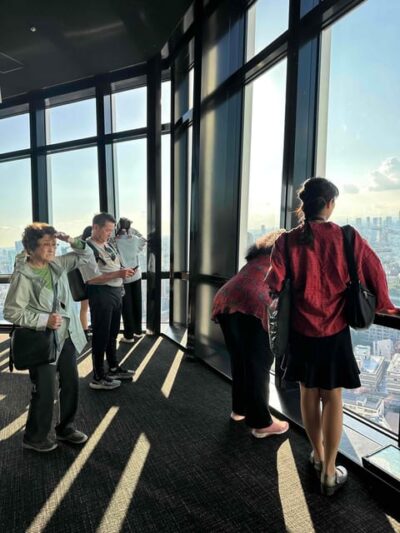
Imperial Palace, Sensō-ji Temple, & Tokyo Tower Tour
Read our review →
Tokyo Castle, Imperial Palace, Shogun & Garden Walking Tour
Read our review →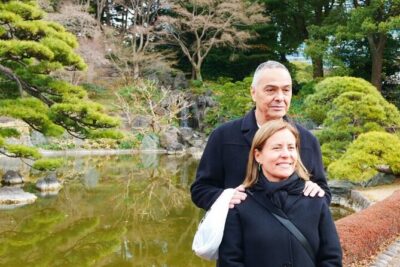
Edo Castle & East Garden of the Imperial Palace Tour
Read our review →Browse the lists this tour appears in