
Reviewed · TOKYO TRADITIONAL CRAFT WORKSHOPS
Tokyo: Discover the Art of Kintsugi in Ginza
Kintsugi turns a broken ceramic into something worth keeping, marking its cracks with metallic lines instead of hiding them. I like the hands-on format and the fact that you leave with a real ceramic piece, not just a demonstration. I also like the calm private room, only about three minutes from Ginza Station.
The main thing to understand is that this is a compact introduction, not traditional Kintsugi in its full form. The workshop uses synthetic lacquer and metallic powder, so you can finish in 90 minutes, but your repaired piece is for decoration only and is not microwave-safe.
Key points at a glance
- Three minutes from Ginza Station: The workshop meets at Cafe AOU Ginza forest, on the ground floor of the Daiwa Ginza Building.
- A small group of up to eight: The limited size gives the instructor time to help with delicate steps.
- Choose a ceramic piece to repair: Depending on the session, you may select from two colored cracked plates or another supplied piece.
- English and Japanese instruction: Guides such as Tatsu and Teki explain the process and share stories about Ginza.
- A ready-to-pack souvenir: Your completed piece is packaged to protect it in your luggage.
- A modern shortcut to an old craft: Synthetic lacquer and metallic powder replace the longer traditional process using natural lacquer and gold.
Why this Ginza craft class is worth your time
Ginza is known for department stores, polished streets, and expensive shopping. This workshop gives you a quieter reason to visit the district. Instead of simply looking at Japanese design, you make something with your own hands.
I like the scale of the class. With no more than eight participants, this feels closer to a guided craft lesson than a large tourist activity. That matters because Kintsugi involves small movements, careful application, and a little patience. If someone needs extra help, the instructor can step in without leaving the rest of the group entirely on their own.
The class also works well as a break in a busy Tokyo day. The meeting point is Cafe AOU Ginza forest, in the Daiwa Ginza Building, and the workshop takes place in a private room near the station. One session included coffee while the instructor explained how the lesson would proceed, and the standard package includes a complimentary soft drink.
You do not need to bring tools, glue, ceramics, or protective materials. Everything is supplied, including the ceramic piece you repair. That keeps the activity simple for a short Tokyo visit and means you can book it without preparing in advance.
More things to do in Ginza:
- Chopstick Making Workshop in Ginza
★ 4.8 · 1,366 reviews - Tokyo: Art Aquarium Museum GINZA Entry Ticket
★ 4.5 · 278 reviews - Official Japan Go-Kart Through Tokyo Bay / Ginza (IDP Required)
★ 4.5 · 71 reviews
Finding the room near Ginza Station
The stated meeting point is Cafe AOU Ginza forest, on the ground level of the Daiwa Ginza Building. It is about three minutes from Ginza Station, a useful detail if you are fitting this between shopping, a museum visit, or dinner.
Pay attention to the confirmation email before setting out. The room can change depending on availability and the number of reservations. If it does, you should receive the new location by email one day before the workshop.
The location is practical, but the building and private-room arrangement mean you should not expect a large street-front studio with a prominent craft-school sign. Allow a little time to identify the building and check the exact meeting instructions. In one session, Tatsu waited outside to help the group find the place, which is especially useful in central Tokyo.
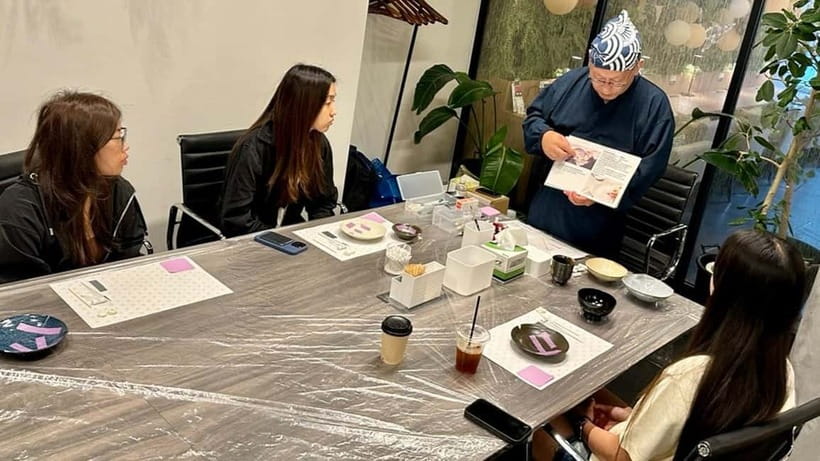
Once inside, the setting is meant to feel personal rather than formal. You sit with the other participants around the work area, receive your materials, and listen to an introduction before handling the ceramic.
The first 15 minutes: Kintsugi, explained plainly
The instructor begins by explaining what Kintsugi does and why the finished cracks are made visible. The basic idea is simple: a broken ceramic is repaired, but the lines of repair become part of its appearance.
This is where the class offers more than a quick souvenir activity. You get an introduction to a Japanese aesthetic approach that treats damage as part of an object’s story. The lesson also covers the practical side of the method, including how the repair material is used and how metallic powder creates the bright finish.
The exact amount of background depends on the instructor and the pace of the group. Tatsu and Teki are named as instructors connected with these sessions, and the teaching style includes conversation as well as instructions. One instructor shared stories about Ginza, while another explained the process and its scientific side in more detail.
That combination works well. You get enough context to understand what you are doing, but the workshop does not ask you to sit through a long lecture before touching the materials.
Choosing and preparing your ceramic piece
You receive a ceramic item to restore, rather than bringing your own. In one session, participants chose between two colored cracked plates. The exact selection can vary, but the important point is that the piece is prepared for this short format.
This is a good choice for a 90-minute class. Bringing your own broken bowl could create problems if it has difficult cracks, missing sections, or a surface that is unsuitable for the materials. A supplied piece lets the instructor keep the activity moving and gives everyone a reasonable chance of completing the repair.
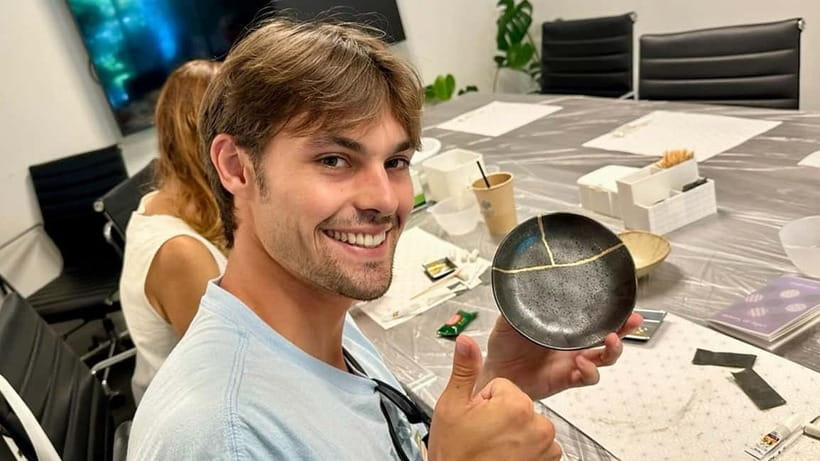
The ceramic is not simply a blank souvenir. Its cracks determine how your finished design will look. You may follow the existing lines closely, or you may find that the pattern encourages a more personal result. The final piece will not look factory-perfect, which is part of the appeal.
If you are doing this with children, the minimum age is 10. One family session included children aged 10 and 14, and the instructor helped them through the work. Still, the class calls for patience and careful handling, so younger children are not suitable.
More Tokyo craft workshops:
- Tokyo Shinjuku Chopsticks Making Class
★ 5.0 · 1,763 reviews - Kintsugi Experience: Art of Golden Joinery in Tokyo
★ 5.0 · 467 reviews - Tokyo Chopstick Making Workshop with Artisan
★ 5.0 · 466 reviews - Authentic Pure Gold Kintsugi Workshop with Master Taku in Tokyo
★ 5.0 · 217 reviews
The hands-on repair, step by step
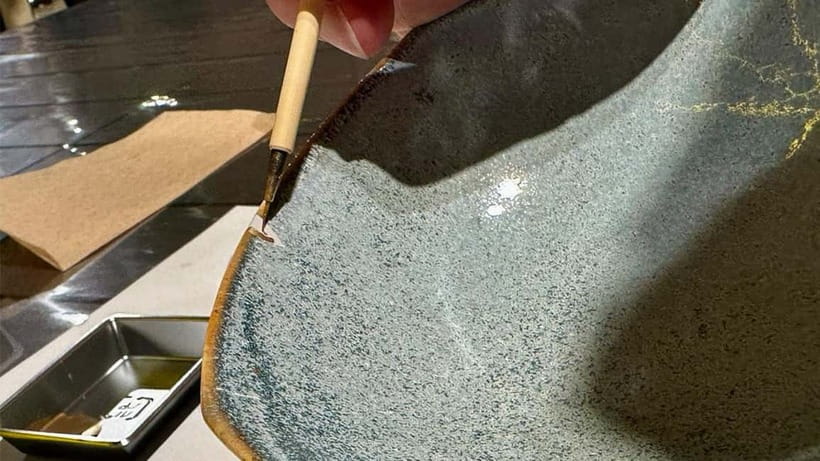
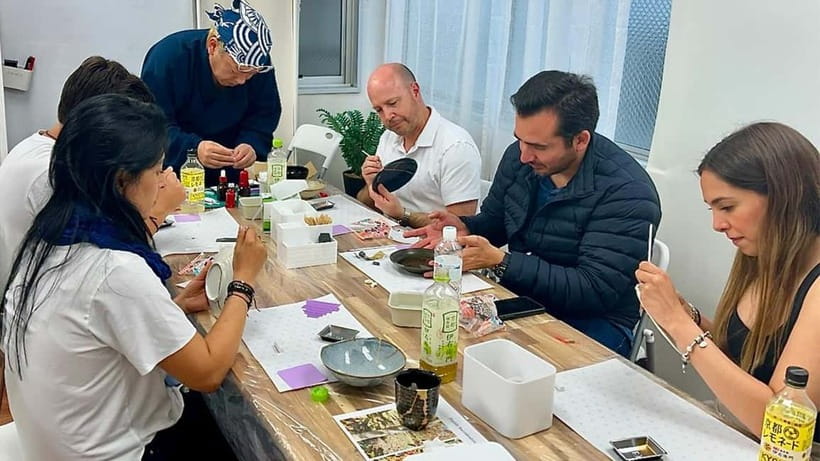
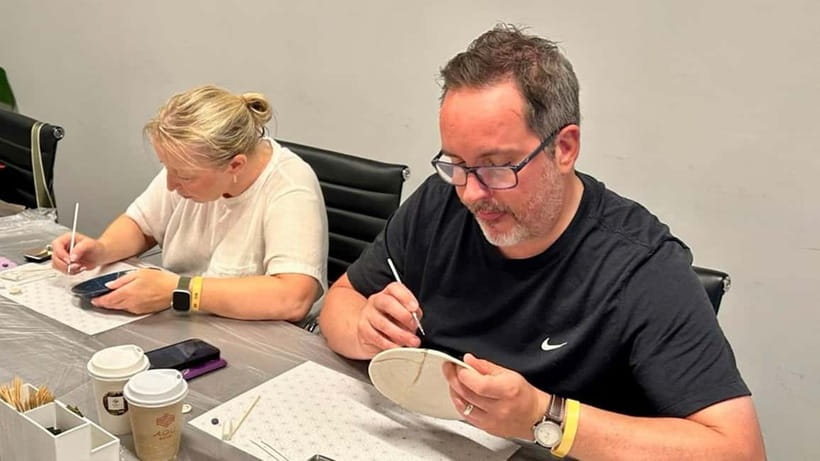
The instructor gives clear directions before each stage. You work with the supplied tools and materials, applying the synthetic lacquer and then adding metallic powder to the repaired lines.
This is the part where the small group helps. Your hands may not behave exactly as you expect at first, and the material needs to be placed with care. The instructor can show you how to proceed, correct a difficult section, or help you move on if your piece is taking longer than expected.
You should expect some waiting if another participant needs help. One session included a little less hands-on time because the instructor had to assist someone who was behind. That is a fair trade for personal guidance, but it means the class does not run like a private one-to-one lesson.
The 90-minute limit keeps the activity focused. You will not be recreating every stage of traditional Kintsugi, and you will not have time for repeated attempts on every line. Instead, you learn the central idea and produce a finished decorative object in one sitting.
I would treat the work as a creative exercise rather than a test of precision. The charm comes from seeing your own decisions in the final lines. A slightly uneven result is not necessarily a failure here. It is part of having made the piece yourself.
Traditional Kintsugi versus this short workshop
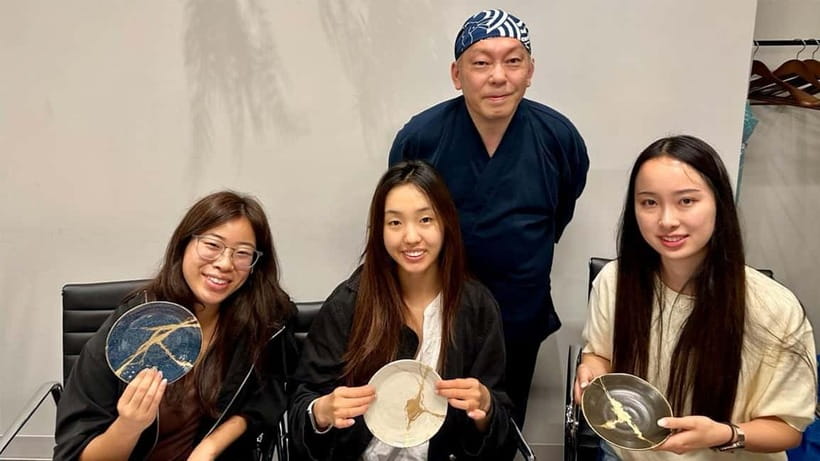
You should know exactly what kind of Kintsugi experience this is. Traditional Kintsugi uses natural lacquer and gold, and the full process can take about a month. This Ginza class uses synthetic lacquer and metallic powder so you can complete the work within 90 minutes.
That difference affects both the timing and the use of the finished item. Your piece is a hands-on introduction to the look and idea of Kintsugi, not a museum-grade restoration using the original long-curing process.
The practical rule is simple: use the repaired ceramic for decoration only. It is not microwave-safe because of the risk of ignition. The information provided also recommends against treating it as ordinary tableware.
For most visitors, this is a sensible compromise. You gain the experience of repairing a ceramic and take home a personal reminder of Tokyo without waiting weeks for the work to cure. If you want to study authentic traditional materials in depth, this class will be too brief and simplified. If you want a meaningful craft activity that fits into an afternoon, the shortcut makes sense.
Packing your finished plate for the journey home
At the end, you take your repaired ceramic with you. The pieces are packaged carefully, which is an important practical detail if Tokyo is only one stop on a longer trip.
Ceramics can be awkward souvenirs. A beautiful plate is not much use if it breaks in your suitcase on the way to the airport. The careful packaging gives you a better chance of carrying it home safely, though you should still place it between soft clothing and avoid putting heavy items on top.
The finished object makes a more personal gift than a standard shop purchase. You can explain where you made it, how the cracks were repaired, and why the visible lines are part of its design. Just remember to tell the recipient that it is decorative and not microwave-safe.
What the $75 price includes
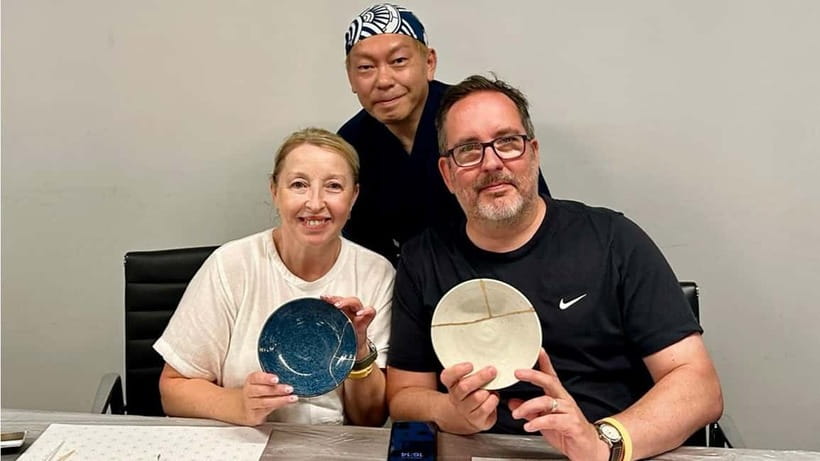
At $75 per person, this is not the cheapest craft activity in Tokyo. The price makes more sense when you count what is included: a 90-minute lesson, all tools and materials, a ceramic piece, instructor guidance, and a soft drink.
You are also paying for a central Ginza location and a small group capped at eight. Those details matter more here than they would in a simple drop-in craft table. The instructor needs to prepare the pieces, explain the process, monitor the work, and help with delicate steps.
The value depends on what you want from your souvenir. If you only want a cheap plate, buying one in a shop will cost less. If you want to understand the craft, make the repair yourself, and leave with an object tied to your time in Japan, the price is fair for a guided 90-minute activity.
I would especially consider it good value for couples, families with older children, and visitors who want a slower activity between major sights. The small class and personal guidance give the experience more substance than a quick demonstration.
Who will enjoy this most
This workshop suits you if you like making things, want a cultural activity that does not require a full day, or prefer a souvenir with a story. It also gives you a reason to spend time in Ginza if high-end shopping is not your priority.
It is a good pick for first-time Kintsugi students. You do not need previous experience, and the instructor explains the work from the beginning. English and Japanese instruction is available, so English-speaking participants can follow the main steps.
Families should note the minimum age of 10. The workshop is not suitable for babies under one year, people with mobility impairments, people with a cold, or people with hearing impairments. Those limits may feel strict, but they reflect the close, careful nature of the room and the need to follow spoken instructions.
You should also be comfortable with a fixed 90-minute format. If you want long, quiet time to experiment, this may feel rushed. If you prefer clear guidance and a finished result before moving on to the next Tokyo sight, the timing is useful.
Small details that make the experience work
The strongest part of this activity is the instructor’s role. The class depends on clear explanations and a friendly pace, and the named instructors, including Tatsu and Teki, bring conversation into the lesson. Their stories about Ginza help connect the craft to the neighborhood around you.
The drink is a modest extra, but it helps the class feel welcoming from the start. So does the packaging at the end. These details do not change the craft itself, yet they make the experience easier and more comfortable.
The main limitation is that the workshop is not fully private unless your group fills the room. With up to eight participants, the instructor must divide attention. You may pause while another person gets help, and the pace may vary across the table.
That is not a serious flaw, but it is worth knowing before you book. The class offers a shared creative setting, not a private appointment where every minute belongs to you.
Booking and cancellation details
You can reserve a place and pay later, which helps if your Tokyo schedule is still changing. Free cancellation is available up to 24 hours before the activity for a full refund.
Starting times vary, so you should check availability for your date. Hotel pickup and drop-off are not included. Plan to reach the Ginza meeting point on your own and check your email for any last-minute venue change.
Should you book this Ginza Kintsugi workshop?
I would book this if you want a compact, hands-on cultural activity with a souvenir you actually helped create. The central location, small group, patient instruction, and careful packaging give the $75 price a reasonable return.
I would skip it if you want authentic natural-lacquer Kintsugi, a fully private lesson, or a usable food vessel. This is a modern, decorative version designed to fit into 90 minutes.
For most visitors, the appeal is clear: you spend a quiet hour and a half making something imperfect but personal, then carry it home as a reminder that your Tokyo trip included more than famous sights. That is a good reason to put this class on your Ginza plans.
FAQ
Where does the Kintsugi workshop meet?
The meeting point is Cafe AOU Ginza forest on the ground floor of the Daiwa Ginza Building, about three minutes from Ginza Station.
How long does the activity take?
The workshop lasts 90 minutes.
What is included in the price?
The price includes the 90-minute workshop, tools and materials, a ceramic piece to restore, instructor guidance, and a complimentary soft drink.
Can I take my repaired ceramic home?
Yes. You take home the repaired piece, and it is packaged to help protect it during your journey.
Is the repaired ceramic safe to use in a microwave?
No. The repaired item is recommended for decorative use only and is not microwave-safe because of a risk of ignition.
Is this traditional Kintsugi?
The workshop introduces the technique in a shortened format. Traditional Kintsugi can take about a month and uses natural lacquer, while this class uses synthetic lacquer and metallic powder so you can finish within 90 minutes.
Newly reviewed around Tokyo
- Tokyo Asakusa:Calligraphy & Make T-shirt Activity★ 5.0 · 62 reviews
- 1 Hour Travel around Tokyo with a Professional Photographer★ 5.0 · 3 reviews
- Travel Tokyo with Your Own Personal Photographer★ 5.0 · 43 reviews
- Intercity Shuttle, Tokyo to Haneda /Narita /Yokohama /Makuhari★ 5.0 · 5 reviews
- Train in Samurai Swordsmanship and Defeat the Demon in Tokyo★ 5.0 · 5 reviews
- Shuttle Van 6hr Tokyo Tour to-and-from Tokyo, Yokohama and Narita★ 5.0 · 9 reviews
- Kickboxing & Body Training with EX-Pro Fighter★ 5.0 · 4 reviews
- Traditional Japanese Knife Sharpening Class★ 5.0 · 18 reviews
Tokyo Traditional Craft Workshops, compared.
Kintsugi Experience: Art of Golden Joinery in Tokyo
Read our review →

Authentic Pure Gold Kintsugi Workshop with Master Taku in Tokyo
Read our review →
Private Handmade Ring Workshop Activity in Tokyo Shibuya
Read our review →
Browse the lists this tour appears in