
Reviewed · TOKYO NIGHT TOURS
Tokyo: Asakusa Photogenic Night Walk with 1 drink
Asakusa changes character after sunset. The crowds thin, Senso-ji glows under the evening lights, and the old streets feel less like a sightseeing circuit and more like a neighborhood. I especially like the small group of eight or fewer and the chance to try Denki Brandy, an Asakusa-born whisky blend with a strong local connection.
I also like the focus on night photography, since the tour takes you to scenic corners that are easy to miss on your own. Guides such as Hiro and Inok bring different strengths: Hiro is praised for his detailed cultural knowledge, while Inok is especially good at engaging children. The main limitation is timing: Senso-ji’s main hall closes at 6pm, so you should expect to see the temple grounds and exterior rather than enter the hall.
Key points at a glance
- Denki Brandy in a historic bar: Try a local Asakusa drink from the Meiji era, with non-alcoholic choices available.
- Senso-ji after dark: See Tokyo’s oldest temple in a quieter setting, though the main hall may already be closed.
- Photo stops beyond the standard route: Your guide leads you to lesser-known viewpoints suited to evening pictures.
- A compact two-hour walk: The route covers Kaminarimon, Nakamise Street, Senso-ji, Hanayashiki, and Hoppy Street.
- Small English-speaking group: The maximum group size is eight, which leaves room for questions and family interaction.
- A useful meeting point: Meet 10 minutes early outside the Asakusa Culture Tourist Information Center, marked by a green Japan Wonder Travel sign.
Why Asakusa works better after sunset
Asakusa is one of Tokyo’s easiest neighborhoods to recognize by day. Kaminarimon’s giant lantern draws a steady stream of people, Nakamise Street fills with souvenir shoppers, and Senso-ji becomes a major photo stop. At night, the same sights take on a calmer tone.
That change is the central reason to book this walk. You are not simply checking famous buildings off a list. You are seeing how the temple district feels once daytime traffic has faded. The lighting around Senso-ji gives you clearer architectural views, while the quieter streets make it easier to listen to your guide and take photographs without constantly waiting for a gap in the crowd.
I would not treat this as a full history tour of Tokyo. It is a focused Asakusa walk with three main ingredients: local stories, night photography, and a drink tied to the neighborhood. That combination suits you if you have already seen Asakusa by day or want a gentle introduction to the area without spending an entire evening on your feet.
The walk lasts two hours. That is long enough to cover the main sights but short enough to fit before dinner, after a day of museums, or at the start of an evening in eastern Tokyo.
More Asakusa and Sensoji tours:
- Tokyo: Japanese Dance Cabaret Theater Asakusa-Kaguwa Ticket
★ 4.8 · 2,270 reviews - Tokyo: Meiji Shrine, Asakusa, Skytree Bus Tour and Cruise
★ 4.7 · 1,986 reviews - Tokyo: Roll and Authentic Sushi Making Class in Asakusa
★ 4.9 · 1,957 reviews
Starting at the Asakusa Culture Tourist Information Center
The meeting point is outside the Asakusa Culture Tourist Information Center. You should arrive 10 minutes before departure and look for the guide holding a green Japan Wonder Travel sign.
This detail matters more than it sounds. Asakusa has several major landmarks and busy pedestrian areas, so arriving at the last moment can create needless stress. The group leaves on time and cannot wait for late arrivals. I would build in extra time for finding the center, especially if you are coming from another part of Tokyo.
The center is a practical place to orient yourself before the walk. From here, the guide can point out the relationship between the modern streets, the temple district, and the Sumida River area, although the advertised route focuses on Asakusa’s central sights.
Kaminarimon and the first night photographs
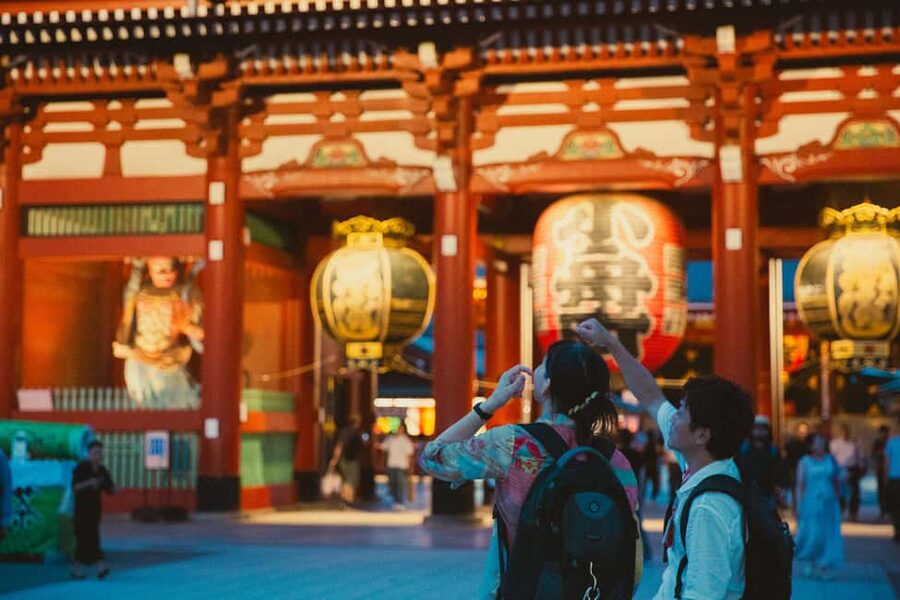
One of the early photo stops is Kaminarimon, the Thunder Gate. Its enormous lantern is one of the most recognizable images in Asakusa, and the evening setting gives you a different frame from the usual daytime shot.
The stop is listed at about 15 minutes, so this is not a long photography workshop. Your guide can help you understand what you are looking at and direct you toward useful angles, but you should still arrive with reasonable expectations. The tour promises access to scenic spots known to local guides, not professional camera instruction or guaranteed empty streets.
For a phone camera, night conditions can be tricky. The illuminated gate may look bright while the surrounding street falls into shadow. A guide who knows the area can save you time by indicating where to stand, when to pause, and which views are worth more than a quick snapshot.
Nakamise Street and the route toward Senso-ji
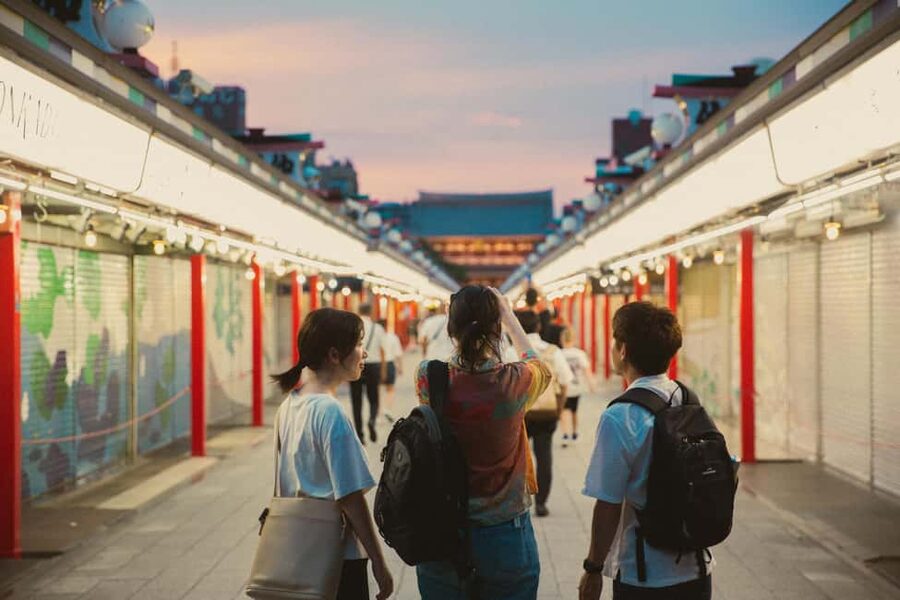
The walk continues through Nakamise Street, the long approach lined with shops leading toward Senso-ji. During the day, this is one of Tokyo’s busiest shopping lanes. In the evening, its closed or quieter storefronts help you notice the street’s role as a ceremonial approach to the temple.
This is where the guide’s local context adds real value. The route is easy to follow on a map, but the meaning of the gates, shops, temple approach, and surrounding district is harder to grasp without explanation. Hiro, one of the named guides, received particular praise for his detailed cultural and historical explanations. If your guide has a similar style, this portion should give the walk its strongest educational content.
I like that the tour does not rush straight from one famous building to another. Moving through Nakamise Street gives you a sense of how the temple district is arranged. It also provides a natural pause between the first photo stop and the more atmospheric temple grounds.
More Tokyo night tours:
- Tokyo After 5: Authentic Japanese Food & Drink Night Tour
★ 4.5 · 560 reviews - Shibuya Meltdown Night Tour: All-You-Can-Drink Bar Hopping
★ 4.8 · 183 reviews - Tokyo by Night Photography Tour (Private Option Available)
★ 5.0 · 151 reviews - Private Tokyo Night Tour
★ 5.0 · 115 reviews
Senso-ji under evening lights
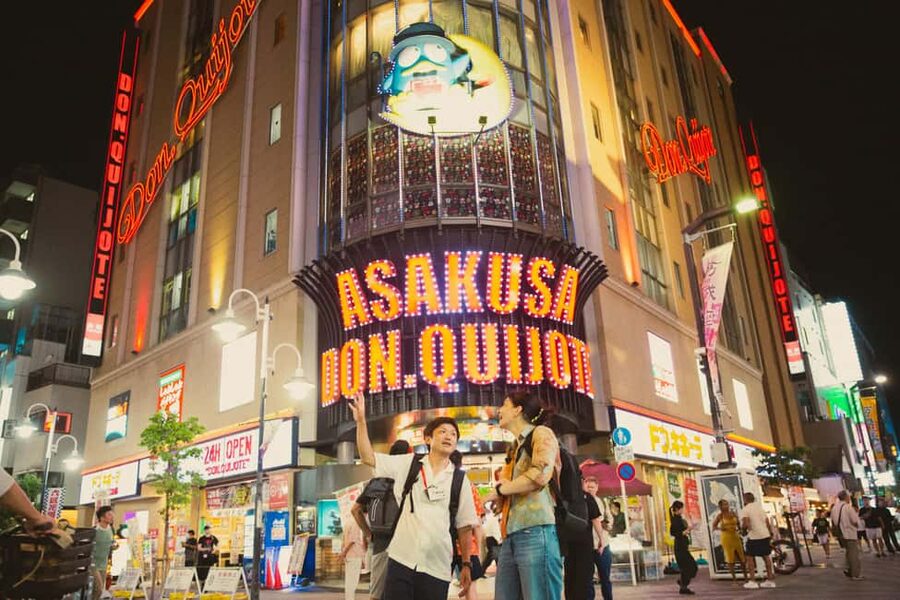
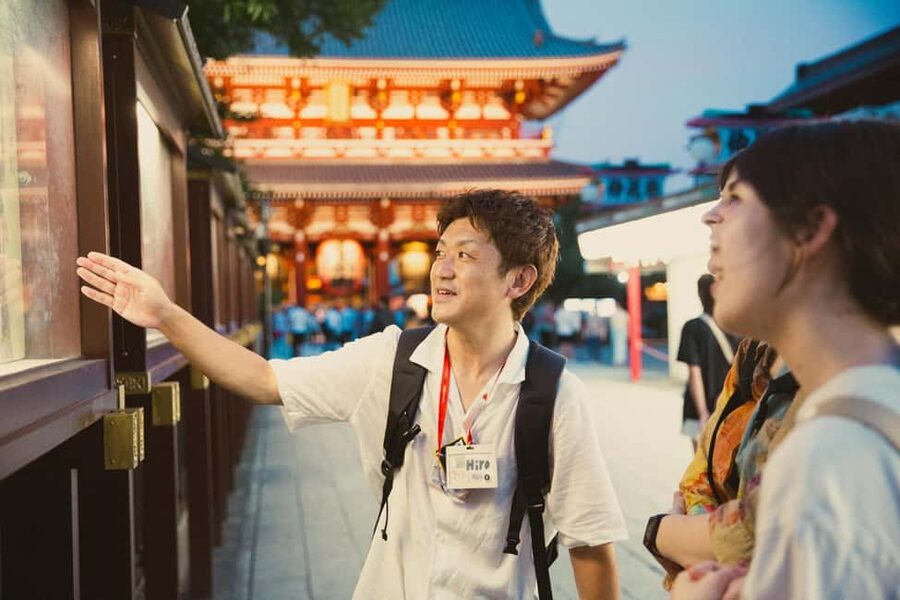
Senso-ji is the centerpiece of the walk. Founded in the seventh century, it is Tokyo’s oldest temple and one of the city’s essential sights. The tour allows roughly 30 minutes here, enough time for a guided look at the grounds, major buildings, and the temple’s importance to Asakusa.
The timing has one clear catch. The main hall closes at 6pm, so an evening tour may not allow you to go inside. You should book this experience for the exterior, lanterns, gates, grounds, and nighttime atmosphere rather than for a visit to the hall itself.
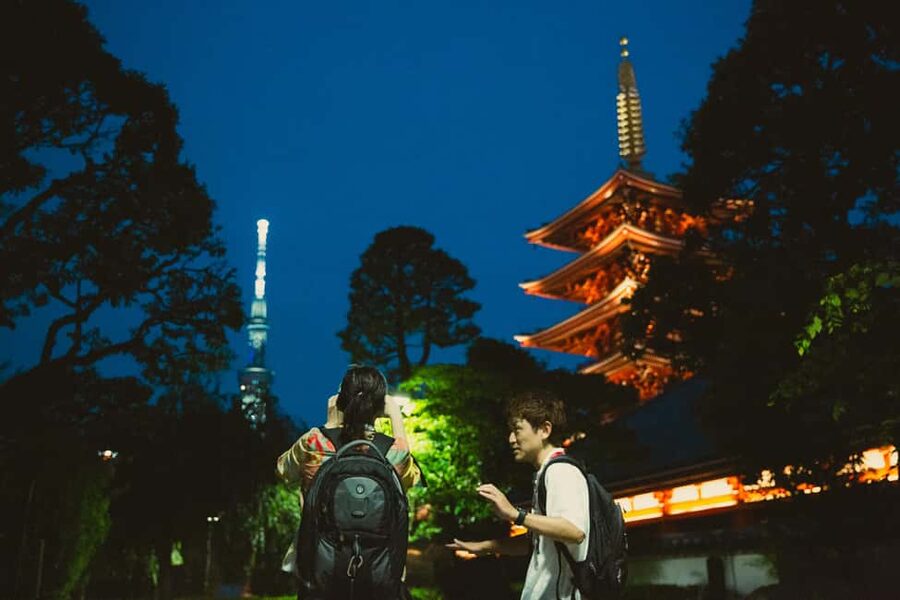
That limitation is not necessarily a flaw. The temple complex is large enough to reward a slower look, and the evening illumination can make the rooflines, gates, and surrounding paths especially photogenic. You also avoid making a rushed daytime temple visit just to fit the building into your schedule.
Your guide can explain the customs and background that turn a beautiful building into a meaningful place. The tour description promises stories about Asakusa’s cultural past, and the positive comments about Hiro point to this as one of the stronger parts of the experience. I would use this time to ask questions. In a group capped at eight, you have a better chance of getting an answer than on a large coach tour.
Hanayashiki and the old-fashioned side of Asakusa
The route includes about 15 minutes around Hanayashiki Amusement Park. The stop adds a different note to the evening. Instead of focusing only on temples and formal architecture, the walk shows you Asakusa’s playful, old-fashioned entertainment side.
You should think of this as a guided photo and neighborhood stop, not a visit to the rides. No admission to the amusement park is listed, and the experience does not promise time inside. The value is in seeing how Hanayashiki fits into the character of Asakusa, where religious sites, shopping streets, bars, and entertainment venues sit close together.
This variety keeps the tour from feeling like a temple-only walk. You get several visual moods in two hours: the grand entrance at Kaminarimon, the traditional approach of Nakamise, the solemn temple grounds, and the more nostalgic feel around Hanayashiki.
A taste of Denki Brandy
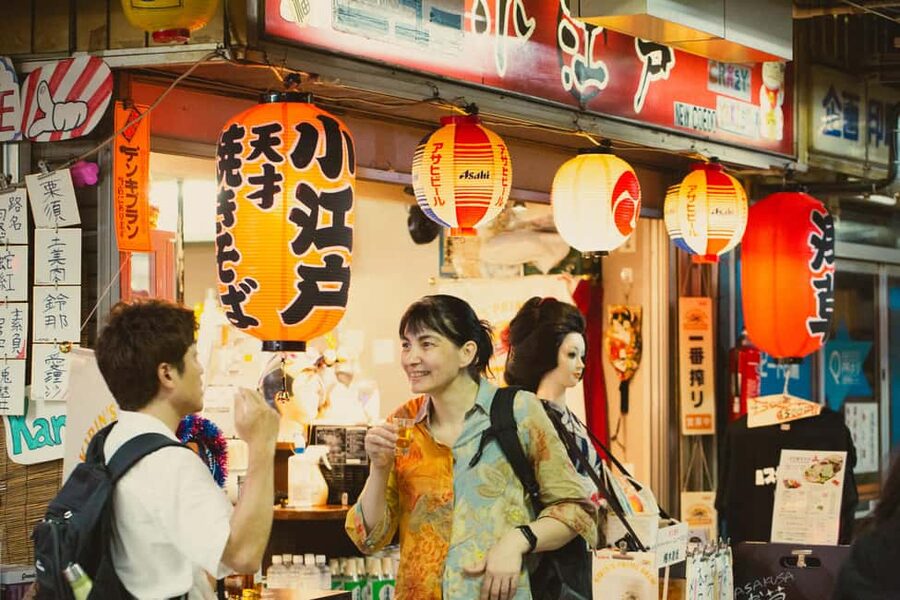
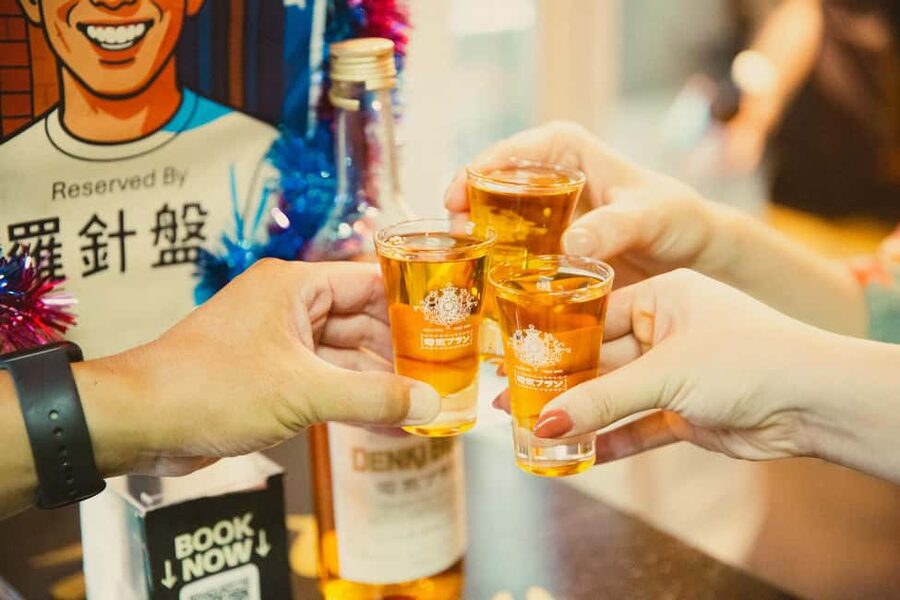
The drink stop gives the walk its most distinctive local detail. At a historic bar, you receive one drink, usually Denki Brandy, a blended whisky associated with Asakusa and dating to the Meiji era.
The name and style fit the district’s retro character. This is not just a generic beverage included to justify the price. It connects the evening to Asakusa’s drinking culture and gives you a small taste of a local classic that you might not order on your own.
You do not need to be a drinker to join. Non-alcoholic choices are available. A different drink may be served on Wednesdays or when the bar is closed for a holiday, so you should not book solely on the promise of one specific pour. The drink is part of the experience, not a tasting session, and only one beverage is included.
I see the drink as a pleasant bonus rather than the main reason to pay $46. The stronger value comes from combining the bar visit with a guided night walk and photo route. If you would not drink alcohol, the non-alcoholic option means you can still take part, but the price may feel less compelling if you mainly want a free walking tour.
Finishing on Hoppy Street
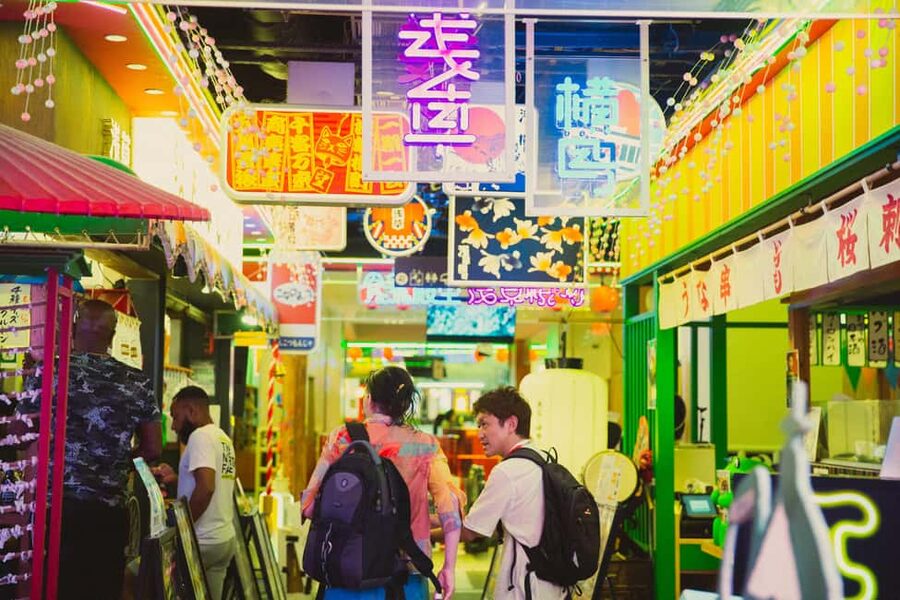
The walk ends on Hoppy Street, a lively local nightlife lane known for casual drinking and old Tokyo atmosphere. This is a good place to finish because it lets you continue the evening on your own terms.
The tour does not include additional food or drinks here. Personal expenses are extra, so you should budget separately if you want to stop for dinner or order another beverage after the guide says goodbye. That arrangement keeps the tour flexible. You can eat nearby, continue sightseeing, or head back to your hotel without being tied to a group meal.
Hoppy Street also gives the route a satisfying change of pace. After the quiet temple grounds, the final stop returns you to the social side of Asakusa. I would plan a meal here only if you are comfortable choosing on your own, since the included experience finishes at the street rather than covering a specific restaurant.
What the $46 price gets you
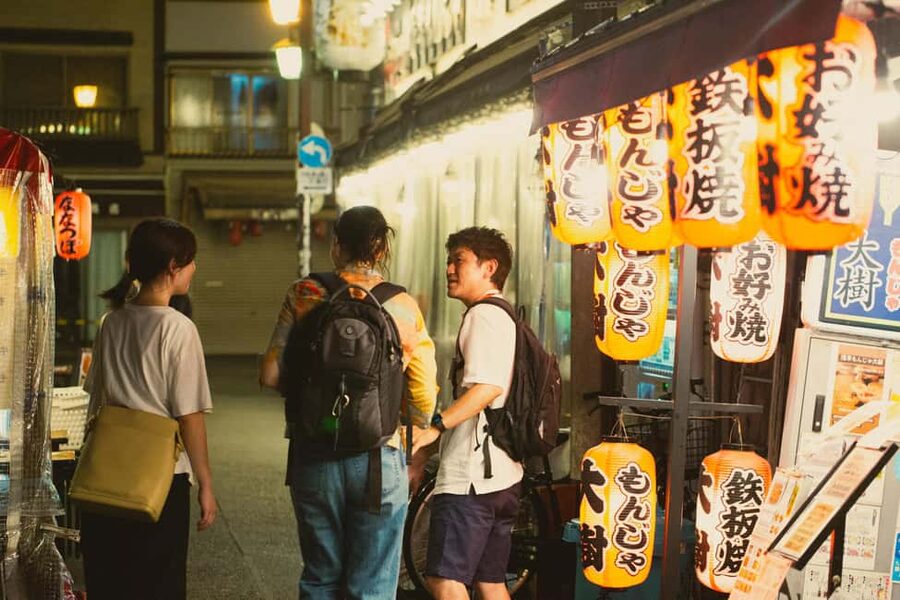
At $46 per person, this is more expensive than walking through Asakusa independently. You can see Kaminarimon, Nakamise Street, Senso-ji, and Hoppy Street without paying an entrance fee. The price needs to make sense through the added guidance and structure.
For me, the value rests on four things:
- A live English-speaking guide for two hours
- A small group limited to eight participants
- One drink, normally Denki Brandy or a non-alcoholic alternative
- Guidance to photo spots you may not find by following the standard route
The small group is important. Asakusa can be crowded and confusing, and a group of eight is far easier to manage than a large walking crowd. It also suits families. Inok was specifically praised for being friendly, flexible, and good at interacting with children, including helping them focus on the things they wanted to see.
The value is weaker if you already know Asakusa well, have no interest in photography, and prefer to choose your own bars. It is stronger if you want cultural explanation, a fixed route, and an evening introduction without having to research every stop.
Who should book this evening walk
I would recommend it to first-time Tokyo visitors who want to see Asakusa without the daytime crush. It also works well for repeat visitors looking for a different side of a familiar district.
Families may appreciate the short duration and the variety of stops. The amusement park, temple, lanterns, street scenes, and drink stop offer more range than a straight historical walk. Inok’s friendly approach with children is a useful sign for parents, though the exact guide depends on the date.
Photography-minded visitors should find the timing appealing, especially if they want illuminated temple buildings and night street scenes. Bring a phone or camera you are comfortable using in low light, and listen closely when the guide points out local viewpoints.
This is not suitable for wheelchair users according to the activity information. The route includes walking through streets and temple grounds, so anyone needing full step-free access should choose another experience. People with altitude sickness are also listed as unsuitable, although this is a low-city walking tour and no high-altitude setting is described.
The English guide makes the experience accessible to English speakers, and the reserve-now, pay-later option gives you some flexibility. You can cancel up to 24 hours before departure for a full refund, which is useful when building a Tokyo schedule that may change.
My verdict on the Asakusa night walk
Book this tour if you want a short, social introduction to Asakusa after dark, with local stories, photo guidance, and a drink built into the route. The calm Senso-ji visit and the small group are the best reasons to choose it. Guides such as Hiro and Inok also show how much the experience can depend on the person leading it.
Skip it if your main goal is entering Senso-ji’s main hall, spending hours photographing every corner, or drinking your way through Hoppy Street. The hall may be closed, only one drink is included, and personal spending at the final stop is separate.
At $46, I see this as a fair choice for a visitor who values context and convenience more than a do-it-yourself route. It gives you a clear two-hour plan, a local drink, and a quieter look at one of Tokyo’s most famous districts without taking up your whole evening.
FAQ
How much does the Asakusa Photogenic Night Walk cost?
The price is $46 per person.
How long does the experience last?
The walking tour lasts two hours.
Where do I meet the guide?
Meet outside the Asakusa Culture Tourist Information Center 10 minutes before departure.
How do I identify the guide?
The guide will hold a green sign board marked Japan Wonder Travel.
What language is the tour conducted in?
The live tour guide speaks English.
How large is the group?
The group is limited to eight participants.
Is a drink included?
Yes. One drink is included, normally Denki Brandy. A non-alcoholic option is available, and a different drink may be offered on Wednesdays or on bar holidays.
Can I enter Senso-ji’s main hall?
The main hall closes at 6pm, so you may not be able to enter during the evening tour.
Where does the walk finish?
The tour finishes at Hoppy Street.
Can I cancel for a refund?
You can cancel up to 24 hours in advance for a full refund. You can also reserve now and pay later.
More Tokyo walking tours
- Tokyo Tsukiji Fish Market Food and Culture Walking Tour
★ 5.0 · 3,184 reviews - Tokyo: Imperial Palace and Shogun Historical Walking Tour
★ 5.0 · 2,251 reviews - Tokyo: Shinjuku Local Bar and Izakaya Guided Walking Tour
★ 4.9 · 1,794 reviews - Tokyo: Tsukiji Fish Market Food and Walking tour
★ 5.0 · 1,724 reviews
Newly reviewed around Tokyo
- Tokyo Asakusa:Calligraphy & Make T-shirt Activity★ 5.0 · 62 reviews
- Intercity Shuttle, Tokyo to Haneda /Narita /Yokohama /Makuhari★ 5.0 · 5 reviews
- 1 Hour Travel around Tokyo with a Professional Photographer★ 5.0 · 3 reviews
- Travel Tokyo with Your Own Personal Photographer★ 5.0 · 43 reviews
- Kickboxing & Body Training with EX-Pro Fighter★ 5.0 · 4 reviews
- Train in Samurai Swordsmanship and Defeat the Demon in Tokyo★ 5.0 · 5 reviews
- Shuttle Van 6hr Tokyo Tour to-and-from Tokyo, Yokohama and Narita★ 5.0 · 9 reviews
- Traditional Japanese Knife Sharpening Class★ 5.0 · 18 reviews
Tokyo Night Tours, compared.
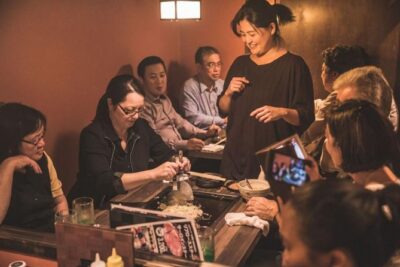
Tokyo After 5: Authentic Japanese Food & Drink Night Tour
Read our review →
Shibuya Meltdown Night Tour: All-You-Can-Drink Bar Hopping
Read our review →
Tokyo by Night Photography Tour (Private Option Available)
Read our review →


Real Tokyo Runner Club : Daikoku Car Meet Night Tour with JDM Car
Read our review →
Browse the lists this tour appears in