
Reviewed · ASAKUSA AND SENSOJI TOURS
Tokyo: Asakusa and Tokyo’s Oldest Temple Senso-ji Tour
Asakusa gives you Tokyo at its most traditional, and this two-hour walk puts its star attraction, Senso-ji Temple, in context. You pass beneath the huge Kaminarimon Gate, follow Nakamise Street, learn how to approach a Buddhist temple, and finish at nearby Asakusa Shrine. Guides such as Shino, Embla, Nicolas, and Aska add local stories that are easy to miss on your own.
I like the small groups of up to 10 and the way guides keep people together through crowded lanes. I also like the practical local advice: where to find traditional snacks such as ningyo-yaki, what souvenirs carry real meaning, and which Asakusa spots deserve more time. The main drawback is simple: Asakusa can be packed, and two hours gives you an introduction rather than a full day in the district.
Key points
- Kaminarimon begins the story: Learn why this famous red gate matters before walking into Asakusa’s temple quarter.
- Senso-ji is more than a photo stop: Get help with temple customs, Buddhist traditions, fortunes, and the site’s long past.
- Nakamise Street adds local flavor: Browse old-style shops and sample or identify sweets and street foods.
- Asakusa Shrine provides contrast: See how a Shinto shrine differs from the Buddhist temple next door.
- Small groups help in the crowds: A maximum of 10 people makes it easier to hear the guide and stay together.
- The $14 price is strong value: You get two hours of guiding, cultural explanation, and a useful orientation to one of Tokyo’s key districts.
Why start your Tokyo visit in Asakusa?
Tokyo can feel huge and fast. Asakusa gives you a clear starting point. Its main sights sit close together, and the route moves from a famous gate to a shopping street, then into a temple and shrine complex. You do not spend the tour riding between disconnected attractions.
I especially like this area for a first look at Tokyo’s older character. Asakusa was the heart of Edo-era Tokyo, and its streets still carry traces of that period. Your guide connects the buildings and rituals to the district’s later changes, including its wartime damage and post-war recovery.
The walk also helps you read Japan’s religious spaces. Without guidance, a visitor might treat Kaminarimon, Senso-ji, and Asakusa Shrine as a series of photogenic buildings. The guide explains what each place is, how people use it, and why the customs matter.
This is not a museum lecture. It is a moving introduction, with time for photos, questions, food suggestions, and short stories about geisha districts, samurai-era Tokyo, local shrines, and everyday customs.
More Asakusa and Sensoji tours:
- Tokyo: Japanese Dance Cabaret Theater Asakusa-Kaguwa Ticket
★ 4.8 · 2,270 reviews - Tokyo: Meiji Shrine, Asakusa, Skytree Bus Tour and Cruise
★ 4.7 · 1,986 reviews - Tokyo: Roll and Authentic Sushi Making Class in Asakusa
★ 4.9 · 1,957 reviews
Meeting near Asakusa Station
The tour begins in front of the Starbucks closest to Asakusa Station. The listed coordinates are 35.7119461, 139.7979446. Because several stations and exits serve this part of Tokyo, give yourself time to confirm the exact Starbucks before the meeting time.
You are asked to download WhatsApp before meeting the guide. That matters in a busy station area, particularly if you need to locate the group or receive a message. One guide, Nicolas, used WhatsApp to help a delayed participant catch up, so keeping the app ready is sensible.
The guide may be Shino, Embla, Nicolas, Aska, Joe, or another member of the English-speaking team. The individual style can vary, but the strongest pattern is clear: guides explain local customs in fluent English, answer questions patiently, and adjust their pace when needed.
The group limit is 10 people. That is small enough for a personal feel without requiring the price of a private tour. One booking even became a group of only two, while another had seven people, so the actual size can vary by date.
Kaminarimon: Tokyo’s dramatic front door
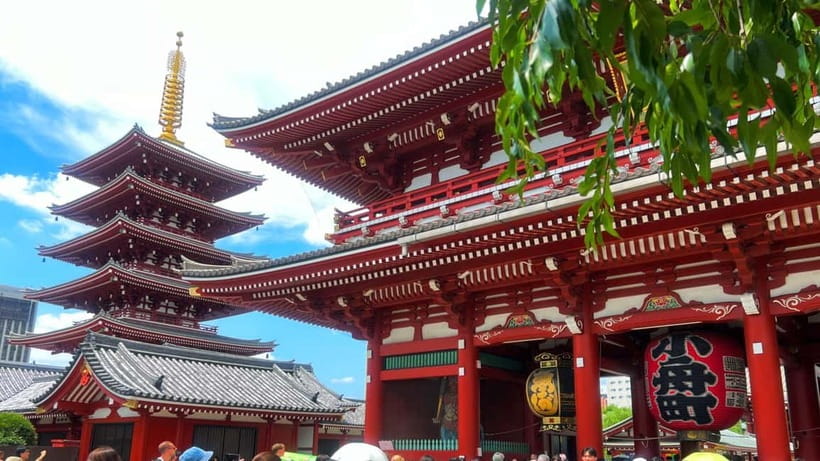
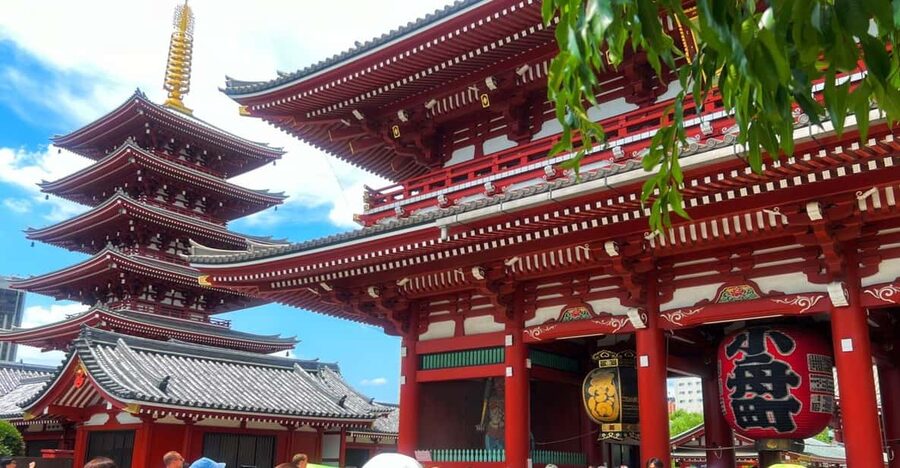
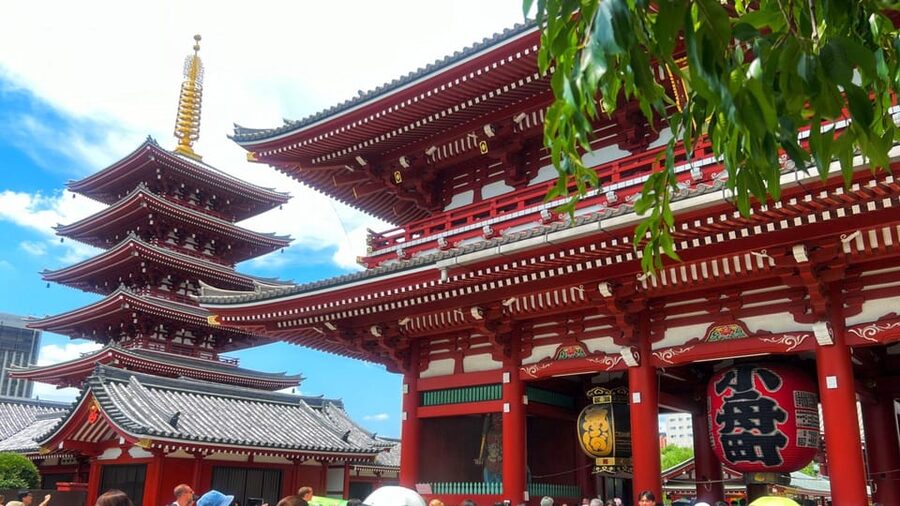
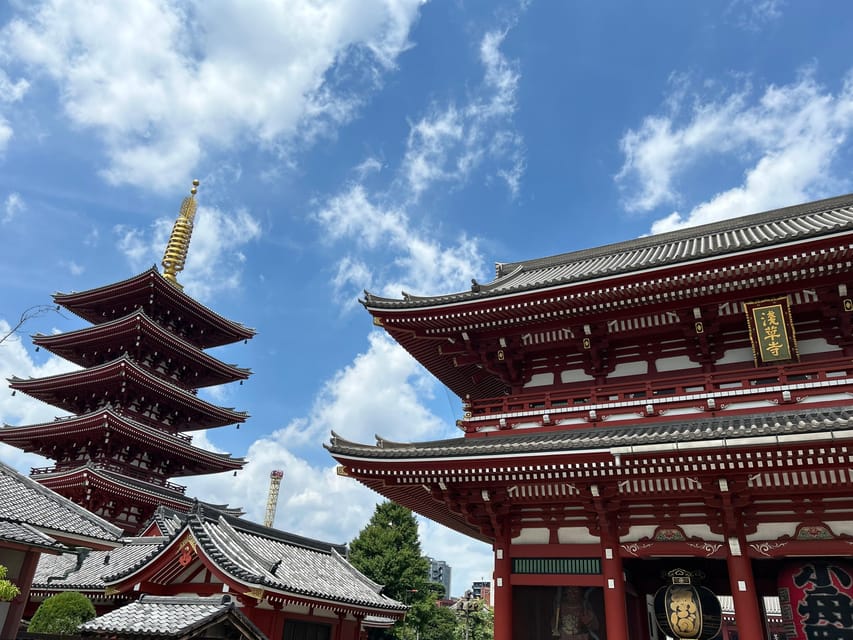
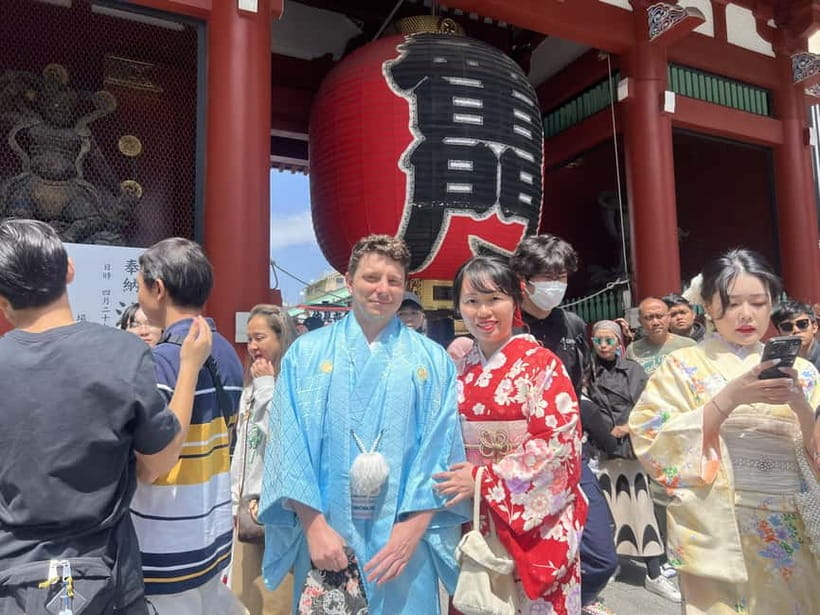
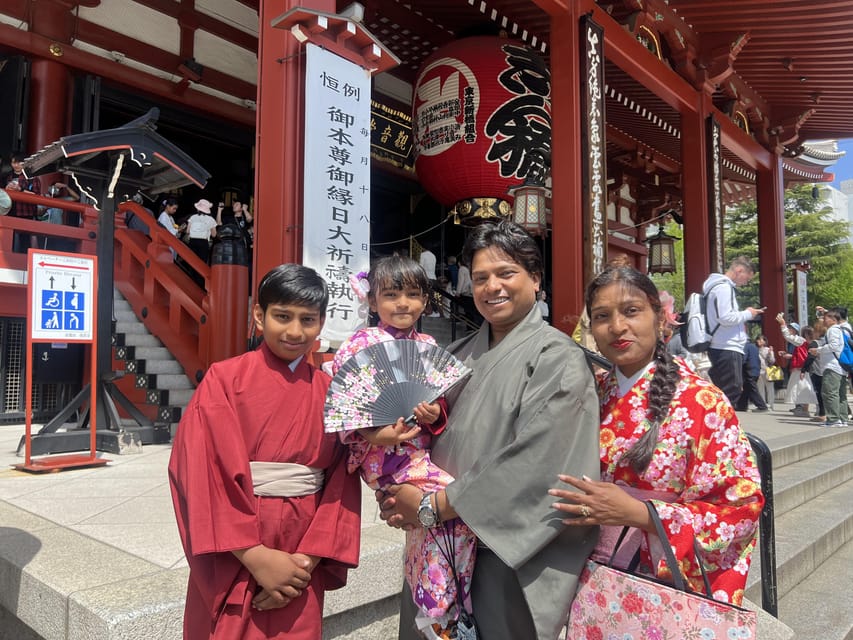
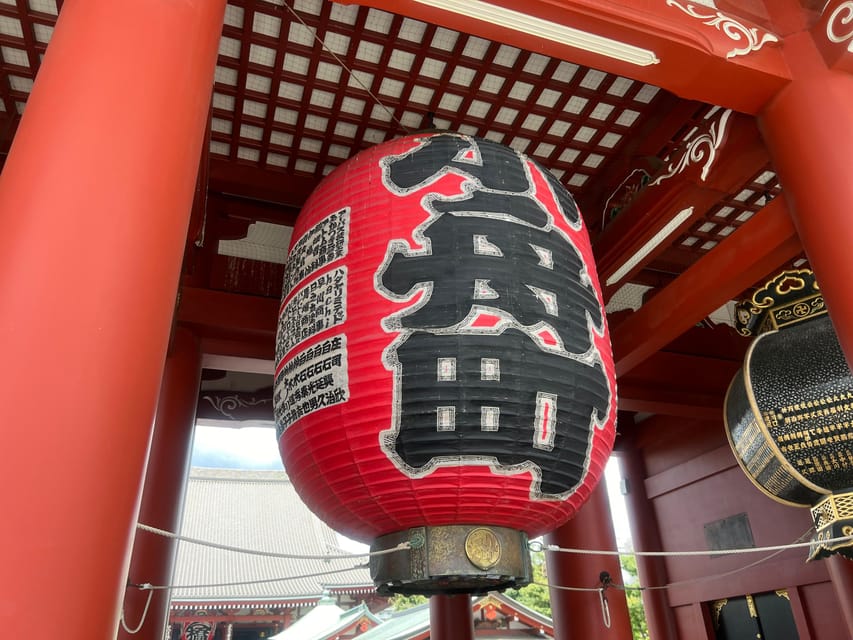
The first proper stop is Kaminarimon, or the Thunder Gate. This is the bold red entrance most people picture when they think of Asakusa. Its large lantern and guardian figures make it a natural photo stop, but the guide gives you reasons to look beyond the obvious picture.
Plan on about 30 minutes here for a visit, guided explanation, and photos. That may sound long for one gate, but the stop serves as an orientation to the entire temple approach. You learn about the gate’s role, the surrounding district, and the religious setting before entering the main pedestrian route.
The space can be crowded. People stop for photos, groups gather beneath the lantern, and foot traffic keeps moving toward Nakamise Street. The small group helps, but you still need to stay alert and close to the guide.
This is also where a good guide earns the fee. Shino, in particular, is praised for sharing local details and explaining customs in a way that suits first-time visitors. Other guides, including Embla and Joe, are noted for adding humor and current observations about Tokyo life.
Nakamise Street: shopping, sweets, and a sense of place
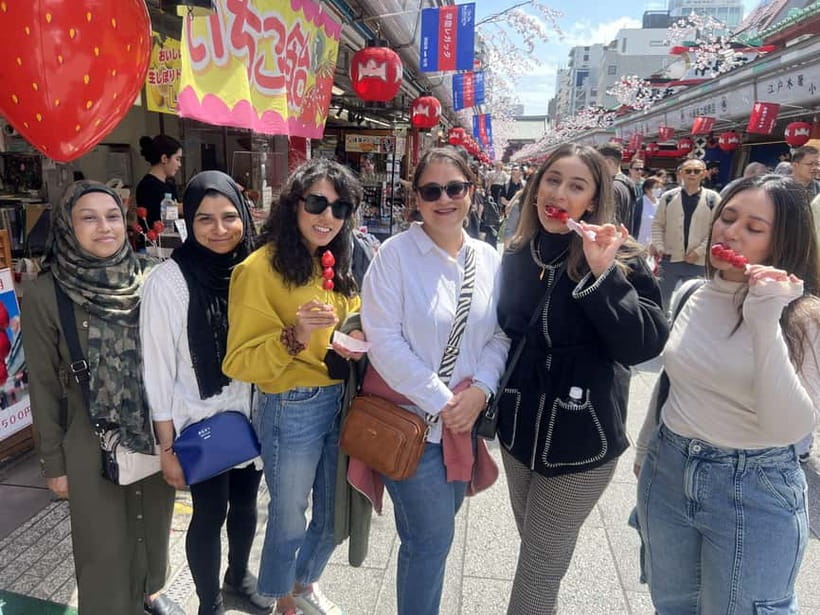
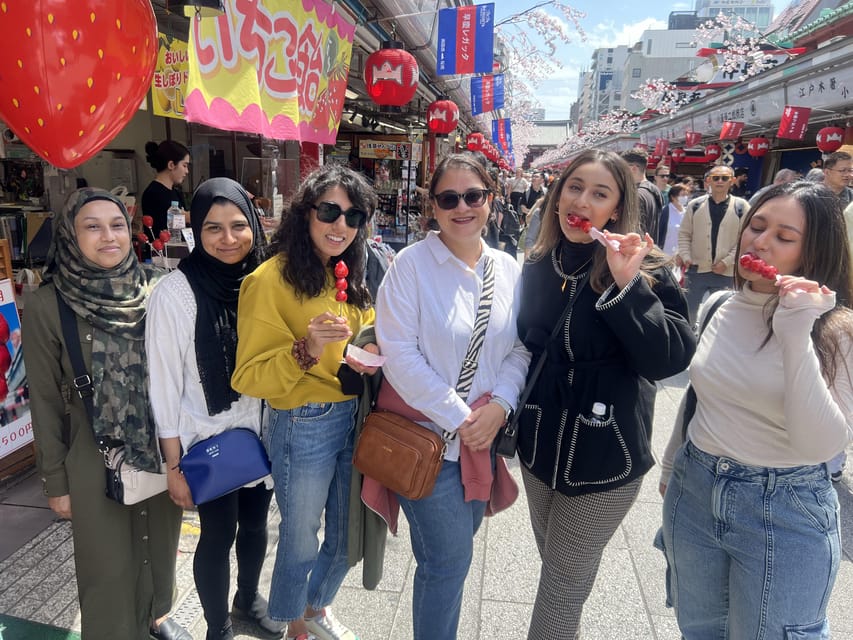
From Kaminarimon, you walk along Nakamise Shopping Street for about 20 minutes. This direct approach to Senso-ji is lined with traditional shops, colorful lanterns, sweets, small gifts, and snack stalls.
Nakamise can feel touristy, and it is worth being honest about that. This is not an untouched Edo lane. It is a busy shopping route serving people who come to the temple, with plenty of souvenirs designed for quick purchases. Still, it is a valuable stop because the street shows how commerce and religious visits have long been linked in Asakusa.
Your guide can point out local foods and explain what makes certain items special. Ningyo-yaki, a small traditional cake filled with red bean paste, came up as a memorable snack recommendation. Guides also give advice about souvenirs with genuine cultural meaning rather than simply directing you to the brightest shop.
I would use this part of the walk to note anything you want to buy later. The tour is short, and stopping at every shop will slow the group. You can return after the tour, when you have a better idea of what you are seeing and where to spend your yen.
The guide may also point out side streets or less obvious corners near the main approach. That is one of the most useful features of this experience. You get the famous route, but you are not confined to the standard postcard view.
A completely different kind of day in Tokyo:
- Mt Fuji and Hakone 1-Day Bus Tour Return by Bullet Train
★ 5.0 · 26,383 reviews - 1-Day Tokyo Bus Tour
★ 5.0 · 14,250 reviews - Tokyo: teamLab Planets TOKYO Digital Art Museum Entry Ticket
★ 4.6 · 9,779 reviews - Mt Fuji & Hakone Cruise, Drum Show Bullet Train 1 Day from Tokyo
★ 4.0 · 7,413 reviews
Senso-ji: learning how to enter a temple
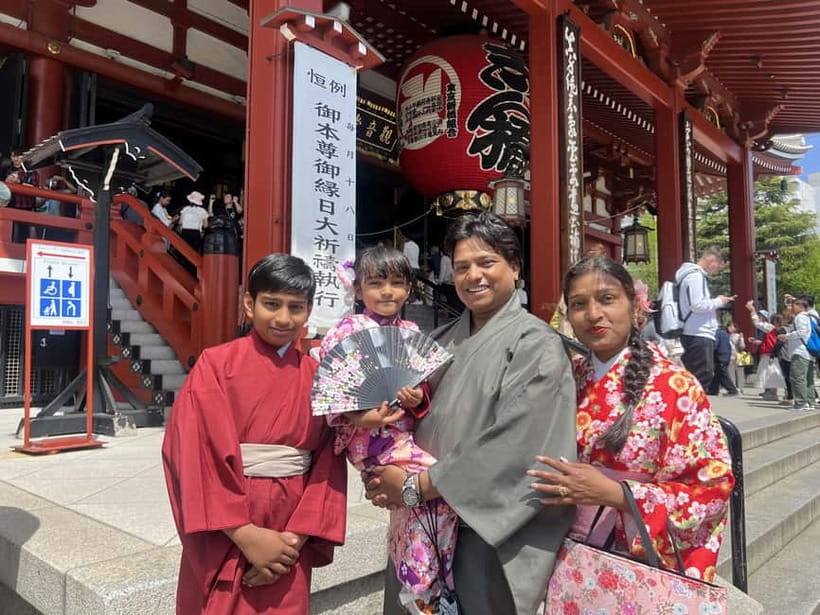
Senso-ji is the heart of the tour. Founded in the seventh century, it is one of Tokyo’s oldest temples and the district’s main landmark. The scheduled visit lasts about 30 minutes, including walking, explanation, and photos.
The value here is not just the building. Your guide explains the temple’s place in Tokyo’s story and introduces the customs connected with visiting. Several guides have taught participants how to approach and pray at the temple, including the proper sequence and the difference between Buddhist and Shinto practice.
That practical instruction makes the visit more respectful and more interesting. You are no longer simply copying the person in front of you. You understand why people pause, cleanse themselves, make an offering, bow, and pray.
You may also learn about fortunes at the temple. One participant especially enjoyed drawing a fortune, and this can add a small personal moment to the visit. If you draw an unfavorable fortune, the temple custom of leaving it behind gives the ritual a memorable twist.
Senso-ji is a working religious site as well as a major attraction. Keep your voice down around worshippers, listen when the guide explains where to stand, and allow people to pass. The guide’s role is useful here because the main grounds can be crowded and the customs may be unfamiliar.
The biggest limitation is time. Thirty minutes is enough for orientation and the key traditions, but not for every building, courtyard, or nearby street. If Senso-ji interests you, plan to return after the tour for a slower look.
Asakusa Shrine: a useful contrast beside the temple
The final main stop is Asakusa Shrine, with about 30 minutes for a guided visit and photos. Its location beside Senso-ji makes Asakusa an unusually good place to compare Buddhist and Shinto traditions within a short walk.
That contrast is one of the best reasons to book this tour rather than simply visit the temple alone. The guide can explain the difference between the two religious traditions, point out how the spaces are used, and show you how customs change from one site to the next.
Asakusa Shrine also gives the walk a quieter change of pace after the main temple grounds and Nakamise Street. It remains part of the popular route, so do not expect complete solitude, but the stop feels different from the grand entrance and packed shopping street.
Guides have been praised for taking time with the shrine and answering questions about Japanese culture. That is especially helpful if this is your first visit to Japan. The explanations are aimed at curious newcomers, not at specialists in religious history.
After the shrine, the group returns to the Starbucks near Asakusa Station. The route ends where it begins, making it easier to continue exploring, find lunch, or return to a shop you noticed earlier.
What the guides add to the walk
The guide is the main reason to choose this experience. The sights are free-standing landmarks you could visit alone, but the explanations turn them into a connected story.
Shino is a Tokyo native who has shared local food, meaningful souvenirs, small customs, and less obvious places around Asakusa. She has also guided people who had visited the area before yet still picked up new details. That makes her style particularly useful for repeat visitors.
Embla has been praised for organization, clear explanations, humor, and keeping a small group moving together. Nicolas is described as a strong storyteller who adds anecdotes, explains Buddhism, and takes care with the pace. Aska is known for explaining temple customs and pointing out smaller local treats.
Other guides, including Joe, Naoya, Ryota, Yota, Connie, Haydn, and Jae, have received praise for friendly conversation, clear English, cultural explanations, and practical suggestions. You cannot choose a specific guide from the information provided, so book for the route and format rather than for one individual.
The best guides do three things well: they explain without drowning you in dates, they watch the group in crowded areas, and they leave room for questions. This team appears to do those jobs consistently, although the exact personality and level of detail will depend on who leads your departure.
Is two hours enough for Asakusa?
Two hours works well as a first orientation. You cover Kaminarimon, Nakamise Street, Senso-ji, and Asakusa Shrine without spending the whole day on one neighborhood. The walking is broken up by explanations and photo stops, so it is not a hard march from start to finish.
You will not see every corner of Asakusa. The tour does not promise a full food crawl, extended shopping time, or a long visit inside every religious building. Think of it as a well-organized introduction that helps you decide where to return.
The pace is usually moderate. Guides have slowed down for groups, watched for anyone falling behind, and adjusted to hot weather. Still, the route takes place outdoors and includes walking through crowded streets, so comfortable shoes and water are sensible choices.
Morning departures can be especially useful because they leave the rest of your day open. You can continue around Asakusa afterward, visit another Tokyo district, or return to the temple when you know what deserves a closer look.
What you get for $14
At $14 per person, this is unusually inexpensive for a two-hour guided walk in central Tokyo. You are paying for an English-speaking guide, the walking route, and organized visits to the listed Asakusa sights. The price is not for a private experience, but the group cap of 10 keeps it from feeling like a large bus tour.
The value is strongest if you are new to Tokyo or unsure how to interpret temple and shrine customs. A short explanation about how to pray, what a fortune means, or why the district developed as it did can prevent a lot of guesswork.
It is also good value for solo visitors. A small group gives you company without requiring you to arrange a private guide. Couples and families benefit from the same format, especially when they want a clear introduction before exploring independently.
The current score is 4.9 from 352 ratings, which fits the consistent praise for guide quality, English ability, patience, and local recommendations. I would still keep expectations realistic: the price does not buy exclusive access, a meal, or a full-day tour.
Free cancellation up to 24 hours before the start and reserve-now, pay-later booking make it easier to fit the walk into a changing Tokyo schedule. Check the available start times before booking, since the duration is fixed at two hours.
Who should book this Asakusa walk?
I would recommend it to first-time Tokyo visitors who want a readable introduction to traditional Japan. It is also a good choice for solo visitors, families, and anyone who prefers a small group over exploring a major temple without context.
History fans will appreciate the links between Edo-era Tokyo, samurai society, local entertainment districts, wartime destruction, and post-war rebuilding. Food-minded visitors will benefit from the guidance about sweets, snacks, and places to eat afterward.
Repeat visitors can enjoy it too, especially if their first visit was mainly for photos. One returning participant still learned new details, which suggests the guide can reveal more than the basic sightseeing script.
I would skip it only if you want a private, slow-paced religious tour, a long shopping session, or a full day devoted to Asakusa. The two-hour format is focused and useful, but it cannot cover every lane and attraction in the district.
My call on the Senso-ji and Asakusa tour
Book this walk if you want clear cultural context at a very low price. The route covers the essential sights, while the guide adds temple manners, local food tips, neighborhood stories, and practical Tokyo advice.
The best plan is to treat the tour as your Asakusa foundation. Follow the guide closely, ask questions, note the shops and foods that interest you, then stay in the neighborhood afterward. You will get far more from the two hours that way than by rushing off to the next landmark.
FAQ
Where does the tour meet?
The meeting point is in front of the Starbucks closest to Asakusa Station. The listed coordinates are 35.7119461, 139.7979446.
How long does the tour last?
The walking tour lasts two hours.
What language is the tour conducted in?
The tour is conducted in English with a live English-speaking guide.
How large is the group?
The group is limited to 10 participants.
Which sights are included?
The route includes Kaminarimon, Nakamise Shopping Street, Senso-ji Temple, and Asakusa Shrine.
Is admission included?
Admission to Asakusa, Senso-ji Temple, and Nakamise Shopping Street is included in the activity details.
Do I need WhatsApp?
You are asked to download WhatsApp before the meeting so the guide and group can coordinate smoothly.
What happens if I need to cancel?
You can cancel up to 24 hours in advance for a full refund.
Can I reserve now and pay later?
Yes. The booking option allows you to reserve your place and pay later, keeping your plans flexible.
Newly reviewed around Tokyo
- Tokyo Asakusa:Calligraphy & Make T-shirt Activity★ 5.0 · 62 reviews
- Intercity Shuttle, Tokyo to Haneda /Narita /Yokohama /Makuhari★ 5.0 · 5 reviews
- 1 Hour Travel around Tokyo with a Professional Photographer★ 5.0 · 3 reviews
- Travel Tokyo with Your Own Personal Photographer★ 5.0 · 43 reviews
- Shuttle Van 6hr Tokyo Tour to-and-from Tokyo, Yokohama and Narita★ 5.0 · 9 reviews
- Kickboxing & Body Training with EX-Pro Fighter★ 5.0 · 4 reviews
- Train in Samurai Swordsmanship and Defeat the Demon in Tokyo★ 5.0 · 5 reviews
- Traditional Japanese Knife Sharpening Class★ 5.0 · 18 reviews
Asakusa and Sensoji Tours, compared.

Japanese Dance Cabaret Theater Asakusa-Kaguwa Ticket
Read our review →
Meiji Shrine, Asakusa, Skytree Bus Tour and Cruise
Read our review →
Roll and Authentic Sushi Making Class in Asakusa
Read our review →
Asakusa Walking Tour with Sensoji Temple Visit
Read our review →
Tokyo Panoramic 1 Day: Meiji Shrine, Asakusa, Odaiba and SKYTREE®
Read our review →
Tokyo Go Kart: Asakusa, Skytree, and Akihabara **IDP MUST**
Read our review →
Asakusa, Skytree & Akhihabara Go-Kart City Experience
Read our review →Browse the lists this tour appears in