
Reviewed · TOKYO SUSHI MAKING CLASSES
Sushi Making Class
The best part of this Tokyo class is its hands-on range. In about 90 minutes, Chef Ken teaches you to make four sushi styles, from hand-pressed nigiri to rolled maki, hand-rolled temaki, and gunkan. The fish and other ingredients are selected and purchased that day, so the lesson is also a close look at how sushi starts before it reaches the plate.
I like the small maximum group of six, which should give you room to ask questions and get help with your technique. I also like that Chef Ken, a former Hyatt hotel sushi chef with experience in Japan and California, teaches in English. The main consideration is the price, $107.26 per person, for a 90-minute class, though the ingredients, equipment, lunch, sake, and tea are included.
Key points
- Four sushi styles in one class: Make nigiri, maki sushi, temaki, and gunkan rather than learning just one basic roll.
- Same-day ingredients: Chef Ken buys the sushi ingredients fresh each day.
- English-speaking instruction: Chef Ken has worked with Japanese and international customers in Japan and California.
- Small group setting: The class accepts no more than six people, with a minimum of two.
- Food and drinks included: Equipment, ingredients, Japanese sake, green tea, and the sushi you prepare are part of the session.
- Central Shibuya meeting point: The class starts and ends at 15-17 Sakuragaokacho, near public transportation.
Four sushi styles in 90 minutes
This class is built around doing, not simply watching. You begin with the building blocks of sushi, then put them to work across several forms. The listed duration is about 1 hour and 30 minutes, so the pace will be active rather than leisurely.
Chef Ken teaches you how to make sushi rice, prepare the ingredients, and shape the finished pieces. That order matters. Good sushi is not just raw fish placed on rice. The rice, cutting, portion size, hand pressure, and presentation all affect the final result.
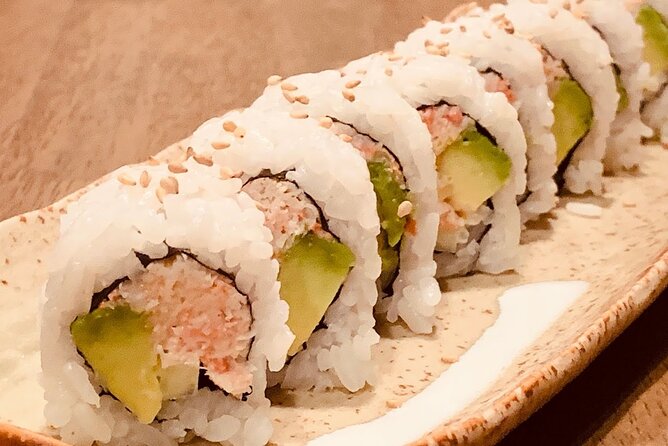
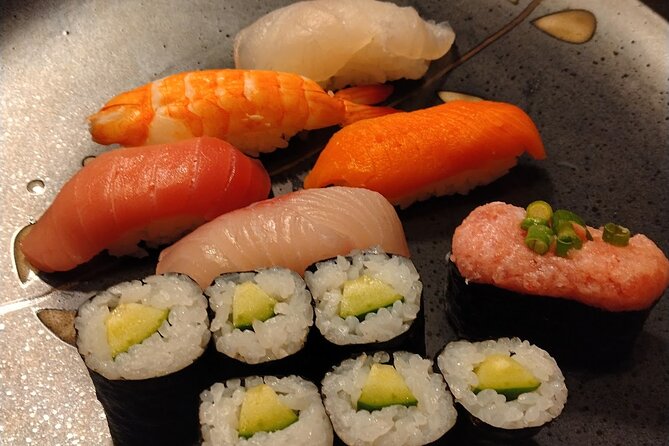
You will make nigiri, the familiar hand-pressed style with a topping over a small mound of rice. You will also prepare maki sushi, the rolled form, then make temaki, the cone-shaped hand-roll that is formed by hand rather than sliced into neat rounds.
The fourth style is gunkan, often called battleship sushi because the seaweed wraps around the rice like a low wall. It is a useful lesson in how sushi structure changes to hold different toppings. Making all four styles gives you a better feel for sushi as a group of techniques, not one single recipe.
The class also includes creative sushi that is popular around the world, alongside traditional forms. That makes it a good fit if you want Japanese technique but do not want a lesson limited to strict traditional presentation.
More Tokyo sushi making classes:
- Sushi Making Tokyo Roll and Authentic Japanese Sushi Class
★ 5.0 · 3,971 reviews - Tokyo: Roll and Authentic Sushi Making Class in Asakusa
★ 4.9 · 1,957 reviews - Make Sushi and Create Unforgettable Memories in Tokyo
★ 5.0 · 1,413 reviews
Chef Ken’s English-language teaching
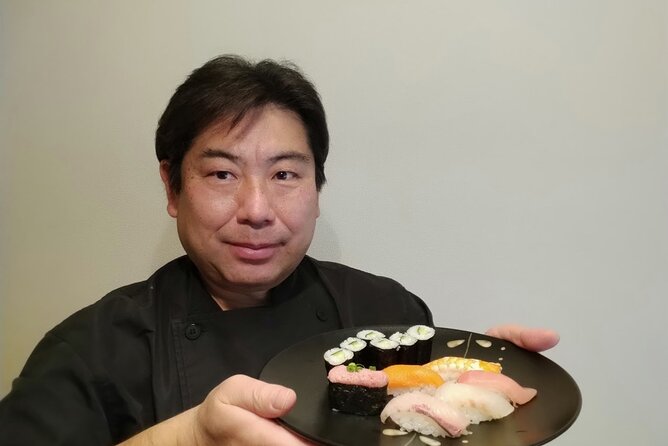
Chef Ken is the key to the class. He previously worked as a sushi chef at a Hyatt hotel and has also taught sushi-making classes and provided catering for Japanese and international customers. His work in Japan and California gives him experience explaining sushi to people who may not already know the customs or vocabulary.
You will not need to rely on a translation app for the main instruction. The class is taught in English, and the information provided specifically notes that Chef Ken speaks English well.
That matters in a practical way. Sushi-making has small movements that are easy to miss. You need to understand how much rice to use, how to shape it, and how firmly to press. Clear spoken guidance makes it easier to correct a clumsy first attempt before you repeat the same mistake across every piece.
The class is also described as personal rather than commercial. With a maximum of six people, it is far smaller than a large cooking demonstration. A group of two is required, so you should not book assuming a one-person session can run on its own.
The private feel is not guaranteed for every booking, since the maximum is six rather than one party only. Still, this is a much more focused setup than a crowded workshop. If you are bringing family or friends, the format should give everyone a chance to work directly with the ingredients.
Fresh ingredients bought on the day
Chef Ken uses sushi ingredients selected and purchased on the day of the class. That is one of the strongest reasons to choose this lesson over a generic cooking activity. You are not simply practicing with ingredients chosen long in advance. The class places emphasis on the quality and freshness of what goes into the sushi.
The available information does not provide a fixed fish menu, so you should not book expecting a particular species. That flexibility is part of the point. The chef selects the ingredients according to what is available that day, and the lesson focuses on preparation and style rather than a promised list of fish.
You will learn how to prepare the ingredients as well as how to shape the sushi. This helps you see the work behind a plate of neatly arranged pieces. Cutting and preparation are part of the result, not chores hidden in a kitchen.
The food also becomes your lunch. One person described the class as a delicious lunch and praised the fresh, tasty ingredients. That makes the $107.26 price easier to assess: you are paying for instruction, food, equipment, drinks, and a small-group activity, rather than for a demonstration alone.
Still, this is not a low-cost meal. If your only goal is to eat sushi, a restaurant will usually be a simpler choice. The value comes from making it yourself and learning several techniques under a chef’s direction.
What happens when you make the sushi
The session starts with the basics, including sushi rice. Rice is easy to overlook because the fish gets most of the attention, but it gives sushi its shape and balance. Chef Ken explains the process before you move into forming the different styles.
Next comes ingredient preparation. The class description does not give a minute-by-minute schedule or name the exact ingredients, so the order may vary slightly. You can expect the lesson to move from preparation into repeated practice, with each sushi style requiring a different approach.
Nigiri tests hand pressure and proportion. You need enough rice to support the topping without making a heavy mouthful. Maki requires a roll that holds together and can be cut into pieces. Temaki is more immediate, since you form and eat a hand-roll rather than preparing a long roll for slicing.
Gunkan adds another shape to your set. Its seaweed wrap creates a small container around the rice, showing how sushi can be designed around its topping. By the end, you will have practiced four forms instead of leaving with only one roll-making trick.
The class is not described as a formal chef certification or advanced culinary course. It is a short, practical introduction. You should arrive ready to follow instructions, handle ingredients, and accept that the first piece may look less polished than the last. That is part of the fun, and it is also why direct instruction is useful.
More Tokyo cooking classes:
- Tokyo Shinjuku Chopsticks Making Class
★ 5.0 · 1,763 reviews - Tokyo: Sushi Making Class in a Happi Coat near a Famous Spot
★ 4.9 · 1,377 reviews - Tokyo Sushi Making Class in Tsukiji with Professional Chef
★ 5.0 · 1,177 reviews - Ramen & Gyoza Cooking Class in Tokyo with Local Supermarket Visit
★ 5.0 · 823 reviews
Sake, green tea, and the meal you make

Japanese sake and green tea add a little cultural context to the meal. Green tea fits naturally with sushi and gives you a non-alcoholic drink option. Sake adds a traditional drink to the tasting portion of the class.
The supplied information does not state the number or type of sake servings, so you should not expect a detailed sake tasting. Think of these drinks as part of the class atmosphere and meal rather than a separate beverage workshop.
You eat the sushi you prepare, making the activity feel complete. One of the strongest comments about the class praised both the lunch and the personal feel of the session. Another highlighted the pleasure of making all four styles in good shape.
That point is worth stressing. You are not just leaving with a recipe sheet or a quick sample. The goal is to make several kinds of sushi and enjoy the results during the same visit. If you like food activities that produce something tangible, this is a better choice than a talk-only introduction to Japanese cuisine.
A small group in Shibuya
The meeting point is at 15-17 Sakuragaokacho, Shibuya, Tokyo 150-0031. The location is near public transportation, and the activity returns to the same meeting point at the end.
Starting and finishing in one place keeps the logistics simple. You do not need to arrange a separate restaurant reservation immediately afterward or find a second neighborhood after the class. Since the activity lasts roughly 90 minutes, it can fit into a larger day in Tokyo.
Opening hours are listed from 12:00 PM to 7:00 PM, Monday through Sunday, for the period from April 3, 2024, through June 17, 2026. Your confirmed start time will depend on the option available when you book.
The class is booked, on average, 10 days ahead. That is a useful planning clue, especially if you want a particular day or time. I would not leave it until the final morning of a short Tokyo visit, particularly because at least two people are needed for the activity to operate.
All equipment and ingredients are supplied. You do not need to bring knives, mats, rice, fish, or other cooking tools. The mobile ticket also makes the booking easy to carry on your phone.
Is $107.26 a fair price?
At $107.26 per person, this class is not an impulse-priced activity. The right comparison is not only with the cost of a sushi lunch. You are also buying 90 minutes of instruction from a chef with hotel, teaching, and catering experience.
The price includes the sushi ingredients, all equipment, green tea, sake, and the food you prepare. A small maximum of six also adds value, since the class is designed for direct participation rather than watching from the back of a room.
I would call it good value for someone who wants a food lesson and a meal in one. It is less convincing for someone who already makes sushi at home or simply wants the cheapest way to eat high-quality fish. The class earns its price through the personal instruction and variety of techniques.
The same-day ingredient policy is another part of the value. You are learning with food selected for the class rather than working through a fixed, mass-produced kit. The exact fish is not promised, but the focus stays on fresh ingredients and proper handling.
Who will enjoy this class most
I would recommend it to couples, families, and small groups of friends who want a structured activity in Tokyo. The minimum of two makes it especially suitable for a pair, while the six-person limit keeps the setting manageable for a small family group.
It also suits first-time sushi makers. You learn the basic rice and preparation steps before moving into several forms, so you do not need to arrive with technical knowledge. Chef Ken’s English instruction is a strong reason to choose this class if language access matters to you.
Food-focused visitors will get the most from it, especially those who want to take a practical skill home. The class gives you ideas for a home party, and the four styles offer more to remember than a single rolled sushi lesson.
I would think twice if you dislike raw fish, want a long professional cooking course, or expect a guaranteed menu. The available details do not promise a particular fish selection, and the class is short. It offers a lively introduction, not a full culinary apprenticeship.
Booking and cancellation details
Confirmation is sent within 48 hours of booking, subject to availability. Free cancellation is available if you cancel at least 24 hours before the local start time.
Cancellations made less than 24 hours before the start are not refunded, and changes inside that same period are not accepted. Since the class needs at least two people, it is wise to book ahead and check your meeting details carefully.
Should you book Chef Ken’s sushi class?
Book it if you want to do more than sit at a sushi counter. You will learn rice preparation, ingredient handling, and four distinct sushi forms with an English-speaking chef. The fresh, same-day ingredients and small group are the strongest reasons to choose it.
The $107.26 cost makes sense when you count the lesson, meal, equipment, sake, and tea together. It is not the best pick for a budget meal or a long advanced course. For a pair or small group looking for an engaging Shibuya activity, though, Chef Ken’s class offers a practical taste of sushi-making that you can repeat at home.
FAQ
Where does the sushi class meet?
The class meets at 15-17 Sakuragaotcho, Shibuya, Tokyo 150-0031, Japan. The activity ends back at the meeting point.
How long does the class last?
The class lasts approximately 1 hour and 30 minutes.
Is the class taught in English?
Yes. Chef Ken has experience working in Japan and California, and the class is taught in English.
How many people can join?
The class has a maximum of six participants. At least two participants are required.
What types of sushi will I learn to make?
You will learn to make nigiri, maki sushi, temaki, and gunkan. The class also covers sushi rice and ingredient preparation.
Are equipment and ingredients included?
Yes. All equipment and ingredients are included, so you do not need to bring anything for the cooking lesson.
Can I cancel for a refund?
Yes. You can cancel for a full refund up to 24 hours before the experience start time. Cancellations made less than 24 hours in advance are not refunded.
More hands-on classes and workshops in Tokyo
- Chopstick Making Workshop in Ginza
★ 4.8 · 1,366 reviews - Matcha Making Class in Tokyo with Authentic Japanese Sweets Set
★ 5.0 · 744 reviews - Tokyo: Samurai Sword & Archery Class from Samurai Descendant
★ 5.0 · 603 reviews - Tokyo: Tsukiji Fish Market Sushi Making Class with Pro Chef
★ 4.9 · 506 reviews
Newly reviewed around Tokyo
- Tokyo Asakusa:Calligraphy & Make T-shirt Activity★ 5.0 · 62 reviews
- 1 Hour Travel around Tokyo with a Professional Photographer★ 5.0 · 3 reviews
- Travel Tokyo with Your Own Personal Photographer★ 5.0 · 43 reviews
- Intercity Shuttle, Tokyo to Haneda /Narita /Yokohama /Makuhari★ 5.0 · 5 reviews
- Train in Samurai Swordsmanship and Defeat the Demon in Tokyo★ 5.0 · 5 reviews
- Shuttle Van 6hr Tokyo Tour to-and-from Tokyo, Yokohama and Narita★ 5.0 · 9 reviews
- Kickboxing & Body Training with EX-Pro Fighter★ 5.0 · 4 reviews
- Traditional Japanese Knife Sharpening Class★ 5.0 · 18 reviews
Tokyo Sushi Making Classes, compared.
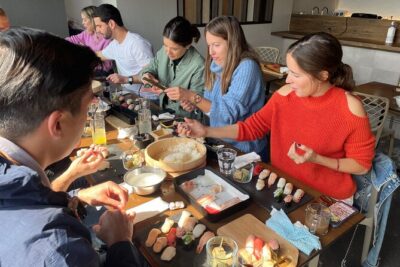
Sushi Making Tokyo Roll and Authentic Japanese Sushi Class
Read our review →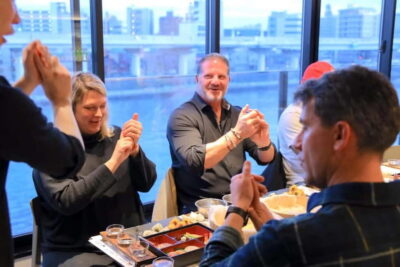
Roll and Authentic Sushi Making Class in Asakusa
Read our review →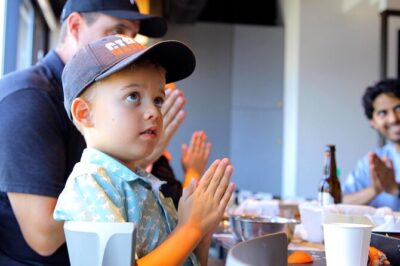
Make Sushi and Create Unforgettable Memories in Tokyo
Read our review →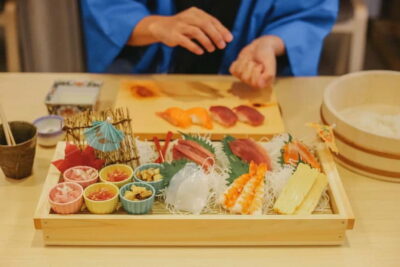
Sushi Making Class in a Happi Coat near a Famous Spot
Read our review →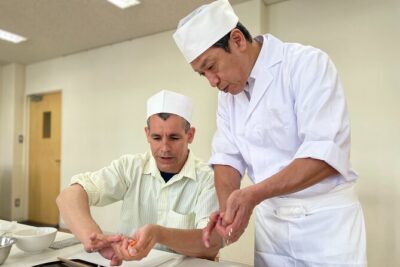
Tokyo Sushi Making Class in Tsukiji with Professional Chef
Read our review →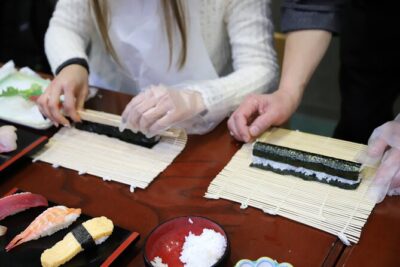
Tsukiji Fish Market Guided Tour and Sushi Making with Pro Chef
Read our review →
Tsukiji Fish Market Sushi Making Class with Pro Chef
Read our review →
Browse the lists this tour appears in