
Reviewed · UENO TOURS
Private Workshop for Making Paper Last 1,000 years in Ueno
Japanese washi is not just paper. It is a careful craft made from tree fibers, water, patience, and practiced hands. At Washi labo TOKYO in Ueno, you get to handle that process yourself, from peeling bark to lifting a fresh sheet from the mold.
I like the private format, which gives you room to ask questions and work at your own pace. I also like the useful result: you make four paper pieces, including two designed postcards, Rakusui paper, and an A5 sheet. The main drawback is finding the workshop, especially if a Metro problem affects the station serving the area.
- Four finished paper pieces: Make two postcards, Rakusui paper, and one A5 sheet.
- Traditional handwork: Try Hyouhitor, Dakai, and the full sheet-forming process.
- Private instruction: The small setting lets the instructor focus on you or your group.
- Tea made from paper fiber leaves: Drink original Japanese paper tea with local sweets while your sheets dry.
- Cat Kami-chan: A friendly workshop cat adds to the homey setting, but you should report allergies in advance.
- English and Japanese guidance: The instructor explains and demonstrates each stage.
Turning a tree into paper in Ueno
The most memorable part of this workshop is the change in material. You begin with plant fiber from a tree, not a blank sheet waiting for decoration. By the end, you have formed paper with your own hands and can see how small choices affect the finished surface.
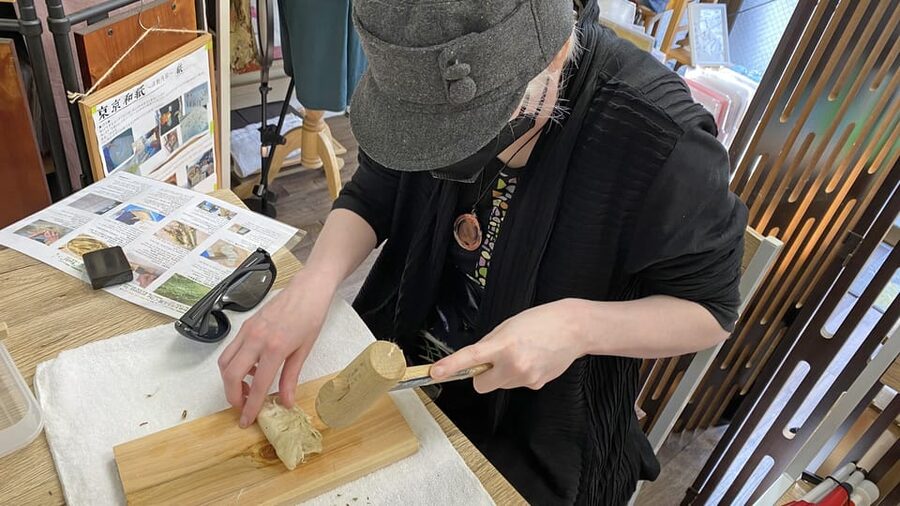
The workshop covers the basic process of Japanese papermaking, known as washi. You are not simply watching an expert work. You take part in the physical steps, including peeling the outer bark, beating the fibers, and shaping the wet pulp into paper.
That gives the activity more weight than a standard craft class. A postcard you buy in Japan may be pretty, but one you help make carries the memory of wet fibers, steady hands, and a little uncertainty as you lift it from the mold.
The experience lasts 150 minutes. That is long enough to cover the process without turning the class into a full-day commitment. Four separate paper products also give the session a clear rhythm, with several chances to practice and create.
Hyouhitor and Dakai: the hands-on beginning
The session starts with a general explanation of Japanese papermaking. This introduction matters because the later steps are easier to understand once you know how plant fiber becomes a usable sheet.
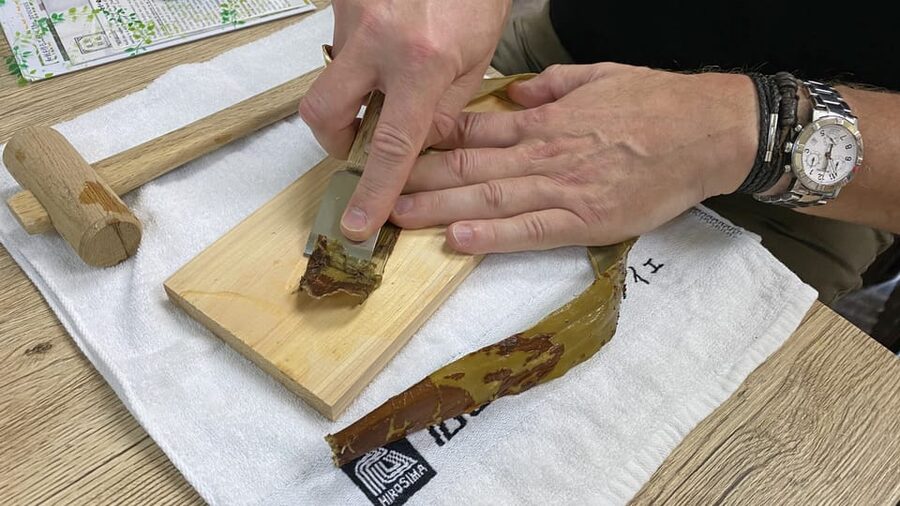
You then experience Hyouhitor, the peeling of the outer bark. This is a practical reminder that washi begins with preparation long before the paper-making frame appears. The material must be handled and cleaned before it can form a smooth sheet.
Next comes Dakai, the beating of tree fibers. This step breaks the fibers down so they can spread through water. It also gives you a feel for the labor behind traditional paper. The craft may look calm, but it depends on repeated physical work.
I like that these stages are included rather than skipped. Many short craft activities move straight to decoration. Here, you get a look at the foundation of the craft, including the less glamorous preparation that makes the final sheet possible.
You should expect the instructor to demonstrate the work as well as explain it. Clear demonstration is useful if you do not speak Japanese. The class is offered in both Japanese and English, and the process can be followed by watching each movement closely.
More things to do in Ueno:
- Eat and Drink Like a Local: Tokyo Ueno Food Tour-Taverns&Ramen
★ 5.0 · 957 reviews - Tokyo: Food Tour in Ueno with 10+ Tastings of Japanese Classics
★ 5.0 · 303 reviews - Tokyo Ueno Food Tour Sushi Ramen and Local Favorites
★ 5.0 · 54 reviews
Forming four pieces of paper
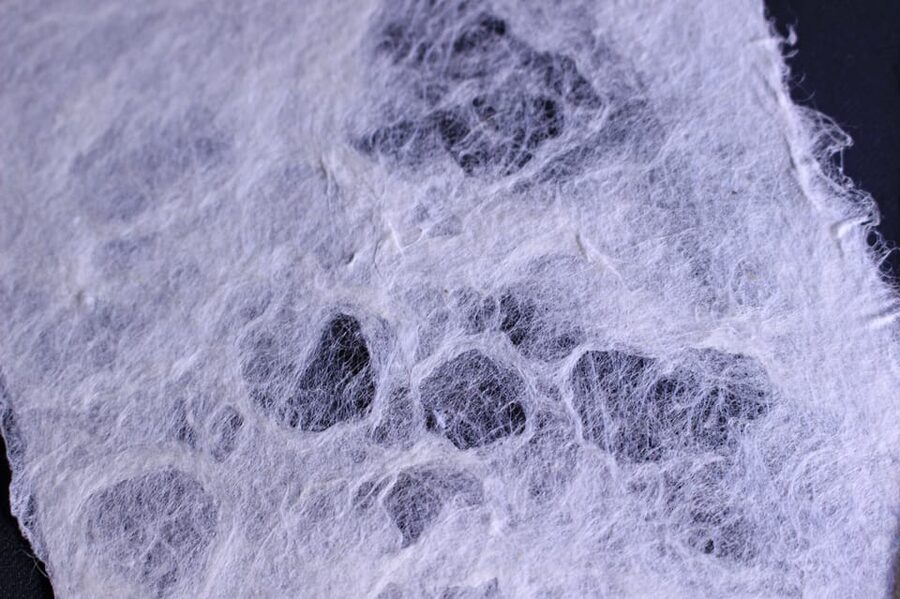
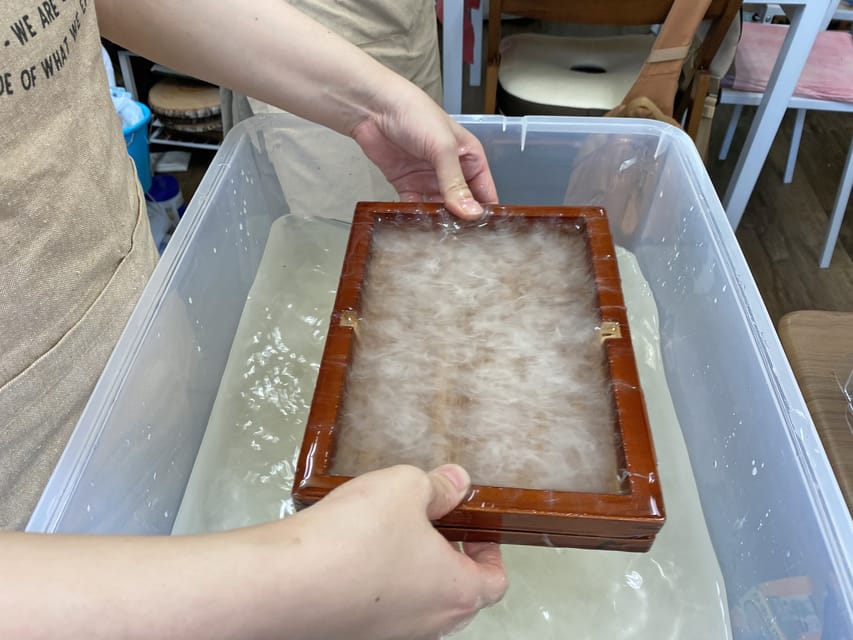
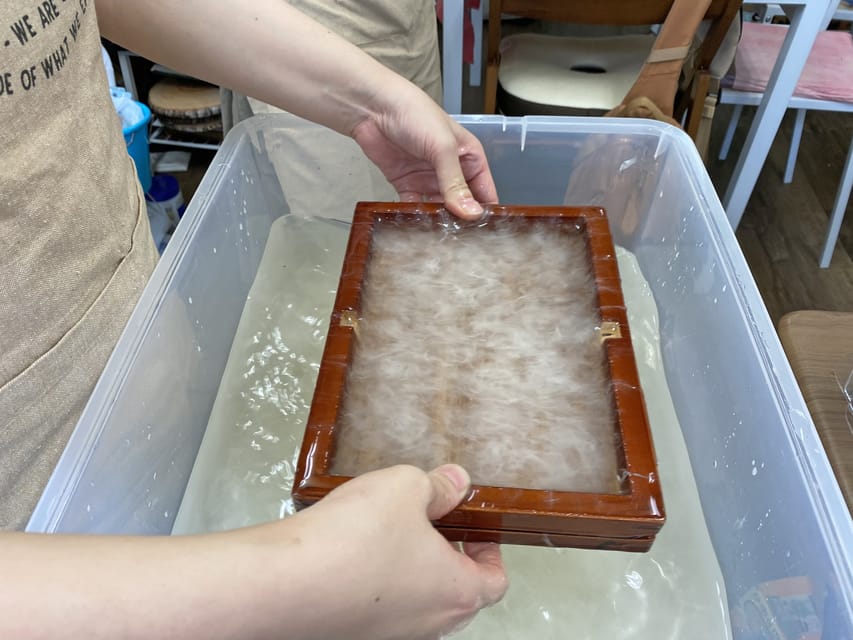
After preparing the raw material, you pour it into a paper-making mold and deckle. You then sift and move the solution so the fibers spread into an even, flat sheet.
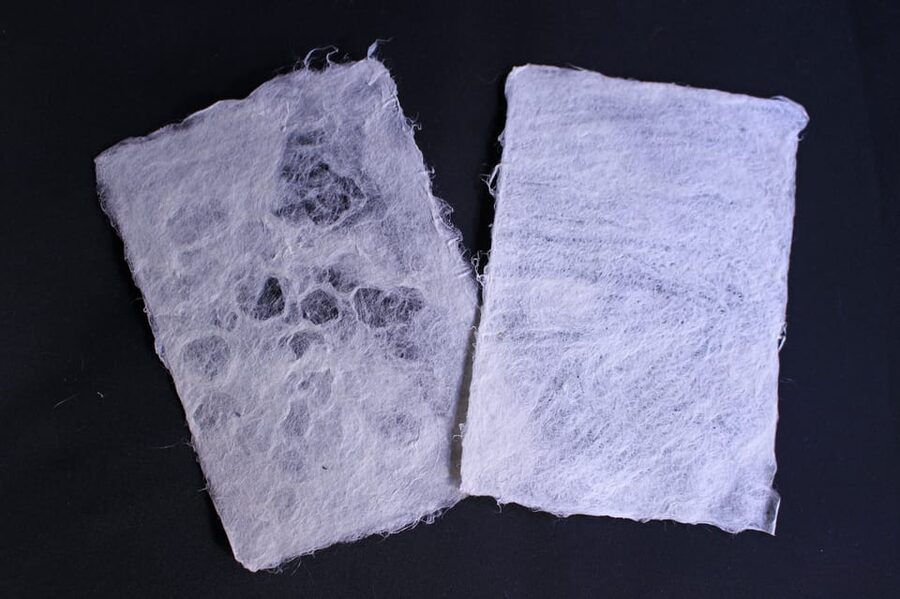
This is the point where patience helps. The pulp must be distributed properly, and the sheet has to form without becoming too thick in one area and too thin in another. You will have several products to make, so the first attempt is not your only chance to get comfortable with the motion.
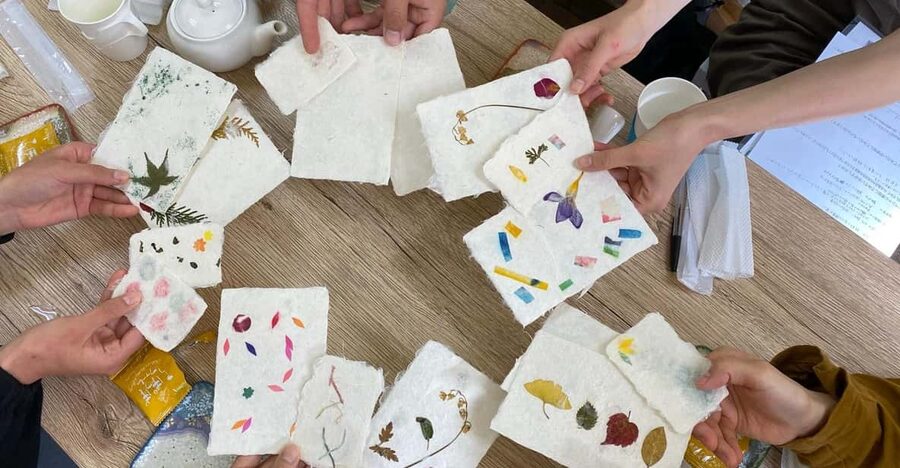
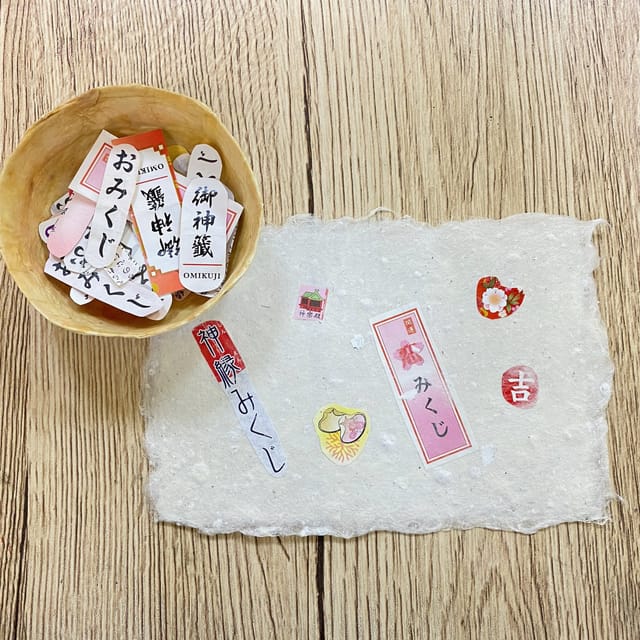
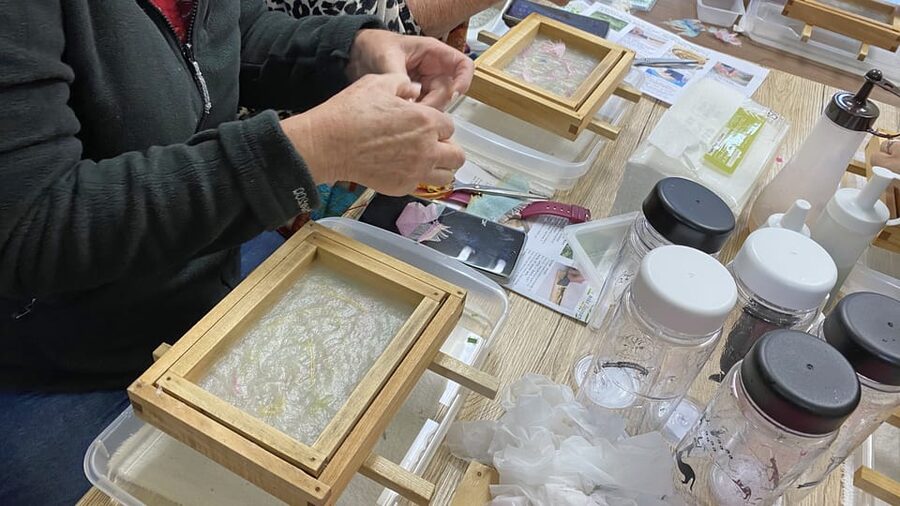
The finished projects include two postcard designs. These give you a smaller format for personal decoration or composition. You also make a Rakusui paper and an A5 paper, giving you larger surfaces to work with.
The four-piece structure is one of the strongest reasons to book this particular class. At $130 per person, you are paying for a substantial activity rather than a quick demonstration. You receive the materials, instruction, and time to produce several handmade objects.
The format also suits people who like a clear task. You are not left wondering what to do next. Each piece gives you a fresh step in the process, and the instructor can help you adjust as you go.
What makes the private format useful
This is a private group experience, which changes the feel of the class. You do not have to compete with a large room of participants for help or wait while someone else finishes a step.
The workshop can work for a solo booking, a couple, or a small private party. One person who attended the class found the space small and compact but well organized, with everything prepared before the activity began. That is exactly what you want from a hands-on workshop, especially when the process involves wet materials and several stages.
A private setting also makes it easier to ask basic questions. You can stop to check how to hold the mold, how to spread the pulp, or how much pressure to use while working with the fibers.
The small room has a tradeoff. It is not a large studio where you can expect lots of space around you. If you prefer a broad, airy craft center with many workstations, this may feel intimate. If you value personal instruction and a quiet setting, the compact layout is likely an advantage.
Work clothes are provided. That is a practical detail, since the activity includes wet pulp and hands-on preparation. You can take part without worrying as much about protecting your sightseeing clothes.
Tea, sweets, and the pause while paper dries
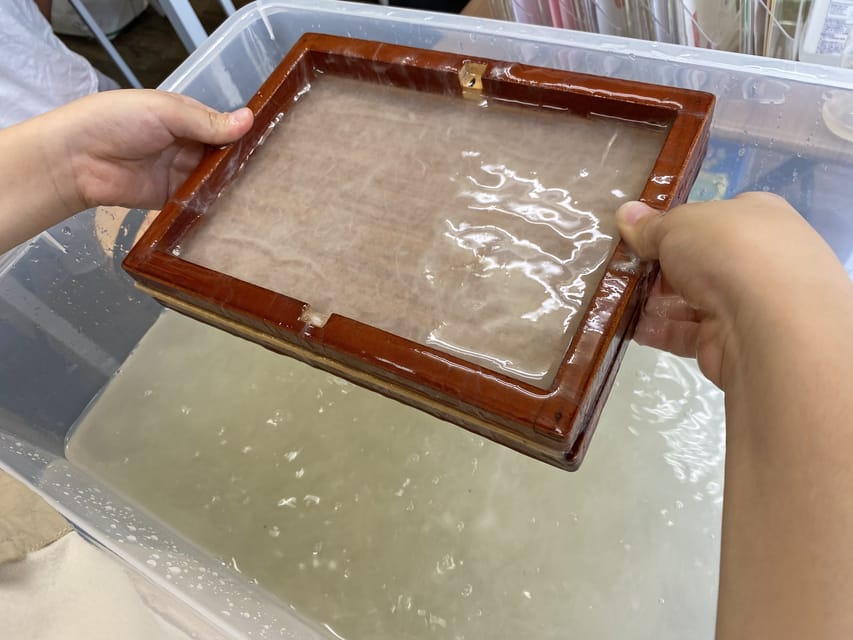
While your paper is drying, the workshop offers original Japanese paper tea and local Japanese sweets. The tea is made from Kozo leaves, the same plant material used as the raw material for making paper.
That is a clever part of the experience. The drink is not an unrelated refreshment added to fill time. It connects the break to the craft and gives you another way to think about the plant behind the paper.
The sweets come from a beloved local shop. They give you a taste of something from the area while you wait for your work to become ready to handle.
Coffee or tea is included. The supplied information does not specify a choice of sweets or a full menu, so do not book this expecting a meal. Think of it as a short cultural pause during the drying stage.
I like this timing because the class does not treat drying as dead time. You can look over the pieces you have made, talk with the instructor, and enjoy a local refreshment before the final results are ready.
More hands-on classes and workshops in Tokyo:
- Sushi Making Tokyo Roll and Authentic Japanese Sushi Class
★ 5.0 · 3,971 reviews - Tokyo: Roll and Authentic Sushi Making Class in Asakusa
★ 4.9 · 1,957 reviews - Tokyo Shinjuku Chopsticks Making Class
★ 5.0 · 1,763 reviews - Tokyo: Sushi Making Class in a Happi Coat near a Famous Spot
★ 4.9 · 1,377 reviews
A small studio with a cat
The workshop has a cat named Kami-chan. The cat was described as well behaved and helped create a cozy atmosphere during one morning session.
That detail will appeal to many people, especially if you enjoy the informal feel of a small owner-run studio. The cat also makes the experience feel less like a formal production line and more like being welcomed into a working creative space.
There is an important caution. A cat is present in the workshop, so you should inform the provider about allergies before attending. The activity may not be a good choice if you have a serious cat allergy.
The cat is part of the setting, not the purpose of the class. You should book this for the washi instruction and handmade paper. Kami-chan is an extra character in the room.
Finding the Ueno workshop
The main practical issue is locating the workshop. One person had difficulty finding it because a problem on the Metro line affected the nearest station. The problem was transport disruption rather than the quality of the activity, but it is still a useful warning.
Allow extra time to reach the address, particularly if you are coming directly from another appointment in Tokyo. Check the route on the day and do not assume that the nearest station will be operating normally.
The exact meeting directions should be checked carefully when you book. If the nearest station has a service issue, you may need another route. Since the workshop lasts 150 minutes and is private, arriving late could affect the pace of your own session.
Ueno is a practical part of Tokyo for a hands-on cultural activity, but the listing only identifies the location as Ueno and does not provide a detailed access description. Do not plan your timing around a quick five-minute transfer unless you have confirmed the route yourself.
Is $130 per person a fair price?
At $130 per person, this is not a cheap souvenir-making stop. The value depends on what you want from your time in Japan.
The price includes the required workshop materials, coffee or tea, an instructor, work clothes, and four handmade paper products. You also receive direct instruction in several stages of a traditional craft, rather than spending the full session on one simple decorating task.
I see the strongest value in the private format. A large group class might cost less, but it would not necessarily offer the same amount of individual attention. Here, your time is focused on your own work, and the instructor can respond to your questions as they arise.
The finished pieces add practical value, too. You leave with two postcards, Rakusui paper, and an A5 sheet that can be kept as souvenirs or used later. They will not have the uniform finish of factory-made stationery, and that is part of the point.
This price is easier to justify if you care about traditional crafts, prefer active cultural experiences, or want a souvenir that you helped produce. It is harder to justify if you are looking for a brief, low-cost activity or are not interested in handling materials yourself.
Who should book this workshop?
I would recommend this class to anyone who likes making things and wants more than a quick photo opportunity. You get a real process, not just a decorative add-on.
It is particularly well suited to:
- Couples or friends who want a private activity
- Solo visitors who enjoy detailed instruction
- Families with an interest in crafts, provided the age and participation needs work for the group
- People who want a handmade souvenir from Japan
- Visitors interested in traditional materials and local production
- Anyone who values a calm, small-group setting
You should think twice if you have a cat allergy, dislike hands-on work, or want a large studio with lots of open space. You should also plan your route with care if you are unfamiliar with Ueno or relying on the nearest Metro station.
The English and Japanese language option makes the workshop approachable for international visitors. Even if your Japanese is limited, the demonstrations provide an important visual guide to each step.
Cancellation, timing, and booking flexibility
The activity lasts 150 minutes, and starting times depend on availability. That is a useful length for fitting the class into a day in Tokyo, but you should leave space before and after it for transport.
You can cancel up to 24 hours in advance for a full refund. The reserve-now, pay-later option also gives you flexibility when your Tokyo plans are still changing.
Those policies do not remove the need to arrive on time. A private appointment is built around your group, so a delayed train or a hard-to-find entrance may be more disruptive than it would be at a large attraction.
My call: book it for craft, not just a souvenir
I would book this workshop if I wanted a personal, useful introduction to washi in Tokyo. The strongest features are the private instruction, the full process from tree fiber to paper, and the four finished pieces you take home.
The tea made from Kozo leaves and the local sweets add a thoughtful pause, while Kami-chan gives the small studio its own personality. Just plan your route carefully, mention any cat allergy, and understand that $130 pays for time, instruction, materials, and a complete craft session rather than a quick make-and-take activity.
If that sounds like your kind of afternoon, Washi labo TOKYO offers an unusually hands-on way to connect with Japanese paper.
FAQ
Where does the workshop take place?
The workshop takes place at Washi labo TOKYO in Ueno, on Honshu, Japan.
How long does the workshop last?
The workshop lasts 150 minutes.
How much does the experience cost?
The listed price is $130 per person.
What paper products will I make?
You will make two postcard designs, one Rakusui paper, and one A5 paper.
Do I make the paper from tree material?
Yes. The workshop explains how traditional paper is made from a tree and includes work with the raw material.
Which papermaking techniques are included?
You will experience Hyouhitor, which is peeling off the outer bark, and Dakai, which is beating the tree fibers. You will also pour the material into a mold and deckle and sift it to form a sheet.
Is food or drink included?
Coffee or tea is included. While the paper dries, the workshop also offers original Japanese paper tea made from Kozo leaves and local Japanese sweets.
What languages are available?
The instructor speaks Japanese and English.
Is the workshop private?
Yes. It is offered as a private group experience.
Is there a cat at the workshop?
Yes. A cat named Kami-chan is present. You should inform the provider if you have any allergies.
Can I cancel for a refund?
You can cancel up to 24 hours in advance for a full refund. You can also reserve now and pay later.
Newly reviewed around Tokyo
- Tokyo Asakusa:Calligraphy & Make T-shirt Activity★ 5.0 · 62 reviews
- 1 Hour Travel around Tokyo with a Professional Photographer★ 5.0 · 3 reviews
- Travel Tokyo with Your Own Personal Photographer★ 5.0 · 43 reviews
- Intercity Shuttle, Tokyo to Haneda /Narita /Yokohama /Makuhari★ 5.0 · 5 reviews
- Train in Samurai Swordsmanship and Defeat the Demon in Tokyo★ 5.0 · 5 reviews
- Shuttle Van 6hr Tokyo Tour to-and-from Tokyo, Yokohama and Narita★ 5.0 · 9 reviews
- Kickboxing & Body Training with EX-Pro Fighter★ 5.0 · 4 reviews
- Traditional Japanese Knife Sharpening Class★ 5.0 · 18 reviews
Ueno Tours, compared.
Eat and Drink Like a Local: Tokyo Ueno Food Tour-Taverns&Ramen
Read our review →
Food Tour in Ueno with 10+ Tastings of Japanese Classics
Read our review →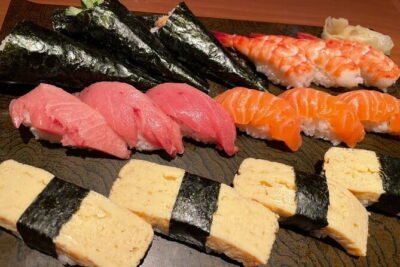
Tokyo Ueno Food Tour Sushi Ramen and Local Favorites
Read our review →
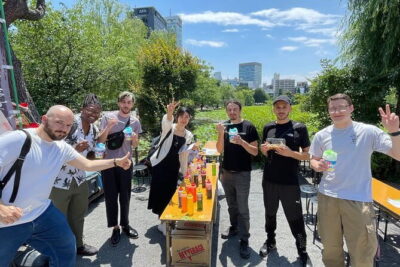
Tokyo Ueno Food & Nature & Localtown Tour: 10Dishes+ Drinks
Read our review →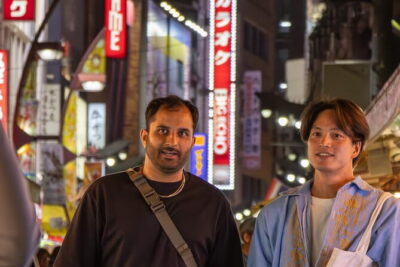
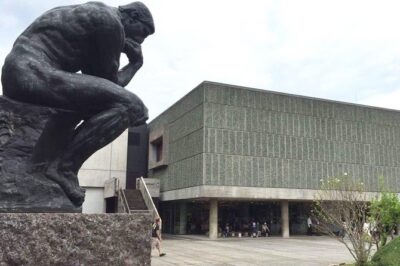
Mini Origami Lamp and Mizuhiki knot Belt Workshop in Ueno
Read our review →Browse the lists this tour appears in