
Reviewed · TSUKIJI AND TOYOSU FISH MARKET TOURS
Private Toyosu & Tsukiji Market Adventure with Tuna Auction
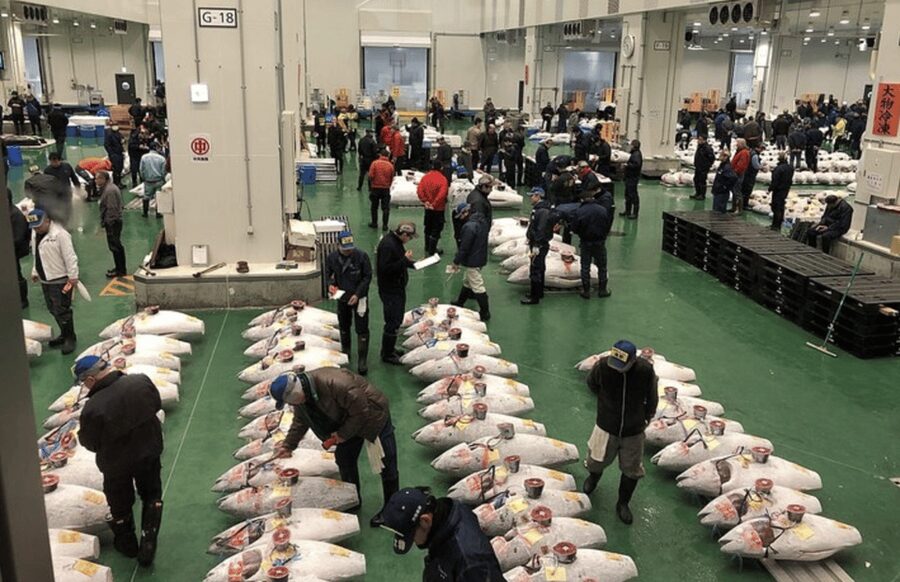
The tuna auction is the star here: before most of Tokyo is awake, you can watch buyers inspect huge bluefin tuna and bid in a fast, highly organized ritual. Toyosu Market is clean, modern, and easy to misunderstand without context, so a good guide matters. Guides such as Nobby, Sachiyo, Yumi, Emi, and Mayumi use diagrams, photos, and clear explanations to show you what is happening.
I like the tour’s two-market design. You get the early auction at Toyosu, then the more food-focused streets of Tsukiji Outer Market, where you can try sushi, grilled eel, tamago, mochi, and other small bites. I also like the practical shopping help, especially for Japanese knives, pottery, matcha tools, chopsticks, and wasabi graters. The catch is the 5 a.m. start, plus taxi costs and the fact that first-floor auction viewing depends on a lottery.
Key points at a glance
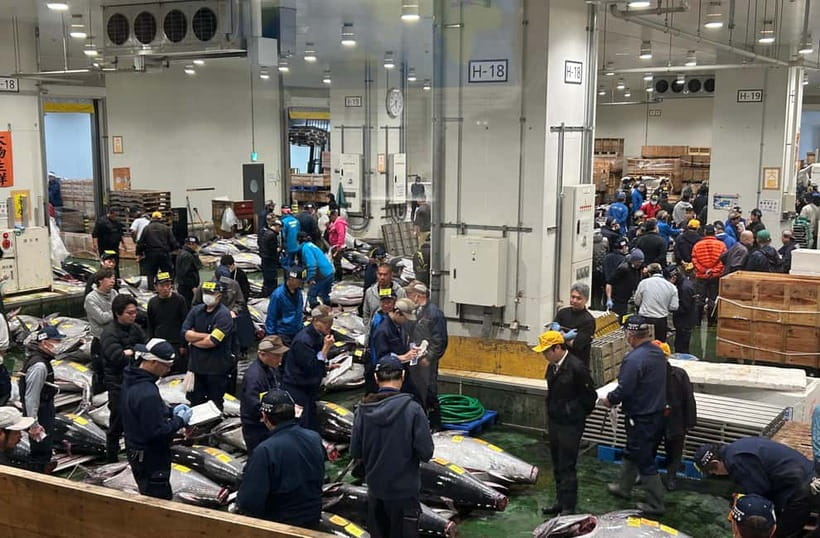
- The auction begins before sunrise: You watch professional buyers assess bluefin tuna, with your guide explaining the gestures, grading, and flow of the sale.
- The first-floor view is not guaranteed: You must register for the official lottery by the fifth day of the previous month. If you do not win, you can still see the auction from the second floor.
- Two markets give you two different mornings: Toyosu is the working wholesale market, while Tsukiji is a lively food and shopping district.
- The food is flexible: Breakfast is not included, but your guide can help you choose sushi, sashimi, grilled eel, tamago, mochi, and other local foods.
- Shopping is a major part of the outing: Tsukiji is useful for knives, pottery, tea tools, chopsticks, miso, pickles, sake, dried mushrooms, and kombu.
- Private means personal pacing: The group can include up to 10 people, and the guide can adjust stops for children, vegetarians, vegans, or people using wheelchairs or strollers.
Why the tuna auction is worth the early alarm
The auction is not simply a chance to watch fish being sold. It shows you one working part of Tokyo’s food system, from the arrival of the tuna to the buyers’ careful inspection and rapid bids.
A guide turns a distant viewing area into a lesson. You learn what the buyers are looking for, why the tuna is examined so closely, and how the auction fits into Japanese seafood culture. Several guides use visual aids, including photographs, diagrams, and binders, which helps when the action is quick or you are watching from above.
The auction viewing has two possible levels. If you win the official lottery, you may watch from the first-floor observation deck, much closer to the action. The lottery is run by the market authorities, not by the tour company, so a winning place is never certain. You must book by the fifth day of the previous month and register through the official link sent in the GetYourGuide app.
If you do not win, you can still watch from the second floor. That view is farther away, but it gives you a broader picture of the room and the process. One practical point: the December lottery does not take place at the end of the month, so viewing during that period is from the second floor.
Bring your passport or another ID if you win a first-floor place. The auction may also be quieter on some mornings. One person found the viewing less dramatic than expected because only two small auctions took place. That is a useful reminder not to expect the old Tsukiji auction spectacle every time. The market is a working business, and the scale of the morning can vary.
More Tsukiji and Toyosu fish market tours:
- Tokyo Tsukiji Fish Market Food and Culture Walking Tour
★ 5.0 · 3,184 reviews - Tokyo: Tsukiji Fish Market Food and Walking tour
★ 5.0 · 1,724 reviews - Tokyo: Tsukiji Fish Market Guided Walking Tour
★ 4.9 · 1,397 reviews
Meeting your guide before dawn
The usual meeting point is the ticket gate at Shijo-mae Station on the Yurikamome Line. The escalator shutters do not open until 5 a.m., so you may need to use the stairs or elevator to reach the second-floor ticket gate.
Pickup from your hotel can be arranged, with the guide meeting you in the lobby or outside the hotel at about 5 a.m. The taxi to Toyosu is not included, and you pay the fare yourself. Subways and buses are not running early enough for many starting times, so this is a real cost to plan for.
Staying in Toyosu, Tsukiji, or Ginza keeps the taxi ride shorter and usually makes the early start easier. If you are staying farther away, confirm the meeting details carefully and keep WhatsApp notifications turned on. The guide contacts you through WhatsApp or the GetYourGuide app, so provide an accurate phone number and download WhatsApp before the morning.
That early start is the tour’s biggest physical demand. You may be walking through markets soon after waking, and the guide might ask what you want to eat while you are still half asleep. If you prefer a quiet taxi ride, tell the guide in advance that you would rather decide on breakfast after arriving.
Toyosu Market, clean lines and serious seafood
Toyosu is Tokyo’s newer wholesale market, and the setting feels controlled and modern. It is also surprisingly clean, with little of the strong fish smell you might expect from a major seafood market.
Your guide first helps you understand the market’s layout and purpose. You may see seafood displays, professional buyers, Japanese food products, and the movement of ingredients through the market. This is where the tour is most useful for people who want more than a quick photo. Without explanations, you could easily watch the action without understanding who is buying, what is being assessed, or how the different areas connect.
The scheduled Toyosu portion lasts about 70 minutes. That is enough time for the auction viewing and a guided walk, but not enough for a slow, unplanned visit to every shop. The private format helps because you can ask questions and spend more time on subjects that interest you, such as tuna, fishing, Japanese food traditions, or market operations.
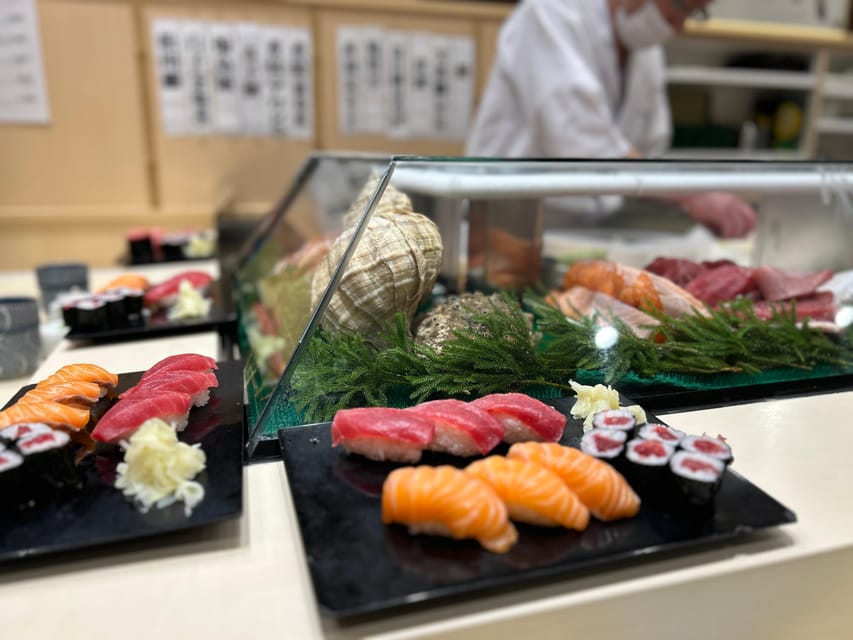
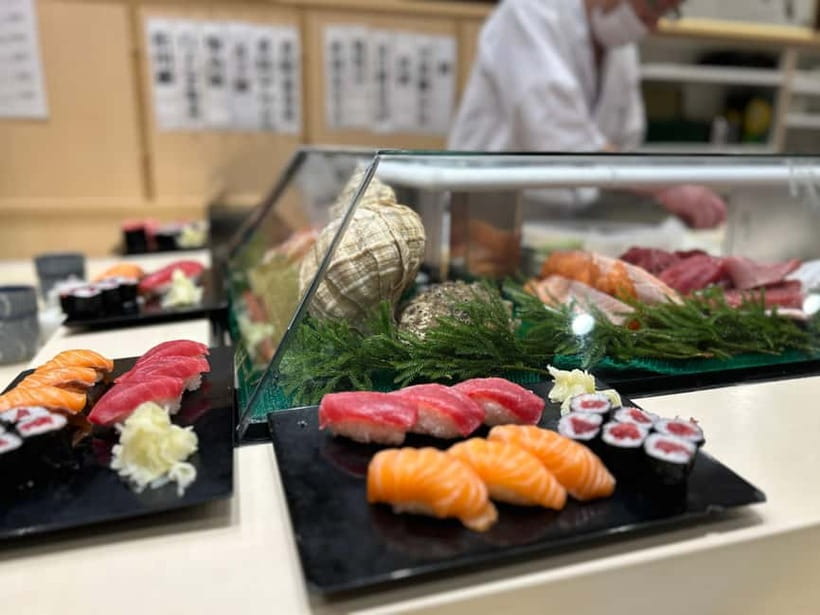
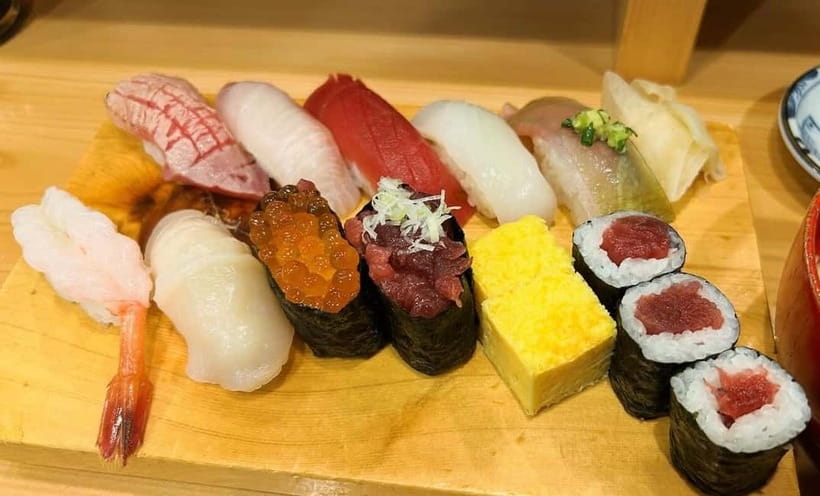
Breakfast can be at Toyosu or later at Tsukiji. It is not included in the price, and neither are drinks, so bring cash. Your guide can point you toward sushi or seafood, with some people choosing very fresh sashimi or a sit-down breakfast after the market walk.
Eating sushi early in the morning may sound odd until you are standing beside a seafood market. If you enjoy seafood, this is one of the tour’s most memorable details. If you do not eat fish, the guide can help locate suitable food, and vegetarian and vegan visitors are welcome.
The short ride from Toyosu to Tsukiji
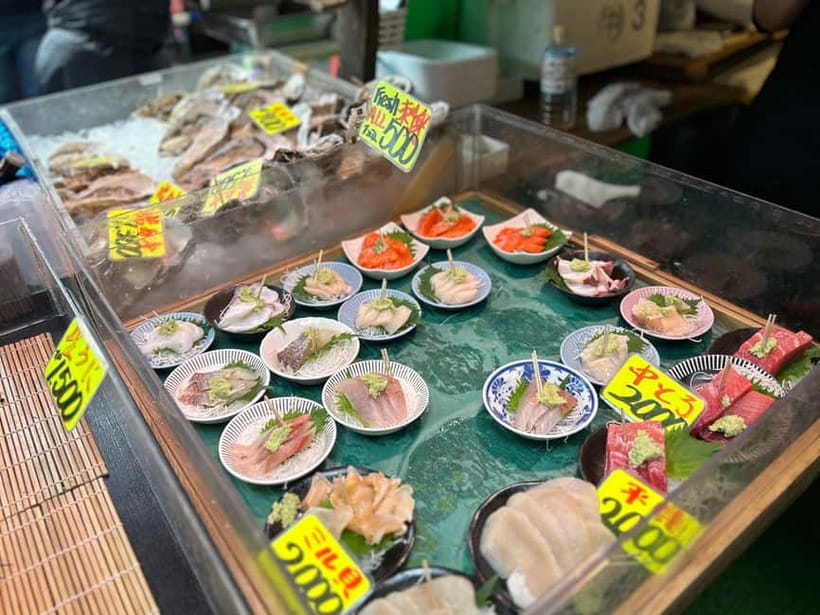
After Toyosu, you take a local bus to Tsukiji. The ride is listed at about 15 minutes, and the bus fare is not included.
This transfer matters because the two markets offer different experiences. Toyosu is the wholesale center, with an emphasis on auctions and professional trade. Tsukiji Outer Market is a street-level food and shopping area where you can stop often, browse small shops, and choose what to taste.
The bus ride also gives the morning a natural change of pace. You move from watching a controlled auction to making your own choices among food stalls and specialist stores. Since the tour is private, your guide can help keep the group together without forcing everyone into the same purchase.
More Tokyo markets and shopping streets:
- Tsukiji Fish Market Guided Tour and Sushi Making with Pro Chef
★ 5.0 · 775 reviews - Tokyo: Tsukiji Fish Market Food and Culture Walking Tour
★ 4.7 · 757 reviews - Tsukiji Fish Market: Street Food & Culture Walking Tour
★ 5.0 · 669 reviews - Tsukiji Fish Market Small-Group Food Walking Tour
★ 5.0 · 621 reviews
Tsukiji Outer Market, where the morning gets tasty
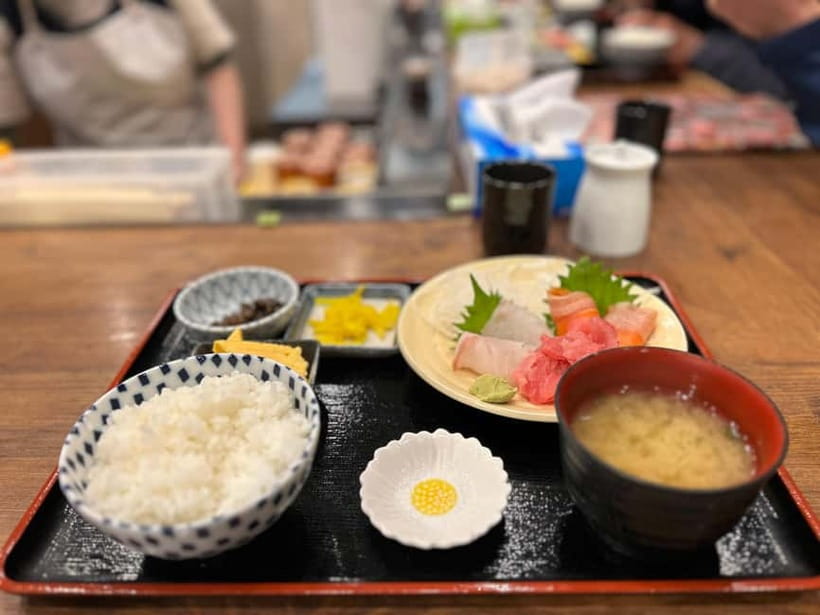
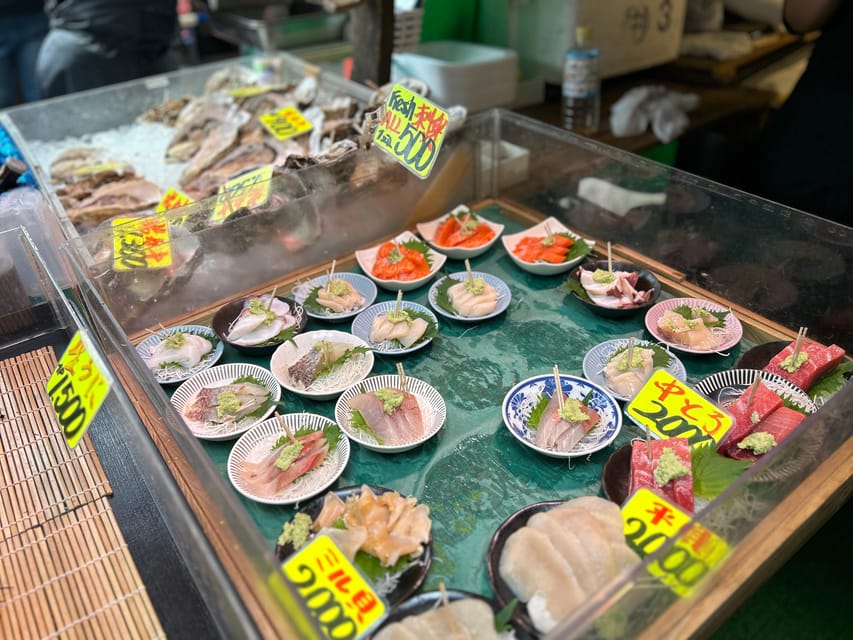
Tsukiji is the more relaxed and immediately rewarding part of the outing. Here you can look for sushi, sashimi, grilled eel, yakitori, tuna steak, tamago, mochi, seasonal produce, and local sweets.
You do not need to eat everything. The better approach is to make a few small stops and share tastes if your group is comfortable doing so. Your guide can help you avoid ordering blindly, explain unfamiliar foods, and point out places that are less obvious from the main route.
Several guides have helped people find fresh sushi at a reasonable price, rather than simply sending them to the most famous or expensive place. One useful advantage of the private format is that you can ask for a sit-down breakfast after the official tour walk. A guide may also help with communication when you are ordering or buying food.
Tsukiji is not only about eating. It is a good place to buy items connected to Japanese home cooking:
- Kitchen knives and sharpening-related items
- Pottery and serving pieces
- Chopsticks
- Matcha and matcha whisks
- Wasabi graters
- Miso and pickles
- Sake
- Dried mushrooms and kombu
- Local vegetables and fruit
If you are buying a knife, ask about care, sharpening, and airline packing before you pay. A knife can be a fine souvenir, but it is also a serious tool, not just a decorative keepsake. Cash is useful for smaller purchases, and the guide may help you find tax-free services when available.
A local shrine may be added as an optional stop. The focus remains the market, so do not book this tour mainly for shrine visits. Think of it as a brief cultural pause if the timing and group interests allow.
What the private format really adds
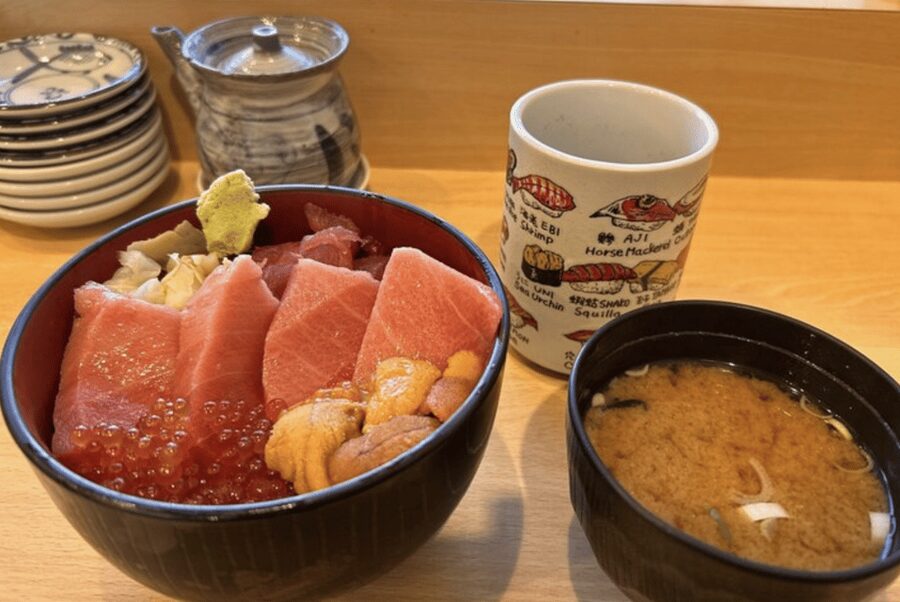
The tour is private for up to 10 people, which gives you more control than a large scheduled walk. You can ask why a tuna is being inspected, pause to compare knives, or spend extra time looking for a particular food.
The guide’s local judgment is the main value. Yumi, Sachiyo, Nobby, Emi, Mayumi, Eriko, Yoko, and other guides have been praised for clear English, punctuality, patience, and helpful food suggestions. Sachiyo has used a binder with photographs and diagrams to explain the auction. Emi has helped people navigate the market and settle into a recommended sushi meal. Nobby has been especially useful for explaining both the auction and the food streets at Tsukiji.
The experience is not a formal cooking class or a set tasting menu. You pay separately for breakfast, snacks, drinks, shopping, transport, and any shrine or food choices. That gives you freedom, but you should budget beyond the $153 tour price.
The private setup is also useful for families. Children can join, and guides can keep the morning moving while still answering questions. Wheelchair and stroller access is available, though you should still discuss your needs when booking because early market routes and transfers can affect the pace.
Is $153 a fair price?
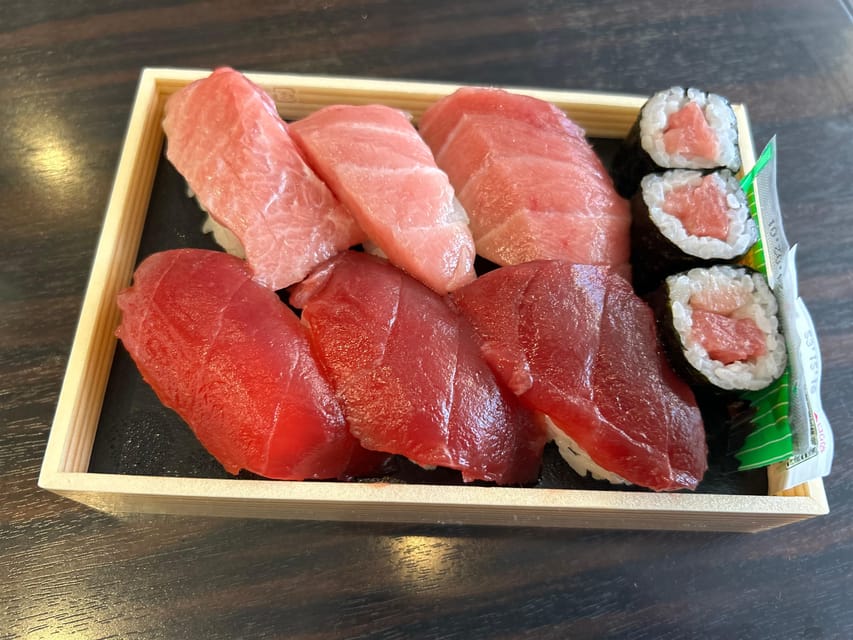
At $153 per person, this is not the cheapest way to visit a Tokyo market. You could reach a market on your own and browse without paying for a guide. The question is what you would understand and how much time you would lose finding the right areas, auction viewing points, food counters, and shops.
The price includes a private English-speaking guide and a three-hour walking tour, but not breakfast, drinks, taxi fare, or the bus from Toyosu to Tsukiji. For a group of several people, the private arrangement can make more sense because the guide’s attention is shared among fewer people, and the group can split food or focus on particular purchases.
I see the value in the explanations and the two-market route. Toyosu can be confusing, and the auction is easy to watch without grasping its purpose. Tsukiji then gives you a more hands-on morning with food and shopping. If you are only interested in seeing tuna from a distance, the price may feel high. If you want help understanding the market and choosing what to eat, it is easier to justify.
Free cancellation up to 24 hours before the start and a reserve-now, pay-later option make planning less rigid. Still, confirm the auction lottery requirements early, since the first-floor viewing is not part of the guaranteed experience.
Who should book this morning?
I would choose this for a first visit to Tokyo, especially if you enjoy seafood, Japanese cooking, market culture, or practical souvenirs. It also suits people who dislike wandering through an unfamiliar market without knowing what they are seeing.
Families can benefit from the guide’s help with food choices and navigation. It works well for people who want sushi early, and vegetarian or vegan visitors can ask the guide to help find suitable ingredients.
You should think twice if you dislike early starts, do not want to pay for taxis and food separately, or expect a dramatic auction every morning. The auction is a working event, not a stage show, and the first-floor view depends on a lottery.
My call: book it for the explanation and the two-market route
Book this tour if you want the tuna auction to make sense, not just appear in a photograph. The most useful combination is the guide’s auction explanation at Toyosu followed by flexible eating and shopping at Tsukiji.
Plan carefully: stay near the markets if possible, arrange the taxi, register for the lottery on time, bring cash and ID, and keep WhatsApp active. If you do that, this is a practical way to turn an extremely early morning into one of Tokyo’s most distinctive food experiences.
FAQ
How early does the tour start?
The guide can meet you at about 5 a.m. for hotel pickup, while the exact starting time depends on the selected option and availability.
Where do I meet the guide?
You can meet at the ticket gate of Shijo-mae Station on the Yurikamome Line, or arrange pickup at your hotel. The guide will contact you through WhatsApp or the GetYourGuide app.
Is the taxi from my hotel included?
No. The taxi fare from your hotel to the market is paid separately. The cost depends on your hotel’s location.
Is breakfast included?
No. Breakfast, drinks, and food purchases are not included. You can choose sushi, seafood, or other local foods at Toyosu or Tsukiji.
Is first-floor tuna auction viewing guaranteed?
No. First-floor viewing requires entry into an official lottery, and winning is not guaranteed. If you do not win, you can still view the auction from the second floor.
When must I register for the auction lottery?
You must book the tour by the fifth day of the previous month and register through the official link. The tour company sends a reminder and registration link through the GetYourGuide app.
What happens to the lottery in December?
The lottery does not take place at the end of December. Tuna auction viewing during that period is from the second floor.
Can vegetarians and vegans join?
Yes. The guide can help you find suitable ingredients and food choices at the markets.
Is the tour suitable for wheelchairs, strollers, and children?
Yes. The tour is listed as accessible for wheelchairs and strollers, and children are welcome to join.
Newly reviewed around Tokyo
- Tokyo Asakusa:Calligraphy & Make T-shirt Activity★ 5.0 · 62 reviews
- Intercity Shuttle, Tokyo to Haneda /Narita /Yokohama /Makuhari★ 5.0 · 5 reviews
- 1 Hour Travel around Tokyo with a Professional Photographer★ 5.0 · 3 reviews
- Travel Tokyo with Your Own Personal Photographer★ 5.0 · 43 reviews
- Kickboxing & Body Training with EX-Pro Fighter★ 5.0 · 4 reviews
- Train in Samurai Swordsmanship and Defeat the Demon in Tokyo★ 5.0 · 5 reviews
- Shuttle Van 6hr Tokyo Tour to-and-from Tokyo, Yokohama and Narita★ 5.0 · 9 reviews
- Traditional Japanese Knife Sharpening Class★ 5.0 · 18 reviews
Tsukiji and Toyosu Fish Market Tours, compared.
Tokyo Tsukiji Fish Market Food and Culture Walking Tour
Read our review →
Tokyo Sushi Making Class in Tsukiji with Professional Chef
Read our review →
Tsukiji Fish Market Guided Tour and Sushi Making with Pro Chef
Read our review →Tsukiji Fish Market Food and Culture Walking Tour
Read our review →
Tsukiji Fish Market: Street Food & Culture Walking Tour
Read our review →
Tsukiji Fish Market Small-Group Food Walking Tour
Read our review →Browse the lists this tour appears in