
Reviewed · TSUKIJI AND TOYOSU FISH MARKET TOURS
Master the art of Sushi : Toyosu Market Tour & Tuna Cutting
Toyosu Market is the star here, but the real treat comes later: watching a chef cut a large tuna into lean, medium-fat, and fatty portions before you taste the difference. You also make nigiri sushi and eat a lunch built around the fish you have just learned to handle.
I like the small maximum of six people, which gives the English-speaking guide room to answer questions. I also like the mix of market shopping, street food, and hands-on sushi work. The main drawback is the travel time between Toyosu, Tsukiji, and Azabujuban, which can take more than an hour on public transportation and may feel tiring in hot weather.
Key points to know before booking
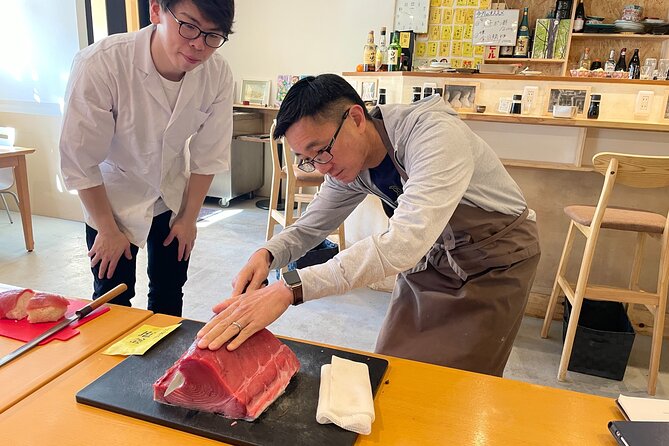
- A rare tuna lesson: Watch about three kilograms of tuna being cut and compare lean, middle, and fatty sections.
- Three different Tokyo food stops: See Toyosu’s wholesale side, browse Tsukiji’s outer market, then finish with sushi preparation in Azabujuban.
- A small group: The tour accepts no more than six people, a useful size for asking questions during the cutting and sushi session.
- Lunch is part of the experience: Tuna and sushi made during the class are included, so you are not paying for a lesson and then hunting for a meal.
- Budget for transit: Subway or bus fares between stops are not included in the $297.23 price.
- A very early start: Meet at Shijō-mae Station at 7:00 a.m. and finish in Azabujuban after roughly four hours.
Why this tour is about tuna, not just a market walk
Many Tokyo food tours take you to a counter, hand you a plate, and send you on your way. This one tries to explain what is on that plate. The tuna-cutting session gives you a look at how one large fish becomes several different eating experiences.
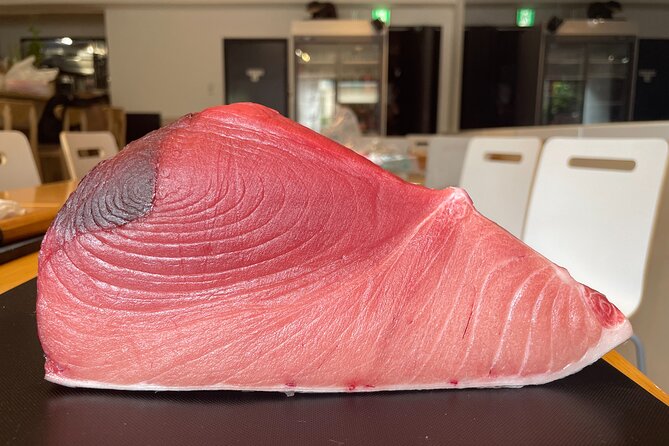
You will compare lean tuna with the middle section and the fattier portion. That matters because sushi is not simply a matter of buying the most expensive-looking slice. Texture, fat, freshness, and how the fish is cut all change the result.
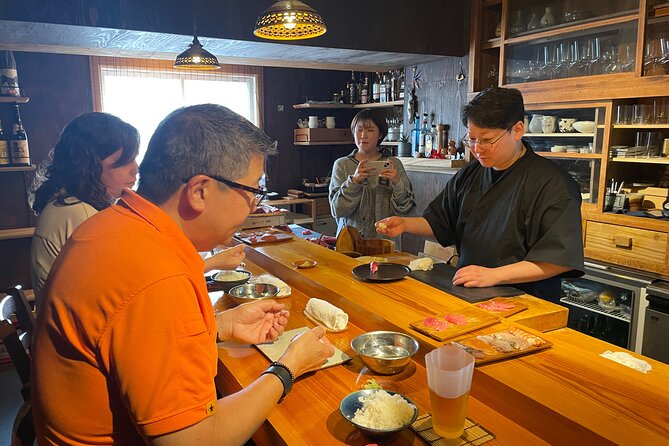
The session also includes nigiri preparation with a sushi chef. You get to observe the process and make sushi yourself, then eat tuna and sushi for lunch. If you enjoy food lessons that connect shopping, preparation, and tasting, this structure gives the morning a clear purpose.
The tour has a 4.9 rating from 60 reviews and a 98 percent recommendation rate. Those figures suggest that the combination of a friendly guide, unusual tuna lesson, and hands-on lunch works well for most people. Still, the price and transport demands deserve a close look before you book.
More Tsukiji and Toyosu fish market tours:
- Tokyo Tsukiji Fish Market Food and Culture Walking Tour
★ 5.0 · 3,184 reviews - Tokyo: Tsukiji Fish Market Food and Walking tour
★ 5.0 · 1,724 reviews - Tokyo: Tsukiji Fish Market Guided Walking Tour
★ 4.9 · 1,397 reviews
Starting at Toyosu Market at 7:00 a.m.
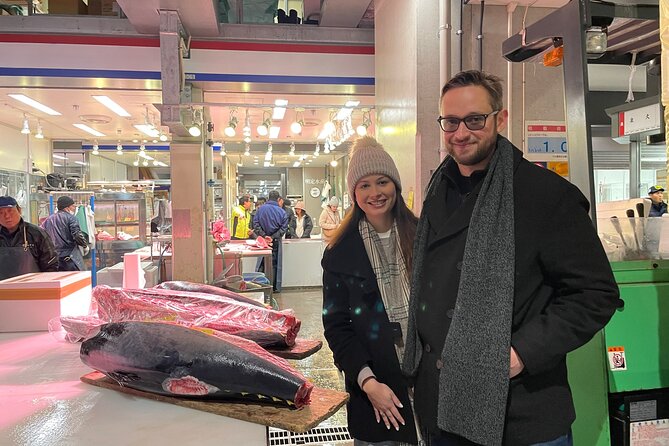
Your morning begins at Shijō-mae Station, beside Toyosu Market. The early start is not decorative. A fish market makes more sense in the morning, when the trade is underway and the stalls are active.
With your guide, you visit the wholesale market and learn how fish is selected and sold. You may also purchase fish from a wholesaler. That possibility gives you a more direct connection to the market than simply walking past counters and taking photographs.
Toyosu replaced Tsukiji as Tokyo’s main wholesale fish market. The two places serve different purposes today, and this tour uses both to show you that difference. Toyosu is the place for the wholesale side of the seafood trade. Tsukiji, by contrast, offers the outer-market atmosphere, with shops and places to eat.
The time at Toyosu is about 45 minutes. That is enough for an introduction and guided look, but not enough for an unhurried market expedition. You should arrive ready to keep moving and listen closely. If you hoped to spend the entire morning browsing every seafood stall, this tour will feel brisk.
The market stop is also free of a separate admission charge. That helps, but remember that the overall tour price pays for the guide, the class, lunch, and the experience across three parts of Tokyo, not just entry to Toyosu.
Seeing the difference at Tsukiji Jogai Market
From Toyosu, you move to Tsukiji Jogai Market. The visit lasts about an hour, including travel time, and focuses on walking, browsing, and eating.
This is not the old wholesale market experience that made Tsukiji famous. Instead, you visit the outer market, where you can look through various shops and buy food or sushi. The guide helps you compare Tsukiji with Toyosu, making the two stops more useful together than either one alone.
I like this comparison because it answers a question many Tokyo visitors have: what happened to Tsukiji after the wholesale market moved? Here, you see the continuing food trade in the outer market while Toyosu handles the newer wholesale role.
The time is limited, though. You have room to sample something and see several stores, but you may need to choose between browsing and eating. Purchases at the market are not described as part of the included lunch, so allow for extra spending if you want to buy snacks, sushi, or fish.
This portion also adds the tour’s most noticeable practical issue. You travel between stops by subway or bus, and those fares are extra. One person found the public transportation portion longer than expected, with more than an hour spent moving between destinations. The guide acknowledged that the journey could be uncomfortable in hot weather.
Plan for that honestly. This is not a compact walking tour in one neighborhood. You are crossing Tokyo to connect three food locations. The reward is a wider view of the city’s seafood culture, but the cost is time on public transportation.
The tuna-cutting session in Azabujuban
The final main stop is a Japanese restaurant in Azabujuban. Here, the tour becomes a food class rather than a market visit.
A sushi chef demonstrates how to cut tuna, working through roughly three kilograms of fish. You compare the lean, middle, and fatty parts, then try different ways of eating them. That comparison is the most distinctive part of the experience, since it turns a familiar sushi ingredient into a lesson in texture and flavor.
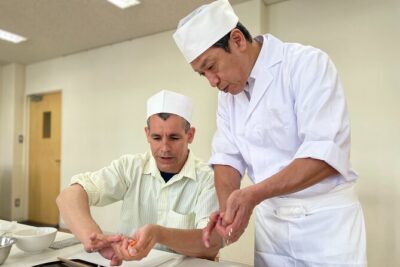
You also learn about sushi preparation and make nigiri. The supplied lunch includes tuna and sushi made during the session, so the class leads directly to a meal. For many people, this will be the most enjoyable part of the day because you are not only watching a specialist. You are handling the food and tasting the results.
The session lasts about an hour and a half. That gives the chef time to explain the cuts and lets you take part without reducing the class to a quick demonstration. The small group size matters here. With no more than six people, you should have a better chance to see the cutting clearly and ask questions than you would in a large class.
Guide Amy is specifically praised for being personable and well informed about the food. Her role covers the market visits and the movement between locations, while the sushi chef handles the technical part of cutting tuna and shaping nigiri. That division gives you both a local guide and a specialist lesson.
The end point is in Azabujuban, not back at Toyosu or your hotel. You should plan the rest of your day from there. Azabujuban is also useful as a finishing point because you can continue exploring Tokyo from a central neighborhood, but the tour itself does not provide onward transportation.
More Tokyo markets and shopping streets:
- Tsukiji Fish Market Guided Tour and Sushi Making with Pro Chef
★ 5.0 · 775 reviews - Tokyo: Tsukiji Fish Market Food and Culture Walking Tour
★ 4.7 · 757 reviews - Tsukiji Fish Market: Street Food & Culture Walking Tour
★ 5.0 · 669 reviews - Tsukiji Fish Market Small-Group Food Walking Tour
★ 5.0 · 621 reviews
What the $297.23 price really covers
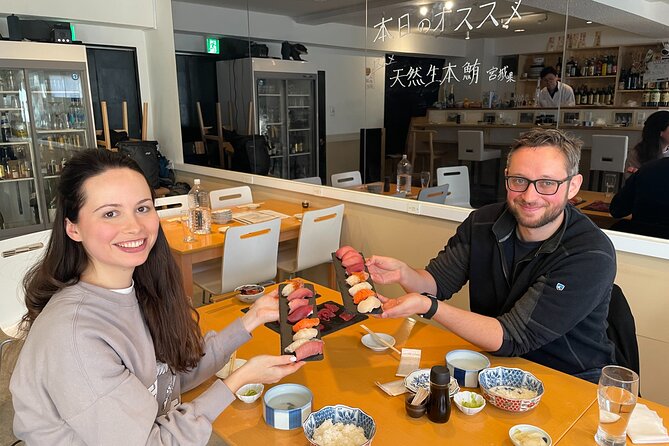
At $297.23 per person, this is an expensive food tour. You are not paying simply for access to Toyosu or a standard sushi lunch. You are paying for a private-feeling small group, an English-speaking guide, a market comparison, a tuna-cutting demonstration, hands-on nigiri preparation, and lunch.
The strongest value comes if you would otherwise pay separately for a sushi class and spend time figuring out Toyosu and Tsukiji on your own. The tour joins those pieces into one morning and removes much of the planning work. It also offers an experience you cannot easily reproduce by ordering sushi at a restaurant.
The value is weaker if your main goal is to eat as much as possible or browse markets at your own speed. Transit costs extra, market purchases are extra, and the time at each market is fairly short. Someone who wants a relaxed breakfast crawl may prefer to visit Tsukiji independently, then book a separate food class.
I would also consider how much you care about tuna. The cutting lesson is the heart of the tour. If you are fascinated by sushi, fish quality, or the difference between lean and fatty tuna, the price becomes easier to justify. If you are only mildly interested in tuna, a less costly food walk may suit you better.
Who will get the most from this morning
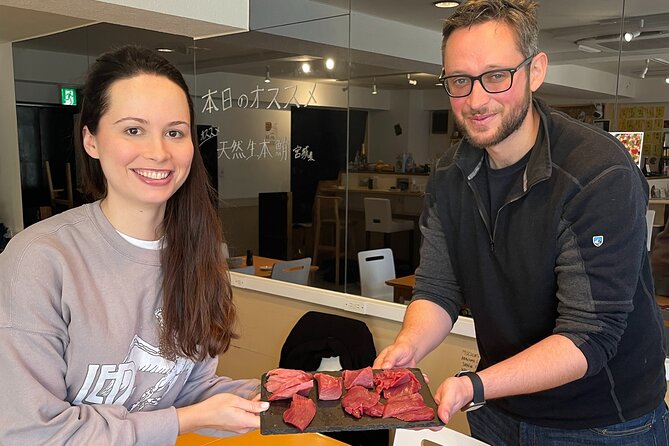
This tour fits you well if you enjoy learning through food rather than simply eating it. It is especially good for sushi fans, curious cooks, and visitors who want an explanation of what makes fish suitable for sushi.
It also suits couples, families with older children, and small groups of friends who like a guided activity. Most people can take part, and the group limit of six keeps the experience personal.
The early start makes it less suitable if you want a slow first morning in Tokyo. The public transportation also calls for some stamina, especially during hot weather. Anyone who dislikes changing locations or prefers a single-neighborhood tour should think twice.
You should also be comfortable with a fixed schedule. The morning moves from Toyosu to Tsukiji and then Azabujuban, so there is limited time to linger. That structure is useful if you want to cover several food areas, but it leaves little room for spontaneous detours.
Small details that can make the day easier
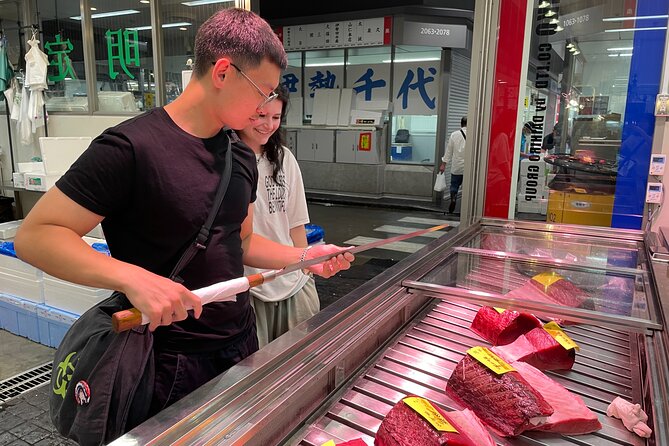
Meet at Shijō-mae Station at 7:00 a.m., not at a hotel. Check the meeting point carefully before setting out, since a late arrival could be difficult once the group has entered the market.
Wear comfortable shoes and carry a little extra money for subway or bus fares and any food or fish you decide to buy. The tour includes lunch, but the Tsukiji portion offers opportunities to spend more.
A mobile ticket is provided, and confirmation is sent within 48 hours, subject to availability. The experience requires a minimum number of participants and good weather. If poor weather or an insufficient group size causes cancellation, you are offered another date or a full refund.
You can cancel for a full refund up to 24 hours before the start time. Changes or cancellations inside that period are not accepted for a refund, so keep the local start time in mind.
How this compares with visiting the markets alone
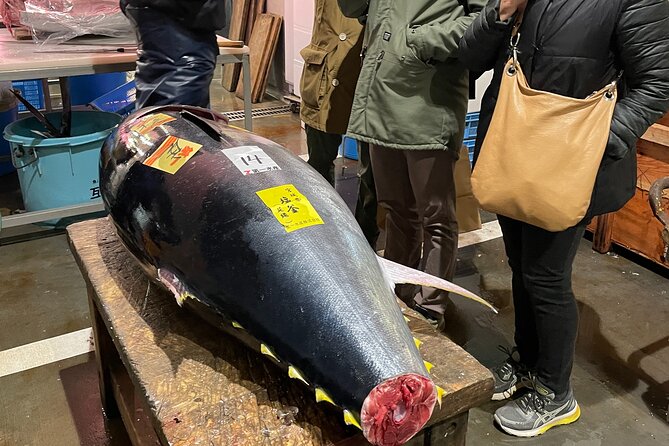
Going alone gives you more control. You can spend longer at Toyosu, eat at whichever Tsukiji shops appeal to you, and avoid the cost of a guide. It also lets you set your own pace and skip the long cross-city transfer to Azabujuban.
The trade-off is that you lose the explanation linking the markets to the sushi on your plate. You may see tuna and seafood, but you will not automatically learn how the portions differ or how a chef prepares them for nigiri.
This tour is most useful when you want context and instruction. The value is not in checking Toyosu off a sightseeing list. It is in understanding the seafood trade, seeing tuna handled by a chef, and then tasting the result while the lesson is still fresh.
Should you book the Toyosu tuna tour?
Book it if you want a focused sushi experience with a strong tuna lesson, a small group, and a proper lunch included. The combination of Toyosu, Tsukiji, and Azabujuban gives you more than a market stroll, and Amy’s friendly guiding style adds warmth to a schedule that could otherwise feel technical.
Skip it if $297.23 feels high for a four-hour activity, if you want to explore at your own pace, or if long public transportation connections are a deal breaker. You should also avoid booking it simply because you want a quick visit to Toyosu. The tour’s main value is the tuna-cutting and nigiri session.
For a serious sushi fan, this is a memorable and unusually hands-on morning. For a casual sightseer, it may be too expensive and too tightly timed. Know which kind of morning you want, and the decision becomes fairly clear.
FAQ
Where does the tour start?
It starts at Shijō-mae Station near Toyosu Market, at 6 Chome-3 Toyosu, Koto City, Tokyo. The start time is 7:00 a.m.
Where does the tour end?
The tour ends in Azabujuban at 3-chōme-3-4 Azabujūban, Minato City, Tokyo.
How long does the experience last?
The full experience takes about four hours. The Toyosu visit lasts about 45 minutes, the Tsukiji visit takes about one hour including travel time, and the Azabujuban sushi session lasts about an hour and a half.
Is lunch included?
Yes. Lunch includes tuna and sushi made during the experience.
Are subway and bus fares included?
No. Transportation between the locations is by subway or bus, and those fares are paid separately.
What happens if the tour is canceled because of weather or group size?
You are offered a different date or experience, or a full refund. The activity requires good weather and a minimum number of participants.
Newly reviewed around Tokyo
- Tokyo Asakusa:Calligraphy & Make T-shirt Activity★ 5.0 · 62 reviews
- Intercity Shuttle, Tokyo to Haneda /Narita /Yokohama /Makuhari★ 5.0 · 5 reviews
- 1 Hour Travel around Tokyo with a Professional Photographer★ 5.0 · 3 reviews
- Travel Tokyo with Your Own Personal Photographer★ 5.0 · 43 reviews
- Shuttle Van 6hr Tokyo Tour to-and-from Tokyo, Yokohama and Narita★ 5.0 · 9 reviews
- Kickboxing & Body Training with EX-Pro Fighter★ 5.0 · 4 reviews
- Train in Samurai Swordsmanship and Defeat the Demon in Tokyo★ 5.0 · 5 reviews
- Traditional Japanese Knife Sharpening Class★ 5.0 · 18 reviews
Tsukiji and Toyosu Fish Market Tours, compared.
Tokyo Tsukiji Fish Market Food and Culture Walking Tour
Read our review →
Tokyo Sushi Making Class in Tsukiji with Professional Chef
Read our review →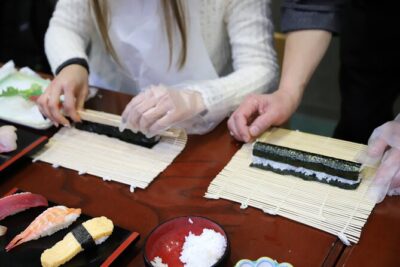
Tsukiji Fish Market Guided Tour and Sushi Making with Pro Chef
Read our review →Tsukiji Fish Market Food and Culture Walking Tour
Read our review →
Tsukiji Fish Market: Street Food & Culture Walking Tour
Read our review →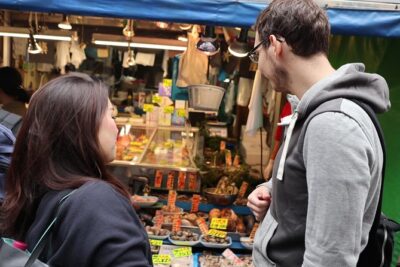
Tsukiji Fish Market Small-Group Food Walking Tour
Read our review →Browse the lists this tour appears in