
Reviewed · KAMAKURA DAY TRIPS FROM TOKYO
Historic Kamakura: Temples, Shrines and Street Food Private Walking Tour
Kamakura gives you a welcome change from Tokyo’s city rush: quiet temple grounds, old shrine gates, wooded hills, bamboo, and snacks served one bite at a time. This private six-hour tour connects the major sights without making you plan every stop yourself. Guides Simon and Chuck are specifically praised for their friendly care, local food advice, and ability to set a comfortable pace.
I like the mix of serious cultural sights and casual street food, and I like that the tour ends at Kamakura Station instead of circling back to the start. Tea in Hokoku-ji’s bamboo grove is another strong touch. The main drawback is the moderate physical effort: you walk for much of the day, climb slopes at Engaku-ji, and must pay your own transportation costs.
Key points to know before you book
- Private guiding: Only your group takes part, so Simon, Chuck, or another Tokyo Memories guide can adjust the pace and conversation to your interests.
- Four major Kamakura sights: The route includes Engaku-ji, Tsurugaoka Hachimangu, Hokoku-ji, and the Great Buddha.
- Food is part of the day: Lunch, snacks, bottled water, soft drinks, and alcoholic beverages are included.
- Bamboo grove tea stop: Hokoku-ji gives you time to sit with green tea in a peaceful setting.
- Useful one-way route: You start at Kita-Kamakura Station at 9:00 a.m. and finish at Kamakura Station.
- Weather matters: The tour requires good weather, with a new date or full refund offered if poor weather causes cancellation.
Why this private Kamakura route works
The best feature here is the balance. Kamakura is easy to experience as a string of disconnected stops, but this route gives the day a clear shape. You begin among temples near Kita-Kamakura, move toward the city’s central shrine and food street, then continue to the bamboo grove and Great Buddha before finishing at Kamakura Station.
That arrangement also lets you see several sides of Kamakura. Engaku-ji brings Zen temple architecture and hillside views. Tsurugaoka Hachimangu shows the city’s major Shinto center. Komachi-dori adds food and everyday energy. Hokoku-ji slows the pace with tea, while the Great Buddha supplies the famous final image.
A private tour makes a real difference here. You are not tied to the needs of a large group, and the guide can spend more time on the subjects that interest you. If you care about ancient trees, architecture, local food, or religious customs, say so early. One account of the tour describes Simon as especially attentive to a family with a young child, while another highlights his care for older parents. That suggests a useful strength for mixed-age groups.
The guide names connected with the experience include Simon and Chuck. Simon is praised for handling the full day, helping with food choices, and keeping families comfortable. Chuck is described as good fun and skilled at knowing when to move on without making the day feel rushed. Those details matter more than a long list of historical facts. A guide who can judge pace well helps you see more without turning the outing into a march.
More Kamakura day trips from Tokyo:
- Tokyo: Mt. Fuji, Kamakura, Big Buddha, & Lake Ashi Day Trip
★ 4.5 · 867 reviews - Tokyo:Sea of Mount Fuji, Hakone Ropeway, Ōwakudani, Enoshima
★ 4.9 · 84 reviews - Kamakura 8 hr Private Walking Tour with Licensed Guide from Tokyo
★ 5.0 · 80 reviews
Starting at Engaku-ji in Kita-Kamakura
Your 9:00 a.m. meeting point is Kita-Kamakura Station, at the northern end of the route. The first stop is Engaku-ji, one of Kamakura’s important temple complexes. You have about 45 minutes here, with admission included.
The visit includes the Busudan Hall, which houses a wooden Buddha statue. The grounds also reach up the slopes behind the temple, where you can see tengu statues and gain fine views over the area. This is the first place where comfortable shoes matter. The route is not described as a difficult hike, but the uphill section adds some work to a day already built around walking.
I like beginning here because the temple offers both architecture and a little height. You get a quiet opening before the more active food stop later in the morning. The tengu figures also give the visit a distinctive detail that you might miss if you simply wandered through the main buildings on your own.
Forty-five minutes is enough for a focused introduction, though not enough for a slow study of every structure. That is a fair trade on a day covering several major sights. If you prefer long, silent temple visits, the schedule may feel brisk. If you want variety, it keeps the day moving.
Tsurugaoka Hachimangu and Kamakura’s central shrine life
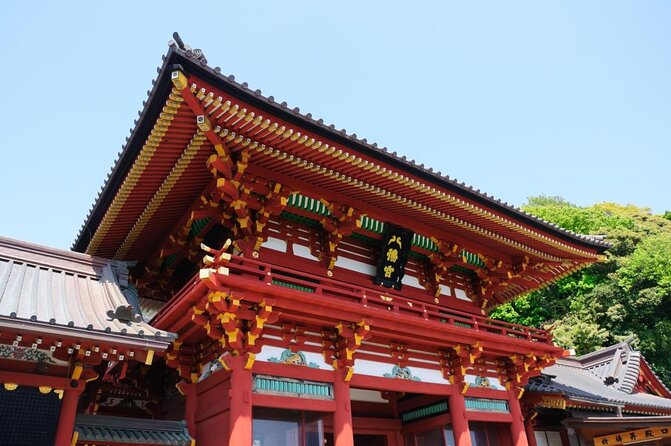
Next comes Tsurugaoka Hachimangu, Kamakura’s most important Shinto shrine. The visit lasts about 30 minutes, and admission is included.
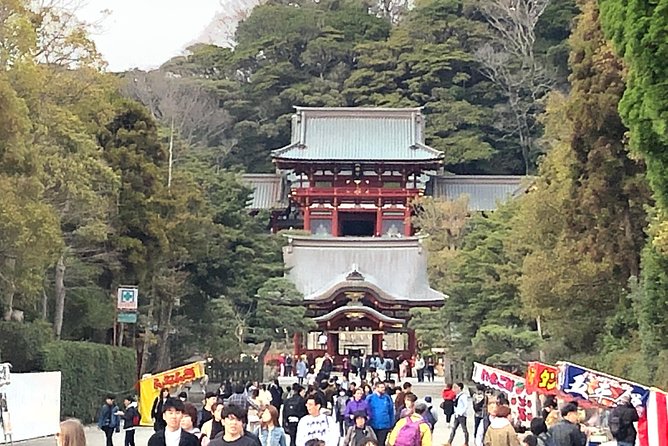
You will see the main hall, the large tori gates, and a small museum of treasures. The shrine gives you a different religious setting from Engaku-ji. Instead of a Zen temple complex, you are looking at a major Shinto site with a strong sense of ceremony and approach.
The shorter time here means you should expect an overview, not an exhaustive museum visit. Your guide can explain what you are seeing and point out the features that deserve attention. This is one of the places where a private guide earns their keep. Shrine spaces can look simple at first glance, especially if you do not know why the gates, halls, and approach matter.
I would pay attention to the transition between the two sites. Engaku-ji begins the day with a quieter temple mood, while Tsurugaoka Hachimangu broadens the picture of Kamakura’s religious life. Together, the stops give you more than a single-style temple tour.
Eating your way along Komachi-dori
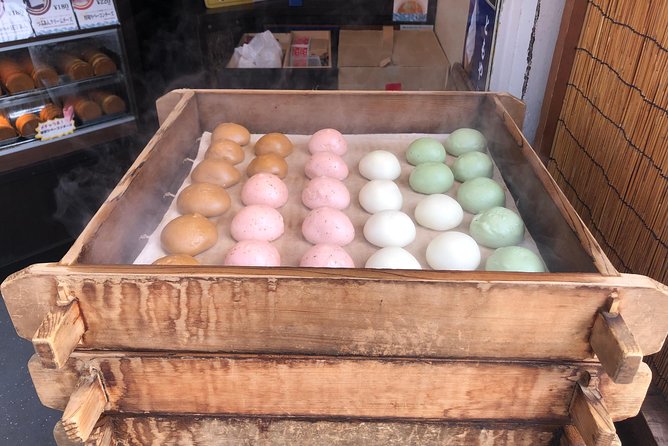
After the morning sights, you get about an hour on Kamakura’s famous Komachi-dori. This is the most informal part of the tour and one of its biggest advantages. The street is lined with eateries and stalls selling sweet and savory foods, and the tour includes lunch through a selection of local street food.
You also receive snacks, bottled water, soda or pop, and alcoholic beverages. The exact food selection is not fixed in the information provided, so you should think of this as guided sampling rather than a set restaurant meal. That distinction is useful. You are paying for a chance to try several local items while moving through the street, not for a formal lunch with a long seated service.
A guide can make this stop less intimidating. Simon is specifically praised for pointing out street food and helping a family try items they might otherwise have skipped. That is the kind of practical help I value. Food stalls can be hard to judge when you do not know what is inside, how something is eaten, or which small item is worth trying.
The hour gives you time to taste, look around, and keep moving. It may feel short if you want to shop or inspect every stall, but the tour is designed as a broader Kamakura day, not a full shopping visit. Alcohol is included, so pace yourself if you plan to sample drinks. You still have temples, a bamboo grove, and walking ahead.
More Tokyo food tours:
- Tokyo: Shinjuku Food Tour (13 Dishes at 4 Local Eateries)
★ 5.0 · 6,603 reviews - Tokyo: Shinjuku Food Tour (15 Dishes and 4 Eateries)
★ 4.9 · 2,033 reviews - Best of Shinjuku: Izakaya Food Tour (4 Stops, 14+ Tastings)
★ 5.0 · 1,863 reviews - Tokyo Night Foodie Tour in Shinjuku – Seasonal Sushi, Wagyu Beef
★ 5.0 · 1,161 reviews
Tea among the bamboo at Hokoku-ji
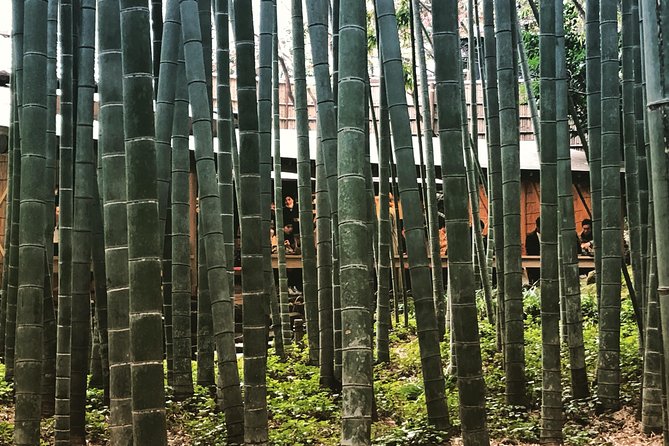
Hokoku-ji is known as the bamboo temple, and you spend about an hour here. The grove gives the tour its most peaceful setting. You can relax among the bamboo and drink a traditional cup of green tea at the tea house.
This is more than a quick photo stop. The hour allows the group to slow down after the food street and earlier temple visits. The cool bamboo grove offers a change in texture and mood, while the tea gives you a simple Japanese ritual to focus on.
I see this as one of the strongest inclusions in the price. A bamboo grove visit on its own can be brief and crowded with the same visual experience: tall stalks, narrow paths, quick photographs. Adding tea gives you a reason to stay and notice the place. Your guide can also help explain how this stop fits into the wider day without turning it into a lecture.
The quiet setting does not remove the need for sensible footwear. You have already walked through two major sites and a food street. If you have a mobility concern, consider the moderate fitness requirement before booking, since the tour does not present itself as a seated sightseeing outing.
Meeting the Great Buddha at Daibutsukiritoshi
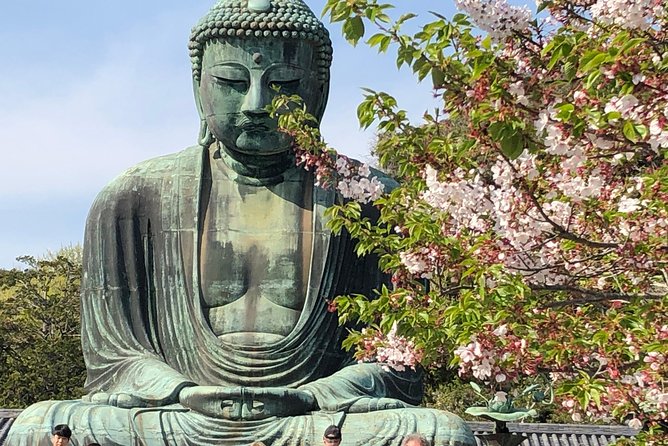
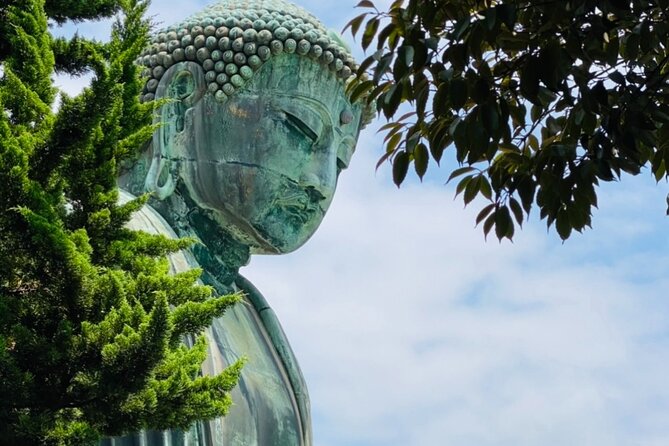
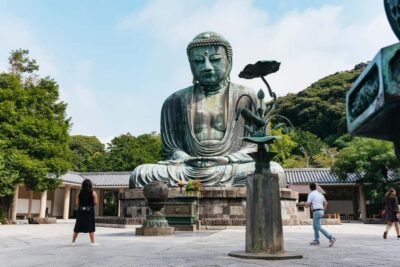
The final listed sightseeing stop is Daibutsukiritoshi, where you see the Great Buddha of Kamakura, described as Japan’s second-largest bronze Buddha. The visit lasts about 30 minutes.
This is a compact stop, but the statue provides a strong finish. After the smaller details of halls, gates, statues, food stalls, and tea, the Great Buddha gives you one large, unmistakable landmark. Thirty minutes should let you see it and absorb the setting, though it is not a long independent visit.
The route then ends at Kamakura Station, at 1-chome-1-15 Onarimachi. I like this finish because it is practical. You do not need to return to Kita-Kamakura after a full day on foot, and you can continue from Kamakura Station on your own plans. The tour does not include transportation costs, so budget separately for getting to the start and handling any transport connected with the day.
What the $220.22 price includes
At $220.22 per person, this is not a budget walking tour. The value depends on how much use you will make of the private guide and included food.
You are paying for approximately six hours of guiding, entrance fees, lunch, snacks, bottled water, soft drinks, and alcoholic beverages. You also get a private format, which means your group is not combined with strangers. For families, couples, and small groups with different interests, that privacy can justify a higher price.
The food inclusion matters too. You do not have to keep stopping to pay for every snack, and you get help navigating Komachi-dori. Entrance fees are also covered, which makes the cost easier to understand before booking.
Still, transportation is not included. You should factor that into your total budget. Group discounts are available, so the per-person cost may work better for a larger private group than for a solo visitor. Since the experience is booked, on average, 95 days ahead, it is sensible to reserve early if your Kamakura date is important.
The listed ratings are five out of five across six reviews. That is a small sample, so I would not treat it as proof that every day will be perfect. I would treat the consistent themes as useful: Simon’s care, Chuck’s pacing, help with children and older parents, and strong guidance around local food.
Pace, fitness, and practical planning
This is a walking day with several changes of setting. You need a moderate level of physical fitness, and the climb behind Engaku-ji is the clearest specific challenge. The rest of the route also involves standing and walking through temple, shrine, street, and station areas.
Wear shoes you can use comfortably for six hours. Bring any personal items you need for changing weather, since the experience requires good weather and can be canceled if conditions are poor. The start is near public transportation, but your own transportation costs are separate.
The 9:00 a.m. start is useful if you want to make the most of Kamakura. It also means you should plan your morning carefully and arrive ready to begin at Kita-Kamakura Station. The end at Kamakura Station makes the route easier to fit into a wider day, but do not assume the tour provides a ride between stops.
Free cancellation is available up to 24 hours before the start time for a full refund. Changes or cancellations inside that window are not accepted for a refund, and poor weather can lead to a different date or a full refund.
Who will get the most from this tour
I would recommend this experience to first-time Kamakura visitors who want the main sights with food and context built in. It suits couples, families, and small private groups that value a guide’s help more than the lowest possible price.
It is also a good fit if you want variety. You get religious buildings, hillside views, statues, shrine architecture, street food, tea, bamboo, and a major bronze Buddha in one day. Families may appreciate Simon’s reported patience with children, while groups with older parents may value the attention to pace.
I would hesitate if you want a slow temple study, a long shopping session, or a cheap route using public transportation and self-guided visits. The six-hour schedule covers a lot. That is its strength, but it also means each stop has a limit.
Should you book the Historic Kamakura walking tour?
Book it if you want Kamakura’s major sights tied together by a private guide, with food and drinks included and no need to choose every stall or entrance yourself. Simon and Chuck’s reported strengths make the tour especially appealing for families and mixed-age groups.
Skip it if the $220.22 price feels high for a walking tour, if you want to control every minute, or if moderate walking and a short uphill section are a concern. For everyone else, the combination of Engaku-ji, Tsurugaoka Hachimangu, Komachi-dori, Hokoku-ji tea, and the Great Buddha gives you a well-rounded day with a practical one-way finish.
FAQ
Where does the tour start?
The tour starts at Kita-Kamakura Station in Yamanouchi, Kamakura, Kanagawa. The scheduled start time is 9:00 a.m.
Where does the tour end?
The tour ends at Kamakura Station, at 1-chome-1-15 Onarimachi, Kamakura. The drop-off point is Kamakura Station.
How long does the experience last?
The tour lasts approximately six hours.
Is transportation included?
No. Transportation costs are not included in the tour price.
What food and drinks are included?
The experience includes lunch, snacks, bottled water, soda or pop, and alcoholic beverages. Entrance fees and guided services are also included.
Can I cancel for a refund?
Yes. You can cancel at least 24 hours before the start time for a full refund. If poor weather causes the experience to be canceled, you will be offered a different date or a full refund.
More history and heritage tours in Tokyo
- Tokyo: Imperial Palace Japanese History Walking Tour
★ 4.9 · 987 reviews - Yanaka Walking Tour: Historic and Traditional District of Tokyo
★ 5.0 · 530 reviews - Tokyo: Shinjuku Historical Walking Tour & Secret Backstreets
★ 5.0 · 530 reviews - Mt. Fuji Heritage Tour: Traditional Villages, Lakes & Shrine
★ 4.5 · 509 reviews
More Tokyo walking tours
- Tokyo Tsukiji Fish Market Food and Culture Walking Tour
★ 5.0 · 3,184 reviews - Tokyo: Imperial Palace and Shogun Historical Walking Tour
★ 5.0 · 2,251 reviews - Tokyo: Shinjuku Local Bar and Izakaya Guided Walking Tour
★ 4.9 · 1,794 reviews - Tokyo: Tsukiji Fish Market Food and Walking tour
★ 5.0 · 1,724 reviews
Newly reviewed around Tokyo
- Tokyo Asakusa:Calligraphy & Make T-shirt Activity★ 5.0 · 62 reviews
- Intercity Shuttle, Tokyo to Haneda /Narita /Yokohama /Makuhari★ 5.0 · 5 reviews
- 1 Hour Travel around Tokyo with a Professional Photographer★ 5.0 · 3 reviews
- Travel Tokyo with Your Own Personal Photographer★ 5.0 · 43 reviews
- Train in Samurai Swordsmanship and Defeat the Demon in Tokyo★ 5.0 · 5 reviews
- Shuttle Van 6hr Tokyo Tour to-and-from Tokyo, Yokohama and Narita★ 5.0 · 9 reviews
- Kickboxing & Body Training with EX-Pro Fighter★ 5.0 · 4 reviews
- Traditional Japanese Knife Sharpening Class★ 5.0 · 18 reviews
Kamakura Day Trips from Tokyo, compared.
Mt. Fuji, Kamakura, Big Buddha, & Lake Ashi Day Trip
Read our review →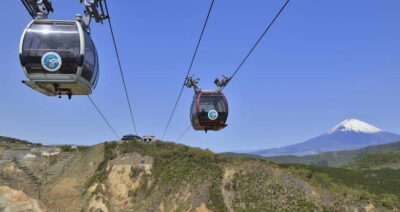
Sea of Mount Fuji, Hakone Ropeway, Ōwakudani, Enoshima
Read our review →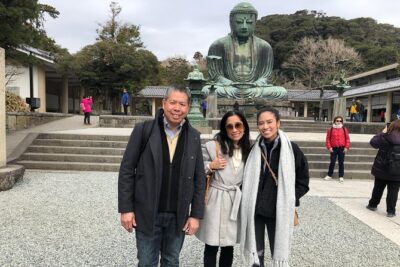
Kamakura 8 hr Private Walking Tour with Licensed Guide from Tokyo
Read our review →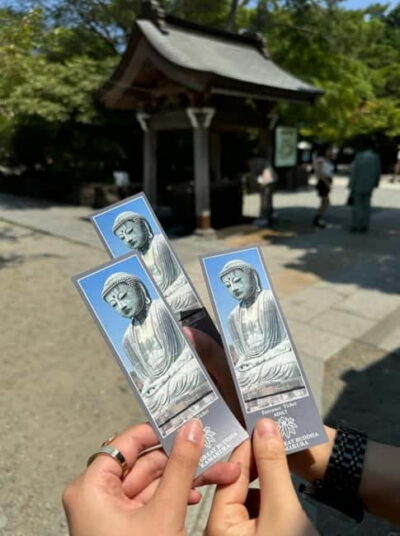
Kamakura & Enoshima Day Tour with Pickup & Train Ride
Read our review →
Kamakura Private & Customizable Tour – All-in-One Experience
Read our review →
Private Car Tour to see Highlights of Kamakura, Enoshima, Yokohama from Tokyo
Read our review →
From Tokyo Kamakura, Hachimangu Shrine and Enoshima Full Day Tour
Read our review →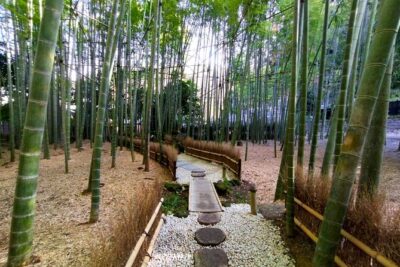
Day Trip to Kamakura & Enoshima: Shrines, Seaside, Temples & Tea
Read our review →Browse the lists this tour appears in