
Reviewed · ASAKUSA AND SENSOJI TOURS
Get to know the secret of Asakusa! Shrine and Temple Tour
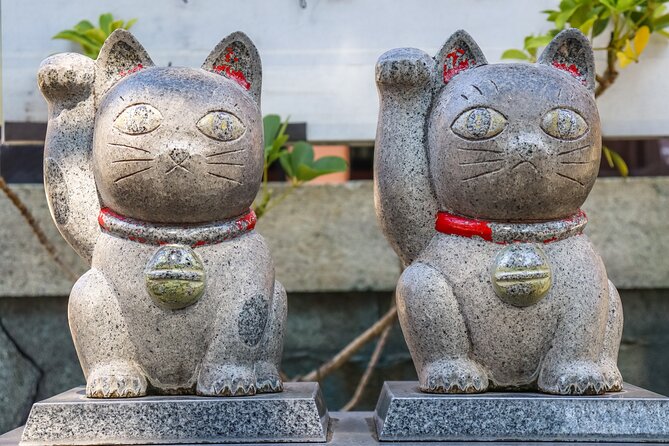
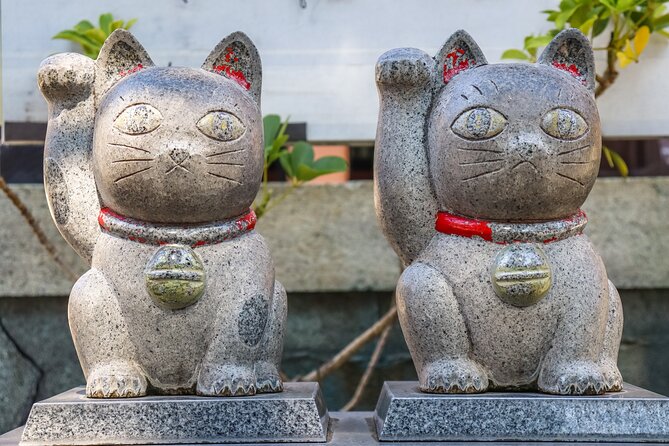
Asakusa’s famous red lanterns are only the front door. This five-and-a-half-hour private walk takes you beyond Sensoji to seven less familiar religious sites tied to Japan’s Seven Gods of Fortune, with stamps to collect as a free keepsake. You’ll see Maneki Neko at Imado Shrine, lucky rakes at Otori Shrine, and the old pleasure district around Yoshiwara.
I like the one-party format, which gives your guide room to answer questions and adjust the pace. I also like the mix of major sights and small temples, especially if you want more than a quick photo at Kaminarimon Gate. The main drawback is the walking and the unclear extra-cost information around lunch, transport, and the Ishihama teahouse, so check those details before booking.
Key points to know before you go
- Seven lucky deities: Visit the seven shrines and temples associated with good fortune, health, business, marriage, art, and happiness.
- Private from start to finish: Only your party takes part, with guides such as Nanako, Kazumi, Nobu, Eric, and Harada Taketsugu having led this route.
- A stamp-collecting trail: Bring space in your day bag for the stamps collected at the sites, a free souvenir that gives the walk a clear purpose.
- More walking than sightseeing buses: The tour uses local transport and foot travel, with reviews noting that the route can be a substantial walk.
- Sensoji comes late: You finish with Asakusa’s best-known temple, Nakamise Street, and the Kaminarimon area rather than spending the whole tour in the busiest zone.
- Budget extra money: Meals, food, drinks, transport, and optional costs are not covered. The listed cost details should be confirmed before departure.
Why this Asakusa route feels different
Most first visits to Asakusa follow a simple line: Kaminarimon Gate, Nakamise Shopping Street, and Sensoji Temple. That route is worth doing, but it leaves out much of the neighborhood’s local character. This tour takes you through a wider slice of eastern Tokyo, including quiet religious sites that are easy to miss on your own.
The theme is the Seven Gods of Fortune, a group of deities associated with luck and everyday hopes. As you move from site to site, your guide connects each place with health, business, marriage, art, happiness, or protection. The stamp collection gives you a small mission at each stop and helps turn a scattered group of temples and shrines into one complete outing.
The private format matters here. Religious sites can be confusing if you do not know what you are looking at, and the difference between a Buddhist temple and a Shinto shrine is not always obvious at first glance. A good guide can explain the customs, symbols, and local stories without forcing you to rush.
Guides named in the experience feedback include Nanako, Kazumi, Nobu, Eric, and Harada Taketsugu. The strongest pattern is personal attention: help with photos, route changes, snack advice, explanations of ceremonies, and a pace that suits the group. That is useful on a route with many stops and a fair amount of walking.
More Asakusa and Sensoji tours:
- Tokyo: Japanese Dance Cabaret Theater Asakusa-Kaguwa Ticket
★ 4.8 · 2,270 reviews - Tokyo: Meiji Shrine, Asakusa, Skytree Bus Tour and Cruise
★ 4.7 · 1,986 reviews - Tokyo: Roll and Authentic Sushi Making Class in Asakusa
★ 4.9 · 1,957 reviews
Matsuchiyama Shoden and the first lucky deity
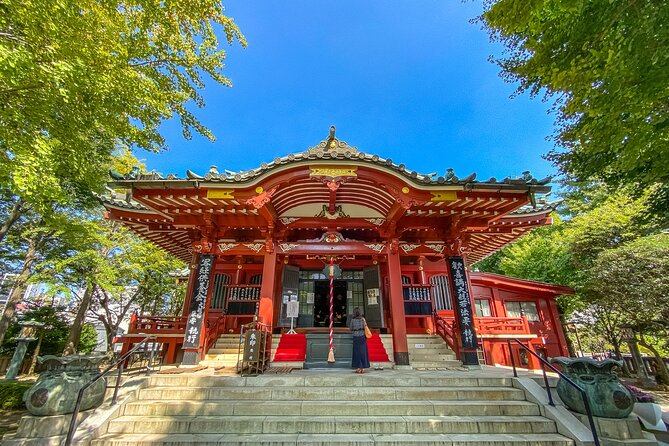
The tour begins at Honryuin Matsuchiyama Shoden, also called Matsuchiyama Shoden. This temple is linked with health, good relationships, marriage, and prosperous business. Bishamonten, one of the Seven Gods of Fortune, is honored here.
The stop lasts about 25 minutes and admission is free. It is a good opening because it introduces the tour’s basic idea: each religious site has its own focus, symbols, and local following. Your guide can give you context before the route grows more complex.
Do not expect a large attraction on the scale of Sensoji. The appeal is the chance to pause in a more focused setting and learn how Japanese religious traditions connect with everyday wishes. If you want only grand architecture, this early stop may feel modest. If you like local customs and small details, it sets the right tone.
Imado Shrine and Tokyo’s Maneki Neko connection
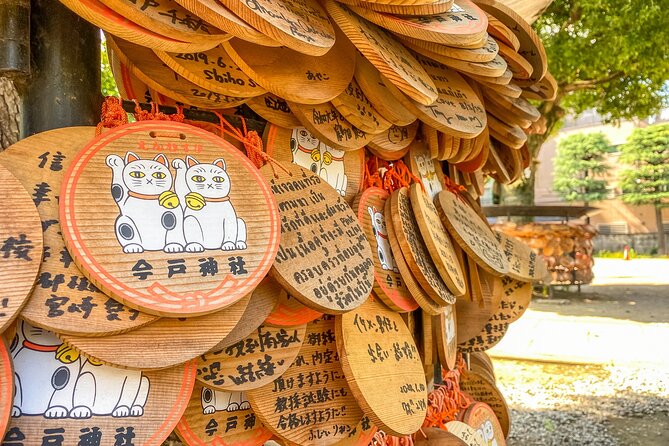
Next comes Imado Shrine, reached in about 20 minutes of touring time. It is famous as a birthplace of Maneki Neko, the raised-paw cat figures associated with good fortune. You can expect to see Maneki Neko throughout the shrine grounds.
The shrine is also linked with marriage luck and has a strong appeal for women hoping for good relationships. The guide’s explanation is valuable here because the cat figures are familiar worldwide, but their Japanese setting and meaning can be less familiar.
This is one of the most distinct stops on the route. You get a recognizable Tokyo symbol, but in a religious setting rather than a souvenir shop. The stop is short, so take your photos early and leave time to hear the explanation instead of treating it as a quick photo point.
Hashiba Fudoson and an Edo-period feel
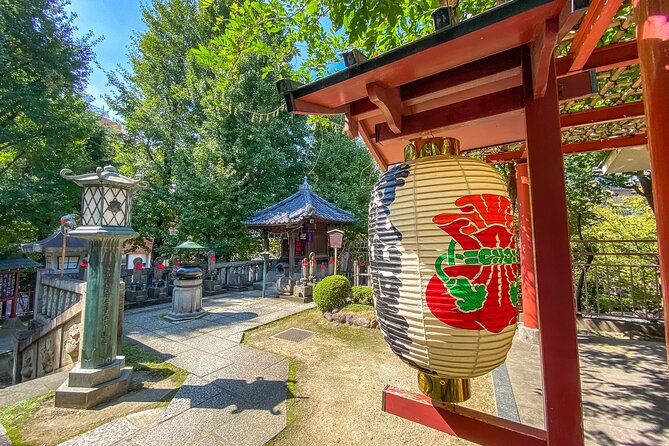
Hashiba Fudoson is a small, simple temple where you can look closely at architectural features associated with the Edo period. The visit lasts about 15 minutes and costs nothing.
This stop works as a contrast to the larger and more decorated sites later in the day. The tour is not only about famous buildings. It also shows how older religious places can sit quietly within an active Tokyo neighborhood.
Because the temple is small, the guide matters. Without context, you might spend only a minute looking around. With an explanation of the building and Hotei-son, the deity of good fortune and happiness linked with this stop, the visit becomes more meaningful.
A completely different kind of day in Tokyo:
- Mt Fuji and Hakone 1-Day Bus Tour Return by Bullet Train
★ 5.0 · 26,383 reviews - 1-Day Tokyo Bus Tour
★ 5.0 · 14,250 reviews - Tokyo: teamLab Planets TOKYO Digital Art Museum Entry Ticket
★ 4.6 · 9,779 reviews - Mt Fuji & Hakone Cruise, Drum Show Bullet Train 1 Day from Tokyo
★ 4.0 · 7,413 reviews
A meal break at Ishihama Saryo Raku
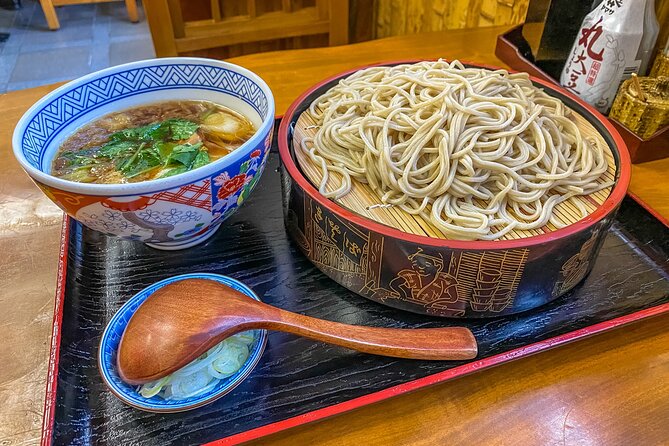
The route includes about 40 minutes at Ishihama Saryo Raku, a restaurant within the grounds of Ishihama Shrine. The menu is described as broad, with choices such as tempura bowls, soba, and sweets.
This is a useful pause. Five and a half hours of walking is easier when you have a proper break, and a local restaurant gives you a chance to sit down rather than grabbing food between stations. One account also singled out lunch at a local restaurant as a strong part of the day.
The cost information needs attention. Food and drinks are not included, and the tour details list an estimated meal cost of 1,000 yen per person. They also list an Ishihama Saryo Raku charge of 4,800 yen per person, described separately as an admission fee, which does not fit neatly with the restaurant description. Confirm exactly what you will pay before the tour begins.
The restaurant is closed on Wednesdays. On that day, the guide will take you to an alternative stop. That change may affect the meal plan and timing, so Wednesday bookings deserve an extra check.
Yoshiwara Shrine and Benzaiten
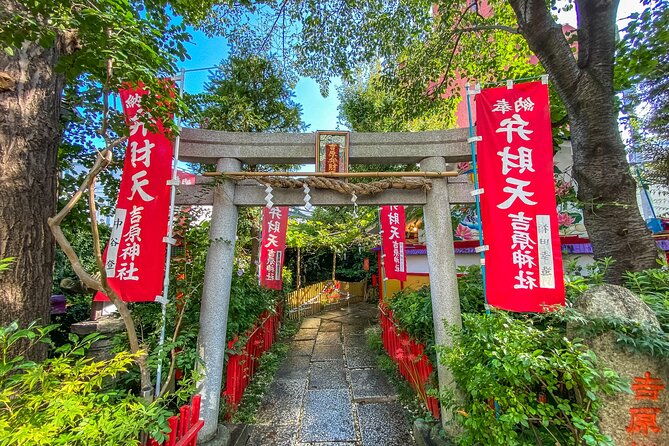
Yoshiwara Shrine is associated with Benzaiten, the only female deity among the Seven Gods of Fortune on this route. Benzaiten is linked with art, marriage, and wishes connected with women.
The 20-minute visit adds a different tone to the day. Instead of focusing mainly on business or protection, the stop brings attention to creativity, relationships, and personal hopes. Your guide can also help explain the connection between the shrine and the former Yoshiwara district, an area with an important place in Edo-era Tokyo.
This is a good point to notice how the tour handles local history. The route is not simply a parade of pretty buildings. Each site connects religion with the lives, work, and hopes of people who lived in this part of the city.
Otori Shrine and lucky rakes
Otori Shrine takes about 20 minutes. It is known for the Rooster Market, where lucky rakes are sold. These rakes are symbols of gathering in good fortune, and the shrine’s large, decorated rake is one of the visual details to watch for.
The shrine’s other notable symbol is Okame-san, a mask from Japanese Noh tradition. This gives your guide another chance to point out how religious sites combine architecture, folk belief, seasonal events, and performing arts.
The Rooster Market is a particular event rather than a daily guarantee, so do not assume the market will be operating during your visit. Still, the shrine remains worthwhile for its symbols and its place in the lucky-deity route.
Asakusa Shrine before the crowds of Sensoji
Asakusa Shrine is closely connected with Sensoji Temple, but it is a separate religious site. It is dedicated to Ebisu, one of the lucky deities, and the visit lasts around 15 minutes.
This stop is especially helpful for first-time visitors because the Sensoji complex can blur into one large experience. Your guide can show you the difference between the shrine and the temple, explain their relationship, and point out details you might otherwise pass without noticing.
The short timing means you will not spend a long period here. That is sensible, since Sensoji follows and requires more time. The value comes from getting the context before entering the most famous part of Asakusa.
Sensoji Temple and the red lantern
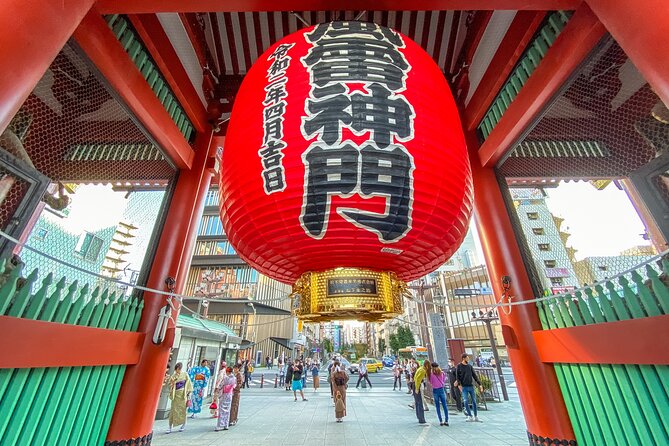
Sensoji is the oldest temple in Tokyo and the visual centerpiece of Asakusa. Its large red lantern and vermillion buildings make it one of the city’s most recognizable sights. The planned visit lasts about 30 minutes.
Expect more people here than at the smaller stops. This is the point where the route meets the Asakusa that appears in nearly every Tokyo guidebook. The private guide helps you handle the crowds while explaining the temple’s place in the neighborhood.
A particularly useful detail is that the tour may include a chance to witness ceremonies at Sensoji, depending on timing. Ceremonies are not guaranteed, but the possibility adds a layer beyond taking photos at the gate.
By placing Sensoji near the end, the tour gives you background first. You arrive knowing more about the religious traditions and local sites that surround it, rather than seeing the temple as an isolated monument.
Nakamise Street and the final shopping walk
The final stop is Asakusa Nakamise Shopping Street, near Kaminarimon. Allow about 20 minutes for this busy shopping area, where the guide can point out recommended places to buy souvenirs and snacks.
This is not a long shopping session, so plan your priorities. If you want to browse carefully, buy several gifts, or eat along the street, you may need extra time after the tour. The guide can help you get oriented, but you should not expect to cover every shop in twenty minutes.
Nakamise is also a practical finish because it leaves you among food stalls, souvenir shops, and major Asakusa sights. The tour information gives mixed details about the end point: one section says the activity returns to the meeting point, while another says the finishing spot is different from the start. Ask your guide where the walk will finish, and request another end point if needed.
What the private format is worth
The advertised price is $103.92 per person. For a private experience lasting about five and a half hours, that can be fair if you care about explanation and flexibility. You are not paying only to enter temples, since the listed admission fees are free. You are paying for the guide’s time, route planning, local interpretation, and attention to your group.
The value improves with two or more people who want the same kind of day. Group discounts are available, though the exact discount is not provided. If your party is large enough, ask for the current price rather than assuming the per-person figure will remain unchanged.
The add-on costs require a careful budget. The details mention 300 yen for transportation, 1,000 yen per person for a meal, and 3,500 yen per person for optional experiences. Food, drinks, transport, and other costs at the sites are the customer’s responsibility. Since the teahouse charge is also listed as 4,800 yen per person, ask the operator to explain which charges apply to your booking.
Walking, timing, and who will enjoy it
This is a walking-heavy day. The individual stop times add up to roughly three hours, leaving the rest of the five-and-a-half-hour schedule for moving between sites, explanations, food, and pauses. One account specifically described quite a lot of walking, while also finding the route worth the effort.
Wear comfortable shoes and carry water or a drink. A guide advised one group to buy beverages and snacks before setting off, which is practical advice for this length of outing. Rain does not automatically cancel the plan. The route has been completed in wet weather, though an umbrella and shoes with good grip would make the day easier.
The experience suits you best if:
- You want a private guide rather than a large group.
- You are interested in Japanese history, religious customs, and Edo-period life.
- You like collecting small souvenirs and following a themed route.
- You want help with photos, translation, and local food suggestions.
- You can comfortably walk for several hours.
- You prefer a slower, more personal visit to Asakusa than a quick landmark tour.
It may not suit you if you want a short sightseeing loop, dislike religious sites, or prefer to spend most of your time shopping. The route covers a lot, and the smaller shrines will appeal more to curious visitors than to anyone looking only for Tokyo’s biggest sights.
Cancellation and booking details
Confirmation is provided when you book, and mobile tickets are available. Free cancellation applies if you cancel at least 24 hours before the start time. Changes or cancellations made within 24 hours are not accepted for a refund.
The tour is near public transportation, and most people can participate. The meeting point is Asakusa Station at 1-chome-1-3 Asakusa, Taito City. Since the finishing-point details are inconsistent, settle that question with the guide at the start.
Should you book this Asakusa shrine tour?
Book it if you want to understand Asakusa beyond Kaminarimon and Sensoji. The seven-deity theme gives the day structure, while the private guide makes room for questions, photos, route changes, and a pace that fits your party. The strongest features are the personal service, the well-explained religious sites, and the mix of quiet places with Tokyo’s major temple.
Skip it if your time in Asakusa is short or you want a cheap, self-guided walk. Before paying, confirm the total extras, the Wednesday alternative, the lunch charge, and the final meeting point. With those details clear, this is a thoughtful choice for a full day of local culture rather than a quick landmark checklist.
FAQ
How long does the Asakusa shrine and temple tour last?
The tour lasts approximately five hours and 30 minutes.
Is this a private tour?
Yes. Only your party participates, and the tour includes a private guide.
What sites are included?
The route includes Honryuin Matsuchiyama Shoden, Imado Shrine, Hashiba Fudoson, Ishihama Saryo Raku, Yoshiwara Shrine, Otori Shrine, Asakusa Shrine, Sensoji Temple, and Nakamise Shopping Street near Kaminarimon.
Are admission fees included?
The listed shrine and temple admission fees are free. Food, drinks, transportation, and other costs incurred at the visited sites are not included.
Is the Ishihama teahouse open every day?
No. Ishihama Saryo Raku is closed on Wednesdays. An alternative stop is provided on that day.
Can I cancel for a full refund?
Yes, if you cancel at least 24 hours before the experience start time. Cancellations or changes made less than 24 hours before the start time are not accepted for a refund.
Newly reviewed around Tokyo
- Tokyo Asakusa:Calligraphy & Make T-shirt Activity★ 5.0 · 62 reviews
- Intercity Shuttle, Tokyo to Haneda /Narita /Yokohama /Makuhari★ 5.0 · 5 reviews
- 1 Hour Travel around Tokyo with a Professional Photographer★ 5.0 · 3 reviews
- Travel Tokyo with Your Own Personal Photographer★ 5.0 · 43 reviews
- Train in Samurai Swordsmanship and Defeat the Demon in Tokyo★ 5.0 · 5 reviews
- Shuttle Van 6hr Tokyo Tour to-and-from Tokyo, Yokohama and Narita★ 5.0 · 9 reviews
- Kickboxing & Body Training with EX-Pro Fighter★ 5.0 · 4 reviews
- Traditional Japanese Knife Sharpening Class★ 5.0 · 18 reviews
Asakusa and Sensoji Tours, compared.
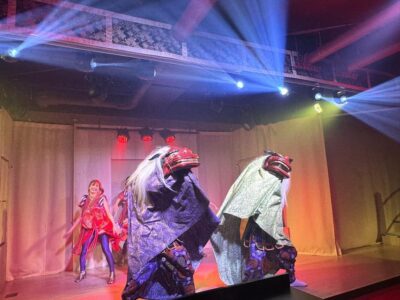
Japanese Dance Cabaret Theater Asakusa-Kaguwa Ticket
Read our review →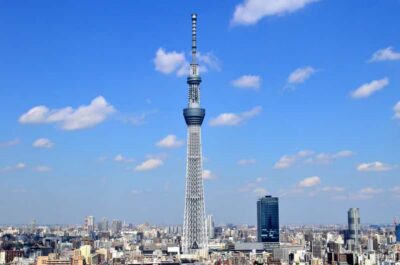
Meiji Shrine, Asakusa, Skytree Bus Tour and Cruise
Read our review →
Roll and Authentic Sushi Making Class in Asakusa
Read our review →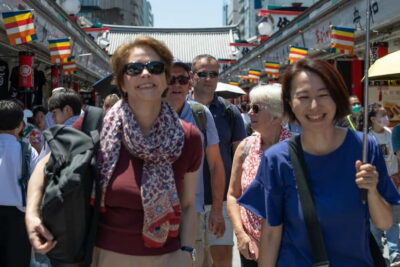
Asakusa Walking Tour with Sensoji Temple Visit
Read our review →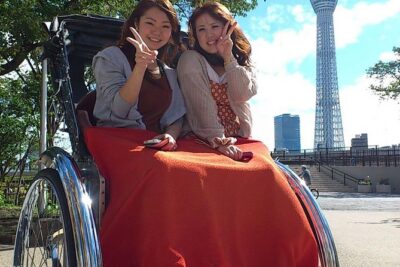
Tokyo Panoramic 1 Day: Meiji Shrine, Asakusa, Odaiba and SKYTREE®
Read our review →
Tokyo Go Kart: Asakusa, Skytree, and Akihabara **IDP MUST**
Read our review →
Asakusa, Skytree & Akhihabara Go-Kart City Experience
Read our review →Browse the lists this tour appears in