
Reviewed · ASAKUSA AND SENSOJI TOURS
Asakusa Traditional Experience
Asakusa’s best feature is the way this tour links old Tokyo’s temple district with a hands-on craft. You begin at Senso-ji, walk through Nakamise-dori, then design and cut an Edo Kiriko glass piece to take home. It gives you more than a quick photo stop.
I like the private format, which lets your group ask questions and set a comfortable pace. I also like the final craft session, since you leave with something you made rather than only a phone full of pictures. The main drawback is price clarity: the $142.84 fee covers the guide, but the glass workshop and food are extra.
Key points to know before booking
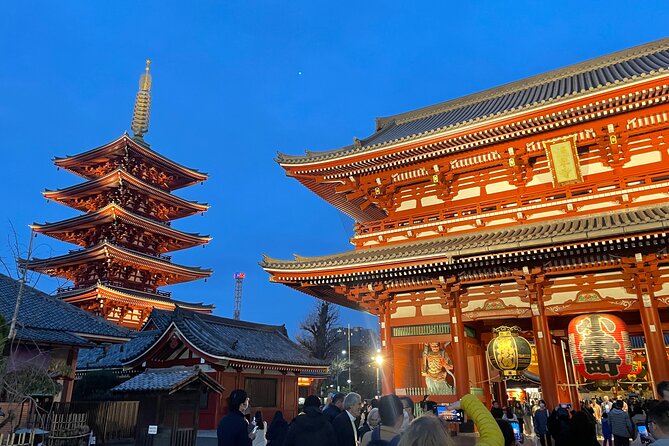
- Senso-ji begins the tour: See Tokyo’s oldest temple, completed in 645, with local context from your guide.
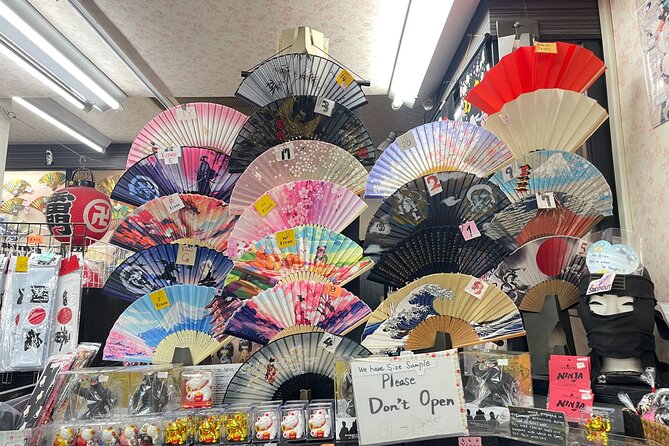
- Nakamise-dori adds a shopping stop: Browse more than 200 meters of stalls selling snacks, yukata, folding fans, and other traditional goods.
- Edo Kiriko is the hands-on highlight: Spend about 90 minutes designing and cutting a glass pattern.
- The price covers the guide only: The 4,950-yen glass workshop and 1,800-yen wagashi experience are not included.
- Your group stays private: Up to five people can join without sharing the tour with strangers.
- The tour starts at 10 a.m.: It lasts about four hours and returns to the starting point.
Why this Asakusa tour works well
Many Asakusa visits stop at Kaminarimon, snap a picture of Senso-ji, and move on. This experience gives the neighborhood more shape. You learn about the temple, see the shopping street, and then spend real time making a traditional craft.
That order makes sense. Senso-ji provides the setting and historical background. Nakamise-dori shows how that temple district still functions as a place for visitors and shopping. The Edo Kiriko session then shifts your attention from looking to doing.
You can book the tour for up to five people at $142.84 per group. For a full group, that is roughly $28.57 per person before workshop and food costs. For one or two people, the value is less striking, since the guide fee does not drop with a smaller party.
The experience has a current rating of 5 based on seven ratings. The strongest pattern in the feedback is the guide’s ability to explain architecture, local history, and small details that are easy to miss when walking alone. No guide name is provided, so you should not expect to select a particular guide.
More Asakusa and Sensoji tours:
- Tokyo: Japanese Dance Cabaret Theater Asakusa-Kaguwa Ticket
★ 4.8 · 2,270 reviews - Tokyo: Meiji Shrine, Asakusa, Skytree Bus Tour and Cruise
★ 4.7 · 1,986 reviews - Tokyo: Roll and Authentic Sushi Making Class in Asakusa
★ 4.9 · 1,957 reviews
Starting at Senso-ji, Tokyo’s oldest temple
The tour begins at Kaminarimon, at 2-chome-3-1 Asakusa, at 10 a.m. From there, your guide introduces Senso-ji and the surrounding Asakusa district.
Senso-ji was completed in 645, making it Tokyo’s oldest temple. That date gives the visit weight, but the useful part is the explanation of what you are seeing. The temple grounds contain layers of Tokyo’s past, especially the atmosphere associated with the Edo period, when Tokyo was known as Edo.
The supplied details do not promise a formal religious ceremony, special access, or a timed entry. Think of this part as a guided orientation through one of Tokyo’s best-known cultural sites. Admission is free, so your payment is for the guide’s time and interpretation rather than a ticket.
Plan on about an hour here. That is enough time for a clear introduction without turning the whole morning into a temple lecture. If you want an especially slow visit for photos, quiet observation, or personal prayer, you may need to keep an eye on the clock.
I like beginning here because it gives the rest of the outing a local frame. You are not simply shopping for souvenirs. You first see the place that gives Nakamise-dori its purpose, then move into the craft tradition connected with the wider Asakusa area.
Walking Nakamise-dori for snacks and souvenirs
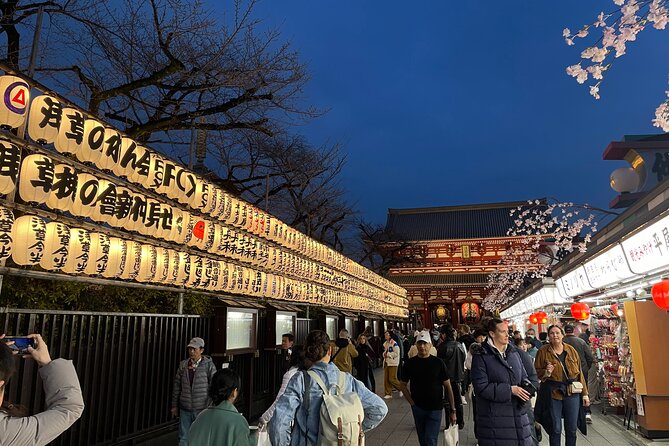
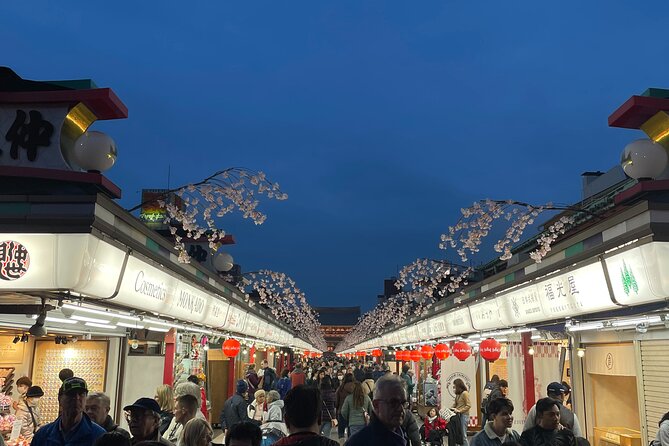
Nakamise-dori runs for more than 200 meters and belongs to Senso-ji. It is lined with shops selling traditional Japanese snacks and souvenirs.
This is the most casual part of the tour. Your guide can explain what you are seeing, while you browse items such as yukata and folding fans. You may also find small gifts that are easier to pack than larger craft pieces.
The tour allows about an hour here. That is useful if you want time to compare items instead of making a rushed pass through the street. It also gives your group room to pause for a snack, though food is not included in the tour price.
Keep some money available if you want to buy anything. The fee includes the guide, but snacks at Nakamise-dori are your responsibility. The provided details do not list particular vendors, prices, or dietary options, so ask your guide what suits you before buying.
Nakamise-dori can be more commercial than the temple grounds. That is not necessarily a flaw. It is part of the Asakusa experience, but you should see it as a traditional shopping street rather than a quiet museum. The guide’s explanations are what can make this stop feel more meaningful than a simple shopping break.
Making an Edo Kiriko glass piece
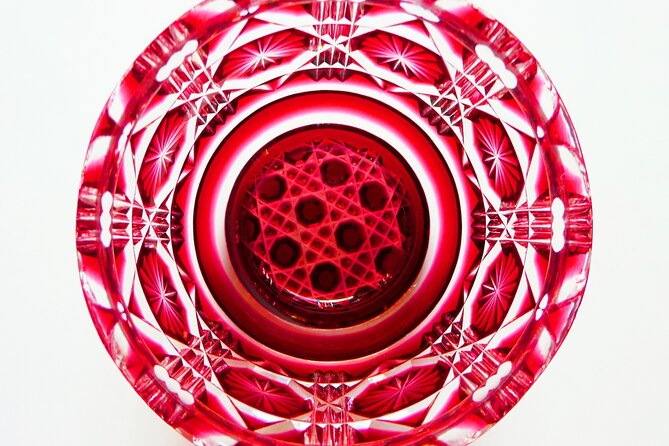
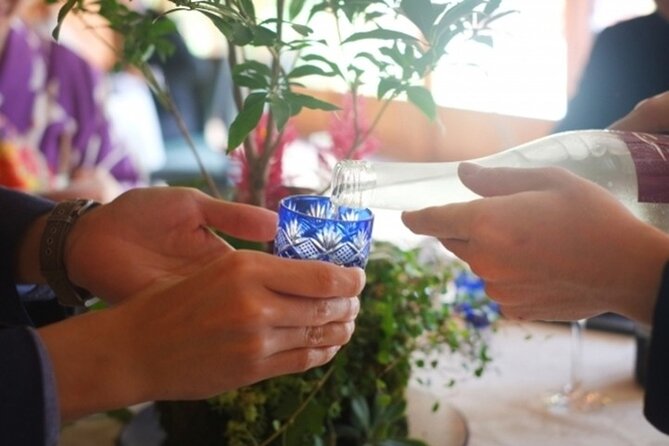
The final major stop is Sumida Edo Kiriko Kan, where you try Edo Kiriko, a traditional cut-glass craft that originated in Edo.
This is the part that gives the tour its lasting souvenir. Rather than choosing a finished item from a shelf, you design a pattern and cut it into your own glass piece. The workshop takes about 90 minutes.
The process is described as designing and then cutting your pattern. The information does not specify the exact glass item, available colors, age restrictions, or how much instruction you receive, so you should ask the provider if those details matter to you.
The workshop costs 4,950 yen and is not included. That extra charge is important when comparing this tour with cheaper Asakusa walking tours. You are paying for a guide-led cultural activity, then adding the cost of the craft session.
I think the extra fee can make sense if you value a personal souvenir and want a break from sightseeing. It is less attractive if you only want to see the temple and shopping street. In that case, the included portion may feel expensive for a four-hour outing.
The location may change, so check the final meeting or activity details after booking. The tour description places the craft stop at Sumida Edo Kiriko Kan, but it also notes that the location can change depending on arrangements.
A completely different kind of day in Tokyo:
- Mt Fuji and Hakone 1-Day Bus Tour Return by Bullet Train
★ 5.0 · 26,383 reviews - 1-Day Tokyo Bus Tour
★ 5.0 · 14,250 reviews - Tokyo: teamLab Planets TOKYO Digital Art Museum Entry Ticket
★ 4.6 · 9,779 reviews - Mt Fuji & Hakone Cruise, Drum Show Bullet Train 1 Day from Tokyo
★ 4.0 · 7,413 reviews
The optional wagashi activity and extra costs
A wagashi-making experience is listed at 1,800 yen, but it is not described as one of the three main stops. That means you should treat it as an optional addition or possible alternative, not assume it is automatically part of the tour.
Wagashi refers to traditional Japanese sweets, and a making session could appeal to you if food preparation interests you more than glass cutting. Still, the supplied information does not confirm exactly when it takes place, how long it lasts, or whether it replaces the Kiriko workshop.
The clearest budget is therefore:
- Tour and guide: $142.84 per group of up to five
- Edo Kiriko workshop: 4,950 yen per person, not included
- Wagashi experience: 1,800 yen, not included
- Nakamise-dori snacks: pay as you go
Ask the provider before booking if you want both the glass and wagashi activities. The stated tour duration is about four hours, including travel time, so adding another activity may affect the schedule.
What the private format means for your morning
This is a private activity, so only your group participates. That is a real advantage for families, friends, and couples who want to ask questions without holding up a larger party.
A private guide can also adjust the conversation to your interests. You might focus on temple architecture, Edo-era culture, shopping, or the craft process. The published feedback repeatedly praises the guide’s friendly manner and clear explanations, including details about architecture and local history.
There is no named guide in the supplied information. You can expect a local guide, but you cannot choose a particular person based on the details provided. The strong feedback about the guiding suggests that the human element is central to the experience, so it is worth asking about language support or guide assignment if that affects your decision.
Most people can participate, and the starting point is near public transportation. The tour ends back at the meeting point. Since total duration includes travel time, allow about four hours from the 10 a.m. start rather than assuming four full hours at the attractions.
A mobile ticket is provided, which is convenient for a morning meeting. Still, arrive with the meeting point address saved on your phone, especially since the area has several major landmarks and busy streets.
Who will get the most from this experience
I would recommend this tour to you if you want a compact introduction to Asakusa with a local guide and a practical activity at the end. It suits first-time visitors who want context without booking a full-day Tokyo tour.
Families may like the mix of temple, shopping, and making something by hand. The private format also avoids the fixed social rhythm of a large group. Couples and small groups of friends may find the glass piece a more personal souvenir than a standard purchase from Nakamise-dori.
It is also a good match if you enjoy traditional crafts. The Kiriko session is not just an added stop. It changes the pace of the morning and gives you a chance to pay attention to design, pattern, and careful handwork.
I would be more cautious if you are mainly seeking a low-cost temple visit. Senso-ji and Nakamise-dori are free to enter, while the tour fee covers the guide rather than admissions. Once you add the glass session, your total cost rises.
You should also think about shopping time. An hour at Nakamise-dori is generous for browsing, but the tour is not designed as a dedicated shopping trip. If you want to compare many souvenirs or eat several snacks, you may prefer to return on your own after the tour.
Practical planning for the 10 a.m. start
The meeting point is Kaminari mon2-chome-3-1, Asakusa, Taito City, Tokyo 111-0032. The activity starts at 10 a.m. and ends at the same meeting point.
The tour is offered with free cancellation up to 24 hours before the start time for a full refund. Cancellations or changes made less than 24 hours before the local start time are not accepted for a refund.
Confirmation is sent within 48 hours of booking, subject to availability. Since the Kiriko location may change, check the confirmed details rather than relying only on the original description.
Wear something comfortable for walking and keep your hands free if you expect to shop. The supplied information does not state the exact walking distance, so it is safest to expect movement between temple, shopping street, and craft location.
The group limit is five people. If your party has more than five, you will need to ask the provider about separate arrangements. If your party is smaller, compare the per-person cost with other guided Asakusa options before booking.
My verdict on value
The strongest value here is not entry to Senso-ji, since admission is free. It is the combination of a private guide and the chance to create an Edo Kiriko piece.
For five people, the base price is reasonable for a private four-hour experience, especially if your group wants a guide who can explain the architecture and cultural background. For one person, or even two, the same group price is harder to justify unless the hands-on craft matters to you.
The extra 4,950 yen for the glass workshop should be treated as part of the real cost, not a minor footnote. If you decide to attend the wagashi activity as well, add another 1,800 yen. The final price can be worthwhile, but only if you plan to use the cultural and craft portions rather than simply walk through Asakusa.
Should you book the Asakusa Traditional Experience?
Book it if you want a private introduction to Senso-ji, time to browse Nakamise-dori, and a meaningful craft session in one morning. The friendly, well-informed guiding is the feature most consistently praised, and the Edo Kiriko piece gives the outing a clear purpose.
Skip it if you only want free temple sightseeing, a quick shopping stop, or a large amount of unstructured time. You will pay extra for the guide and workshop, and the craft location may change.
For a group of four or five with an interest in Japanese tradition, I think this is the best value. For solo visitors, compare the cost carefully, then book only if making your own glass piece sounds like the part you will remember most.
FAQ
How long does the Asakusa Traditional Experience last?
The experience lasts about four hours, including travel time.
What time does the tour begin?
The tour begins at 10 a.m.
Where does the tour start and end?
It starts at Kaminari mon2-chome-3-1 in Asakusa, Taito City, Tokyo, and ends back at the meeting point.
Is the Edo Kiriko workshop included in the price?
No. The Edo Kiriko workshop costs 4,950 yen and is not included in the tour price.
Is food included?
No. Snacks at Nakamise-dori are not included. A wagashi-making experience is listed at 1,800 yen and is also not included.
How many people can join the private tour?
Up to five people can join, and only your group participates.
Newly reviewed around Tokyo
- Tokyo Asakusa:Calligraphy & Make T-shirt Activity★ 5.0 · 62 reviews
- 1 Hour Travel around Tokyo with a Professional Photographer★ 5.0 · 3 reviews
- Travel Tokyo with Your Own Personal Photographer★ 5.0 · 43 reviews
- Intercity Shuttle, Tokyo to Haneda /Narita /Yokohama /Makuhari★ 5.0 · 5 reviews
- Train in Samurai Swordsmanship and Defeat the Demon in Tokyo★ 5.0 · 5 reviews
- Shuttle Van 6hr Tokyo Tour to-and-from Tokyo, Yokohama and Narita★ 5.0 · 9 reviews
- Kickboxing & Body Training with EX-Pro Fighter★ 5.0 · 4 reviews
- Traditional Japanese Knife Sharpening Class★ 5.0 · 18 reviews
Asakusa and Sensoji Tours, compared.

Japanese Dance Cabaret Theater Asakusa-Kaguwa Ticket
Read our review →
Meiji Shrine, Asakusa, Skytree Bus Tour and Cruise
Read our review →
Roll and Authentic Sushi Making Class in Asakusa
Read our review →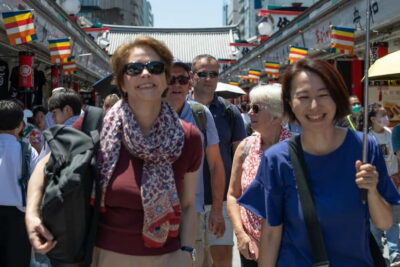
Asakusa Walking Tour with Sensoji Temple Visit
Read our review →
Tokyo Panoramic 1 Day: Meiji Shrine, Asakusa, Odaiba and SKYTREE®
Read our review →
Tokyo Go Kart: Asakusa, Skytree, and Akihabara **IDP MUST**
Read our review →
Asakusa, Skytree & Akhihabara Go-Kart City Experience
Read our review →Browse the lists this tour appears in