
Reviewed · MEIJI SHRINE TOURS
Tokyo: Meiji Jingu Shrine and Shinto Culture Walking Tour
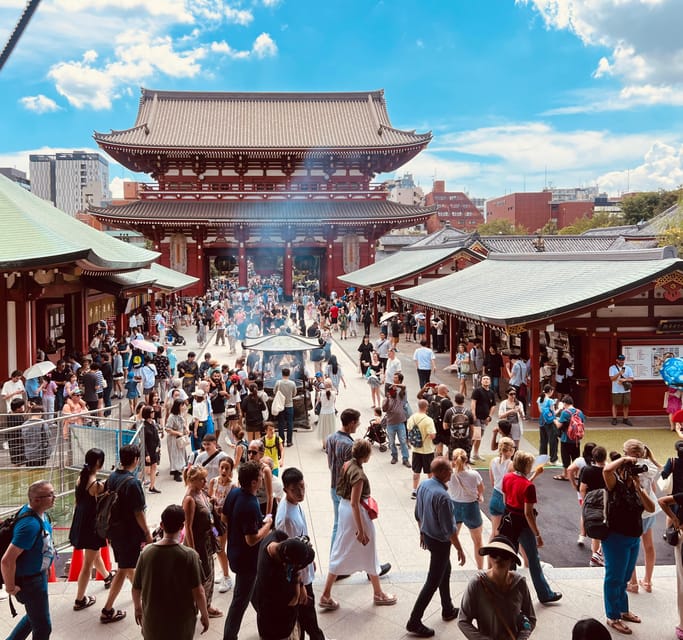
Meiji Jingu gives you a rare pause in the middle of Tokyo. After meeting near Harajuku, you walk beneath a giant torii and into a forest of roughly 100,000 trees. The city noise fades quickly, and a guide explains why people bow, how they approach the shrine, and what the offerings and sacred objects mean. The forest setting and the practical Shinto lessons are the best reasons to book.
I like the small-group format, which leaves room for questions and personal help. Guides including Maya, Yota, Minori, Andres, Ryota, Hoshi, and Haydn have been praised for clear English, friendly conversation, and useful Tokyo suggestions. The main consideration is pace: two hours passes quickly, and this is a cultural walking tour, not a long visit with time to inspect every corner on your own.
Key points to know before you book
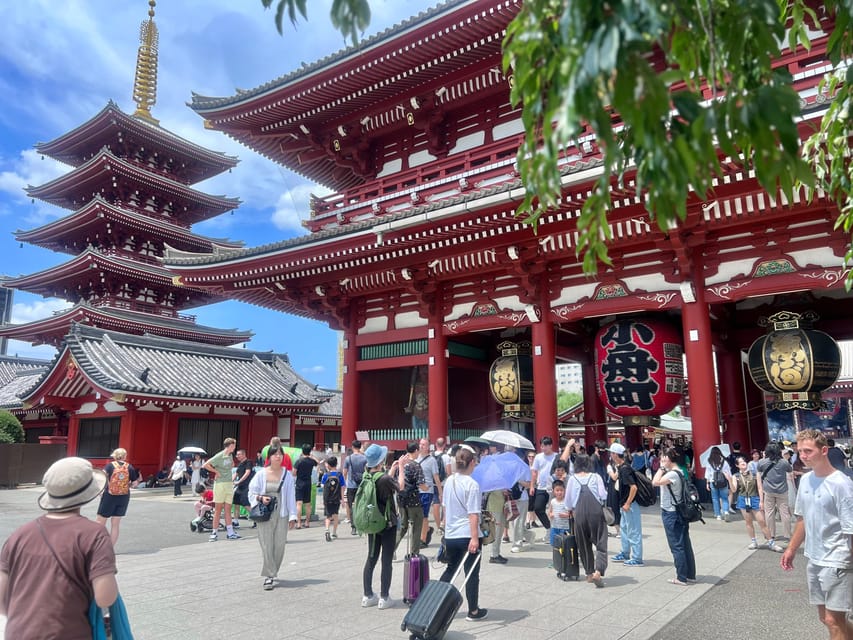
- A calm forest walk in central Tokyo: Meiji Jingu’s 100,000 trees make the approach feel far removed from Harajuku.
- Shinto customs made simple: You’ll learn shrine etiquette, prayer steps, purification, and the meaning of common features.
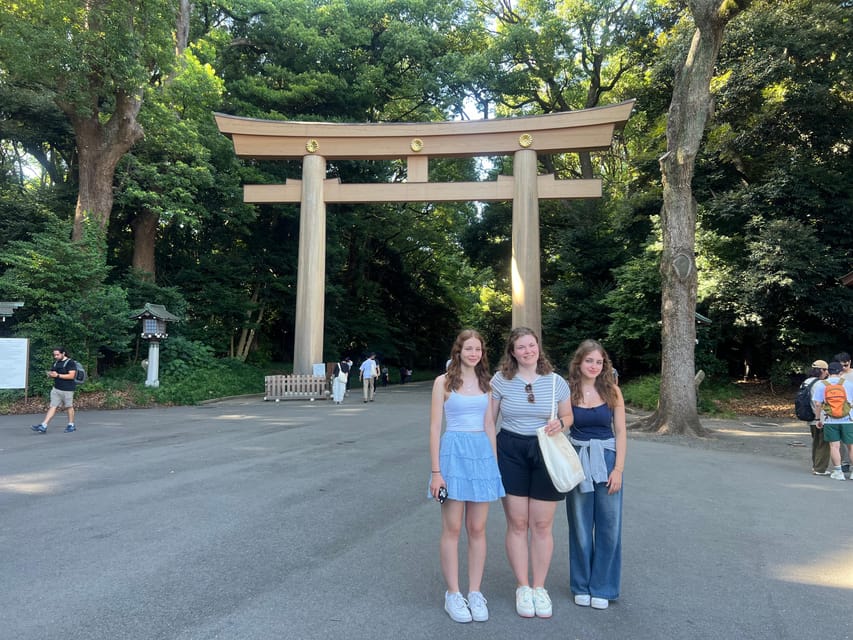
- More than one photo stop: The route includes the big torii, sake barrels, wine barrels, the Imperial Garden, and the main shrine.
- Small groups help: The usual group can be as large as 12, but some departures are much smaller or even private.
- Useful for your first Tokyo day: Guides often explain local customs, transport basics, food spots, and other places to visit.
- Good value at $19: Admission to Meiji Shrine and the Imperial Garden is included, along with an English-speaking guide and photos.
Starting near Harajuku, then leaving the city behind
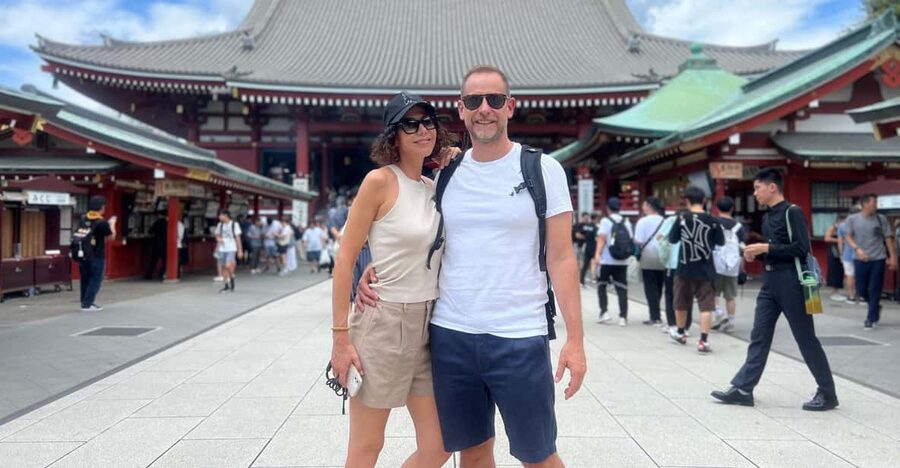
The meeting point is in front of the Starbucks closest to Meiji Shrine, at coordinates 35.6705208, 139.7031067. That detail matters because Harajuku has several Starbucks locations, so use the map pin rather than simply searching for the brand name.
From there, the tour heads toward Meiji Jingu Gyoen, the garden area connected with the shrine. You do not begin with a long lecture. The walking route gives you a clear sense of place first, then the guide adds the cultural background as each feature appears.
That approach works well in Tokyo. Shinto customs can seem mysterious if someone explains them in a classroom, but the ideas make more sense when you are standing beside a torii, a purification fountain, or an offering box. Guides such as Andres and Yota have also helped visitors with basic shrine manners and Tokyo questions, making this a useful first activity after arrival.
The route is listed as wheelchair accessible. Still, this is a walking experience through shrine grounds and a forested setting, so you should confirm current route details if you have specific mobility needs.
More Meiji Shrine tours in Tokyo:
- Tokyo: Meiji Shrine, Asakusa, Skytree Bus Tour and Cruise
★ 4.7 · 1,986 reviews - Tokyo Panoramic 1 Day: Meiji Shrine, Asakusa, Odaiba and SKYTREE®
★ 4.5 · 1,222 reviews - Tokyo: Meiji Shrine Walking Tour — Shinto & Imperial System
★ 4.9 · 266 reviews
Meiji Jingu Gyoen and the 100,000-tree forest
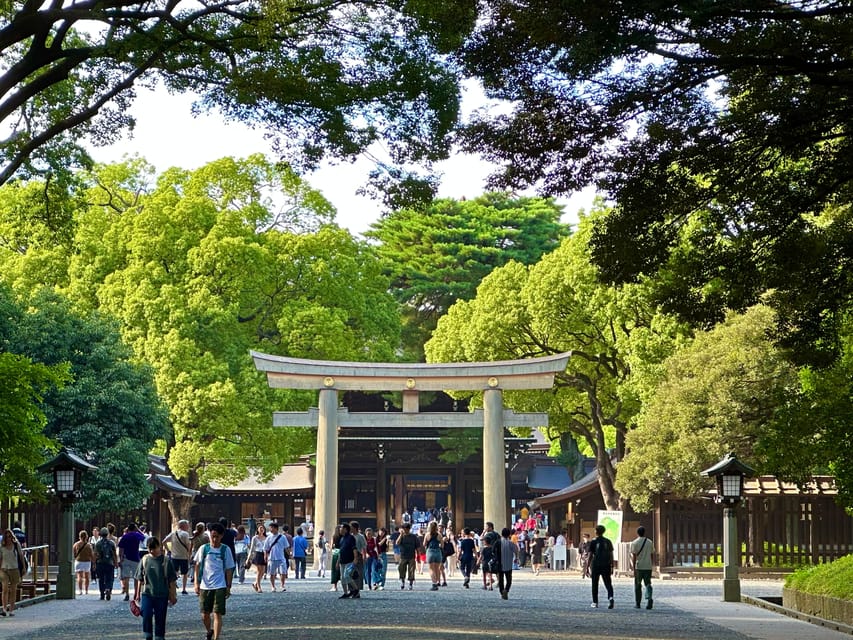
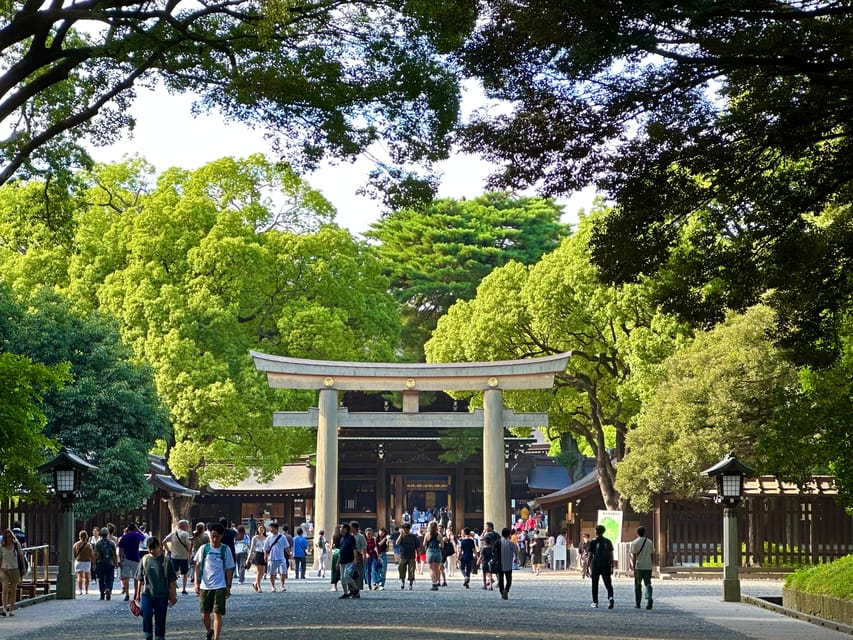
The first major portion lasts about 30 minutes in Meiji Jingu Gyoen. The big attraction is not a single spectacular building. It is the change in atmosphere as you move from one of Tokyo’s busiest districts into a broad, wooded religious site.
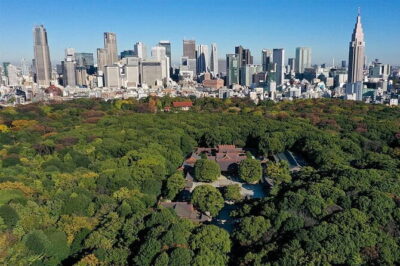
The forest contains about 100,000 trees, planted when the shrine was created. That gives the approach a sense of purpose. You are not simply crossing a park on the way to a monument. You are walking through a setting designed to create distance from ordinary city life and prepare visitors for a sacred place.
Your guide can point out how nature and Shinto fit together. Shinto does not depend only on grand halls or written doctrine. Sacred presence can be tied to trees, rocks, water, and particular places. The forest helps you see that connection without needing a complicated explanation.
This is also the part where comfortable shoes matter. The tour lasts two hours, and the route includes a forest walk rather than a short stop beside the shrine entrance. In hot or rainy weather, the conditions can affect your enjoyment. One group completed the tour during heavy rain and still found the personal explanations worthwhile, but bring suitable clothing if the forecast looks poor.
The big torii sets the tone
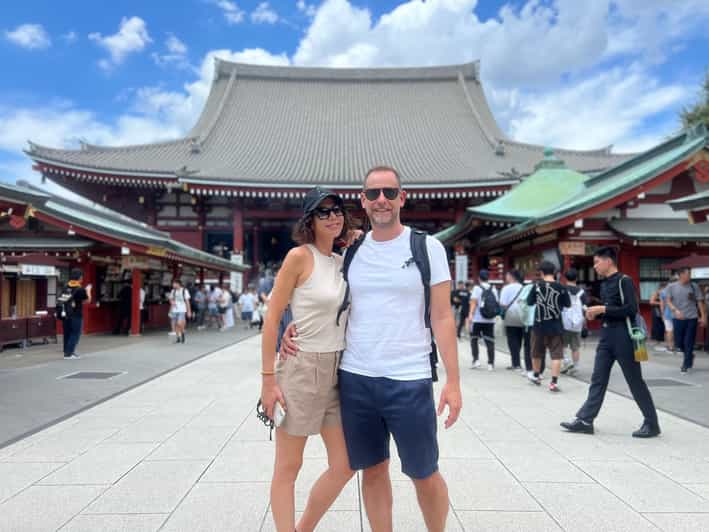
The big torii receives about 10 minutes of guided attention, but it carries more meaning than its short stop suggests. A torii marks the move from ordinary space toward a Shinto shrine. It is also a useful point for learning basic behavior, including how to approach and where to walk.
This is the sort of detail that improves the rest of your Japan trip. Once you understand what a torii signals, you will notice similar gates at other shrines. The guide can also explain the difference between respectful observation and treating a sacred place like a photo backdrop.
You will likely want a picture here. The tour includes photos taken during the walk, a helpful touch for solo visitors and families. Do not expect a dedicated photography session at every angle, but having a guide who can take pictures means you can focus on the surroundings instead of setting up your phone.
Sake barrels, wine barrels, and modern Meiji Jingu
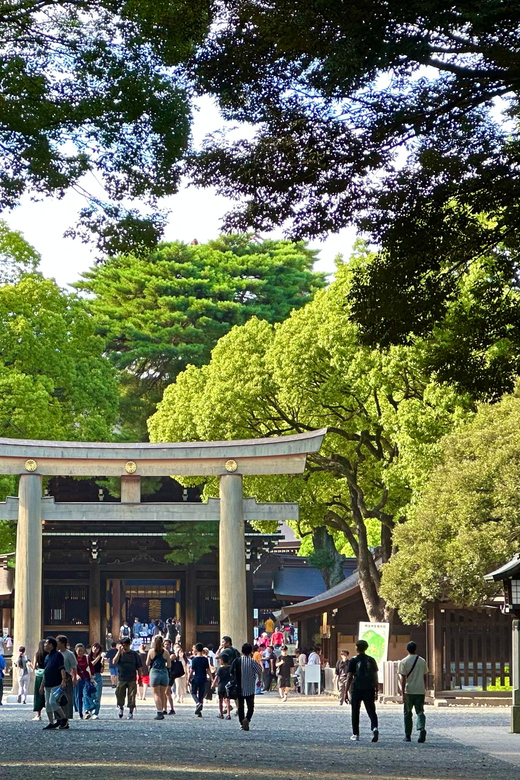
The route pauses at the consecrated sake barrels for roughly 10 minutes, followed by another 10-minute stop at the consecrated wine barrels. These displays are among the most visually memorable details on the approach.
Sake has a long connection with Shinto ceremonies, and donated barrels can be placed at shrines as offerings. The wine barrels are a reminder that Meiji Jingu also reflects Japan’s modern imperial period and its contact with the wider world. The two displays together give your guide a natural way to discuss tradition, donation, ceremony, and change.
Do not expect to taste either drink. These are cultural and visual stops, not food or drink tastings. Their value comes from learning why they are present and how they fit into the shrine’s identity.
This is also where guides can add useful local context. Several guides have helped groups connect the shrine visit with nearby restaurants and other Tokyo sights. That advice is not part of the formal admission, but it can be handy if this is your first day in the city and you want to know where to eat next.
More Tokyo walking tours:
- Tokyo Tsukiji Fish Market Food and Culture Walking Tour
★ 5.0 · 3,184 reviews - Tokyo: Imperial Palace and Shogun Historical Walking Tour
★ 5.0 · 2,251 reviews - Tokyo: Shinjuku Local Bar and Izakaya Guided Walking Tour
★ 4.9 · 1,794 reviews - Tokyo: Tsukiji Fish Market Food and Walking tour
★ 5.0 · 1,724 reviews
Inside Meiji Shrine, where etiquette becomes practical
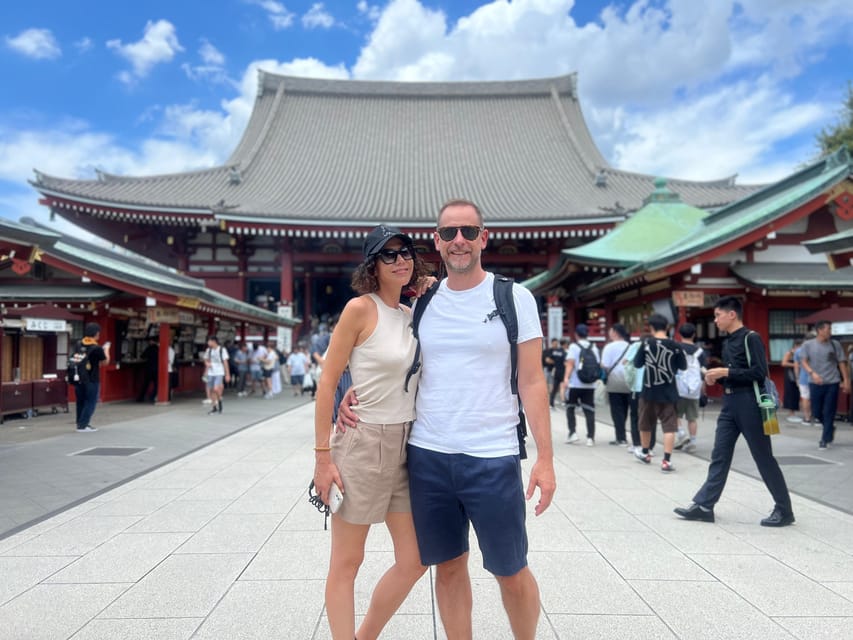
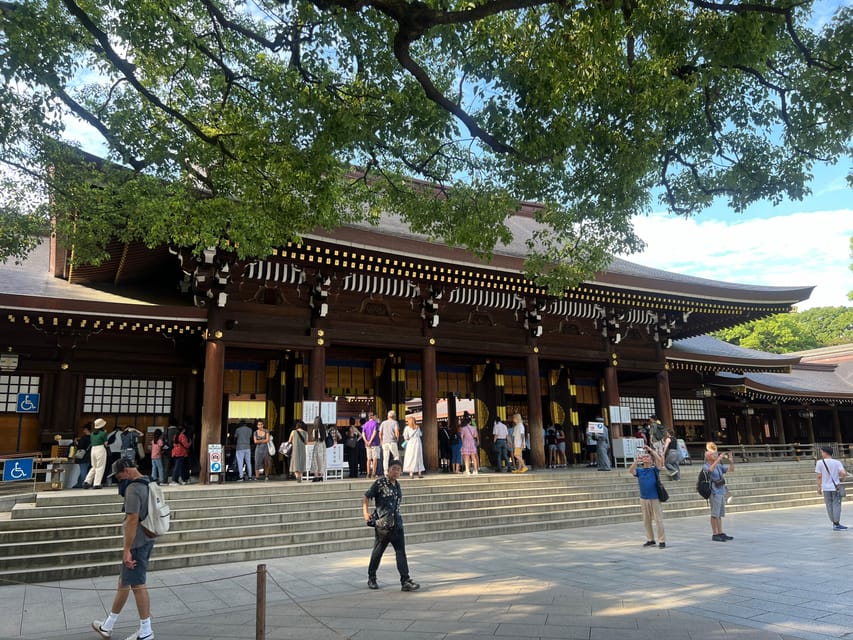
The largest part of the tour is the main Meiji Shrine visit, listed at about one hour. This gives the guide time to explain the shrine’s origins, the Meiji period, and the relationship between Shinto and Buddhism in Japan.
Meiji Shrine is dedicated to Emperor Meiji and Empress Shoken. The tour’s focus is not only on the imperial connection. It also shows how visitors use the shrine today, how rituals work, and why certain actions are done in a particular order.
You can expect guidance on points such as:
- How to behave before crossing a torii
- How purification works
- How to approach the main hall
- How to pray at a Shinto shrine
- What common offerings and shrine items mean
- How Shinto customs differ from Buddhist practices
The explanations are especially useful because the two traditions can look similar to someone seeing them for the first time. A guide can help you notice differences without turning the visit into a dry religious lecture. Hoshi, Minori, Haydn, and others have been praised for answering questions clearly and adjusting explanations to the group.
You may also encounter ema, wooden plaques where people write wishes, and shrine stamps in a personal notebook. One family used the opportunity to write on an ema and collect stamps. Those activities are not listed as guaranteed parts of the tour, so treat them as possible additions if the shrine facilities and your timing allow.
The shrine itself can become busy, especially later in the day or during major celebrations. Early departures are a smart choice if you want a quieter walk. One guide specifically recommended an early morning visit for the stillness, and that advice makes sense here. The tour gives you a structured visit, but the hour at the main shrine is more enjoyable when you are not competing with large crowds at every stopping point.
A small group changes the whole experience
The advertised group size can reach 12 people, but actual departures vary. Some have had only two to four people, while one departure became a private tour when the other booking did not arrive.
That flexibility is a major strength. In a small group, you can ask why a ritual is performed, stop for a photo, or request clarification without holding up a large crowd. Guides such as Yota and Ryota have been especially appreciated for making small groups feel personal and for taking time with questions.
The tradeoff is that you cannot assume every departure will be private. If the group is full, the guide must keep the route moving and share attention among everyone. Even so, a maximum of 12 is manageable for a two-hour cultural walk, particularly compared with a large coach-style tour.
The guide team changes by date. Names associated with this experience include Maya, Minori, Nicholas, Hoshi, Naruto, Matt, Sara, Maria, Andres, Yota, Ryota, Haydn, Doren, and others. The consistent requirement is a live English-speaking guide, but the exact personality and emphasis will vary. Some guides focus heavily on history, while others add restaurant tips, photography help, or transport advice.
Why $19 is a fair price
At $19 per person, this is inexpensive for a guided two-hour visit in central Tokyo. Admission to Meiji Shrine and the Imperial Garden is included, as is an English-speaking guide and photos taken during the tour.
The value depends on what you want from Meiji Jingu. If you only want to walk through the forest and take pictures, you can visit the shrine on your own. The tour earns its price by explaining what you are seeing and helping you participate respectfully.
I find the cultural translation especially valuable. Shrine customs are easy to copy incorrectly when you are following the person in front of you. A good guide explains the reason behind the action, so you leave with something more useful than a few snapshots.
The price does not include food, drinks, or transport beyond the walking route. Some guides have recommended ramen, sushi, wagyu, ice cream, and other local places, but those suggestions are extras rather than part of the paid experience. Budget for your own meal afterward.
The best time to fit it into your Tokyo plans
This tour works particularly well near the start of a Tokyo trip. You learn basic shrine etiquette, get an introduction to Shinto and Buddhism, and can ask for suggestions about other areas. Several guides have also explained how to use the metro, which can make the rest of your stay less intimidating.
The meeting point near Harajuku makes it easy to pair the tour with time in that district before or after. The route itself is quieter than the surrounding shopping streets, so you get two very different sides of Tokyo in one outing.
Morning is the strongest choice if available. You have a better chance of enjoying the forest in a calm mood, and the shrine visit will not take up your best afternoon hours. The tour may also work well after a long flight because the gentle walking and clear schedule help you get oriented without requiring a full day.
Allow the full two hours, even though the route is compact. You will want time for explanations, photographs, and questions. If you are traveling with children, the forest, ritual demonstrations, and ema plaques can give them concrete things to notice, and one guide was specifically praised for keeping children engaged.
Who should book this Meiji Shrine walk
I would choose this tour if you are visiting Meiji Jingu for the first time and want to understand what you are seeing. It is also a good fit for couples, families, solo visitors, and anyone who prefers conversation over a recorded audio guide.
It suits you especially well if:
- You want a clear introduction to Shinto customs
- You are curious about the difference between Shinto and Buddhism
- You like small groups and time for questions
- You want photos taken during the walk
- You are visiting Tokyo for the first time
- You would value local suggestions for food and sightseeing
I would skip it if you prefer to wander alone, spend several hours writing wishes and taking photographs, or avoid a fixed schedule. The route is focused and guided. You will gain context, but you will have less free time than on an independent visit.
Booking is flexible: you can cancel up to 24 hours before the start for a full refund, and you can reserve now while paying later. Those terms are useful when Tokyo plans are still changing.
Should you book it?
Book this Meiji Jingu tour if you want more than a pretty walk through trees. At $19, it is a strong-value introduction to Shinto practice, the Meiji period, and one of Tokyo’s most important shrines.
Choose an early start if possible, and arrive at the correct Starbucks meeting point. Expect a two-hour walk, bring weather-ready clothing, and use the guide for questions. If you want a calm cultural beginning to your Tokyo visit, this is a sensible choice.
FAQ
How long is the Meiji Shrine walking tour?
The tour lasts two hours, including the walk through the garden and forest, the torii and barrel stops, and the main shrine visit.
What language is the tour conducted in?
The live tour guide speaks English. English is the listed tour language.
Where does the tour meet?
The meeting point is in front of the Starbucks closest to Meiji Shrine in Harajuku. The listed coordinates are 35.6705208, 139.7031067.
What places are included?
The route includes Meiji Jingu Gyoen, the big torii, consecrated sake barrels, consecrated wine barrels, and Meiji Shrine. Admission to Meiji Shrine and the Imperial Garden is included.
How large is the group?
The usual group can include as many as 12 people. Some departures are smaller, and some have operated as private tours when only one booking was present.
Is the tour wheelchair accessible?
Yes. The activity is listed as wheelchair accessible.
What does the $19 price include?
The price includes the professional English-speaking guide, photos taken during the tour, historical information about the districts, and entry to Meiji Shrine and the Imperial Garden.
Can I cancel the booking?
Yes. You can cancel up to 24 hours in advance for a full refund. You can also reserve now and pay later.
Newly reviewed around Tokyo
- Tokyo Asakusa:Calligraphy & Make T-shirt Activity★ 5.0 · 62 reviews
- Intercity Shuttle, Tokyo to Haneda /Narita /Yokohama /Makuhari★ 5.0 · 5 reviews
- 1 Hour Travel around Tokyo with a Professional Photographer★ 5.0 · 3 reviews
- Travel Tokyo with Your Own Personal Photographer★ 5.0 · 43 reviews
- Train in Samurai Swordsmanship and Defeat the Demon in Tokyo★ 5.0 · 5 reviews
- Shuttle Van 6hr Tokyo Tour to-and-from Tokyo, Yokohama and Narita★ 5.0 · 9 reviews
- Kickboxing & Body Training with EX-Pro Fighter★ 5.0 · 4 reviews
- Traditional Japanese Knife Sharpening Class★ 5.0 · 18 reviews
Meiji Shrine Tours, compared.
Meiji Shrine, Asakusa, Skytree Bus Tour and Cruise
Read our review →
Tokyo Panoramic 1 Day: Meiji Shrine, Asakusa, Odaiba and SKYTREE®
Read our review →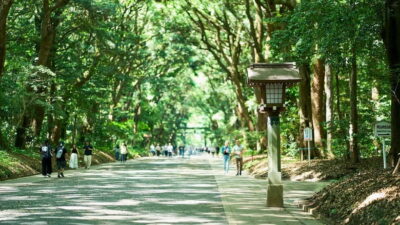
Meiji Shrine Walking Tour — Shinto & Imperial System
Read our review →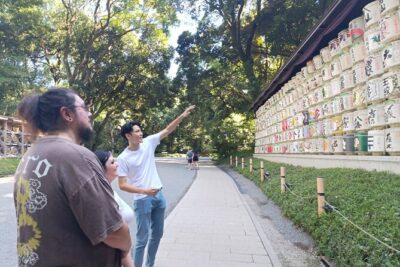
Meiji Shrine Walking Tour — Shintoism & Imperial System
Read our review →
1 Day Bus Tour with Meiji-Jingu,Odaiba,lunch&Skytree
Read our review →
Tokyo Morning Tour : Meiji Shrine, Asakusa and Fish Market
Read our review →
Full Tokyo: Meiji Shrine, Imperial Palace, Asakusa & Skytree
Read our review →Browse the lists this tour appears in